-
-
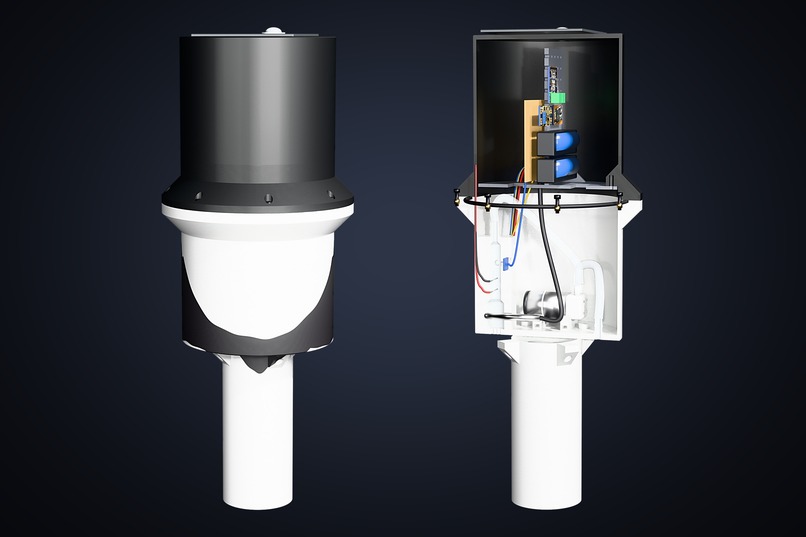
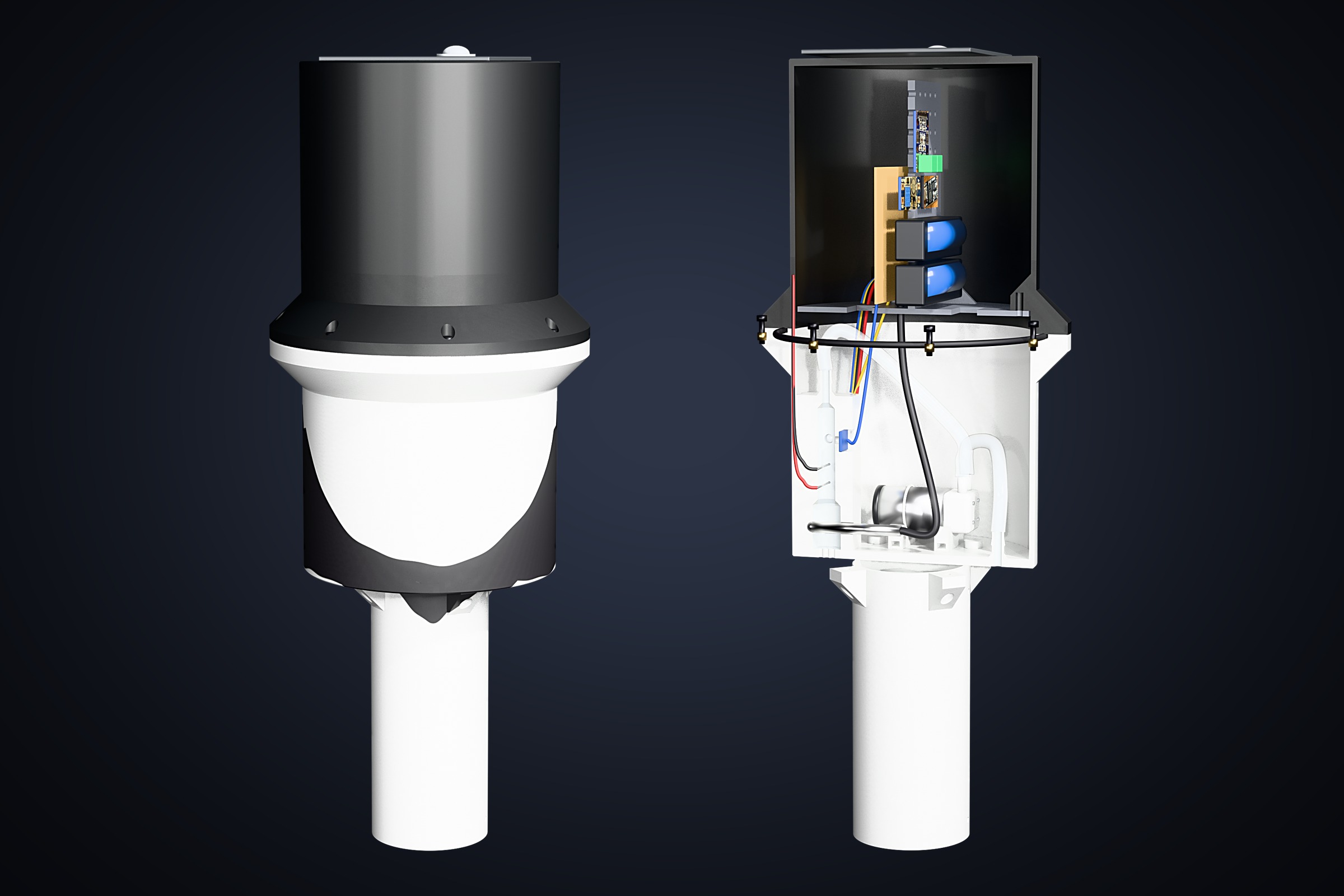
Render of Lincoln closed and cut open: electronics up top, pump and sensor column in the base
-
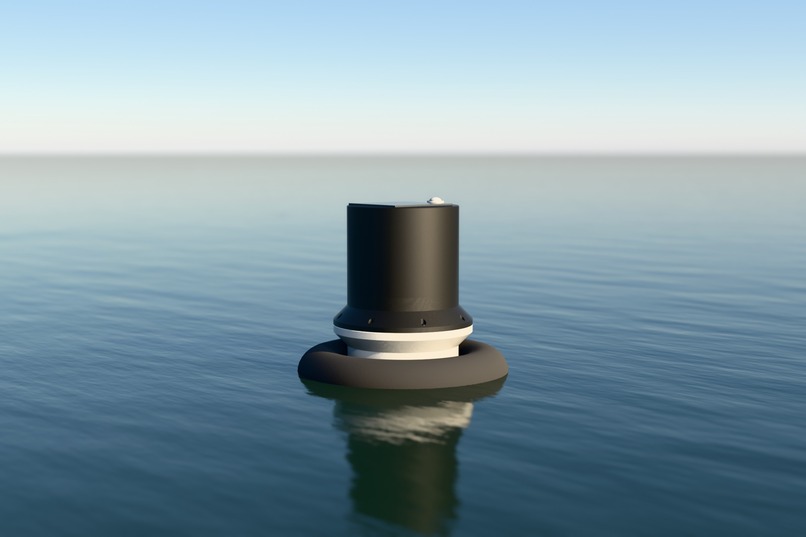
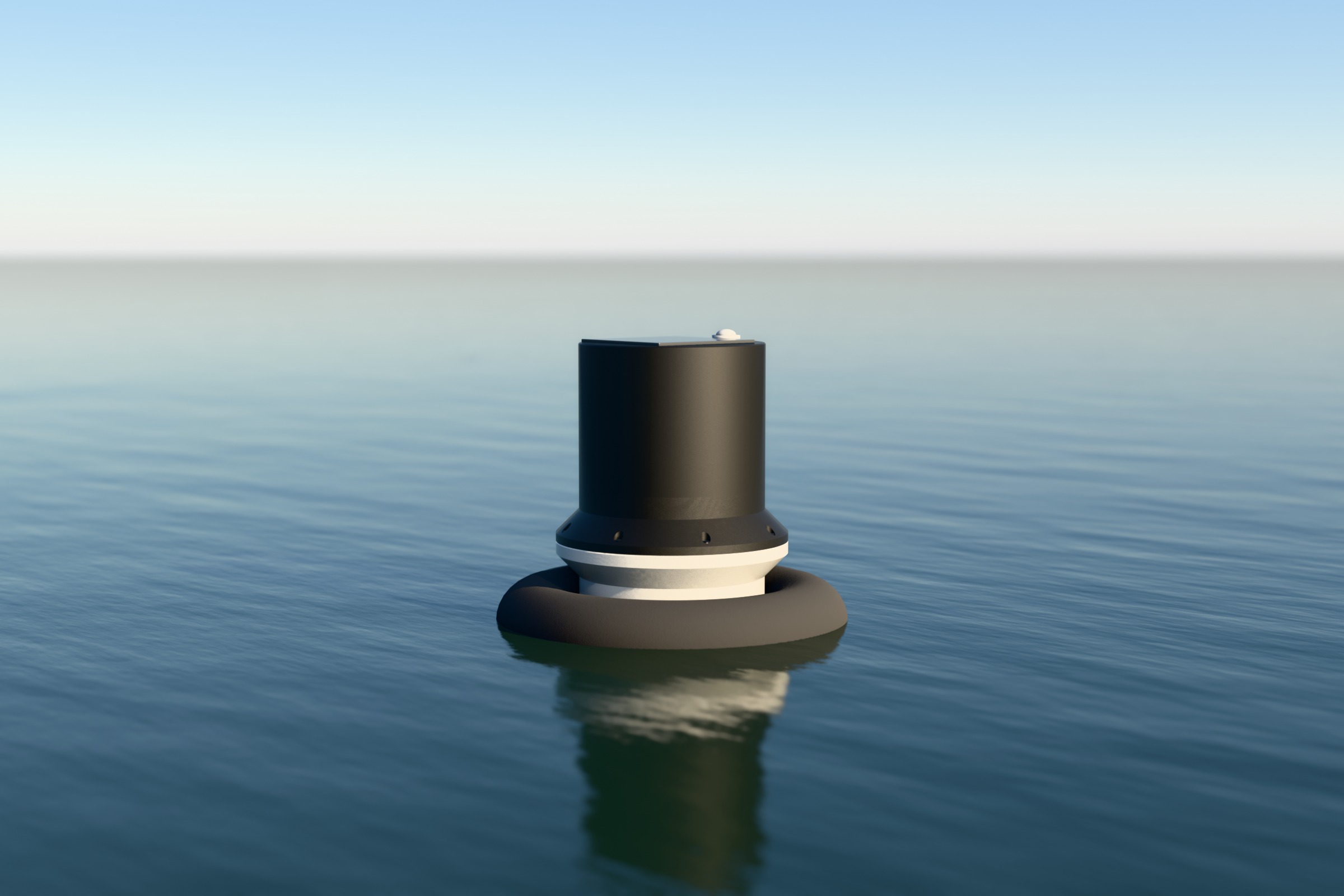
Render of Lincoln on the water, held up by its foam collar
-
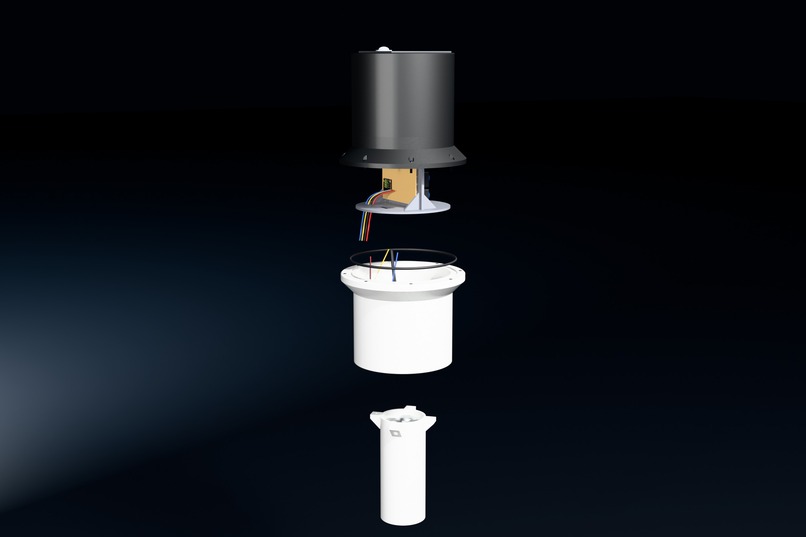
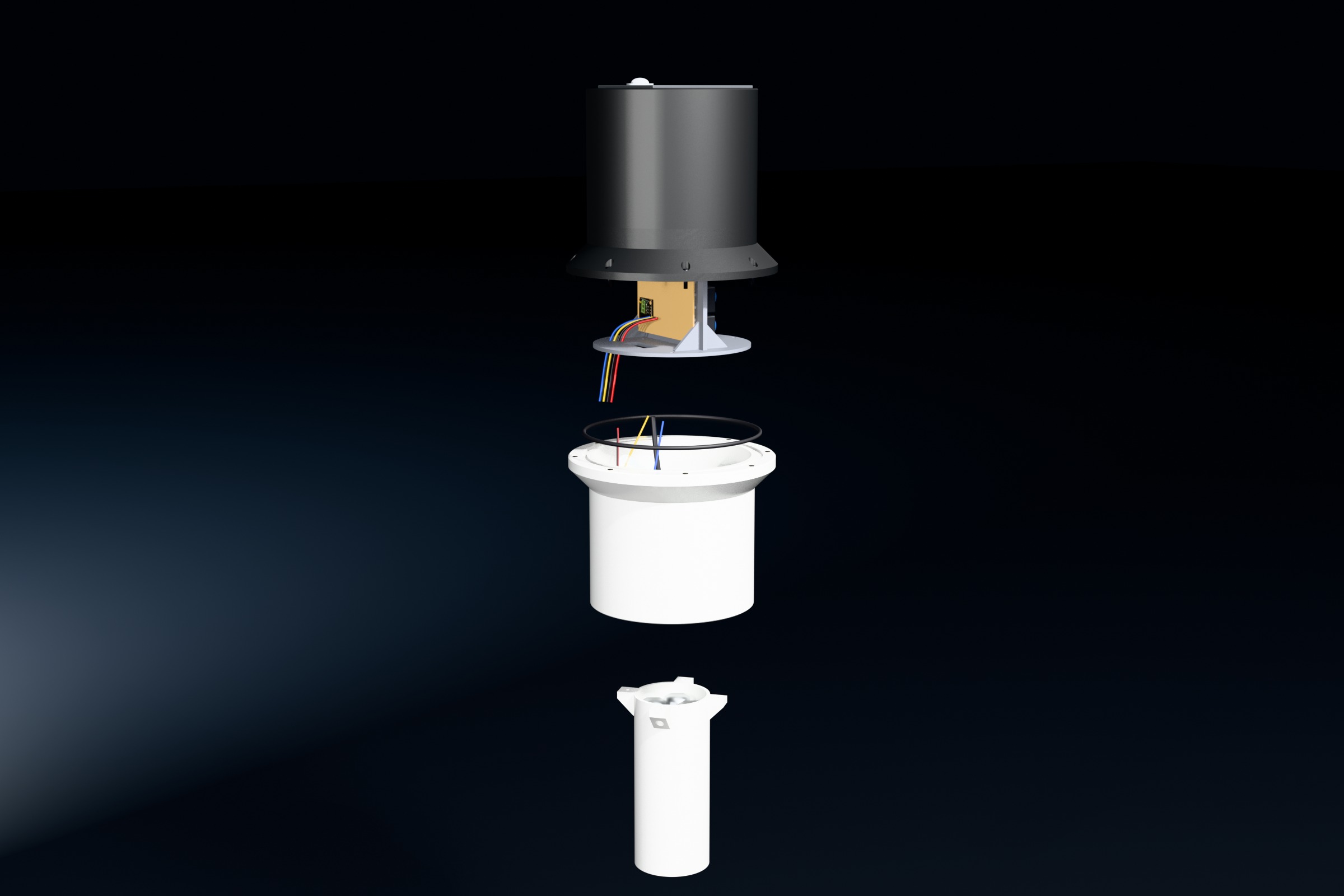
Exploded view: electronics module, chassis, O-ring, sensor base and keel
-
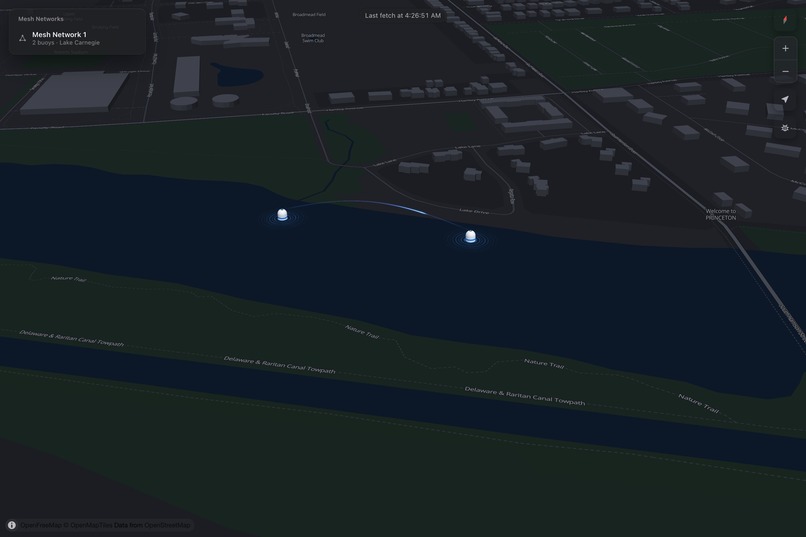
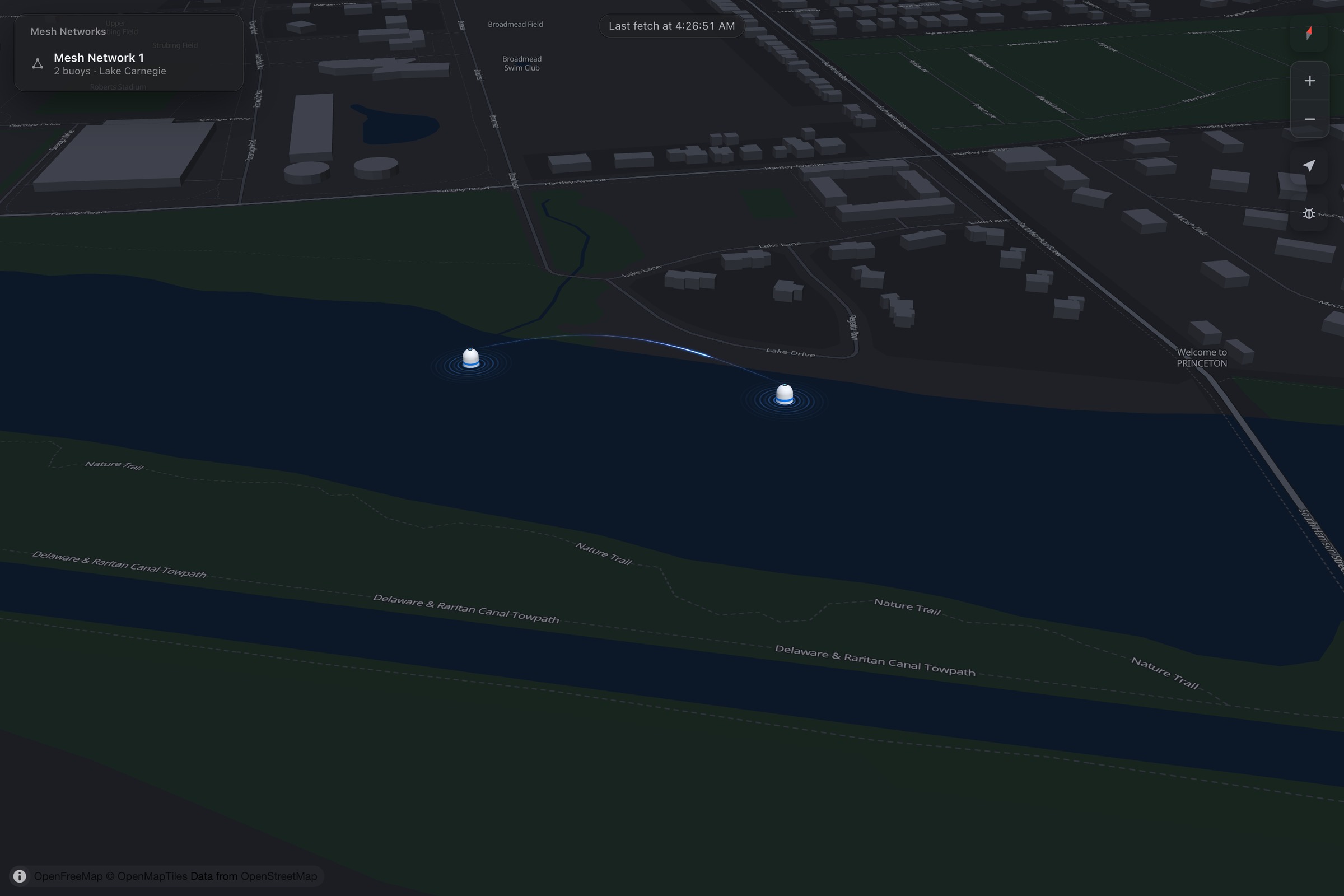
The live dashboard, with our two buoys placed on Lake Carnegie
-
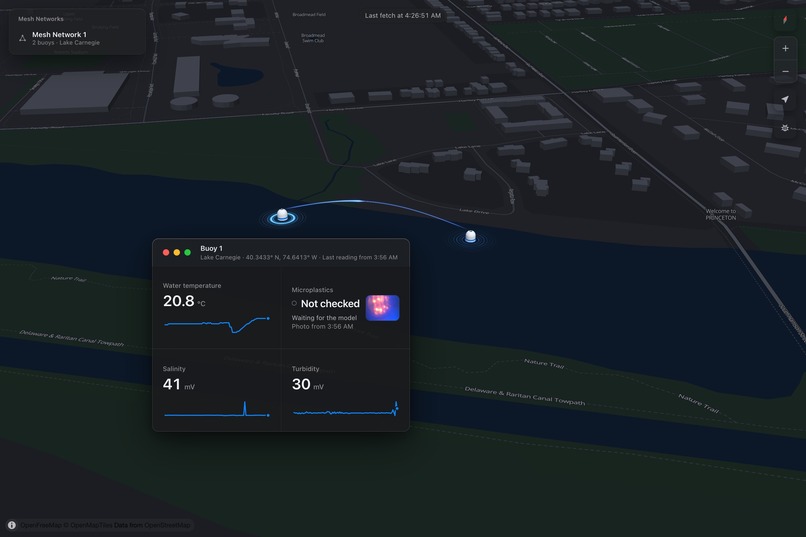
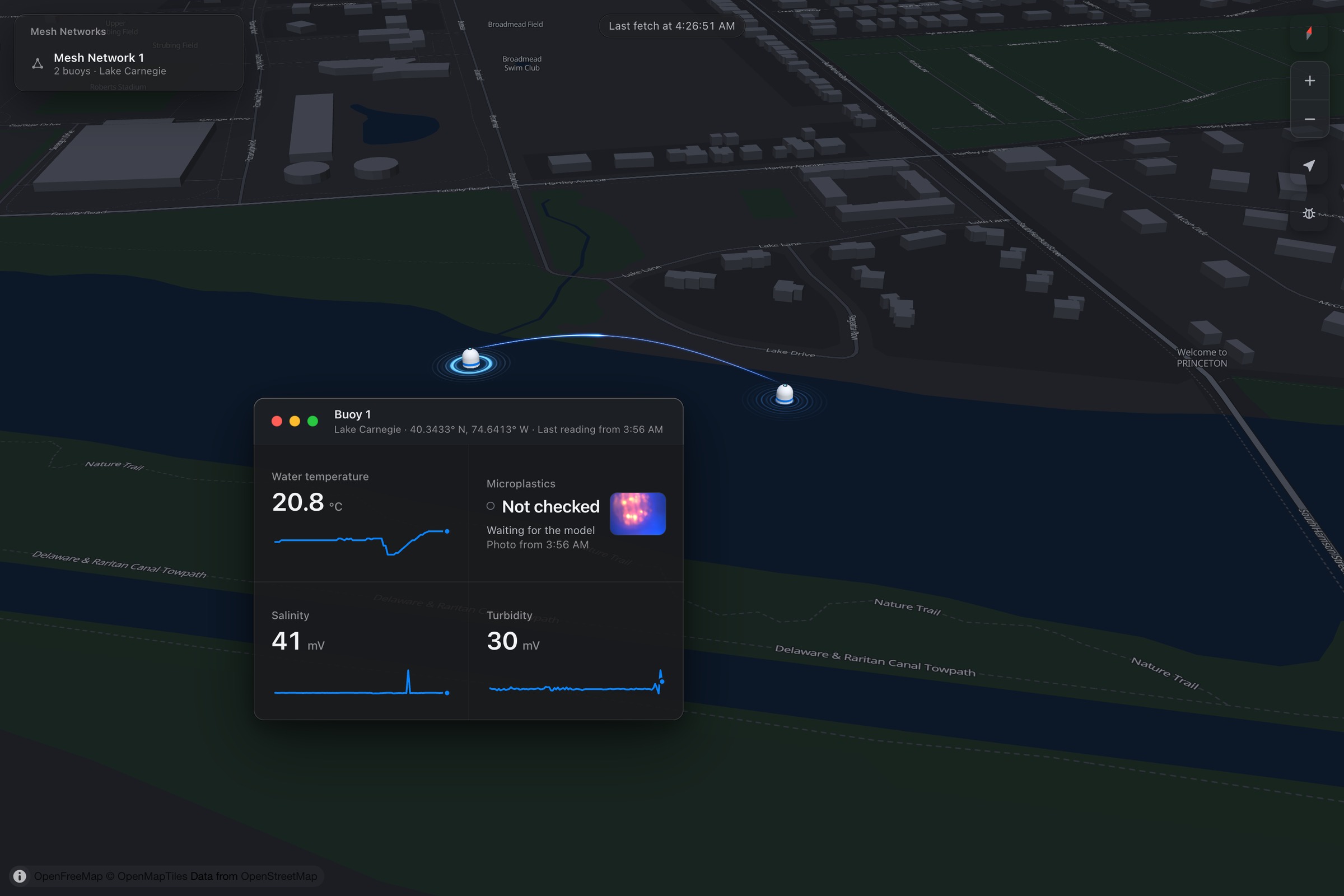
Buoy 1 on the dashboard with real temperature, salinity and turbidity readings
-
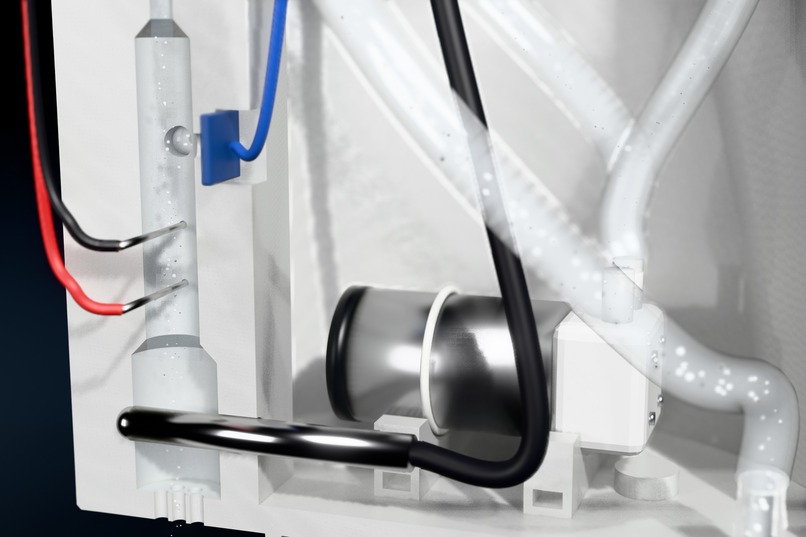
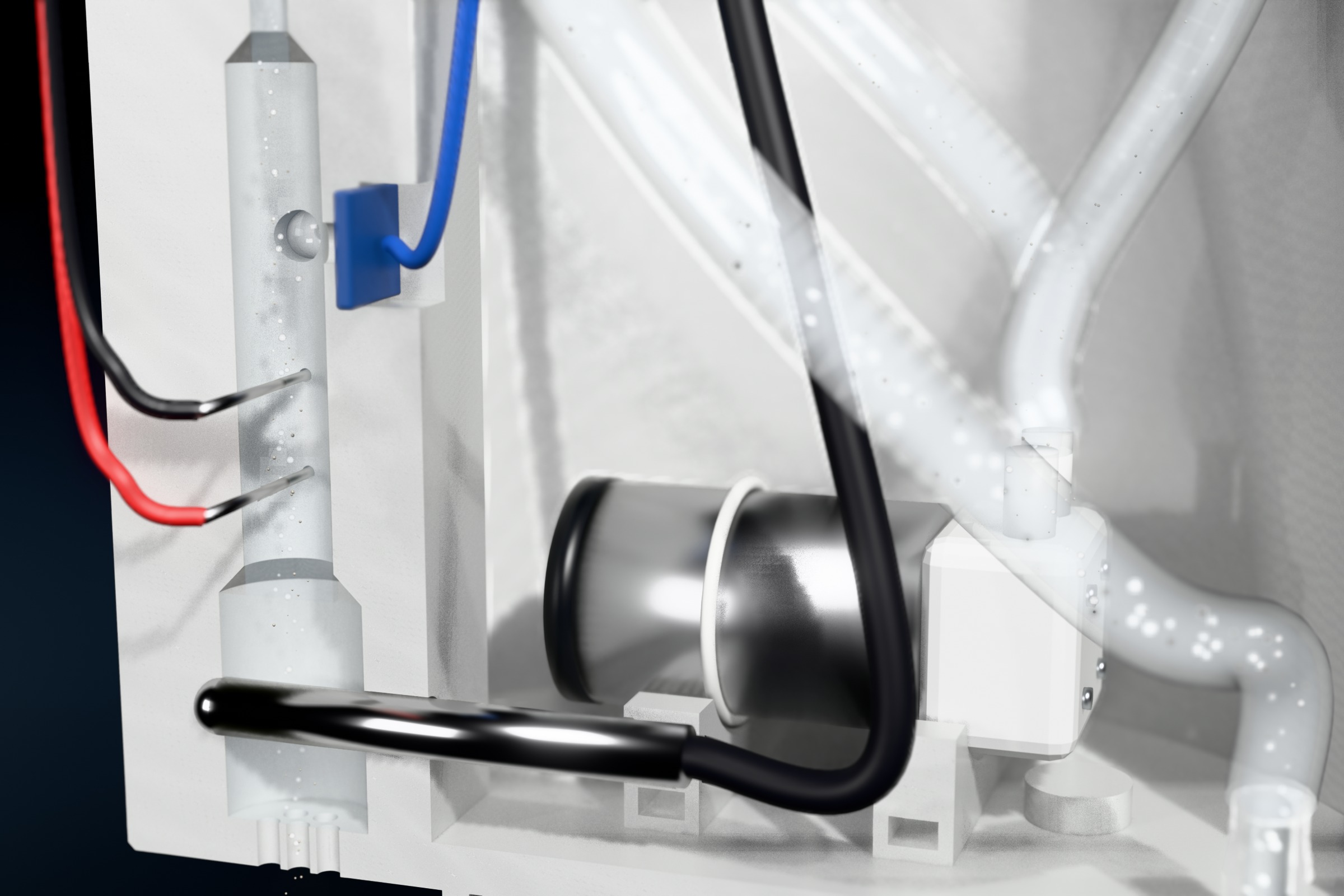
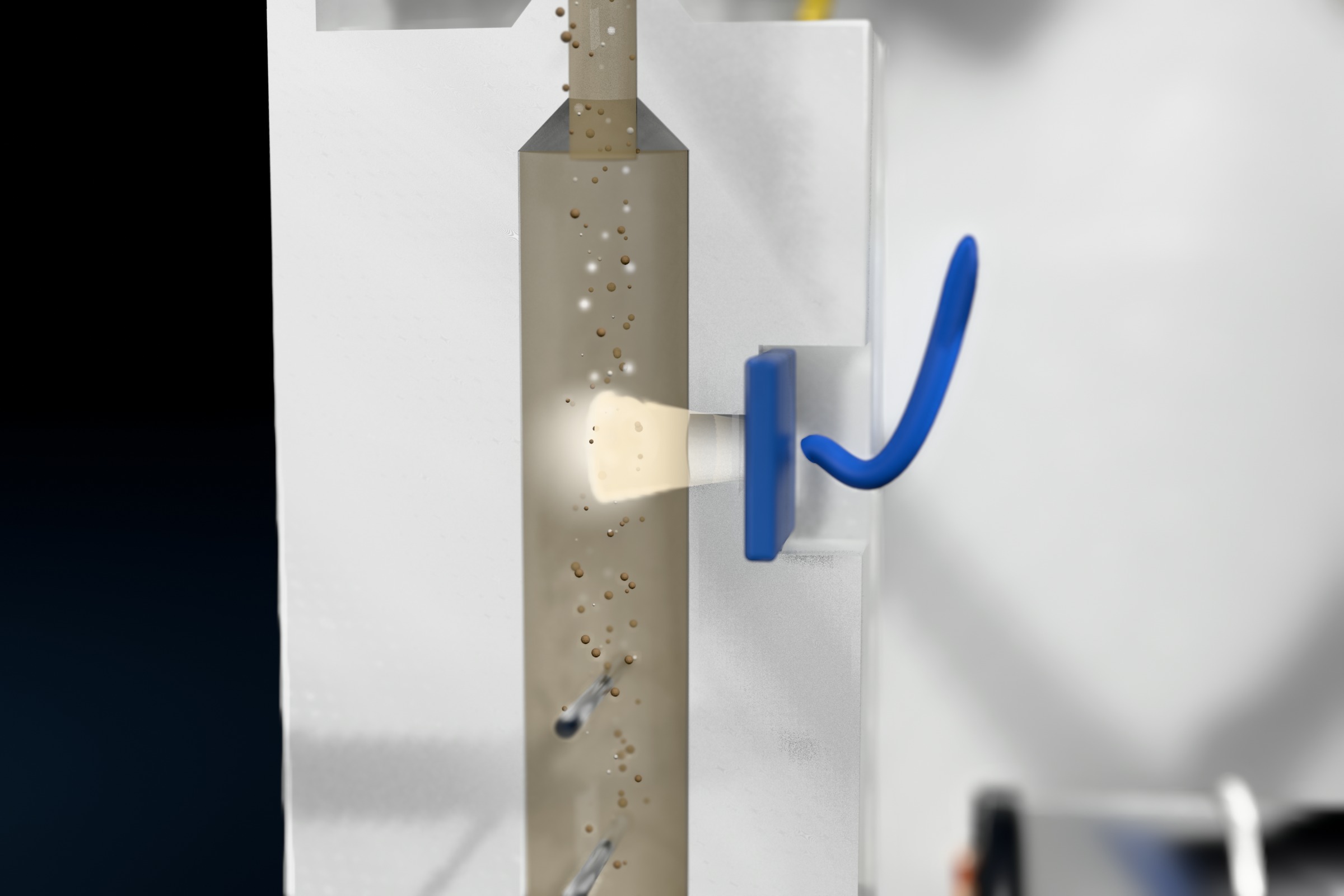
Inside the base: the pump pulls lake water up through the sensor column
-
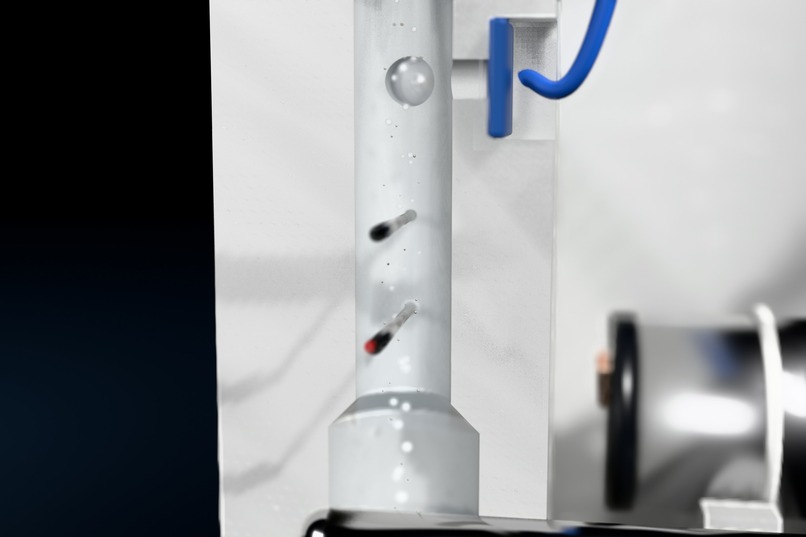
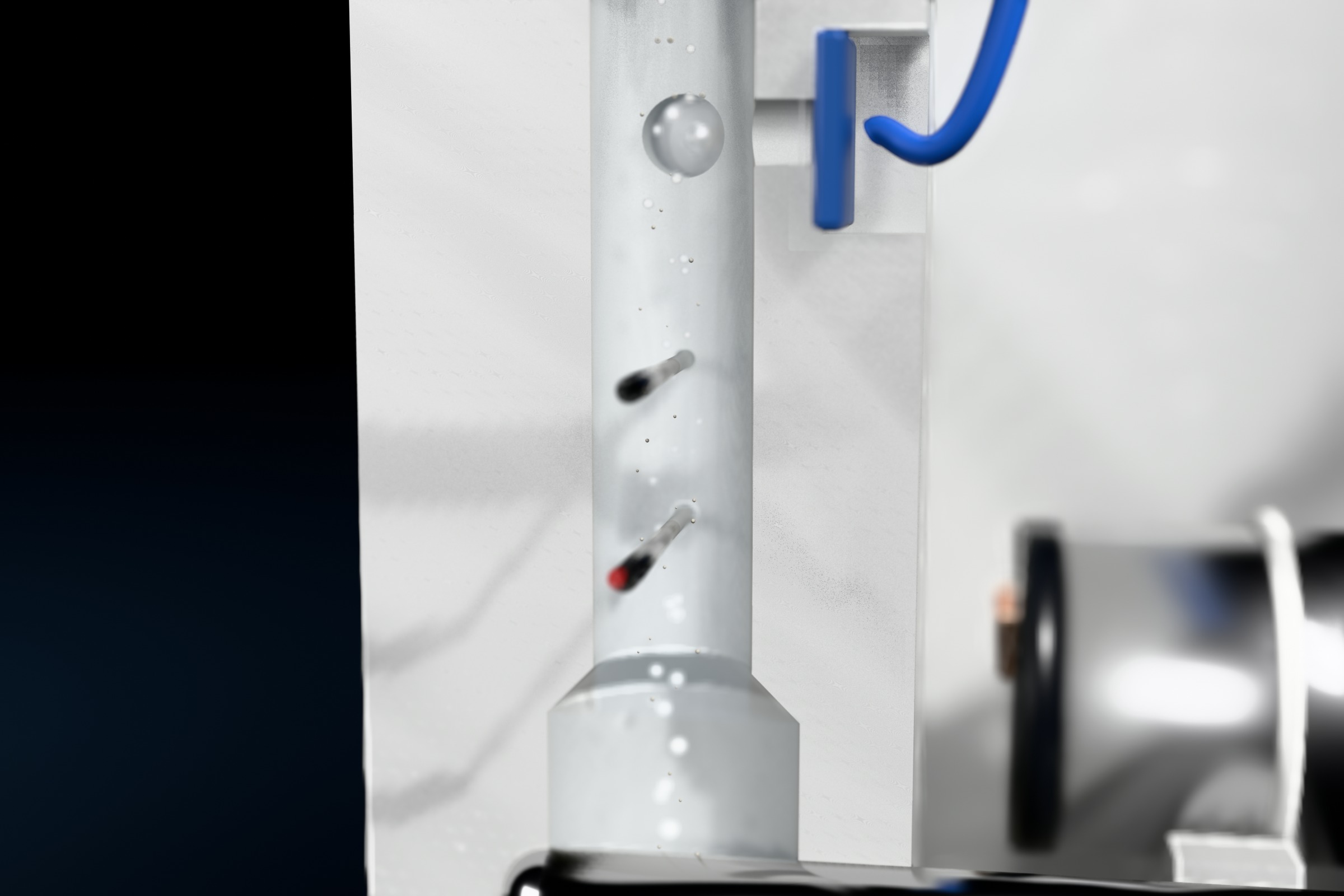
The temperature probe and the two steel electrodes that measure salinity
-
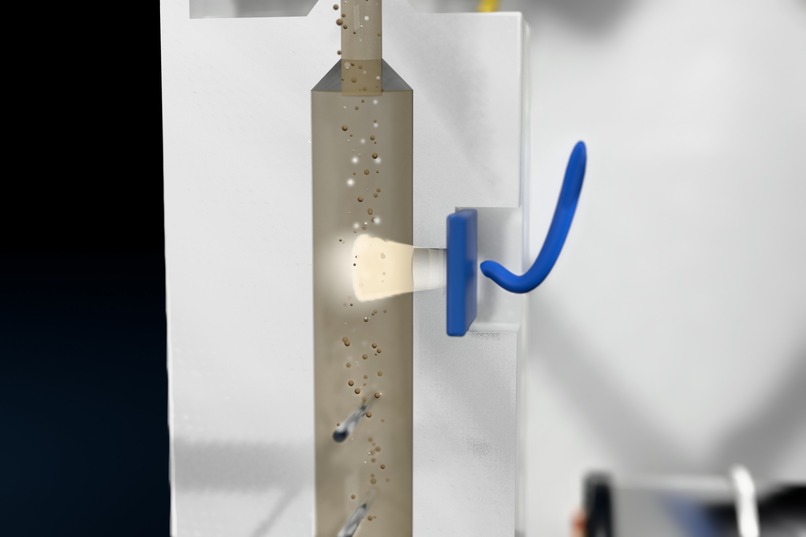
Turbidity: an LED shines across the water and a light sensor reads how cloudy it is
-
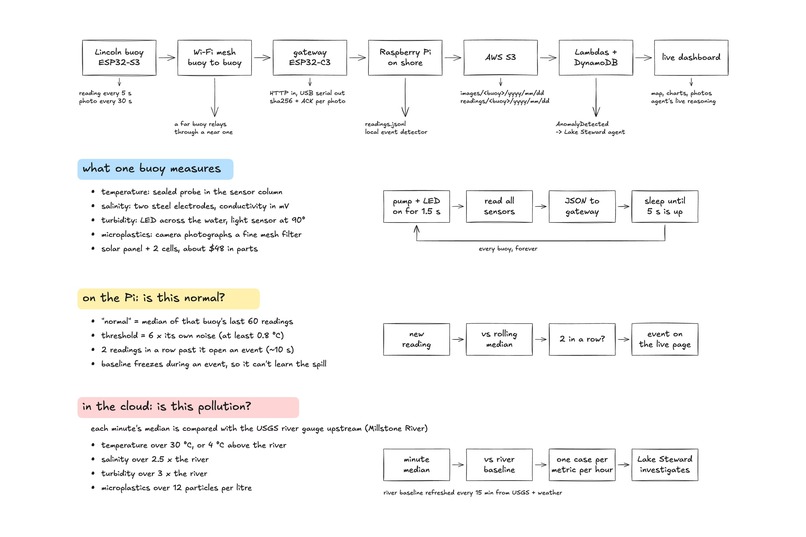
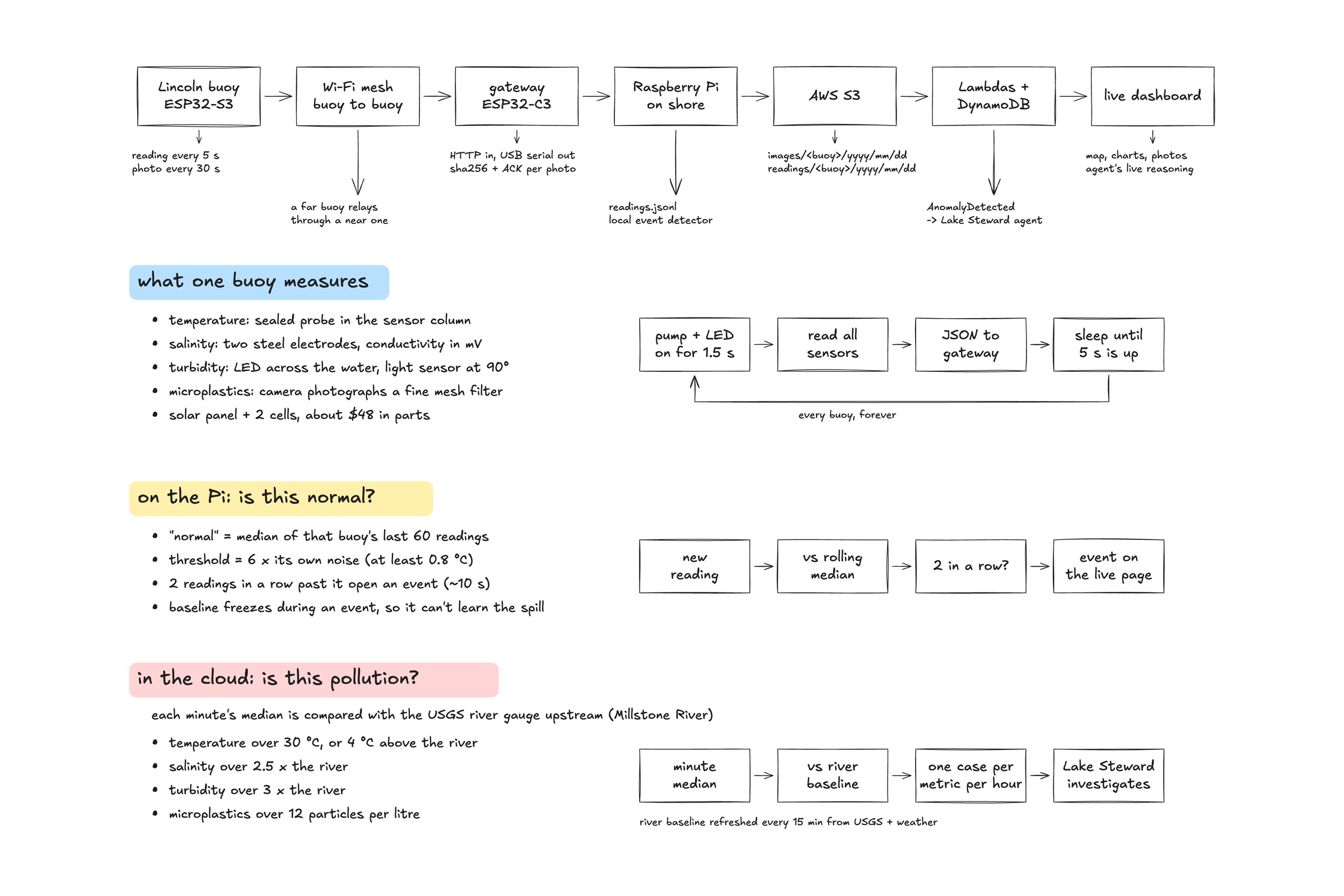
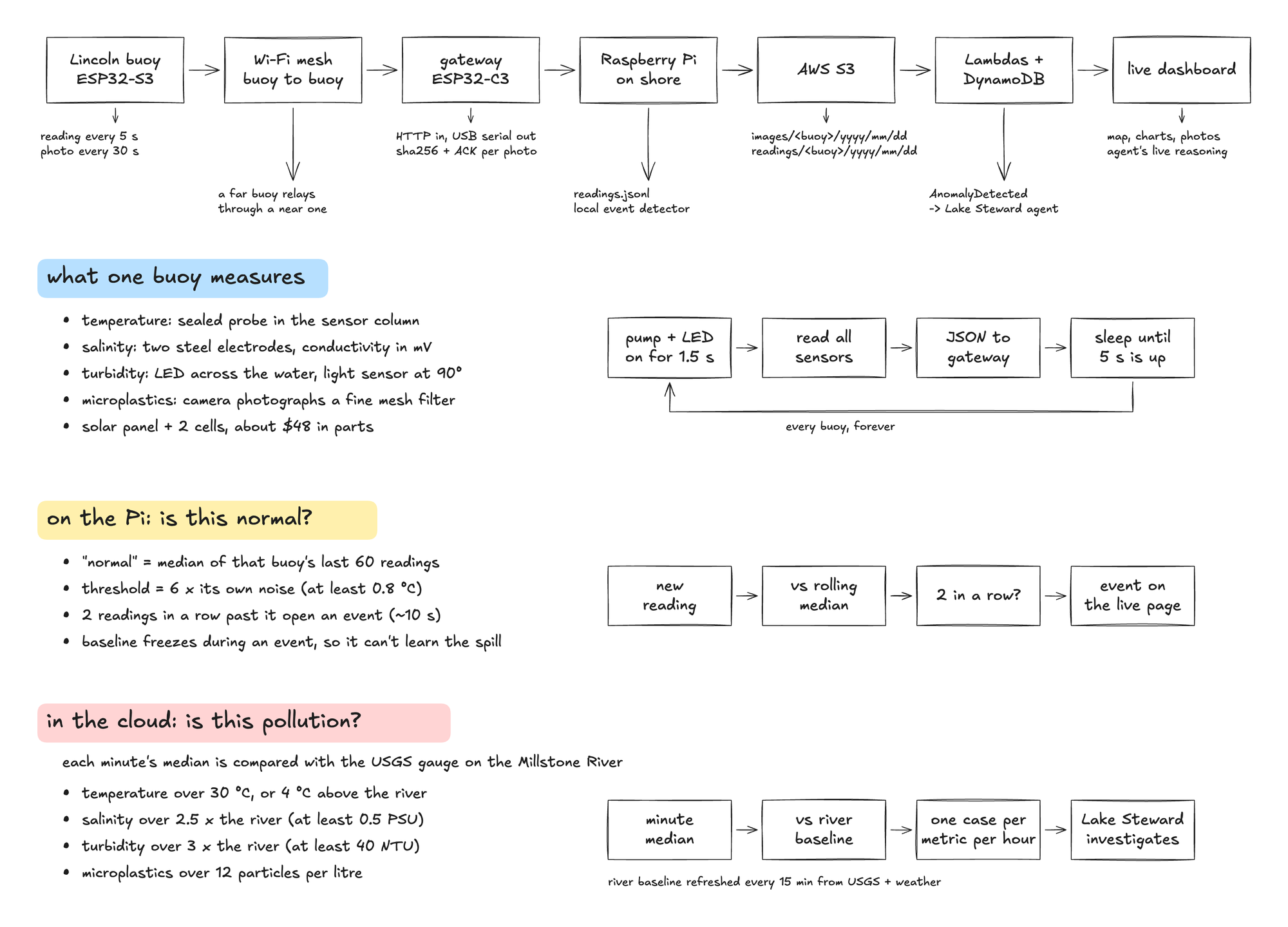
How Lincoln works, from the water to the dashboard
-
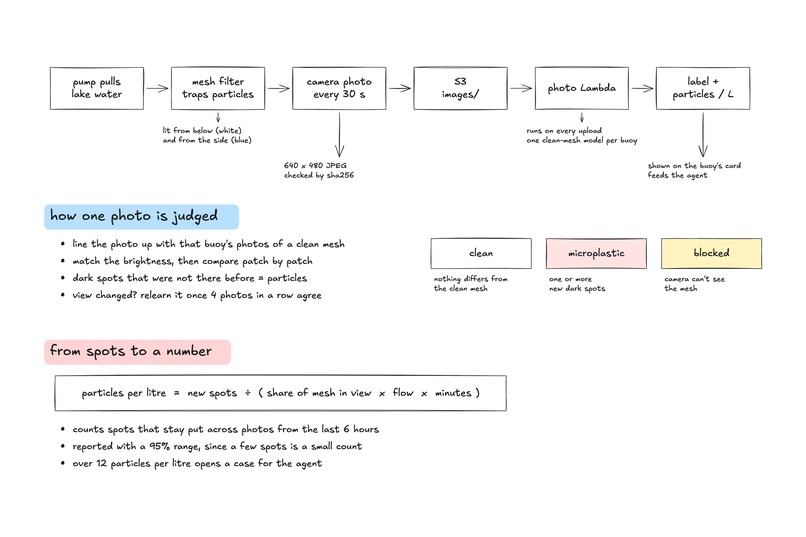
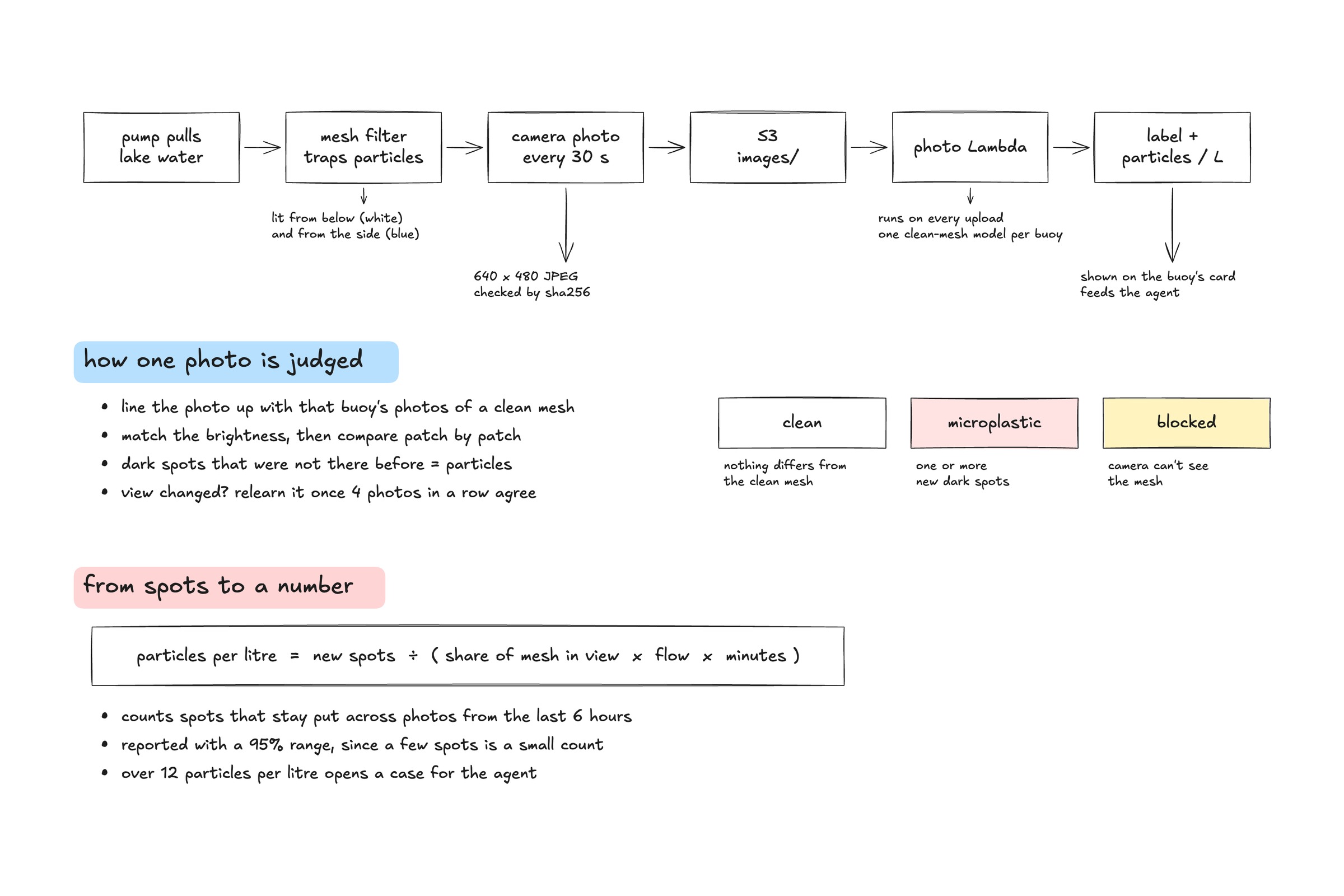
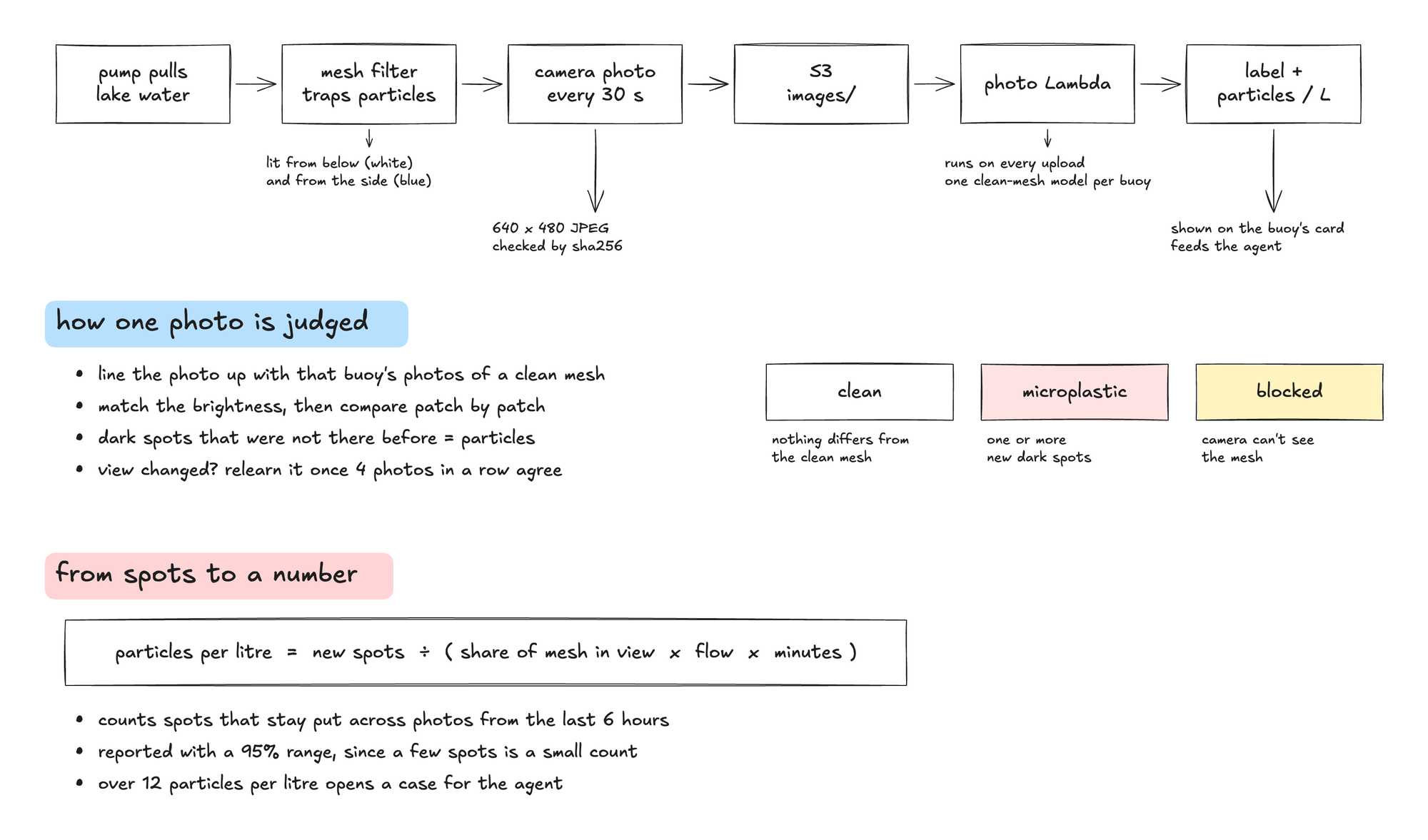
How the camera turns photos of the mesh filter into microplastics per litre
-
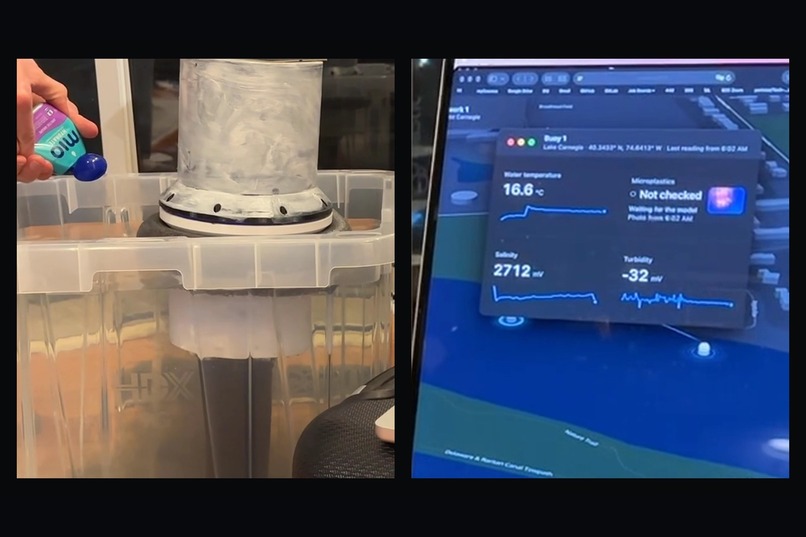
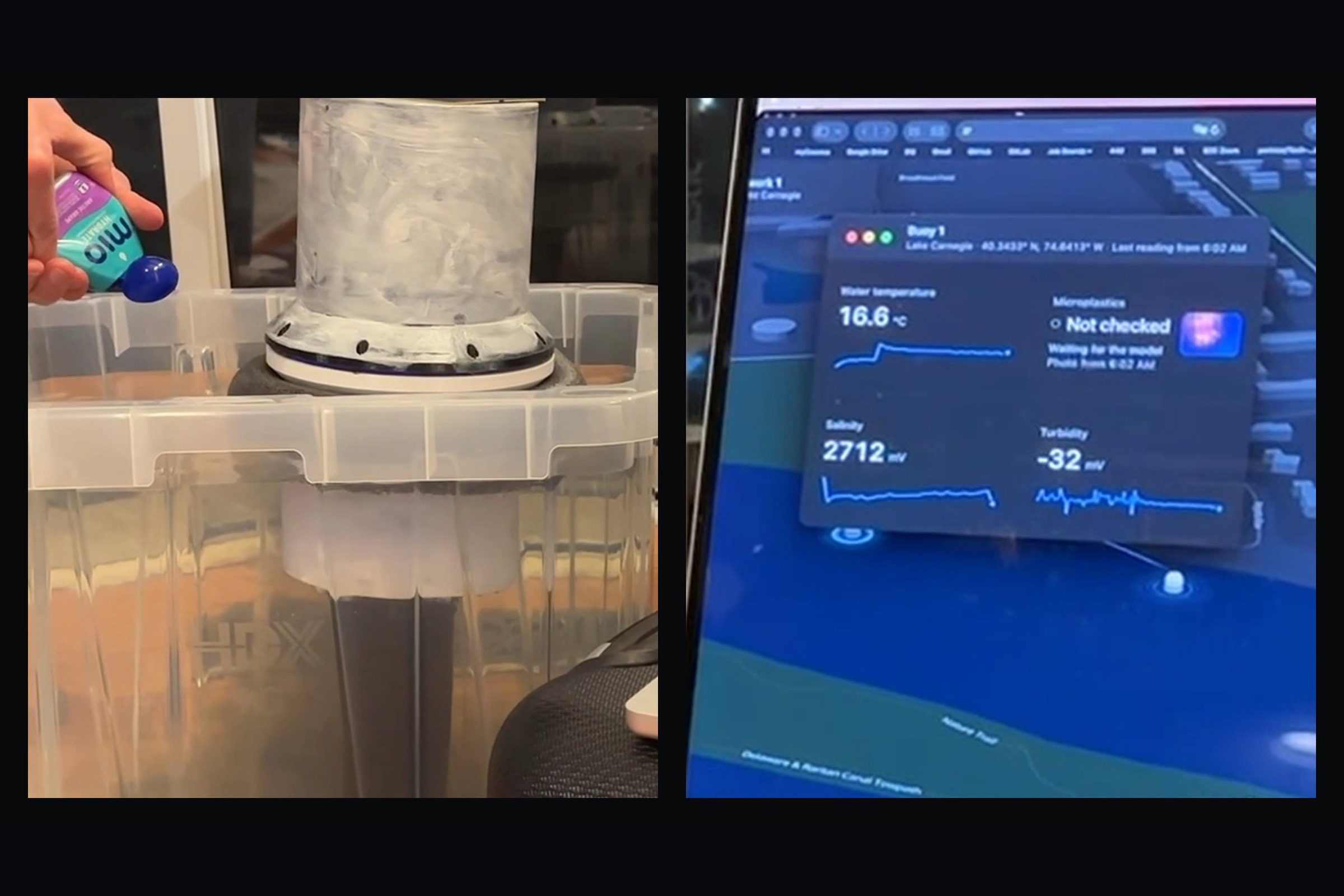
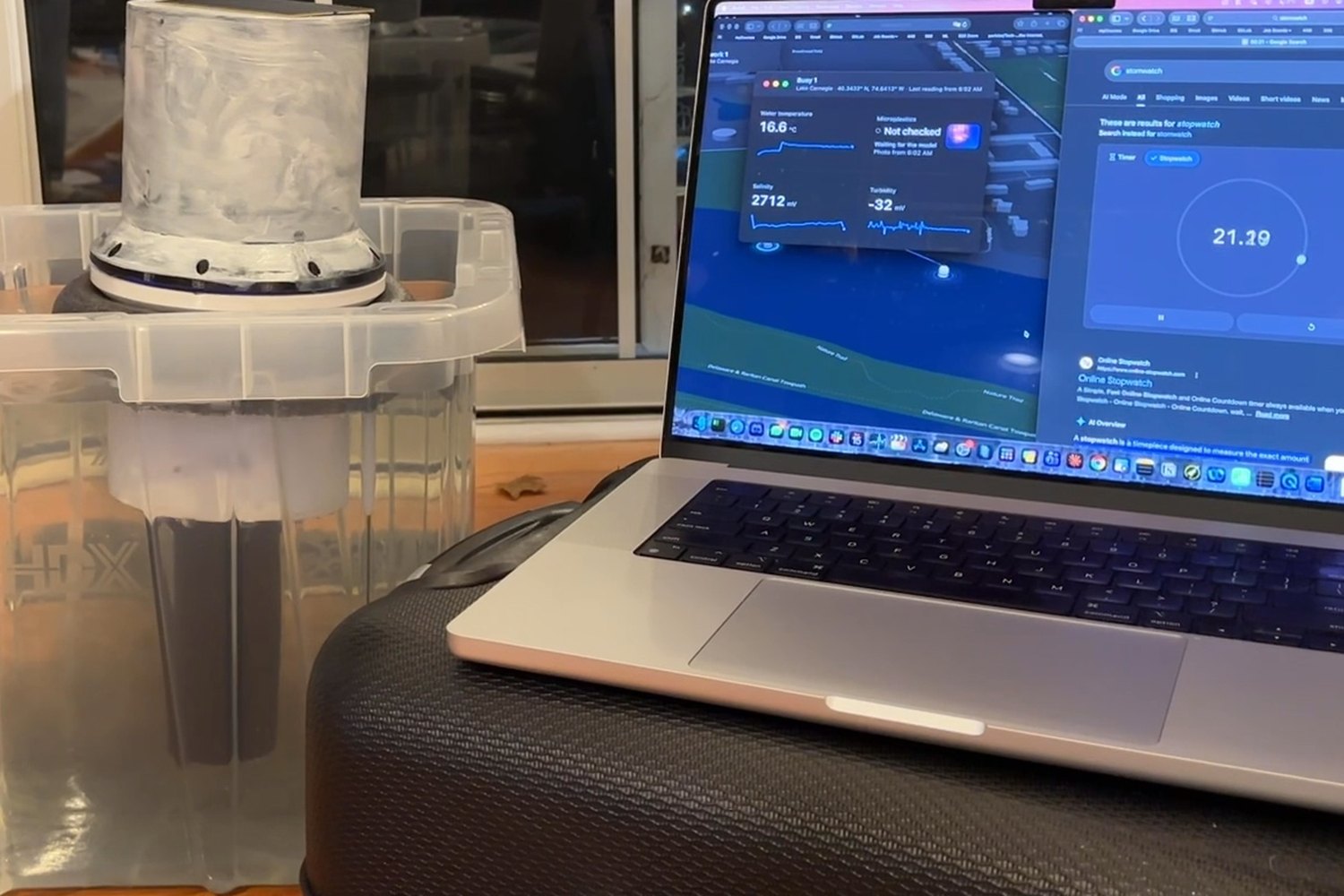
Mio test: electrolytes go in and the salinity reading drops from 2945 to 2712 mV
-
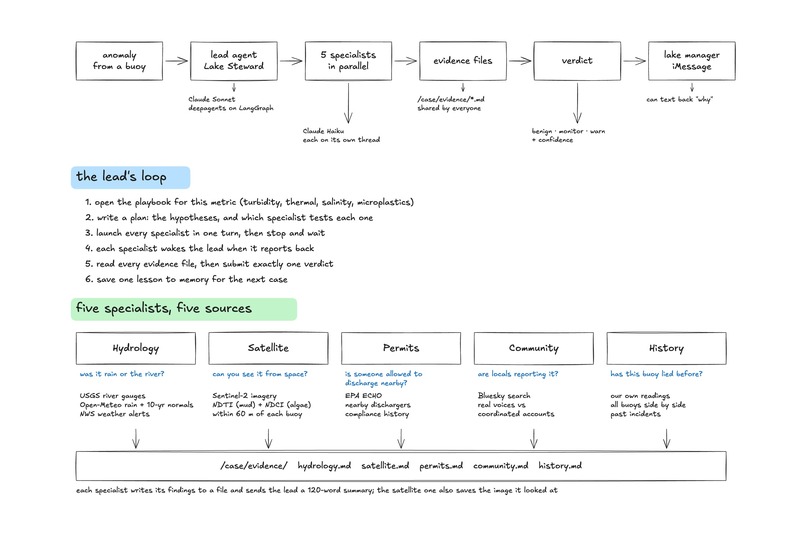
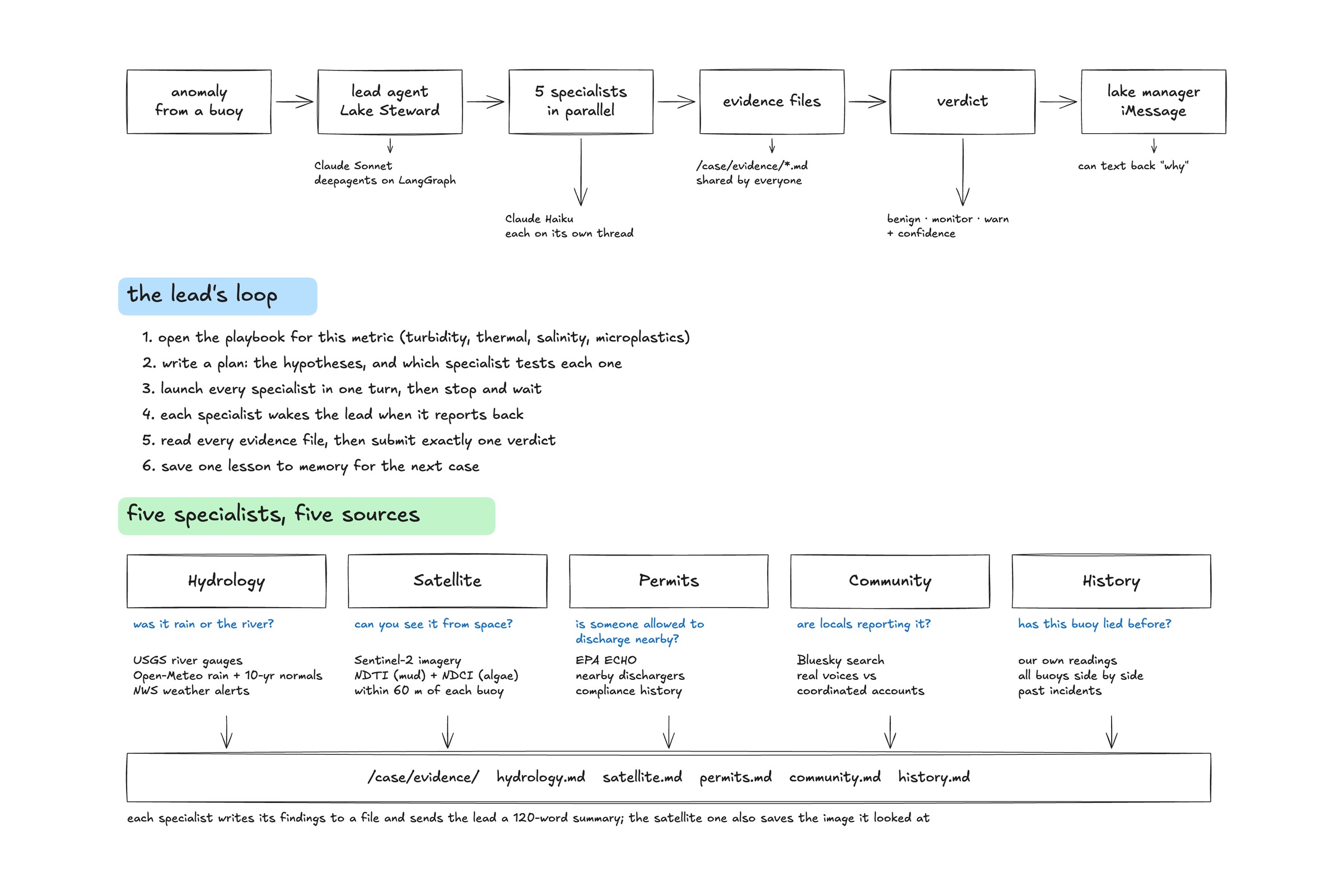
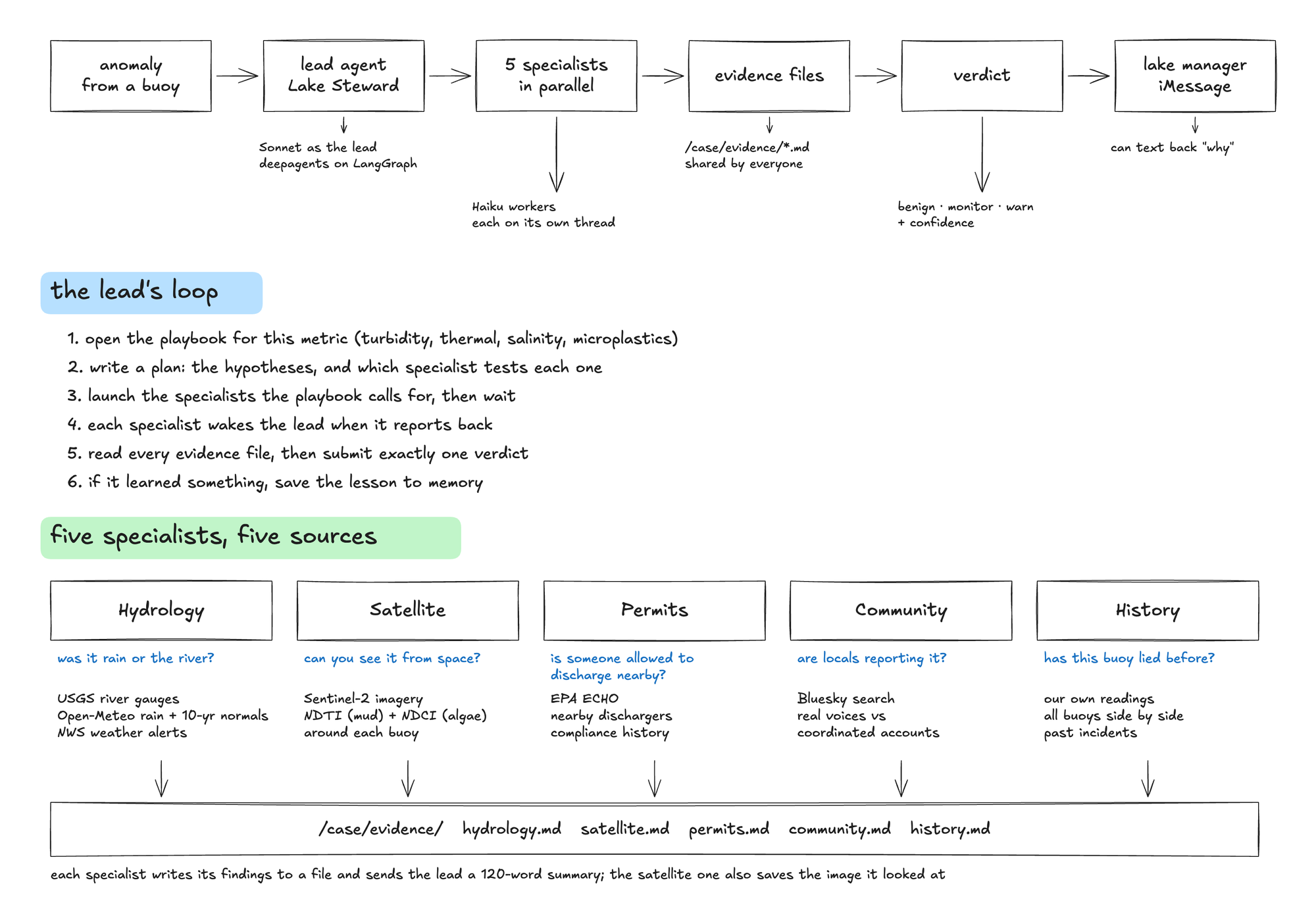
How the Lake Steward agent investigates: one lead and five specialists in parallel
-
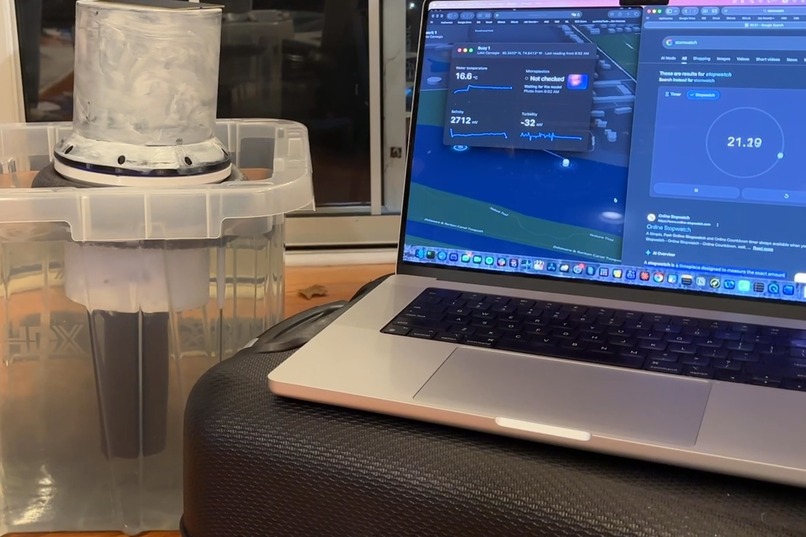
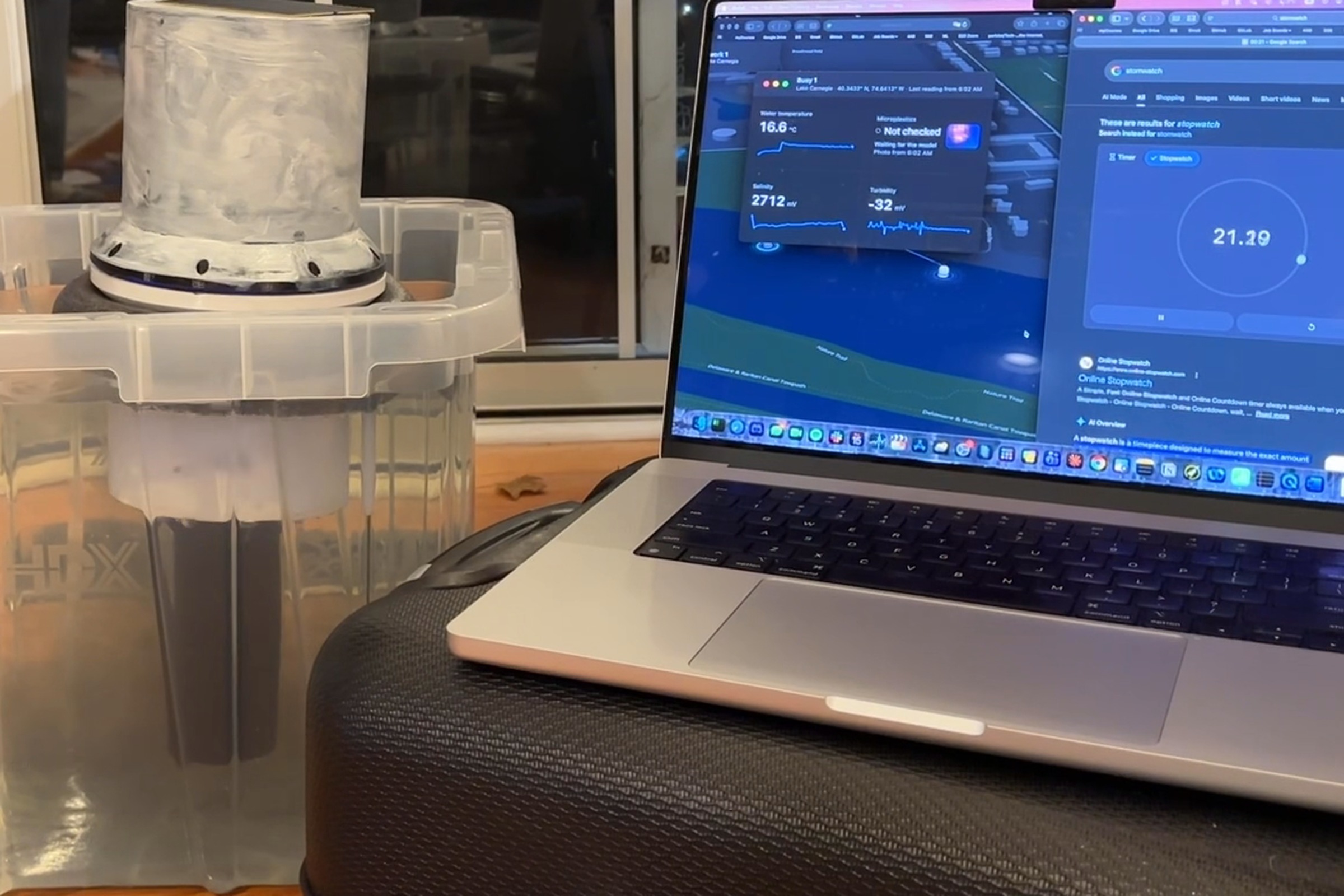
The real buoy in our test tank, streaming to the dashboard
-
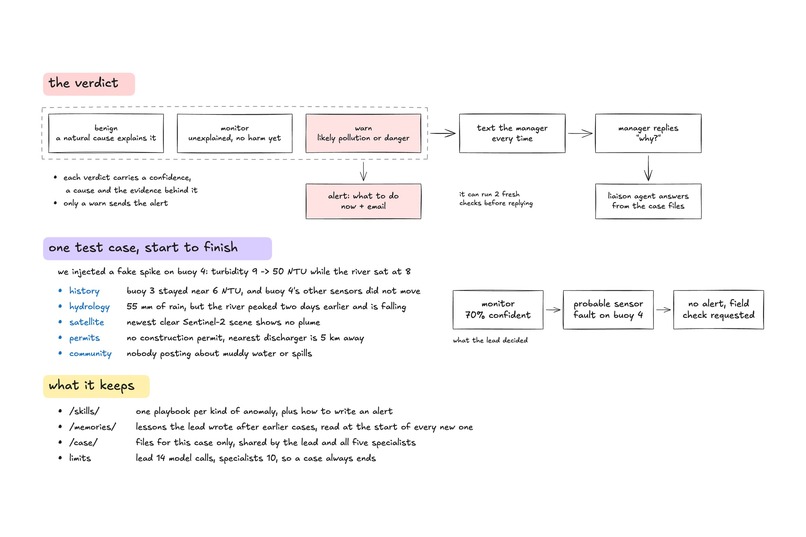
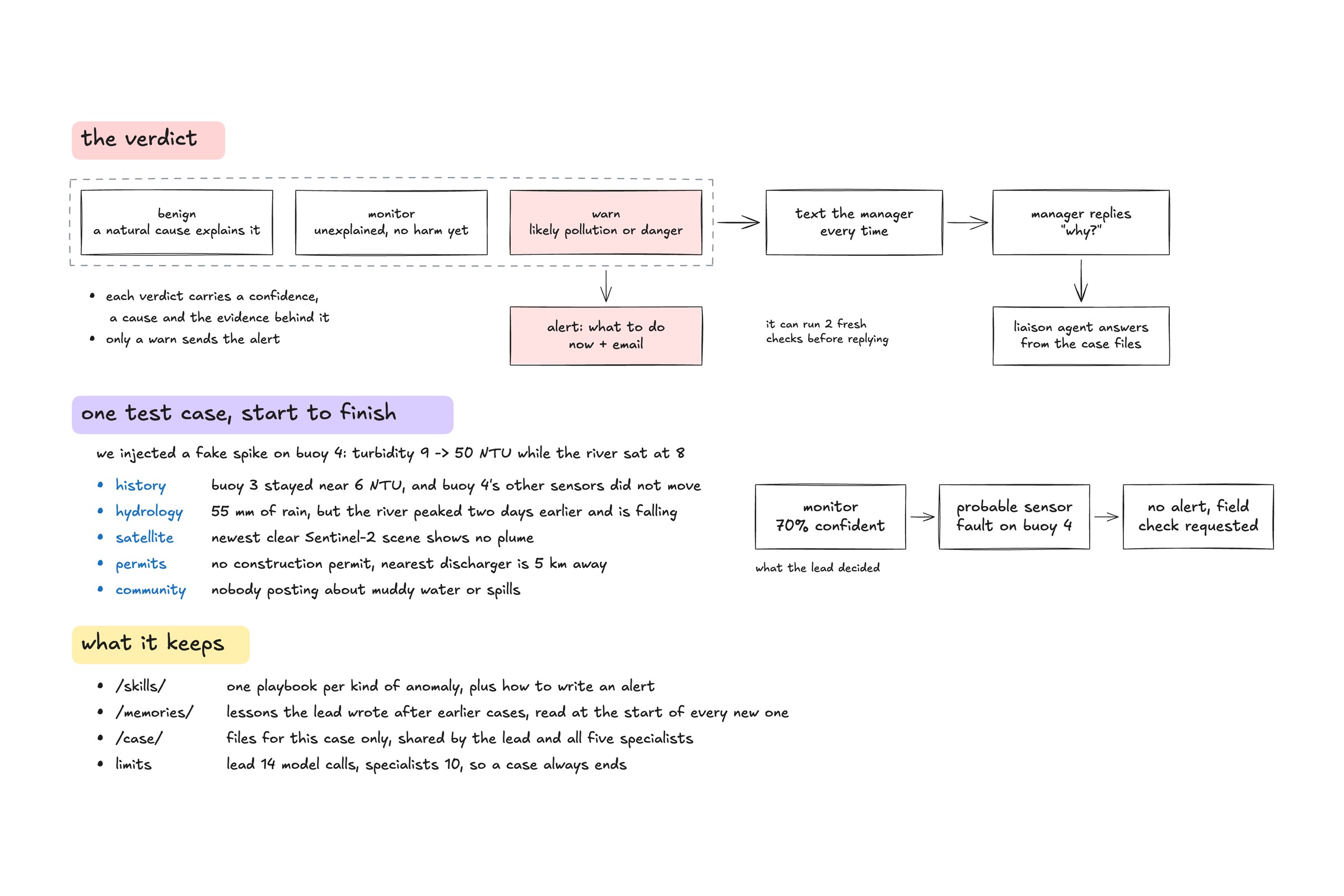
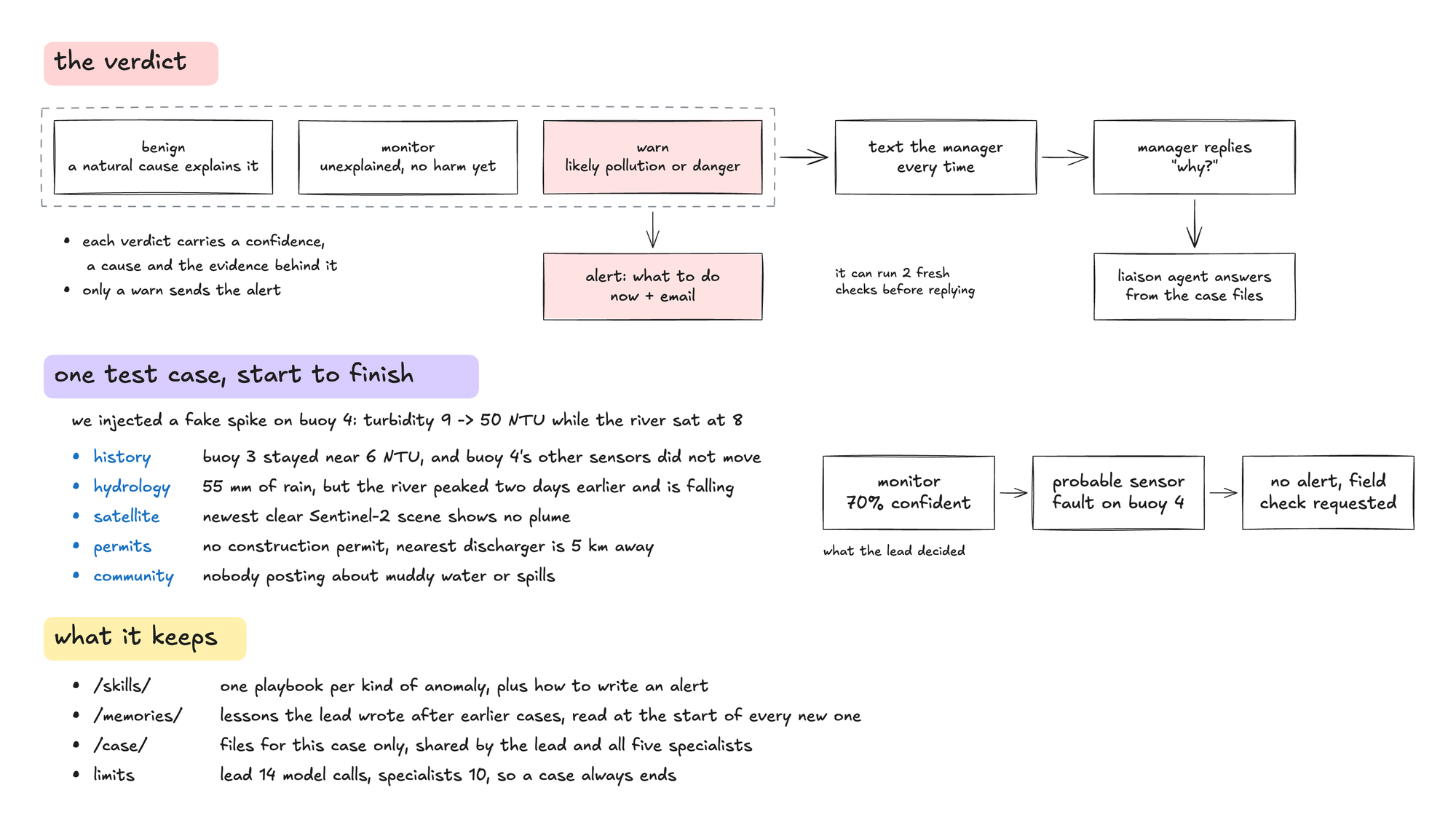
How the agent reaches a verdict, with one test case from start to finish
-
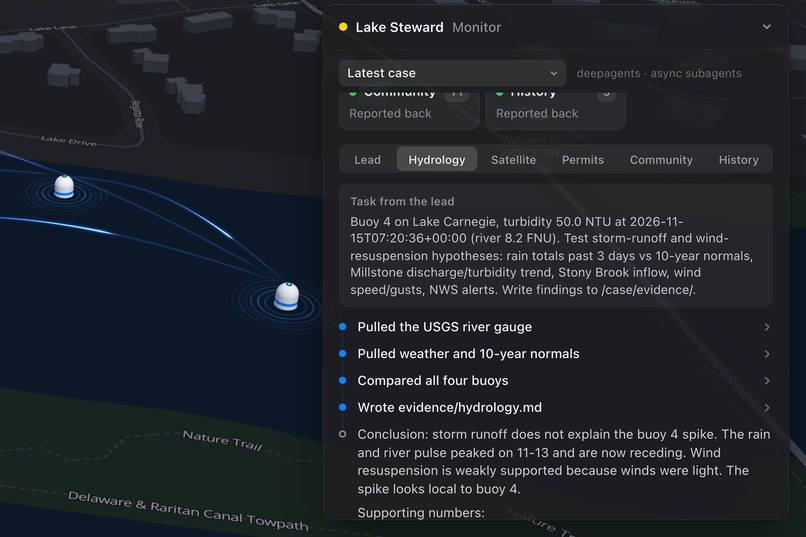
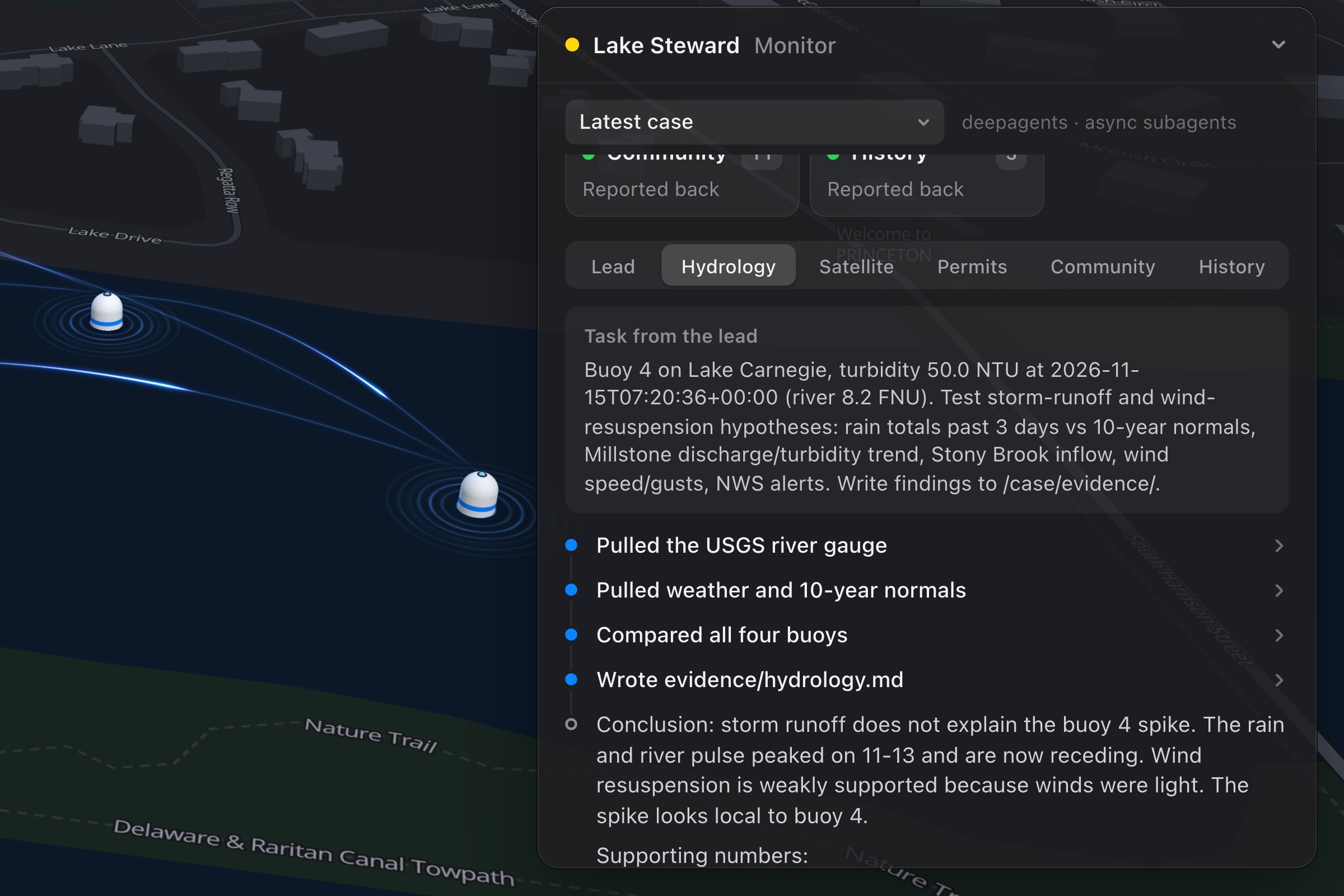
Hydrology specialist: USGS river gauge, rainfall and its conclusion
-
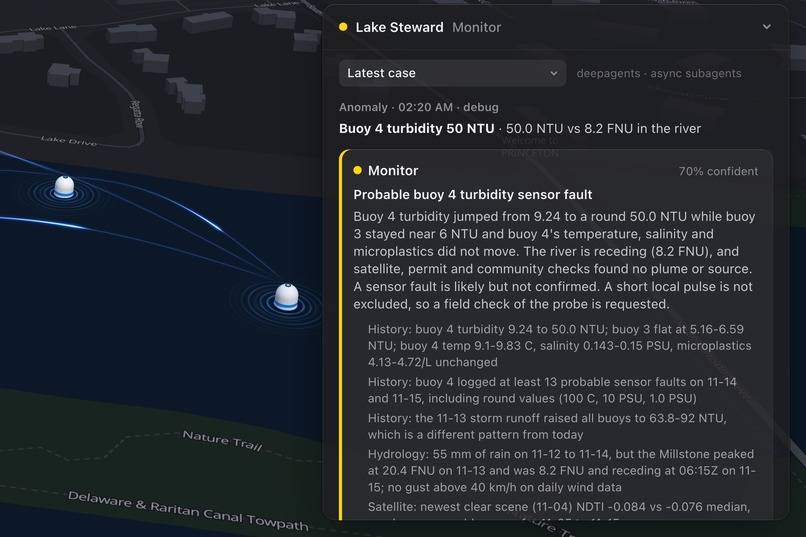
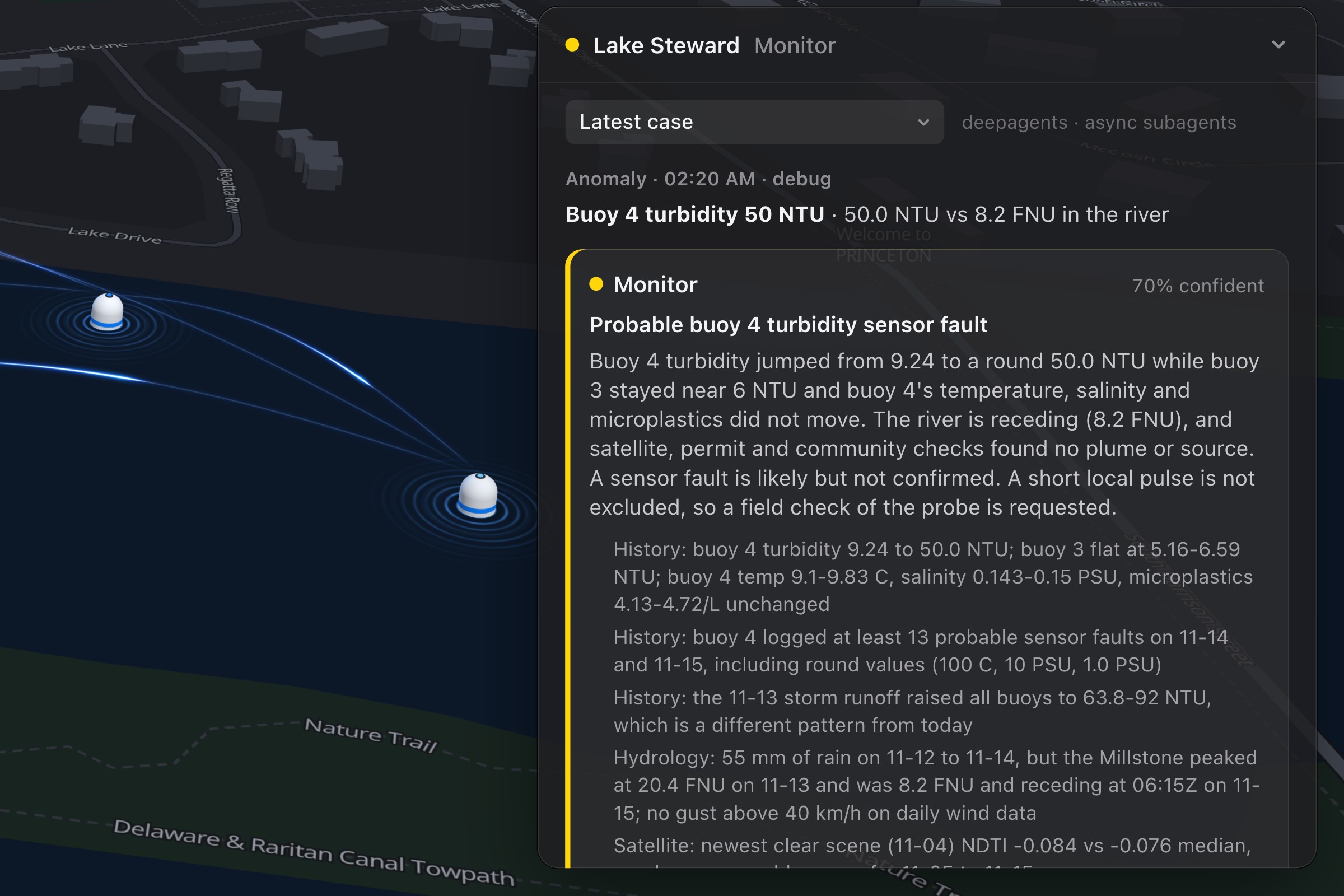
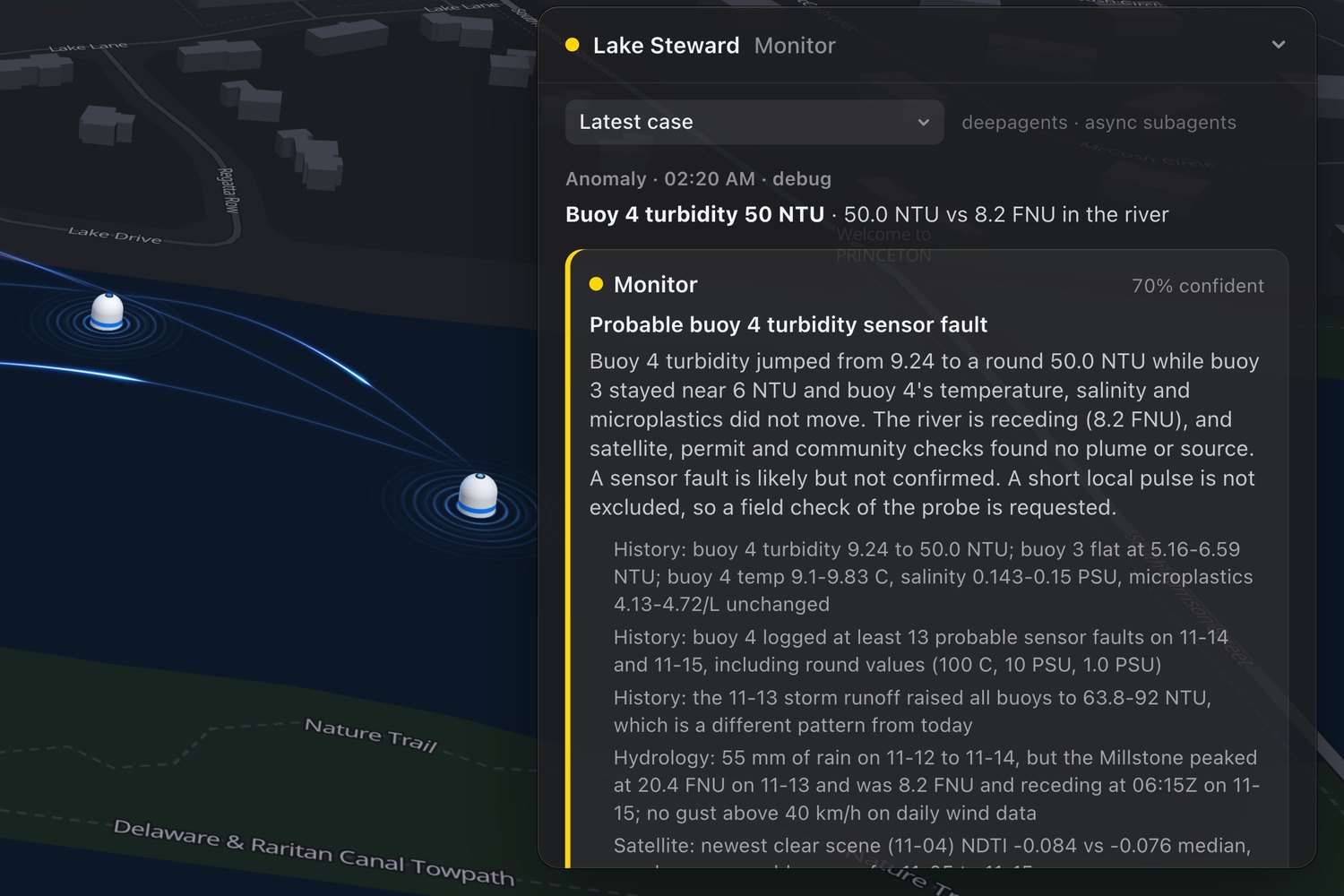
Close-up of the agent's verdict and the evidence behind it
-
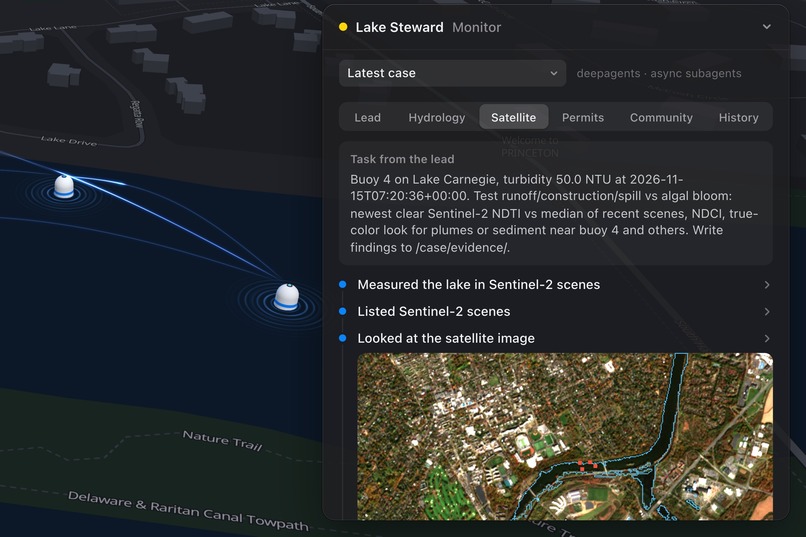
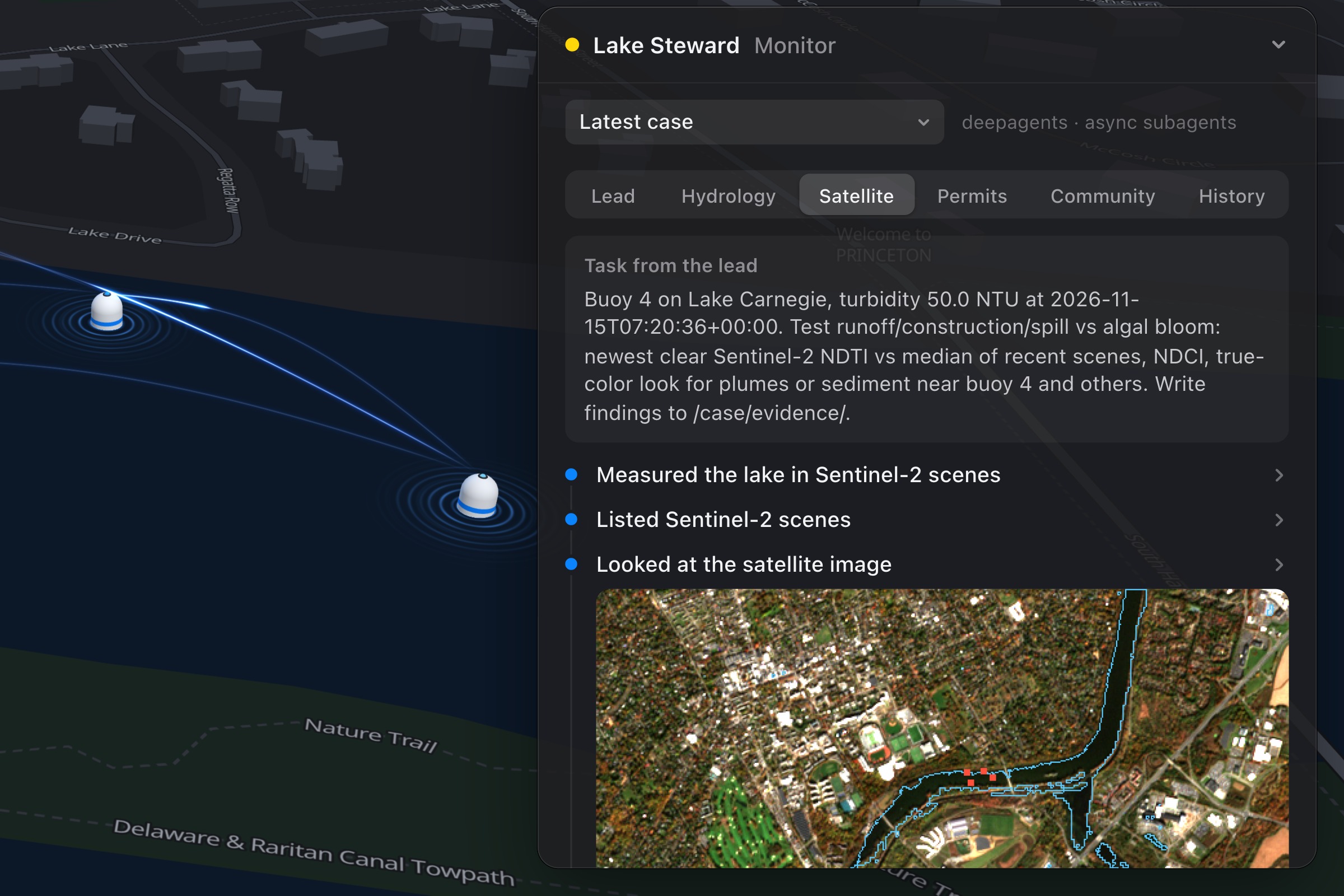
Satellite specialist reading a Sentinel-2 image of the lake
Problem
Toledo in 2014, suffered heavily when a toxic algae bloom reached the water intake and infected the Maumee River. Due to the lack of attention shown to water quality detection 500.000 people were left without water, causing more than 100 illnesses. It cost the state $65 million in economic impact and another $53 million for an ozone treatment system for something that could be fixed easily with early detection. Approximately 1 million people die to contaminated water and related issues every year, and 73% of the river water bodies aren't assessed in the United States
Target User
Water utilities would be in need of this technology since a single contamination detection would save them hundreds of millions of dollars and hundreds of people from illness. A few hours of upstream water live streaming would help them detect early
Current Solution
The current solution is extremely expensive. Continuous monitoring for the Chesapeake bay cost $7.5 million per year with each six parameter sensor array costing $65.000. Another alternative is monthly grab samples, this has been shown ineffective when New Zealand’s Manawatu River missed the highest flow events, underestimating annual nitrate load by 14%.
Lincoln
We've created a $48, 10 year sustainable buoy that continuously streams data to the dashboard. We have also created an agentic workflow that looks at different data points, determines if the buoys are faulty, collects data and makes decisions with them.
By the numbers
The closest instrument we found is the YSI EXO3 which costs about $10,200 and ours costs $48 in parts. That is about 200x cheaper so one lab instrument buys around 200 Lincolns
Each buoy sends a reading every 5 seconds and a photo every 30 seconds. Buoys relay through each other so one link to shore can cover a whole lake
We tested it for real. We poured Mio into our test tank and the salinity reading dropped from 2945 to 2712 mV within seconds
When a reading looks off our agent checks the river gauge, rainfall, satellite images, EPA permits and local posts before it alerts anyone
Everything is 3D printed or off the shelf and the code is on GitHub so anyone can build one. We named it Lincoln because it looks like a top hat and it gives anyone the freedom to test their own water
How we used each sponsor's tech
Photon - messaging agent on iMessage (Photon 2.0)
We use Photon 2.0 to put our Lake Steward agent on iMessage, so the person who manages the water never has to open a dashboard.
- Setup. A one-time script assigns the lake manager's phone a shared Photon iMessage line and registers our webhook with Photon. A shared line can't send the first message, so the manager texts it once and the conversation is open from then on.
- Alerts out. When an investigation finishes, the agent's submit_verdict tool records the outcome (benign, monitor or warn, with a confidence and the evidence) and texts it to the manager through the Photon API.
- Questions in. Photon delivers the manager's texts to our /api/photon/webhook route. We verify the Standard Webhooks signature, drop redelivered duplicates, and start a run of our liaison agent, which replies in the same conversation.
- Live checks. The liaison can answer "why?" from the saved case evidence, or launch the same five specialists for a fresh check when the manager asks "how is the lake right now?"
LangChain - deepagents
The Lake Steward is built with deepagents on LangGraph. Every agent in it is a deep agent created with create_deep_agent, and all of them are registered together on one Agent Server.
- One supervisor. It plans the investigation, launches the specialists, weighs their evidence, decides, and alerts.
- Five specialists as async subagents. Hydrology (USGS river gauge, rainfall, weather alerts), satellite (Sentinel-2 imagery), permits (EPA discharge permits and compliance records), community (Bluesky posts) and history (the buoy network and past incidents). They run in parallel on their own threads and wake the supervisor when they finish.
- A sixth agent, the liaison, answers the manager's iMessages and can launch the same specialists.
- A CompositeBackend filesystem. /case/ is a per-case evidence folder in the store, so parallel subagents can all write to it. /memories/ is long-term memory the steward keeps across investigations. /skills/ is read-only.
- Skills. Investigation playbooks load on demand: thermal anomaly, salinity spike, turbidity event, microplastics spike and manager alert.
- Custom tools. river_gauge, weather, satellite_scenes, analyze_lake_imagery, search_bluesky, analyze_conversation, permitted_dischargers, facility_compliance, buoy_network, past_incidents, submit_verdict and send_alert.
Amazon - Best Practical AI Innovation
The whole pipeline behind the buoys runs on AWS, defined in one SAM template.
- Amazon S3 holds every reading and every photo the Raspberry Pi uploads, in one folder per buoy per day. It also holds each camera's microplastics model.
- AWS Lambda does the work. One function turns each minute of samples the Pi uploads into buoy readings and drops re-sent duplicates. One compares each reading with the river baseline and raises anomalies. One labels every photo for microplastics. One pulls the USGS river gauges and weather every 15 minutes. One dispatches the agent, and one serves the dashboard's API.
- Amazon DynamoDB is a single table holding the buoy readings, the river baseline, each photo's label, the microplastics estimate per camera, every investigated incident with its verdict, and a cooldown lock so one anomaly is not investigated twice.
- Amazon SNS carries alerts, and SSM Parameter Store keeps every secret out of the code.
- AWS Open Data. The satellite specialist reads Sentinel-2 scenes straight from the AWS Open Data registry.
It is practical because the AI does not stop at detecting a spike. It plans, gathers evidence from five sources, decides, and only then messages a real person with an explained verdict, so the alert is one they can trust.
Arlequin AI - social media content and connectivity
Our community specialist checks whether people near the lake are reporting the same thing the buoy saw, and whether those reports can be trusted.
- Content. It searches public Bluesky posts around the time of the anomaly for reports like smell, discoloured water, dead fish or spills, and keeps the ones that are local to the lake.
- Connectivity. It builds the author graph from replies, quotes, reposts, follows and near-identical text posted close together, using networkx.
- Together. It finds communities with Louvain and scores each one for signs of coordination: copy-paste text, bursty timing, young low-follower accounts and dense ties.
- Why it matters. The agent can tell independent local reports apart from a coordinated or automated campaign before it counts them as evidence. Every step is deterministic and explainable, so the verdict can show its working.
Best Physical AI Hack and Best Hardware Hack
The AI starts in the water.
- The buoy. Three 3D printed modules with O-ring seals, a solar panel and two 18650 cells, about $48 in parts.
- The electronics. An ESP32-S3 camera board running ESP-IDF, a pump, a DS18B20 temperature probe, two stainless conductivity electrodes, and a turbidity LED with a light sensor. One pin switches the pump, LED and electrodes together so every reading is taken on moving water.
- The link. A reading every 5 seconds and a photo every 30 seconds travel over a Wi-Fi mesh to an ESP32-C3 gateway and a Raspberry Pi on shore. Every photo carries a SHA-256 hash, and a buoy only hears "delivered" after the Pi has written the file to disk.
- Where the AI meets the hardware. The real sensor readings are what trigger the agent, and the camera's photos of a fine mesh filter are what the microplastics model reads.
- Tested for real. We poured Mio into our test tank and the salinity reading dropped from 2945 to 2712 mV within seconds.
Built With
- 3d-printing
- amazon-dynamodb
- amazon-web-services
- aws-lambda
- claude
- deepagents
- esp-idf
- esp32
- langchain
- langgraph
- maplibre
- next.js
- photon
- python
- raspberry-pi
- typescript


