-
-
-
-
-
-
-
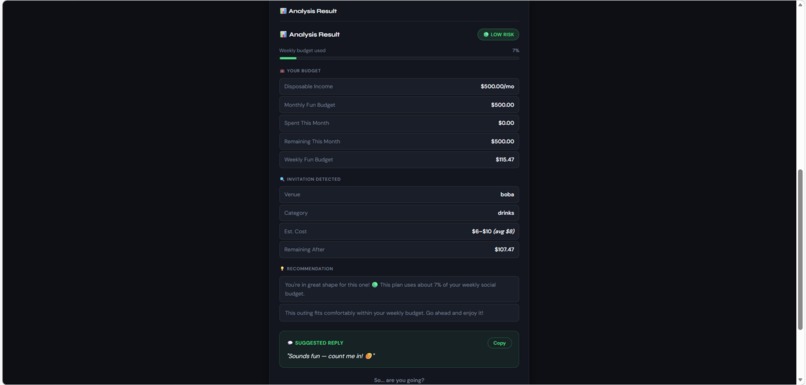
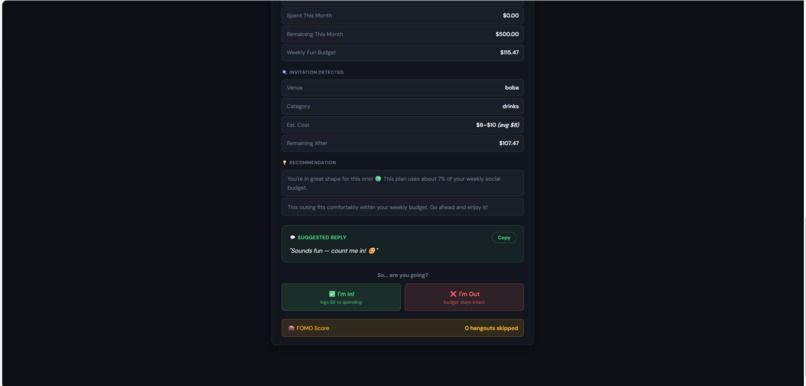
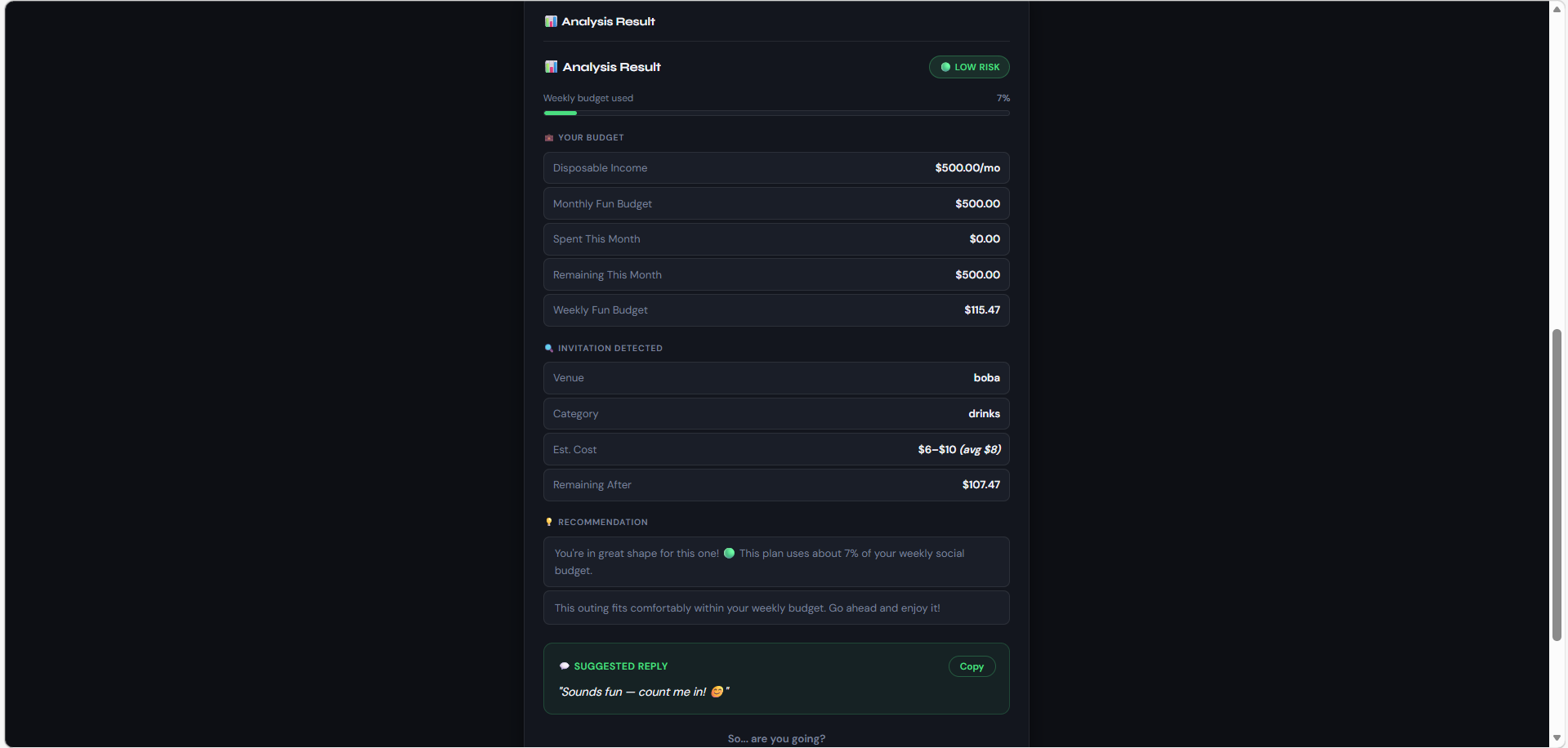
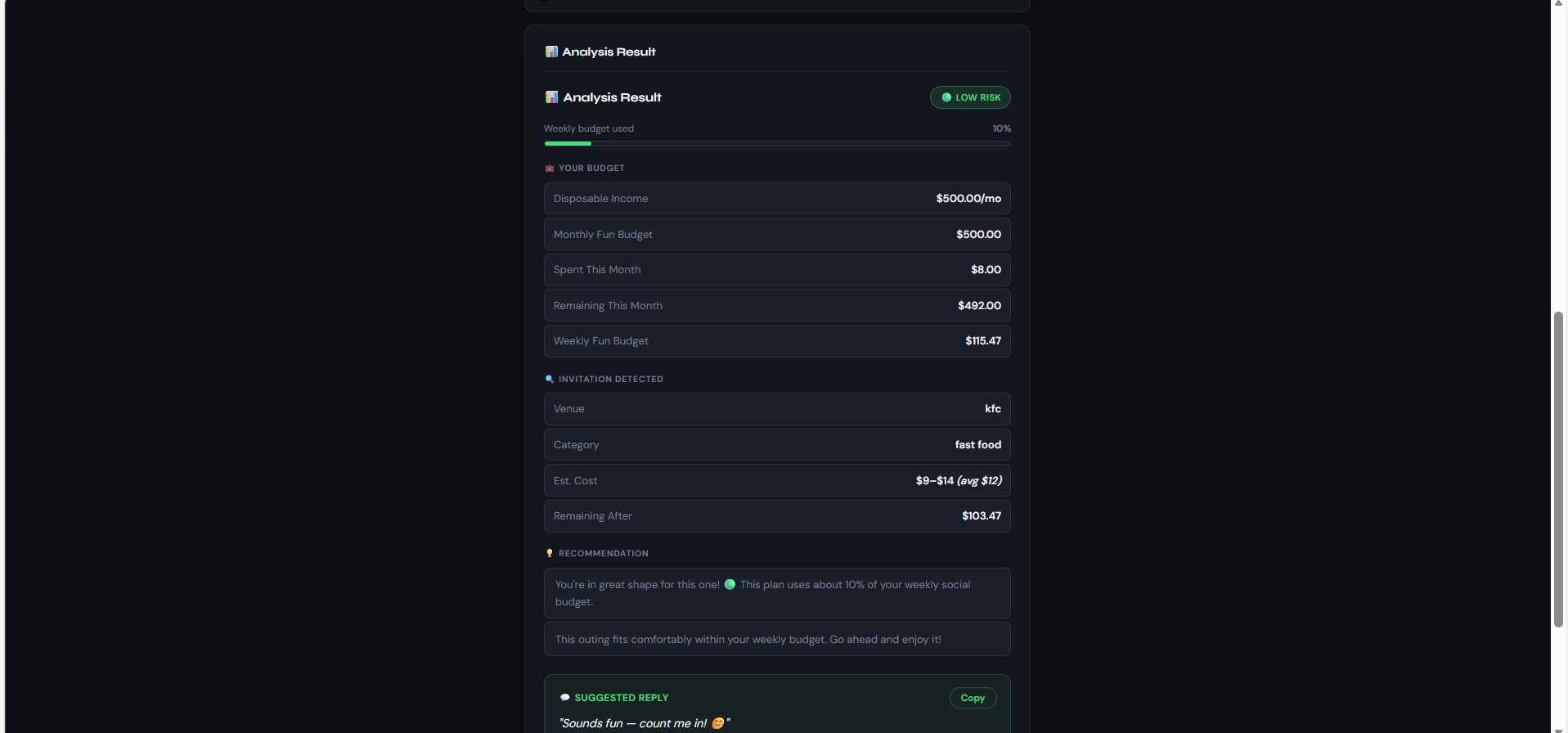
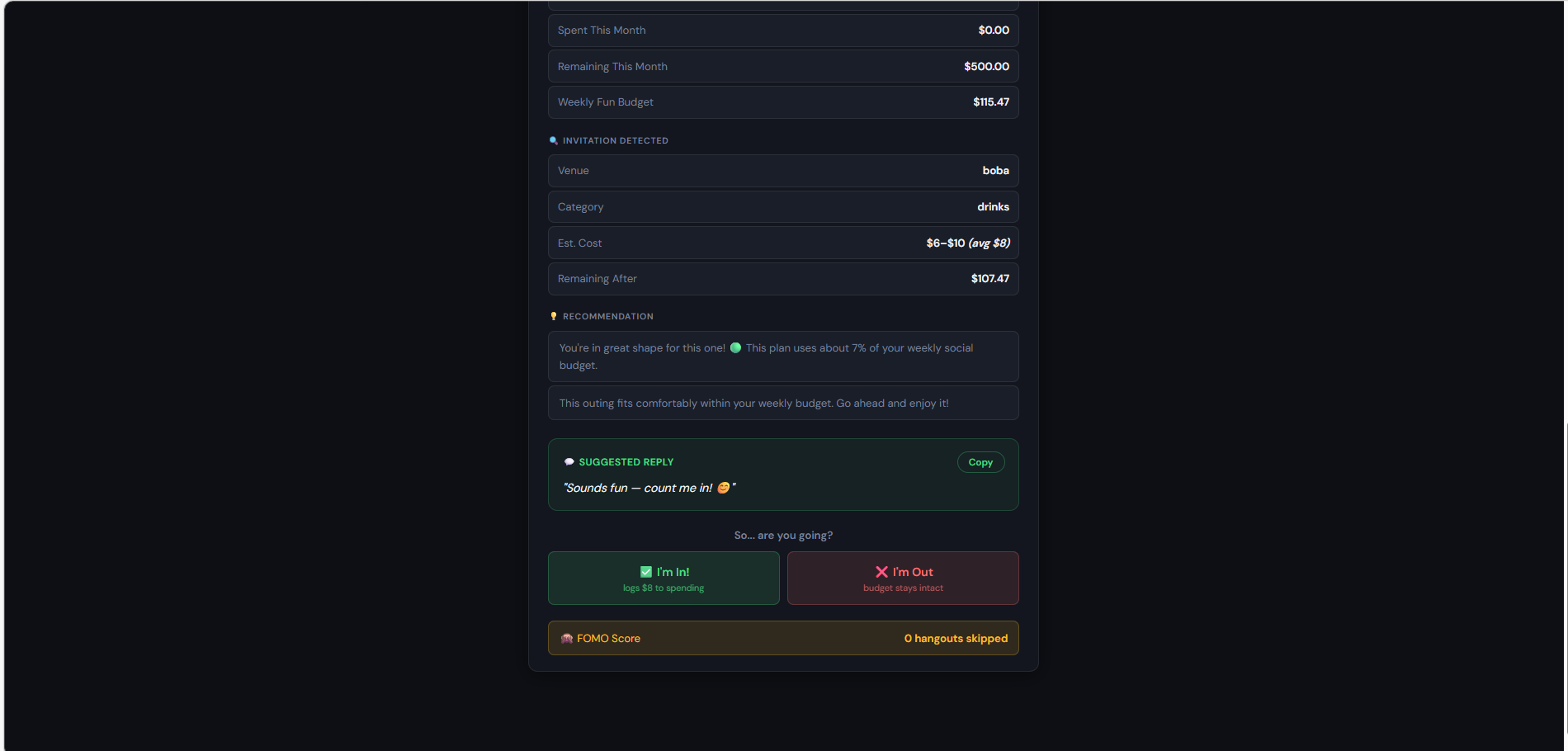
Analyze Result
-
-
-
-
-
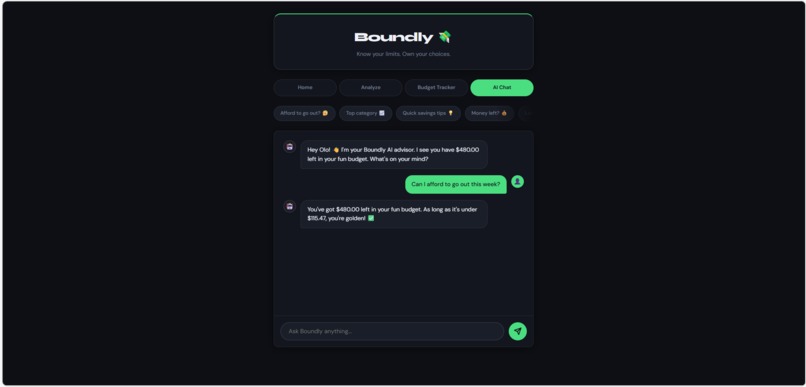
AI Chatbot
-

-
-
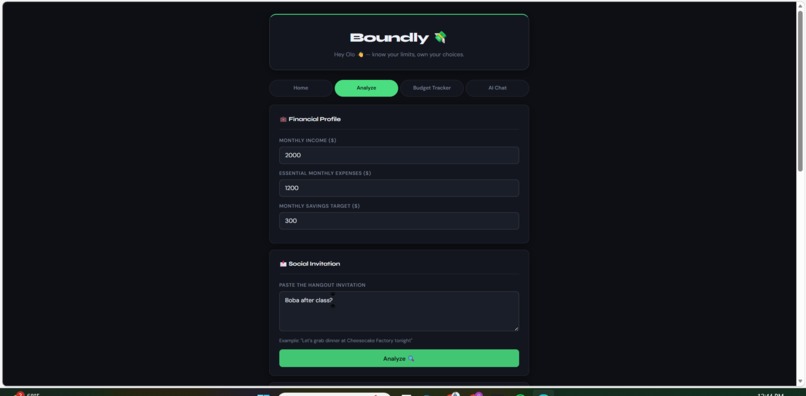
Input Invitation (Boba)
-
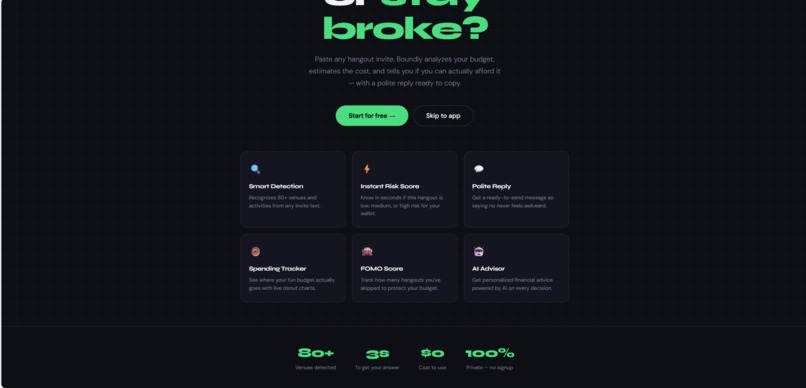
-
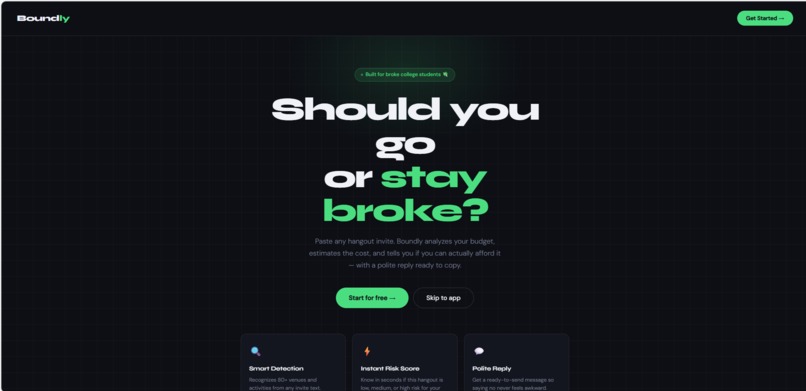
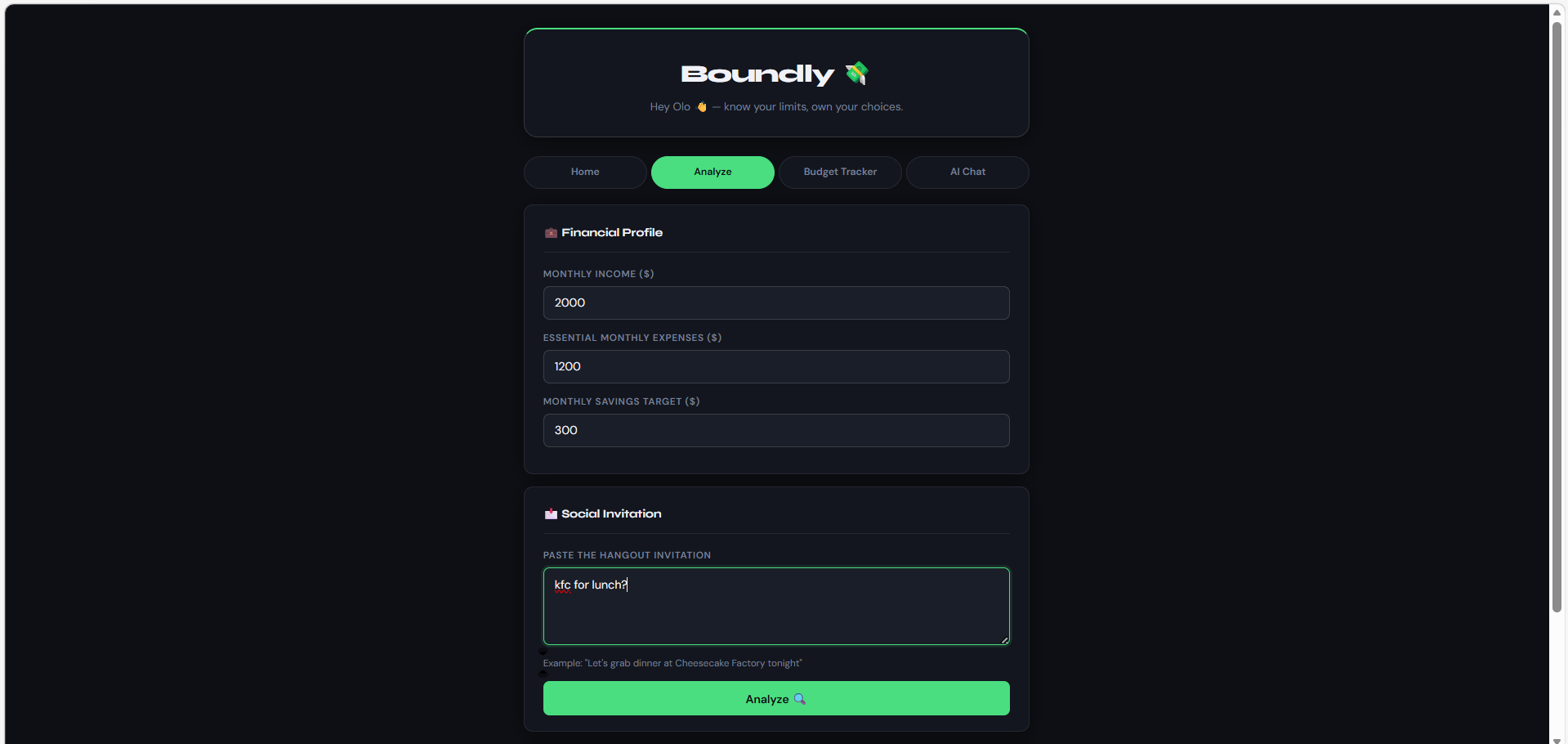
Landing Page
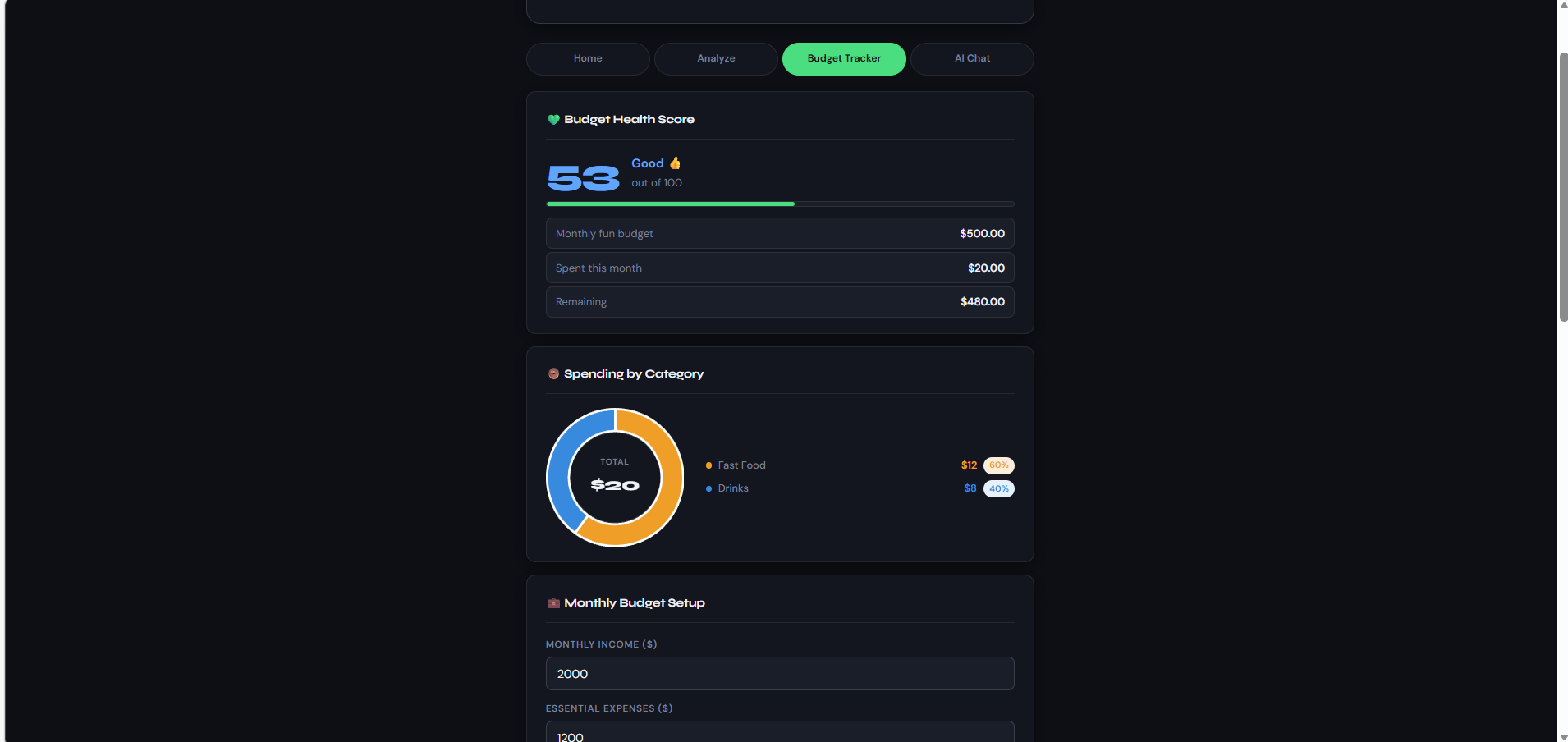
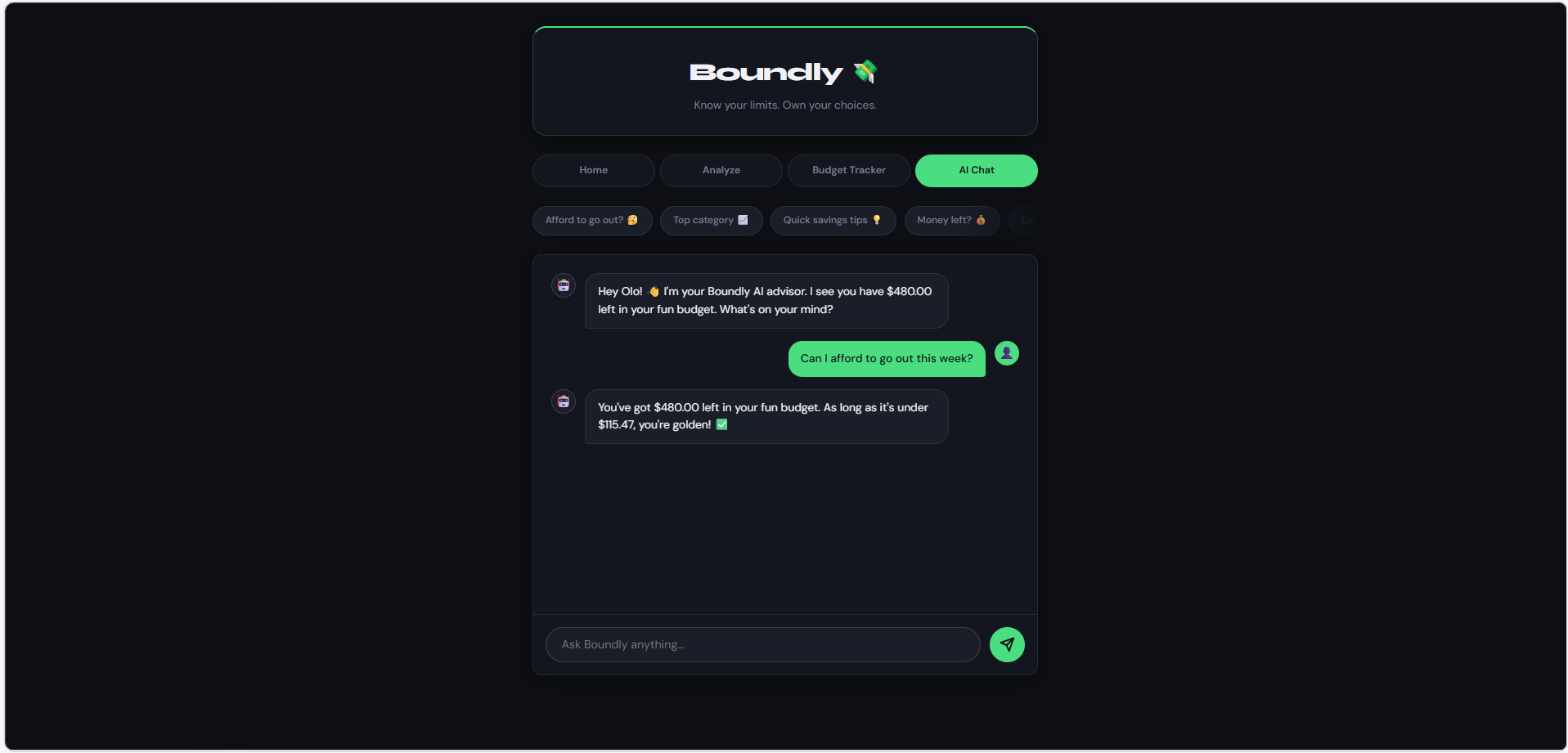
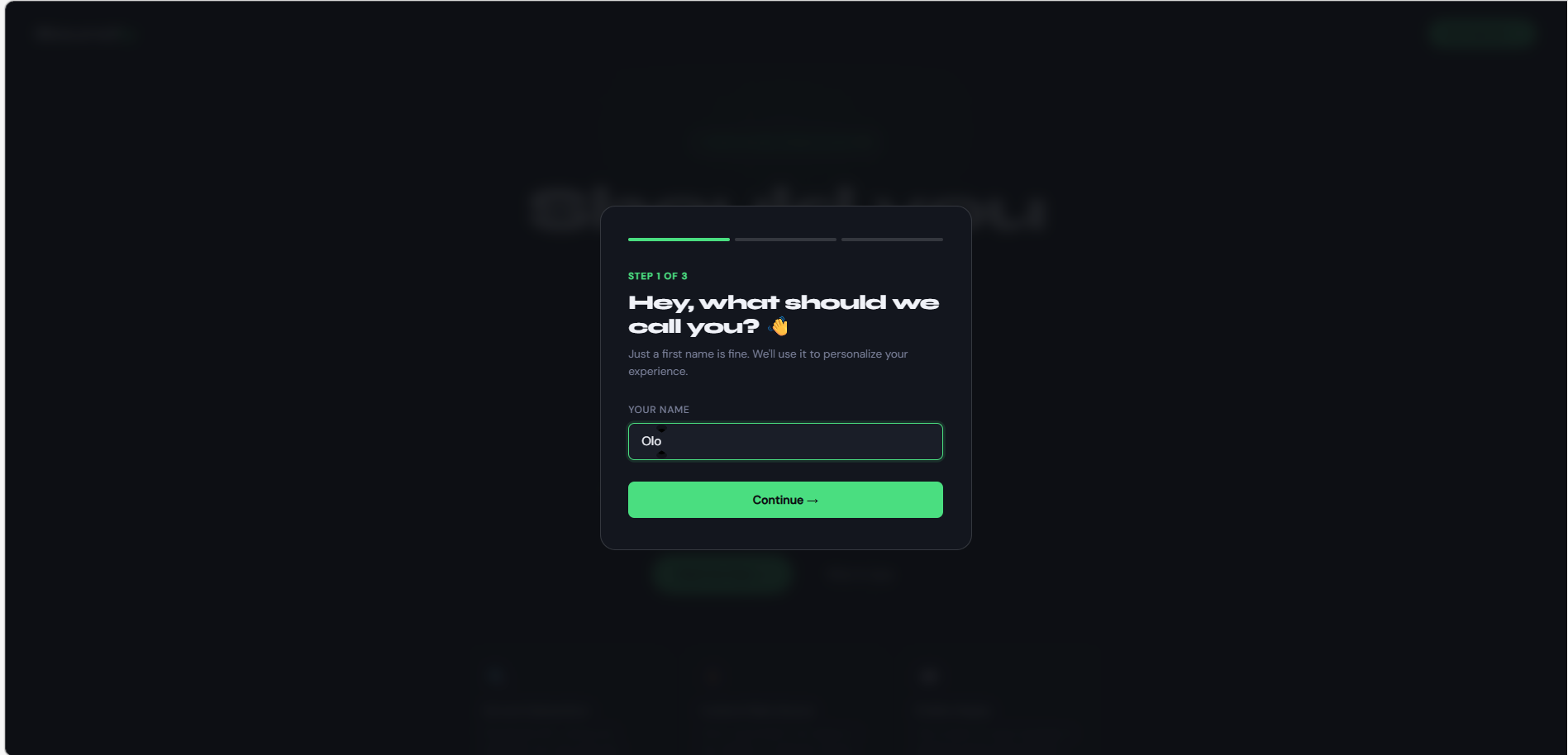
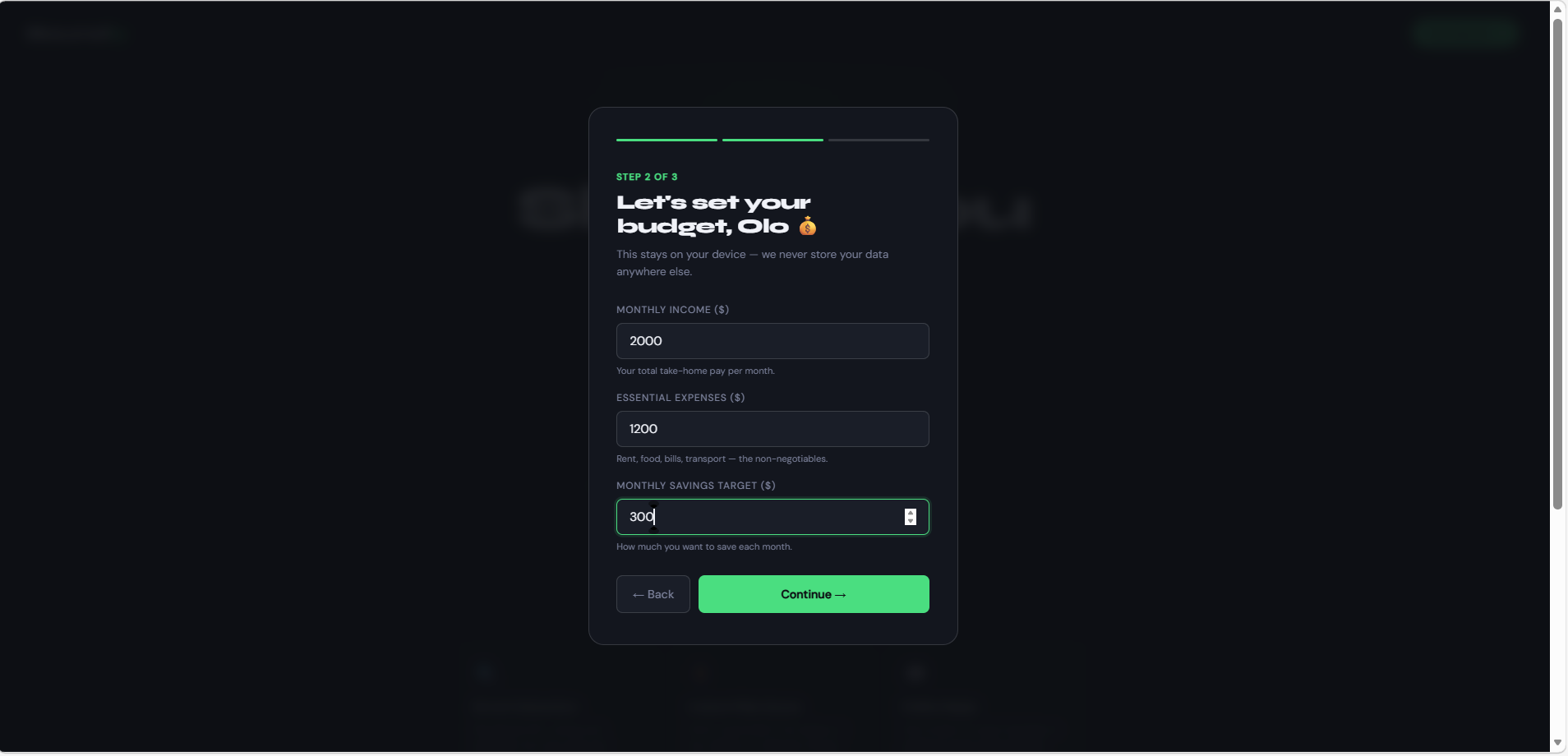
Inspiration
As students, we often find ourselves in situations where we feel pressured to spend money just to keep up socially—whether it's eating out, getting drinks, or joining group activities. Even when we know it's not the best financial decision, saying no can feel uncomfortable.
We realized that most financial tools only track spending after it happens. However, the real challenge occurs before the decision is made. This inspired us to build Boundly—a tool that helps users evaluate social spending decisions in real time, before money is spent.
What it does
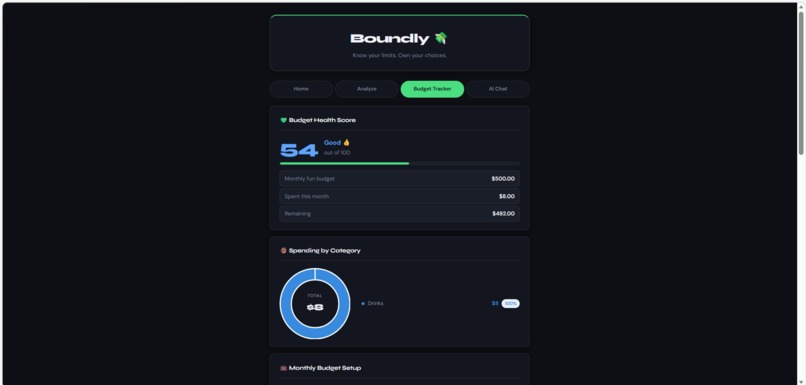
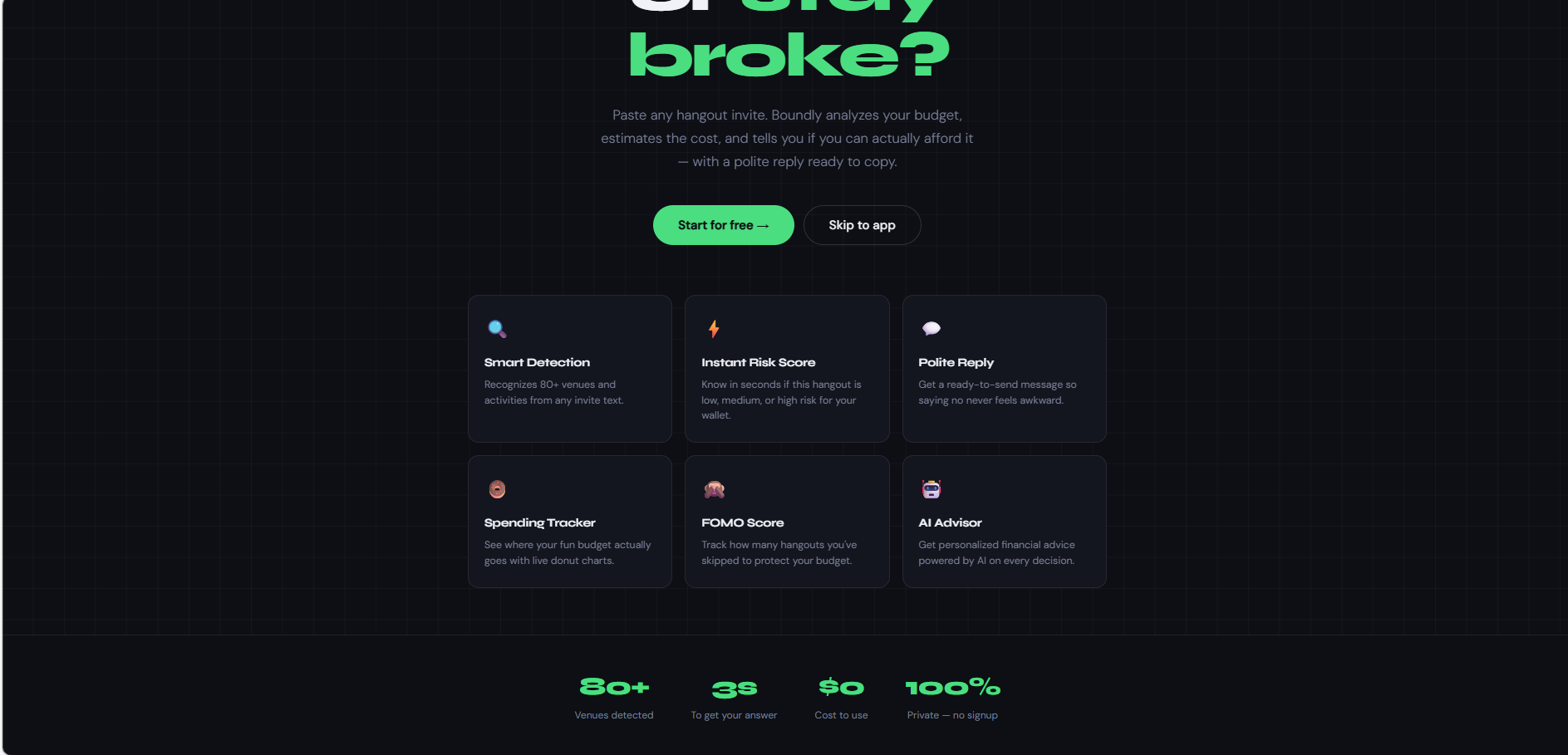
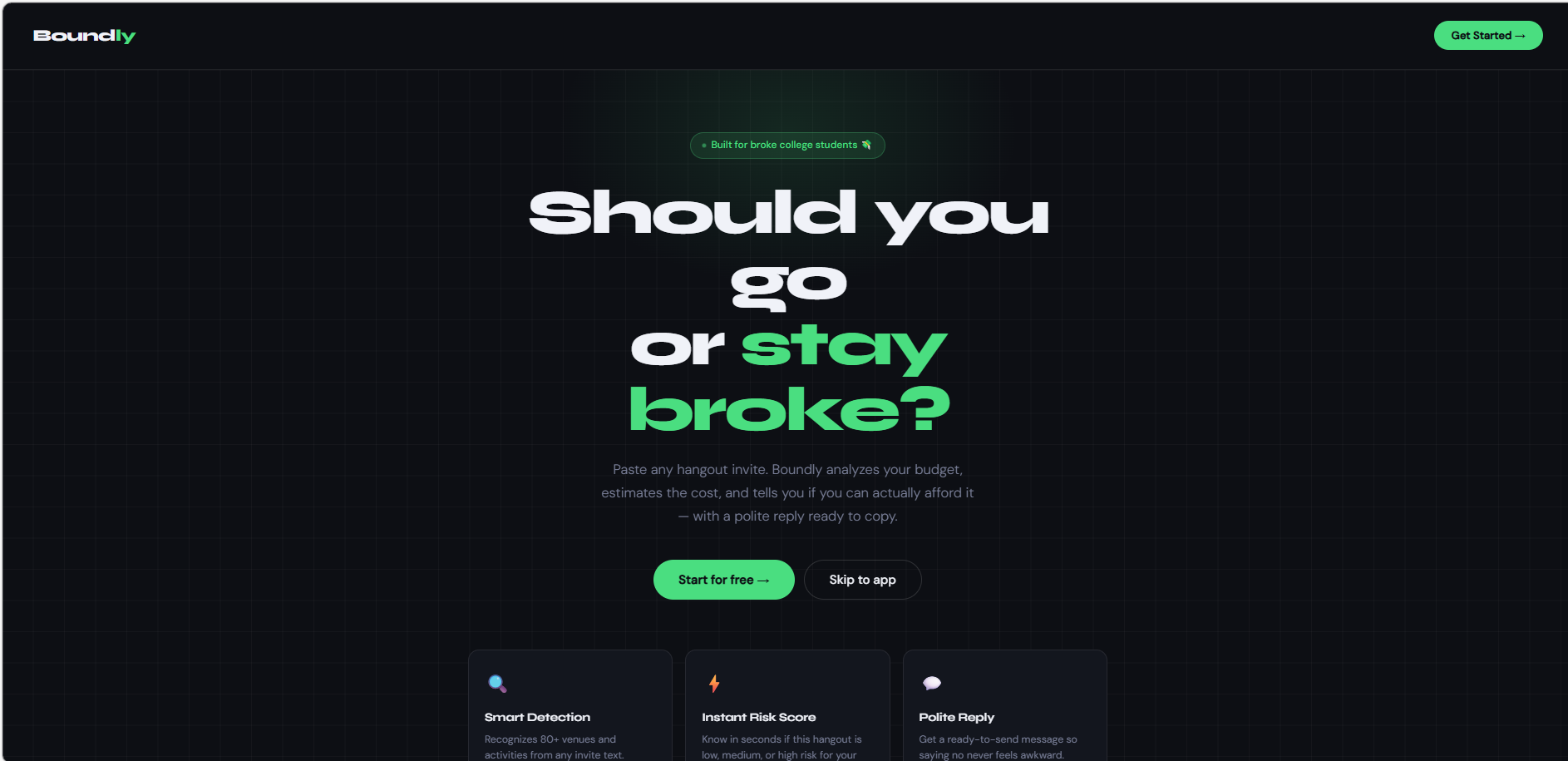
Boundly is a behavioral finance tool that helps users manage social spending pressure.
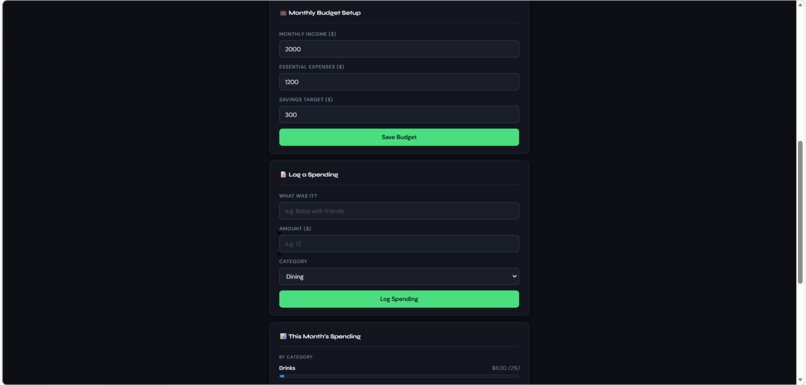
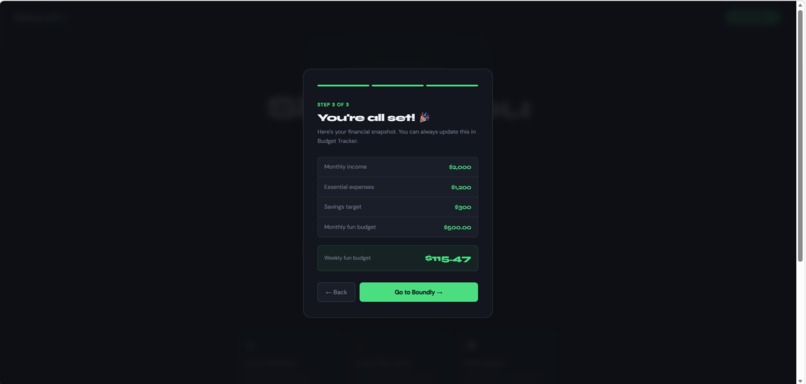
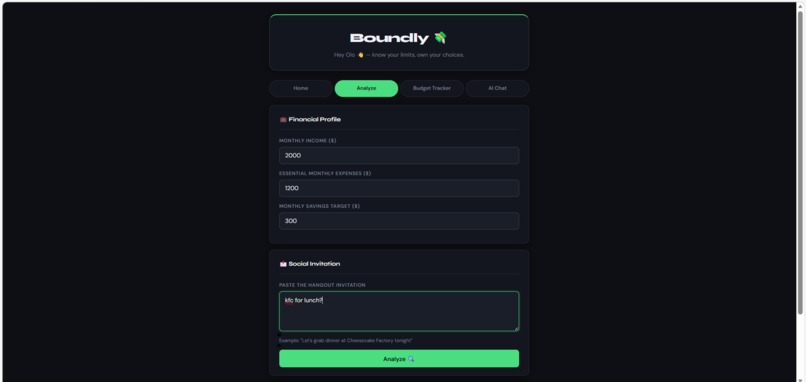
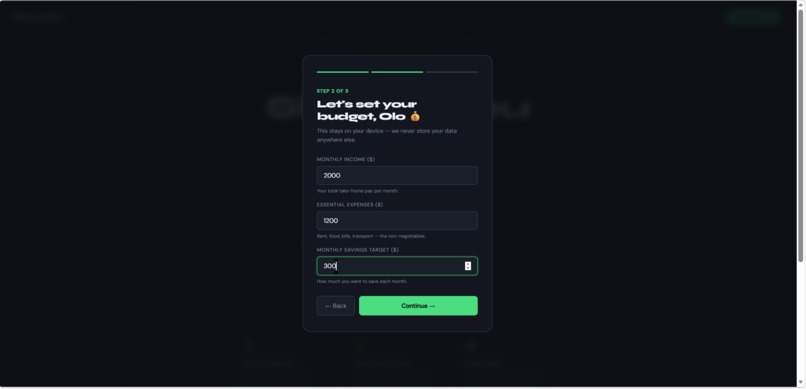
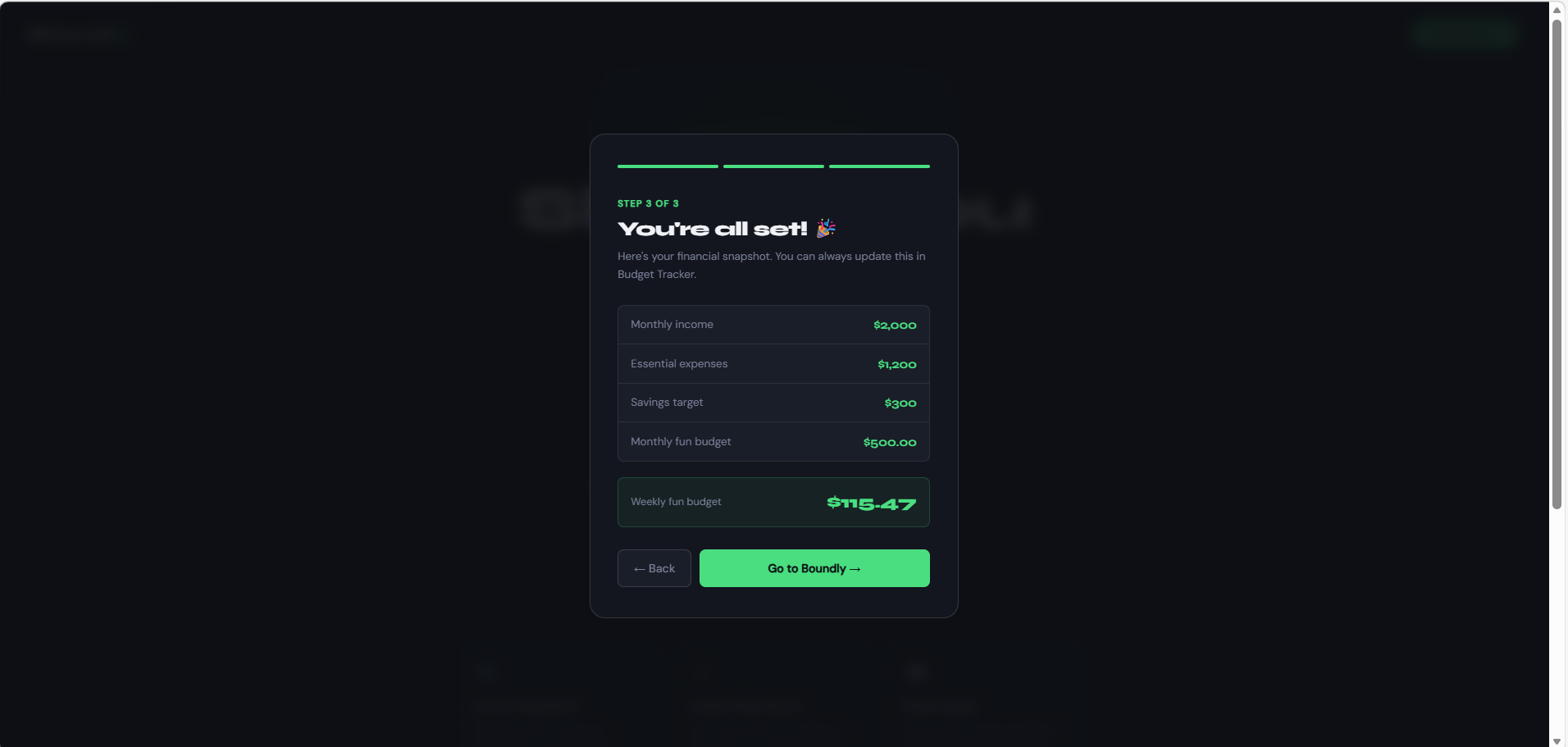
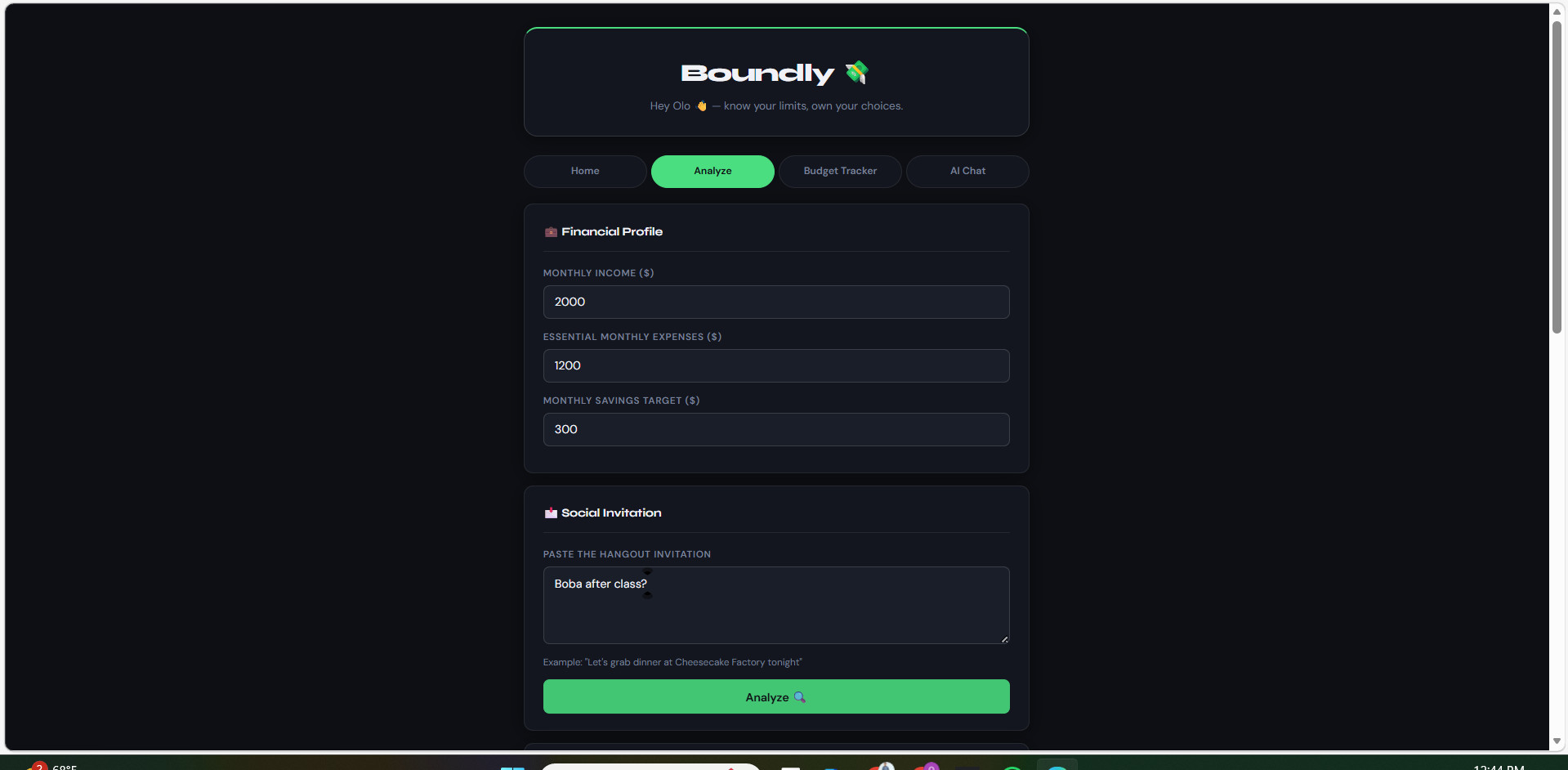
Users input their financial profile (income, essential expenses, and savings goals), then paste a social invitation such as: "Let's get boba after class"
The system:
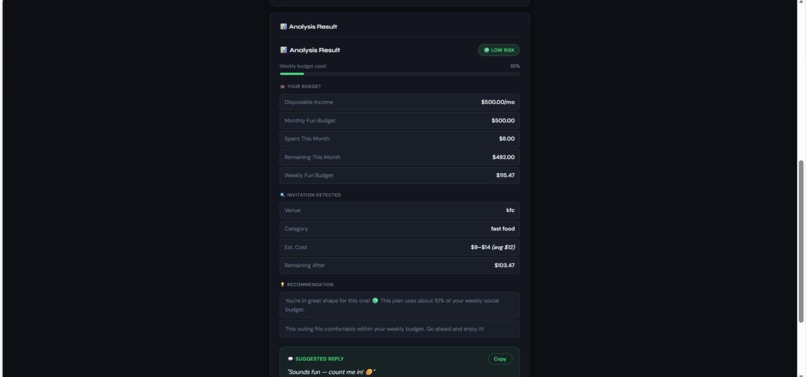
- Analyzes the invitation to detect venue or activity type
- Estimates expected spending
- Calculates how much of the user's weekly budget will be used
- Determines a financial risk level (low, medium, high)
- Provides actionable recommendations
- Suggests a polite response message
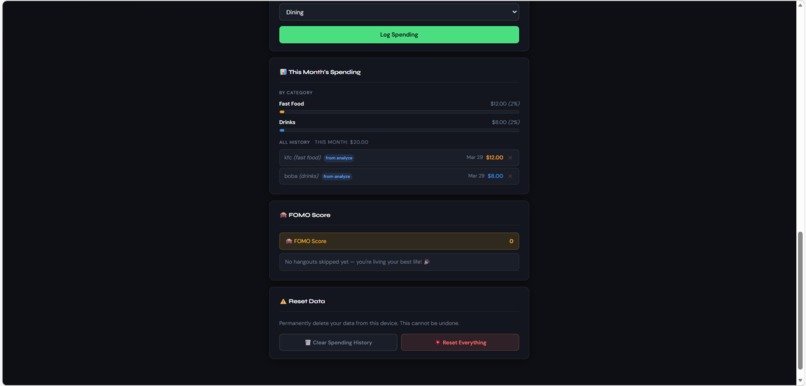
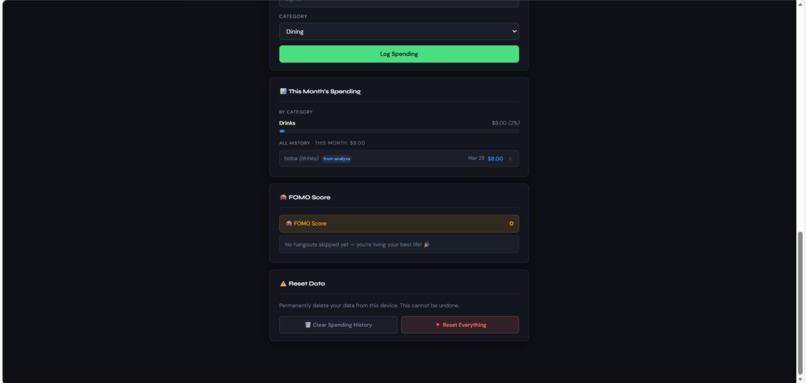
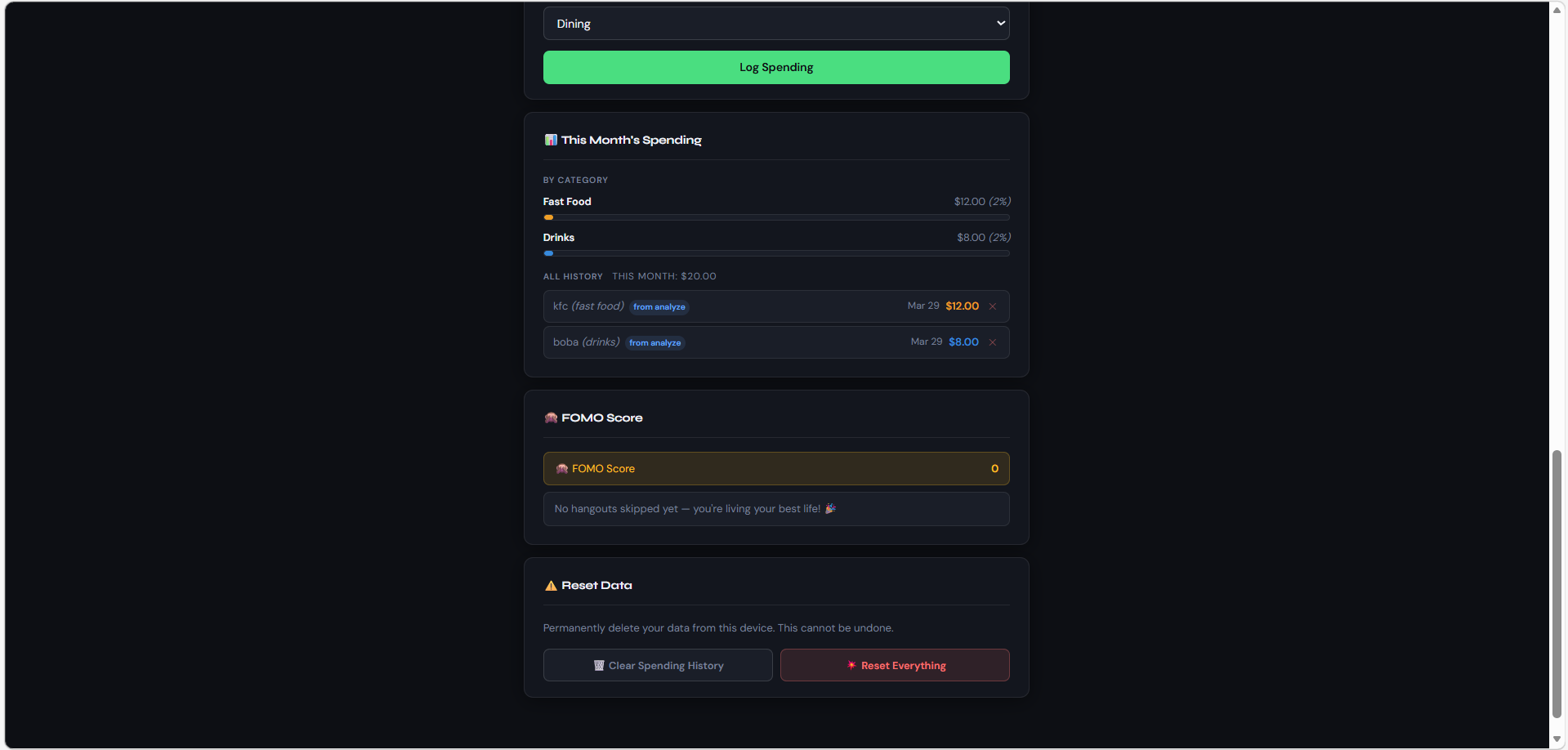
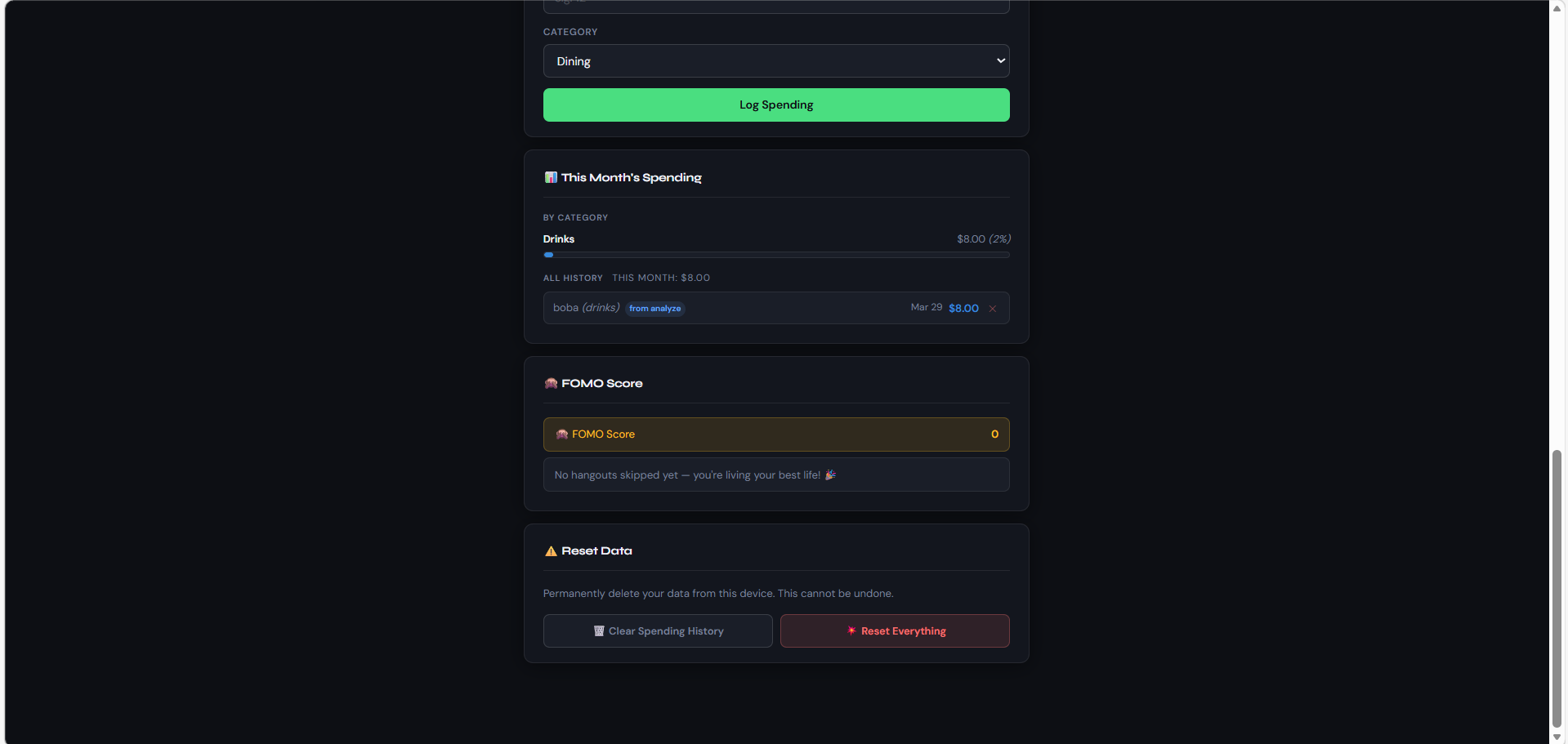
User financial data is stored locally on their device for privacy and convenience.
How we built it
We built Boundly as a modular JavaScript web application.
The system consists of:
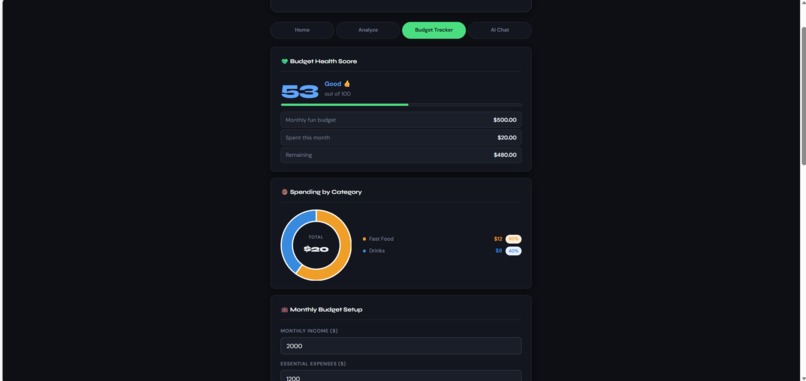
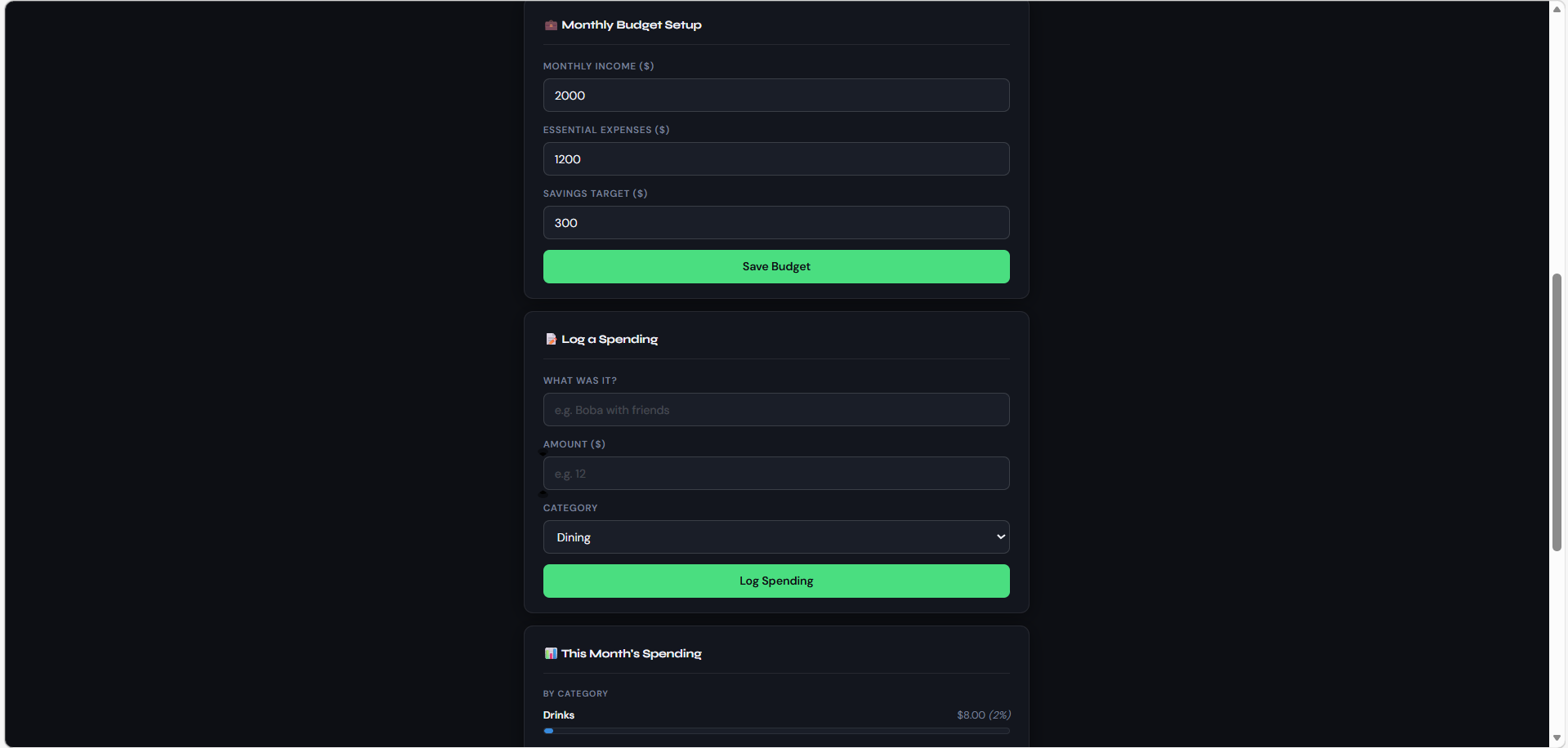
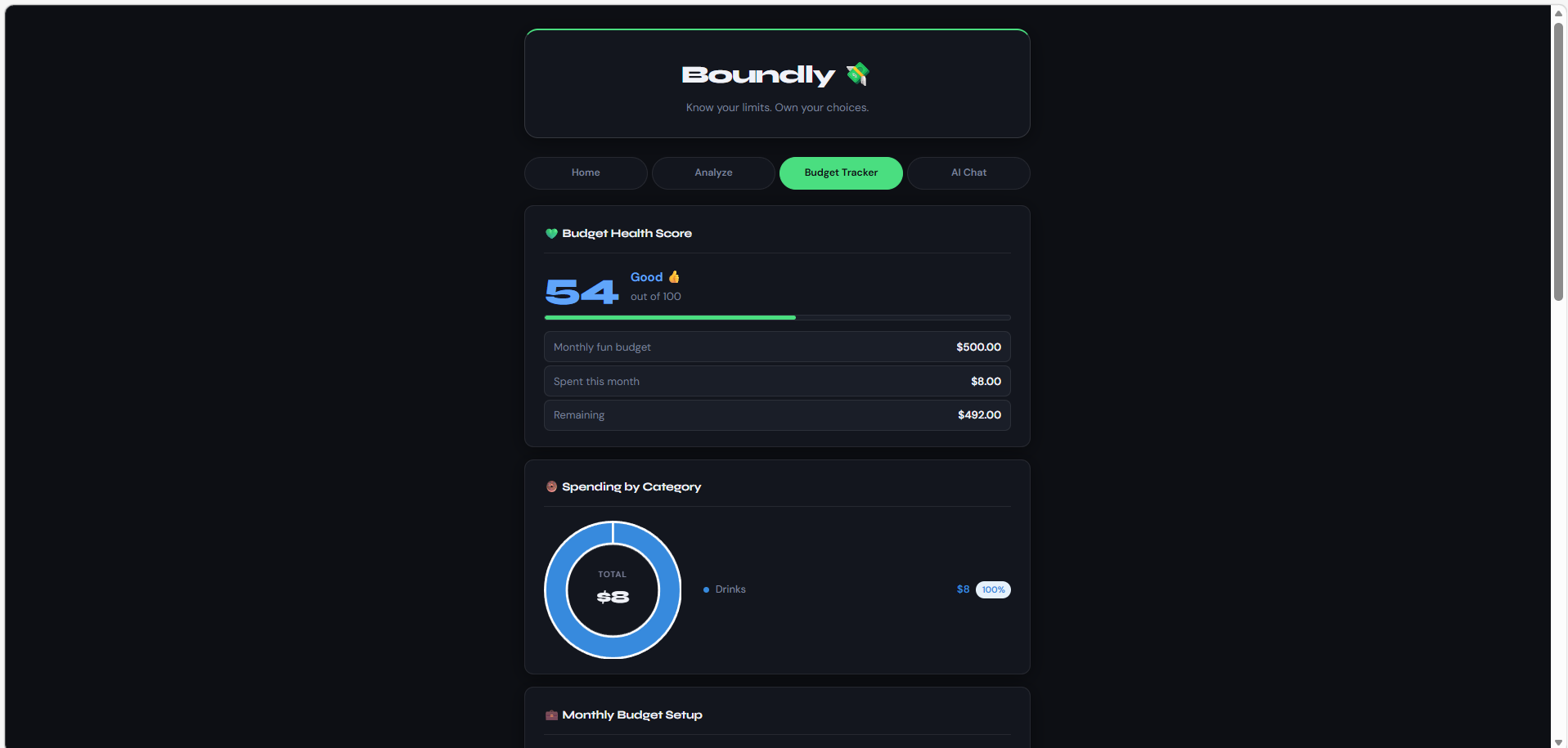
- A budget engine to calculate disposable and weekly spending capacity
- An invitation analyzer to extract venues and categories from natural language input
- A cost estimation module based on venue/category mappings
- A risk evaluation engine to assess financial impact
- A recommendation system that generates practical advice and polite responses
- A local storage module to persist user profile data on-device
The architecture is modular, making it easy to extend with AI-powered features for more personalized recommendations.
Challenges we ran into
One challenge was bridging the gap between technical calculations and human behavior. While financial risk can be quantified, turning it into advice that feels natural and non-judgmental required careful design.
Another challenge was ensuring smooth integration across multiple modules. Since each part of the system (budget, analysis, cost, risk) operates independently, maintaining consistency and handling edge cases was critical.
We also had to balance simplicity and usefulness—building something powerful while keeping the interface intuitive.
Accomplishments that we're proud of
We’re proud of building a complete system that shifts financial decision-making from reactive to proactive.
Instead of tracking past expenses, Boundly helps users make smarter choices before spending happens. This real-time decision support is what sets our project apart from traditional budgeting tools.
We’re also proud of the clean, modular architecture that makes the system scalable and easy to extend.
What we learned
We learned how to design systems that combine financial modeling with behavioral insights.
We also gained experience in:
- modular JavaScript architecture
- handling real-world input scenarios
- designing user-friendly decision-support tools
Most importantly, we learned how technology can help users navigate everyday social and financial pressures more confidently.
What's next for boundly
We plan to enhance Boundly with AI-powered insights to make recommendations more personalized and context-aware.
Future improvements include:
- detecting tone and urgency in invitations (e.g., peer pressure vs casual invite)
- recommending cheaper alternatives nearby
- integrating with messaging platforms
- tracking long-term spending behavior patterns
- optional cross-device sync
Our goal is to evolve Boundly into a real-time financial decision assistant that helps users stay in control without sacrificing their social life.


Log in or sign up for Devpost to join the conversation.