-
-
icon
-
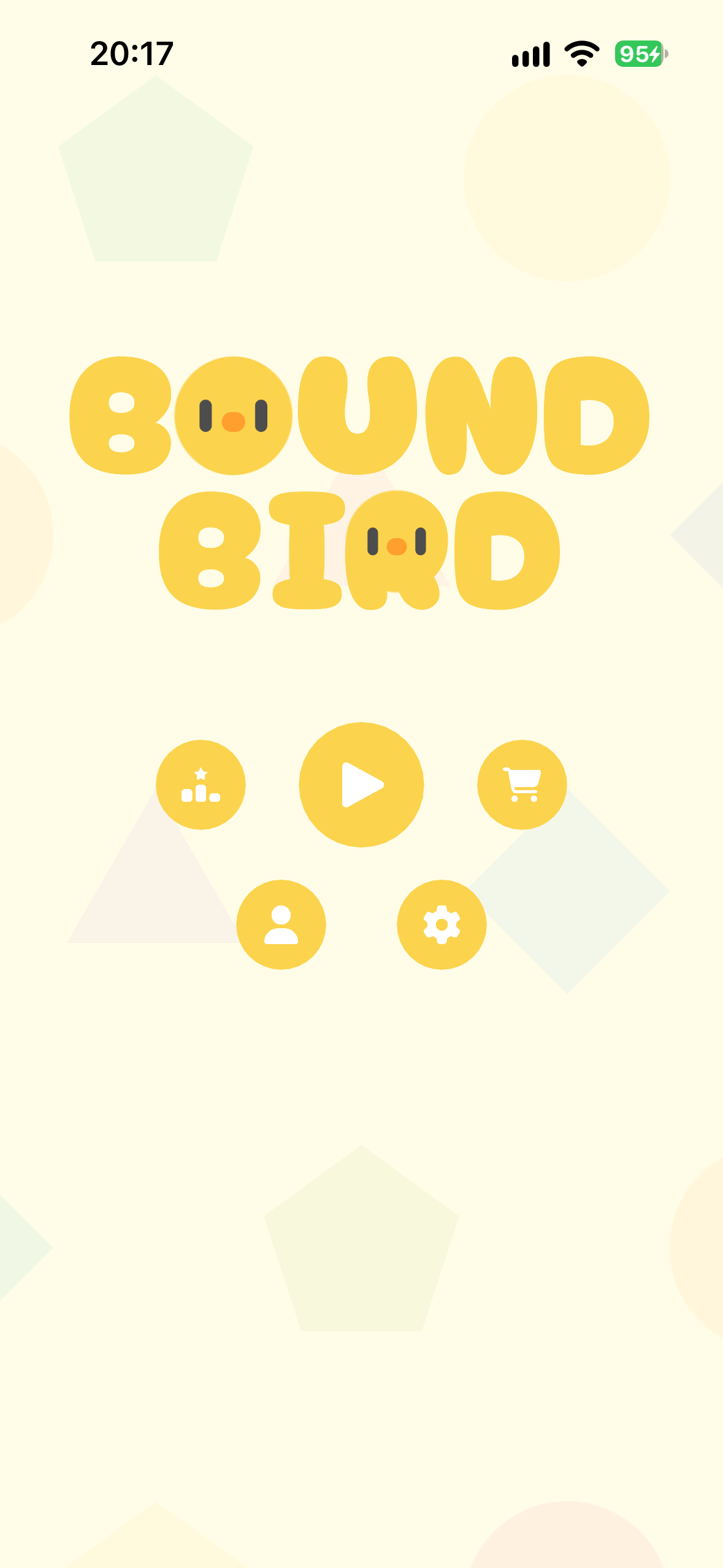
title
-
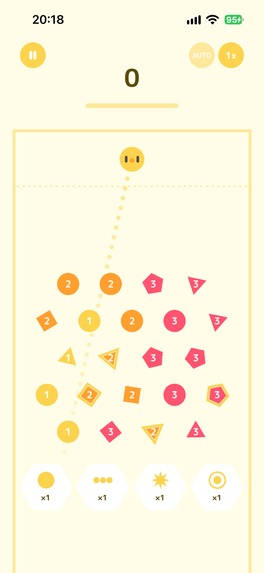
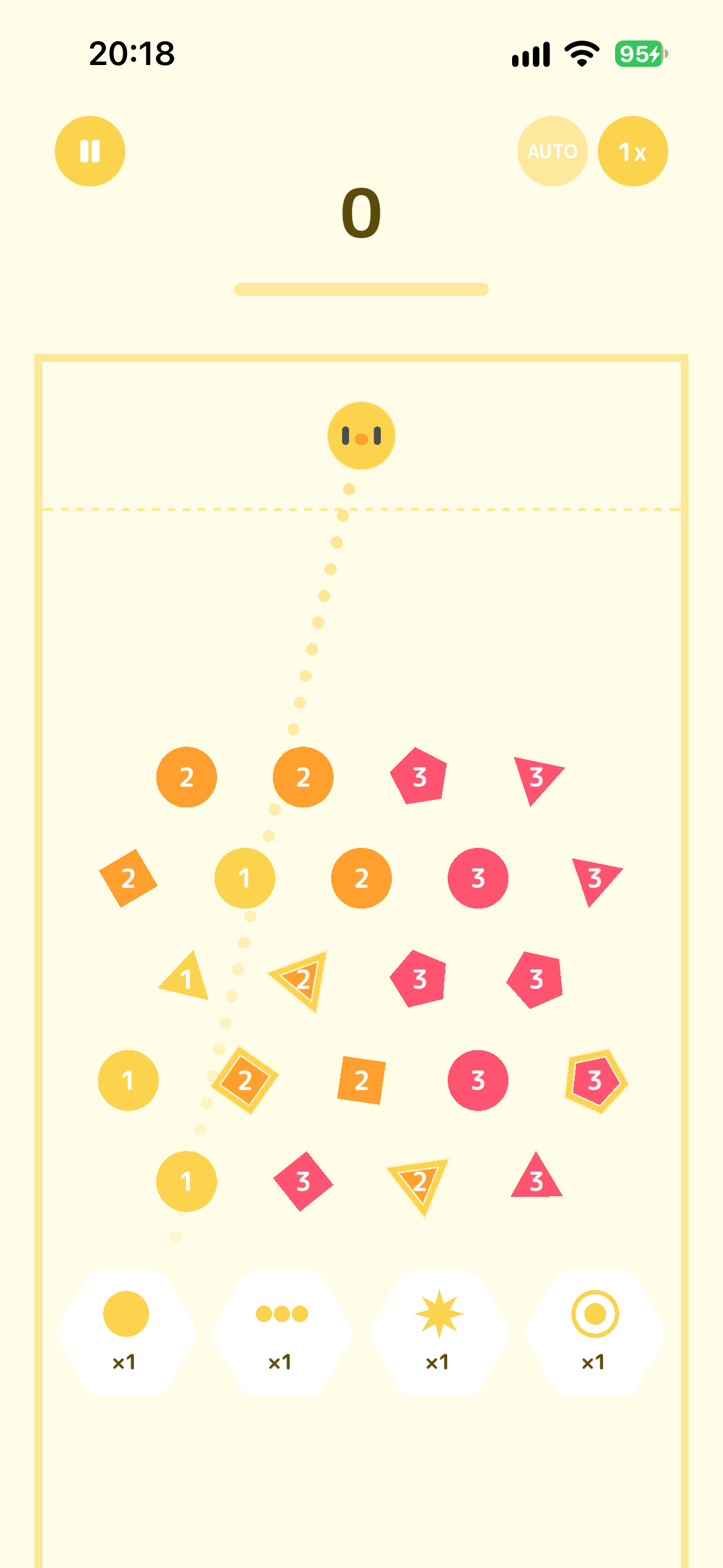
game
-
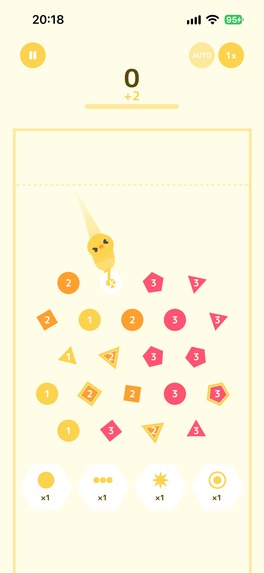
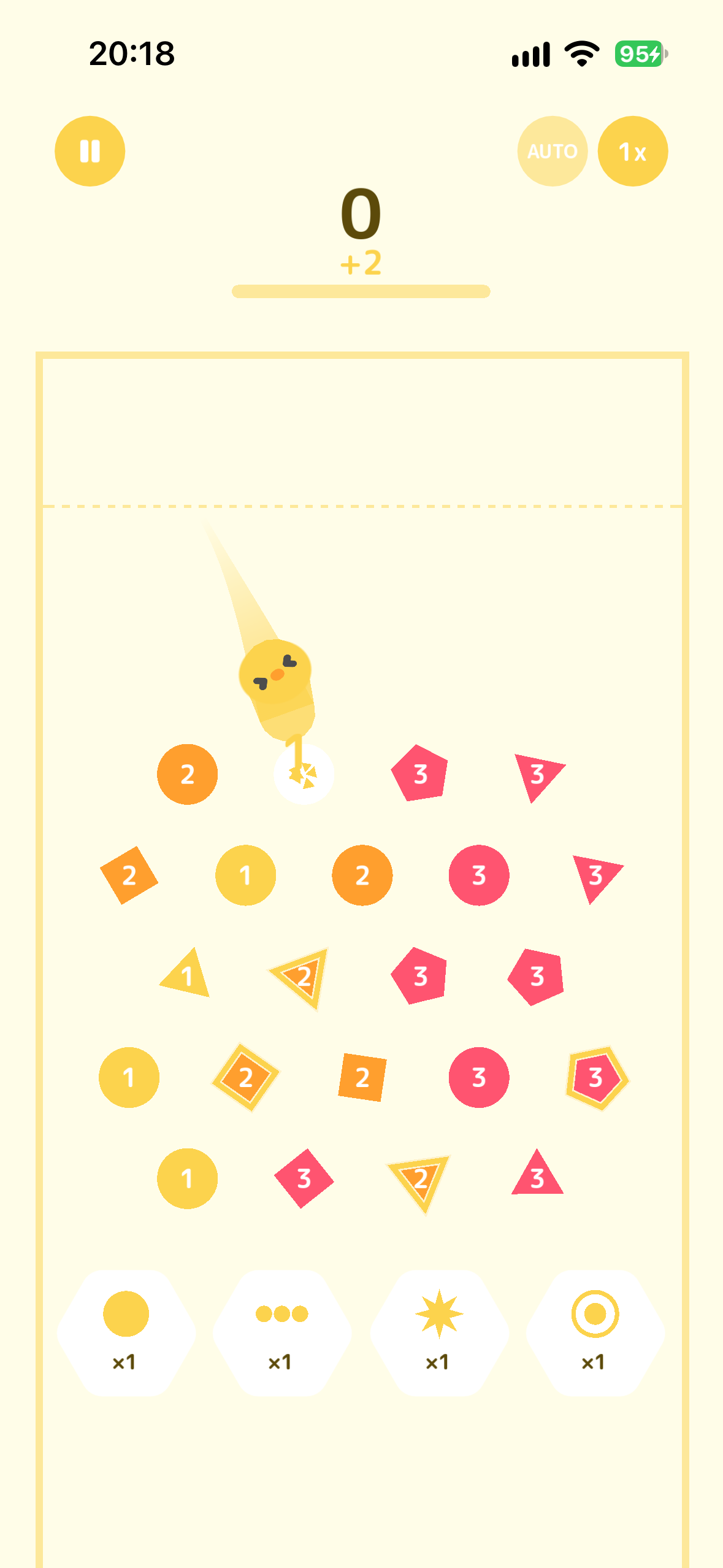
game
-
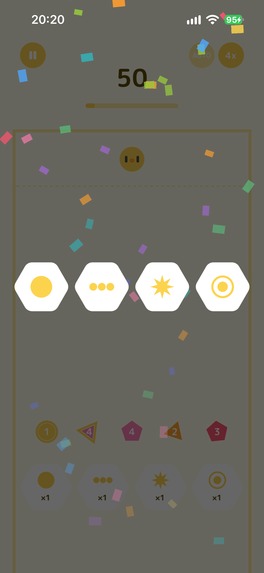
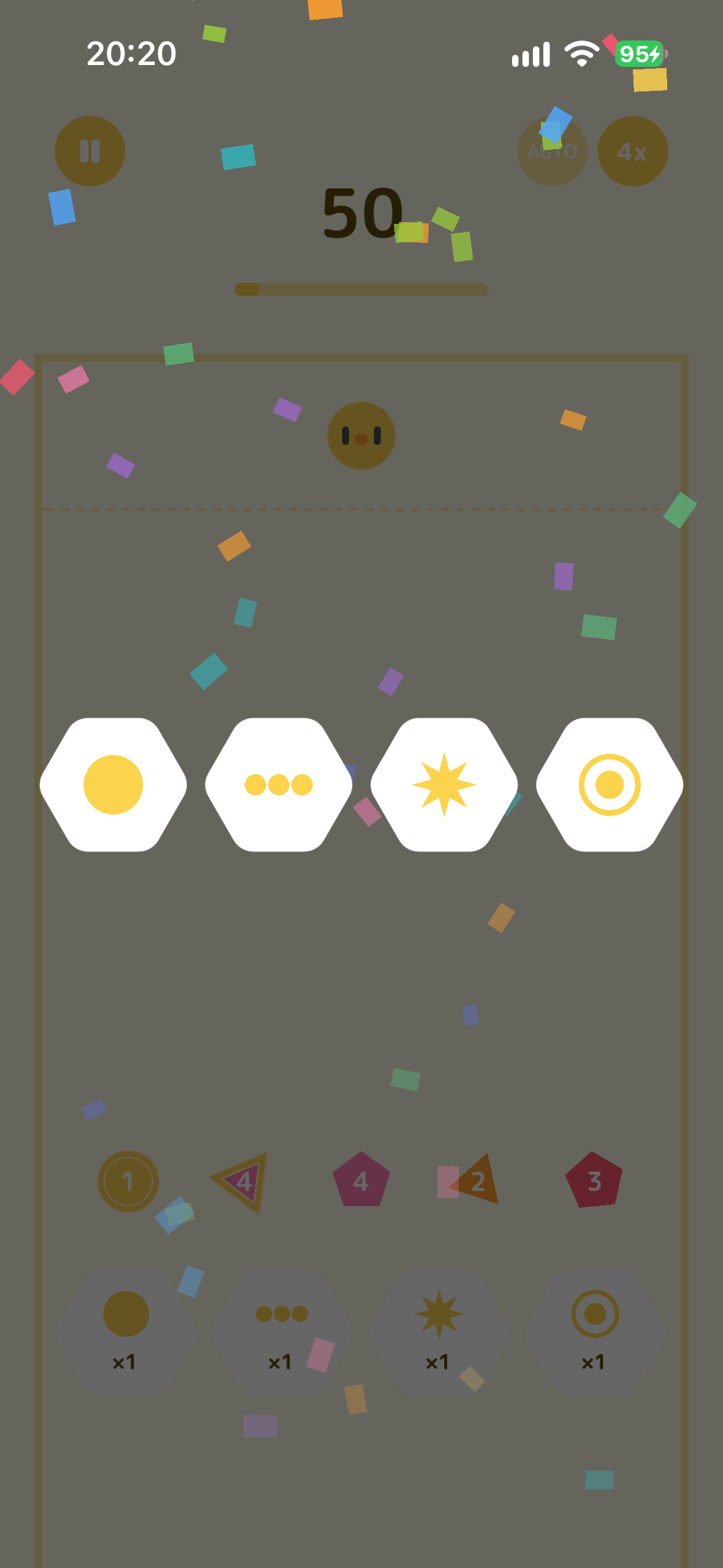
select a skill
-
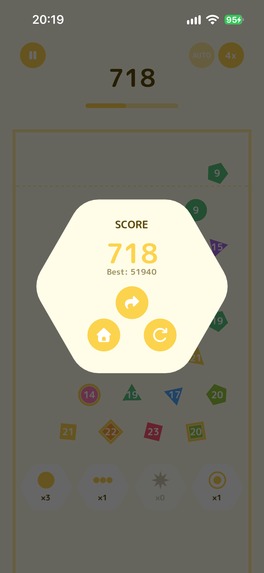
result
-
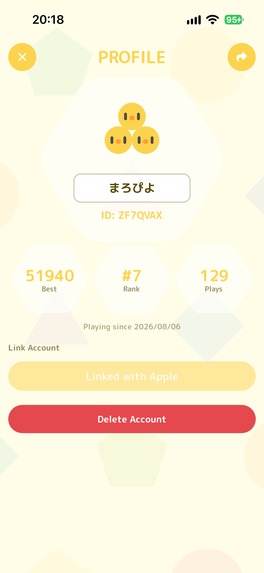
profile
-
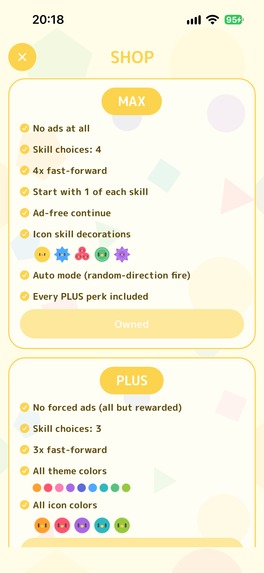
shop
-
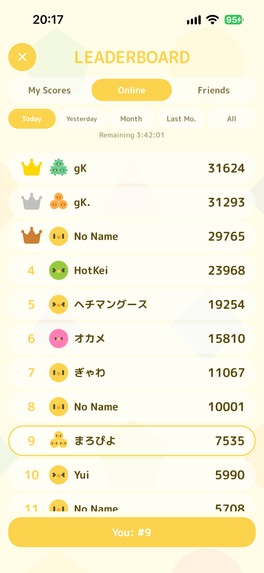
leaderboard
-
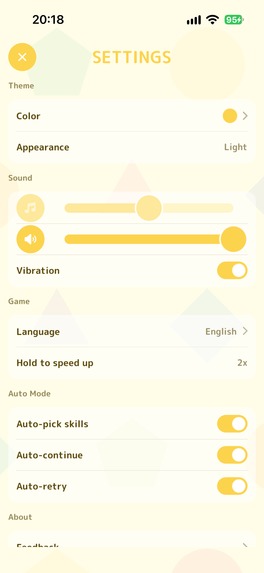
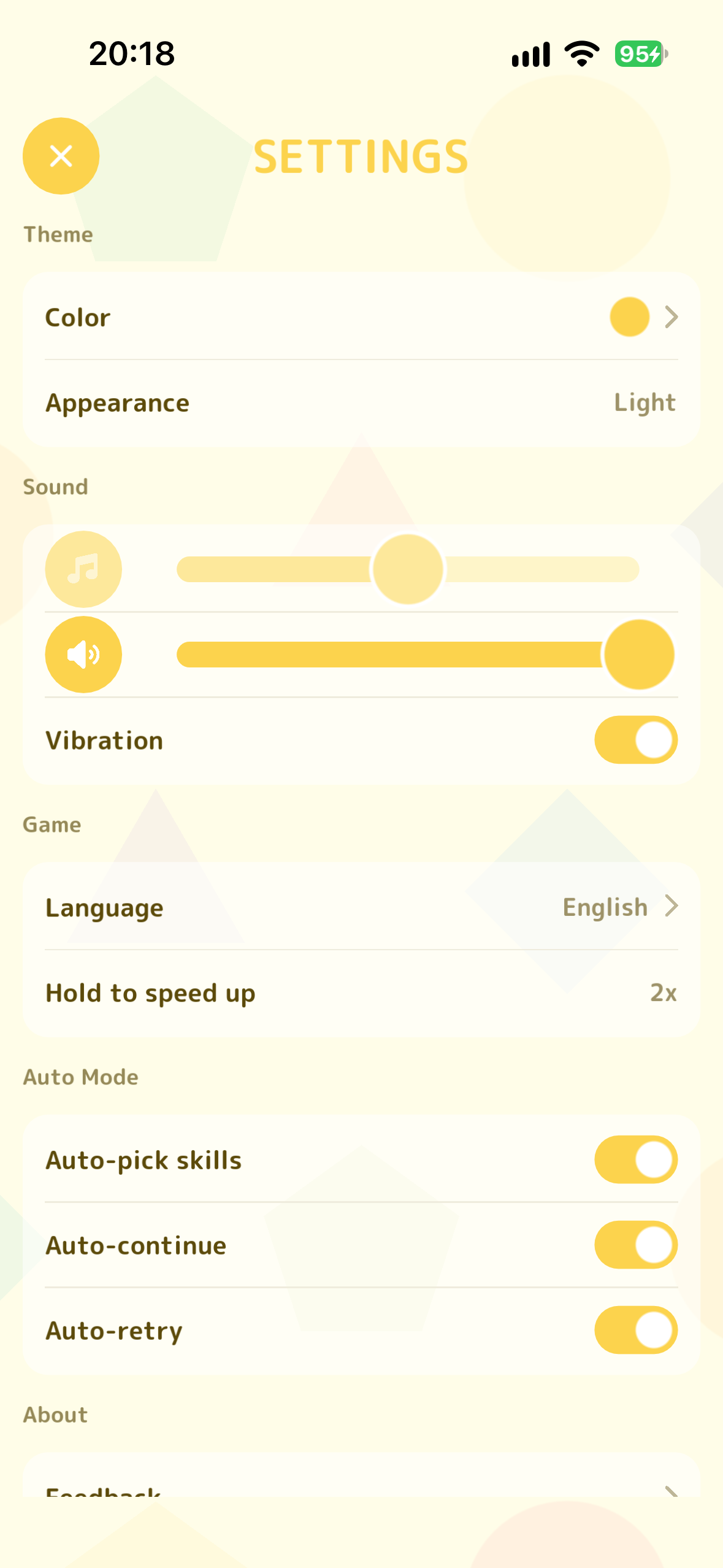
settings
-
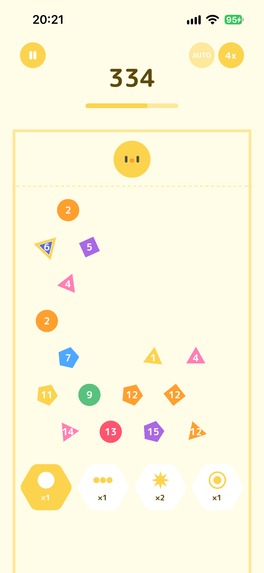
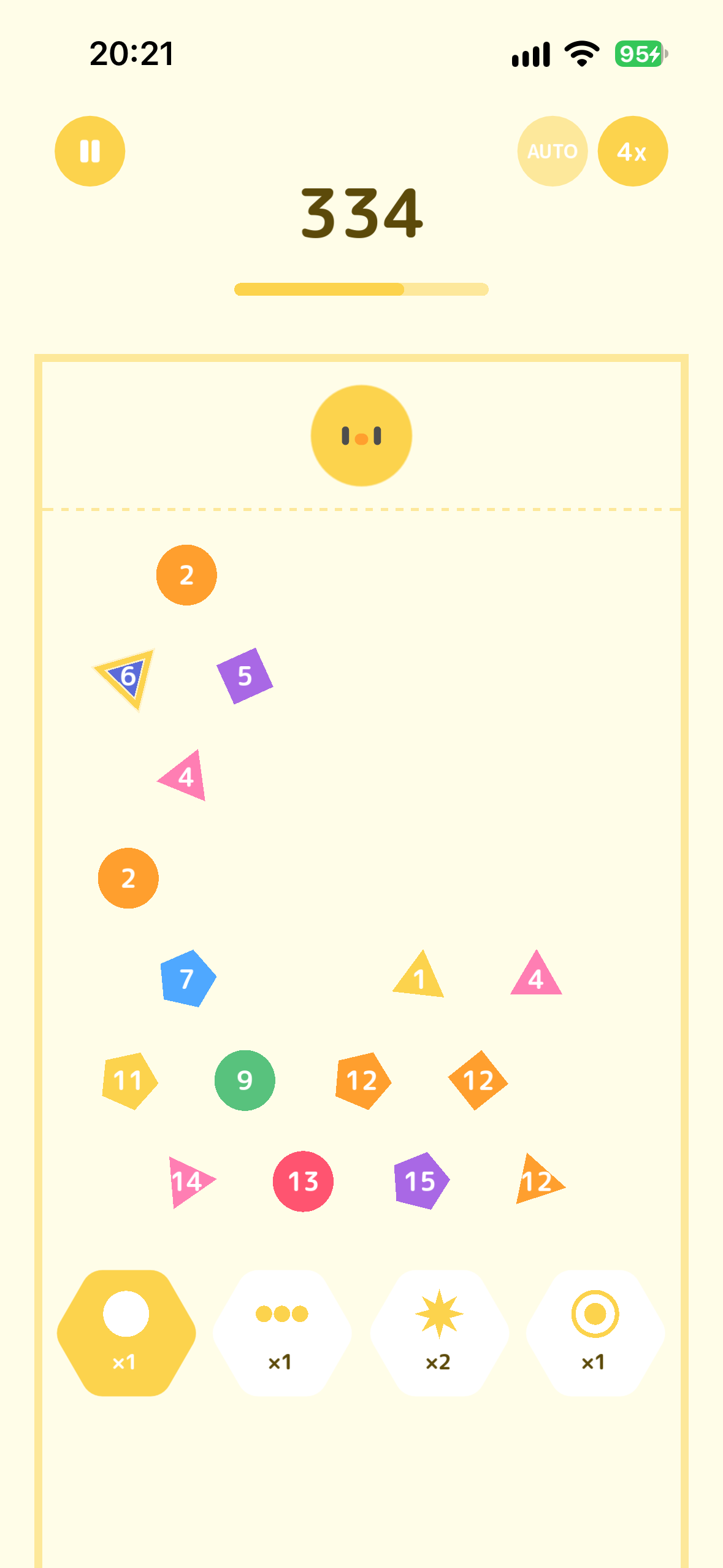
large skill
-
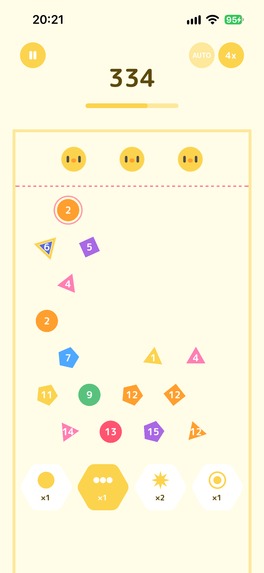
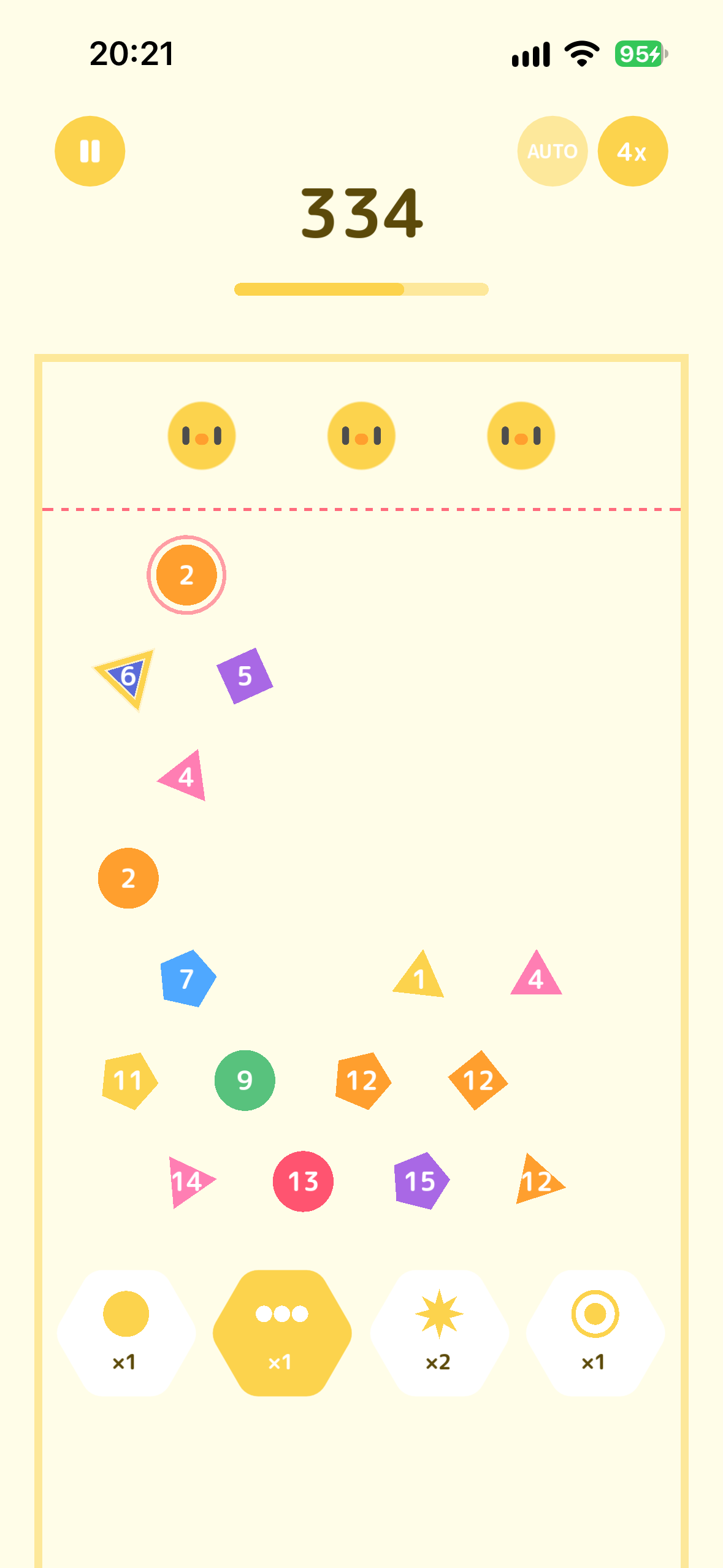
triple skill
-
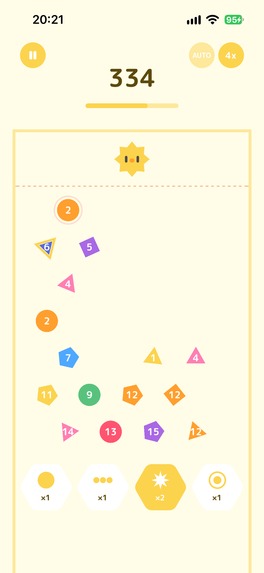
clash skill
-
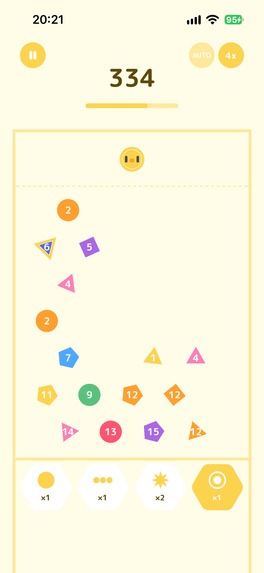
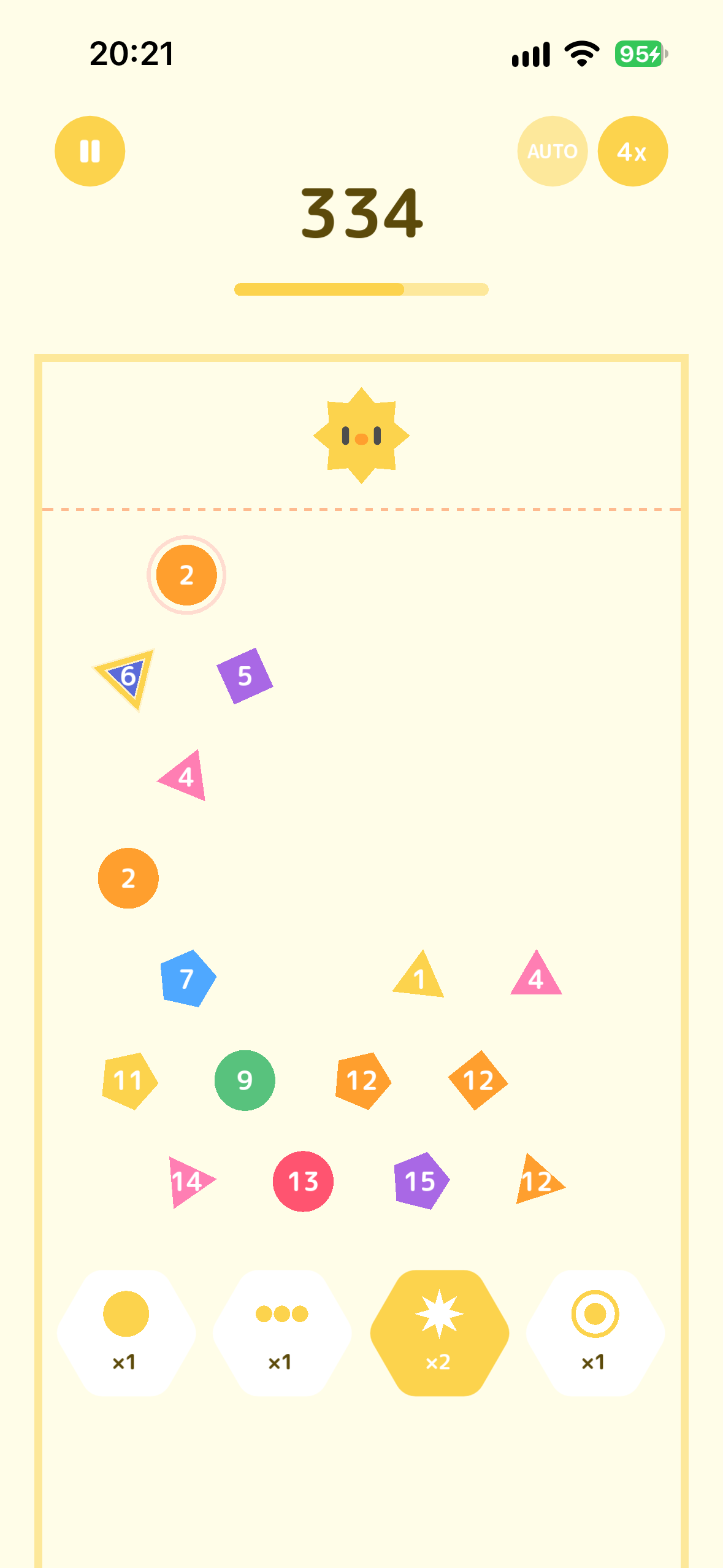
boost skill
-
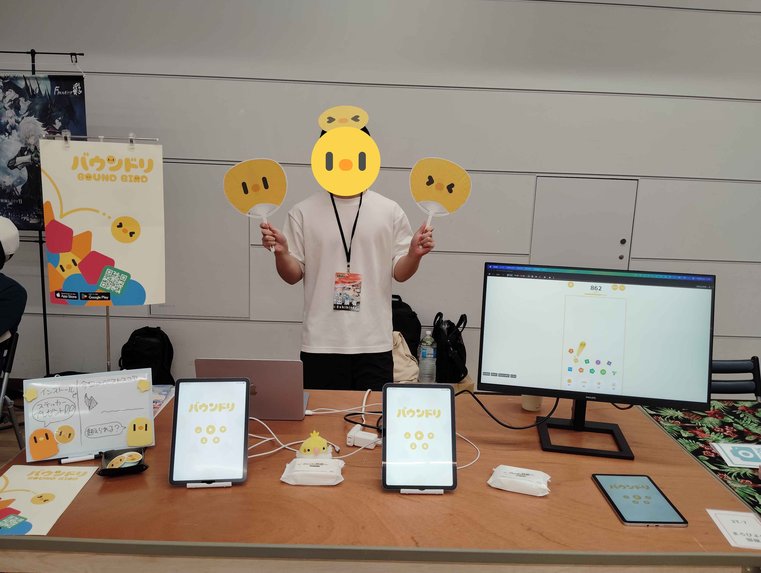
event
Inspiration
I set out to design a game anyone could play. Not "easy" — accessible. Nobody should be stopped by the controls, and nobody should finish a run still unsure what happened. And once someone is in, I wanted it to be hard to put down.
The form came from two places: pinball's tension of watching a ball bounce somewhere you didn't expect, and a brick-breaker's satisfaction of clearing a board. BOUND BIRD puts them together — aim a bird, let go, and watch it ricochet through a field of blocks.
What it does
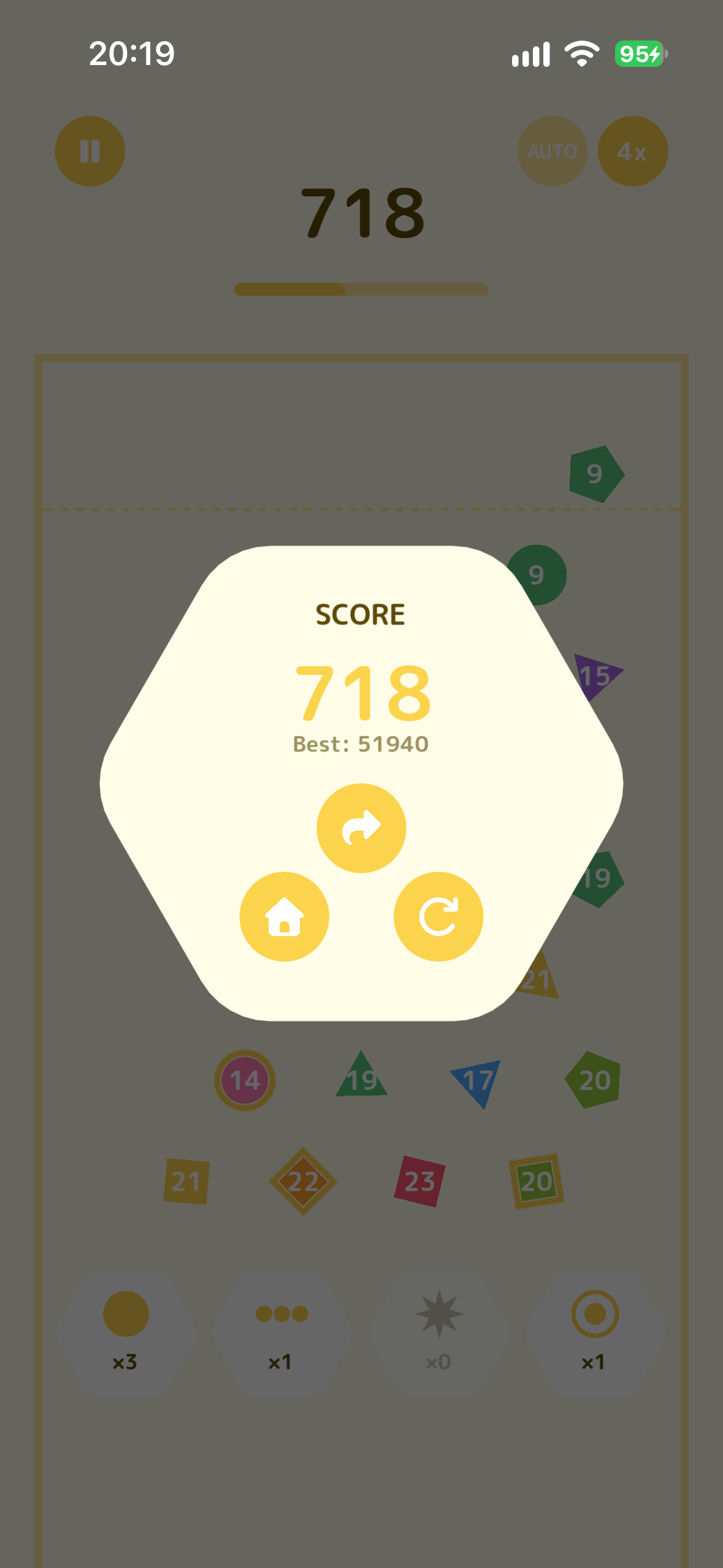
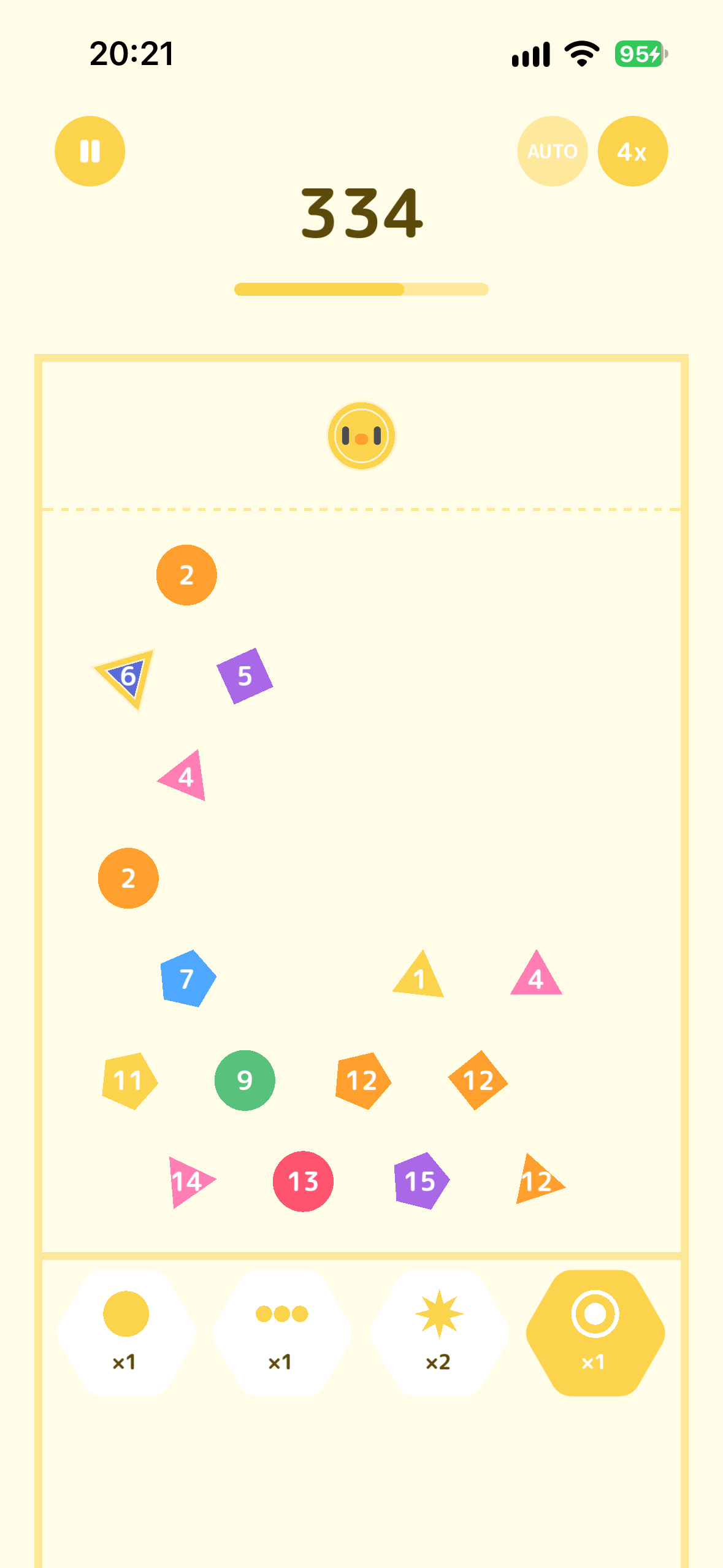
One control: aim and release. The bird does the rest, bouncing around the board and smashing blocks. The blocks rise one row every turn, and the run ends when they reach the top.
The board is made to be read at a glance. Blocks are plain geometry — circle, triangle, square, pentagon — set at random angles, so the shape decides which way the bird comes off. Each one carries the number of hits it has left. The palette is yours to pick: ten colors, each with a light and a dark version. On a screen built only from shapes and numbers, changing the color changes the feel of the whole game.
When you're in trouble, spend a skill:
- LARGE — the bird grows, 3x damage for 15 seconds
- TRIPLE — splits into three birds
- CRASH — breaks any block in one hit
- BOOST — high-speed bouncing, plus a temporary floor so the bird can't fall out
Skills stack. BOOST and TRIPLE on the same turn puts three birds on the screen at full speed, clearing half the board in seconds.
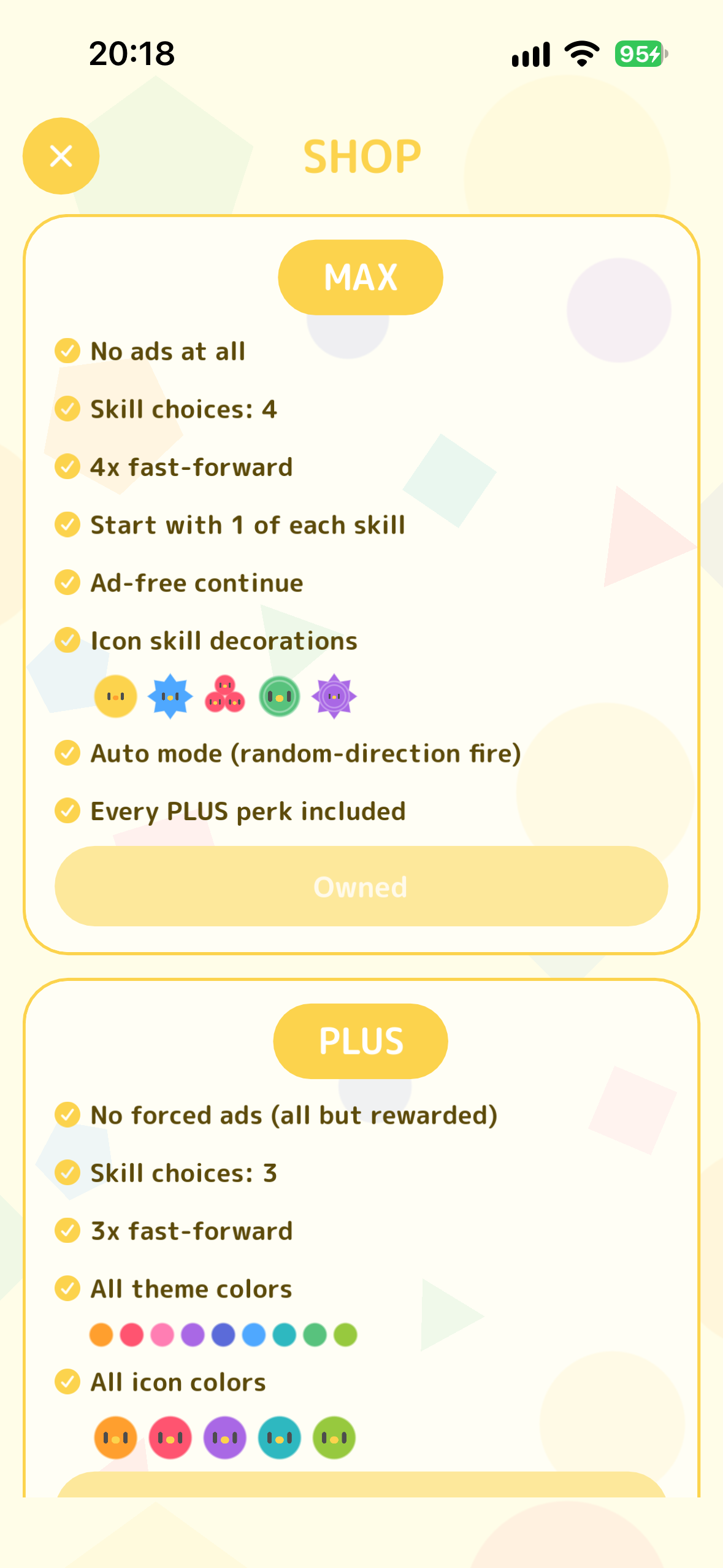
Two premium tiers, both one-time purchases:
| Free | PLUS | MAX | |
|---|---|---|---|
| Skill choices per draw | 2 | 3 | 4 |
| Speed | 1x, 2x | + 3x | + 4x |
| Themes | 1 color | All 10 colors | All 10 colors |
| Ads | All (banner, interstitial, rewarded) | Banner & interstitial removed | All removed, including rewarded |
How I built it
Driven entirely by feel: play the build, ask whether the bounce felt good, change it, play again. No design doc, no spec. I stayed on the player's side of the screen the whole way, judging every change by whether it made the game more fun, and handed builds to friends to see how it played in someone else's hands. It was my first Godot project.
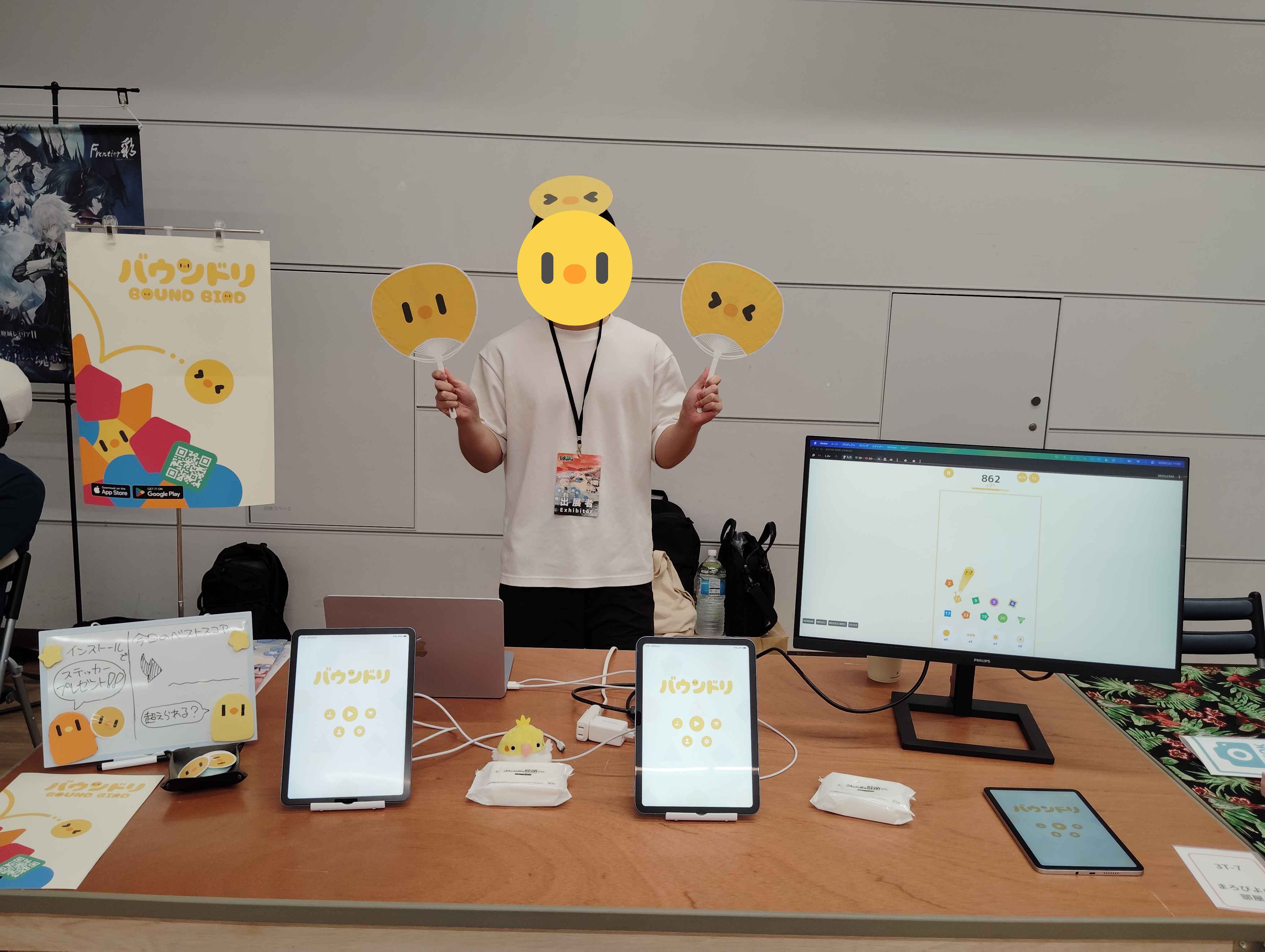
The game went live on August 6, and two days later, on August 8, I exhibited it at Tokyo Game Dungeon, an in-person indie game event, to see how players reacted in the moment. What I saw there went straight into updates: improvements to the controls and adjustments to how the skills work. I made stickers and flyers for it too, and handed them out.
Challenges I ran into
A game doesn't need words. The board is shapes and numbers. The menus and the skill cards are icons, with no names on them. There's no tutorial either — if the core of a game is fun, people will play it and enjoy it without being walked through it. So the player works it out instead of being told. Building the rules yourself out of what's in front of you is the part of games I like best.
Simple without being shallow. The first half of a run is where you learn the rules; the back half is where it becomes a thinking game. The controls never get more complex; the decisions do. A good player's score isn't a number luck can reach. It reads abstract written down, and it's clear after a few runs.
How the game feels. Games like this usually multiply tiny balls into hundreds and get their spectacle from volume. BOUND BIRD uses one bird, sized to just barely fit through the gaps between blocks. The spacing is tuned for the pinball moment where the ball gets wedged and rattles in place — drrrrrrr. You feel it too: the haptics turn the rattle into a fast run of taps in your hand. Later in a run it gets wedged more often. That rattle is the best feeling in the game.
Deciding how to charge. PLUS and MAX are one-time purchases — a subscription doesn't fit a game like this. The difficulty curve is the same whether you pay or not. If someone likes the game enough to support it, the purchase should feel like exactly that and nothing more.
Accomplishments that I'm proud of
There were two goals: anyone can get in, and once in, they don't stop. The first one I can check myself. The second one I can't — my own opinion that the game is fun proves nothing.
In Japan it goes by its Japanese title, and players there post about it on X under #バウンドリ. Some of them play every day. Getting into someone else's day, every day, is the evidence that the thing I set out to make is the thing I made.
After Tokyo Game Dungeon, a student who had played it at the event emailed to ask whether they could make BOUND BIRD in Scratch. I said yes, of course. Something I made moved a student enough to want to build it themselves, and that made me really happy.
What I learned
The thing I was most wrong about was pricing. After install, BOUND BIRD runs a 48-hour introductory sale — PLUS at ¥190 (normally ¥490), MAX at ¥990 (normally ¥1,490). I assumed the cheap tier would carry the revenue and that MAX would be a rounding error. Instead, more people bought MAX.
That was a good thing to be wrong about. I think it means some people picked the game on what it is rather than what it costs. So that's where I want to keep putting the time: into making something worth buying.
What's next for BOUND BIRD
The game itself is done. It does what I set out to do, and I would rather leave it there than pad it with features it doesn't need.
What's left is reach. In Japan it has found an audience, and I'm grateful for that. Outside Japan it hasn't been judged well or badly — it has barely arrived. It's on the stores worldwide and it needs no translation to play, and it still hasn't found players beyond one country. Closing that gap is the next job.

Log in or sign up for Devpost to join the conversation.