-
-
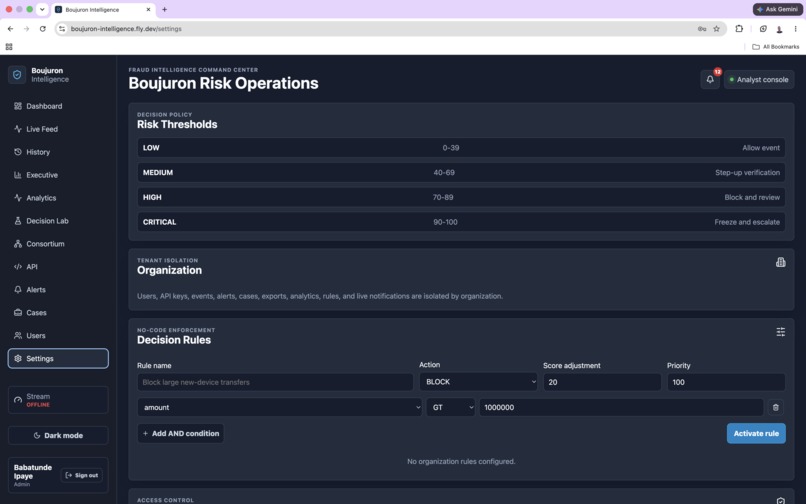
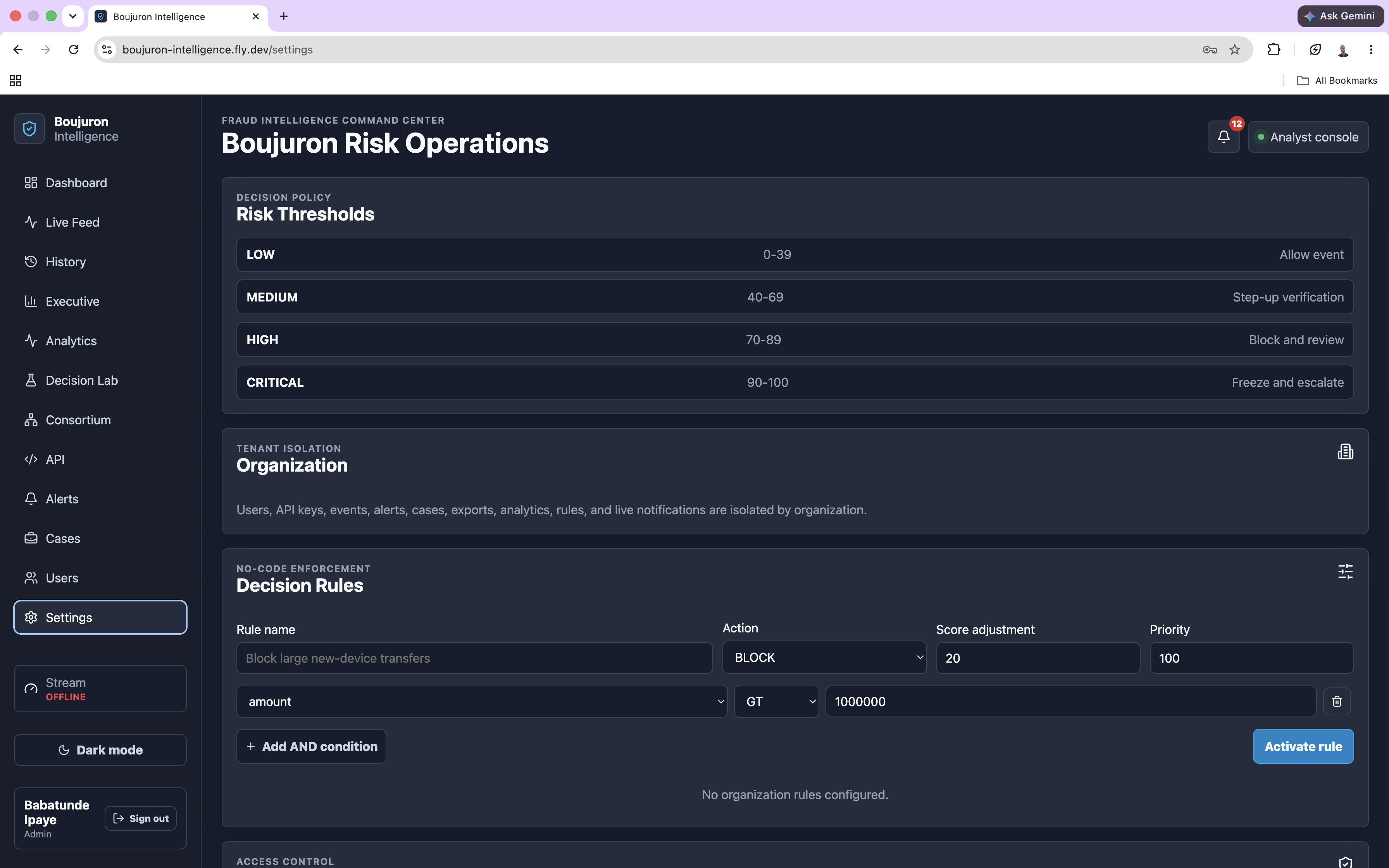
Boujuron settings (Decision policy)
-
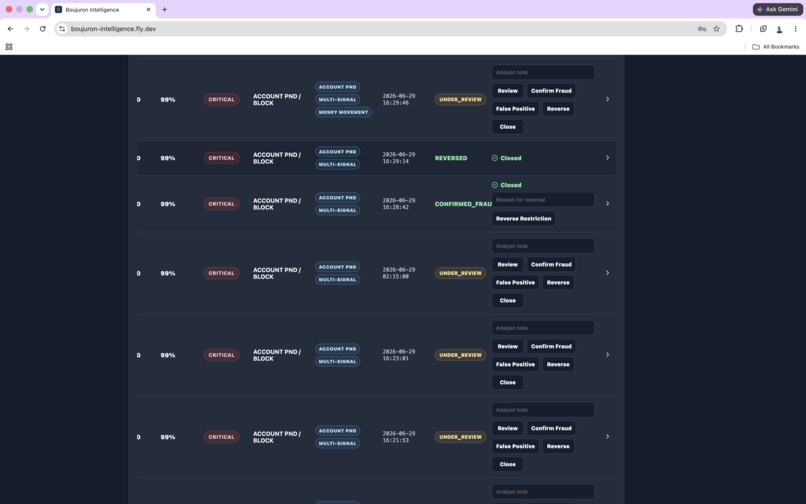
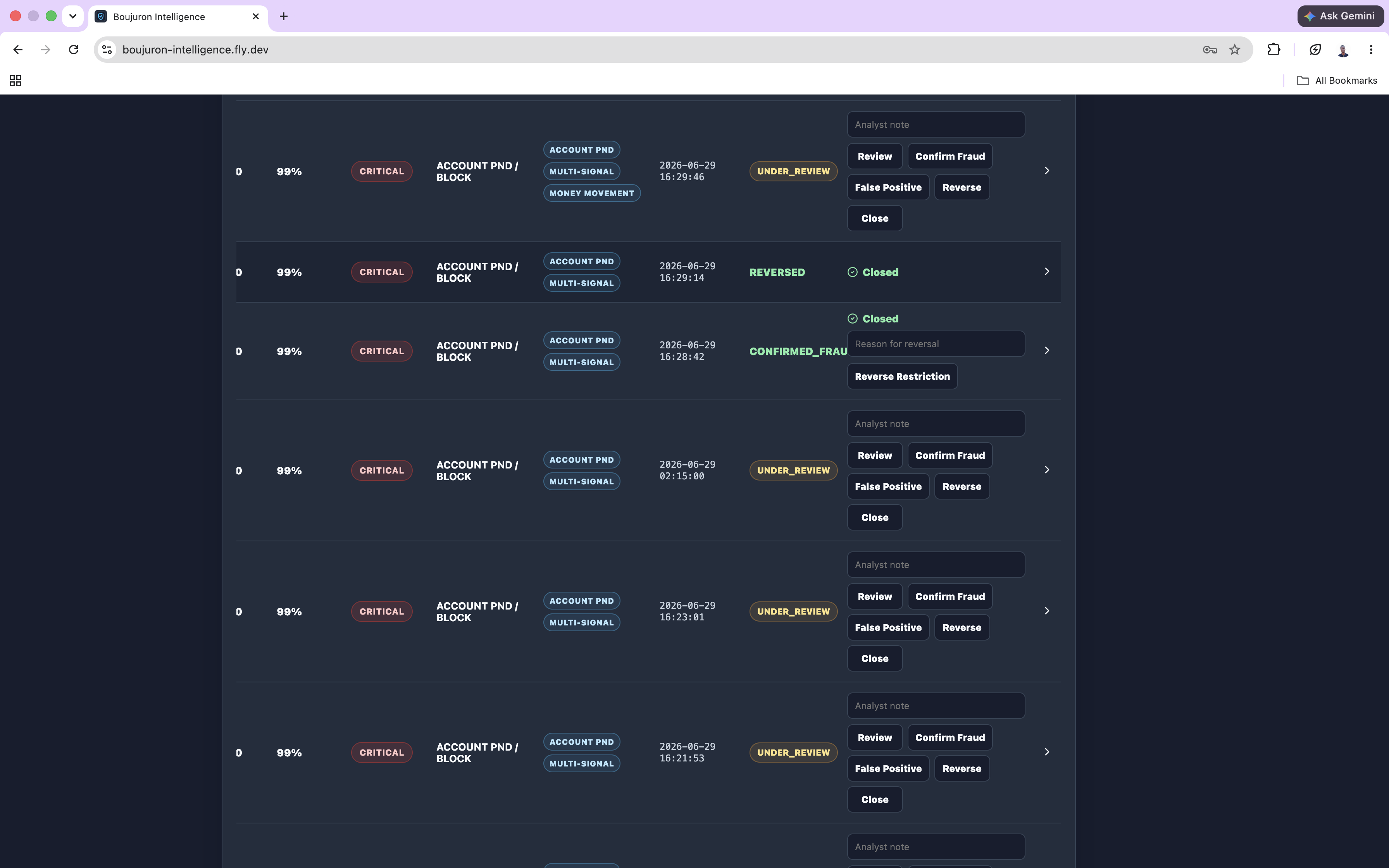
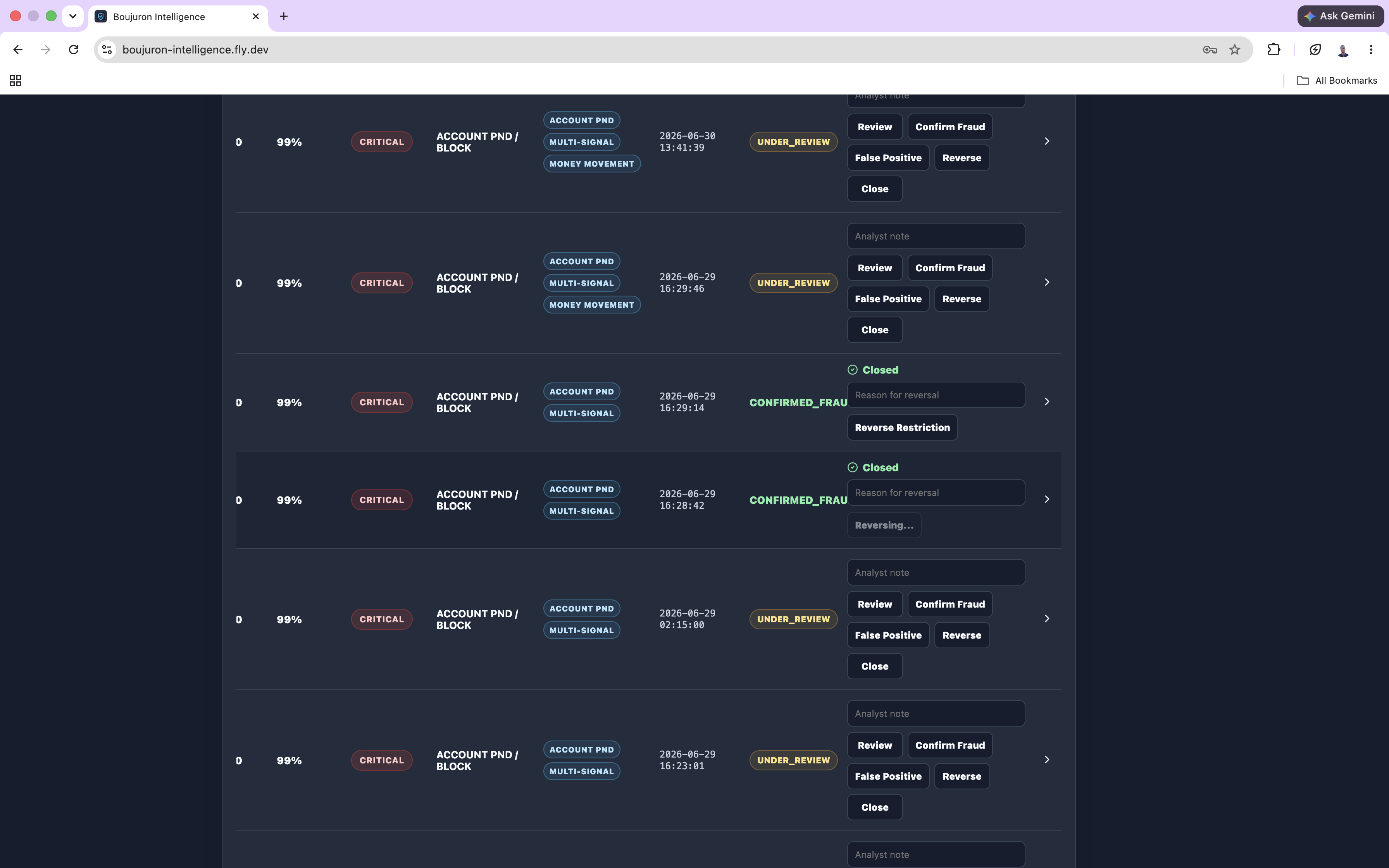
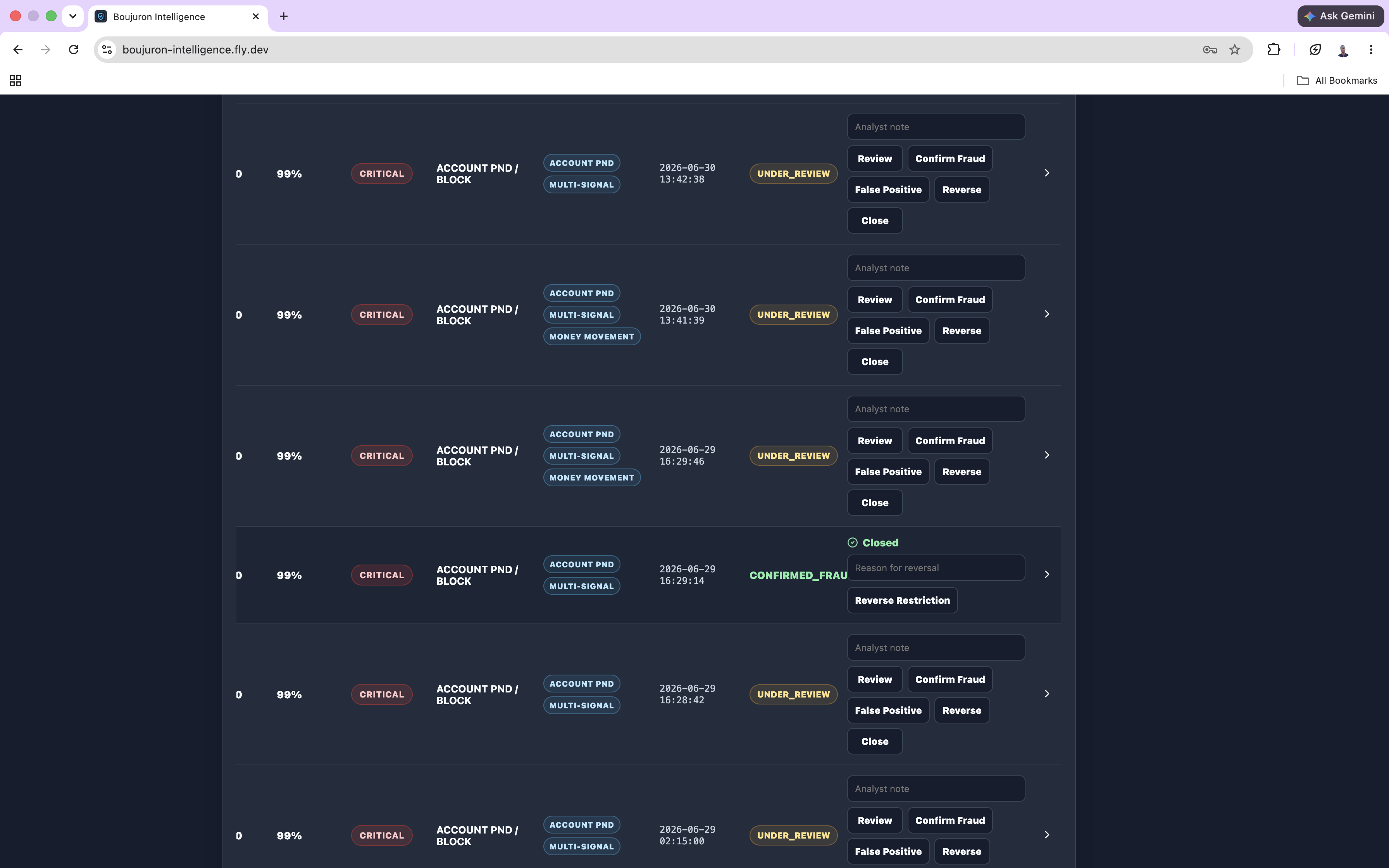
Boujuron dashboard showing the reversed decision by the analyst after auto pnd has been place on the account
-
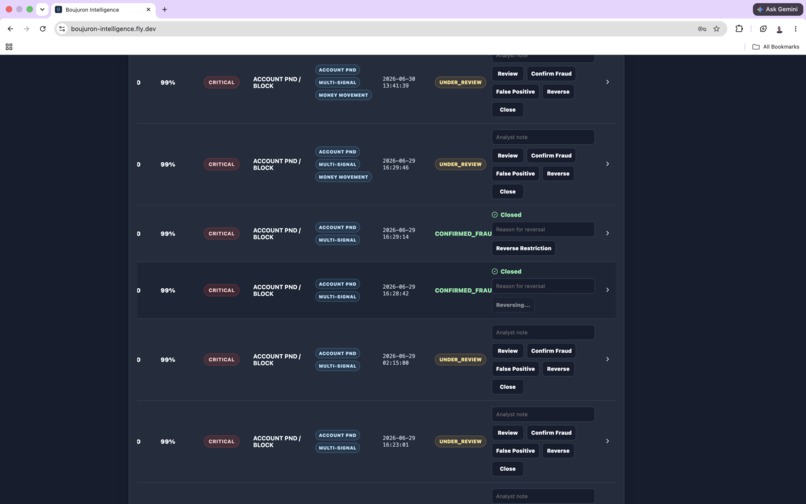
Boujuron dashboard showing the analyst decision on the customer account
-
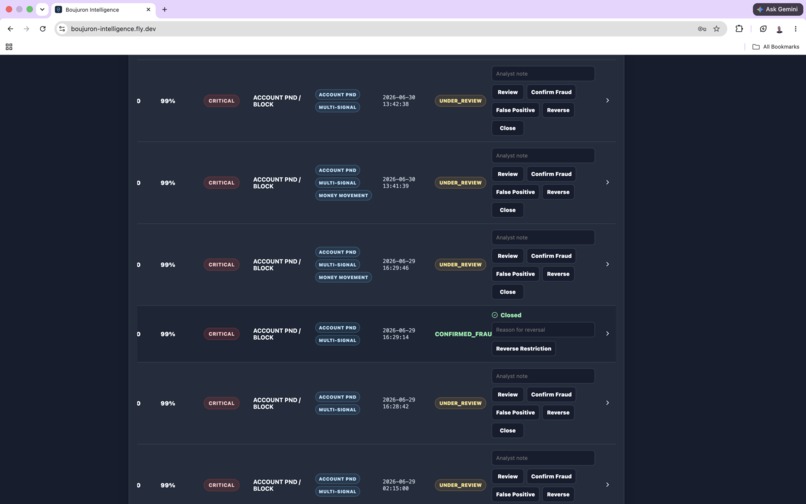
Boujuron dashboard showing the customer account state status
-
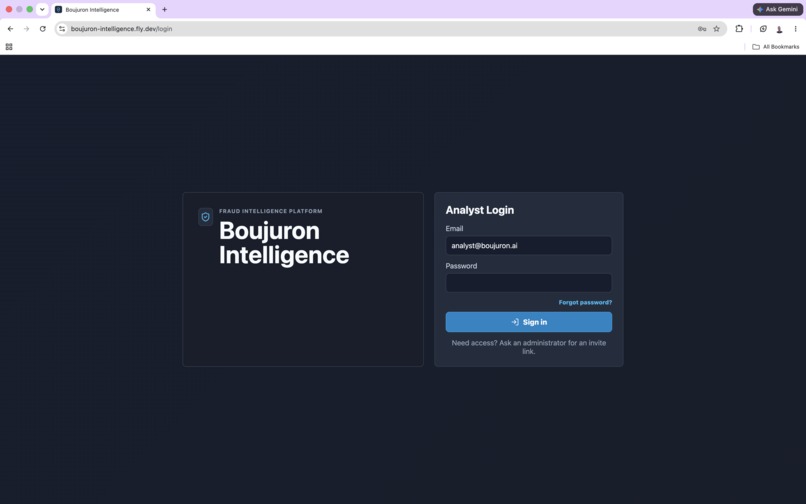
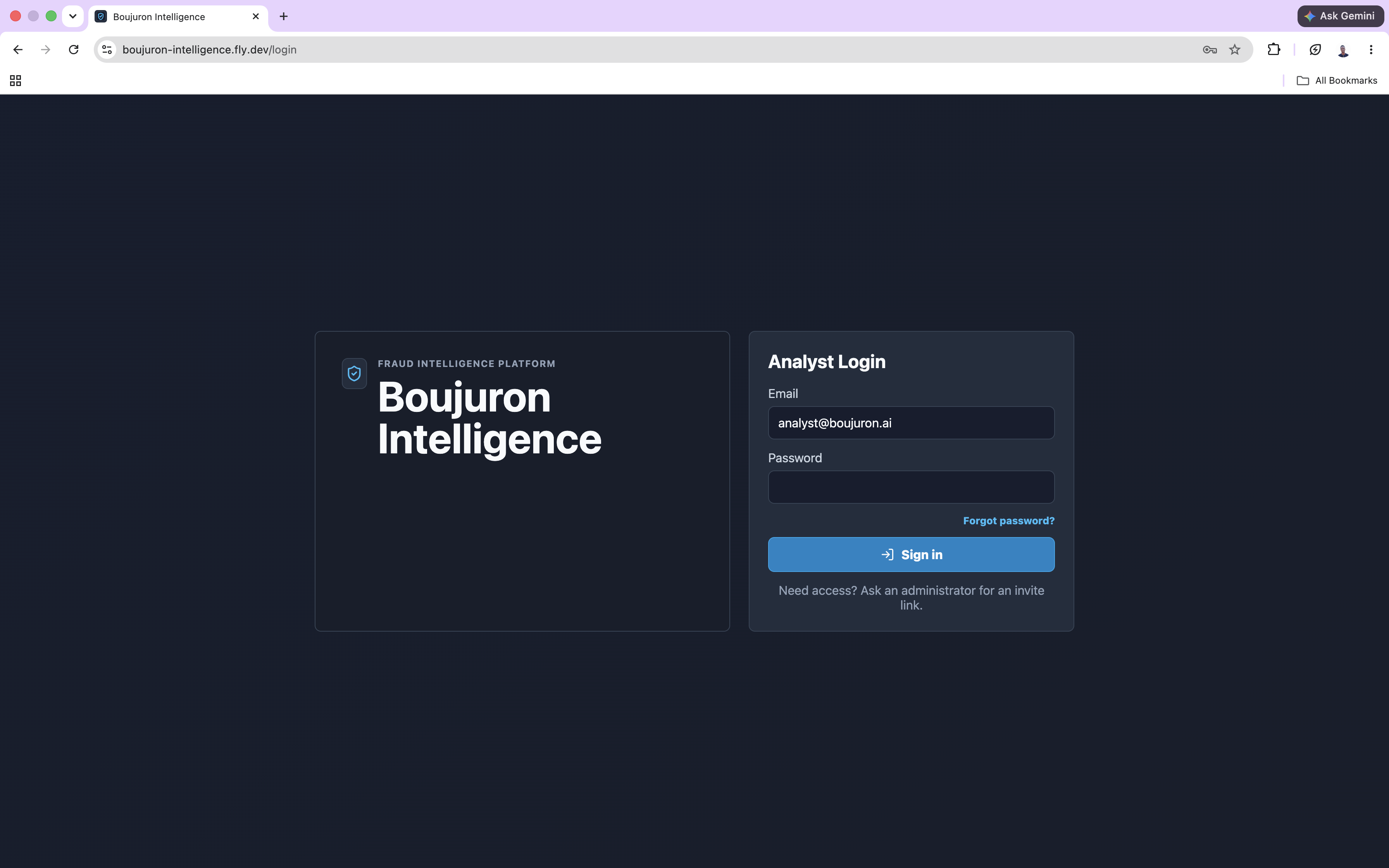
Boujuron secured login page
-
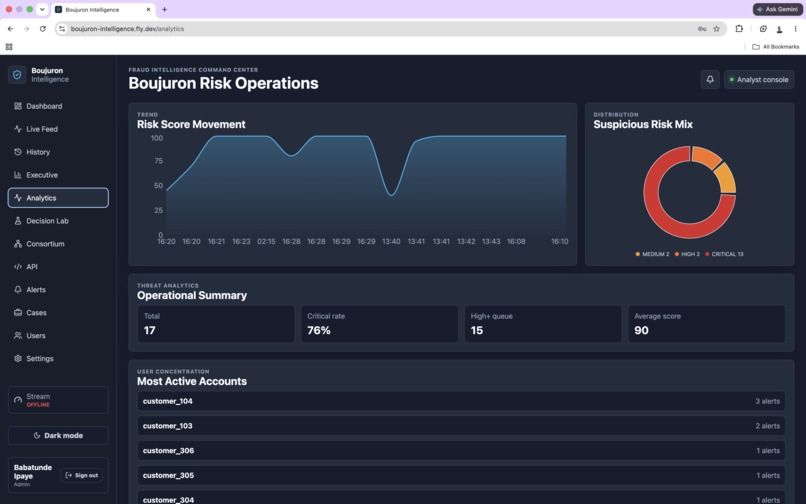
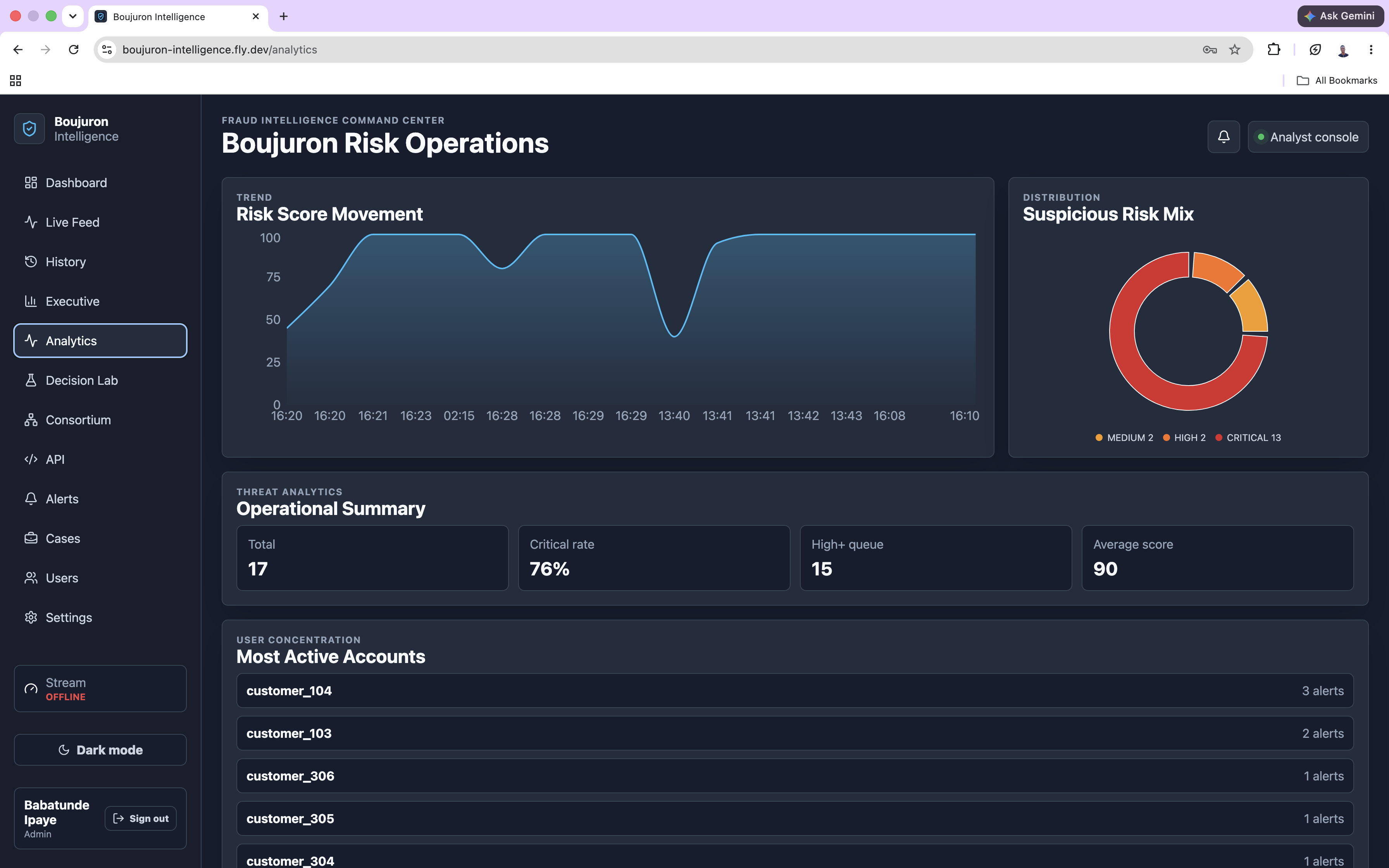
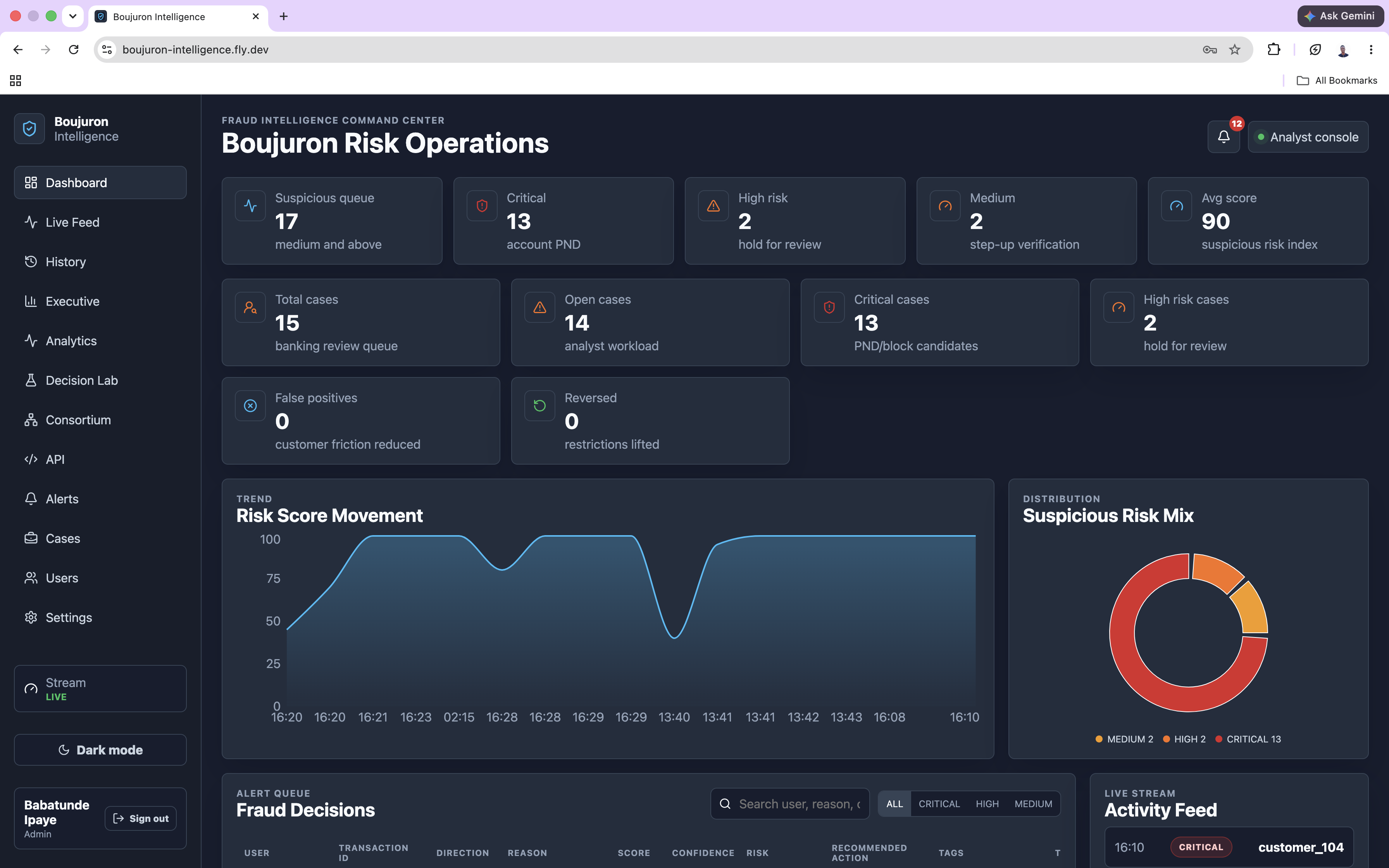
Boujuron risk score movement
-
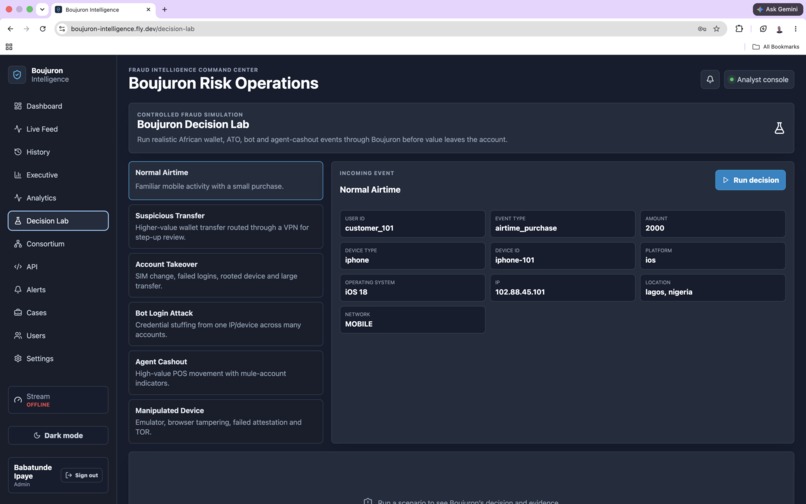
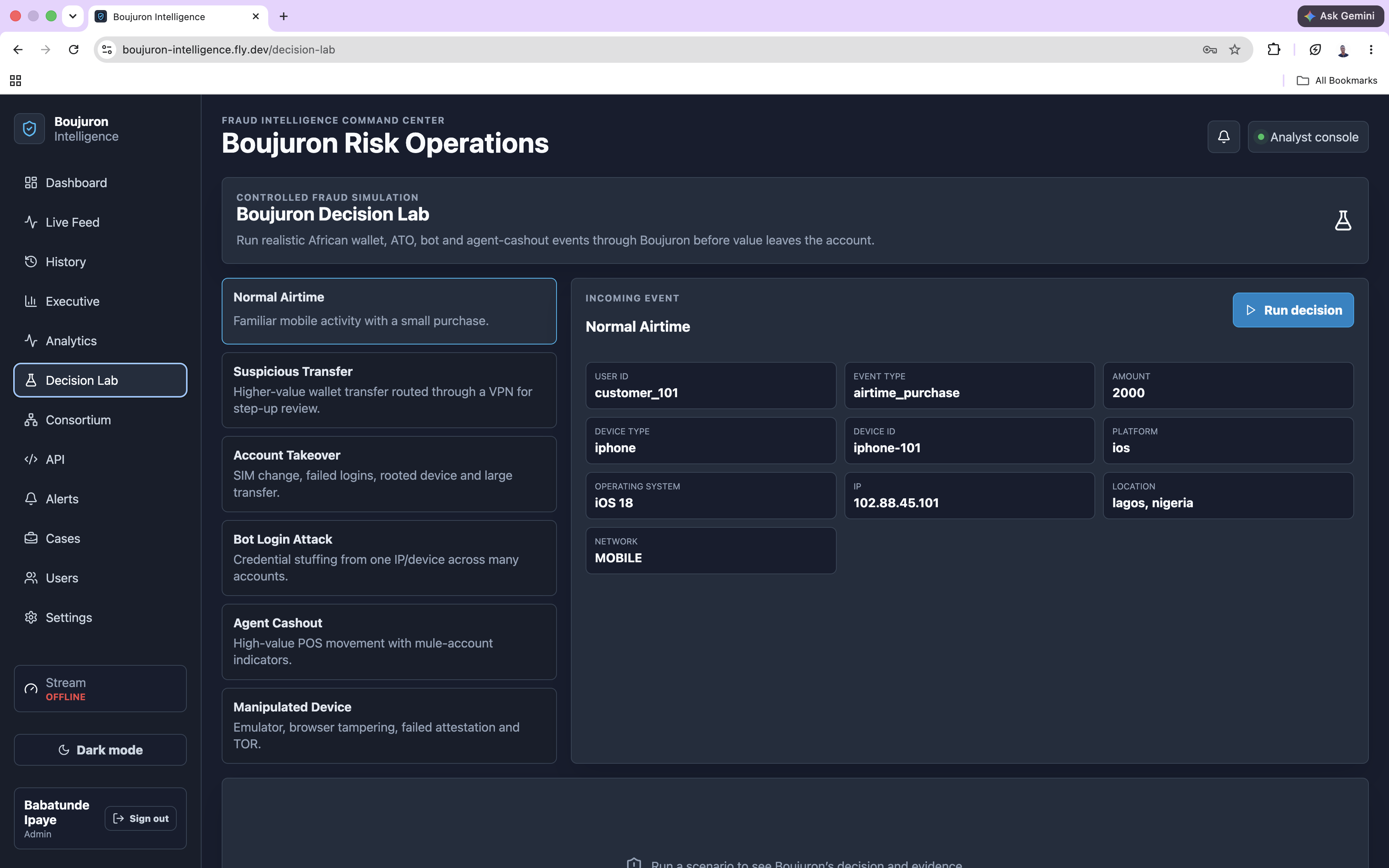
Boujuron Decision lab (Controlled fraud simulation)
-
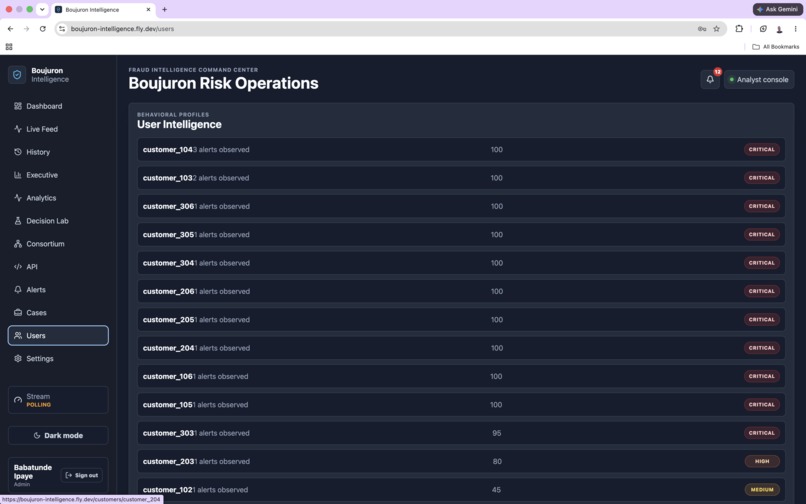
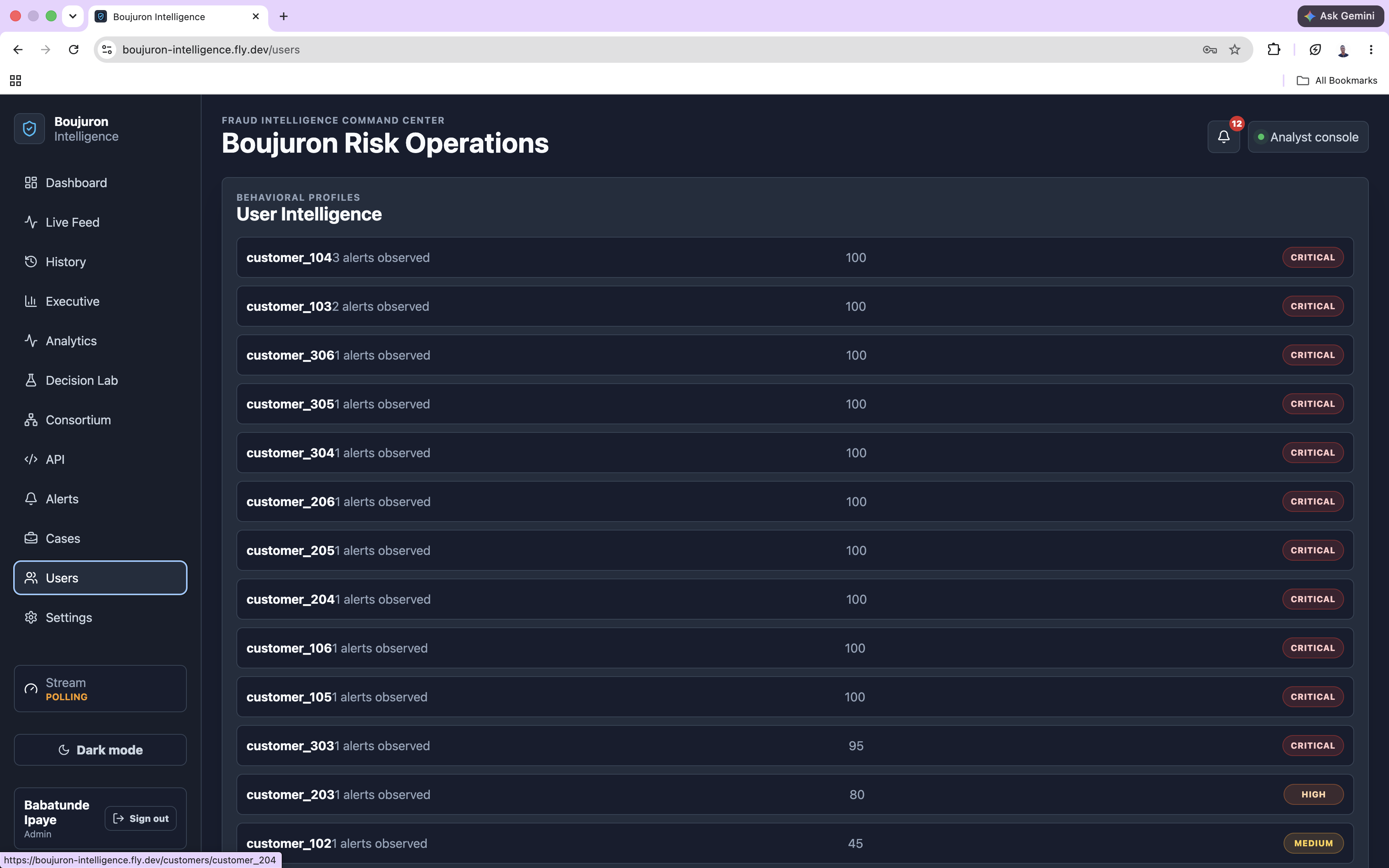
Boujuron behavioral profile
-
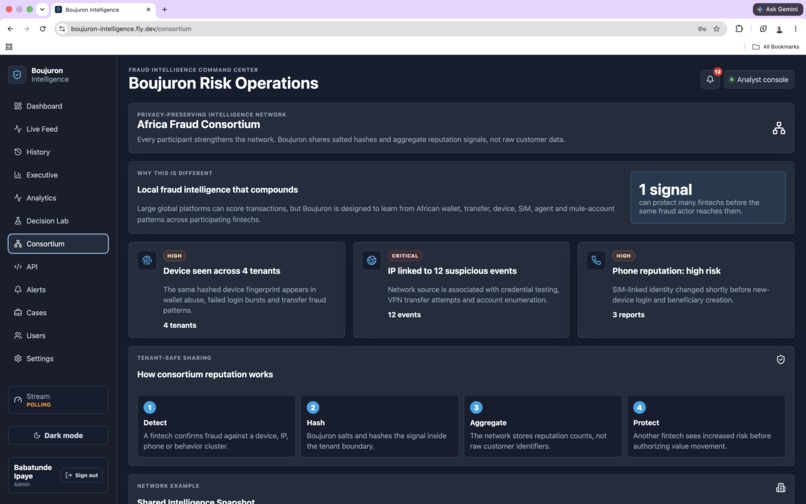
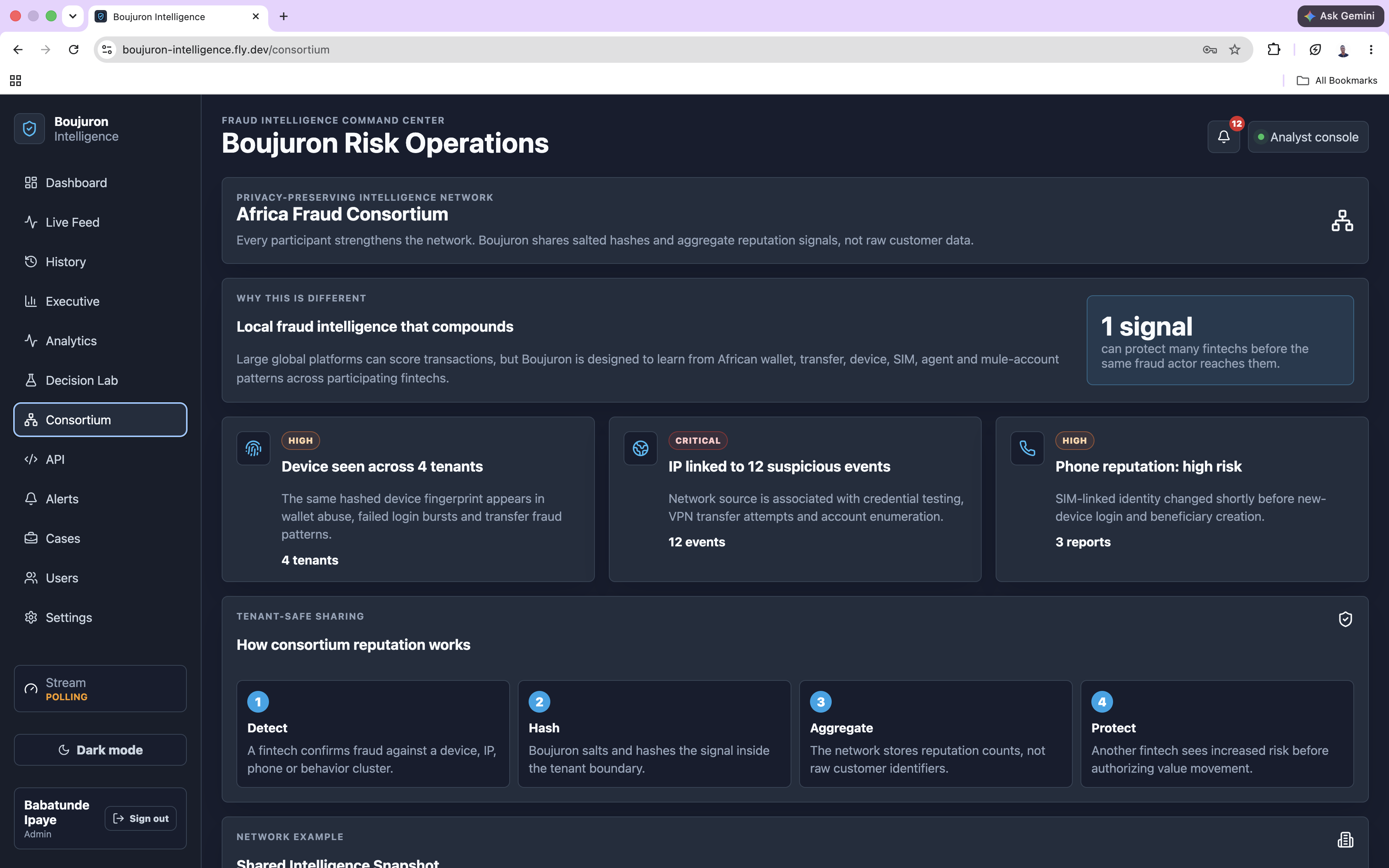
Boujuron Consortium
-
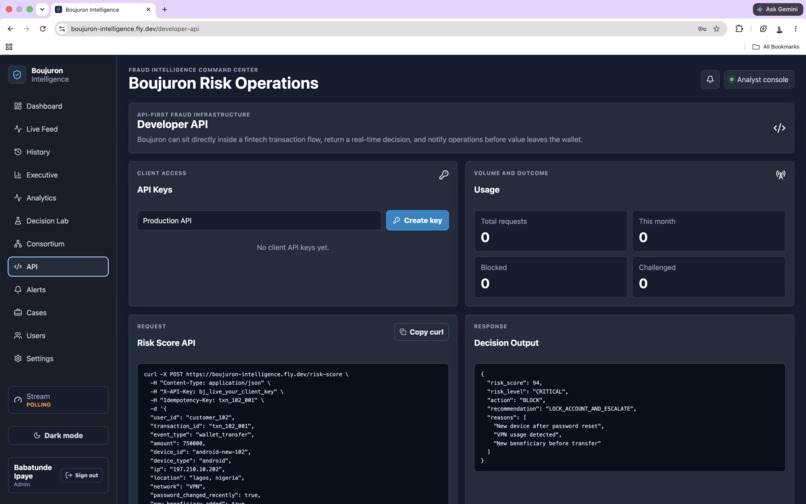
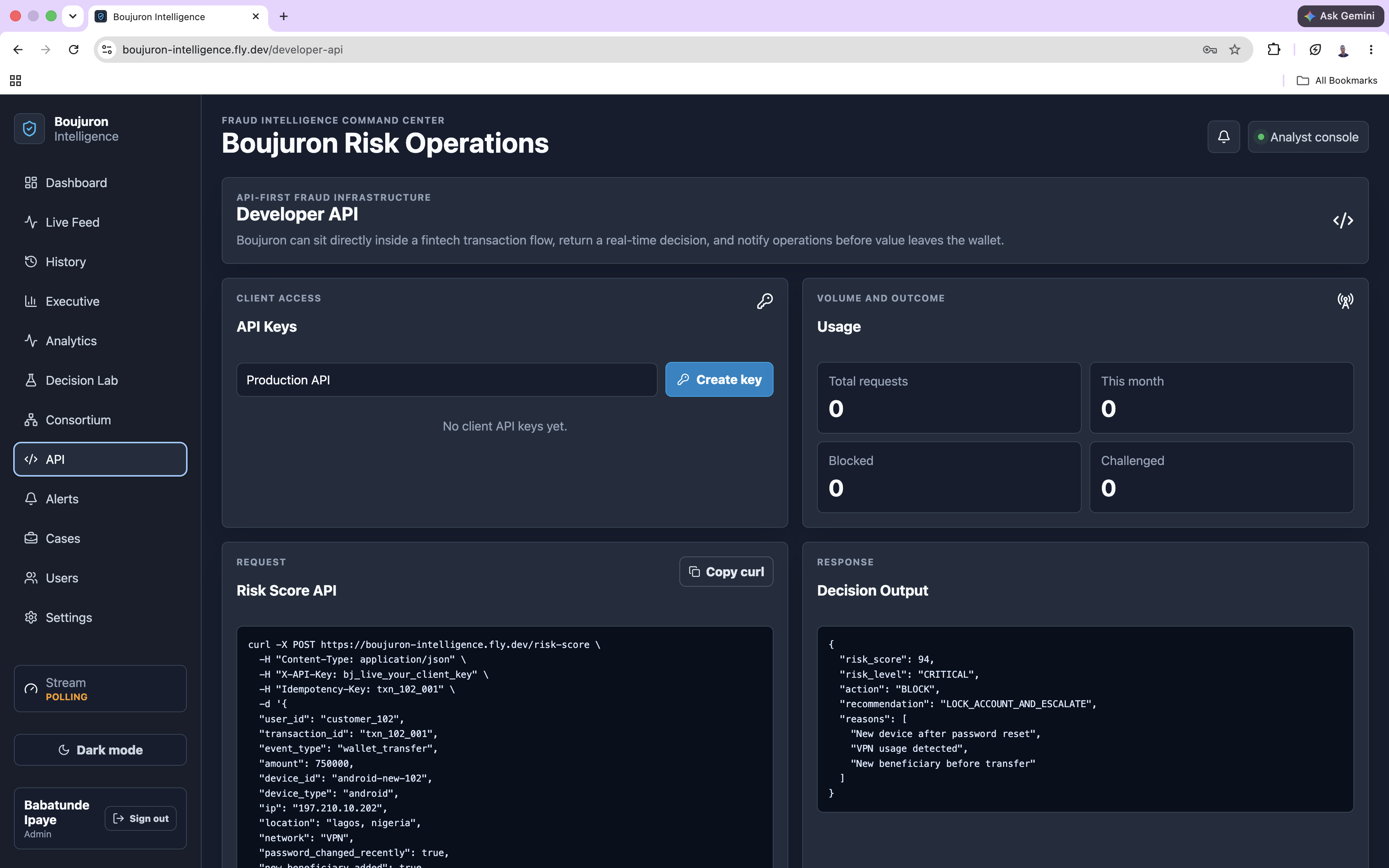
Boujuron Developer API
-
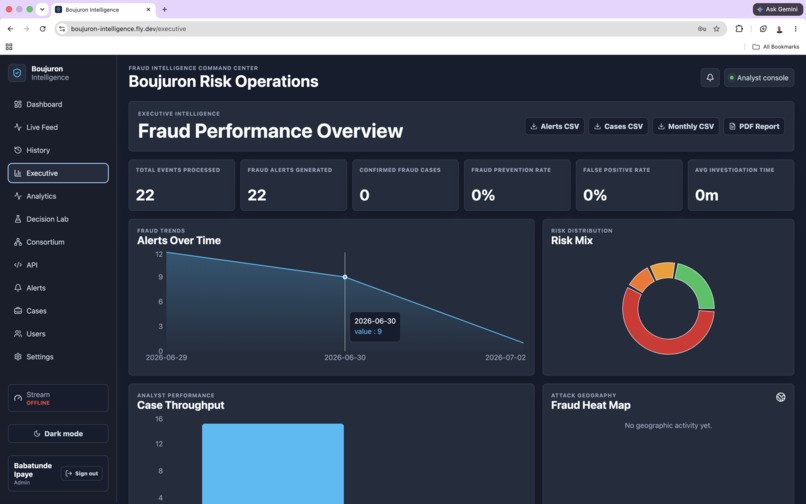
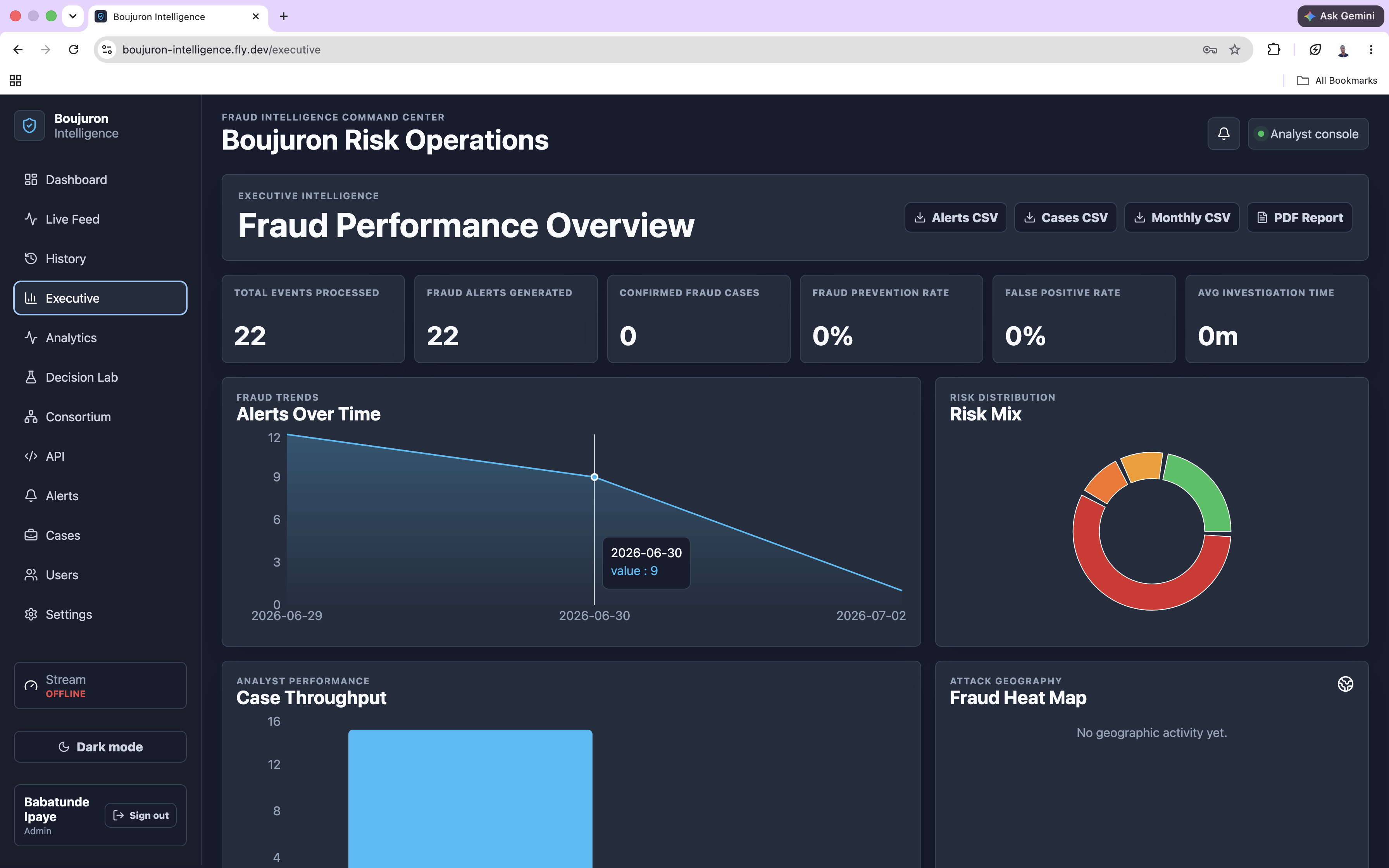
Boujuron fraud performance overview
-
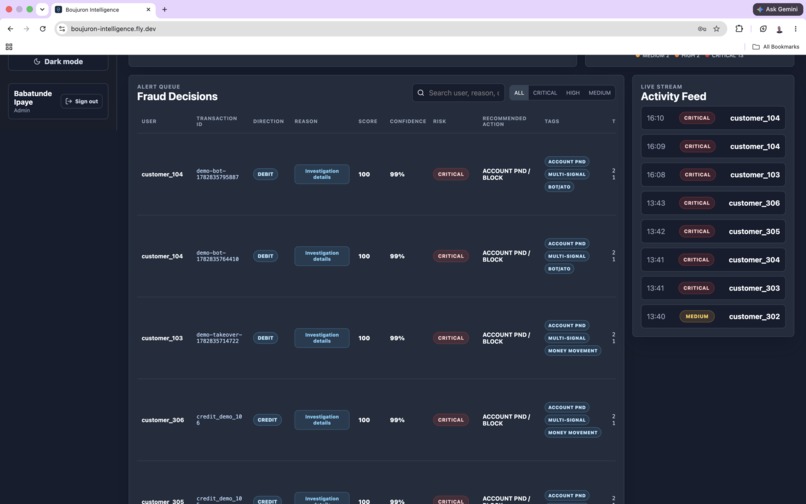
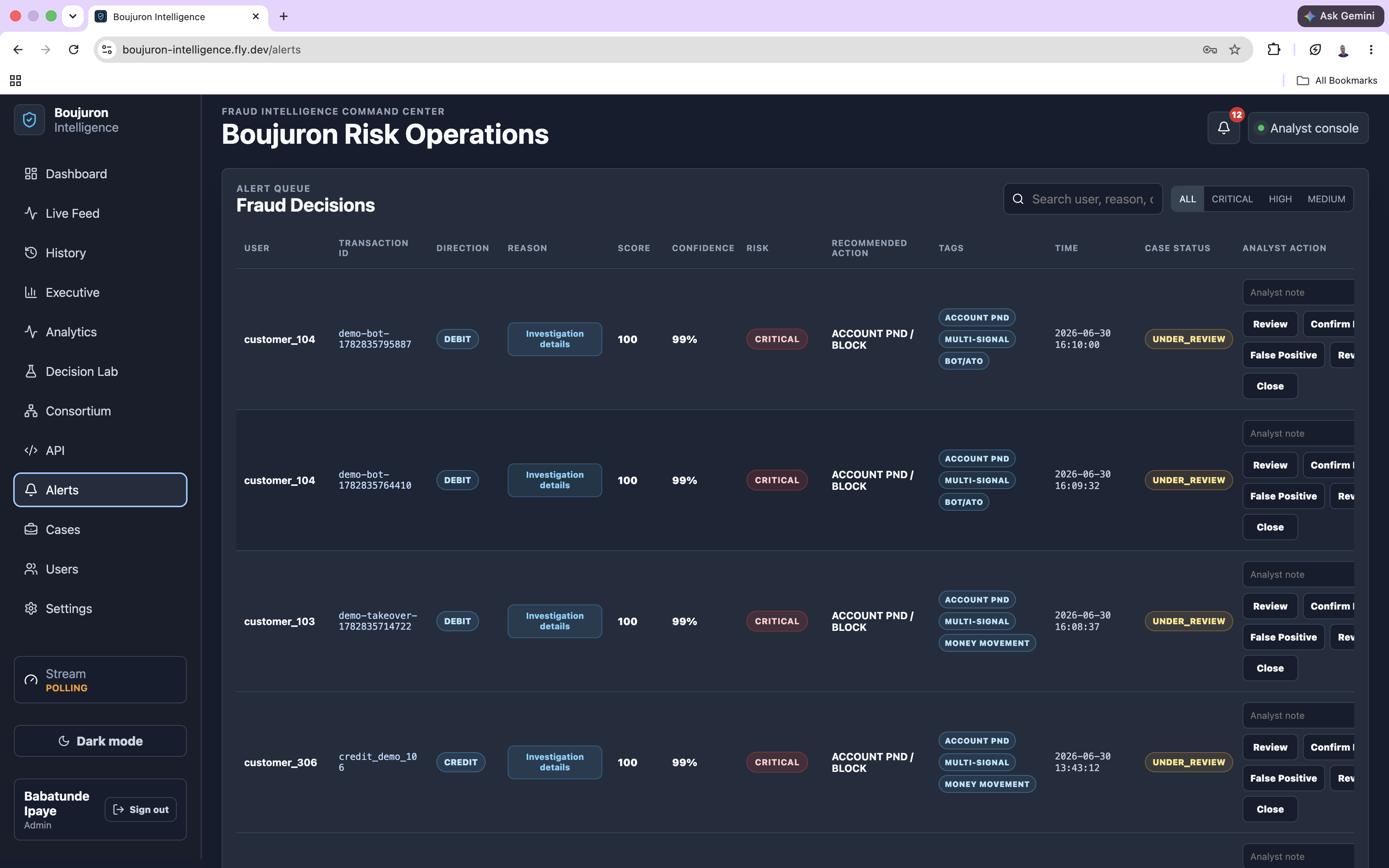
Boujuron dashboard showing the alert queues
-
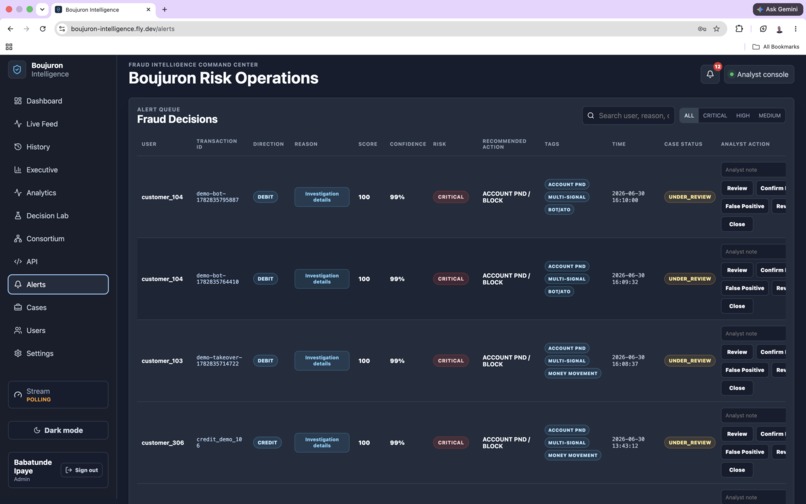
Boujuron alert queues
-
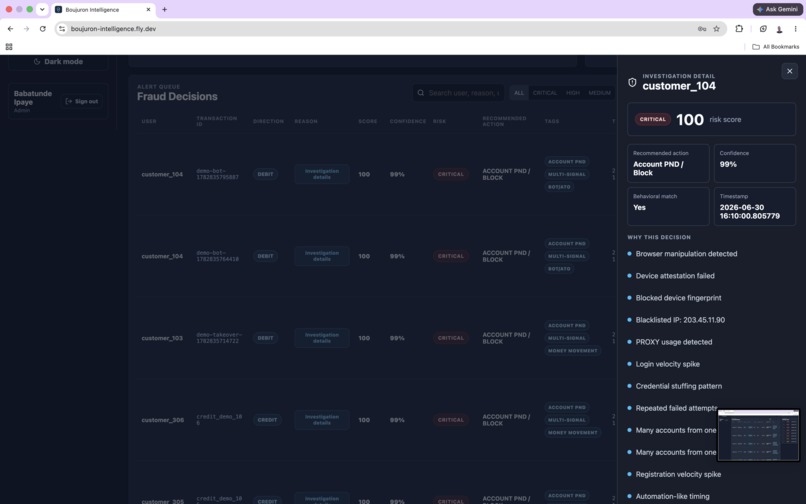
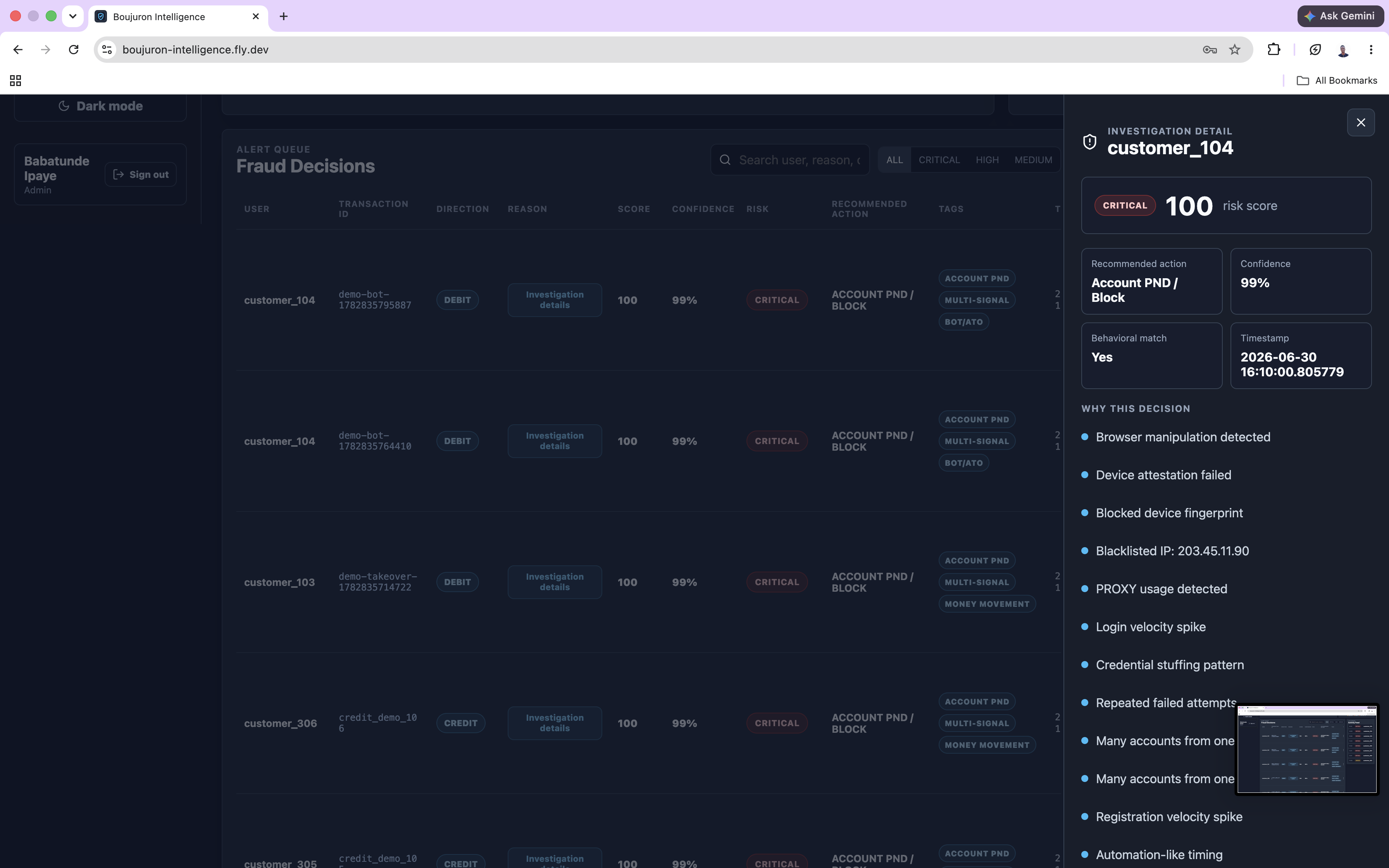
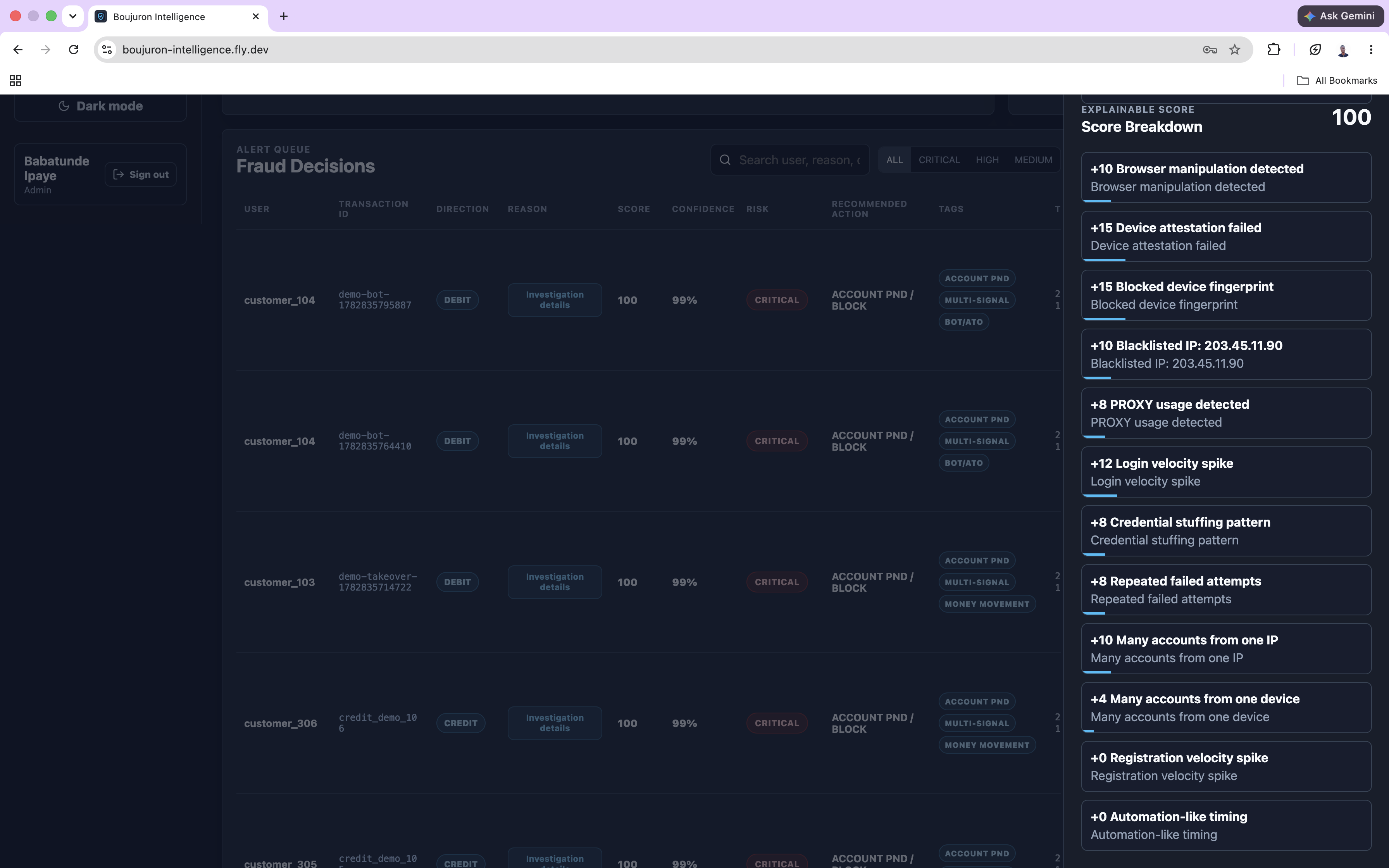
Boujuron dashboard showing customer investigation Details
-
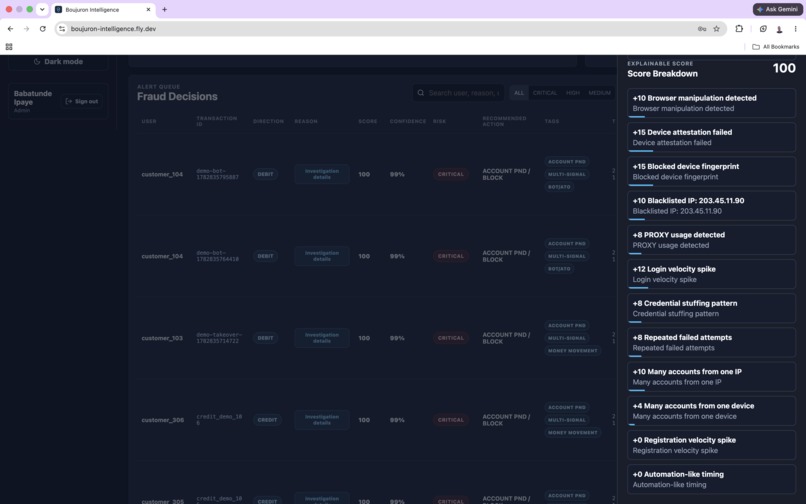
Boujuron dashboard showing customer investigation Details II
-
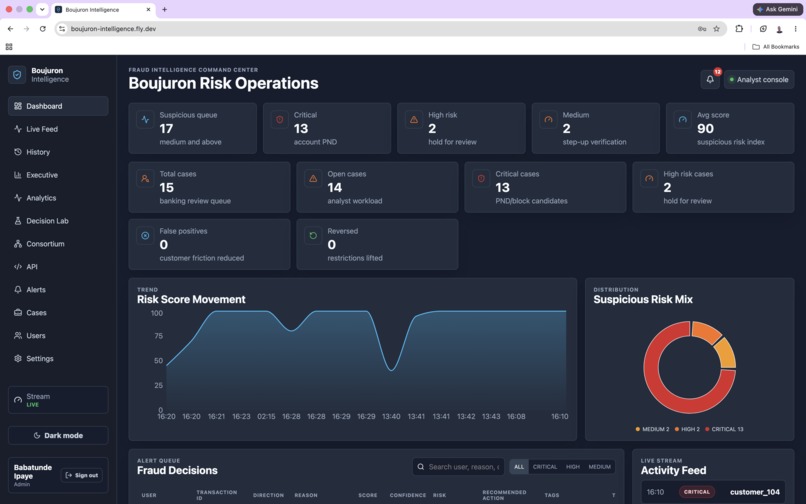
Boujuron Dashboard
-

Boujuron access and investigation history
-
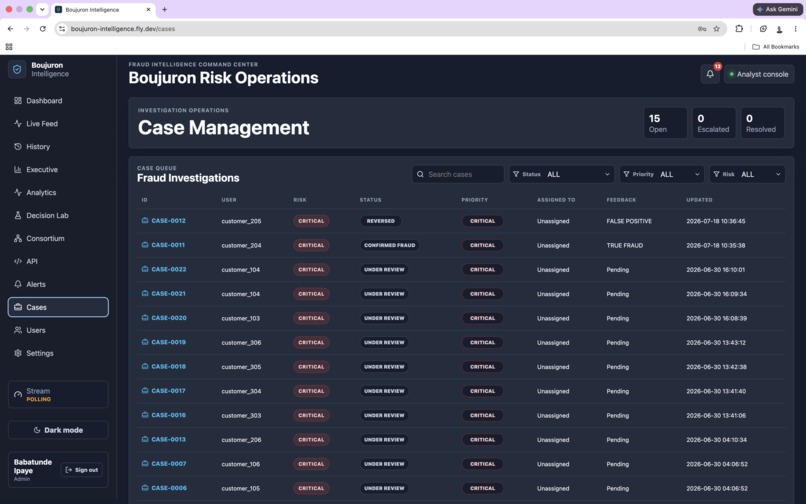
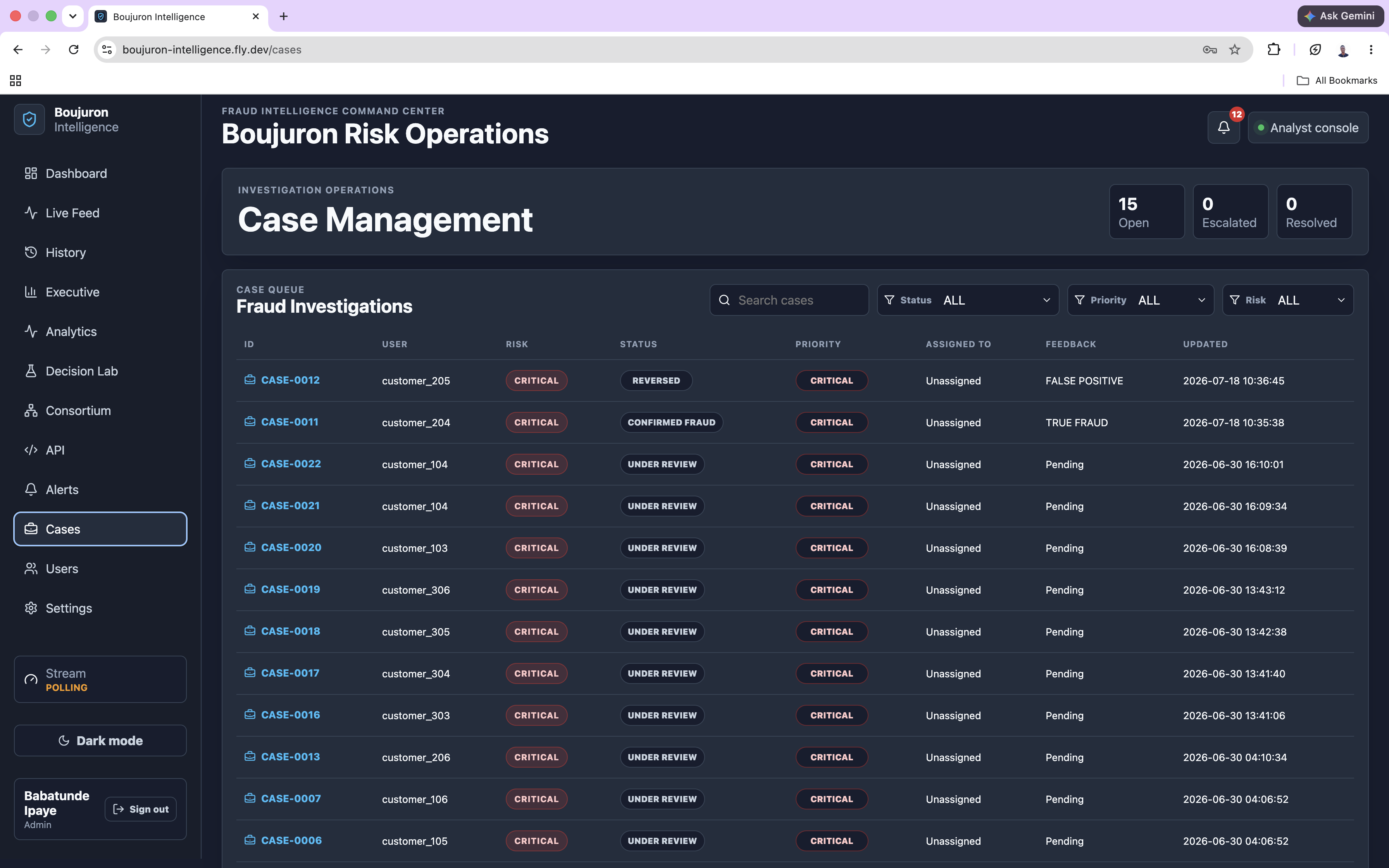
Boujuron Case management


Inspiration
As Co-Founder and Lead Software Engineer at Boujuron System Limited, I set out to build a fraud intelligence platform that goes beyond traditional fraud detection. While Boujuron Intelligence already provided a secure backend for fraud management, OpenAI Build Week gave me the opportunity to enhance it with AI-powered capabilities, including explainable fraud reasoning, intelligent investigation summaries, and contextual recommendations that help analysts make faster and more informed decisions.
Financial fraud costs organizations billions of dollars each year, yet many fraud teams still rely on manual investigations and rule-based systems that generate excessive false positives with little explanation. Analysts often know that a transaction is suspicious but spend significant time understanding why.
Boujuron Intelligence addresses this challenge by combining modern AI with scalable backend engineering. Instead of simply assigning a risk score, the platform uses OpenAI models to generate human-readable explanations, summarize fraud investigations, and provide actionable recommendations. The goal is to help organizations detect, understand, and investigate fraud more efficiently while keeping human analysts in control of critical decisions.
What it does
Boujuron Intelligence is an AI-powered fraud intelligence platform that helps organizations:
- Detect suspicious transactions and user behavior.
- Analyze fraud signals using Large Language Models.
- Generate explainable risk assessments instead of opaque fraud scores.
- Assist fraud analysts with AI-generated investigation summaries.
- Manage fraud cases through a centralized investigation dashboard.
- Reduce false positives by combining behavioral analysis with contextual AI reasoning.
- Provide secure APIs for integration into existing financial systems. Unlike traditional fraud detection tools that simply assign risk scores, Boujuron Intelligence focuses on AI-assisted decision support, helping investigators understand the reasoning behind each recommendation.
How we built it
The platform is built using a modern backend architecture designed for scalability and future machine learning integration.
Backend
- Python
- FastAPI
- Async REST APIs
- JWT Authentication
- Role-Based Access Control (RBAC)
Database
- PostgreSQL
Infrastructure
- Docker
- Git
- Cloud-ready architecture
AI OpenAI models for:
- Fraud reasoning
- Investigation summaries
- Risk explanation
- Intelligent recommendations
The backend follows a modular architecture, making it easy to integrate future machine learning models, additional fraud engines, and external financial systems.
Challenges we ran into
Building an AI-powered fraud platform involved several technical challenges:
- Designing a scalable backend capable of processing large volumes of fraud-related events.
- Structuring investigation workflows that remain intuitive for fraud analysts.
- Generating AI responses that are both explainable and useful rather than generic.
- Balancing performance, security, and maintainability while keeping the platform extensible.
- Creating a modular architecture that supports future behavioral analytics and machine learning models without requiring major redesigns. One of the biggest engineering challenges was ensuring that AI complements human investigators by providing context and recommendations instead of replacing human judgment.
Accomplishments that we're proud of
- Built a production-ready AI-powered fraud intelligence platform from the ground up using Python, FastAPI, PostgreSQL, and OpenAI.
- Successfully integrated OpenAI models to generate explainable fraud risk assessments, investigation summaries, and actionable recommendations instead of simple risk scores.
- Designed a secure, modular backend architecture with JWT authentication, role-based access control (RBAC), and scalable REST APIs.
- Developed an AI-assisted fraud investigation workflow that helps analysts understand why an activity is suspicious, improving transparency and decision-making.
- Created a cloud-ready foundation that can be extended with real-time event streaming, machine learning models, and enterprise financial system integrations.
- Demonstrated how LLMs can augment fraud analysts by reducing manual investigation effort while keeping humans in control of final decisions. This highlights both the technical sophistication and the practical value of Boujuron Intelligence, which is exactly what hackathon judges are looking for.
What we learned
Throughout development, we learned that effective AI systems require much more than integrating an LLM. They need:
- High-quality backend architecture.
- Secure API design.
- Well-structured data models.
- Clear prompting strategies.
- Explainable outputs that users can trust. We also gained valuable experience designing AI-native backend services that combine traditional software engineering with intelligent automation.
What's next for Boujuron Intelligence
Our roadmap includes:
- Real-time fraud event streaming.
- Behavioral anomaly detection using machine learning.
- Multi-agent AI investigators.
- Automated fraud report generation.
- Graph-based relationship analysis.
- Integration with banking and payment APIs.
- Advanced analytics dashboards.
- Support for enterprise security and compliance standards. Our long-term vision is to build an intelligent fraud operations platform that enables organizations to detect, investigate, and prevent fraud faster using explainable AI.

Log in or sign up for Devpost to join the conversation.