-
-

Login Page
-
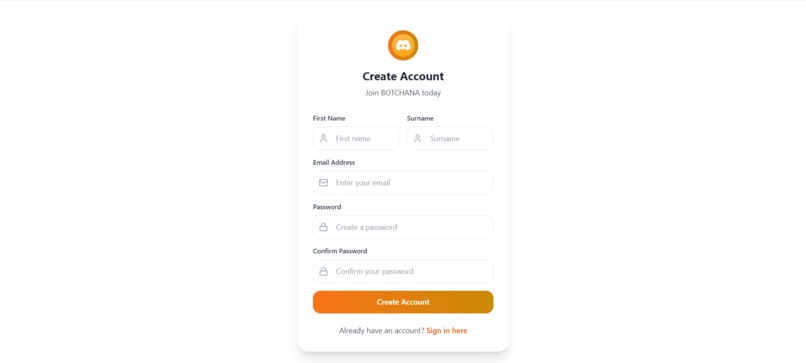
Register Page
-
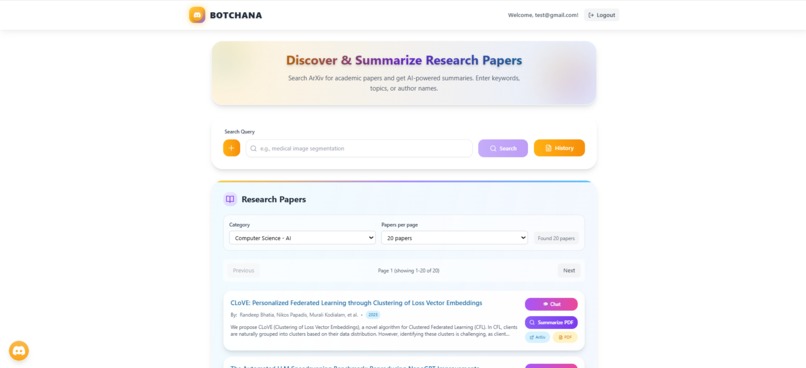
Dashboard Page
-
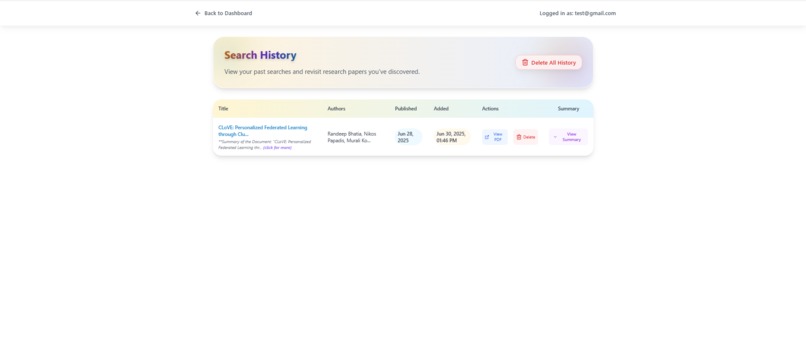
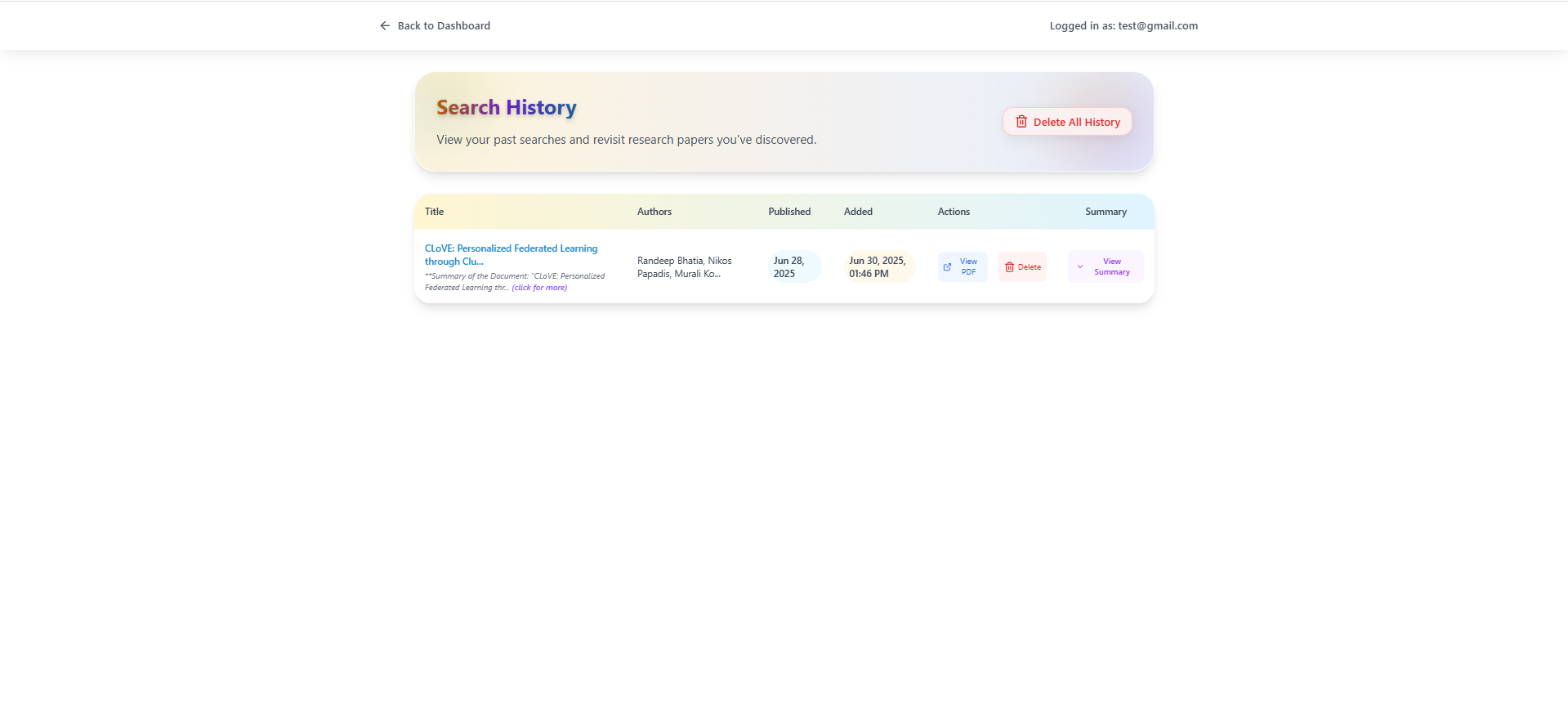
History Page


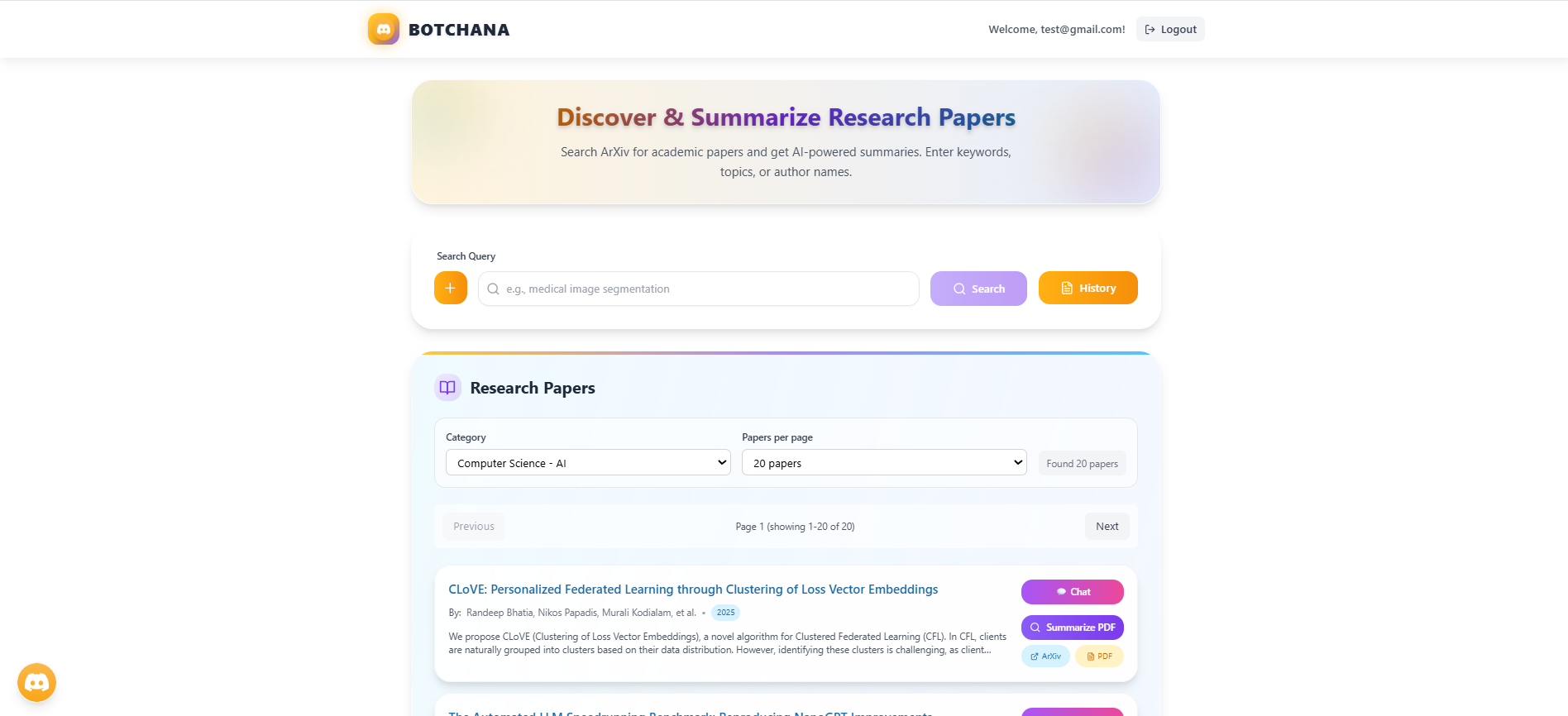
Botchana - AI-Powered Research Paper Discovery Platform
Inspiration
The overwhelming volume of academic research being published daily creates a significant barrier for researchers, students, and professionals trying to stay current in their fields. We were inspired by the challenge of information overload in academia - thousands of papers are published on ArXiv alone every week, making it nearly impossible to identify relevant research efficiently. We envisioned a solution that could democratize access to academic knowledge by leveraging AI to make research discovery and comprehension more accessible and interactive.
What it does
Botchana is an AI-powered research paper discovery and analysis platform that transforms how users interact with academic literature. The platform offers:
- Intelligent Paper Search: Users can search through ArXiv's vast database using natural language queries, finding papers by keywords, topics, or authors across multiple academic categories
- AI-Powered Summarization: Leveraging OpenAI's GPT-4o-mini, Botchana generates concise, meaningful summaries of research papers, extracting key insights and methodologies
- PDF Upload & Analysis: Users can upload their own research papers for AI-driven analysis and summarization
- Interactive Chat with Papers: Using advanced RAG (Retrieval-Augmented Generation) technology, users can have conversations with papers, asking specific questions and getting contextual answers
- Search History Management: Complete tracking of past searches and analyzed papers for easy reference and organization
- Multi-Category Browse: Explore papers across various ArXiv categories from computer science to physics and beyond
How we built it
Our architecture follows a modern full-stack approach with multiple integrated services:
Frontend Stack:
- Built with React 18 and TypeScript for type safety and modern component patterns
- Tailwind CSS for responsive, custom-designed UI with smooth animations and dark/light theme support
- Vite for lightning-fast development and optimized production builds
- React Router for seamless navigation between features
Backend Infrastructure:
- FastAPI (Python) as our primary API server, chosen for its performance and automatic API documentation
- Node.js/Express proxy server for handling external API integrations
- OpenAI GPT-4o-mini integration for natural language processing and summarization
- ArXiv API integration for real-time academic paper discovery
Database & Storage:
- Supabase (PostgreSQL) for user authentication, paper metadata, and search history
- Supabase Storage for secure PDF file management
- Row Level Security (RLS) implementation for data protection
AI & RAG Implementation:
- Custom RAG pipeline for contextual paper analysis
- Vector embeddings for semantic search capabilities
- Conversation memory for coherent multi-turn dialogues with papers
Challenges we ran into
API Rate Limiting & Integration: Managing multiple external APIs (ArXiv, OpenAI) while handling rate limits and ensuring reliable service availability required implementing robust retry mechanisms and caching strategies.
RAG Implementation Complexity: Building an effective Retrieval-Augmented Generation system that could accurately understand and respond to questions about academic papers required extensive prompt engineering and context management.
PDF Processing & Text Extraction: Handling diverse PDF formats and extracting clean, structured text while preserving academic formatting and mathematical notation proved challenging.
Authentication & Security: Implementing secure user authentication with Supabase while maintaining Row Level Security for multi-tenant data access required careful database design and security policy configuration.
Performance Optimization: Balancing AI processing time with user experience expectations, especially for large papers and complex queries, required implementing async processing and smart caching.
Cross-Platform Compatibility: Ensuring consistent functionality across different operating systems and browsers while managing environment-specific configurations.
Accomplishments that we're proud of
Seamless User Experience: Created an intuitive interface that makes complex AI-powered research tools accessible to users of all technical backgrounds.
Robust RAG Implementation: Successfully built a conversational AI system that can understand and discuss academic papers with remarkable accuracy and context awareness.
Scalable Architecture: Designed a modular, scalable system that can handle multiple users simultaneously while maintaining performance.
Comprehensive Feature Set: Delivered a complete platform that addresses the entire research workflow from discovery to analysis to organization.
Security-First Approach: Implemented enterprise-grade security with proper authentication, data encryption, and user data isolation.
Real-Time Integration: Successfully integrated multiple external APIs to provide real-time access to the latest academic research.
What we learned
AI Integration Best Practices: Gained deep insights into prompt engineering, context management, and the nuances of working with large language models in production environments.
Full-Stack Development Challenges: Learned the complexities of coordinating multiple services, handling asynchronous operations, and maintaining data consistency across distributed systems.
User-Centric Design: Understood the importance of iterative design and user feedback in creating tools that truly serve academic and research communities.
Performance Optimization: Mastered techniques for optimizing AI-powered applications, including caching strategies, async processing, and efficient data structures.
Academic Data Handling: Learned the intricacies of working with academic data formats, citation systems, and the importance of preserving research integrity.
Modern Development Tools: Gained expertise with cutting-edge development tools and frameworks that enable rapid, reliable application development.
What's next for BotChana
Enhanced AI Capabilities: Integration with multiple LLM providers for improved accuracy and specialized academic tasks, including mathematical equation understanding and scientific diagram analysis.
Collaborative Features: Multi-user workspaces, shared paper collections, team annotation tools, and collaborative research management features.
Advanced Analytics: Research trend analysis, citation network mapping, author collaboration graphs, and personalized research recommendations.
Mobile Application: Native mobile apps for iOS and Android to enable research on-the-go with offline paper access and sync capabilities.
Institution Integration: Enterprise features for universities and research institutions, including SSO integration, usage analytics, and administrative controls.
Expanded Database Coverage: Integration with additional academic databases beyond ArXiv, including PubMed, IEEE Xplore, ACM Digital Library, and institutional repositories.
AI-Powered Research Assistant: Advanced features like automatic literature review generation, research gap identification, and experimental design suggestions.
Community Features: User reviews, paper recommendations, research community building, and expert-verified summaries.
Built With
- bolt.new
- fastapi
- javascript
- python
- sql
- supabase
- typescript


Log in or sign up for Devpost to join the conversation.