-
-
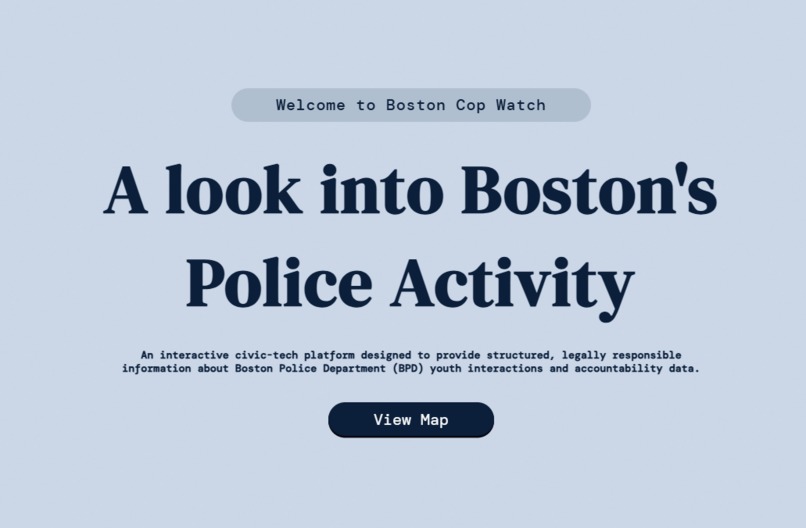
Our Homepage!
-
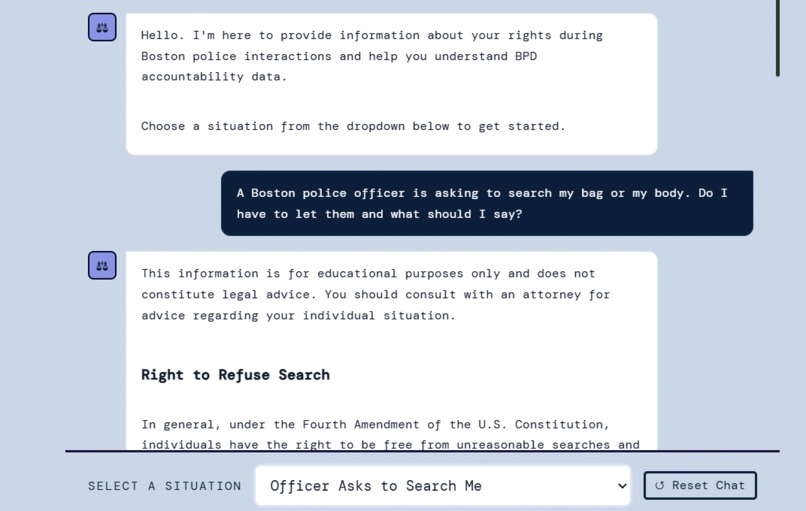
AI Informative Chatbot
-
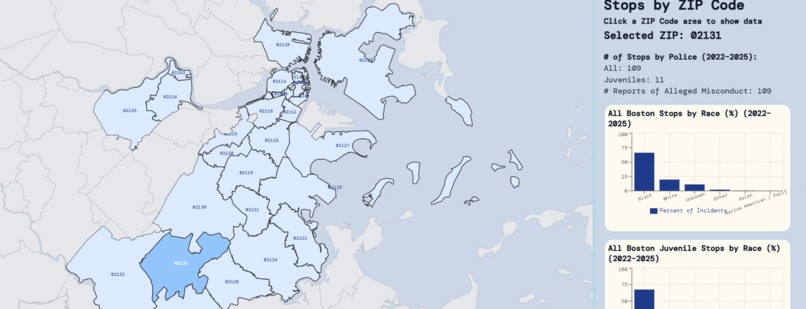
Interactive Map
Inspiration
Police interactions shape the futures of Boston youth, yet patterns remain difficult to access or analyze. We built Boston Cop Watch to increase transparency and make youth policing data visible and actionable for the public.
What it does
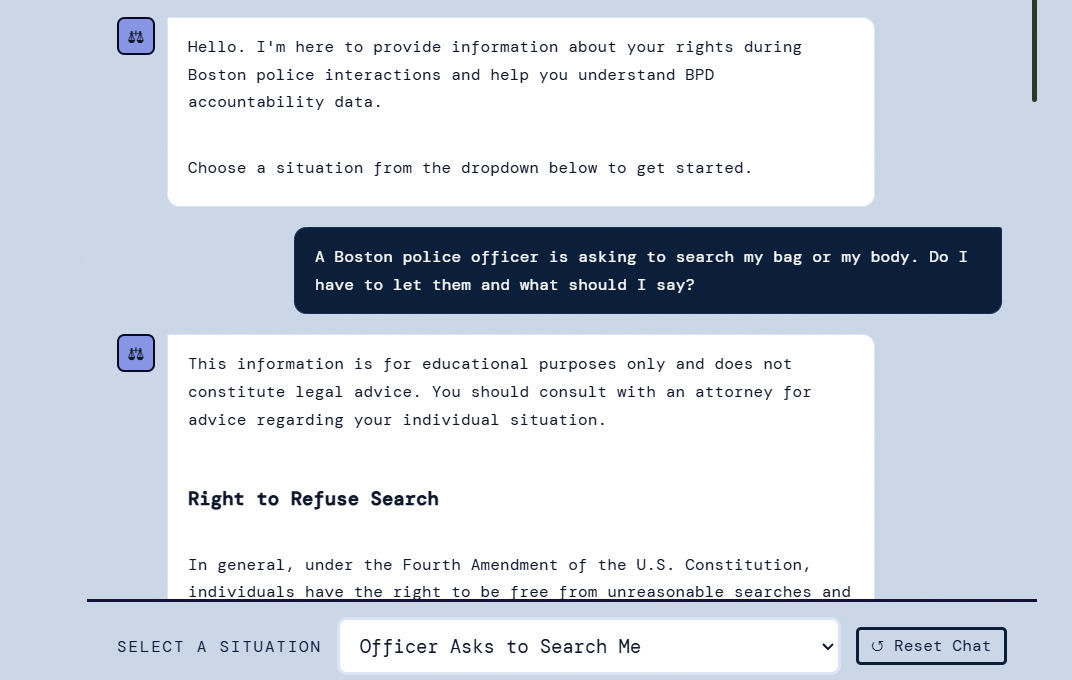
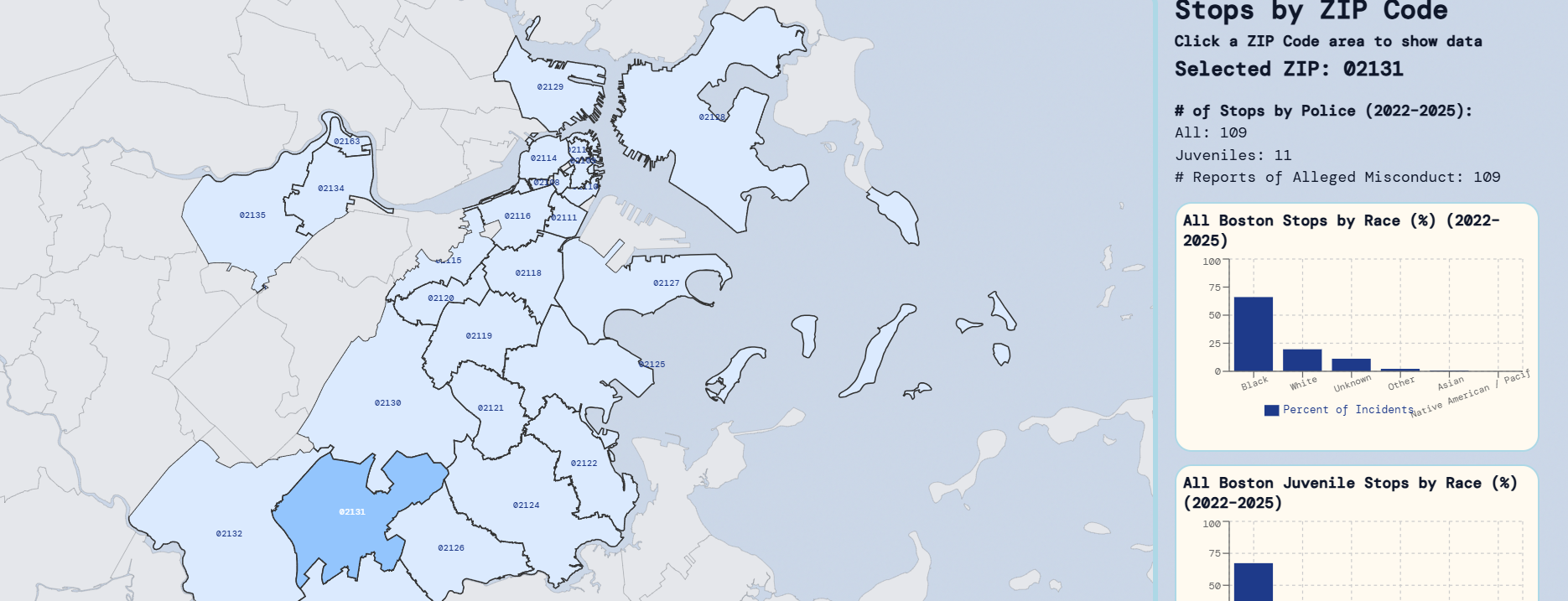
Boston Cop Watch pairs an AI rights chatbot with an interactive district-level data map. The chatbot provides clear legal guidance, while the map highlights where and how youth police encounters occur across Boston.
How we built it
We built the frontend with React and integrated routing, a custom chat interface, and geospatial visualizations using react-simple-maps and D3. A Python REST API powers the chatbot and processes structured policing data.
Challenges we ran into
Cleaning and structuring real-world policing data required careful validation. We also worked to ensure the chatbot delivered accurate, accessible information while handling sensitive civic topics responsibly.
Accomplishments that we're proud of
We integrated AI and geospatial analytics into a unified civic platform. We transformed complex policing data into clear visual summaries that are accessible to non-technical users.
What we learned
We gained experience connecting AI systems with structured civic data and building data-driven tools for public accountability. We also learned how design impacts the clarity and accessibility of sensitive information.
What's next for Boston Cop Watch
We plan to expand the dataset, improve filtering and comparisons across districts, and refine the chatbot’s contextual responses as well as improve accessibility by having a language option such as Spanish. Our goal is to strengthen civic transparency and scale the model to other communities.


Log in or sign up for Devpost to join the conversation.