Inspiration
College students often need items they only use occasionally, such as calculators, textbooks, chargers, cameras, and other everyday essentials. Buying these items can be expensive, especially when someone only needs them for a short period. Meanwhile, other students may already own those same items and rarely use them.
We wanted to create a simple way for students to share resources within their campus community. BorrowBuddy was inspired by the idea that students should be able to find what they need from people around them without having to buy everything themselves.
What it does
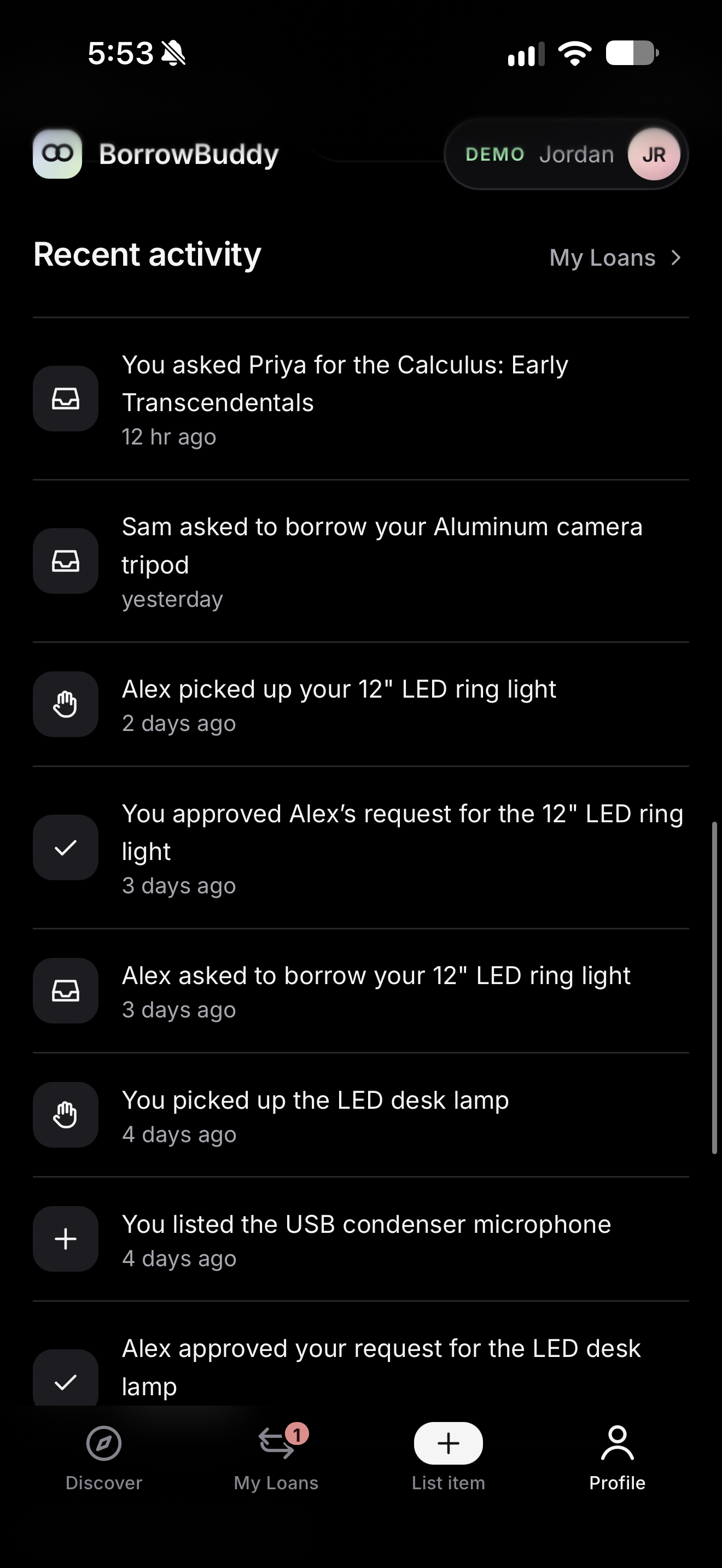
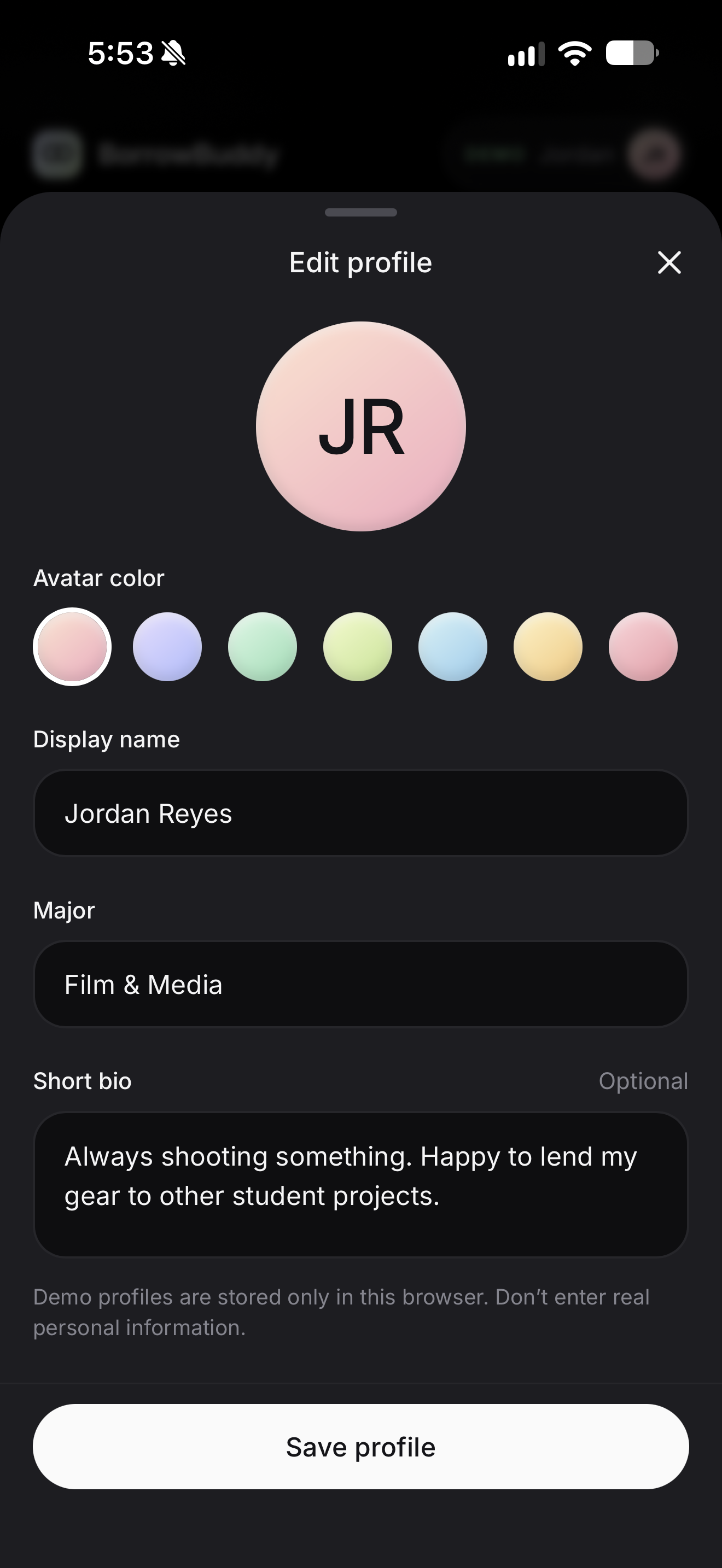
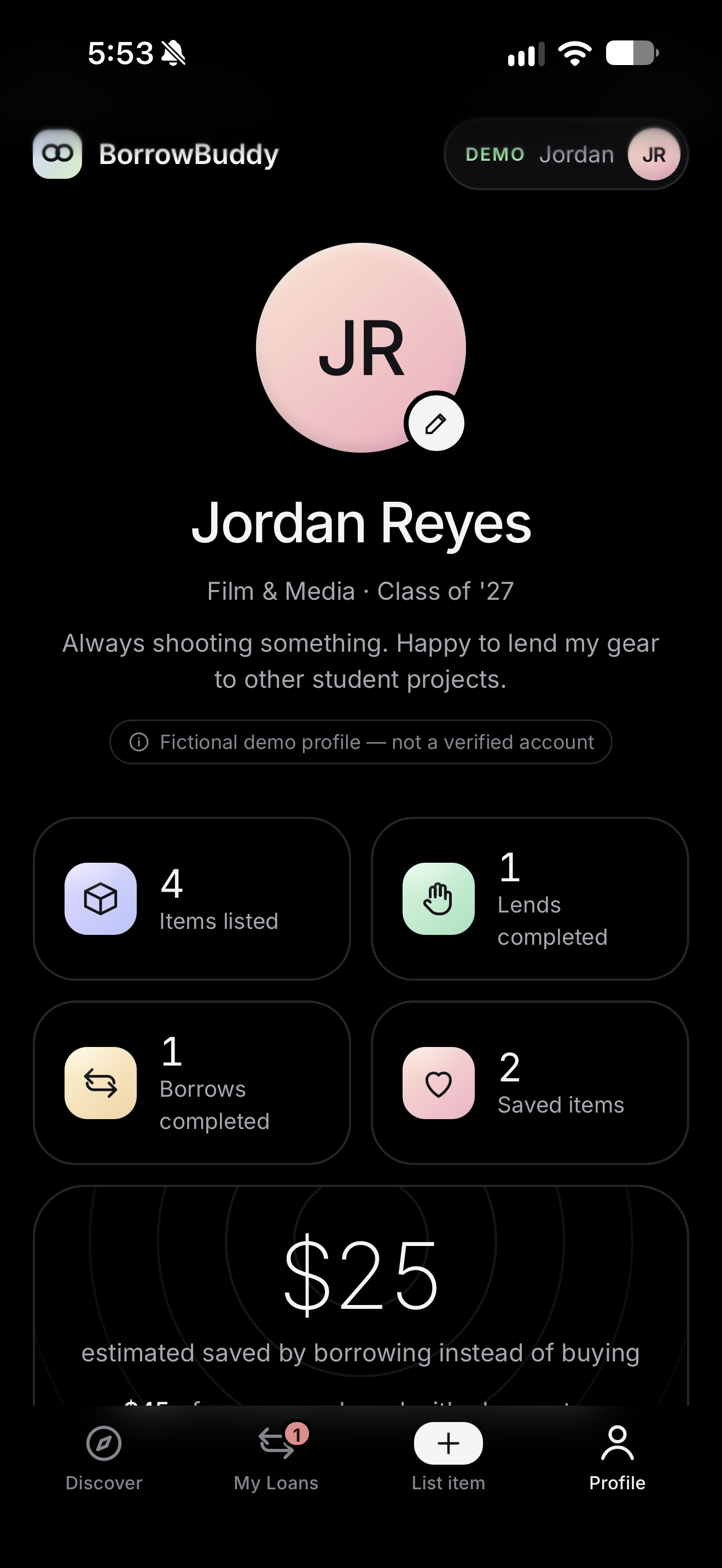
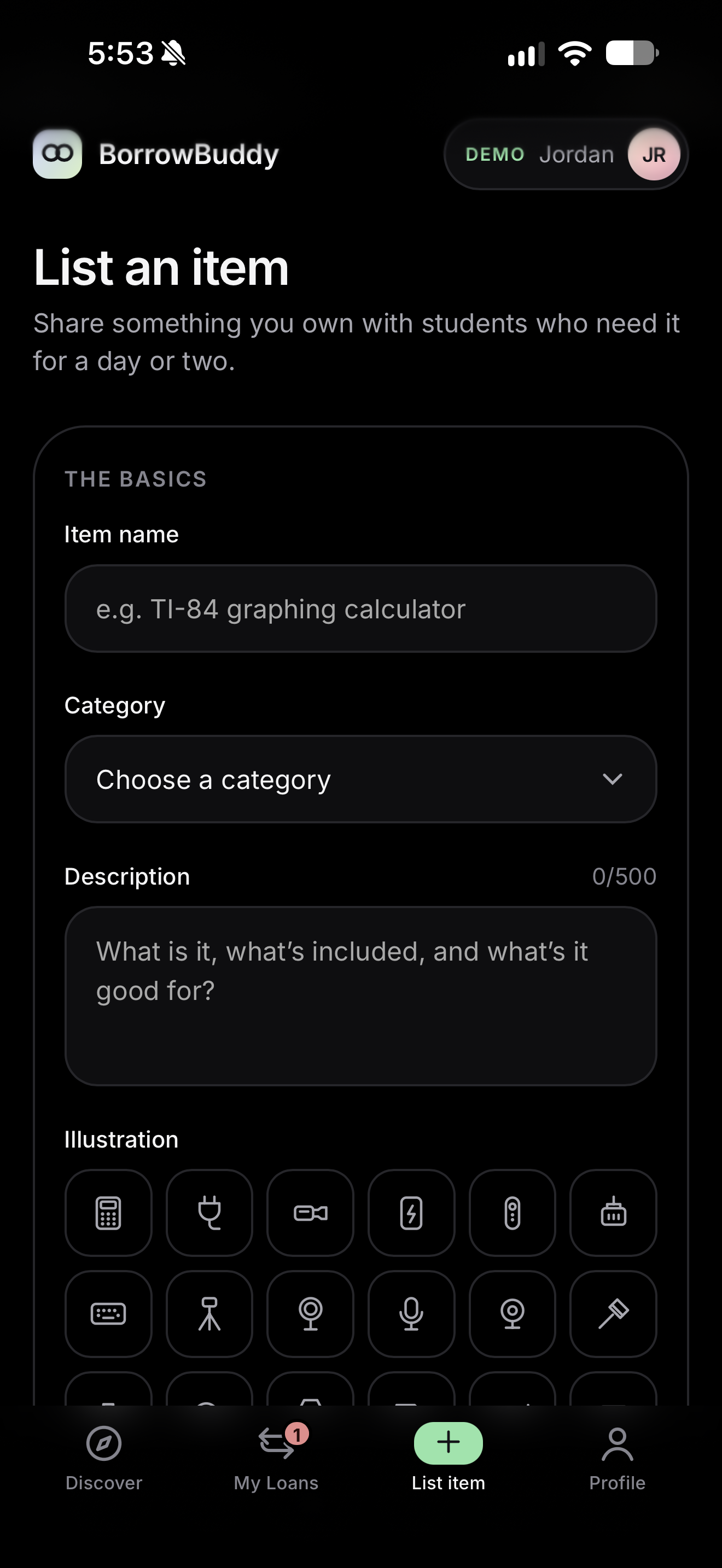
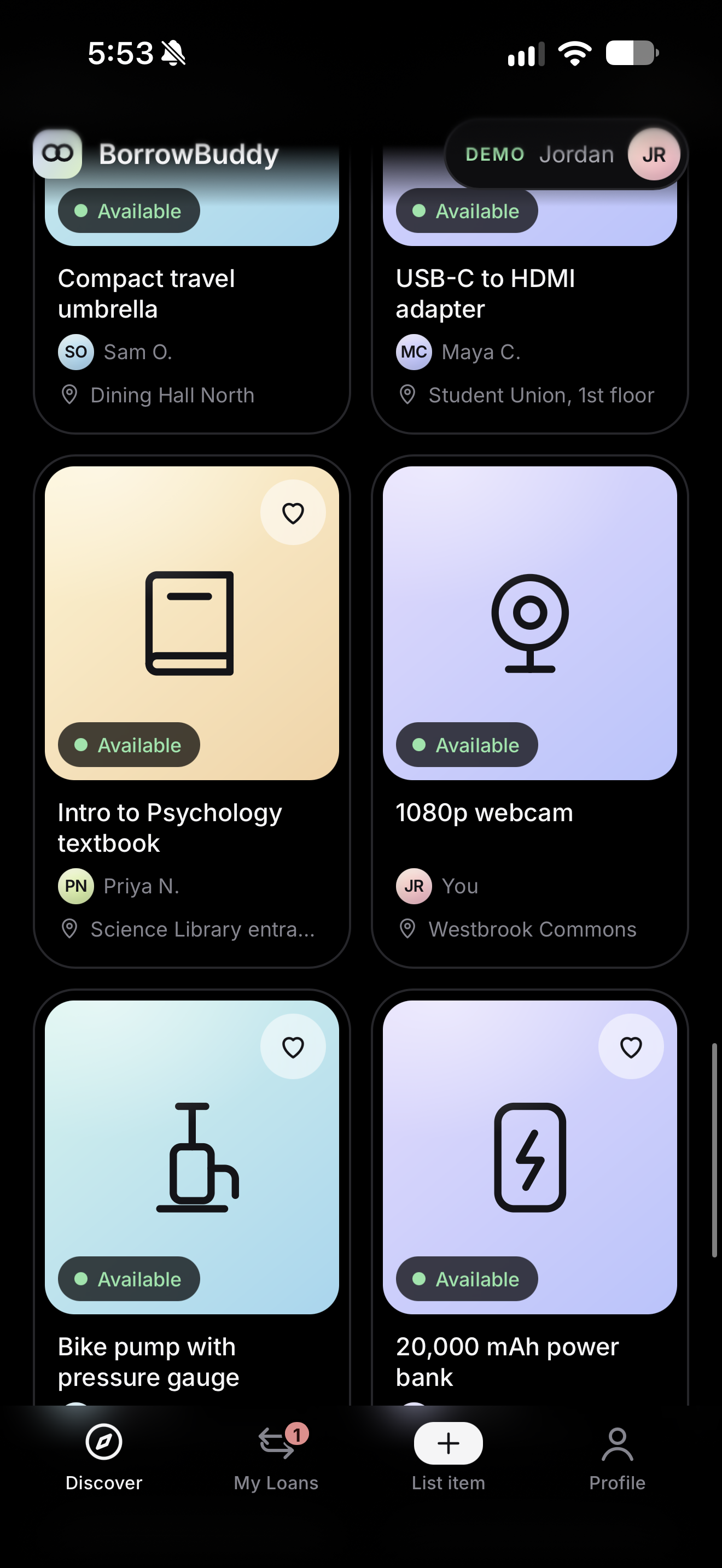
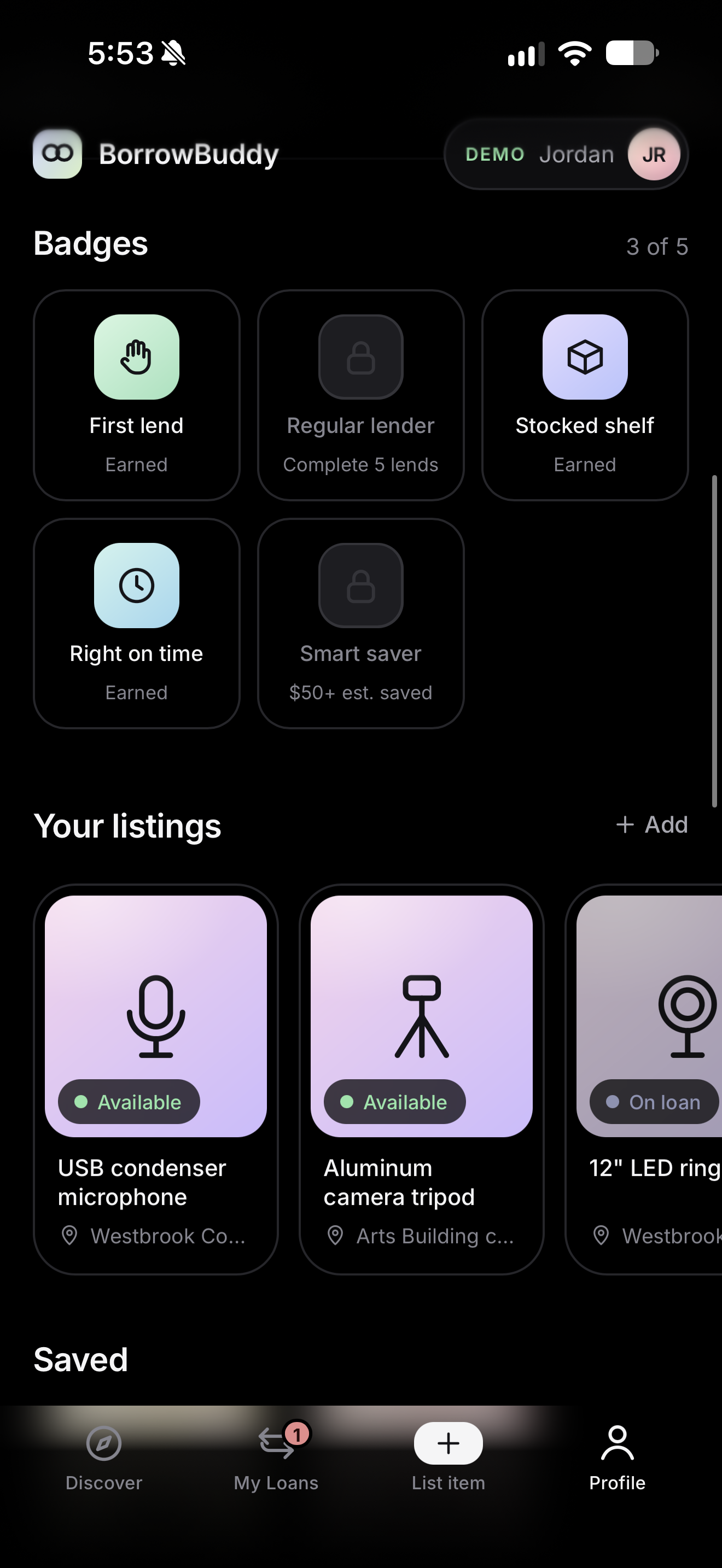
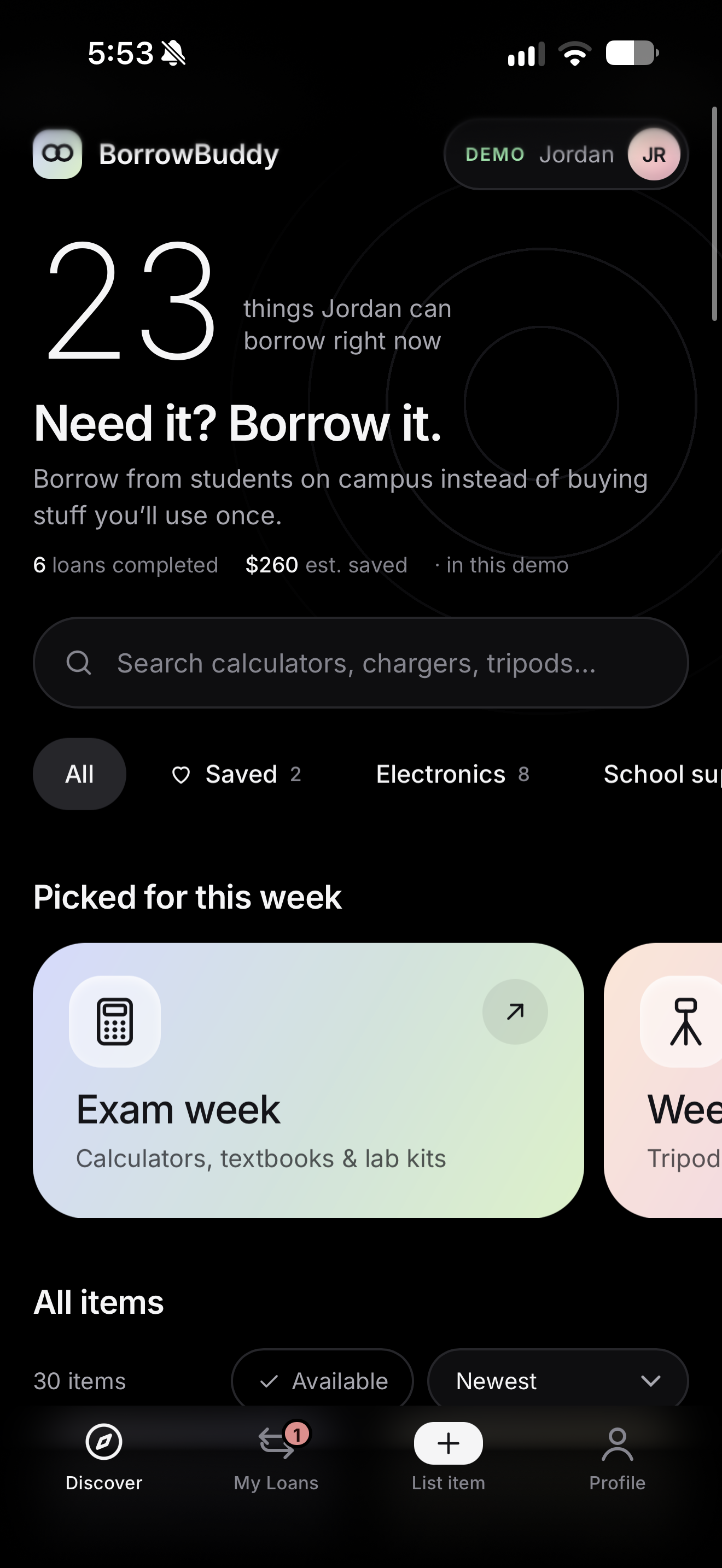
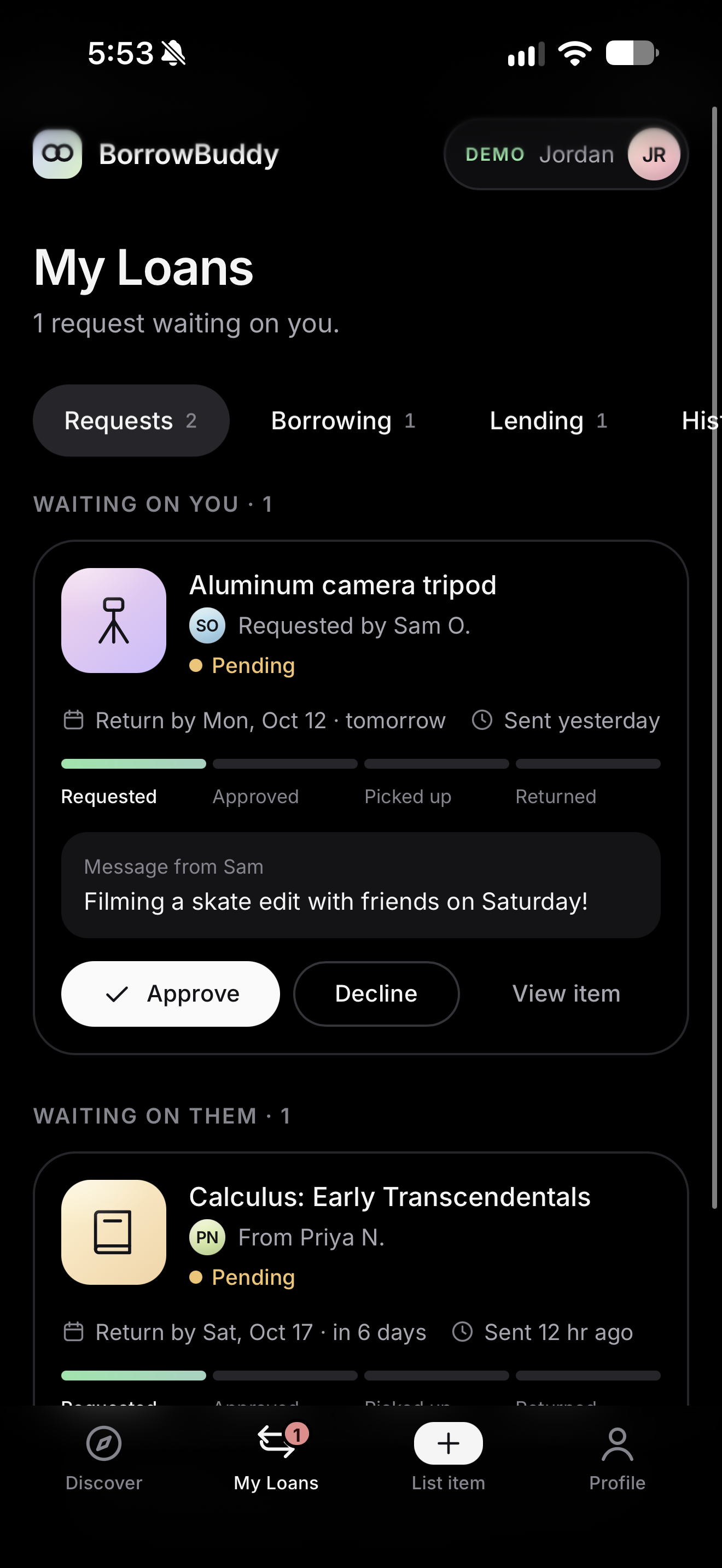
BorrowBuddy is a campus-focused borrowing platform that helps students discover items they need and share items they already own. Users can browse and search listings, explore categories, view item details, and interact with the borrowing experience through a straightforward interface.
The goal is to make borrowing more convenient, reduce unnecessary spending, and encourage students to make better use of resources that are already available within their community.
How we built it
We built BorrowBuddy using vanilla HTML, CSS, and JavaScript, without relying on a frontend framework. We focused on creating a straightforward, interactive interface that could run directly in a web browser and be hosted as a static website.
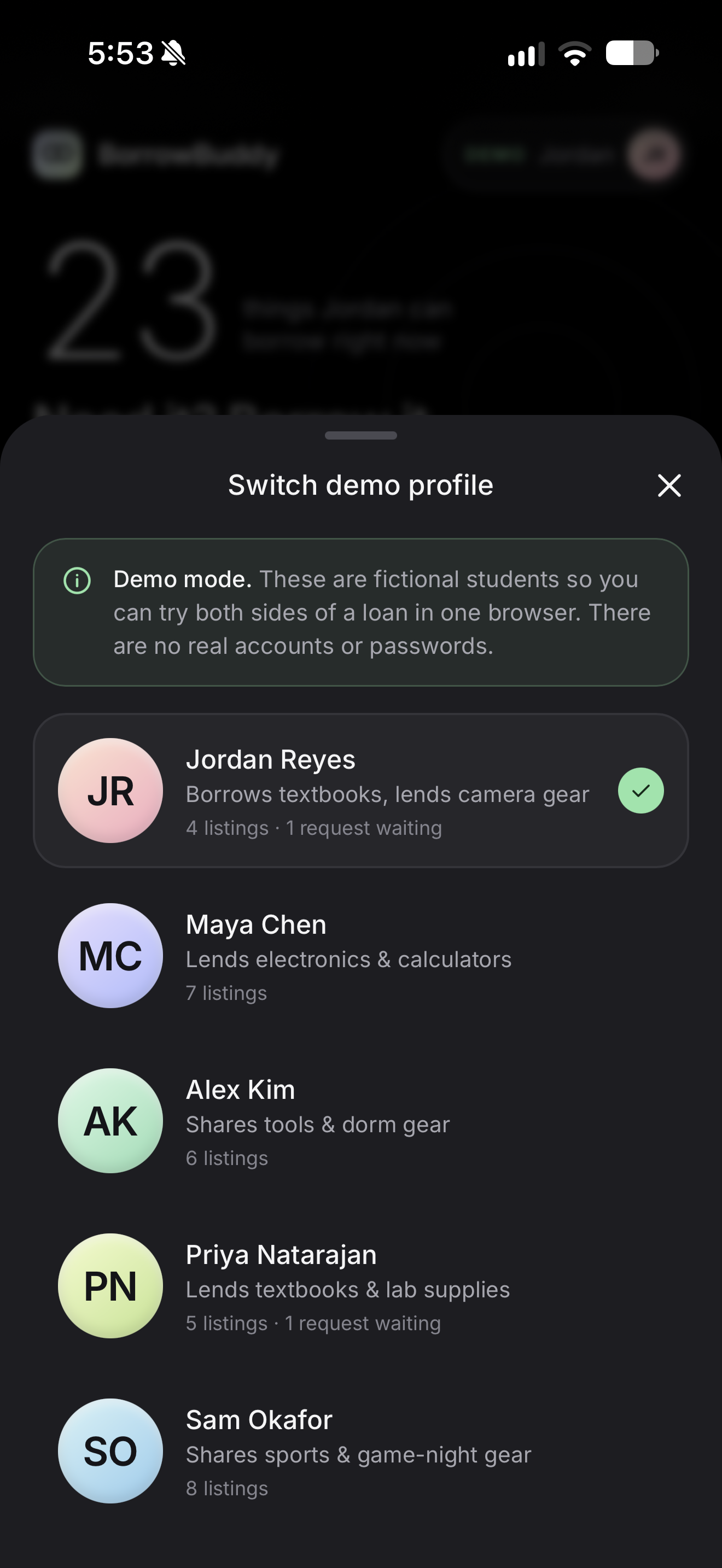
The application uses JavaScript to handle its interactive elements and browser local storage for local data persistence. This approach allowed us to develop the initial prototype with a lightweight technology stack and without requiring a dedicated backend.
Challenges we ran into
One challenge was organizing the application so that browsing listings, exploring categories, and viewing item details felt like parts of one cohesive experience. We wanted the interface to be easy to navigate without making it unnecessarily complicated.
Another challenge was working within the limitations of a lightweight, browser-based application. Using local storage made it possible to retain data locally, but it also meant the prototype did not have a shared database connecting different users. We had to keep the implementation focused on demonstrating the core concept within the available time.
Accomplishments that we're proud of
We're proud of turning a simple idea into an interactive prototype that addresses a relatable problem for college students.
Simple item discovery: Organized listings and categories to help users find relevant items.
A focused user experience: Kept the application lightweight and centered on its primary purpose.
A practical community concept: Created a foundation for helping students save money and share resources rather than purchasing items they only need temporarily.
What we learned
We learned the importance of keeping an application focused on its core purpose and designing an interface that makes the intended experience easy to understand. We also gained experience building an interactive browser-based application without relying on a framework or backend.
The project highlighted the difference between a prototype and a production-ready platform. While a lightweight implementation is useful for demonstrating an idea, supporting real borrowing between multiple users would require additional infrastructure and coordination.
What's next for BorrowBuddy
Our next step is to build on the initial prototype and move toward a platform that students can use to share items with one another. Future improvements could include real user accounts, a shared database for listings, borrowing requests, availability tracking, and clearer pickup and return coordination.
Long term, we hope to make BorrowBuddy a convenient way for campus communities to share resources, reduce unnecessary purchases, and make everyday essentials more accessible to students.
Built With
- community
- css3
- education
- frontend
- github
- html5
- javascript
- localstorage
- responsive-design
- sustainability
- ui/ux-design
- web-development

Log in or sign up for Devpost to join the conversation.