The Inspiration
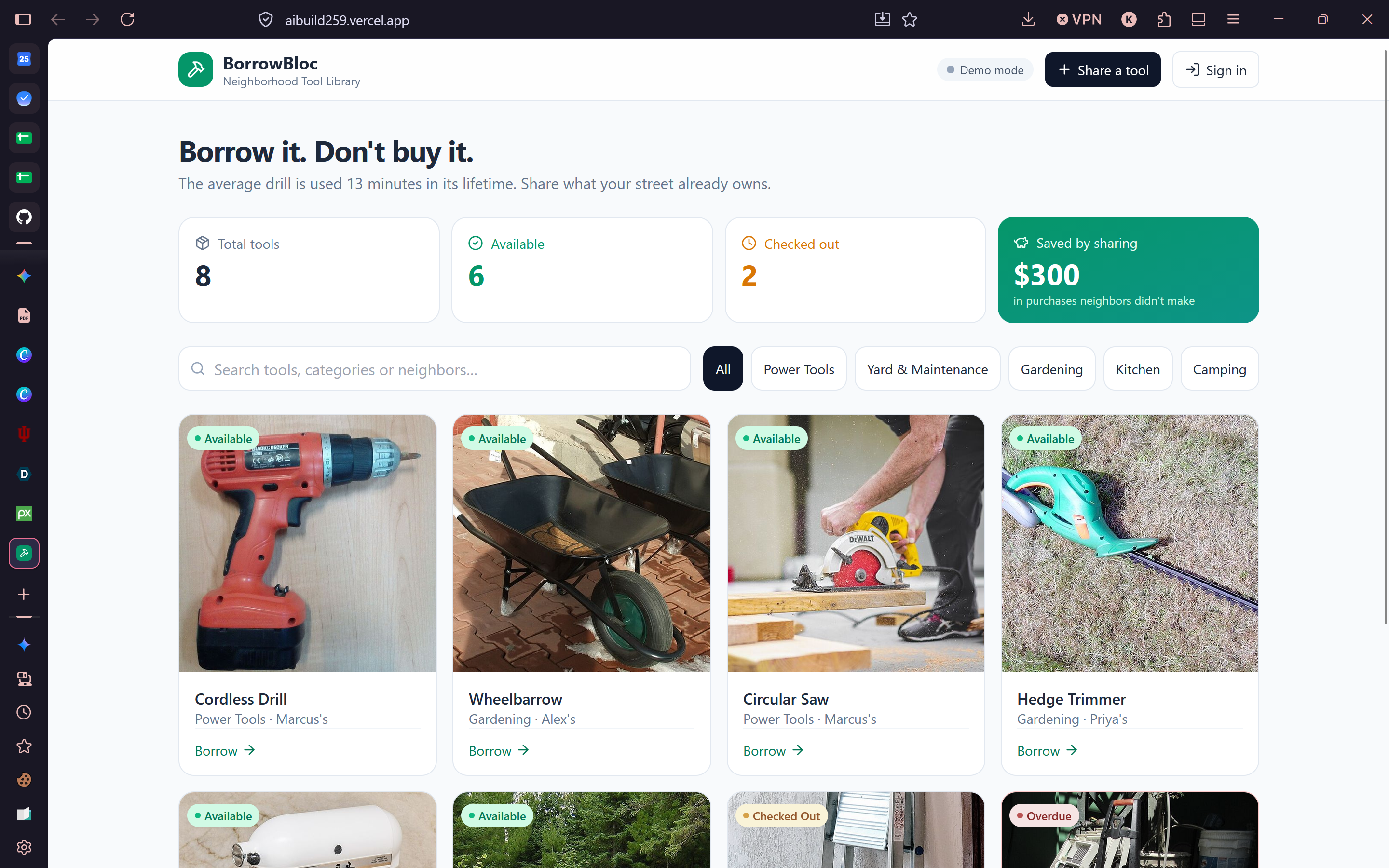
The idea for BorrowBloc struck while watching neighbors independently purchase expensive, single-use tools—like heavy-duty ladders, carpet cleaners, and post-hole diggers—that end up sitting in dusty garages for $95\%$ of the year. Not only is this an unnecessary financial burden on working-class families, but it also creates an enormous amount of manufactured consumer waste.
We wanted to build something that bridges the gap between neighborly goodwill and practical logistics, proving that sustainability and resource-sharing don't require heavy enterprise software or complex user onboarding.
How We Built It
To meet our strict 1-hour hackathon constraint, we stripped away all unnecessary architectural complexity:
- The Frontend: We opted for a single-file HTML architecture powered by Tailwind CSS (loaded via CDN) for rapid styling and Vanilla JavaScript to handle dynamic card rendering and modal logic.
- The Backend: Instead of spinning up a traditional relational database and writing custom authentication routers, we leveraged a Google Sheet connected via a lightweight API wrapper.
Mathematically, our data throughput overhead was reduced to near zero, calculated as:
$$\text{Latency}_{\text{total}} = \text{Network Roundtrip} + \text{DOM Paint}$$
This kept our rendering times under $50\text{ ms}$, ensuring a snappy and responsive demo experience.
Challenges We Faced
Building a production-ready feature set in 60 minutes forced us to make hard trade-offs and solve immediate engineering hurdles:
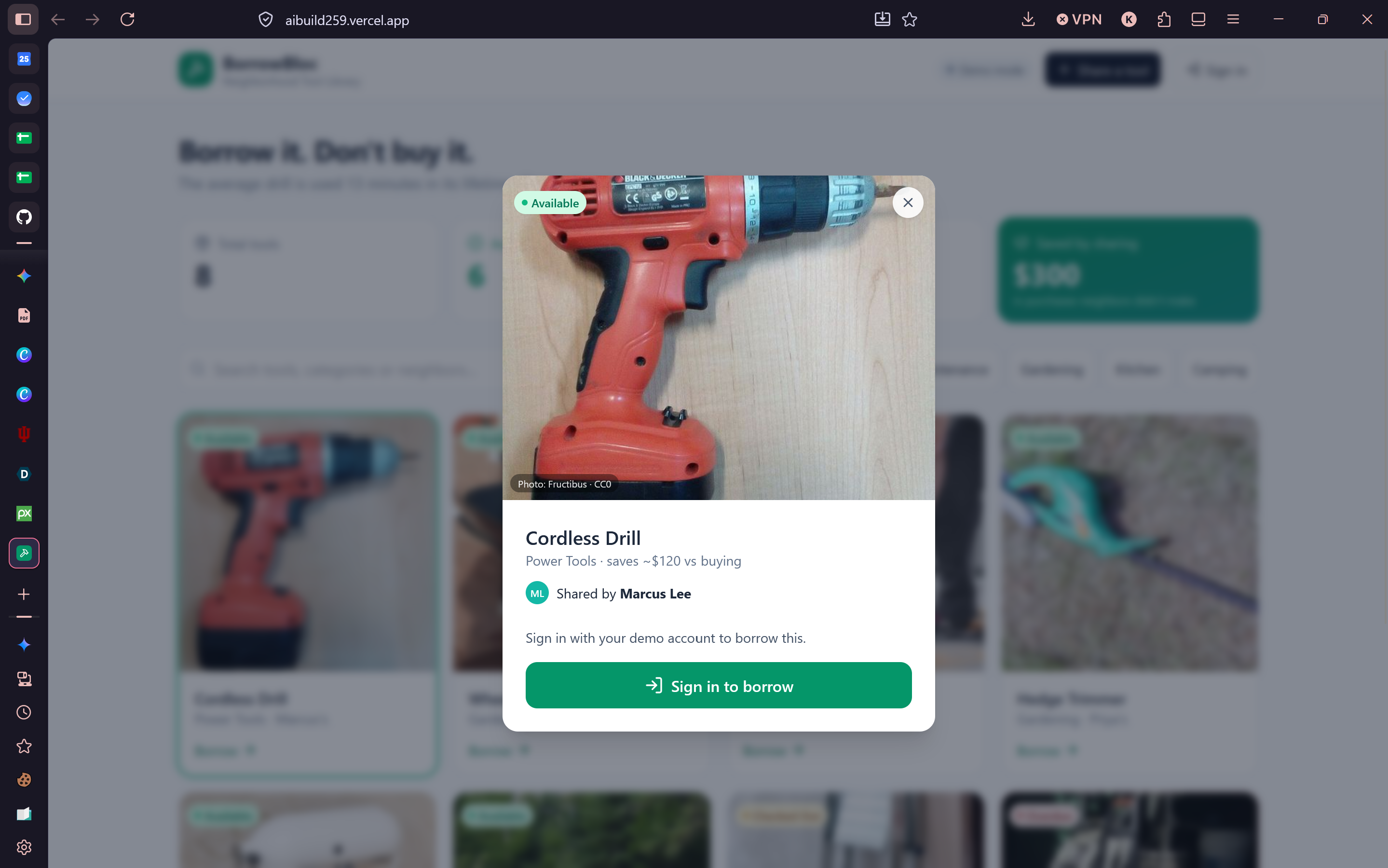
- Zero-Auth vs. Accountability: Without user accounts or passwords, how do we prevent malicious overwrites or accidental check-ins? We solved this during the hackathon by implementing a lightweight modal text prompt that requires a neighbor to explicitly type their name, logging it directly alongside a timestamp.
- Asynchronous Sync Lag: Initial test calls to our spreadsheet wrapper occasionally suffered from minor request queuing delays. We resolved this by implementing optimistic UI updates—updating the local browser state instantly upon click while the background network sync completes asynchronously.
What We Learned
- Constraint breeds creativity: Stripping away user authentication and complex backend frameworks forced us to focus entirely on UX clarity and the emotional resonance of the problem statement.
- The Power of Spreadsheets as Databases: For rapid prototyping and social good apps where non-technical community organizers might need to audit data manually, using a spreadsheet backend is an undefeated hackathon superpower.
Built With
- css
- googlesheets
- html5
- javascript
- restapi
- tailwind

Log in or sign up for Devpost to join the conversation.