-
-
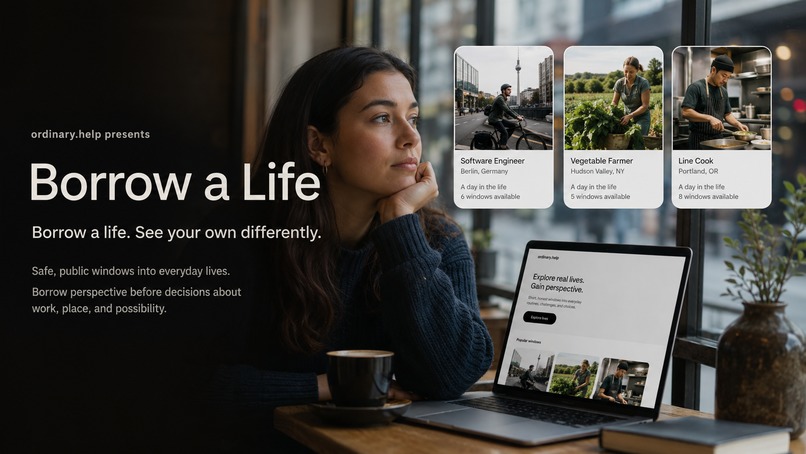
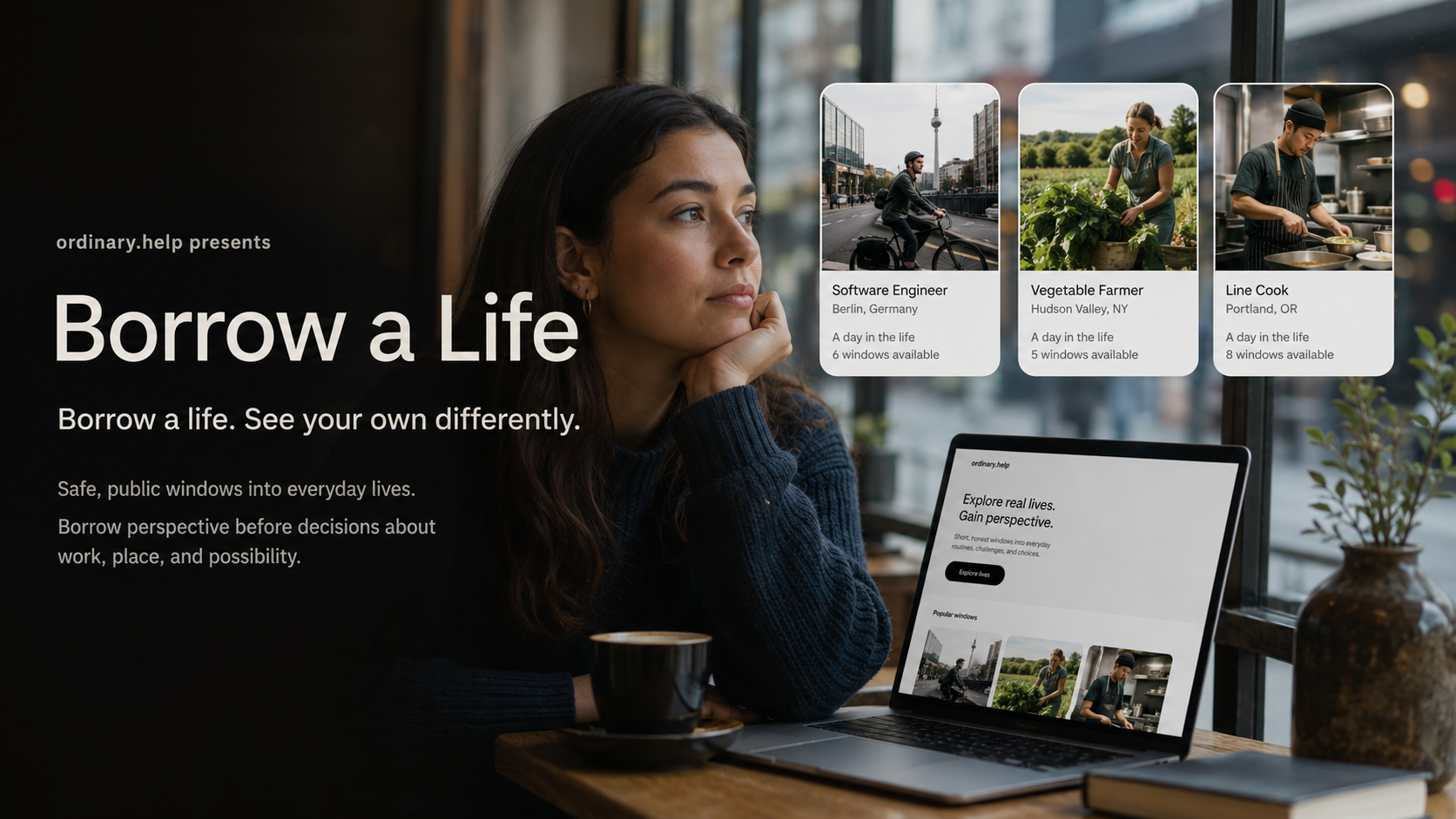
ordinary.help as a product: safe public life windows that help people see ordinary lives differently.
-
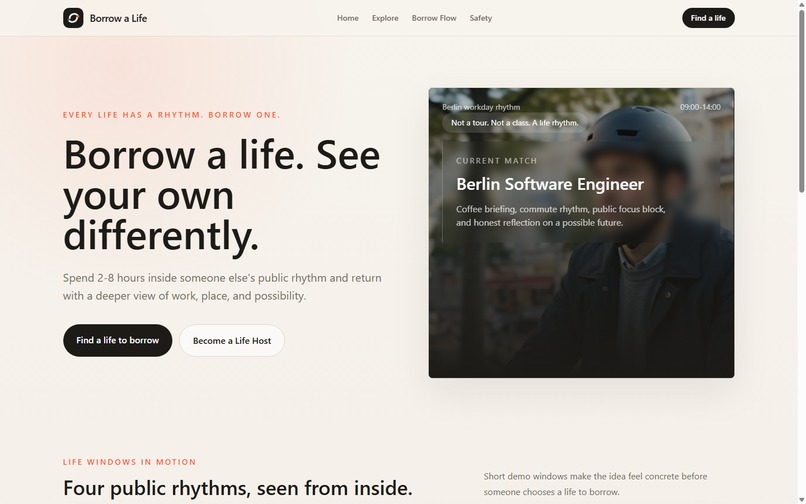
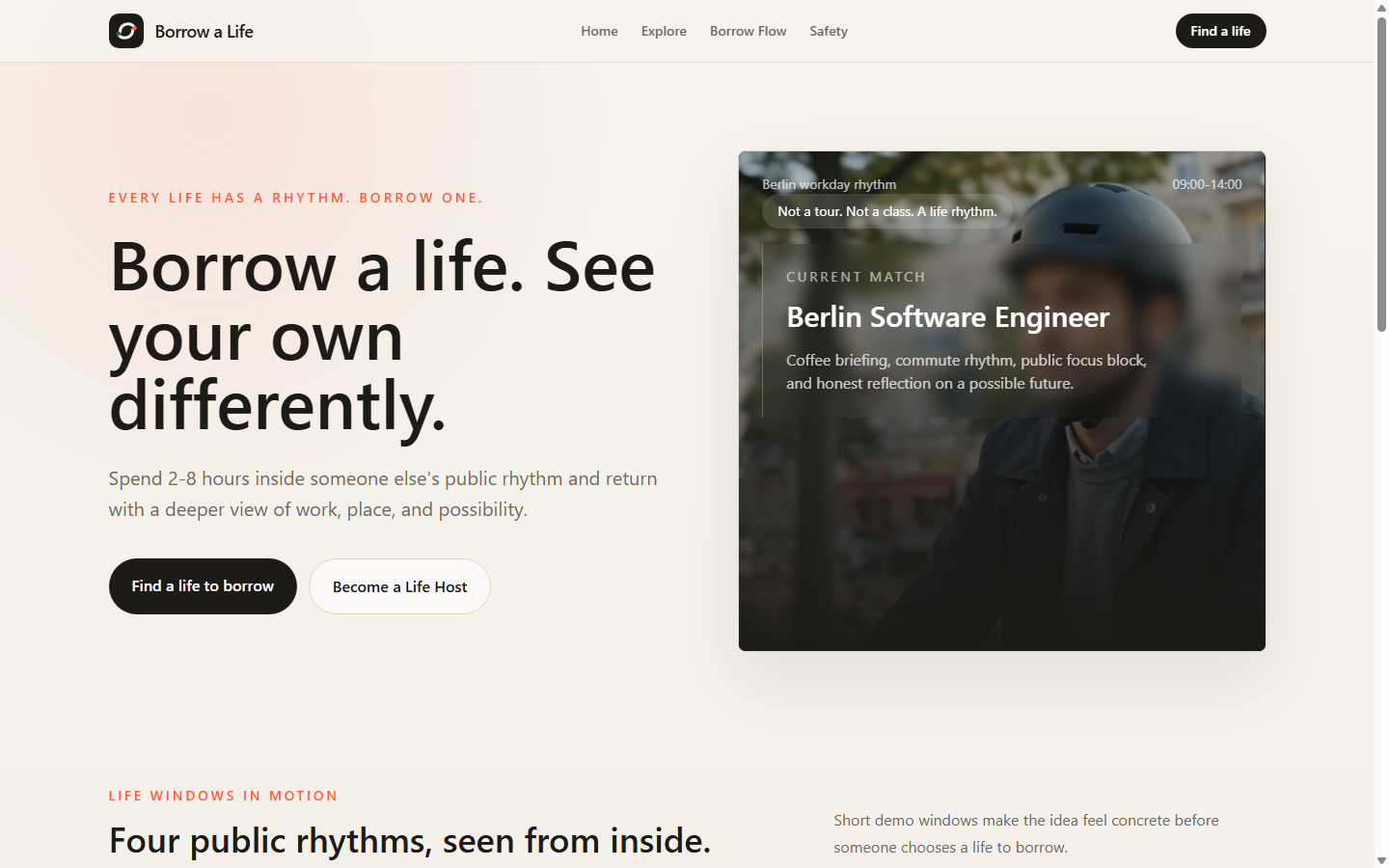
Borrow a Life turns ordinary.help into safe public windows that help people see ordinary lives differently.
-
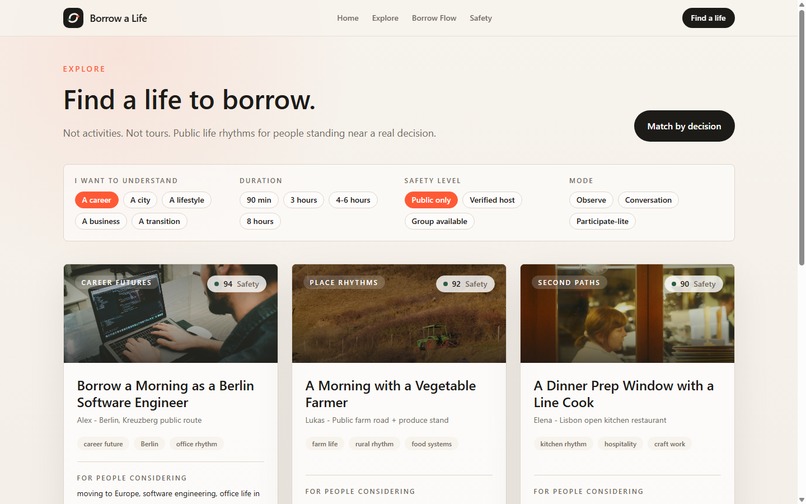
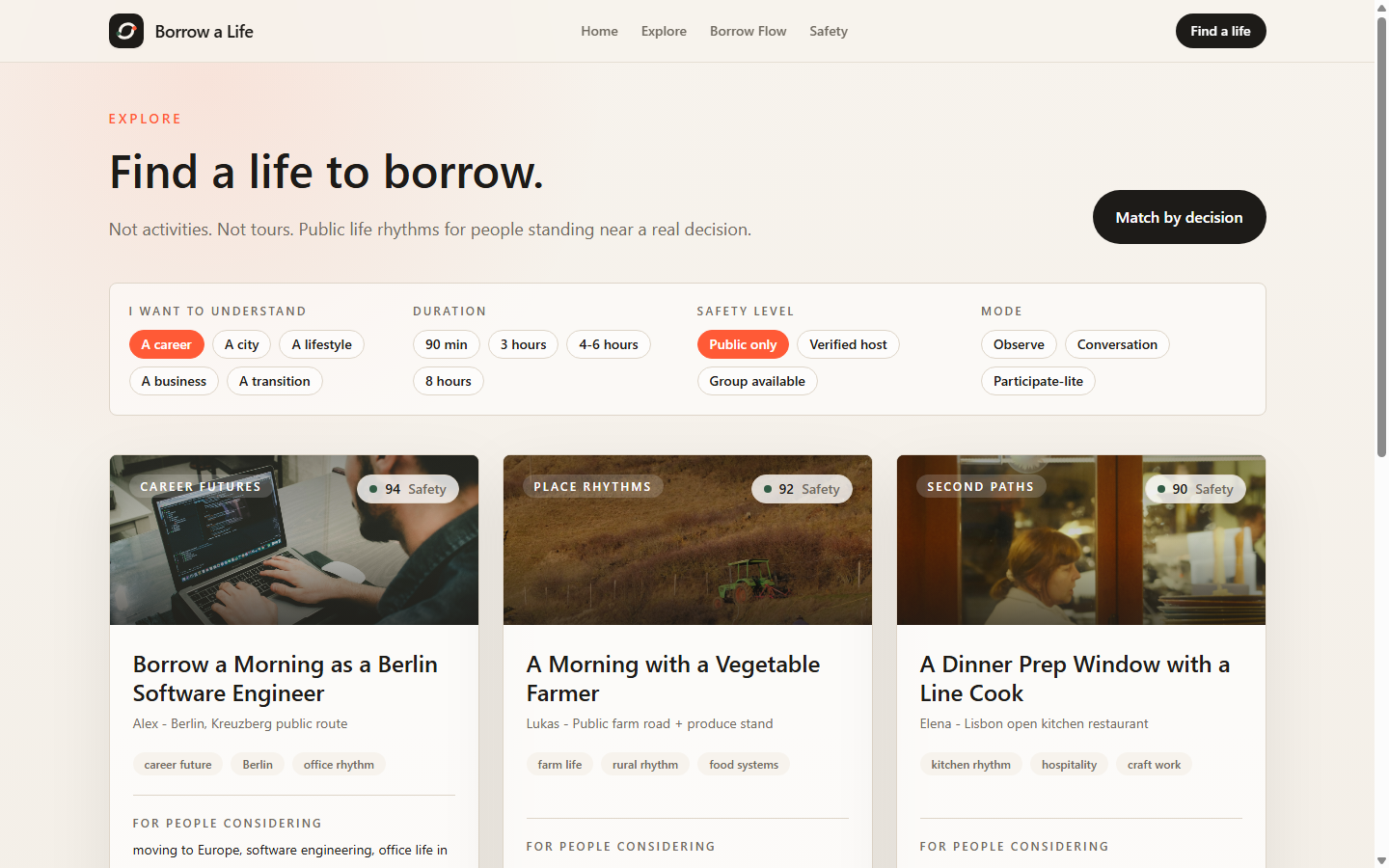
Explore public life windows across careers, places, routines, and second paths.
-
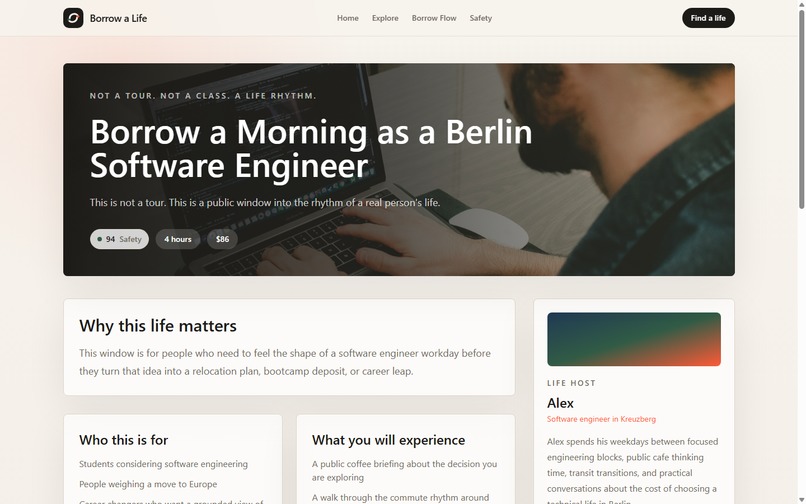
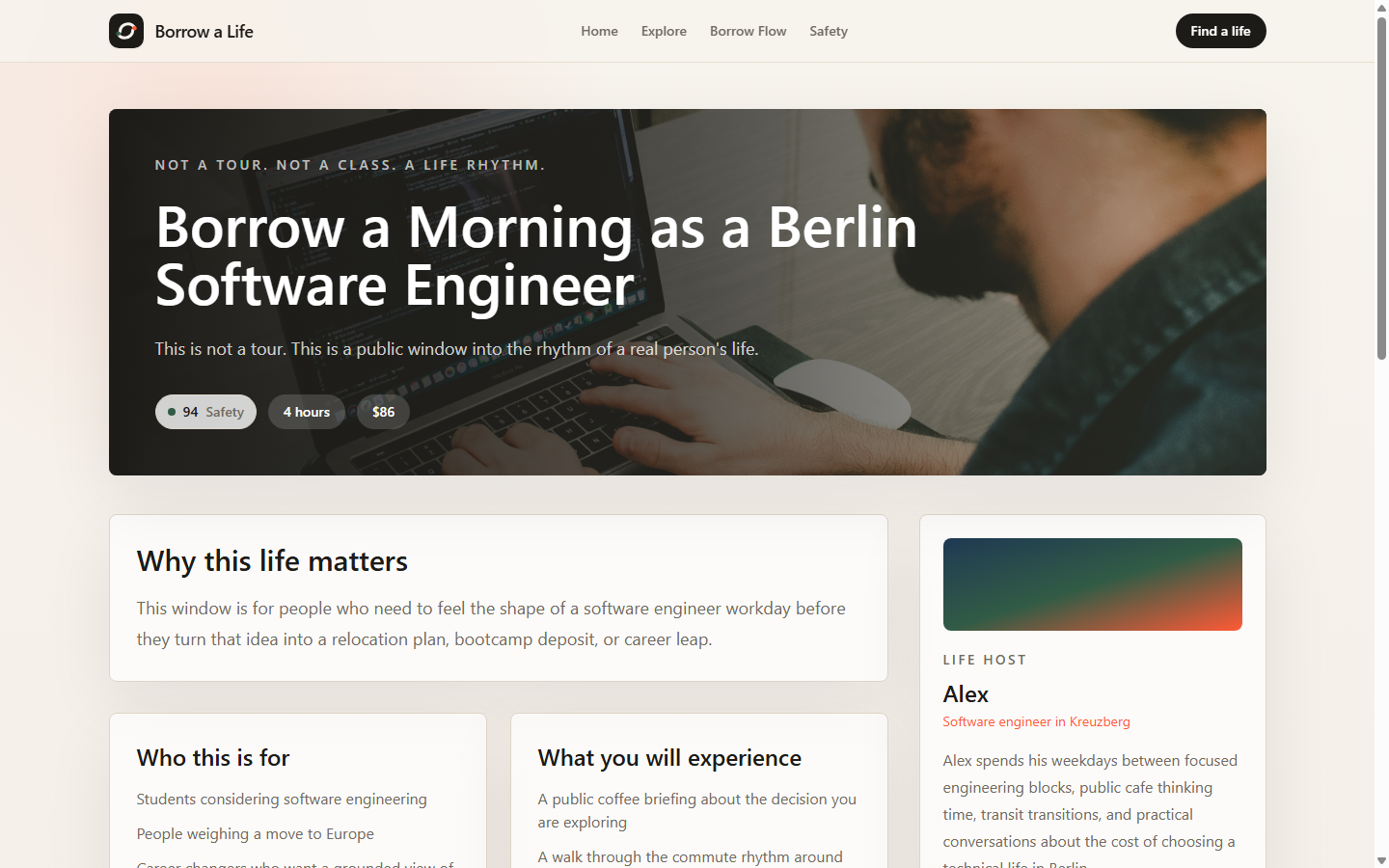
Each listing explains the host, public rhythm, safety score, duration, and why the life window matters.
-
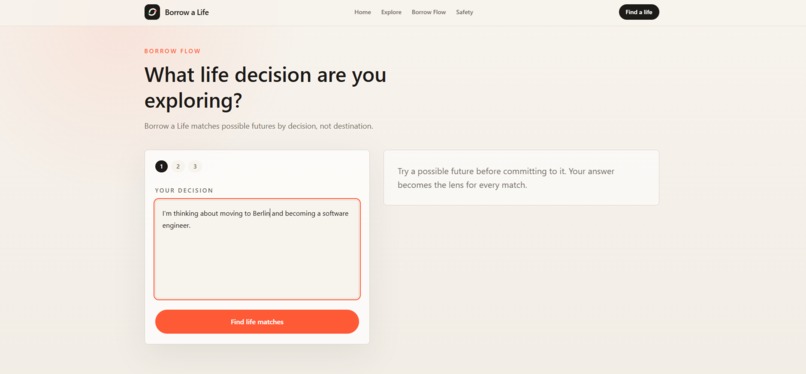
The AI Safety Engine generates a Boundary Contract before a public life window can be requested.
Inspiration
The project started from the domain ordinary.help.
Most hackathon projects begin with an idea and then search for a domain. This challenge reversed that process, so I asked: what could ordinary.help become if it were a real product?
The answer became Borrow a Life: a perspective marketplace for safe, public windows into ordinary lives.
The core belief is simple:
No life is ordinary from the inside.
A programmer’s commute, a farmer’s morning, a cook’s dinner prep, a street vendor’s market route, a founder’s pressure, or someone starting over may look ordinary from the outside. But inside each life there are rhythms, tradeoffs, dignity, constraints, and meaning.
ordinary is the surface. help is the transformation: ordinary lives can help people see their own differently.
What It Does
Borrow a Life helps people experience short, safe, public Life Windows before making assumptions about a career, place, lifestyle, or possible future.
It is not a tour app, not a class marketplace, and not a mentor platform. It is a way to borrow perspective.
Users can:
- Explore different Life Windows
- Watch motion previews
- Read host stories and public itineraries
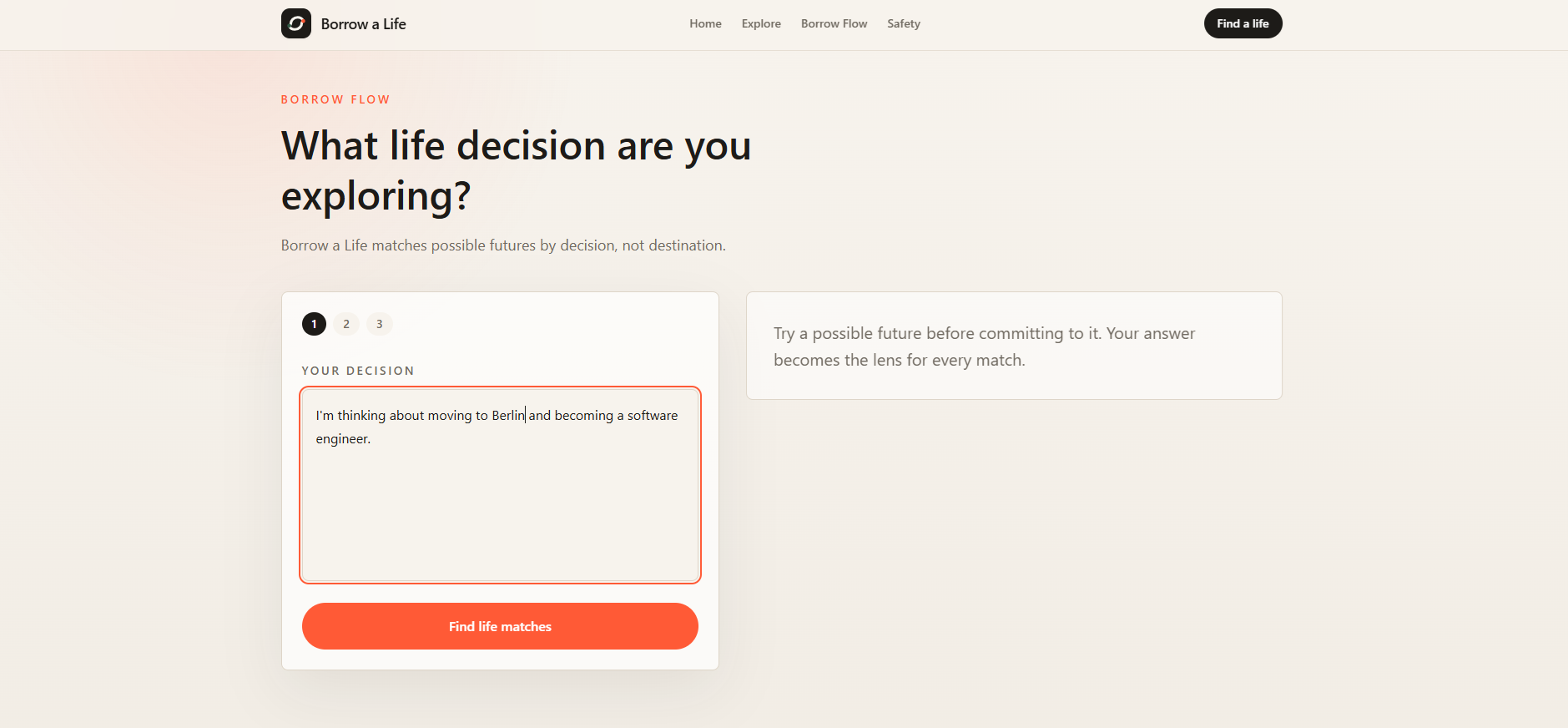
- Start a borrow flow based on a real decision
- Run a Safety Engine before booking
- Review a Boundary Contract that defines what is allowed, not allowed, and required
Every session is designed to be safe, public, bounded, and respectful.
The product line is:
Borrow a life. See your own differently.
How We Built It
The web experience is built with SvelteKit, TypeScript, and Tailwind CSS.
The safety layer is implemented as a separate Rust Axum service. It analyzes booking requests based on time, duration, location type, public exit access, transport risk, and itinerary structure.
The MVP uses static demo data and local video assets to make the concept feel tangible and pitch-ready. The demo also includes cinematic character videos created with Veo to make each Life Window feel more human, memorable, and emotionally grounded.
I also deployed the product on Google Cloud Run, with the web app and safety engine running as separate services.
Challenges We Ran Into
The hardest challenge was making the domain connection feel natural.
ordinary.help could easily become too abstract, so the product had to make the domain literal: ordinary lives helping people see their own differently.
Another challenge was safety. A product about experiencing someone else’s life can become risky or invasive if the boundaries are weak. That is why the MVP focuses heavily on public-only sessions, safety scoring, and boundary contracts.
The final challenge was product tone. The app needed to feel emotional and philosophical, but still practical enough to become a real startup.
Accomplishments That We’re Proud Of
I’m proud that the project connects deeply back to the selected domain instead of treating the domain as decoration.
I’m also proud of the product polish. Borrow a Life has a clear landing page, real Life Window cards, motion previews, detail pages, a borrow flow, safety analysis, and a Boundary Contract.
The Safety Engine is another key accomplishment. It gives the concept a serious trust layer and shows how the product could handle real-world risk before a booking request is made.
Most of all, I’m proud that the MVP feels like more than a demo. It feels like the beginning of a real startup idea.
What We Learned
I learned that a strong domain can act like a creative constraint.
Instead of forcing an idea onto a domain, I tried to let the domain reveal the product. That led to a concept that is part marketplace, part empathy tool, and part decision-support experience.
I also learned that product polish matters a lot for unusual ideas. When the concept is new, the interface, copy, and demo flow have to make people understand it quickly and trust it immediately.
What’s Next
I want to keep developing Borrow a Life beyond the hackathon.
Next steps include:
- Verified hosts
- Real booking requests
- Stronger safety checks
- Identity and trust layers
- Payment and refund flows
- Host onboarding
- City-by-city launch strategy
- Life Window Reports after each session
The long-term goal is to turn Borrow a Life into a real startup: practical enough to launch, thoughtful enough to matter, and creative enough to make people see ordinary lives differently.
Built With
- axum
- cloud-build
- google-cloud-run
- node.js
- rust
- sveltekit
- tailwind-css
- typescript
- vite

Log in or sign up for Devpost to join the conversation.