Inspiration
Budgeting is hard for all of us, and the small snacks we buy along the way really do add up! We wanted to give users an insight into their spending habits, and how they compare to their peers, and to highlight small, but frequent purchases.
What it does
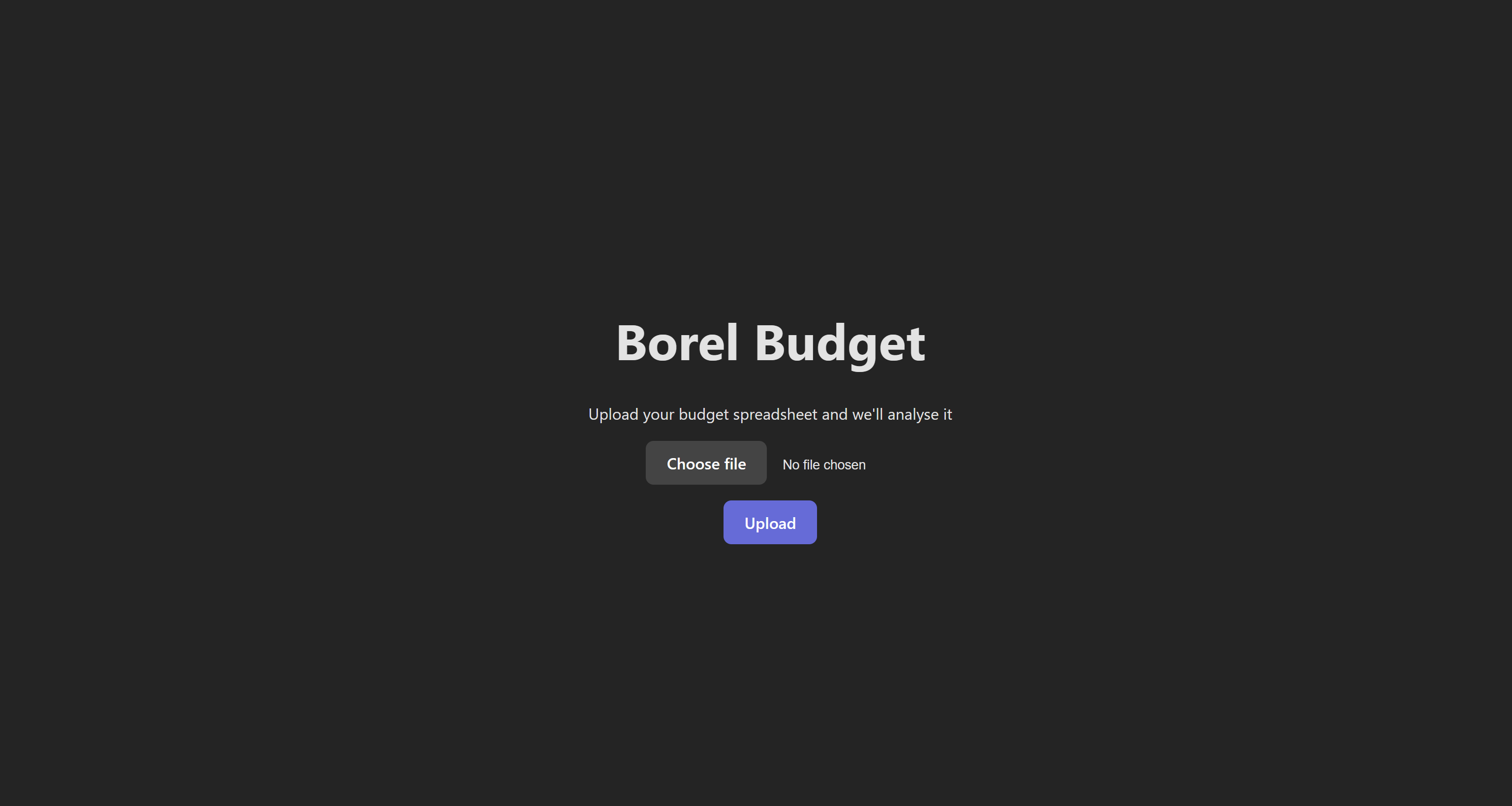
Borel Budget parses a user's bank statement (as a CSV file) - uploaded on a portal, analyzes it and highlights these low but frequent purchases as well as other highlights. The program offers budgeting advice on the more flexible of purchases and assigns a user a "budget" score based on their performance to encourage people to be more aware of their spendings.
How we built it
Processing and statistical analysis is done using the Go programming language.
A central server is run on Flask running a PostgreSQL database in a Docker container.
Front end made in React with Vite.
Challenges we ran into
- Parsing CSV files from different banks.
- User authentication.
- Git conflicts.
- Linking up the vast tech stack.
Accomplishments that we're proud of
A functioning prototype in 24 hours. Insightful analysis of spending habits that will be useful for all people. A visually appealing UI that builds trust.
What we learned
- Cross communication across a tech stack.
- Proritise system architecture before details.
- Knowing when to stop and rethink when met with a dead end.
What's next for Borel Budget
- Add a scoreboard for all users to encourage competitive budgeting.
- Less reliance on pre-existing machine learning software and an increased use of advanced and thorough statistical analysis techniques.
- Heightened security and session tokens.
- More interactive financial analysis tools.

Log in or sign up for Devpost to join the conversation.