-
-
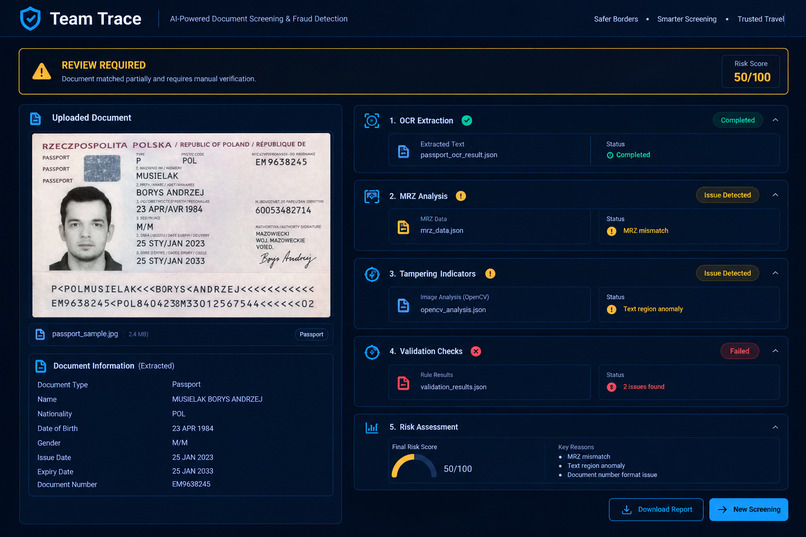
SCREENING DOCUMENT
Inspiration
Border officers get only 10-30 seconds per traveler, so forged IDs, edited photos, and tampered logs slip through. We built BorderShield AI to give them a fast, trustworthy second pair of eyes.
What it does
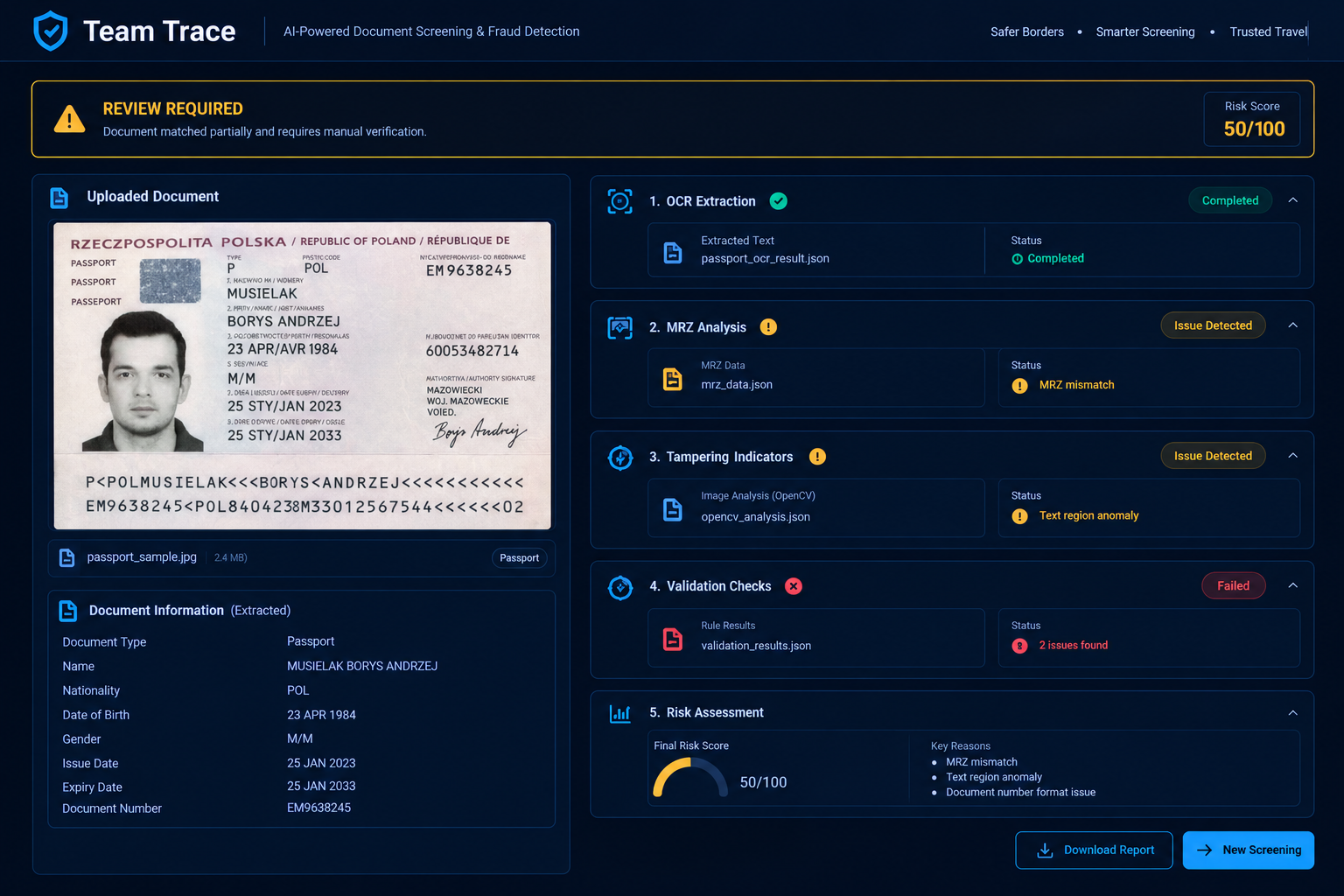
It auto-classifies Passport, Aadhaar, PAN, Licence, and Visa documents, runs OpenCV 5 forensics, and uses an agent to re-inspect suspicious regions before scoring risk from 0 to 100. Every screening is logged in a tamper-proof hash chain.
How we built it
OpenCV 5 forensics (ELA, copy-move, quality checks) run in FastAPI on AWS Lambda, with S3 for uploads, RDS PostgreSQL for data, and Bedrock for flag explanations. A SHA-256 hash chain secures the audit trail.
Challenges we ran into
Noisy phone photos broke OCR, and getting the checksum and signature rules exactly right was hard.
Accomplishments that we're proud of
An end-to-end platform covering five document types, where OpenCV findings drive the agent’s next step, backed by a verifiable audit trail.
What we learned
Layered checks catch more fraud than any single method, and explainable results matter as much as accuracy.
What's next for BorderShield AI
Real-time sharing between checkpoints, face matching with Rekognition, and an offline mobile app for remote posts.
Built With
- amazon-bedrock
- amazon-rds-relational-database-service
- amazon-web-services
- aws-lambda
- css3
- fastapi
- html5
- javascript
- opencv
- opencv-5
- postgresql
- python
- sha-256

Log in or sign up for Devpost to join the conversation.