🌍 BorderPay — Cardless Cross-Border Payment Platform
Inspiration
We were inspired by stories of freelancers, students, and small businesses struggling with international payments due to high fees, slow settlement times, and lack of access to cards. By listening to real users on Reddit, Discord, and forums in Africa and Asia, we discovered the need for a simple, resilient, and cardless way to send and receive money across borders.
What it does
BorderPay lets users:
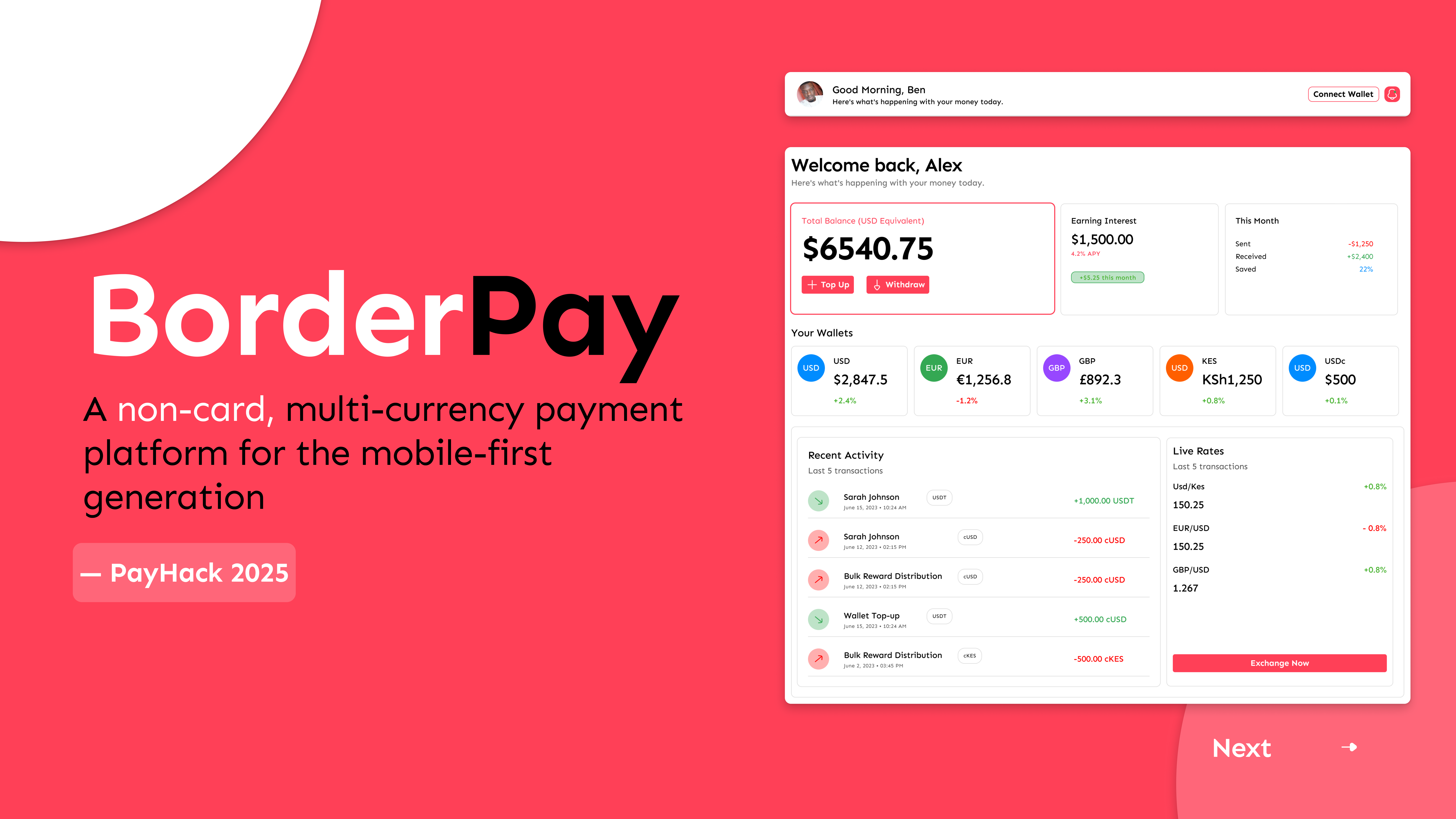
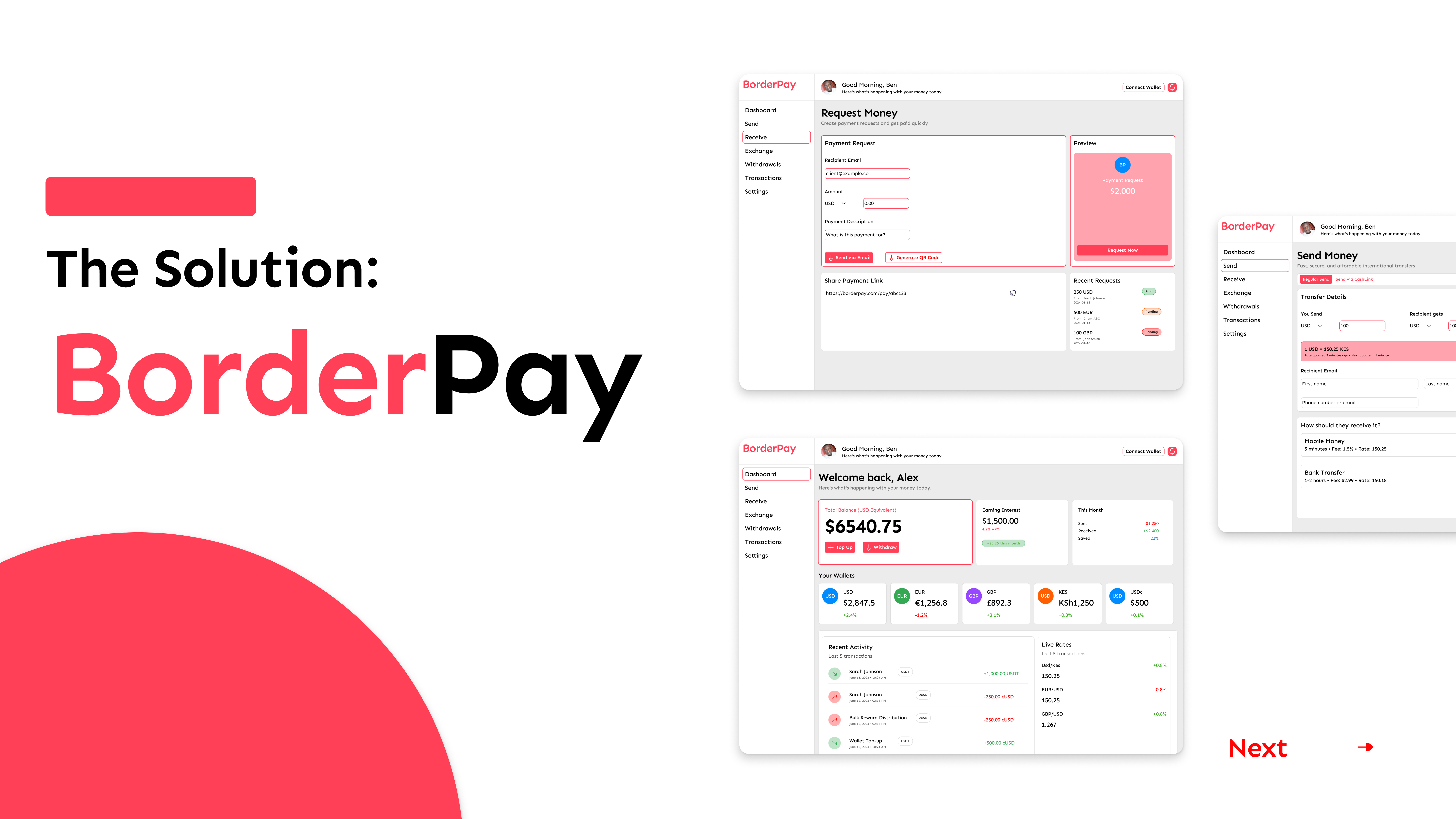
- Send/receive money via mobile money, bank, or crypto wallets
- Hold multiple currencies and stablecoins in a single wallet
- Generate secure, shareable payment links (CashLink)
- Convert currencies with live FX rates and transparent fees
- View all transactions and invoices in one place
- Withdraw funds instantly via local rails or blockchain
How we built it
We began with community research, mapped user journeys, and prototyped in Figma using modular bento grid layouts. We studied leading tools like Wise and PaydHQ, integrated design inspiration from crypto-first platforms, and built a seamless flow prioritizing transparency and user control. All flows were mapped with responsiveness, accessibility, and localized usage in mind.
Challenges we ran into
- Designing a smooth send/receive experience that works across mobile money, crypto, and banks
- Simplifying the CashLink experience so it works even for non-tech users
- Balancing technical accuracy with user-friendly financial education
- Creating a unified transaction + invoicing dashboard that felt intuitive
Accomplishments that we're proud of
- A fully interactive Figma prototype with 12+ high-fidelity screens
- A working UX flow for cardless, borderless payments — including CashLink
- Consolidated transaction + invoice view tailored for freelancers
- Mobile-first and desktop-responsive design with localized tone and UI
What we learned
We learned how important transparency, simplicity, and speed are when building for global users. We saw firsthand that people trust tools that explain fees, offer flexible options, and work reliably even when infrastructure is limited. We also learned that cross-border payments must be culturally and economically adaptive.
What's next for BorderPay
- Integrate with real APIs (Valora, M-Pesa, Stellar, Celo)
- Add offline QR support for low-connectivity regions
- Launch closed beta in Kenya, Nigeria, and Malaysia
- Collaborate with freelance platforms to pilot invoice payouts
“Money should move as easily as a message.” — That’s the vision behind BorderPay.

Log in or sign up for Devpost to join the conversation.