-
-
-
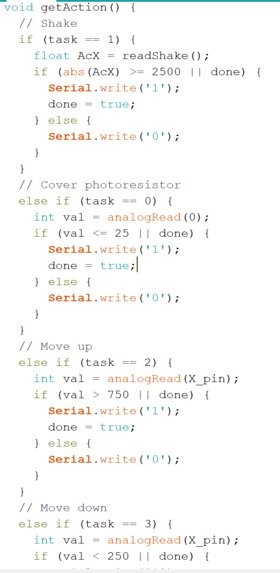
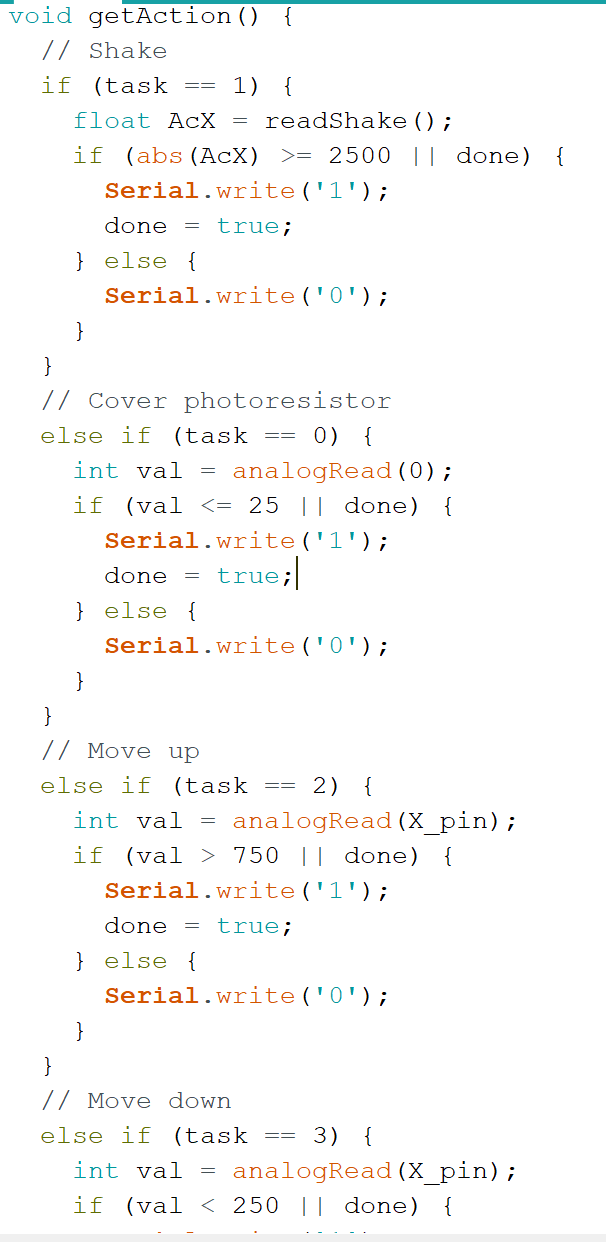
Arduino: read sensor input
-
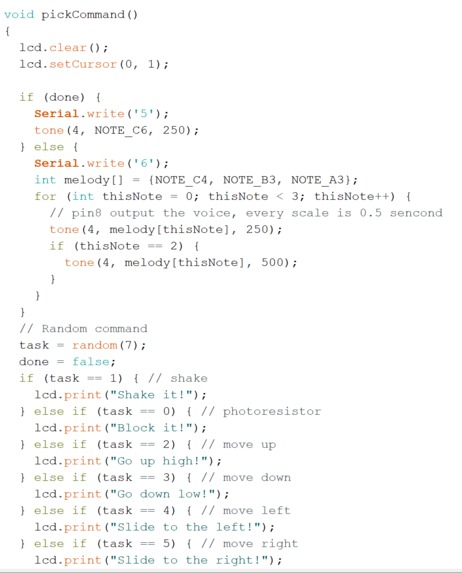
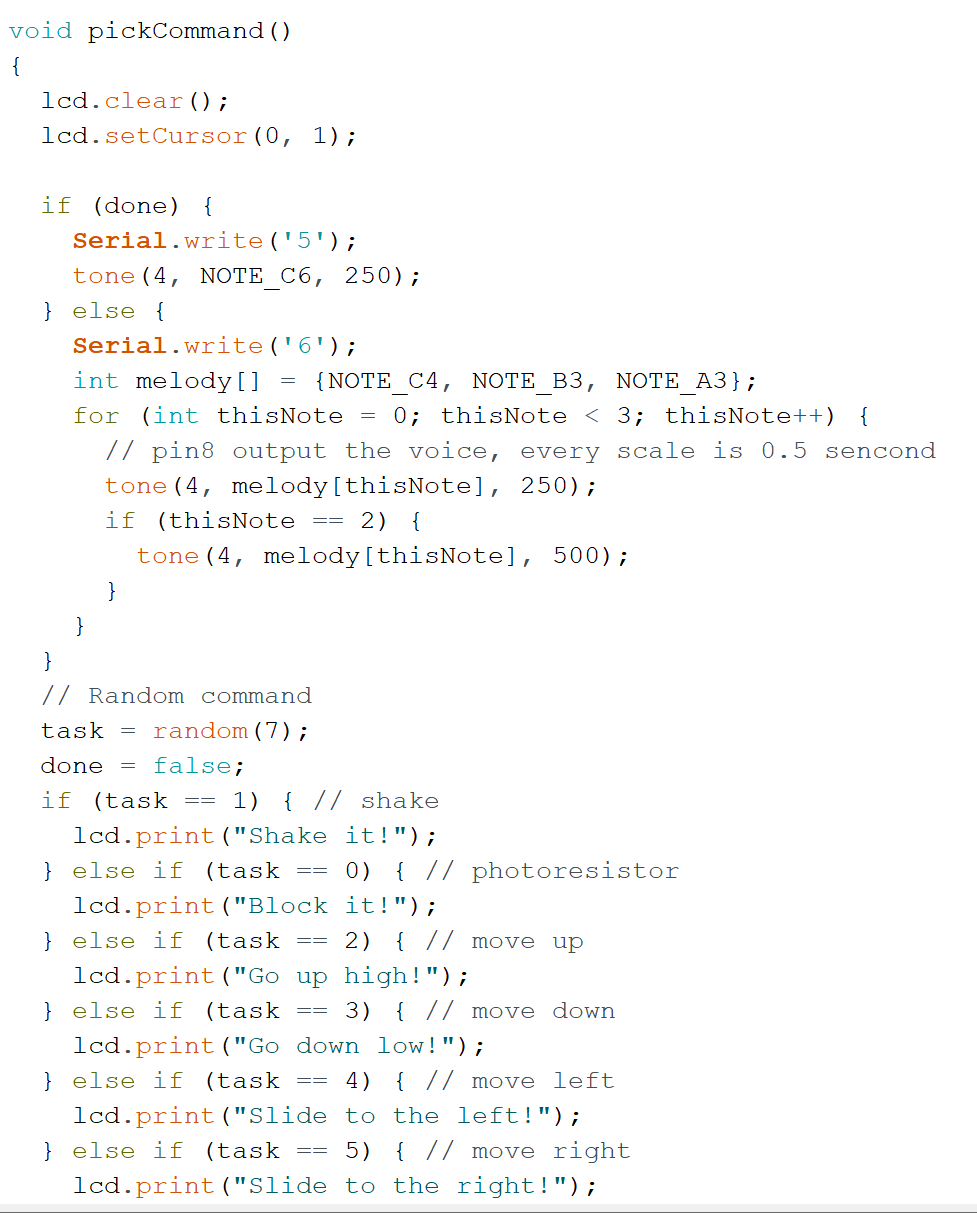
Arduino: pick command
-
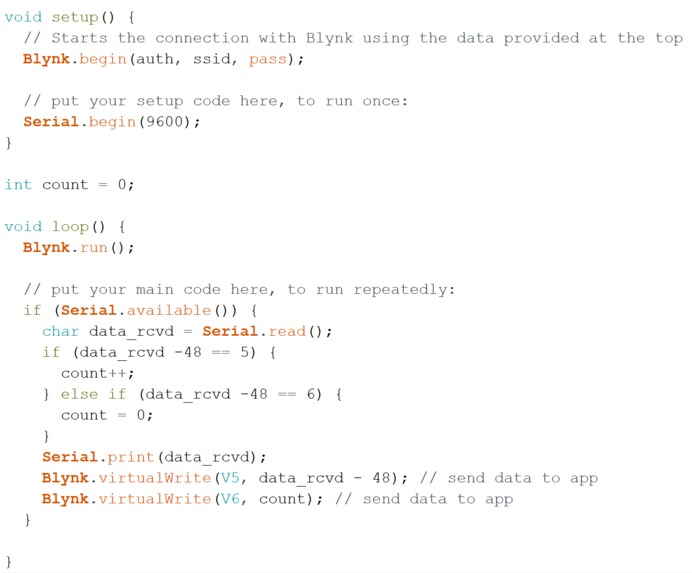
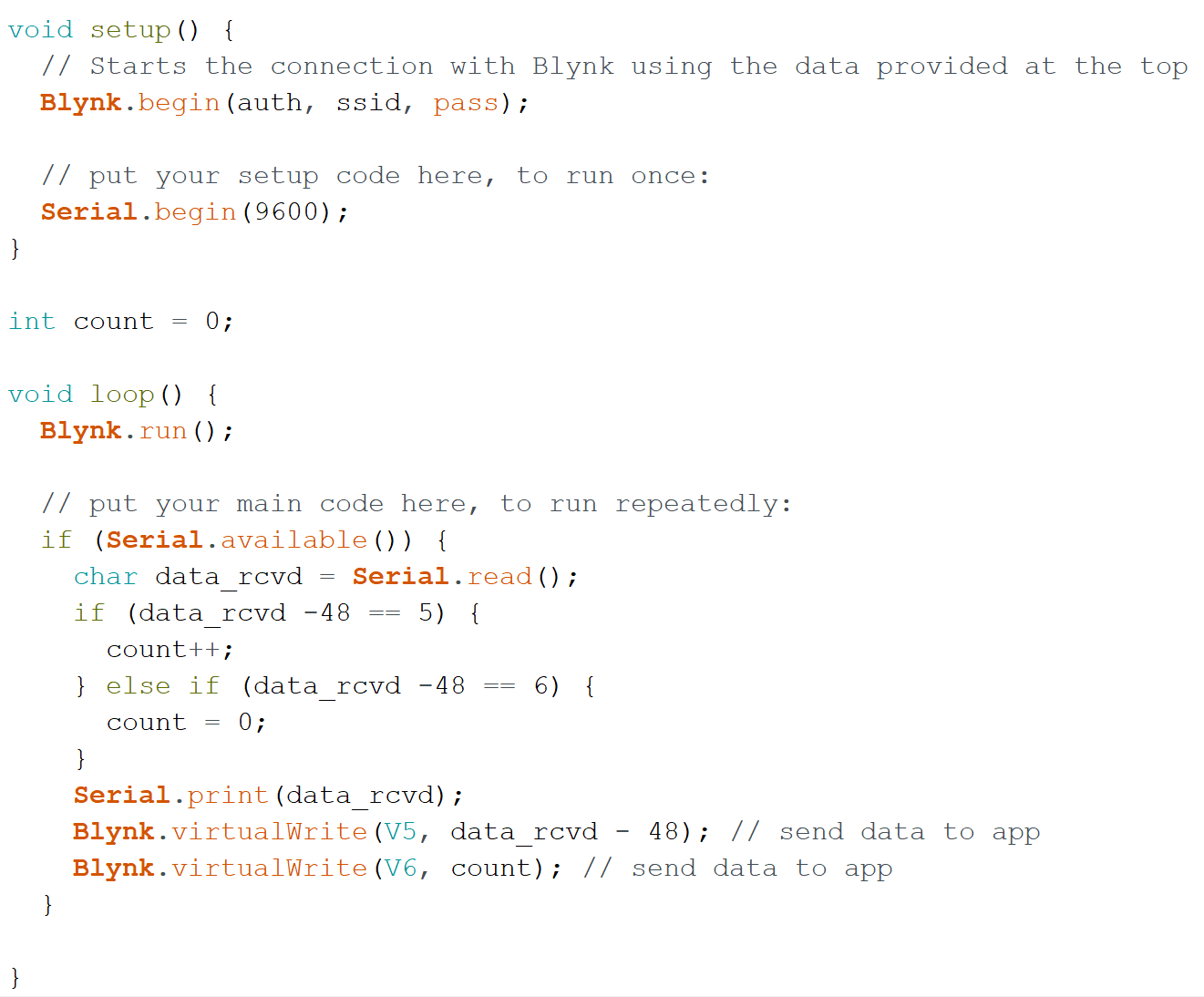
NodeMCU
Inspiration
We were inspired by the thrilling game of Bop-It!! You get to be told what to do, and if you don't do it, you fail! See how quickly you can listen to instructions.
Project Design
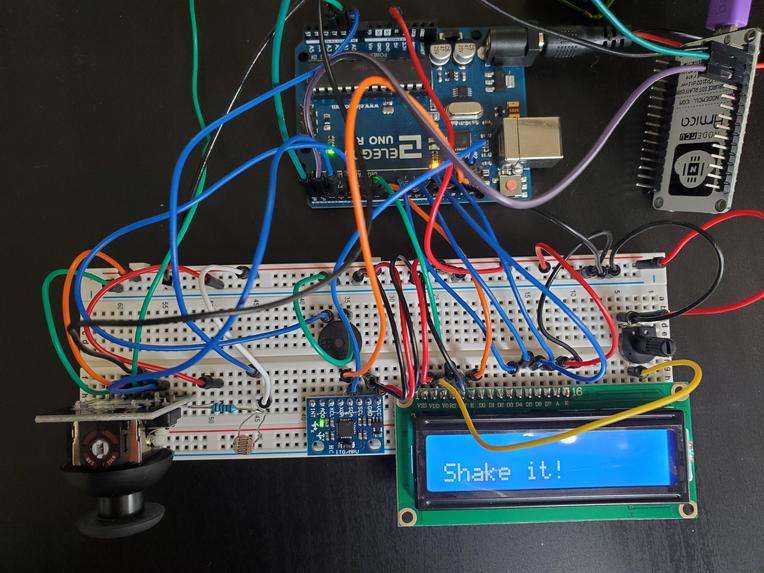
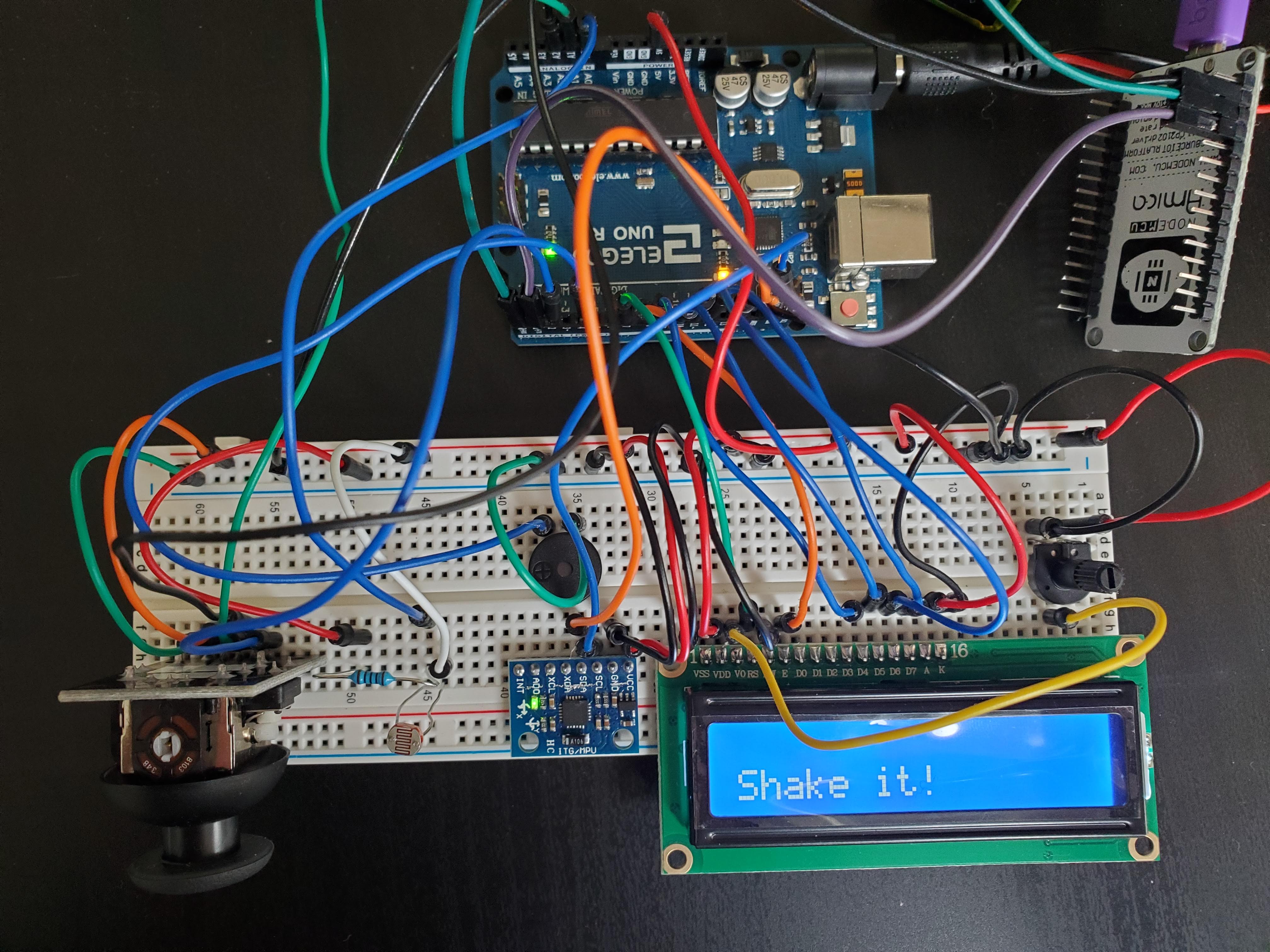
Our project uses the Arduino and different sensors to capture the tasks. We use the joystick for moving up, down, left, right, and pushing. The accelerometer measures shaking, and the photoresistor can be covered up. The task will display on the LCD1602 module monitor. When a new task is given, the player has a short time to respond. Every second, the Arduino will check to see if the current task has been satisfied. A new task is randomly generated every 3 seconds at first, and the time to solve the task slowly decreases. Before the next task is given, it sends whether the last task was satisfied to the NodeMCU through the Serial Monitor. The NodeMCU then processes each output to update the score which is sent to display on Blynk. Different tones will sound to alert the person that they successfully completed or failed to complete the task. See the video for a demo!
Challenges we ran into
Our biggest challenge was interfacing the NodeMCU and Arduino to communicate with each other. We needed to do this because we needed more analog pins for the different types of sensors (the NodeMCU only has 1 analog pin).
Accomplishments that we're proud of
We are proud of getting the LCD display to work properly as well as incorporating the sound.
What we learned
We learned how to use several new sensors including the joystick, LCD monitor, and the passive buzzer. We also learned how the NodeMCU and Arduino can communicate.
What's next for Bop It
A new command involving a microphone.

Log in or sign up for Devpost to join the conversation.