-
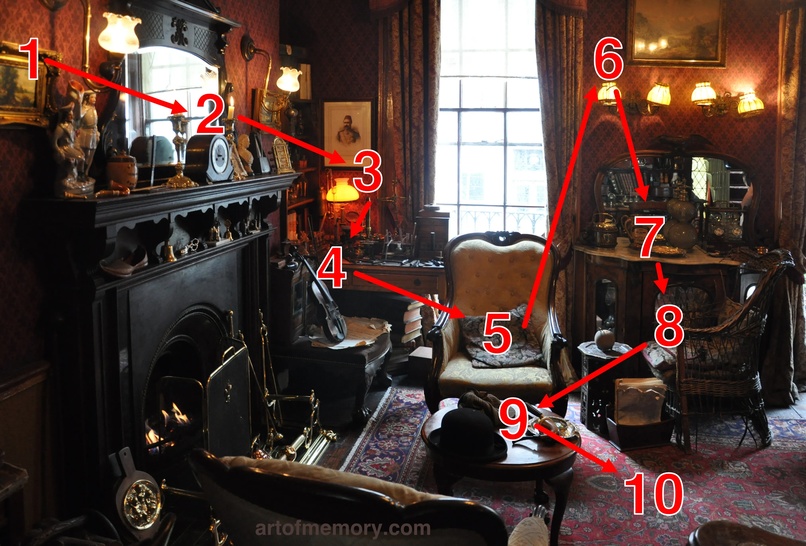
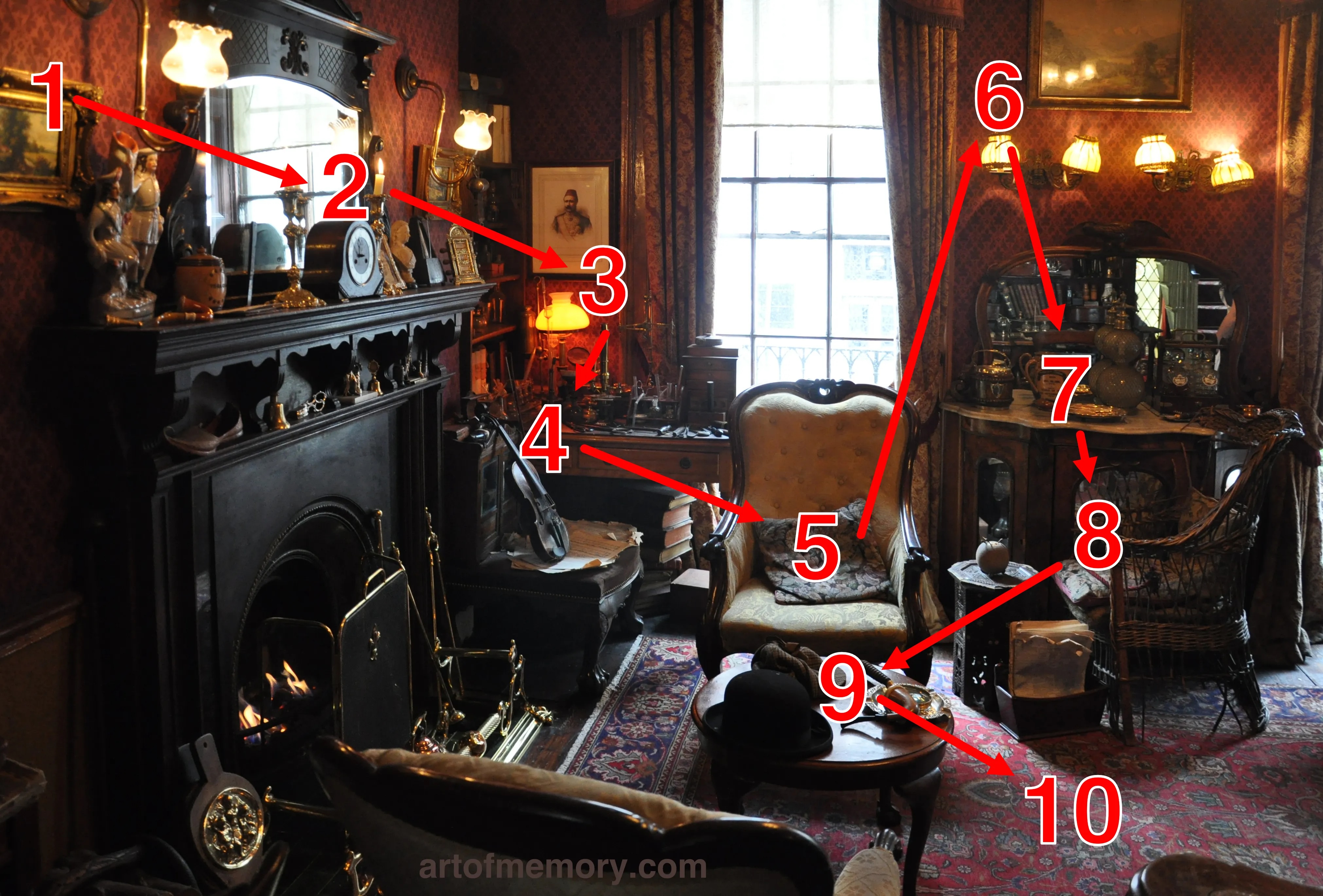
Infographic of classic 'Mind Palace' memorization method to store thoughts/memories associated with familiar places and objects
-
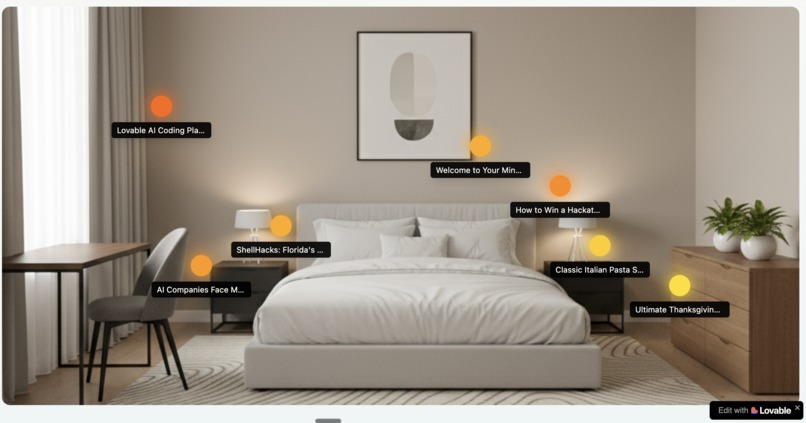
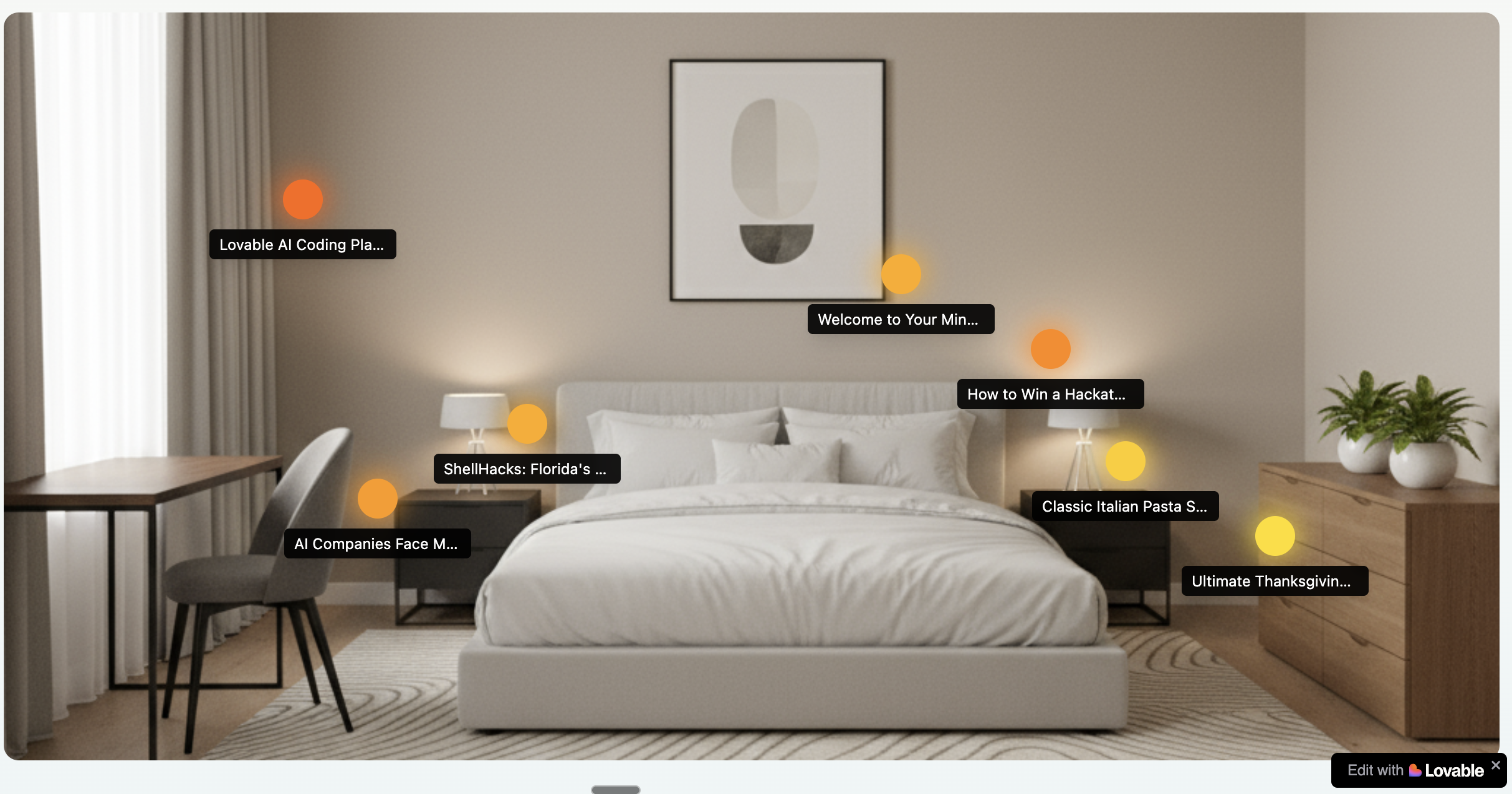
AI-generated Mind Palace [screenshot from app - Bedroom view]
-
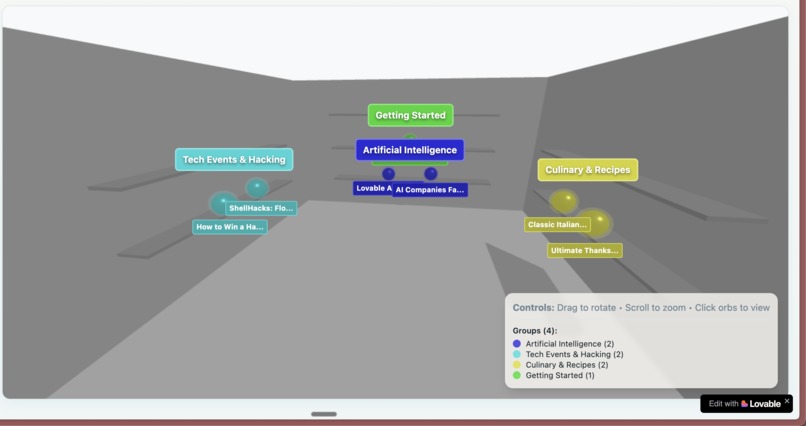
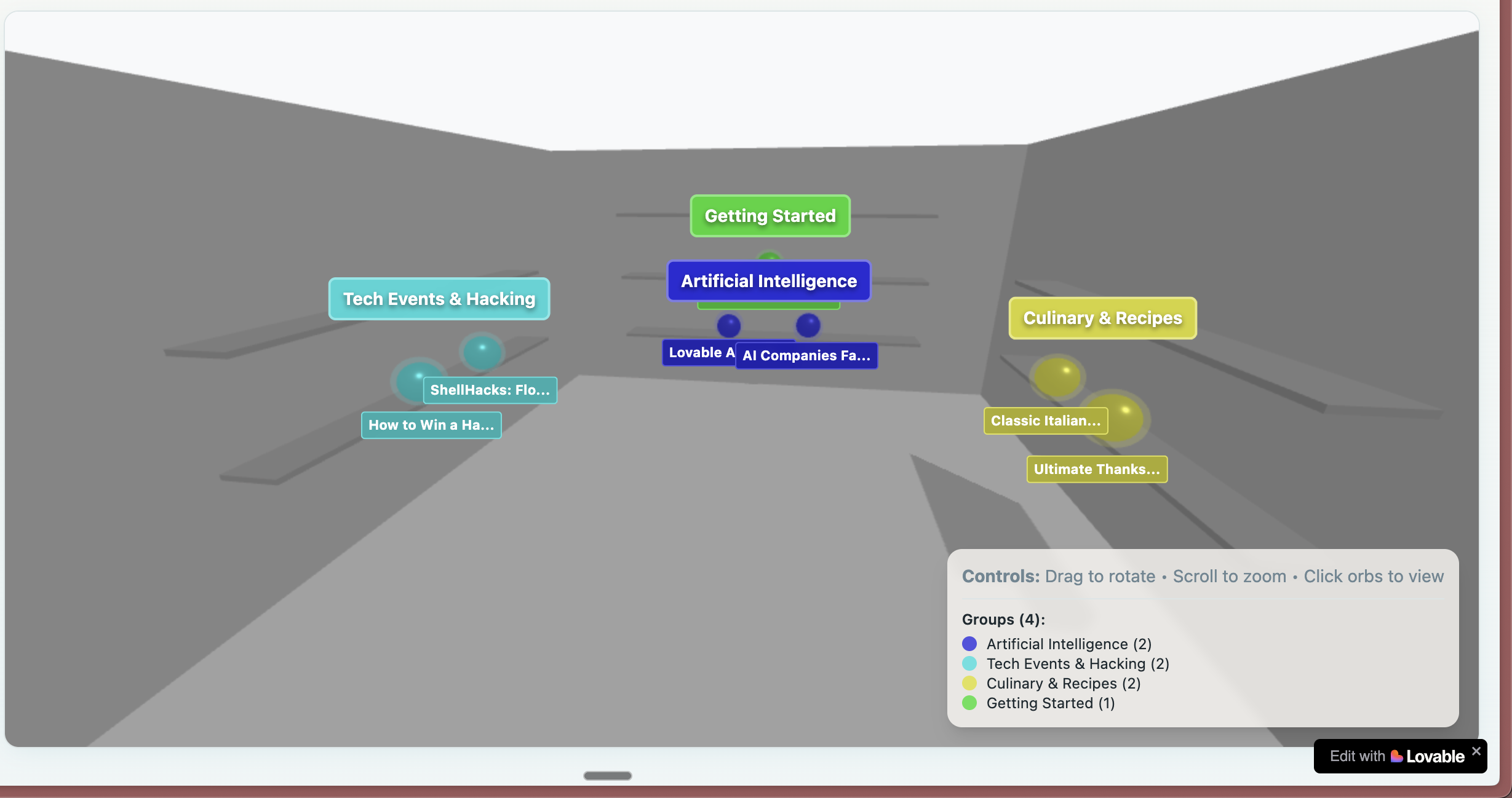
AI-generated Mind Palace [screenshot from app - Library view]
About the project
Project Mind Palace helps learners connect the dots in a world of fragmented information. It uses AI to turn lectures, articles, and podcasts into visual memory spaces filled with symbolic objects, each representing a key idea. Instead of scattered notes, users get structured scenes they can revisit, recall from, and build upon. Remember the memory chamber from Inside Out? We’re bringing that to life, not just to store information, but to make it stick.
What inspired you?
The “mind palace,” or method of loci, is one of the oldest cognitive frameworks humans developed. It originated in ancient Greece as a practical technique for orators who needed to memorize long speeches without notes. The Romans formalized it, and medieval monks and preachers used it to memorize hours-long sermons. For roughly 1,500 years, this was a standard part of rhetorical and scholarly training. The technique faded only when writing, printing, and widespread note-taking became dominant. It wasn’t abandoned because it stopped working, but because it stopped being necessary and because maintaining vivid internal imagery is effortful for most people.
Our inspiration was born from our own struggles as students. We are constantly consuming information such as lectures, case studies, recruiting prep, and articles. We felt acutely that our existing tools, like note apps and bookmarks, are great for storing this information but do nothing to help us remember or connect it. When it mattered most, like in an exam or a high-stakes interview, the key ideas were scattered and forgotten. We were inspired by the ancient "mind palace" technique and realized that generative AI could finally make this powerful memory tool accessible to everyone, removing the intense manual effort it historically required.
How you built your project
We built Project Mind Palace as a full-stack web application.
Frontend
- Built a fully responsive web app compatible with desktop and mobile.
- Implemented an email-based authentication flow.
- Designed dual interaction modes: structured list view and visual 3D room view.
Backend
- Managed authentication and session handling through Lovable’s backend services.
- Stored user Thoughts, summaries, tags, and semantic groupings.
- Schema ensures coordinated data flow between text-based and 3D representations to keep them synchronized.
3D
- Used Lovable’s 3D model generator (powered by Three.js) to create room scenes automatically.
- Mapped user “Thoughts” onto objects in the room to create a spatial, memory-palace-style interface.
- Iterated on object selection and placement to make abstract concepts feel intuitive in a visual environment.
- Ensured the 3D view remained performant and usable on mobile screens.
AI Integration
- Leveraged Lovable’s built-in AI to analyze user-submitted Thoughts.
- Automatically generated summaries, tags, and semantic groupings used for search and filtering.
- Integrated AI outputs with the 3D renderer to anchor concepts to objects in the scene.
The challenges you faced
Our biggest challenge was prompt engineering. It took many iterations to design AI prompts that could consistently generate high-quality, concise, and useful flashcards from very diverse content like a dense PDF, a long article, or unstructured lecture notes. Another challenge was designing the 3D visualization. We wanted to ensure it was a truly useful memory aid for seeing connections, not just a gimmick, which required careful design. Finally, implementing the spaced repetition logic and managing all the different states for flashcards in a short time was a complex task. With more time, we would use the source code of Lovable’s 3D model to have fine-grained control of the Three.js visualization to prevent labels from overlapping and other edge-case UI issues.
What you learned
We learned that generative AI is the perfect partner for human memory. It's the key to automating the most effortful parts of powerful learning techniques like the method of loci and spaced repetition. We also learned that the user experience for a memory tool is fundamentally different from a note-taking tool. It must be built around active recall and retrieval, not just passive organization and storage. This project proved to us that the next generation of learning tools won't just be about storing information, but about actively helping us process, connect, and retain it.

Log in or sign up for Devpost to join the conversation.