-
-
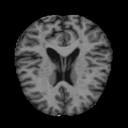
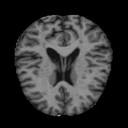
RMI scan
DISCLAIMER: The technical details of the implementation of the app from a computer science perspective, the scientific details of the games introduced, the mathematical details of the evaluation of the BOOST score, and much more… are available in a LaTeX paper that we add in the Additional Info section.
You are about to decide which path to take after university. You discover that your grandmother suffers from Alzheimer’s disease. The form is mild, but the news destroys you because you know what it means. You embark on a path in the hard sciences and statistical methods to manipulate and interpret them, or even to probe them. Your gaze is set on the frontier of neuroscience, where the finest technological and statistical-physical tools ever developed converge. Along the way, you meet three other young people, a bit different, but just like you. And here we are. This is what BOOST really is: 4 young people who, deep down, wish they had never received that news, who would like to hold their grandmother close for a little longer. Since the very first moment we connected at 4 am from Italy at the beginning of the hackathon, when we discovered the enormous potential of this event, we understood that the time had come to set ourselves a real challenge, to push ourselves to the limits of our computer science skills, with the purpose of creating something that does not exist but that we would have wished had existed to help people affected by Alzheimer’s. Something that would help them face this disease in its early and intermediate stages, or even prevent it. But also something that would relieve part of the burden from family members, the “caregivers,” whose sacrifices we know all too well. An app, the first to truly do what we needed. An interactive app, personalized through AI specifically for the user, but, above all, science-based, neuroscientifically grounded, effective in strengthening users’ cognitive abilities and slowing their decline. An app of cognitive games that work on short-term memory by linking it to the neural processes of long-term memory: our strategy to take the disease by surprise. BOOST was developed, for the occasion of the hackathon, as a web app. Designed to be managed by a caregiver and used by patients, it requires sign-up and the creation of a caregiver profile, to which several patient profiles can be associated. Each patient profile is associated with a link, through which the patient has access to their personal experience. Personal, too big a word? Not at all! What BOOST introduces is an experience based on profiling launched by the caregiver at the time of creating the new patient avatar and that is constantly updated with weekly reports from the caregiver on the state of the patient, and above all with the patient’s own activity in the app. Their results in the proposed games are aggregated and converted into a modification of their BOOST score, a metric accessible only to the caregiver to track the state of the patient: from 0 (severe stage) to 100 (no disease). It does not end here. We make our valuable skills in Machine Learning count through the implementation of a model that classifies the patient’s MRI scans into four categories of disease severity: from 1 (no disease) to 4 (severe stage). Whenever an MRI image of the patient is uploaded, its weight is prioritized in the determination of the BOOST score. The technical details of the implementation of the app from a computer science perspective, the scientific details of the games introduced, the mathematical details of the evaluation of the BOOST score, and much more… are available in a LaTeX paper that we add in the Additional Info section. What makes us most proud of the work accomplished is the immense effort spent in developing the cognitive games, since none of the 4 members of the group had specific expertise in the field. The result is a striking example of what teamwork—and, above all, determination to see a vision realized—can achieve. How do we come out of these 42 hours without stop? Tired. Some of us have significantly increased their technical programming skills in certain areas where they were weaker (front-end rather than back-end or vice versa, machine learning). Others have learned notions of anatomy and physiology regarding Alzheimer’s disease, as well as its pharmacological and non-pharmacological treatments. We come out of it with a dream: to see BOOST grow, improve, integrate all the features we imagined and that, due to the limitations of the occasion, we could not implement: new games, deeper and more precise profiling, an even more personalized user experience, more captivating graphics. Above all, with the dream of seeing BOOST become a mobile app, which every caregiver and every patient can download from their phone’s store like any other game or social app, in a completely natural way.
Built With
- better-out
- biome
- bun
- drizzleorm
- file-system-api-for-mri-uploads
- git-platform:-node.js-runtime
- huggingface
- javascript-frameworks:-next.js-14
- json-data-format-architecture:-modern-typescript-stack-with-next.js-app-router
- keras
- lucide-react-icons
- next.js
- openai
- postcss
- python
- pytorch
- react
- react-18
- react-hook-form
- react-hot-toast-ai/ml:-custom-ai-model-for-mri-analysis-(tensorflow/pytorch-based
- reacthookform
- recharts-for-data-visualization
- separate-repository)-development-tools:-eslint
- server-side-rendering
- tailwind-css-state-management:-zustand
- tailwindcss
- tensorflow
- transformers
- trpc
- typescript
- vercel-deployment-apis:-custom-rest-endpoints
- zod
- zod-validation-ui-libraries:-radix-ui
- zustand


Log in or sign up for Devpost to join the conversation.