Inspiration
Our digital libraries are fractured. We have PDF readers for academic papers, separate applications for EPUB novels, and browser tabs for web articles. This constant context-switching breaks the flow of reading and learning. The inspiration for BookFlow came from a desire to dissolve these digital barriers. We envisioned a single, tranquil space for reading, a place where the format of the document becomes irrelevant and the focus returns entirely to the content. It is a rebellion against digital clutter and a pursuit of frictionless access to knowledge.
What it does
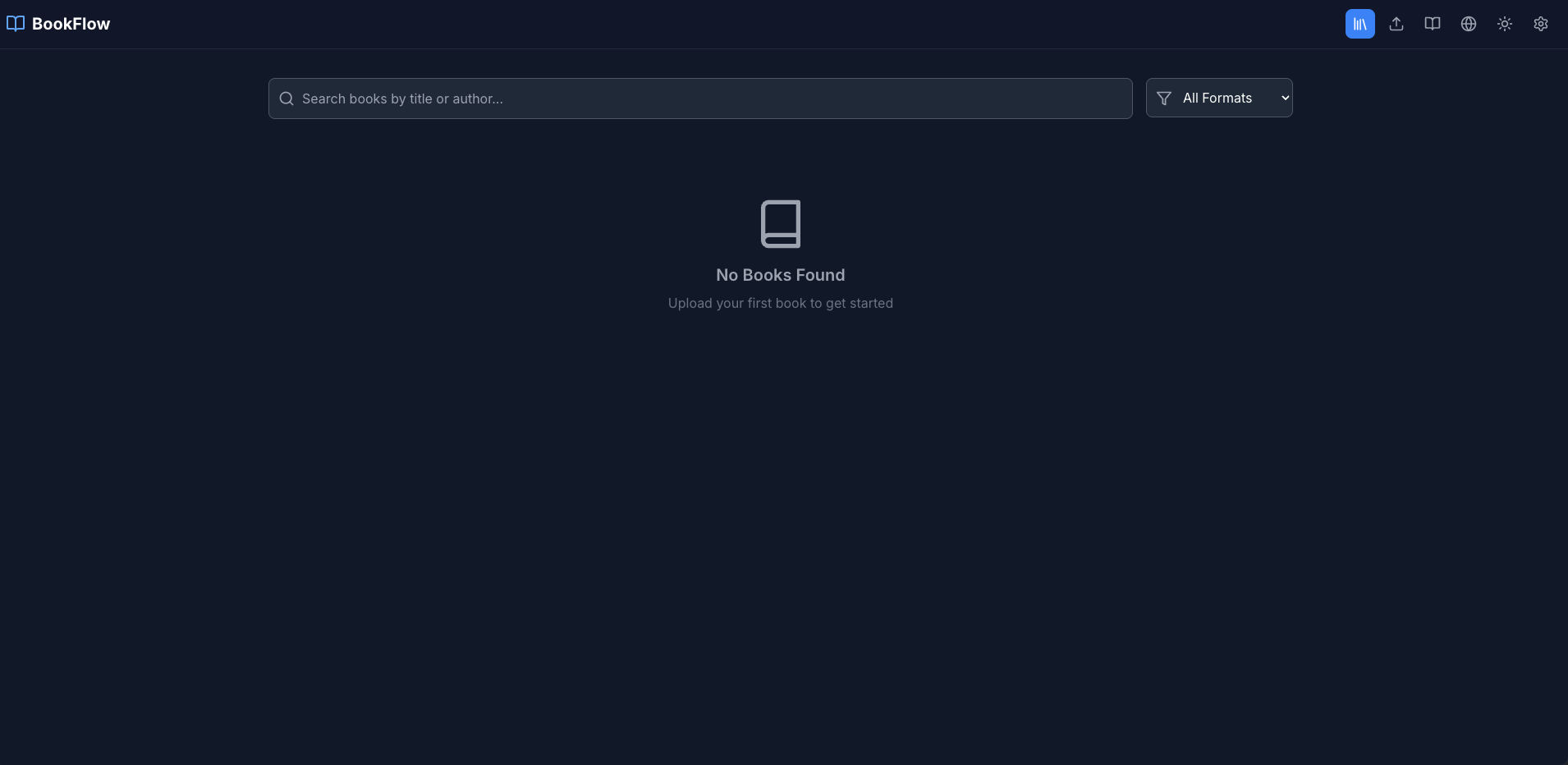
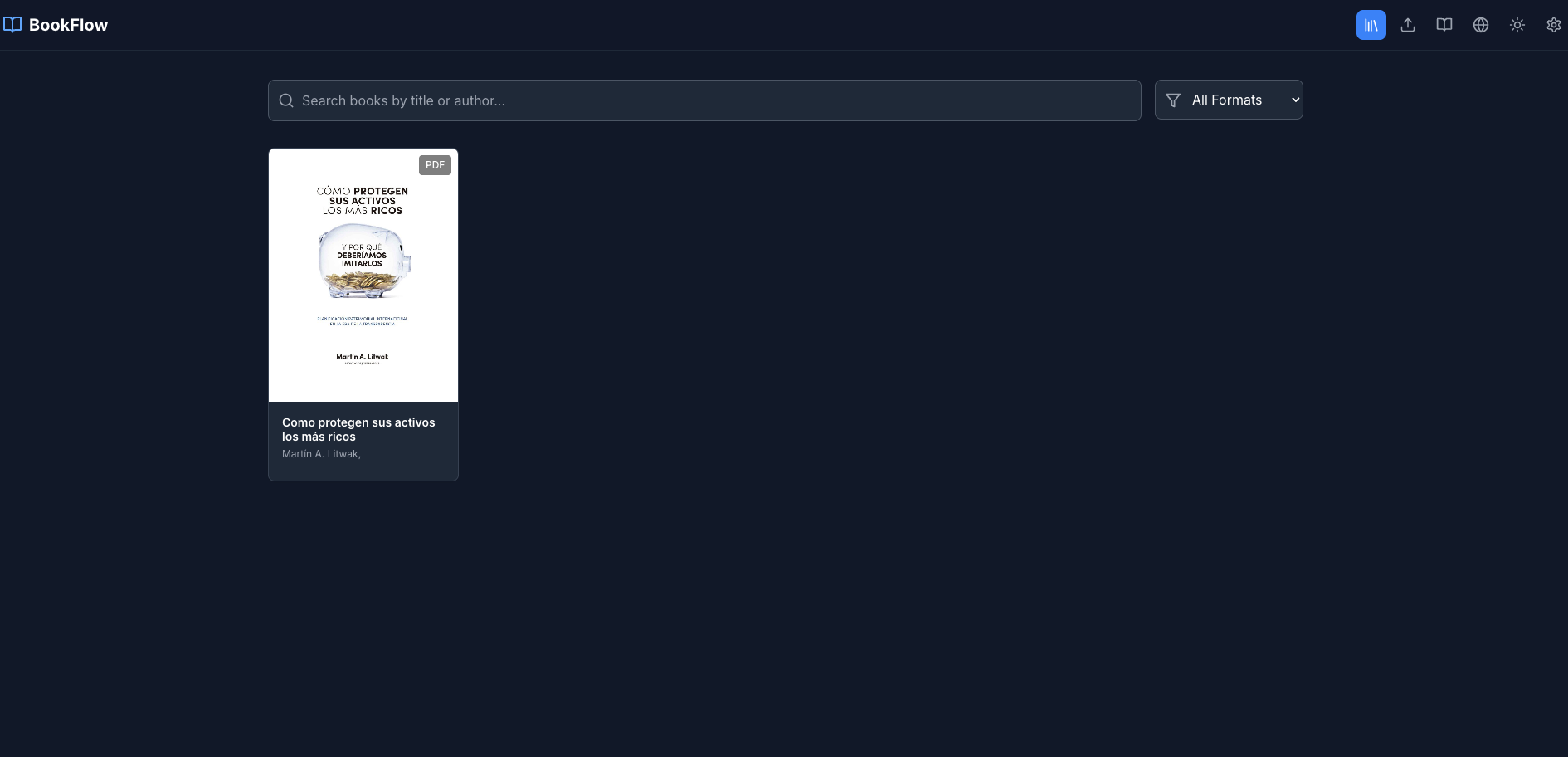
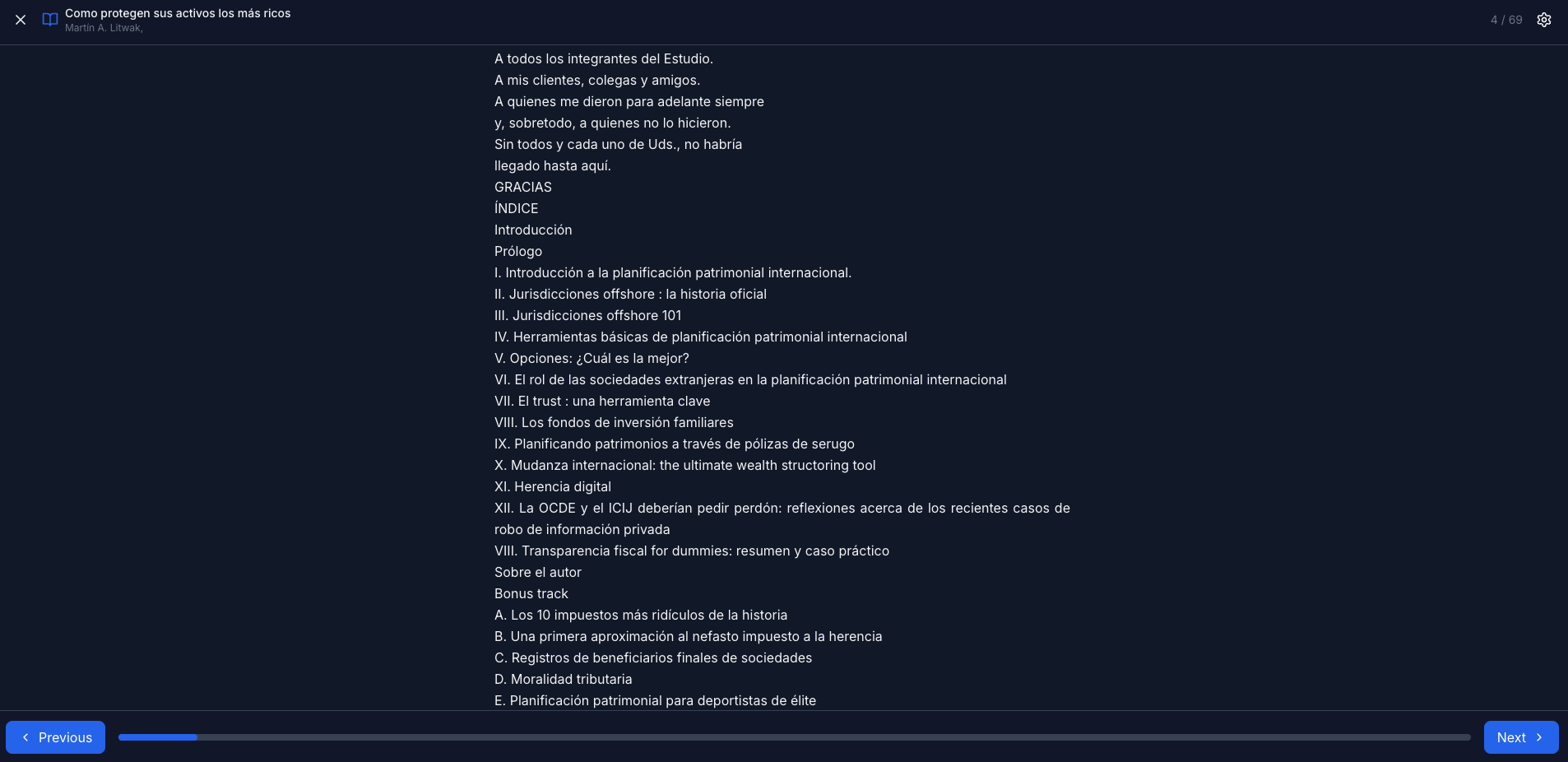
BookFlow is a lightweight, cross-platform web reader that lives in your browser. It transforms a simple browser tab into a universal library. A user can open and read multiple document formats—such as PDF, EPUB, and MOBI—within one clean, consistent interface. Because it is a web application, it works on any device with a modern browser, from a desktop computer to a tablet. BookFlow unifies the reading experience, removing the need to download or manage multiple specialized applications. It provides the core tools for reading, like bookmarks and text highlighting, without the unnecessary features that cause distraction.
How we built it
We built BookFlow on a modern and efficient technical foundation to ensure a fast and responsive experience. We chose Vite as our development and build tool, which gave us instant server startup and hot module replacement during development, dramatically speeding up our workflow. For the user interface, we used React. Its component-based architecture was essential for managing the application's complexity. We created distinct components for the library view, the reader, and the annotation tools, which allowed us to build a sophisticated yet maintainable front-end. To deliver on our promise of a private and offline-first application, we used IndexedDB for all data storage. Every book, bookmark, and highlight is stored directly in the user's browser, making BookFlow completely serverless and placing the user in full control of their own data.
Challenges we ran into Our greatest challenge was standardizing the rendering of different formats. A PDF file has a fixed layout, where every element has a precise position. An EPUB file, however, is designed to reflow its content to fit any screen size. Forcing these two fundamentally different structures into a single, seamless user experience required a deeply thoughtful approach to our rendering engine. We also faced significant performance hurdles with large files. Loading a 500-page textbook with high-resolution images could easily crash a browser tab. We had to re-architect our file processing logic to load and display content in chunks, ensuring the interface remained responsive at all times.
Accomplishments that we're proud of We are most proud of our unified reading view. We successfully created an abstraction layer that makes a fixed-layout PDF feel as fluid and readable as a reflowable EPUB. This core engine is the heart of BookFlow and delivers on our promise of a truly consistent experience. We are also proud of the application's performance. By implementing a progressive rendering system, we made it possible to open massive files almost instantly. Building a feature-rich reader that is entirely client-side and requires no installation, no sign-up, and no server is an accomplishment that proves the power of the modern web platform.
What we learned Through building BookFlow, we learned that the most important design decisions are not about what to add, but what to subtract. The temptation to add more features was constant, but we learned to measure every new idea against our core principle of a focused, distraction-free environment. This taught us discipline. We also learned the deep intricacies of web standards and browser APIs, realizing that a web application can be just as powerful and capable as a native one. The ultimate lesson was philosophical: the best technology is invisible. Our goal was to make the tool disappear, so that all that remained was the reader and the text.
What's next for BookFlow The future of BookFlow is about moving from a solitary experience to a connected one. We plan to build an optional, privacy-focused sync service, allowing users to share annotations and create collaborative reading groups. We also want to deepen our commitment to accessibility by adding advanced screen reader support and more high-contrast themes. Finally, we envision BookFlow evolving beyond static documents. The next major step is to integrate with the web itself, allowing users to save web articles directly into their library, transforming BookFlow into the single destination for all of a person's reading.
Built With
- indexdb
- react
- standard-file-system
- typescript


Log in or sign up for Devpost to join the conversation.