
Inspiration
As avid readers, we’ve all been there – joining a book club only to realize the pace or genre just doesn’t click. Frustrated by the lack of simple, no-fuss tools to find compatible groups, we set out to build BookClub Match. We wanted to create something that puts readers first: no logins, no endless forms, just a straightforward way to connect with like-minded book lovers and make group reading more meaningful.
What it does
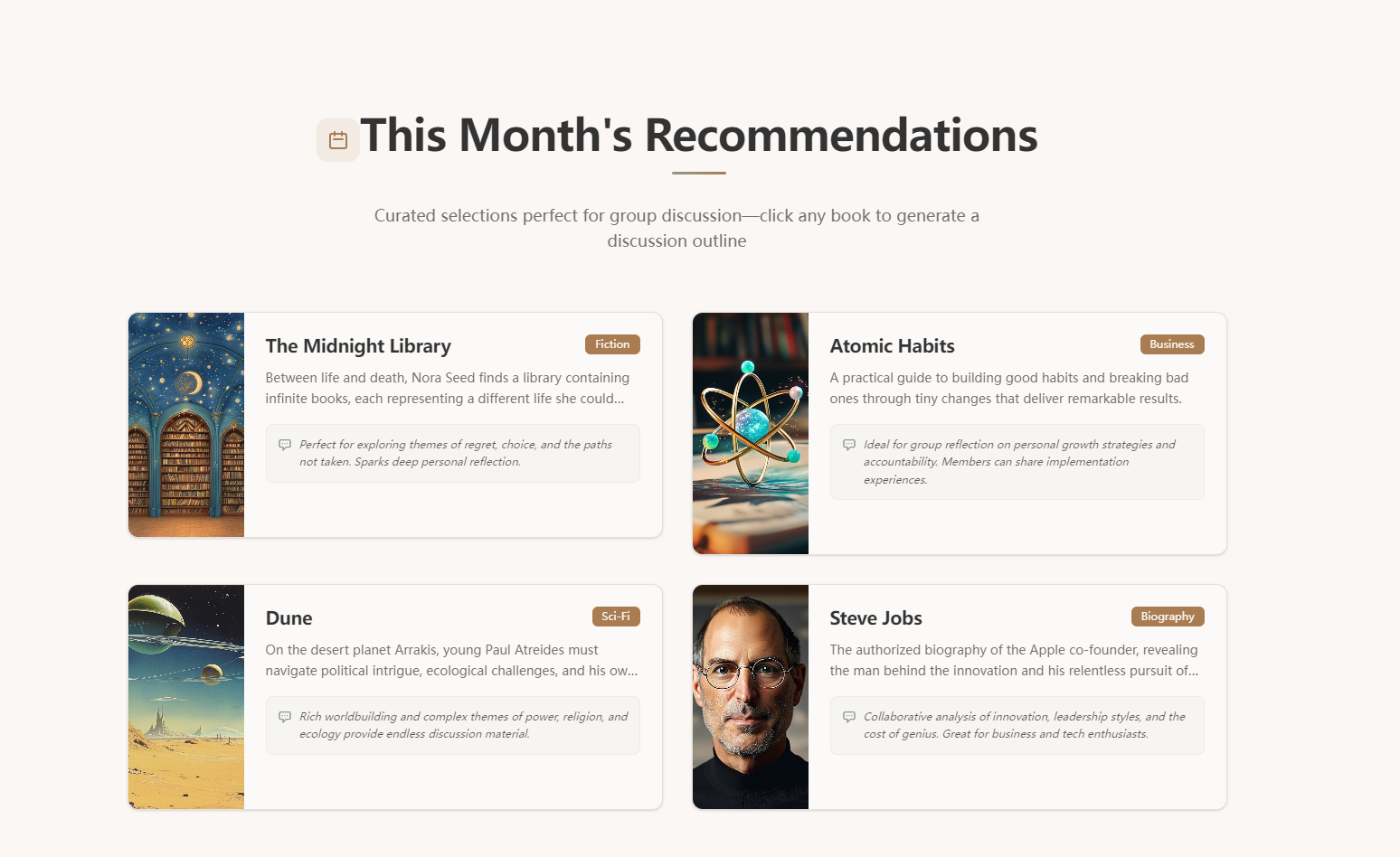
BookClub Match lets users filter book clubs by genre, meeting format (online/in-person/hybrid), and reading speed to find their perfect match. It features monthly curated book recommendations (4 diverse titles each month) and an instant discussion outline generator with themed questions tailored to each book’s genre and themes – all without requiring registration.
How we built it
We started by mapping core user needs (simple filtering, curated recs, easy outlines) to a clean page structure (Homepage, Results, Outline Generator). We built the frontend with React for responsive design, used Node.js for backend logic, and MongoDB to store club/book data. AWS hosted our static assets, and we leveraged book metadata APIs to automate book detail updates. We prioritized mobile/desktop compatibility from day one, testing across browsers to ensure seamless use.
Challenges we ran into
The biggest hurdle was refining the matching algorithm to ensure exact filter matches (genre/format/speed) while handling edge cases (no matching clubs). We also struggled with making the discussion outline generator adapt to diverse genres (e.g., poetry vs. mystery) while keeping a consistent, usable structure. Additionally, ensuring cached recommendations loaded when monthly data failed required creative error-handling logic.
Accomplishments that we're proud of
We’re proud to deliver a fully functional, no-login platform that meets all core user needs. The responsive design works flawlessly across devices, and the discussion outline generator produces thoughtful, genre-specific questions that elevate group conversations. We also nailed the edge-case handling (e.g., redirecting unfiltered results, showing cached recs) to keep the user experience smooth.
What we learned
We learned the importance of prioritizing user simplicity over feature bloat – skipping logins/registration removed friction and kept focus on core value. We also gained hands-on experience with API integration for dynamic content and refining algorithms to balance precision (exact matches) with user-friendly error messaging. UI/UX testing taught us how critical clear, minimalist design is for accessible, intuitive use.
What's next for this project
Next, we plan to add support for multiple genre selections (a top user request) and let users save favorite book clubs/outlines (still no login – just local storage). We’ll expand monthly recommendations to include user-submitted book suggestions and integrate a lightweight review system for clubs (focused on discussion style, not ratings). Long-term, we want to add hybrid meeting tools (e.g., virtual discussion boards) to bridge online/in-person groups.
Built With
- amazon-web-services
- figma
- mongodb
- rest
- vercel

Log in or sign up for Devpost to join the conversation.