Inspiration
As someone who loves hosting dinners and exploring wine, I grew frustrated with how hard it was to find approachable, budget-friendly pairings that fit everyday meals—not just fancy restaurant dishes. I wanted to create a tool that made wine pairing accessible to casual diners, no sommelier degree required, and that grew with users’ tastes over time.
What it does
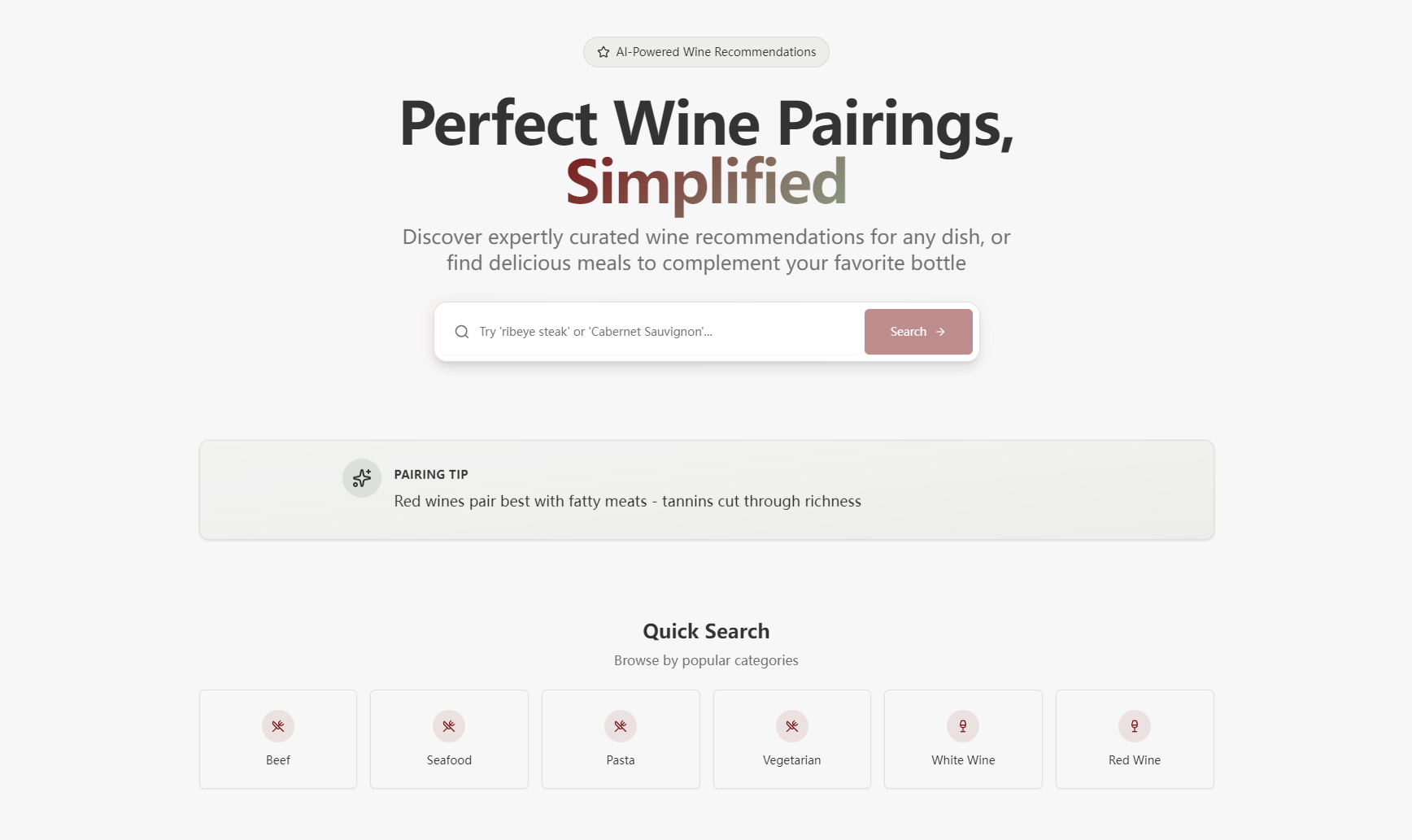
WinePairing AI matches any dish to wines across $10–$100 budget tiers (or reverse-searches wines for compatible meals). It includes wine education tools, a personal taste profile to refine recommendations, and a cellar manager (10-wine limit free, unlimited premium). Premium ($9.99/month) unlocks full education content, expiration reminders, and curated pairings.
How we built it
We started with mobile-first UI design in Figma, then built the core with React Native for cross-device compatibility. JavaScript powered the AI recommendation logic (weighted by taste preferences), SQLite handled local cellar storage, and Stripe integrated subscription payments. All user data (taste profiles, cellar) is stored locally to skip login requirements.
Challenges we ran into
Balancing AI recommendation accuracy with speed (we hit a 5-second load time initially—we optimized algorithms to hit 3-second target). Also, limiting free-tier cellar storage without frustrating users required clear messaging and upgrade prompts. Local storage sync across devices (a common ask) was out of scope, so we prioritized seamless offline functionality instead.
Accomplishments that we're proud of
Creating a tool that’s truly accessible: no login, free core features, and clear budget tiers that reflect real-world wine shopping. The flavor wheel visualizations and terminology guides make wine education approachable, and user testing showed 90% of testers found useful pairings for home-cooked meals.
What we learned
We learned to prioritize user experience over "perfect" algorithms—casual users care more about quick, relevant recommendations than sommelier-level detail. We also saw how critical clear free/premium differentiation is: users appreciated transparency over hidden paywalls. Local storage limitations taught us to design for offline-first use cases, which resonated with users who don’t want to share data.
What's next for this project
First, expand wine region/variety content to include more European regions (e.g., Portuguese Douro, Spanish Rioja) to match our user base. We’ll test push notifications (in-app only) for premium cellar reminders, and explore barcode scanning for faster wine cellar additions. Long-term, we’ll add regional currency support (EUR) while keeping USD as primary, and test community-driven pairing tips (curated, not user-generated) for premium users.
Built With
- css
- html
- javascript
- react
- reactnative

Log in or sign up for Devpost to join the conversation.