
Inspiration
As a long-time book club organizer, I grew frustrated with cobbling together spreadsheets, poll tools, and calendars to keep our group on track. Every month, I’d spend hours creating discussion questions, chasing vote counts, and reminding members of meetings—time I wanted to spend reading instead. I knew other organizers faced the same chaos, so I set out to build a single platform that wrapped all these needs into one intuitive tool.
What it does
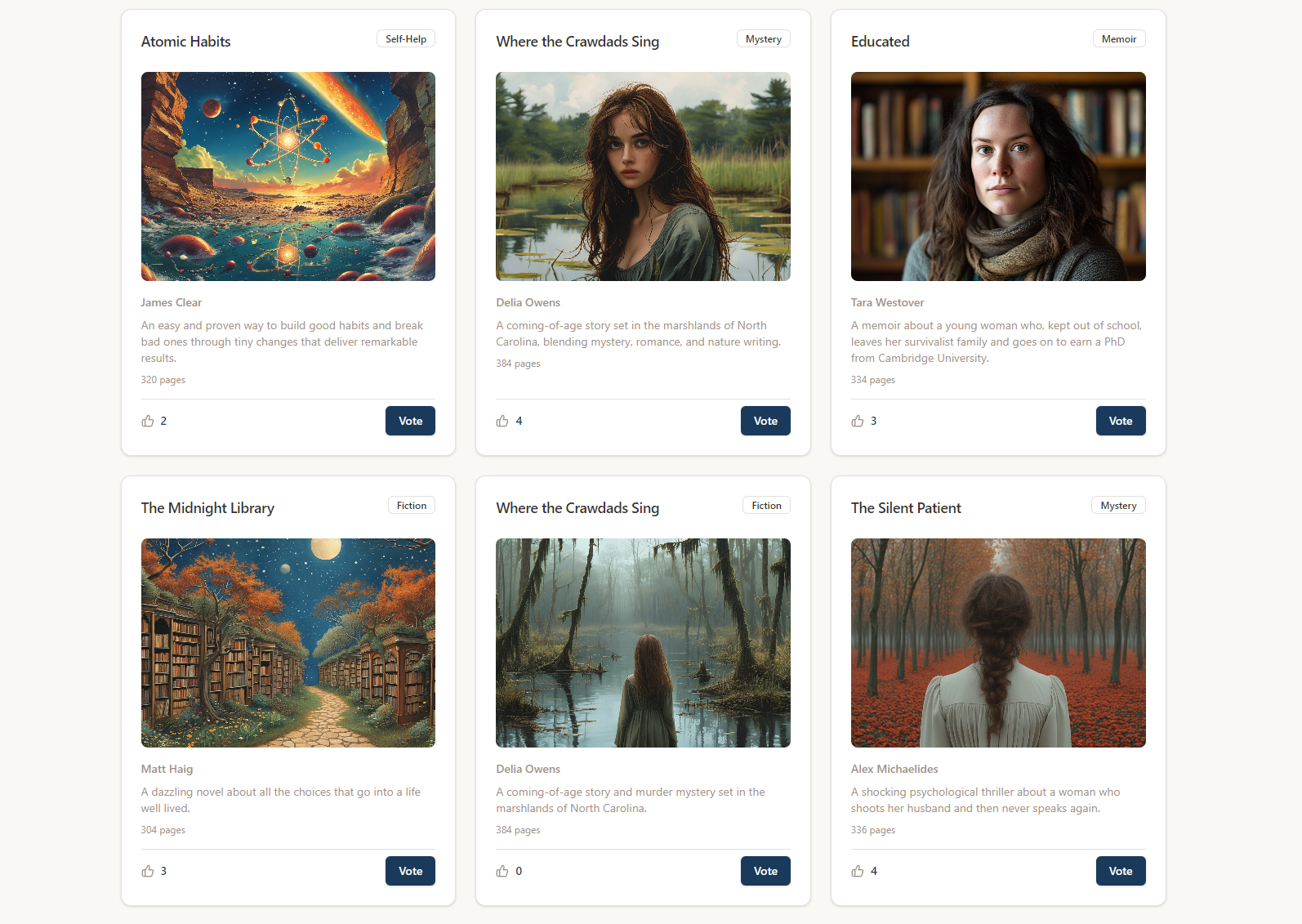
BookClub Toolkit is a free web platform that centralizes every task of running a book club: members vote on monthly reads, AI generates thoughtful discussion questions, progress is tracked visually, meetings are scheduled with automated reminders, and past books are archived with ratings and notes—all in a clean, easy-to-use interface.
How we built it
I started by mapping out core pain points from my own experience and talking to other book club leaders. I built the front end with React and Bootstrap for responsiveness, used Node.js/Express for the back end, and MongoDB to store book data, votes, and meeting details. I integrated OpenAI’s API for discussion questions, Calendly for meeting invites, and Chart.js for progress visualizations, hosting the whole project on AWS.
Challenges we ran into
The biggest hurdle was balancing simplicity with functionality—book club organizers don’t want a steep learning curve. I also struggled with real-time vote tracking; early versions had lag, so I optimized the database queries to keep counts instant. Integrating multiple APIs meant debugging conflicting authentication flows, which took weeks to resolve without breaking the user experience.
Accomplishments that we're proud of
The platform’s intuitive design is what I’m most proud of—every feature is one click away, and even first-time users can navigate it effortlessly. Seeing beta testers (fellow book club leaders) cut their planning time by 70% was validating, as was the AI-generated questions: they’re thoughtful, varied, and save organizers hours of manual work.
What we learned
I learned to prioritize user feedback over my initial vision—testers pointed out that the progress tracker needed chapter-based logging (not just pages), which I hadn’t considered. I also deepened my skills in API integration and responsive design, and realized how critical it is to build for “real-world” use cases instead of theoretical needs.
What's next for this project
Next, I want to add lightweight member check-ins (so members can log progress directly) and a simple feedback form for post-meeting input. I also plan to test integration with public book databases to auto-populate book details (covers, author info) and add genre-based filtering for the book archive. Eventually, I’d like to roll out a mobile-friendly version optimized for on-the-go planning.

Log in or sign up for Devpost to join the conversation.