-
-
Architecture Overview
-
Case Design
-
Process Flow
-
Compliance Score
-
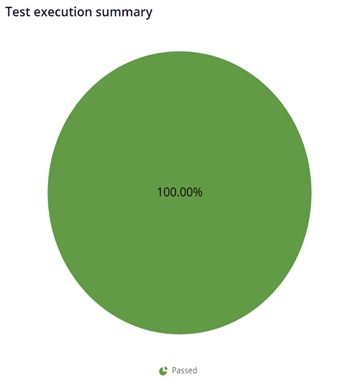
Pega Units Pass Percentage
Content Overview
- Problem Statement & Solution
- Business Outcomes
- Benefits
- Applicability In Other Domains
- Functional & Non-Functional Requirements
- Architecture Overview
- Design Considerations & Assumptions
- Design Approach
- Process Flow
- Pega Express
- End To End Use Case
- Pega Guardrail Score
- Scalability
- Pega Unit Test Cases
- Reusability and Post Delivery Changes
- Final Product
Problem Statement & Solution
Problem Statement:
Today customer has to log into different ride-hailing applications to find the cheapest & quickest available vehicle by doing manual comparisons.
User has to install multiple applications.
User has to maintain multiple login credentials.
If the user books the cab for the same ride in multiple applications, User has to take care of multiple cancellations in different applications bearing the cancellation charges.
Solution:
"BookMyRide" application allows retail customers to find & book rides in a single place, to get the cheapest, quickest available vehicle in a convenient manner.
Business Outcomes
One-stop application to book available vehicles from different vendors like Uber, Ola, etc.
Consolidation of vehicles availability with cost from multiple vendors.
Benefits
No pain point of using multiple hail trip apps to search for available vehicles, comparing rates and arrival time
Selection of 1 or more available vehicles, auto-selection in case of multiple selections
Cancellation of the ride before cab arrival
Tracking of cab status
Can be used in multiple countries/cities
Supports multi-ride types
Easy addition of any vendors, in future
Time save as we get consolidated data in a single app
It also paves the way for the local vendors in the market amidst massive vendors
Applicability in Other Domains
This product idea can be extended to any customer searchable parameters. Use cases include comparing prices & availability of
Food in apps like Swiggy, Zomato, Door dash, Uber Eats
Flight ticket across various airlines
Medicines in apps like Netmeds, OneMg
Products in online shopping apps like Amazon, Flipkart
Functional & Non-Functional Requirements
Functional Requirements:
User should be able to book a ride by selecting ride type, pick up & drop location
Upon entering the ride details, the user should be able to view the complete list of service providers along with fare and ETA details
User should be able to select one or more rides from the list based on his/her preference (Cost Vs ETA factors)
The service provider, giving the first response upon user's preference, should be assigned the ride while the other selected rides should be automatically rejected
Users should be able to cancel the ride after their ride is confirmed until the cab arrival
Non-Functional Requirements:
Auto-fill suggestions of Pick Up and Drop Location based on real-time typing of alphabets in these fields
App capacity to handle many requests at a time
Update ETA at ping frequency of 30 seconds, after the cab has been confirmed until the cab arrival
Simple and user intuitive User Interface design
Providing secure environment for both service providers and users as per PEGA security guidelines
Displaying the rating of the service providers (Extendable)
Showing the possible routes to reach the destination (Extendable)
Showing the real time traffic conditions (Extendable)
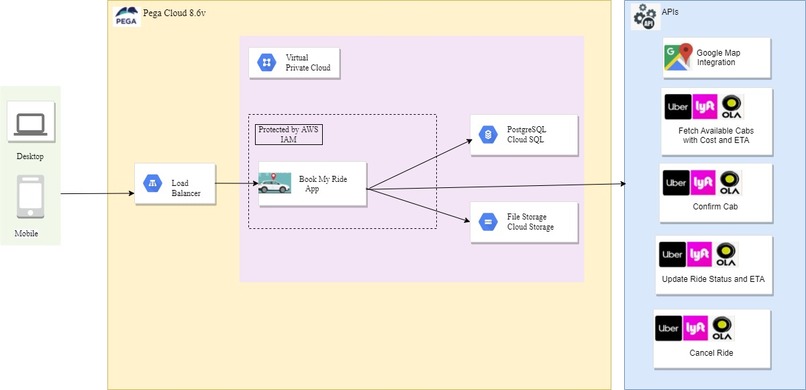
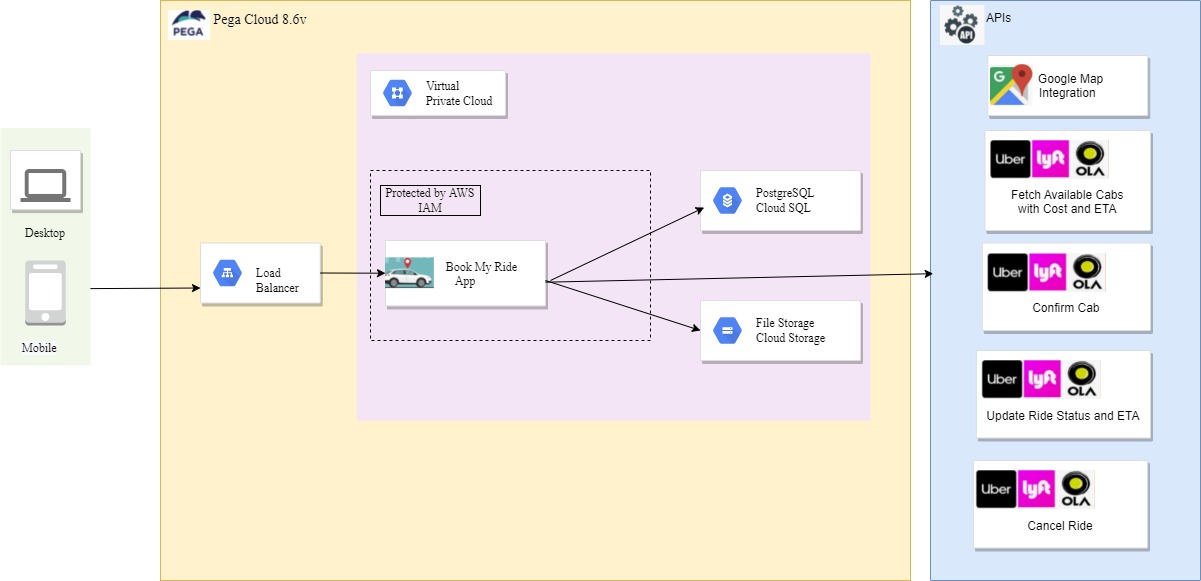
Architecture Overview

Design Considerations & Assumptions
Tool used for Implementation: Pega Cloud v 8.6
Design considerations:
Use of Pega Cosmos UI
Use of Google Maps integration with Pega to allow user to select pick up and drop location
Use of Pega case management feature for creating and managing ride case
Use of configurable DB to add/remove supported vendors, vehicle type and end-point URL
Use of Connect-REST in PEGA for API calls to the service providers
Pega has inbuilt horizontal & vertical scaling to support huge user base
Assumptions:
Service providers to expose the following APIs:
i) List the available rides with cost and ETA based on the ride type, pick up and drop location
ii) Confirm the booking
iii) Update the cab arrival status and ETA
iv) Cancel the booking
Design Approach
Database Design:
Design a configurable DB to allow more vendors without code change. DB will have vendor name, ride type, status (Y/N) and end-point URL
If a service provider decides to not support the ride, just a simple change in DB column status can be updated to N
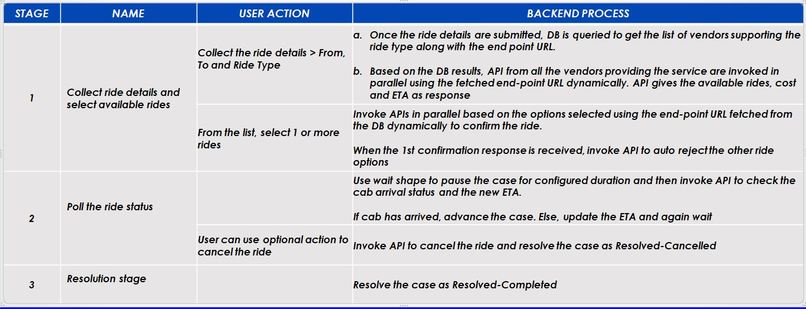
Case Design:

This app can be extended to other domains like food delivery, medicines etc. by following the same design approach
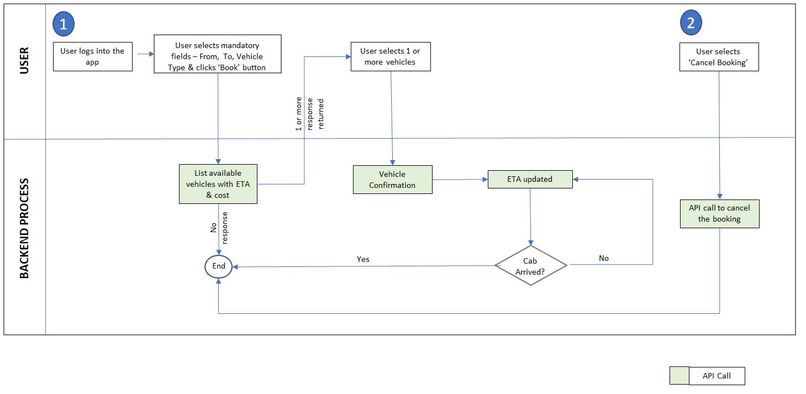
Process Flow

Pega Express

We have used Pega Express for all four phases – Discover, Prepare, Build and Adopt.
End To End Use Case
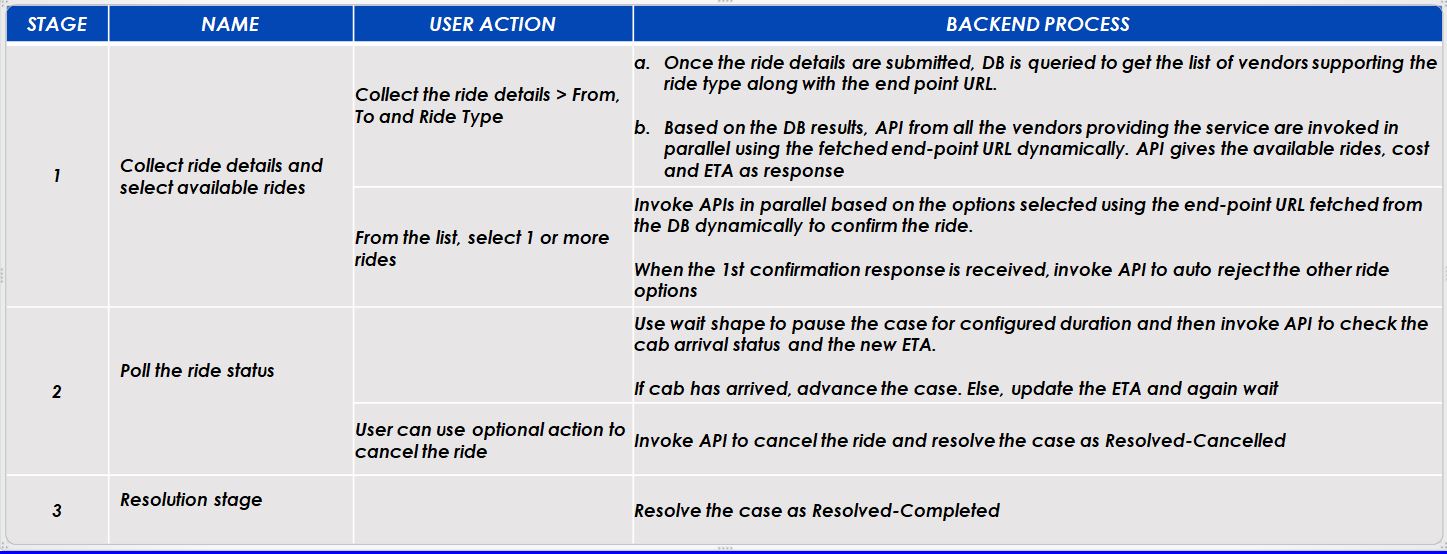
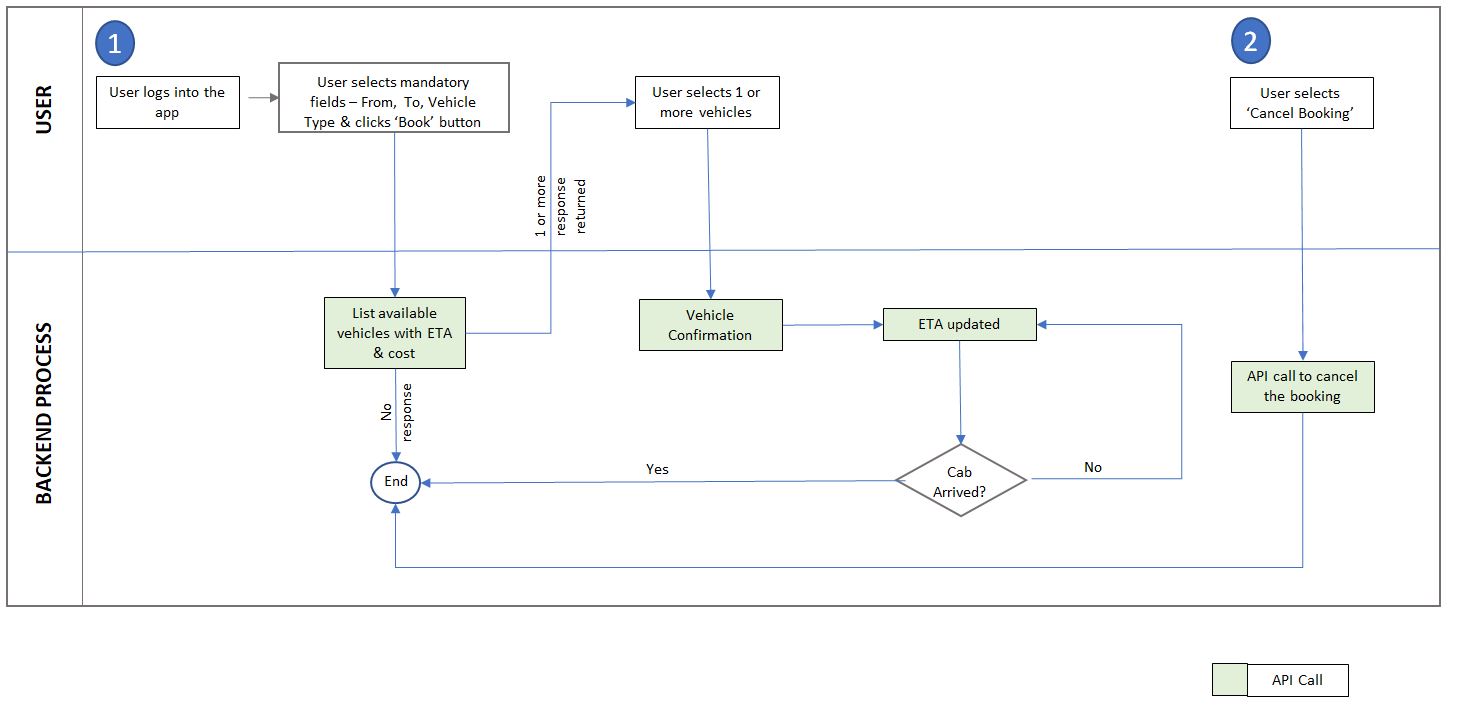
User selects pick up/drop location & vehicle type. All the 3 fields are mandatory. Google map is integrated in this screen.

On click of submit, APIs are invoked to fetch the list of available vehicles from registered vendors.
User must select at least 1 option to proceed further.

User can request one or more vehicles.

On click of submit, APIs are invoked to get vehicle confirmation. Ride is assigned for the vendor who sends the accept response first, others are auto rejected.
ETA and cab status are updated frequently until cab arrival. The booking status is set as Scheduled.

Once cab arrives, case gets 'Resolved – Completed'.

User can cancel the request, after ride creation till cab arrival.

Upon cancellation, case gets 'Resolved-Cancelled'.

Pega Guardrail Score
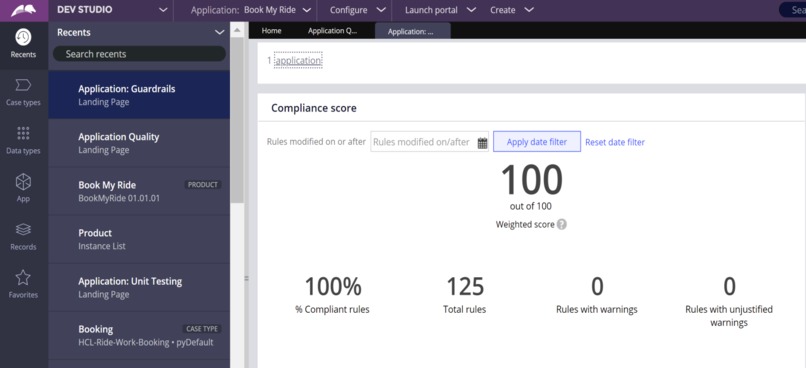
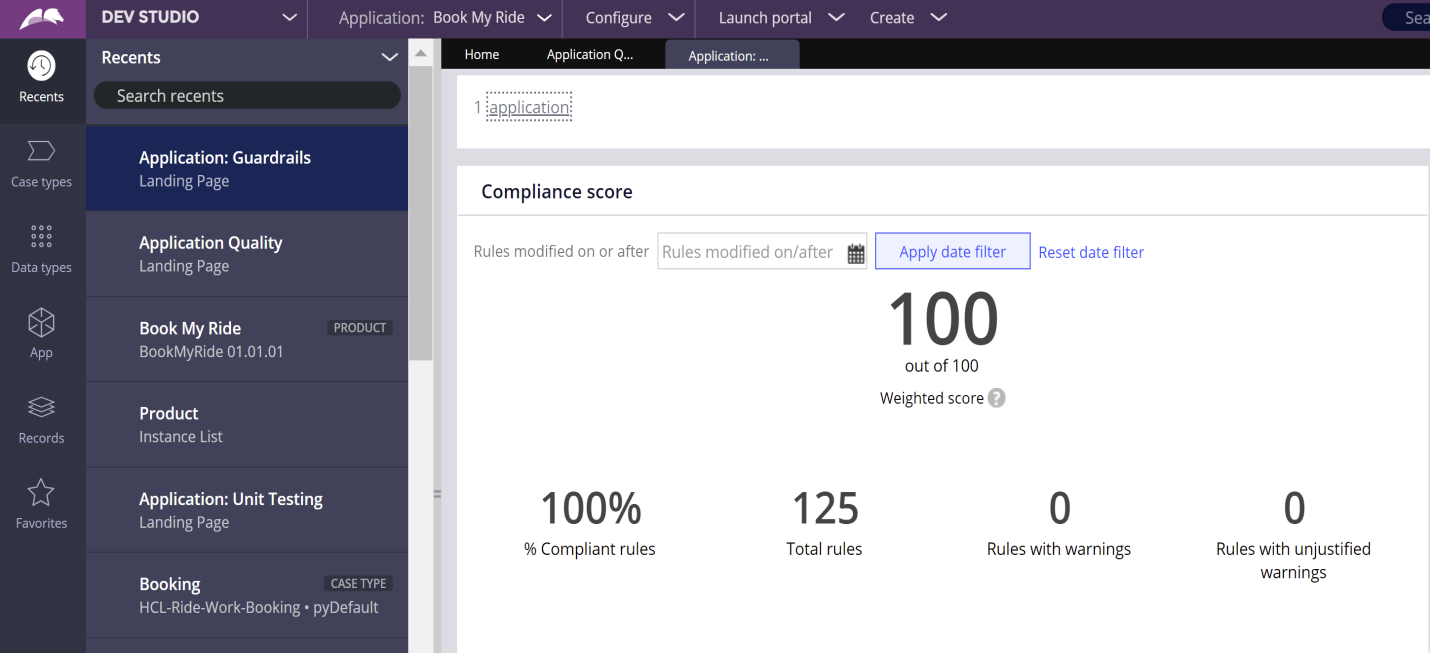
Application is 100% compliant with Pega Best Practices and the guardrail compliance score is 100.

Scalability
Pega Platform operates on a large scale with a single cluster supporting tens of thousands of simultaneous users and millions of cases per day. Both horizontal and vertical scaling is supported:
• Horizontal scaling with near-linear scalability within a certain range of scaling can be supported by deploying Pega JVM nodes across multiple load-balanced servers. Shared database architecture is used across a horizontal cluster, with certain instances of communication between the nodes taking place throughout the database. Hazelcast is generally used as a clustering solution for the nodes. If needed, database scalability is provided by the database vendor's clustering capabilities.
• Vertical scaling is supported by running multiple Pega JVM nodes on a multi-CPU server. Pega Platform adds capabilities for failover in the case of node server crashes.
Browser crashes are also handled by recovering the user session.
Pega Unit Test Cases
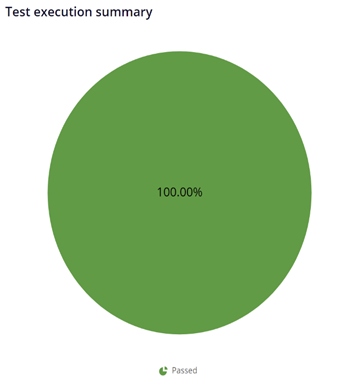
Pega Unit Test cases are written for all the rules having an option to write Pega AUT cases and the pass rate is 100%.


Reusability and Post Delivery Changes
Reusability:
This application can be reused to support consolidations of food delivery applications, airline ticket booking applications, medicine delivery applications, online shopping applications etc by following the same case design with minimal changes.
Post Delivery Changes:
To support additional vendors, we just need to add entries to the configurable DB.
Connect rest is run in parallel by picking up the end point URLs from the configurable DB. No code changes are required to support additional vendors
Final Product
Application Product (RAP file), PPT and Video can be downloaded from below link
https://drive.google.com/drive/folders/1hbObtQVyV72Lys4zF0_fpDSWtIqqLt63?usp=sharing
Operator Details :
admin.bookmyride / rules
User.bookmyride / rules


Log in or sign up for Devpost to join the conversation.