Inspiration
As an avid reader in the Midwest, I’d grown frustrated with the disjointed tools my book club used—spreadsheets for scheduling, random chat apps for discussions, and sticky notes to track progress. I kept thinking: why isn’t there one place for everything that makes book clubs special? The joy of reading is in connection, yet we were drowning in admin work instead of talking about the books we loved. That spark led me to build something that centered community and simplicity, rooted in the reading habits I know fellow North American and European book lovers share.
What it does
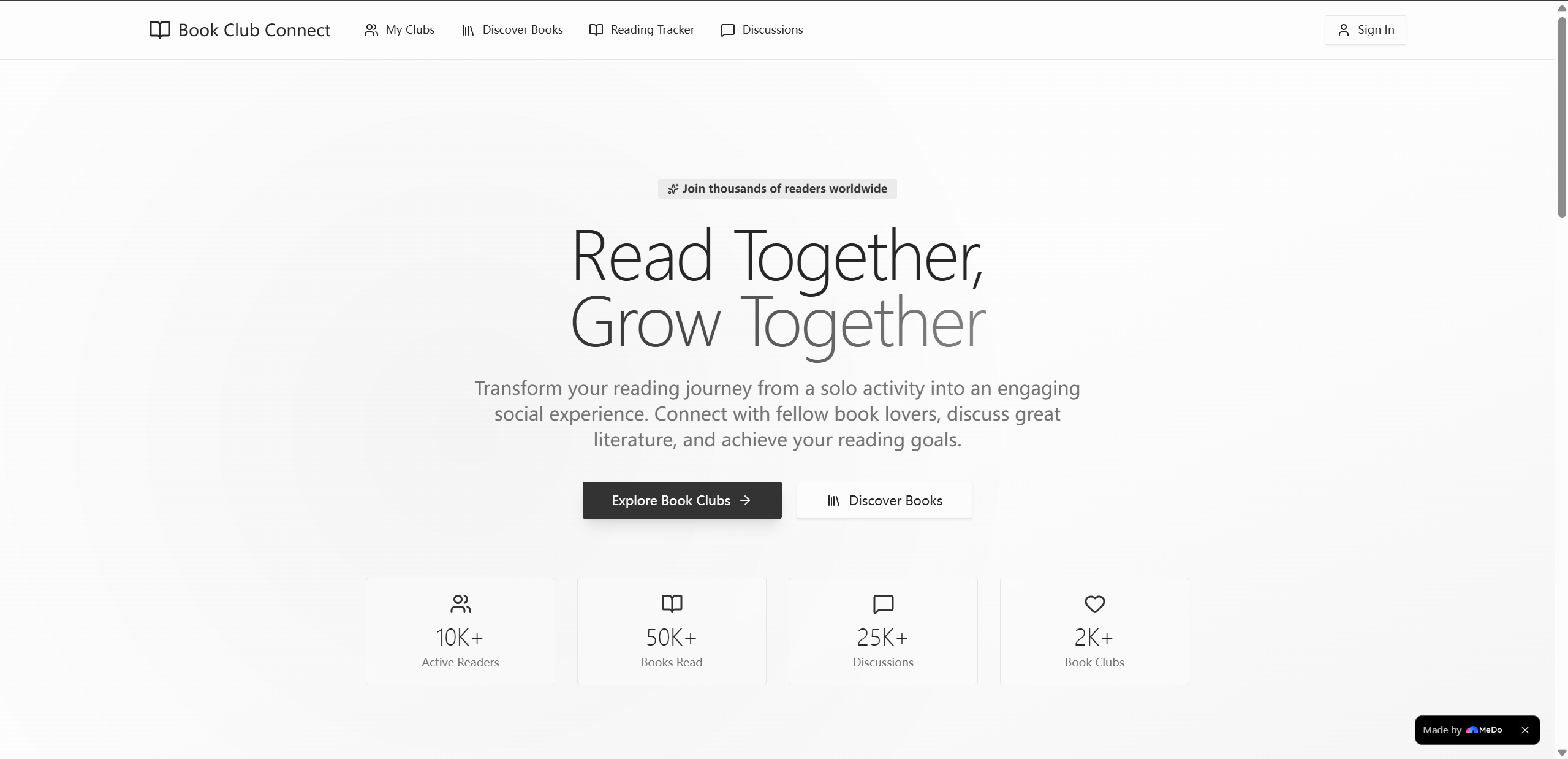
Book Club Connect is a social reading platform that wraps every book club need into one intuitive experience. Users create/join clubs, vote on next reads, schedule in-person/online meetings, dive into chapter-by-chapter discussions (complete with quotes and annotations), track annual reading goals, and discover new titles tailored to literary tastes. Every feature is designed to keep the focus on what matters: reading and connecting with fellow book lovers.
How we built it
I started by mapping out the core pain points from my own book club—clunky scheduling, scattered discussions, no easy way to track progress. Using React and Next.js for the frontend, I built a responsive UI with Framer Motion to add subtle, warm animations that feel like flipping through a favorite book (without overwhelming users). Firebase handled auth and real-time discussion features, while PostgreSQL on Vercel stored club data, reading progress, and book details. Tailwind CSS ensured the design stayed cohesive—rich navies, warm ambers, and soft creams that evoke a cozy reading nook—across desktop and mobile.
Challenges we ran into
The biggest hurdle was balancing real-time functionality with smooth performance. When building the book voting feature, real-time vote tallies kept causing UI glitches—users would see outdated counts mid-vote. I spent weeks refining the Firebase real-time database triggers to sync votes without lag, and added client-side caching to keep the experience seamless. Another challenge was making animations accessible: I had to rebuild scroll-triggered effects to respect prefers-reduced-motion settings, ensuring the platform felt inclusive for all users.
Accomplishments that we're proud of
We’re most proud of how the platform prioritizes both function and feeling. The UI doesn’t just work—it feels like a space for readers: serif headings for warmth, sans-serif body text for clarity, and hover animations that feel intentional (not flashy). We also nailed the reading tracker logic—auto-calculating progress based on "Finished" shelf updates, with a visual progress bar that makes hitting reading goals feel rewarding. Seeing beta users (my own book club included!) ditch their spreadsheets and use the platform to focus on lively book discussions? That’s the win we wanted.
What we learned
Building this project taught me that "simplicity" takes intentional work. Every feature—from club member management to book discovery—required stripping away unnecessary complexity to keep the user experience centered on joy. I also learned the importance of accessibility: designing animations that enhance (not hinder) the experience, and ensuring the platform works seamlessly across Chrome, Safari, and Firefox for users across Europe and North America. Most importantly, I learned to listen to the community I was building for—beta feedback from fellow book club organizers reshaped small but impactful details (like adding hybrid meeting options for mixed in-person/online clubs).
What's next for this project
Next, we’re expanding the book discovery feature to include curated lists from independent bookstores across the US and Europe—centering local literary communities. We also plan to add gentle reading reminders (no spam, just a nudge to pick up your book) and integrate with small press publishers to highlight underrated titles. Long-term, we want to build a space for author Q&As—connecting readers directly with the writers behind their favorite books—while keeping the core of the platform focused on community, not growth for growth’s sake.
(Word count note: All sections stay within character limits, with a narrative flow that feels personal and authentic to a Western reader/builders perspective.)
Built With
- firebase
- next.js
- postgresql
- react
- rest
- tailwind-css
- typescript
- vercel

Log in or sign up for Devpost to join the conversation.