-
-
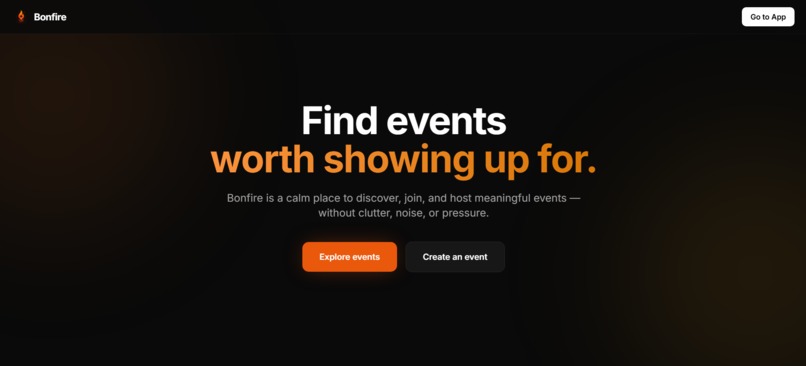
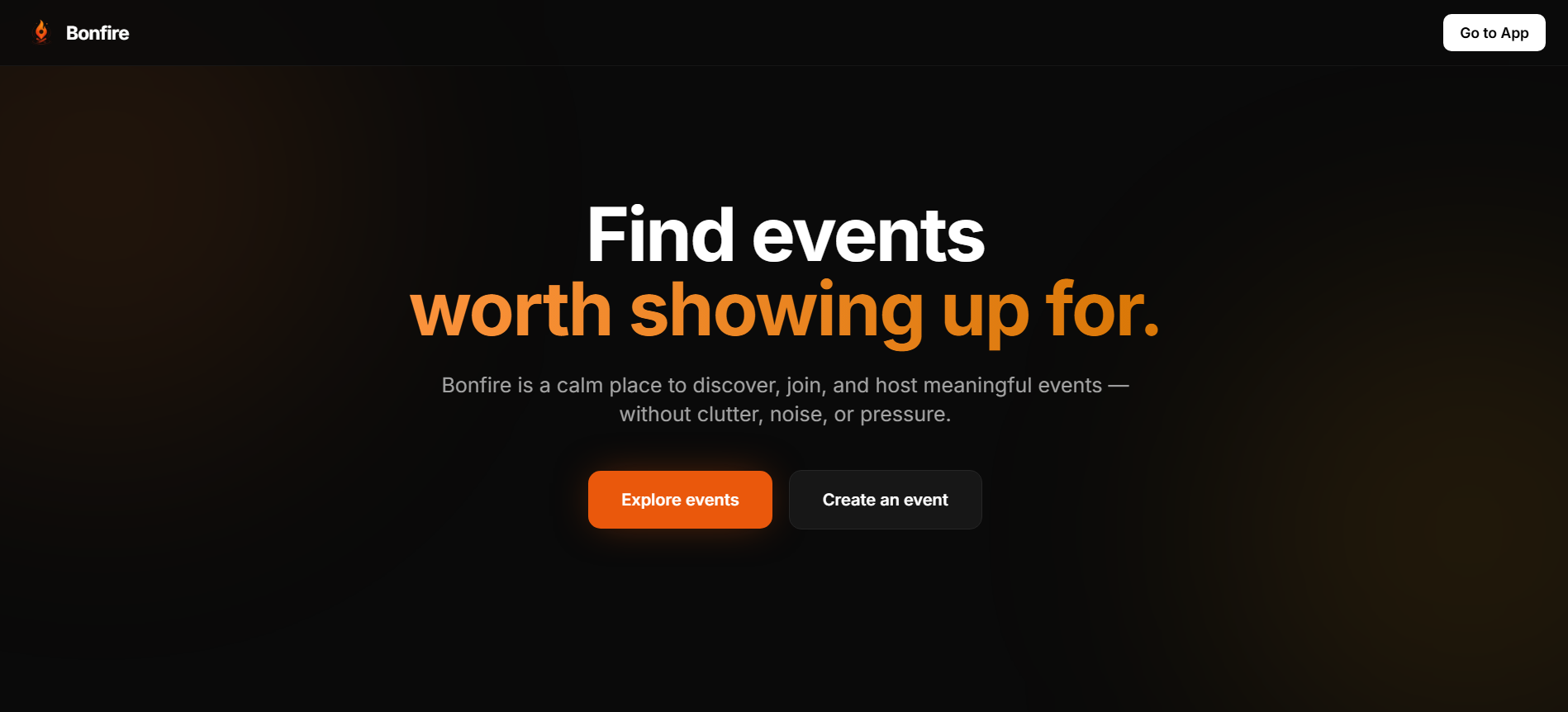
Landing Page
-
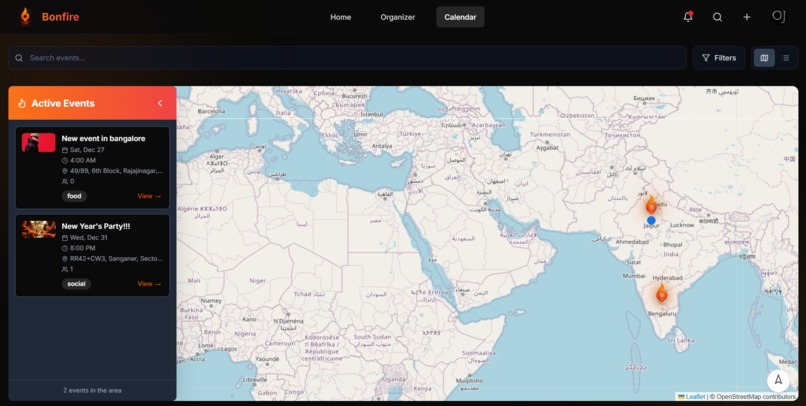
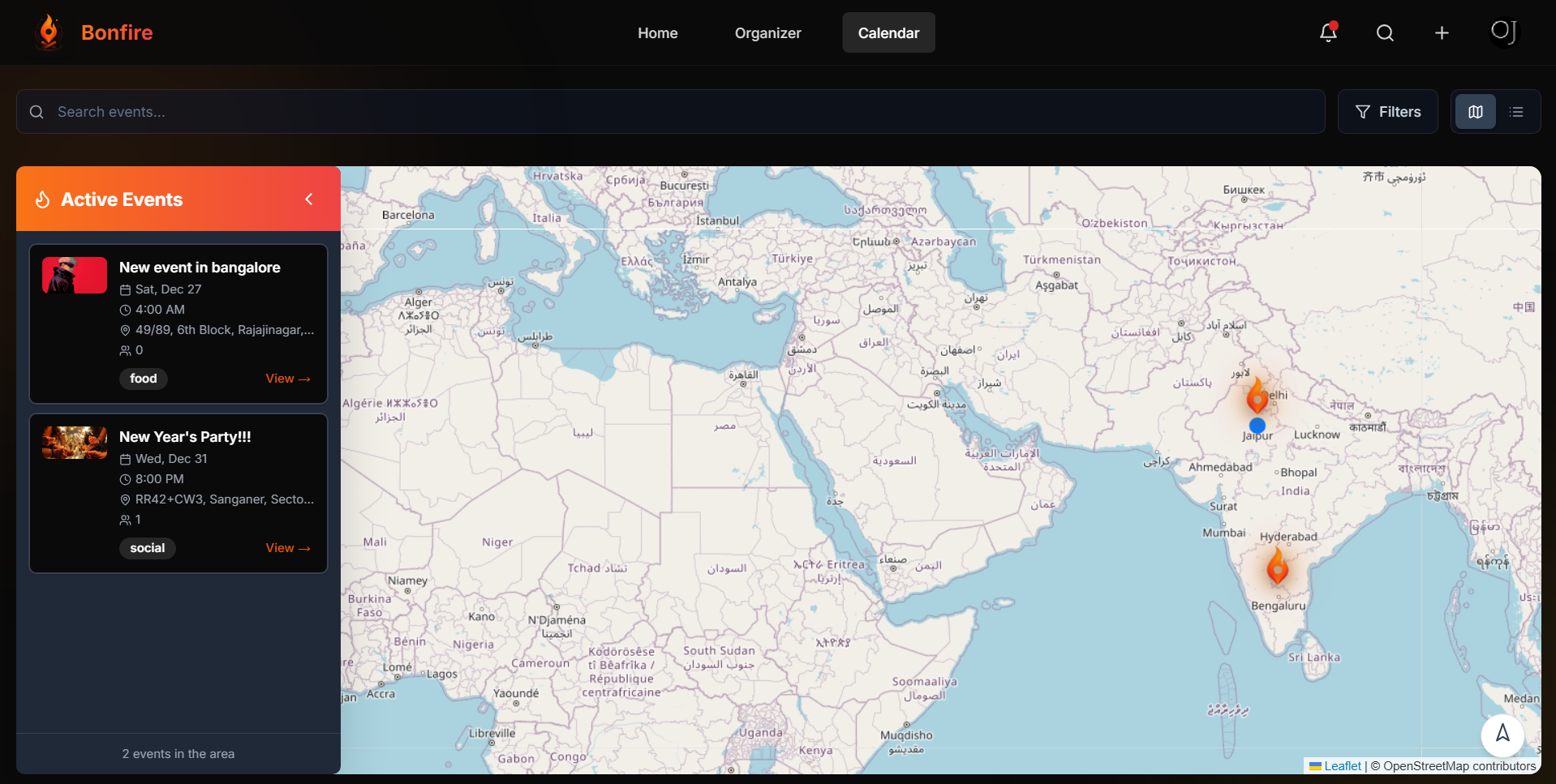
Home Page
-
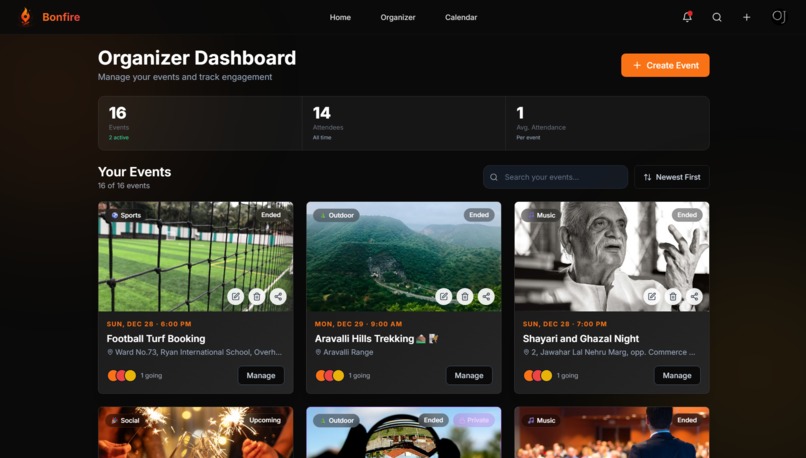
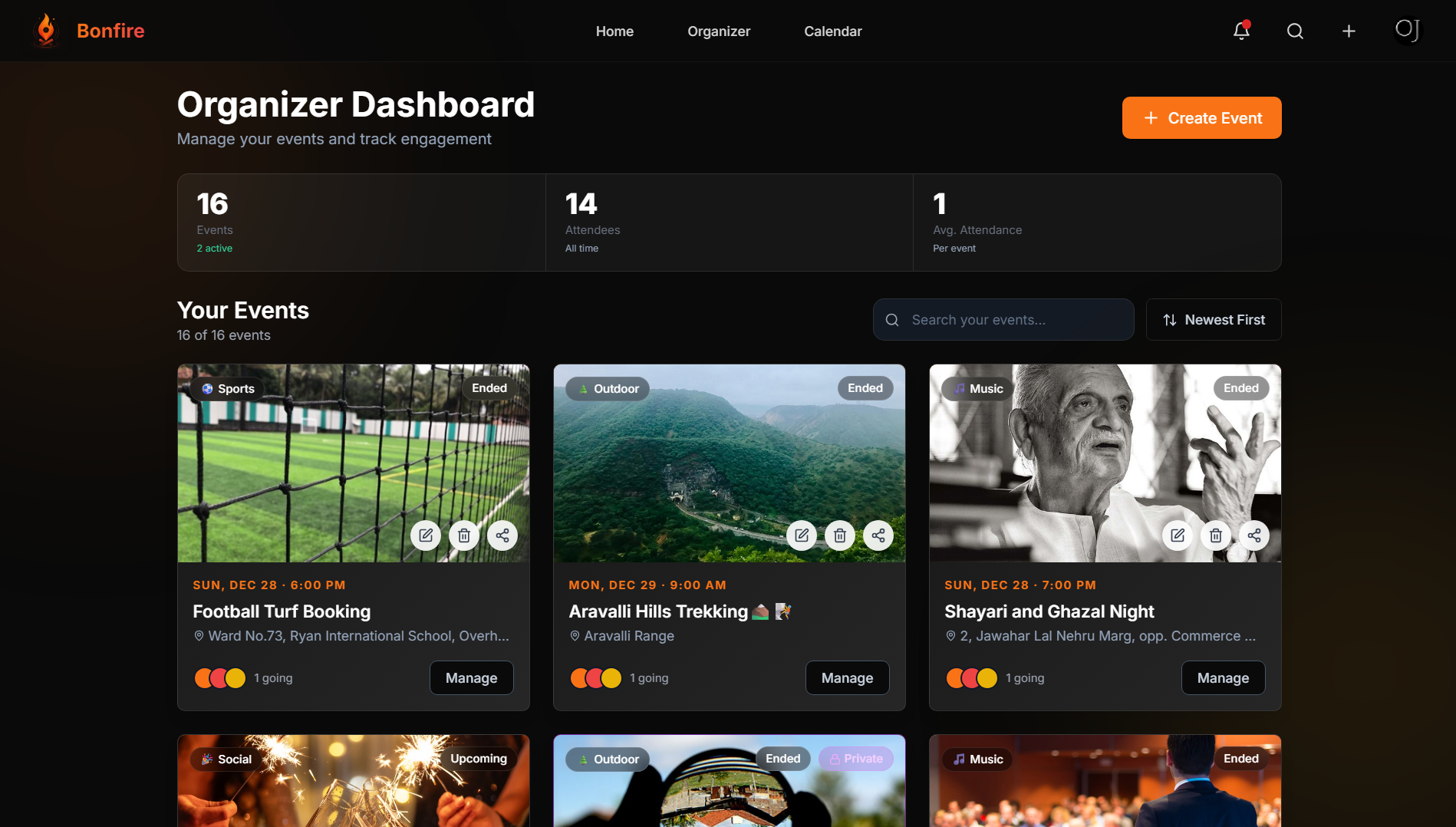
Organiser Dashboard
-
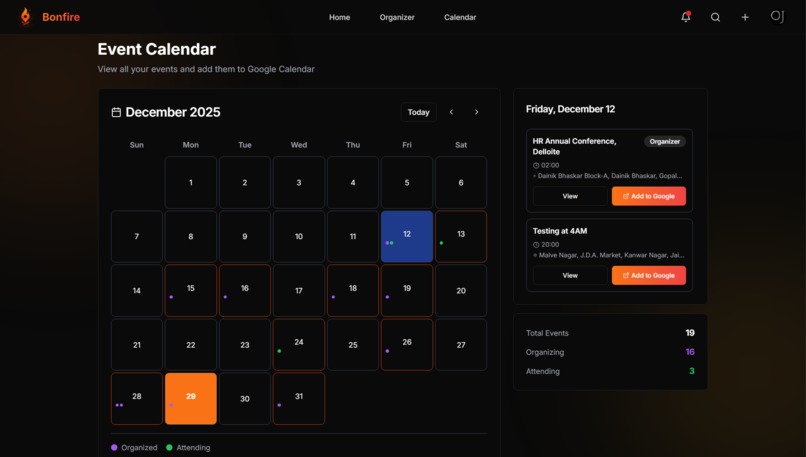
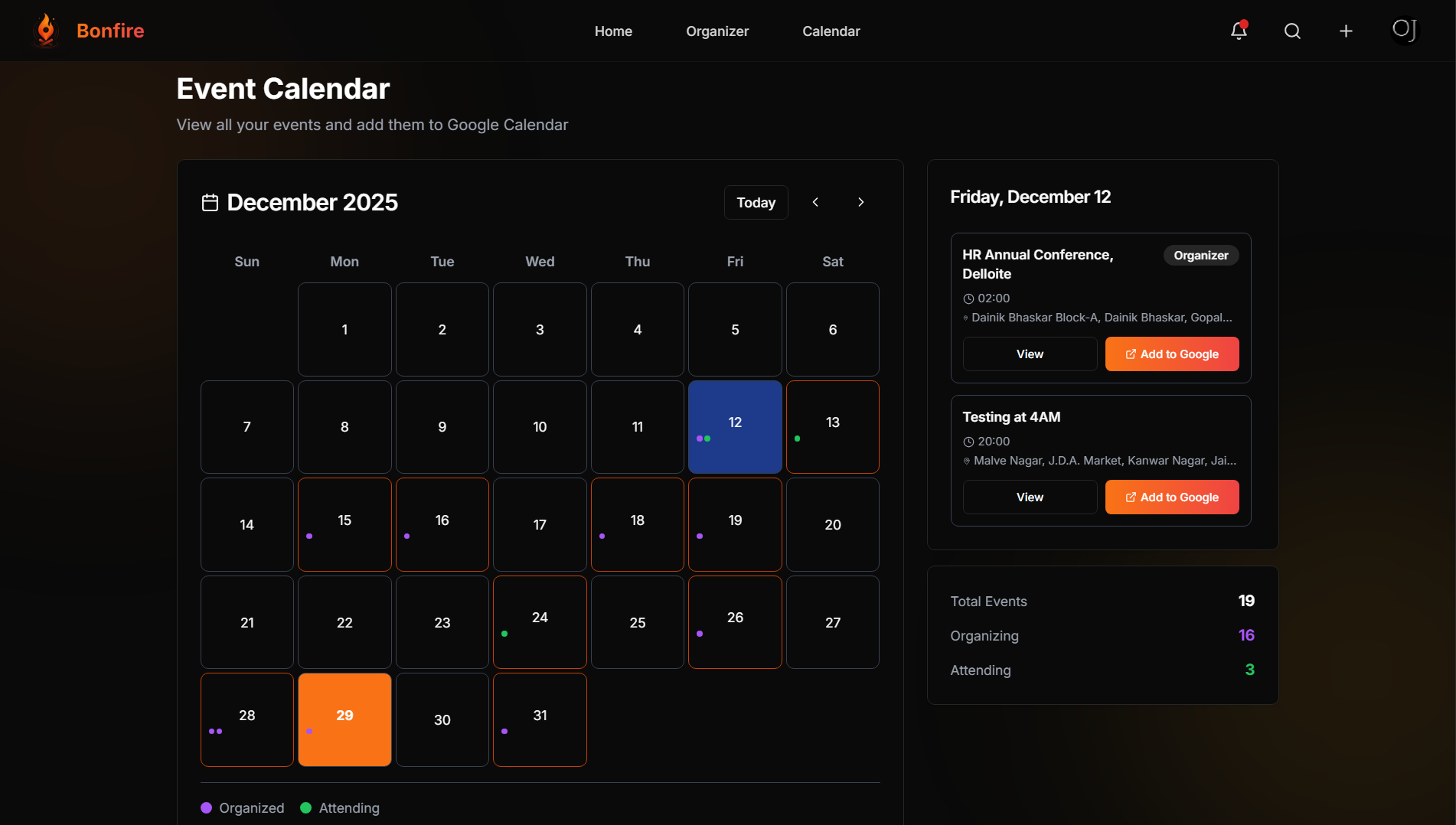
Calender
About BONFIRE
BONFIRE began with a quiet frustration I kept running into again and again. Making plans was never the hard part. Following through was. Group chats would fill up with messages, ideas would sound exciting in the moment, and then momentum would fade. Existing platforms seemed optimized for visibility, validation, or scale, but not for intent. I wanted to explore what a product would look like if it was designed primarily to help people actually show up.
The inspiration came directly from my own life: organizing football games with friends, planning treks, hosting small meetups, and trying to get a handful of people aligned on time and place. The best experiences were always small, clear, and intentional. BONFIRE is an attempt to capture that feeling digitally.
What I Built
BONFIRE is a platform for hosting and discovering real-world gatherings, built around clarity rather than noise. Anyone can create an event, describe what they want to do, and invite others who genuinely want to participate.
Instead of follower counts or algorithmic reach, the product focuses on:
- Intent: Why the event exists and who it is for
- Locality: Events are tied to real places, not abstract feeds
- Commitment: Reducing ambiguity so joining feels like a decision, not a tap
The result is a space where plans feel grounded and actionable, not performative.
How I Built It
I approached BONFIRE as a long-term product, not a hacky prototype. The stack was chosen to support iteration, scalability, and a clean developer experience:
- Next.js with TypeScript for structure, performance, and type safety
- React for composable, interactive interfaces
- Tailwind CSS to iterate quickly on design without losing consistency
- Supabase for authentication, database, and backend workflows
- Map-based discovery to anchor events in the physical world
The system is intentionally simple. Most user actions map directly to real-world outcomes, which helped guide architectural decisions.
Conceptually, the product follows a simple relationship:
[ \text{Real-world participation} = \text{Clear intent} \times \text{Low friction} \times \text{Trust} ]
Each feature was evaluated against whether it strengthened or weakened this equation.
Challenges Faced
One of the hardest parts was knowing what not to build. There was constant pressure to add social mechanics, engagement hooks, or growth-driven features. Resisting that meant repeatedly cutting ideas that did not serve the core goal.
Designing for mobile was another major challenge. A map-centric interface can quickly become cluttered, especially on small screens. Achieving balance between discoverability and breathing room required multiple layout experiments and user-flow revisions.
On the technical side, challenges included:
- Managing environment variables and secrets securely in production
- Debugging inconsistencies between local and deployed environments
- Designing event creation and joining flows that felt natural without heavy onboarding
Each challenge forced clearer thinking about both the product and the system behind it.
What I Learned
Building BONFIRE reinforced that good products are not defined by feature count, but by restraint. I learned how to:
- Prioritize user intent over surface-level engagement
- Design systems that encourage offline action
- Build under constraints without compromising clarity
- Treat design, UX, and engineering as one continuous problem
It also deepened my understanding of how subtle interface decisions can shape real human behavior.
Why BONFIRE Matters to Me
BONFIRE is deeply personal. It reflects how I like to meet people, form communities, and spend time offline. It is an exploration of what happens when software steps back instead of taking center stage.
This project is not about scaling attention. It is about enabling presence. BONFIRE is my attempt to build technology that respects people’s time, energy, and intent, and this is only the beginning.
Built With
- google-calendar
- google-maps
- next.js
- supabase
- tailwindcss
- typescript


Log in or sign up for Devpost to join the conversation.