-
-
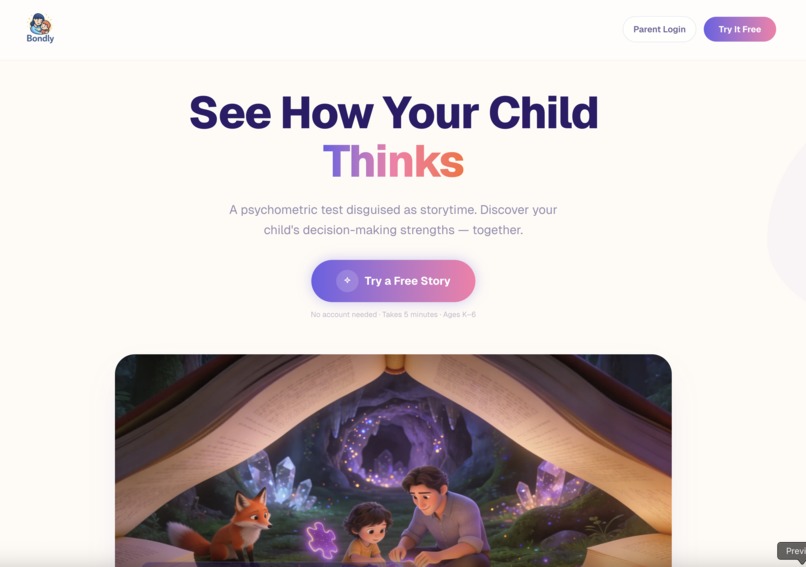
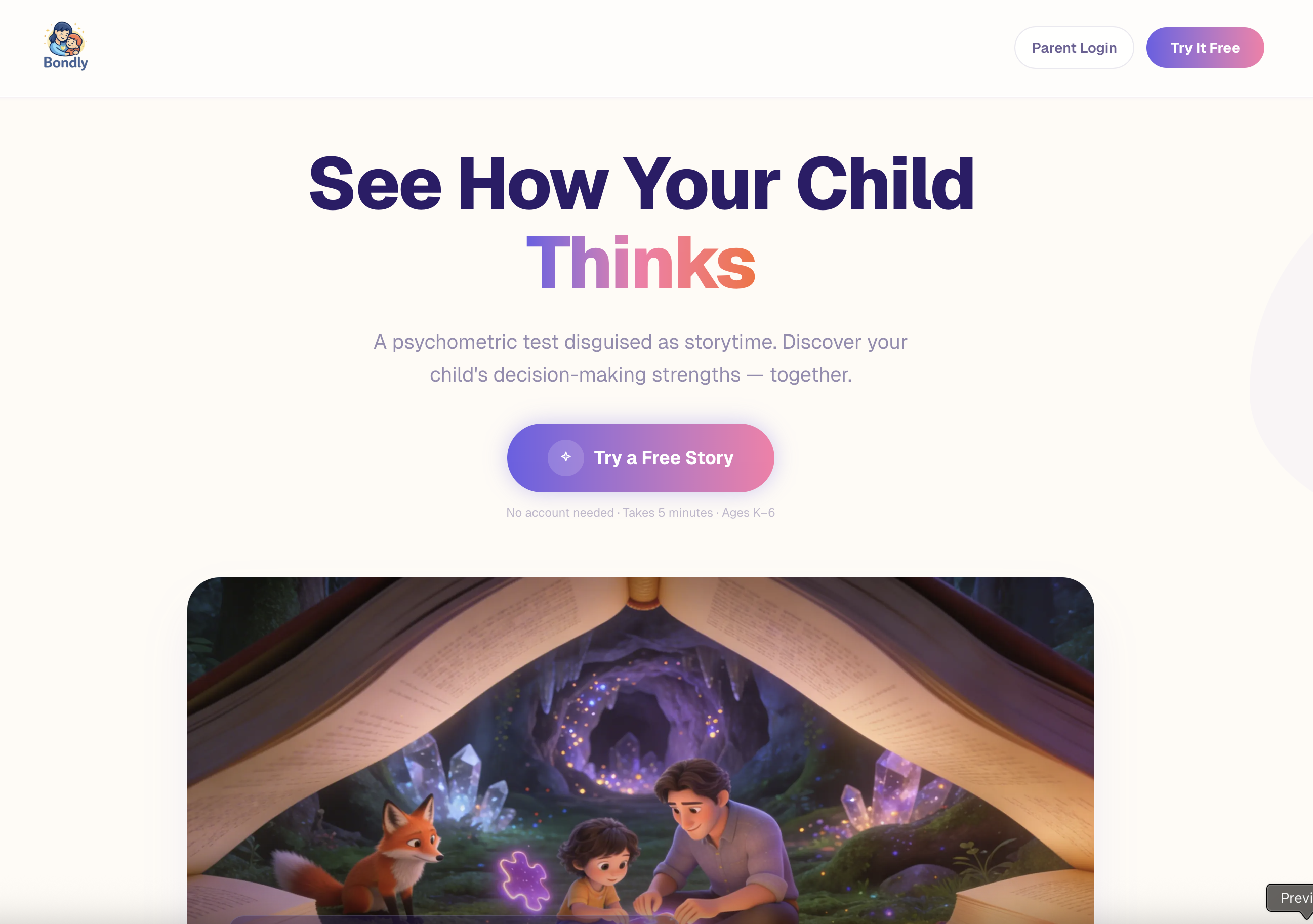
Landing Page_Home
-
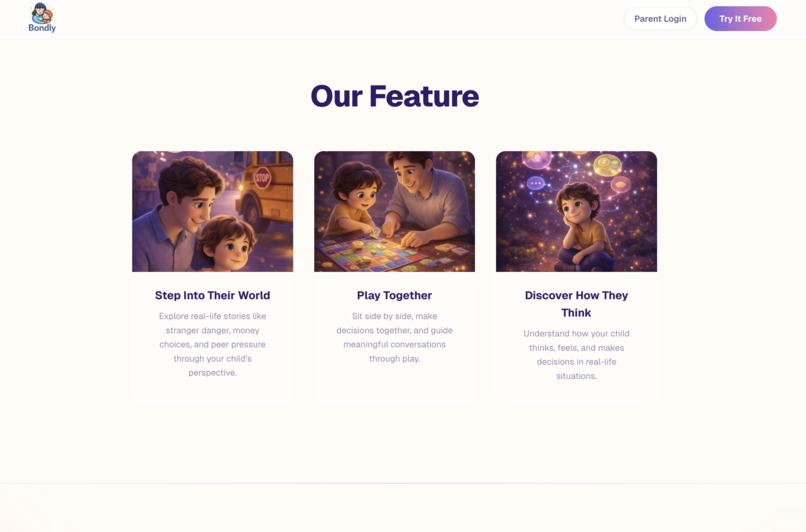
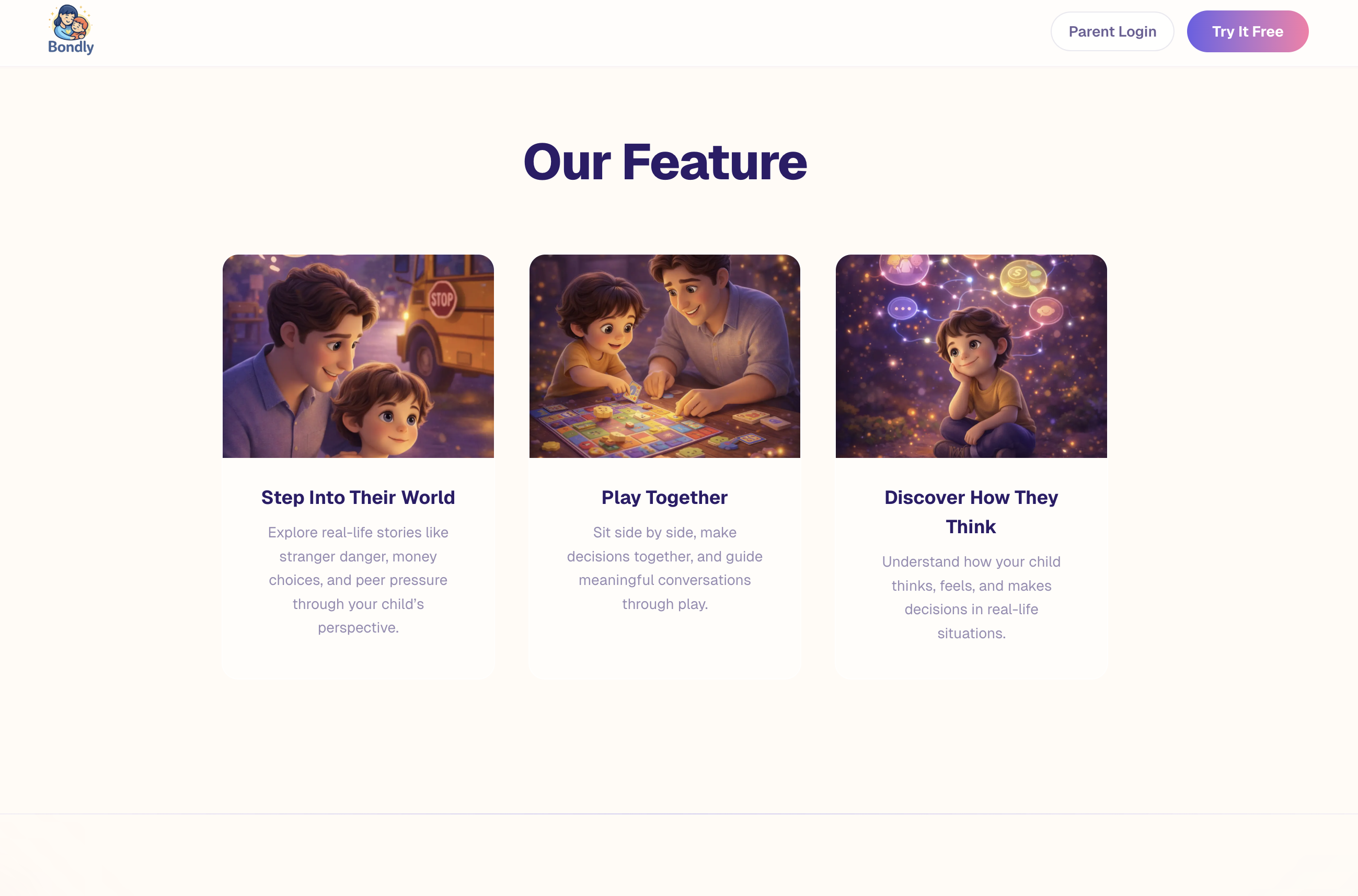
Feature
-
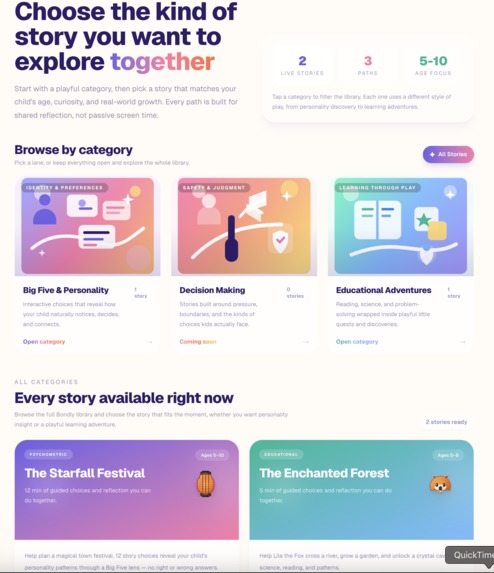
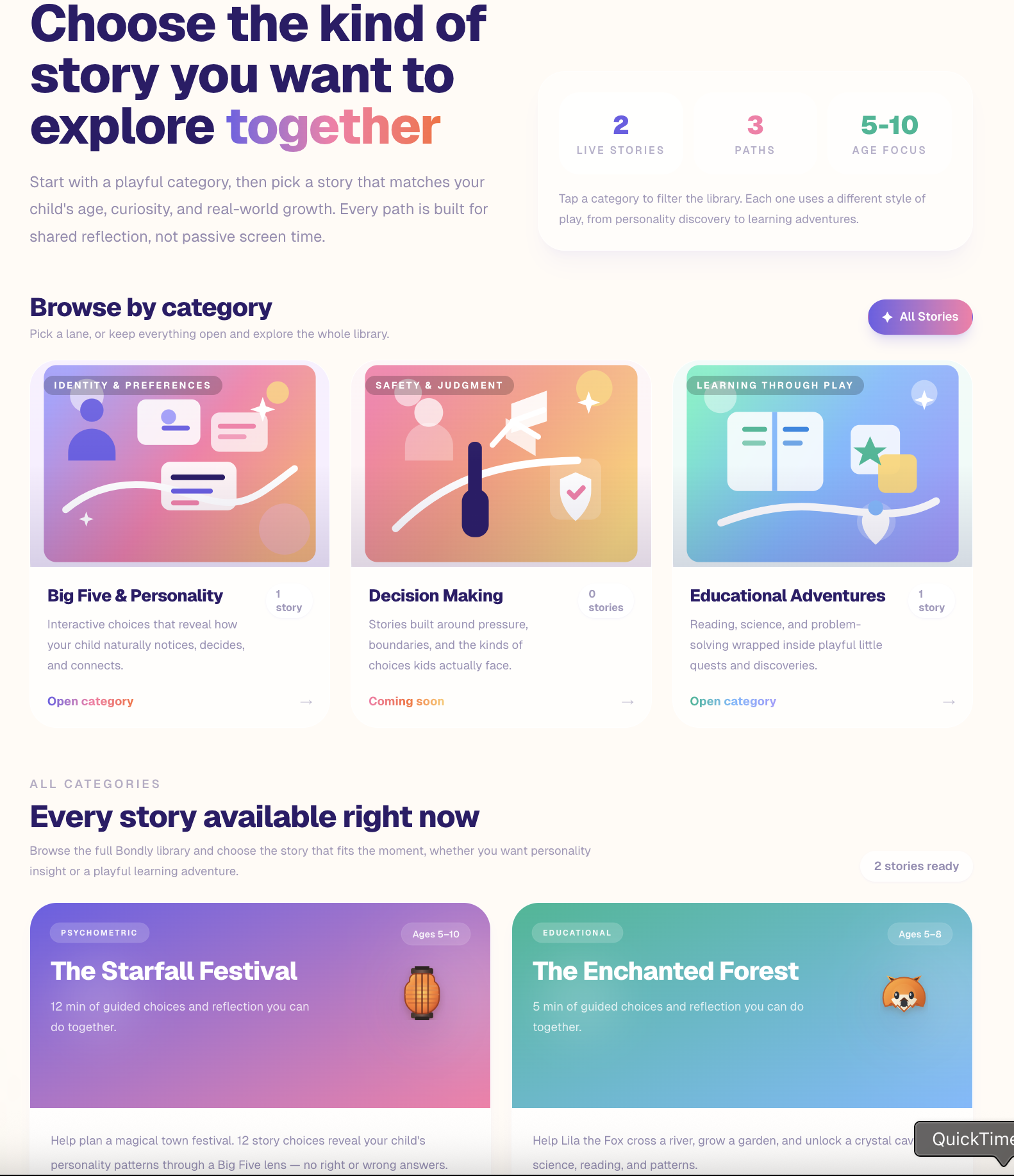
Story_Explore
-
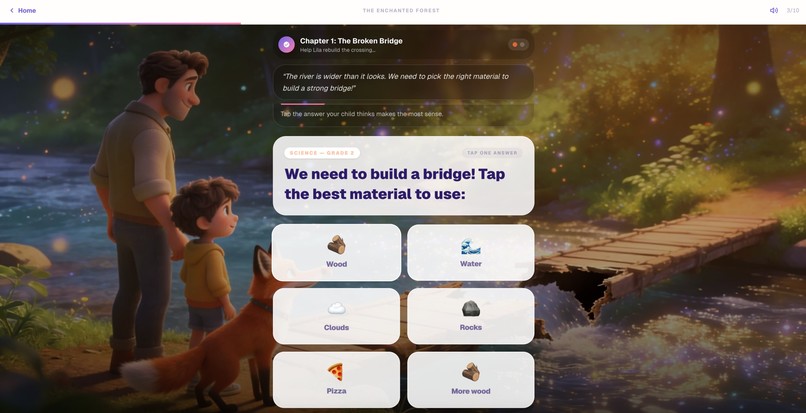
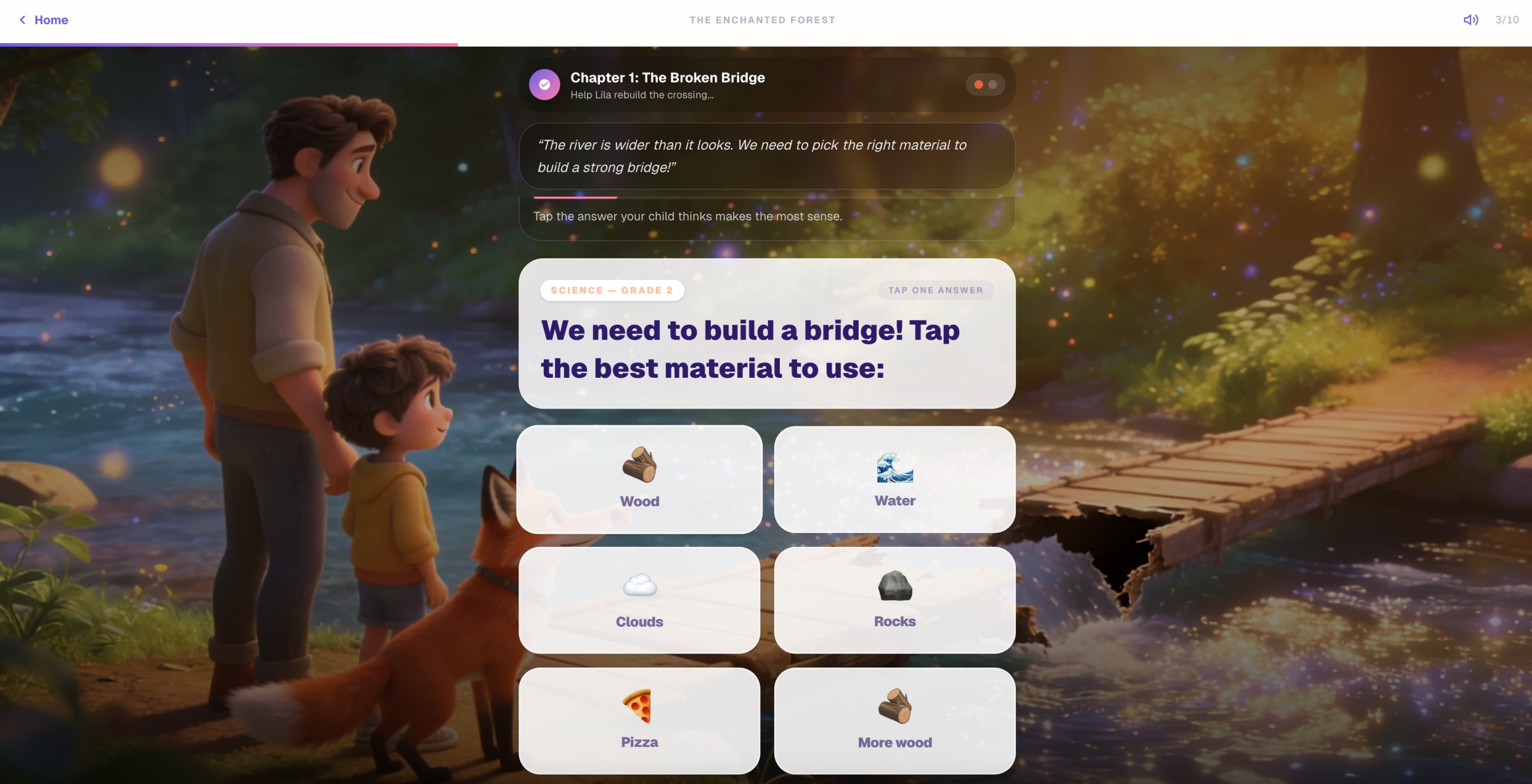
Interactive_decision
-
interactive_result
-
Deciding together impacts the outcome
-
Workflow
-
Parent_Progress_Report

Inspiration
Parents today have less time and are digitally distracted than ever, yet the tools available to understand their child's emotional and developmental well-being haven't kept up. We were struck by the statistic that only 35% of Australian parents feel confident recognising signs of social and emotional difficulty in their child, and that most wouldn't know until something had already gone wrong. We wanted to build the first line of visibility that parents never had, while simultaneously allowing children to have an engaging experience with their parents throughout this process.
What it does
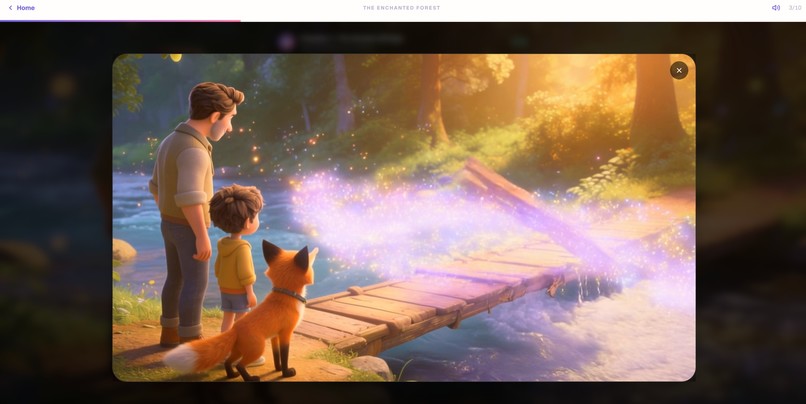
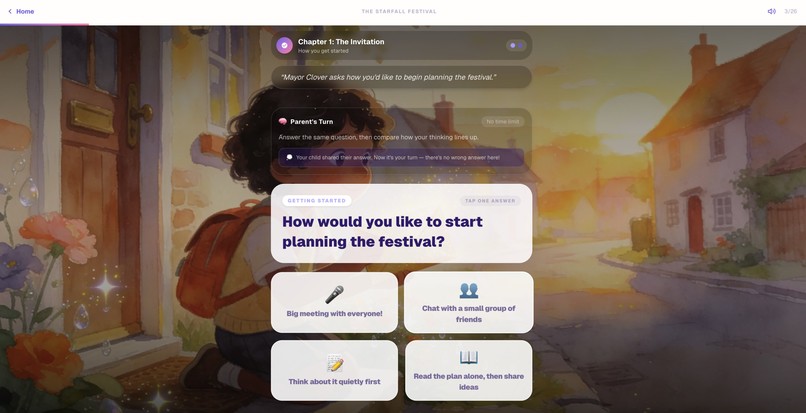
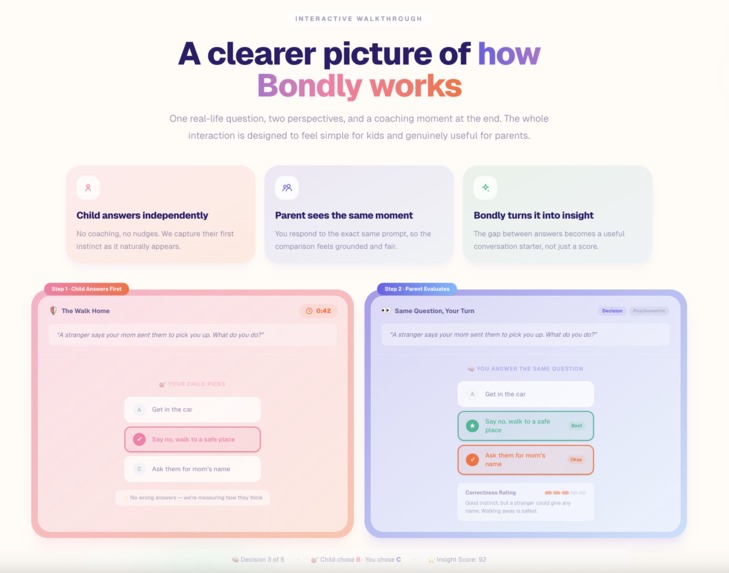
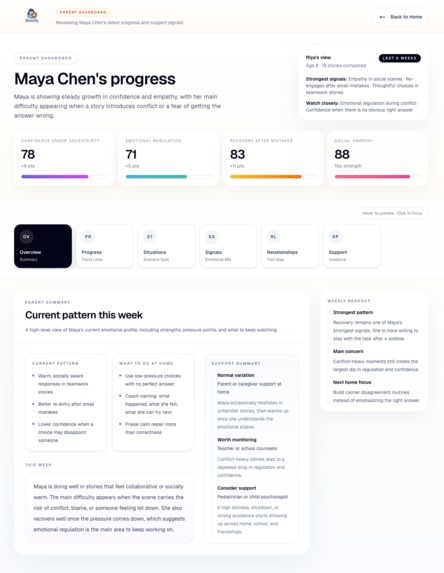
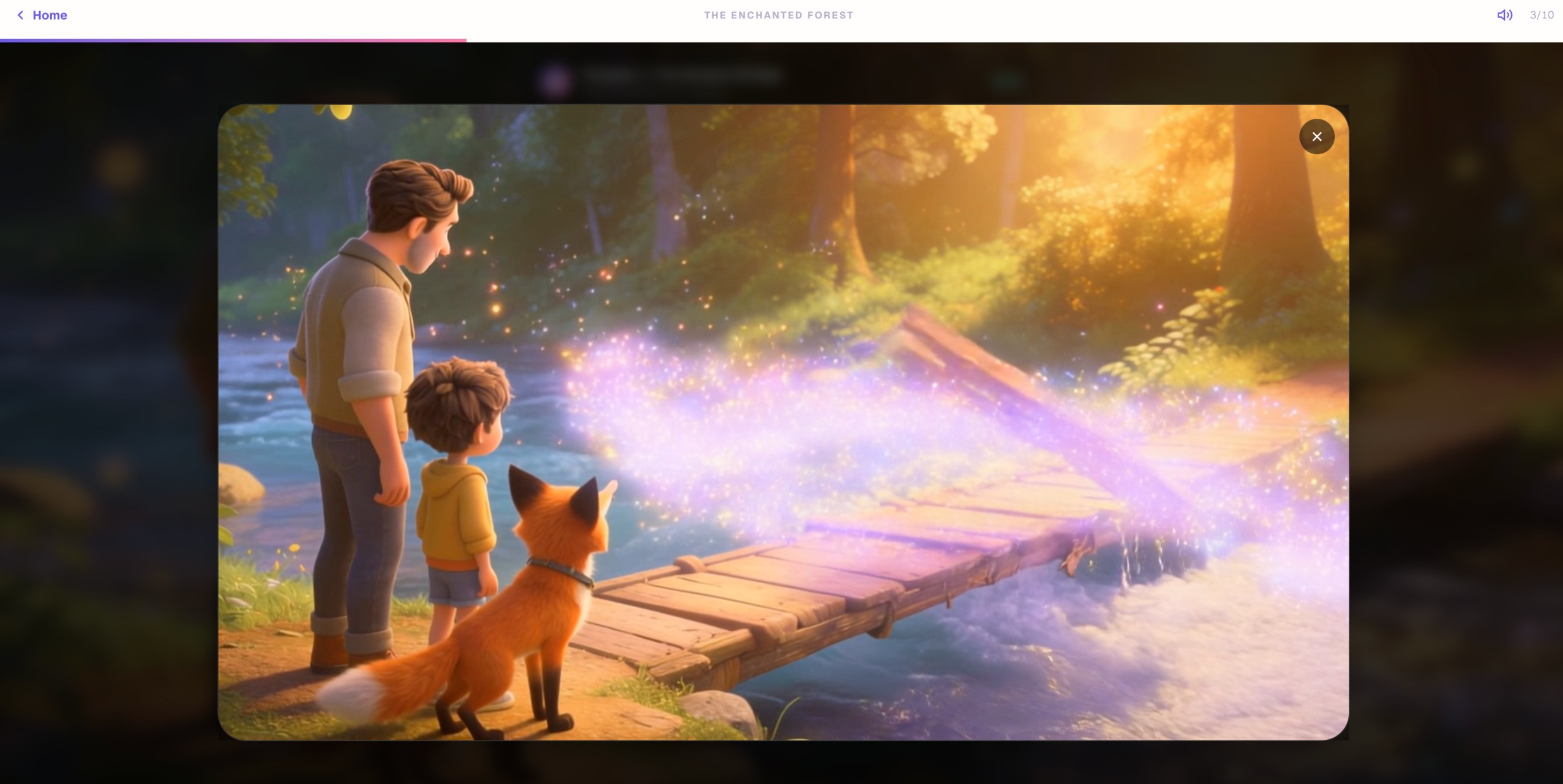
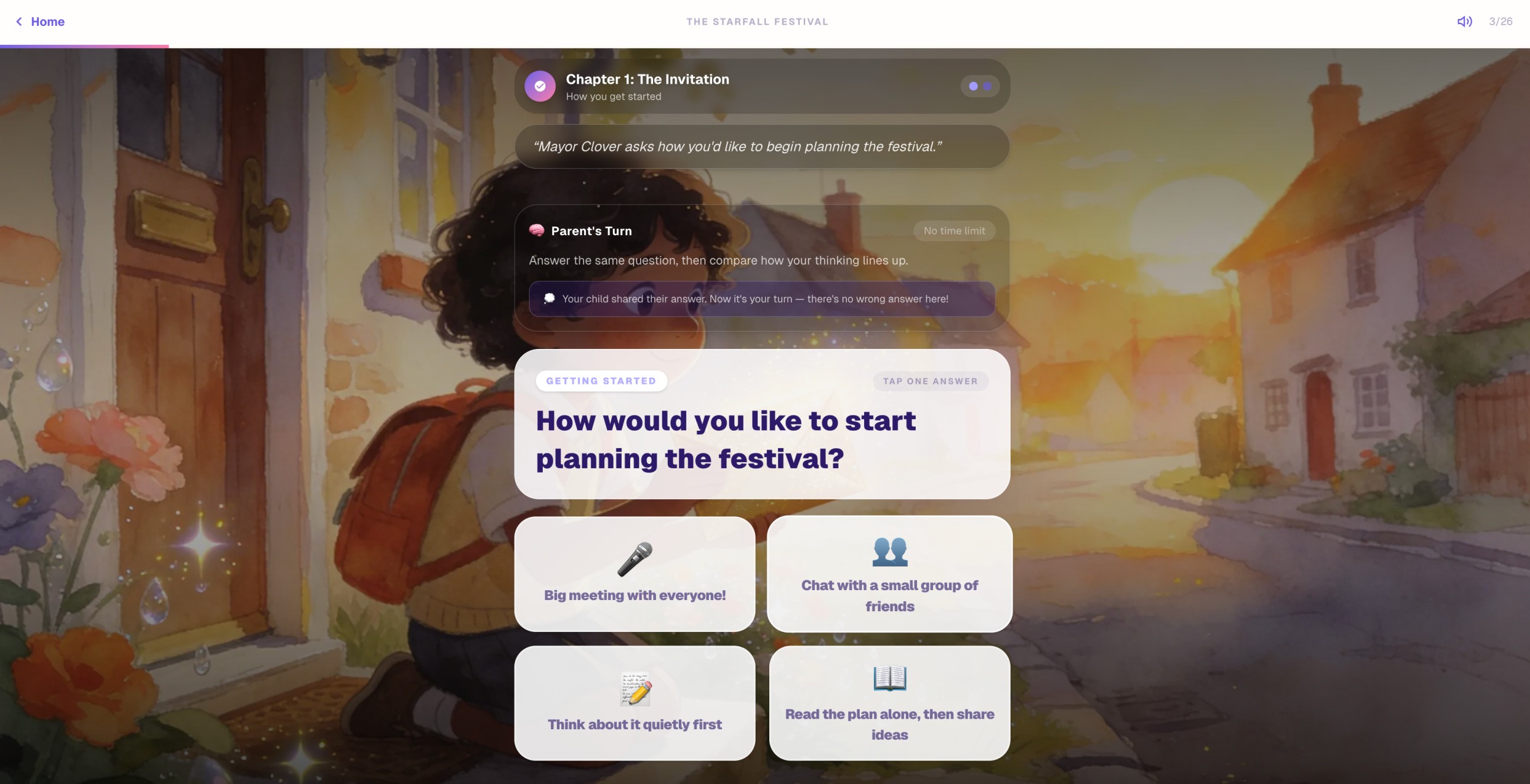
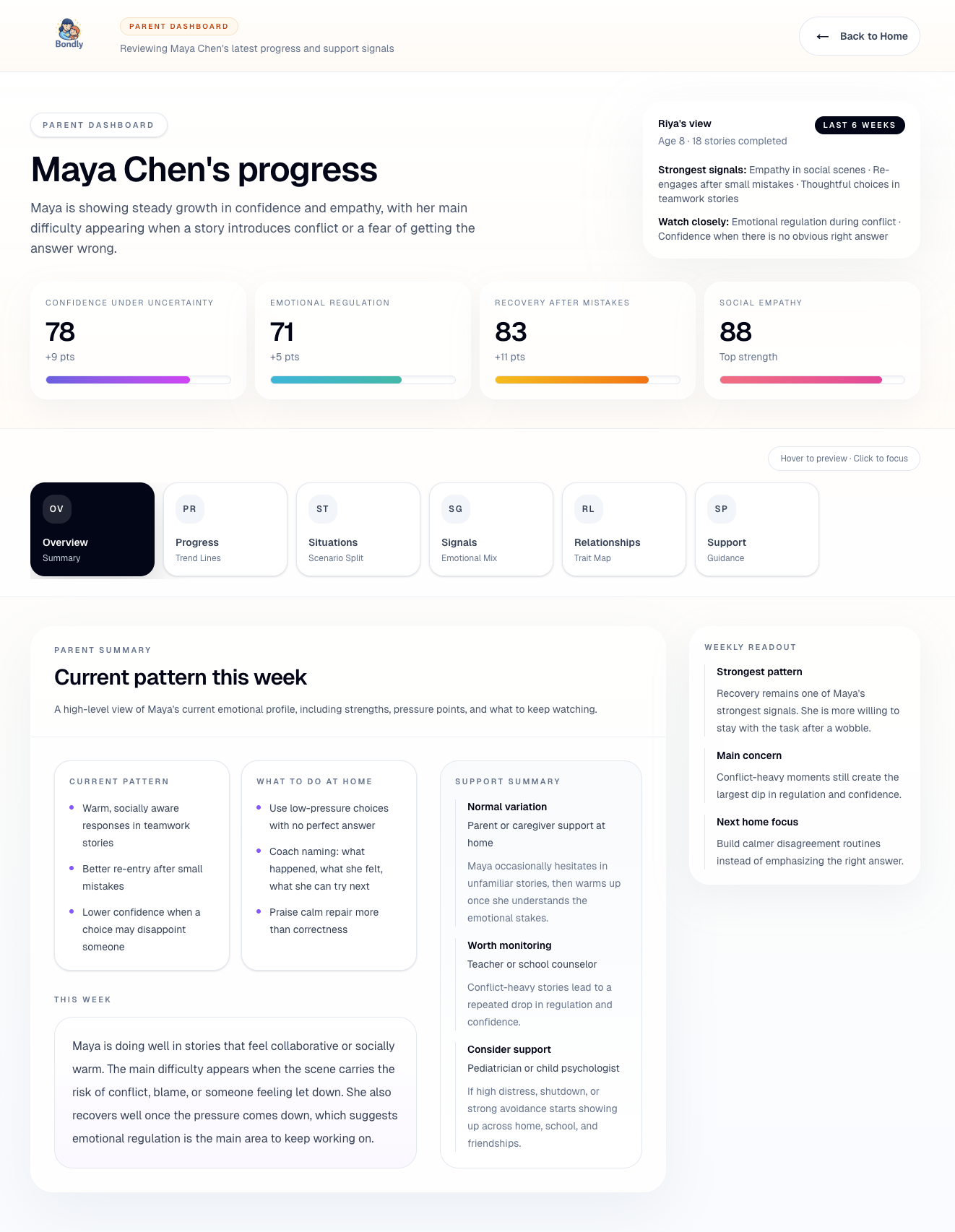
Bondly is a parent-child co-play experience that embeds psychologist-backed assessments inside interactive stories. As parent and child play through the narrative together, Bondly captures how the child responds, reasons, and engages. After the experience, an AI-powered analysis surfaces actionable insights across dimensions like extraversion, assertiveness, and social empathy. All of this data is presented in a clean, visual parent dashboard. It also provides an initial developmental assessment and flags when professional support may be worth exploring, acting as a first push or step for parents to make informed decisions for their child's mental growth.
How we built it
We built the interactive story and co-play experience as the core engagement layer, then layered a fine-tuned AI model to analyze responses of children in collaboration in psychologist. The parent dashboard visualises behavioural metrics in a way that's easy to understand without a clinical background. The stack combines conversational AI, adaptive assessment logic, and a user-friendly front-end designed for parents. We also iterated through many designs for our application to finally land on a minimalistic design with pleasing colors. The application is built using react.
Challenges we ran into
The hardest challenge was making the assessment feel invisible. The moment it feels like a test, children disengage, and the data becomes less reliable. Designing stories that are genuinely fun while still surfacing meaningful signals required a lot of iteration. We also had to think carefully about how to present complex psychometric outputs in plain language that parents can actually act on, without oversimplifying or overstating what the data means. For visualization, we had to test different graphs with our parents to see if they achieved the goal of conveying information while being simple and distinct. Below shows one of the equations (stacked bar plot) that we used for visualization.
$$w_{ij} = \frac{n_{ij}}{\sum_{i=1}^{k} n_{ij}} \times 100$$
Accomplishments that we're proud of
We're proud of building a working prototype that spans the full experience from story-based quizzes to actionable insight. The co-play format feels natural and engaging, and the parent dashboard turns something that would normally require intricate knowledge of psychology and behavioral patterns into an accessible, ongoing tool. We're also proud of the integrity we've tried to build in, as the product is designed to inform, not alarm, and to point toward professional help when it genuinely matters.
What we learned
We learned that the hardest product problems are often design problems, not engineering ones. Getting the tone of stories right, warm enough for children, credible enough for parents, and clinically interpretable for psychologists was much harder than building the technical components. Based on our initial online research and customer validation, we learned how deep the gap really is between what parents need to know, actually know, and what current tools help them see. Our research also reveals the deeper complexity of children’s minds, making it important to be cautious against the false assumption that we entirely understand their feelings.
What's next for Bondly
We want to bring more licensed psychologists into the loop to co-develop and validate the test library, making the insight model more rigorous over time. Beyond that, we see ourselves building a community, connecting parents of children with similar developmental profiles as the long-term moat. The vision is a platform that gets smarter and more personalised the longer a family uses it, becoming an indispensable part of how parents understand and support their child's growth. Furthermore, co-play will get more interactive, allowing children and parents to have a better time together.
Built With
- next.js
- react
- replicateapi
- tailwildcss
- typescript
- vercel


Log in or sign up for Devpost to join the conversation.