-
-
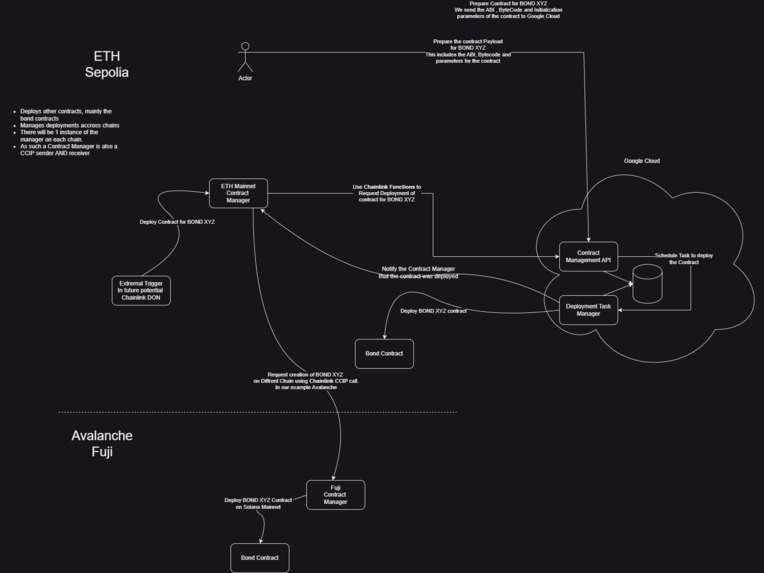
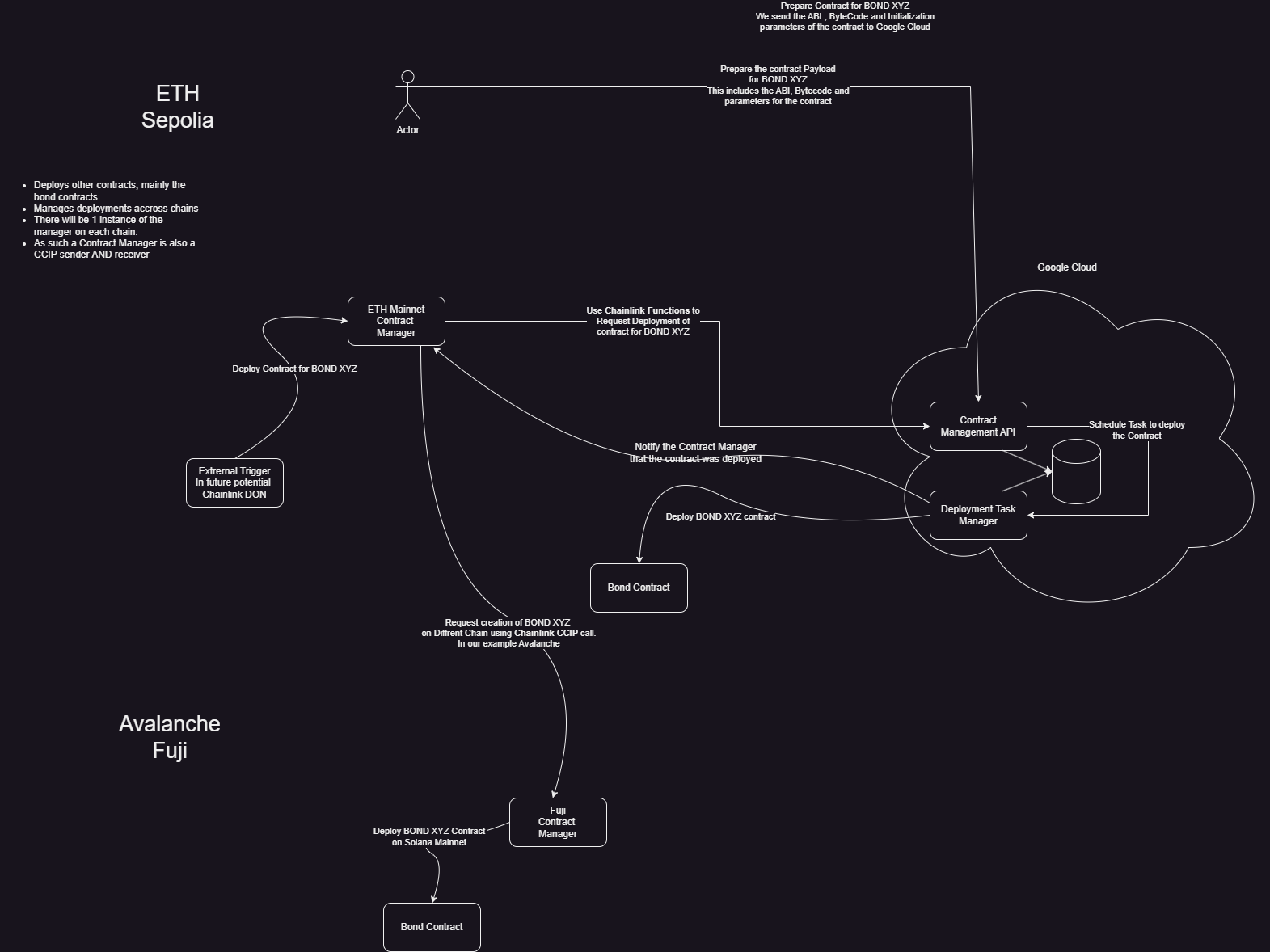
Chainlink Functions and Chainlink CCIP to create a smart contract that can deploy contracts across multiple blockchains
-
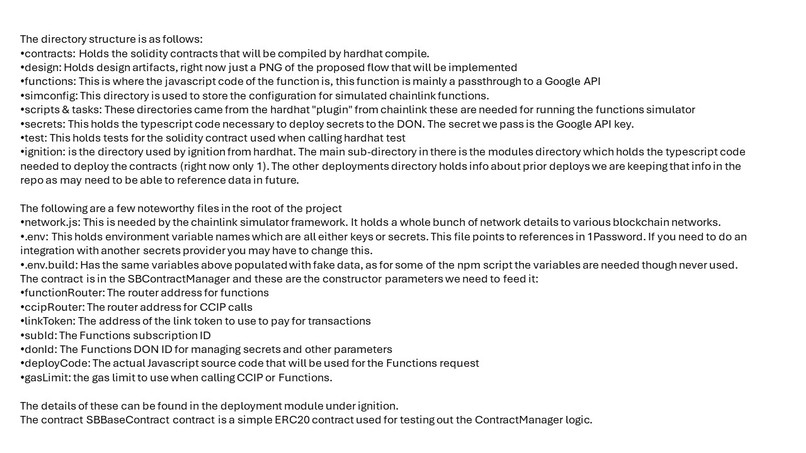
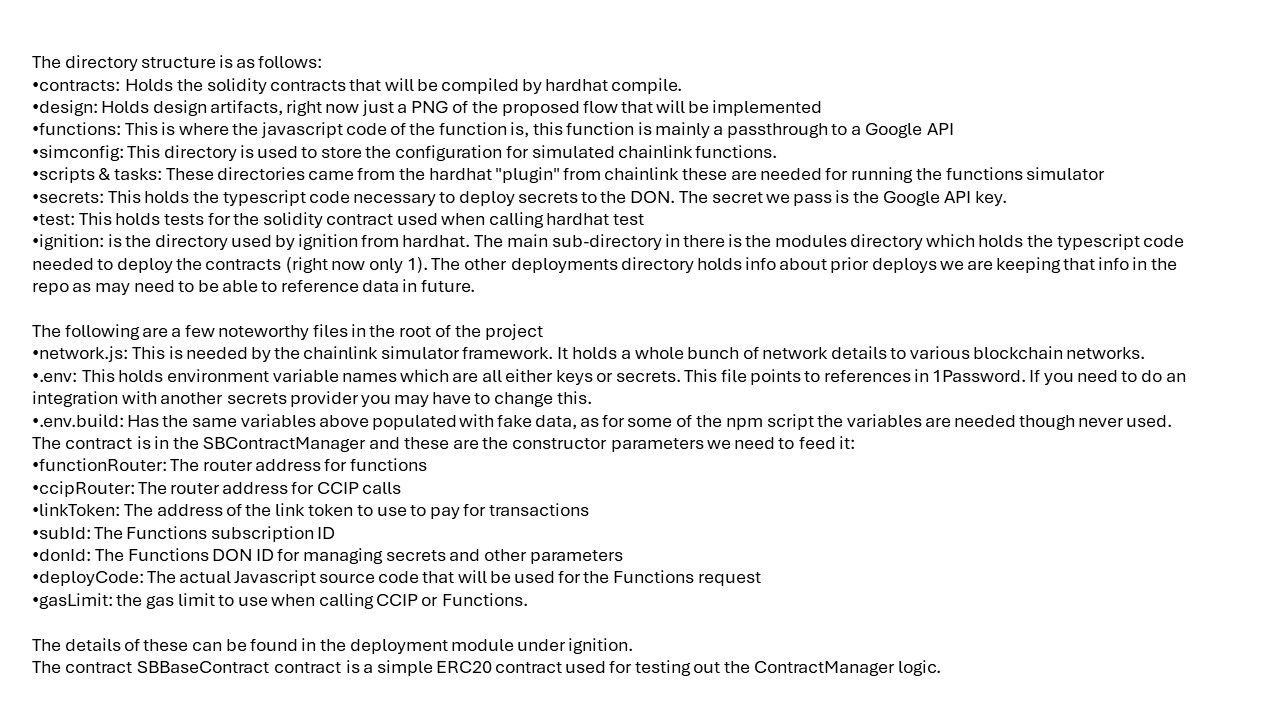
Directory structure
Inspiration
We are driven by the vision of democratizing access to financial markets, empowering individuals and small businesses to participate in opportunities traditionally reserved for large institutions. By leveraging blockchain technology, we can create a more transparent, secure, and efficient way to issue, trade, and manage bonds, breaking down barriers and fostering financial inclusion. This innovation has the potential to reshape the landscape of investment, providing everyone with the tools to achieve their financial goals and contribute to a more equitable global economy.
What it does
Bond Tokenizer allows any TradFi asset manager to digitize traditional bonds using blockchain technology, converting them into digital tokens that can be easily traded and managed on a blockchain network. This process involves representing the bond's ownership and value in a digital form, allowing for more efficient issuance, distribution, and trading. Tokenized bonds offer increased transparency, reduced transaction costs, and enhanced liquidity compared to traditional bonds. They can also enable fractional ownership, making it possible for smaller investors to participate in bond markets that were previously inaccessible to them.
How we built it
The app was built on Ethereum and leveraging Chainlink's CCIP and Functions. Users can issue bonds using the ERC-20 standard, enabling seamless cross-chain functionality.
Bond Tokenizer enables issuers to deploy a smart contract on Ethereum that adheres to the ERC-20 standard. This contract manages the creation, issuance, and lifecycle of the bond tokens. The smart contract mints these tokens, encoding essential details such as the bond's maturity date, interest rate, and issuer information. Beyond the basic functionality of an ERC-20, the smart contract manager also includes a variety of features that would be of interest to corporate issuers and/or their TradFi representatives, including the ability to mint, burn, pause, transfer ownership, apply holder rewards, and impose a transaction tax. Utilizing Chainlink's CCIP and Chainlink Functions technologies, the bond tokens can be issued and traded across multiple blockchain networks (which we tested on Sepolia and Fuji). This cross-chain functionality enhances liquidity and accessibility, allowing investors to buy and sell bonds on various platforms seamlessly.
Challenges we ran into
Managing API keys and calls to/from Google Cloud was a challenge. So was contract creation times and gas fees (on testnets).
Accomplishments that we're proud of
Participating in a hackathon to build a bond tokenization platform was an incredible journey, marked by several key accomplishments. One of the highlights was mastering Chainlink’s CCIP and Functions technology. We also deepened our understanding of the tokenization process, from creating ERC-20 tokens to multi-chain deployments.
Engaging in various workshops and webinars offered by Chainlink and the hackathon partners further enhanced our technical and domain-specific knowledge. Collaborating with a talented and diverse team fostered a creative and innovative environment, where we shared knowledge and overcame challenges together. Receiving feedback from mentors allowed us to iteratively improve our platform.
What we learned
The business opportunity behind bond tokenization lies in its potential to revolutionize the traditional bond market by enhancing accessibility, liquidity, and efficiency. Tokenizing bonds allows for fractional ownership, making it easier for individual investors and smaller institutions to participate in bond markets, which were previously dominated by large entities. This democratization of access can significantly expand the investor base, driving more capital into the market. Chainlink tools play a crucial role in this transformation by providing secure, reliable, and decentralized services. We were particularly impresssed by Chainlink’s CCIP, Functions, and Automation tools. By leveraging Chainlink, bond tokenization platforms can offer seamless, transparent, and trustworthy services that attract a diverse range of investors and issuers, unlocking new market opportunities and driving growth in the financial sector.
What's next for Bond Tokenizer
After building a prototype for Bond Tokenizer, the next steps involve refining, testing, and expanding the platform to ensure it meets market needs and regulatory requirements. This would involve the following:
- [ ] Smart Contract Audits: Engage reputable third-party auditors to thoroughly review the smart contracts for vulnerabilities and ensure security.
- [ ] Legal Review: Consult with legal experts to ensure the platform complies with relevant financial regulations and securities laws in different jurisdictions.
- [ ] KYC/AML Integration: Implement Know Your Customer (KYC) and Anti-Money Laundering (AML) procedures to meet regulatory requirements and enhance trust.
- [ ] User Interface Improvements: Refine the user interface and user experience based on feedback from testers to make the platform intuitive and easy to use.
- [ ] Scalability: Optimize the platform for scalability to handle increased transaction volumes and user activity. This would include L2 strategies.
- [ ] Feature Expansion: Add new features such as automated portfolio management, advanced analytics, and customizable investment options.
- [ ] TradFi Partnerships: Partner with banks, asset managers, and other financial institutions to expand the reach and credibility of the platform.


Log in or sign up for Devpost to join the conversation.