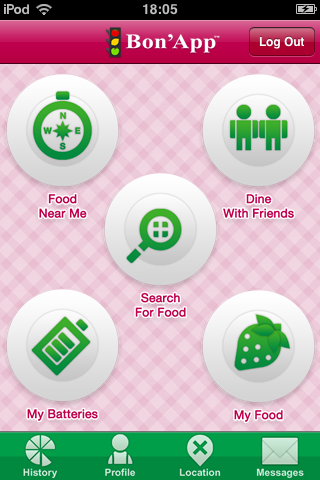

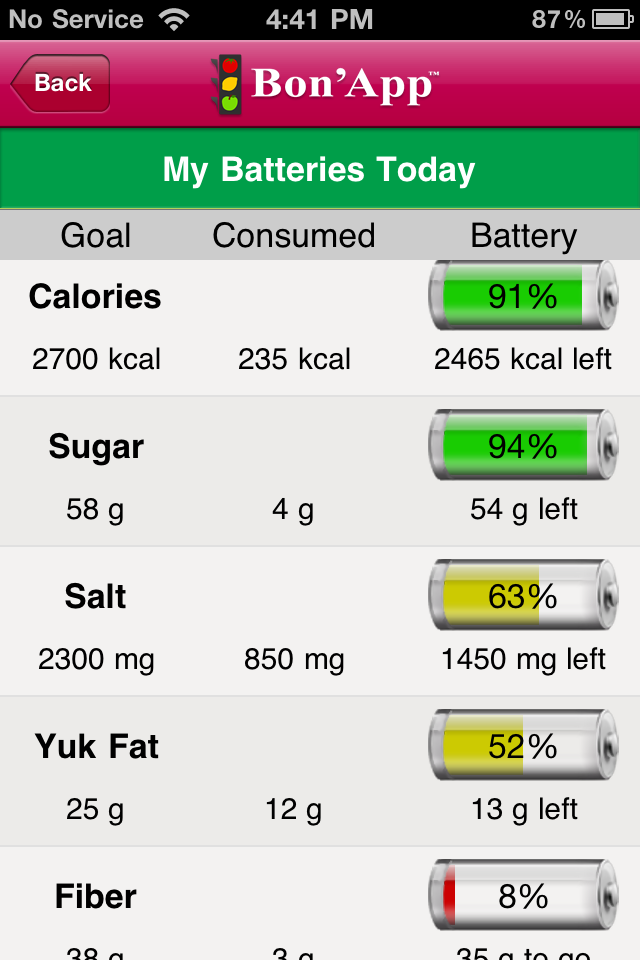

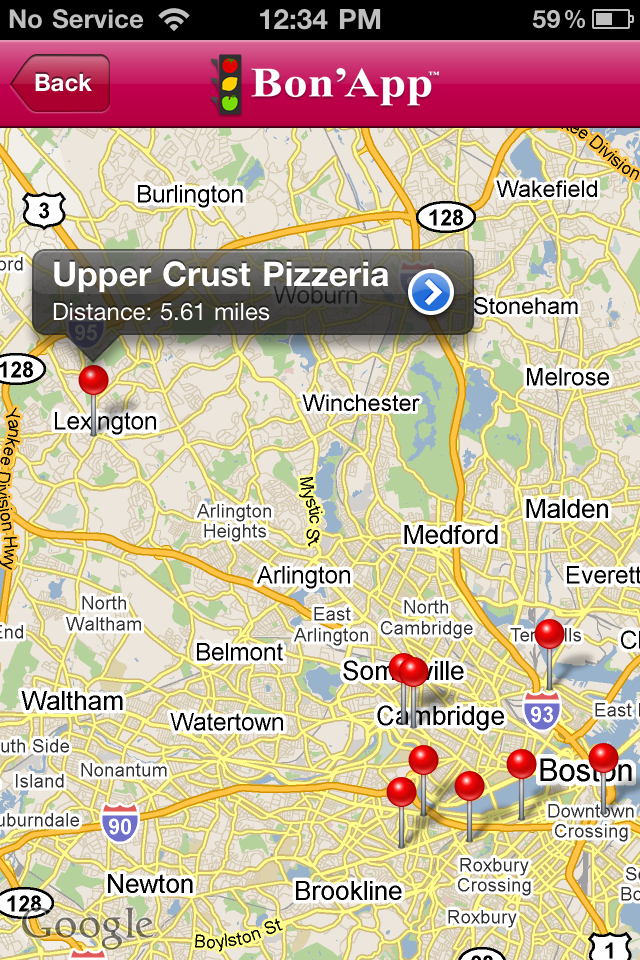
The Mission Empowering consumers to pursue a healthier lifestyle through personalized food choices. A Social Enterprise Bon’App, created a year ago as a social enterprise by a Harvard University Advanced Leadership Initiative Fellow, is a novel application that promotes healthier eating habits, thereby addressing the issues of obesity, diabetes, cardiovascular disease, and food allergies. Bon’App is not just an app; it is an open platform (iPhone, Android, and a website) connecting healthcare professionals to end-users whether they’re eating out or at home. The application identifies food and tailors recommendations to users based on their food allergies, food intolerances, and preferences; it then speaks a simple language of calories, sugar, salt, and fat, so users can understand what’s in their food and if it’s right for them or not. Bon’App makes nutrition data more usable, personalized, and accessible to all Americans. Bon’App for Apple products can be downloaded for free here: http://itunes.apple.com/us/app/bonapp/id437083777?mt=8 Bon’App for Android can be downloaded for free here:https://market.android.com/details?id=com.bonapp&feature=search_result Innovative Concepts Bon’App works on two levels. One, the nutrition datasets provided by government databases are presented in an easy to understand format. The concept of the battery makes the users daily nutritional goals accessible. This visual representation helps users understand what each dietary choice means to their body. Some batteries, such as calories and fat, deplete to show that the user is nearing their daily limit. Each day those batteries start green at 100%, turn yellow as users consume during the day and then red as they deplete to warn the user that they are getting closer to their daily limit. Other batteries, like protein, charge up to reach daily goals. This strategy conveys a stronger message about these key areas because games and other electronics have already defined the concept that running out of batteries is not a desirable outcome. Overcharging has no real consequence whereas dead batteries mean "game-over". Teens and children in particular will understand that concept very well. The other part of Bon’App is the ability to search deep into ingredients lists to screen local restaurant dishes for food choices that are right for the user based on their personal profile of food allergies, food intolerances, preferences, and daily nutritional goals. Bon’App is developing a database of ingredients based on local restaurant dishes, creating a hyper-local experience for the user. Access to the cafeterias of schools and colleges in the US forms the backbone of Bon’App’s strategy to reach out to teen and young adults with the intention to change their eating behavior. In addition to the personalization of the searches to the profile, and the setting of daily goals using USDA and FDA datasets, Bon’App allows for another unique personalization that is the ability to connect the users with their doctor or nutritionist. Practitioners can set new goals for their patients, comment on their food intake and keep track of their progress in real time. Reaching Local Communities Connecting users with limited Internet access to nutrition information, Bon’App literally puts the federal databases in the pockets of Americans and aims to widen its scope of information over time by moving beyond restaurants to gather ingredient and key macronutrients from all food sources. It shall include school cafeterias on campuses and public schools as well. With approximately 500,000 restaurant and school cafeterias locations in the US, a national expansion to create these hyper-local menu databases requires significant financial support. In addition to expanding the scope of its database to make a meaningful user experience for all local communities, Bon’App is developing a SMS text and voice-activated version of its app for low-tech phones. It has been shown that community and peer support is necessary for successful lifestyle change, and the Bon’App platform makes that community much more accessible. Developing a tool that provides a similar user experience for a low-tech phone means reaching every consumer and all patients in the U.S. The integrated nature of Bon’App, including the website, means bringing more users to the internet, and promoting broadband adoption as well. The Problem and the Bon’App Solution Most existing nutrition and dietary apps only provide journal entry capability without filtering for personal medical restrictions, allergies and food preferences. Bon’App creates personalized maps of food items that are tailored to individual users. It is versatile because it is powered by voice (just say ‘pizza’ to find the pizza that’s healthiest for you); it was created with the professional expertise of physicians and nutritionists; and a highly experienced Board of Advisors: http://www.bon-app.com/about/advisory Access to user-friendly nutrition information is the first step towards healthy behavioral change. With a combination of government agencies nutrition datasets (USDA, FDA, CDC) and hyper-localized ingredient data, Bon’App creates better links between Americans and services provided by local, state, Tribal, and federal governments and can be replicated across the country to provide each community with its most relevant dietary choices. Interschool Team Work Led by Laurent Adamowicz (Harvard University Advanced Leadership Initiative Senior Fellow, MA from Columbia University in New York, MBA from the Wharton School), a serial entrepreneur and former food industry executive, the Bon’App team includes graduate students from, Harvard School of Public Health, Harvard Law School, Harvard Graduate School of Education, Harvard Business School, Harvard Divinity School, and other schools. They have combined expertise in social media, marketing, IT, nutrition, public health, and education. A team of 55 students from MIT, BU, and Harvard currently input restaurant data, menu items, and ingredients in the Bon’App database, soon finishing Cambridge and just starting Boston. A Funding Need, Now Funding is necessary to expand the reach. In addition to the Apple and Android applications in English, Bon’App intends to develop its platform to any kind of phones so it can reach low-income, rural, seniors, people with disabilities, and the low digital/English literacy communities by offering its free app to any voice/SMS/Text-based phone in different languages. The Bon’App experience will be translated to a voice-activated and text based system so that nutrition information can be made available to all communities.
Bon'App
Updates

Leave feedback in the comments!
Log in or sign up for Devpost to join the conversation.