Inspiration
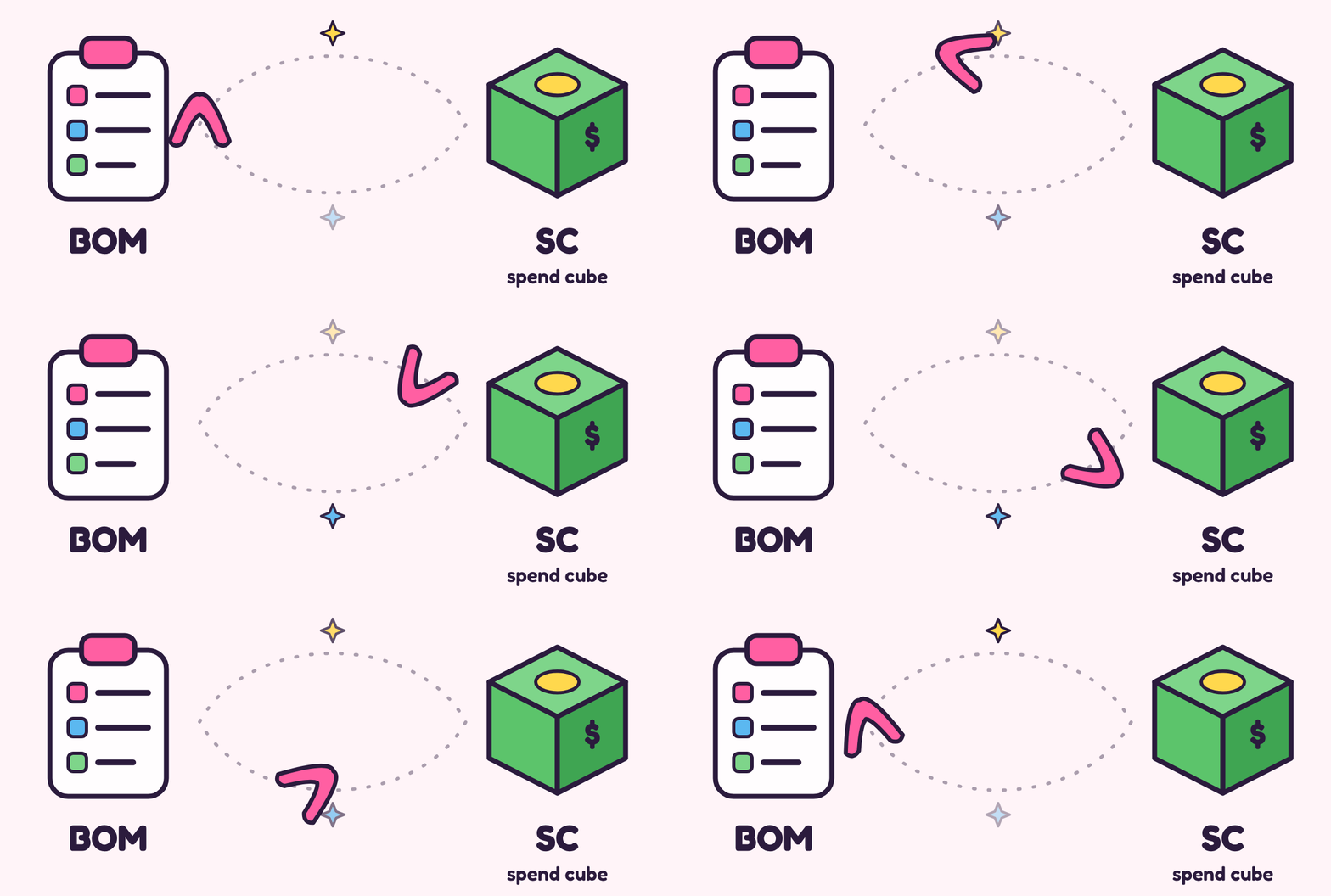
One of us did this job by hand in industry: matching one product family's BOM to its invoices took about a week, and was out of date as soon as new invoices arrived. BOMs and spend cubes describe the same parts in different numbers, languages, units and currencies, so nobody can say what a product really costs.
We used Kearney's Velocity AI to analyse the market and business side of BOM-to-spend pain points. It pointed us to the user who feels it most: a consultant in week one of a cost engagement, holding raw Excel exports.
What it does
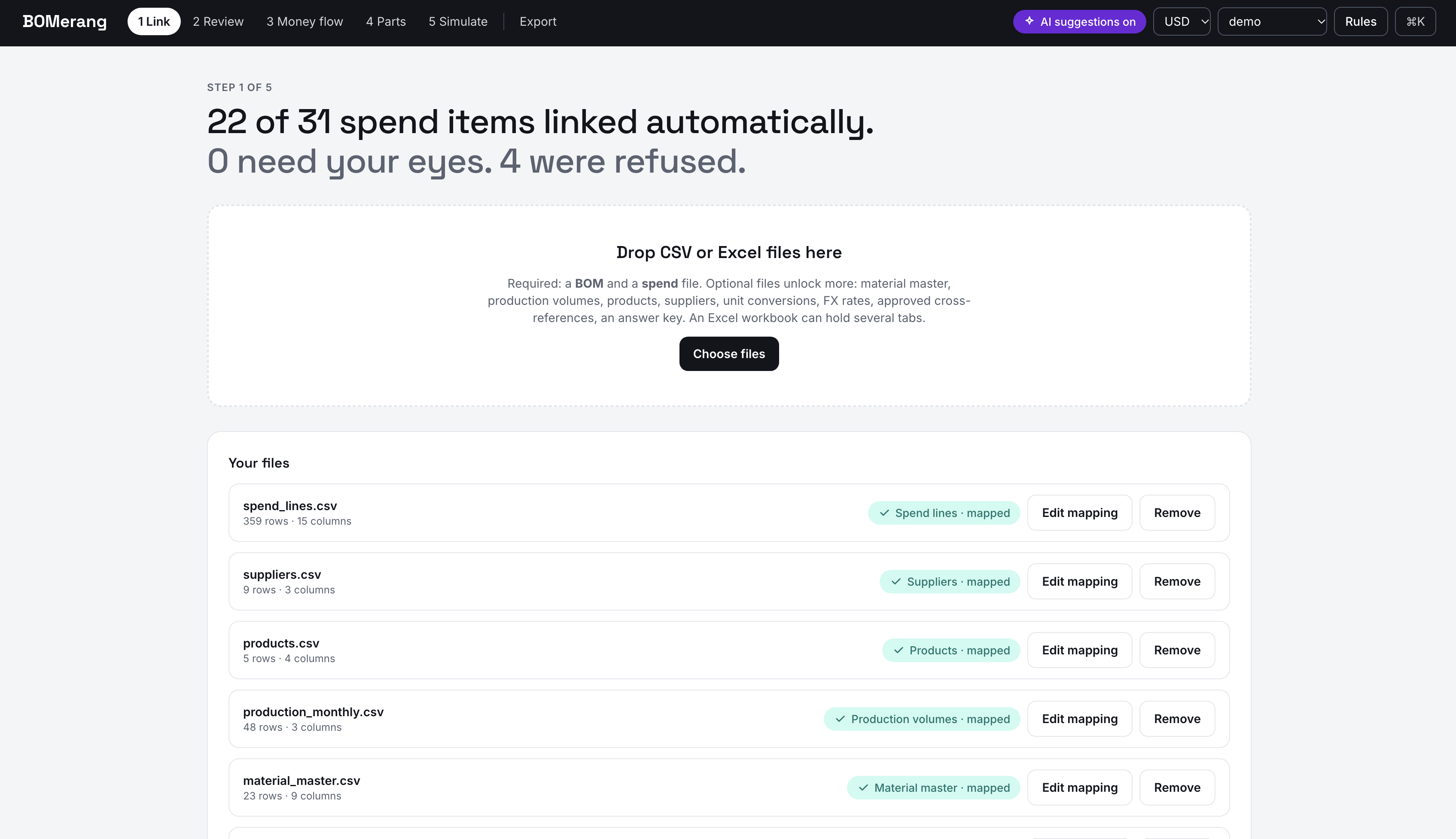
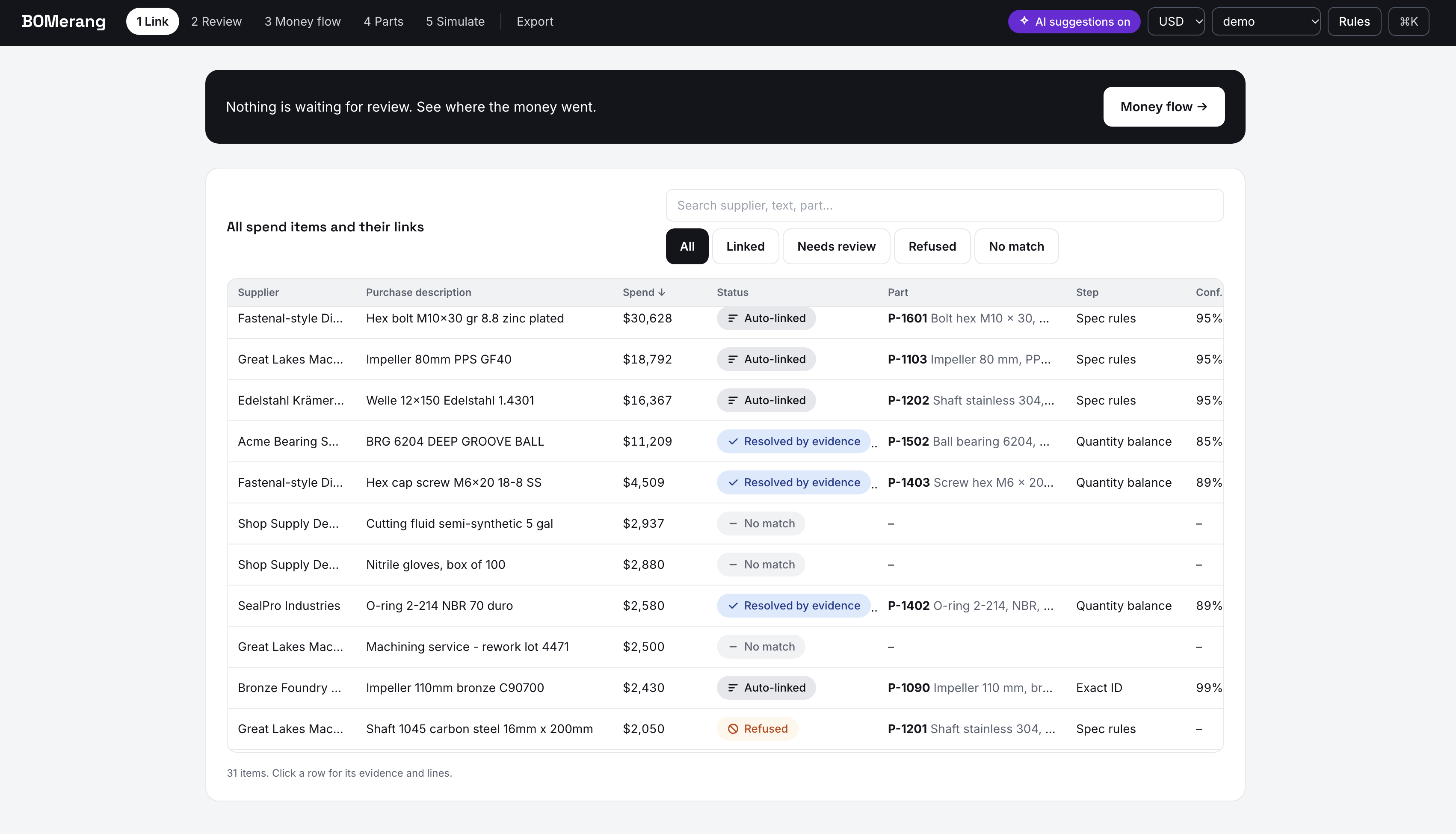
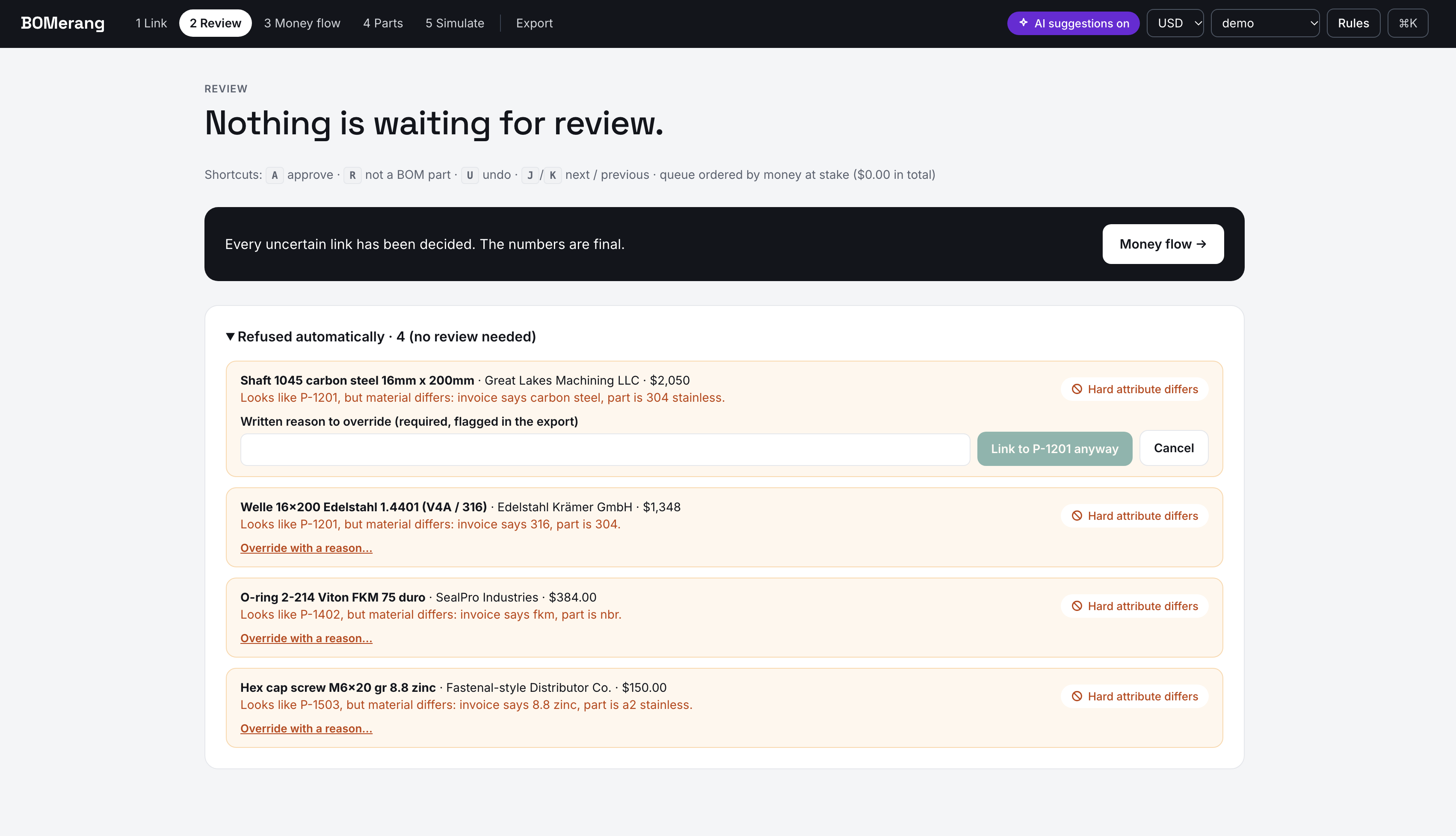
BOMerang links every purchase to the right part in every product, shows the proof for each link, and refuses look-alikes.
- AI suggests, rules decide, people approve. A 6-step ladder: exact ID → cross-references → spec rules → AI shortlist → price/quantity/unit checks → human review.
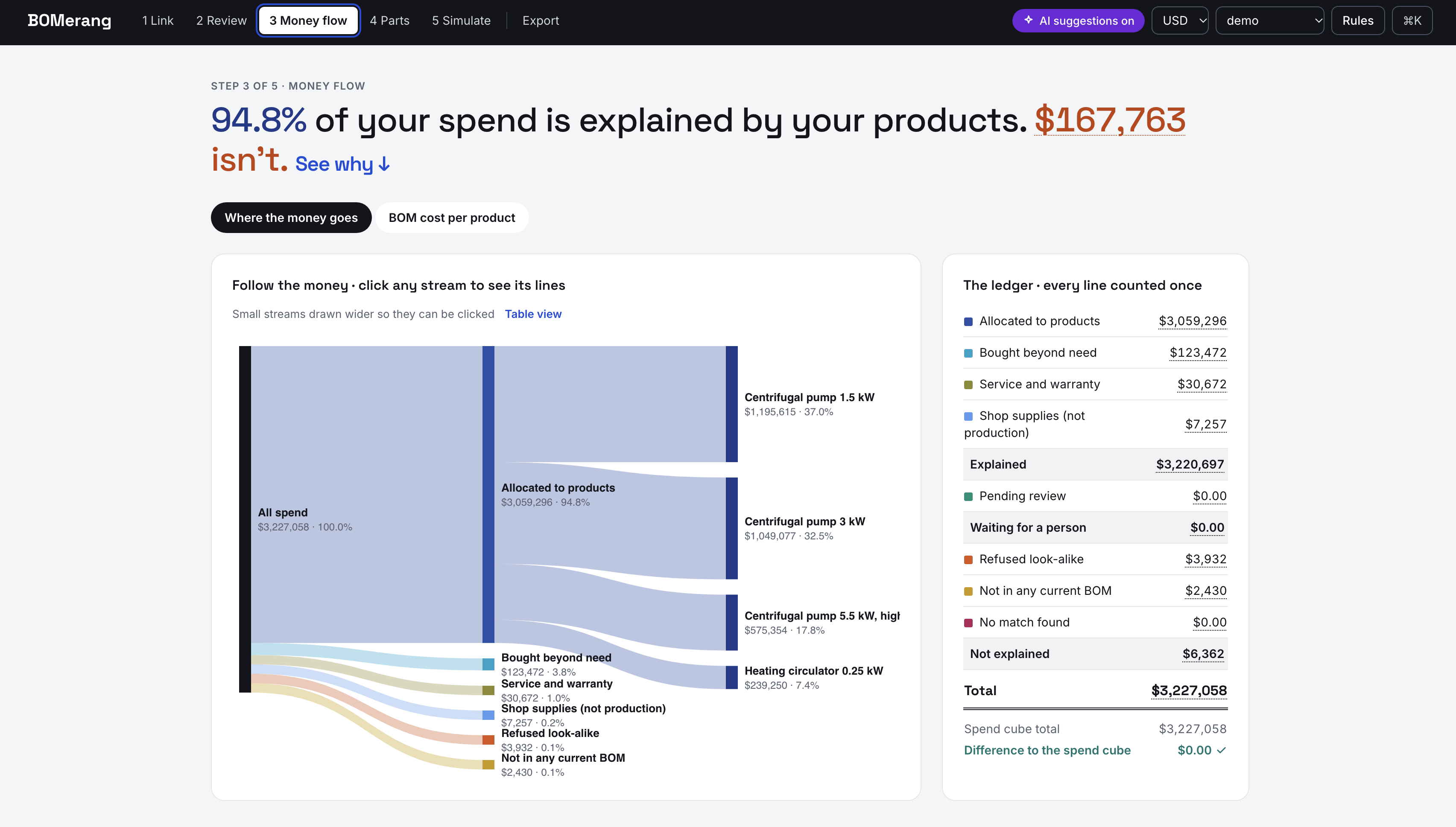
- Every dollar reconciles to the spend cube, with a difference of 0.00.
How we built it
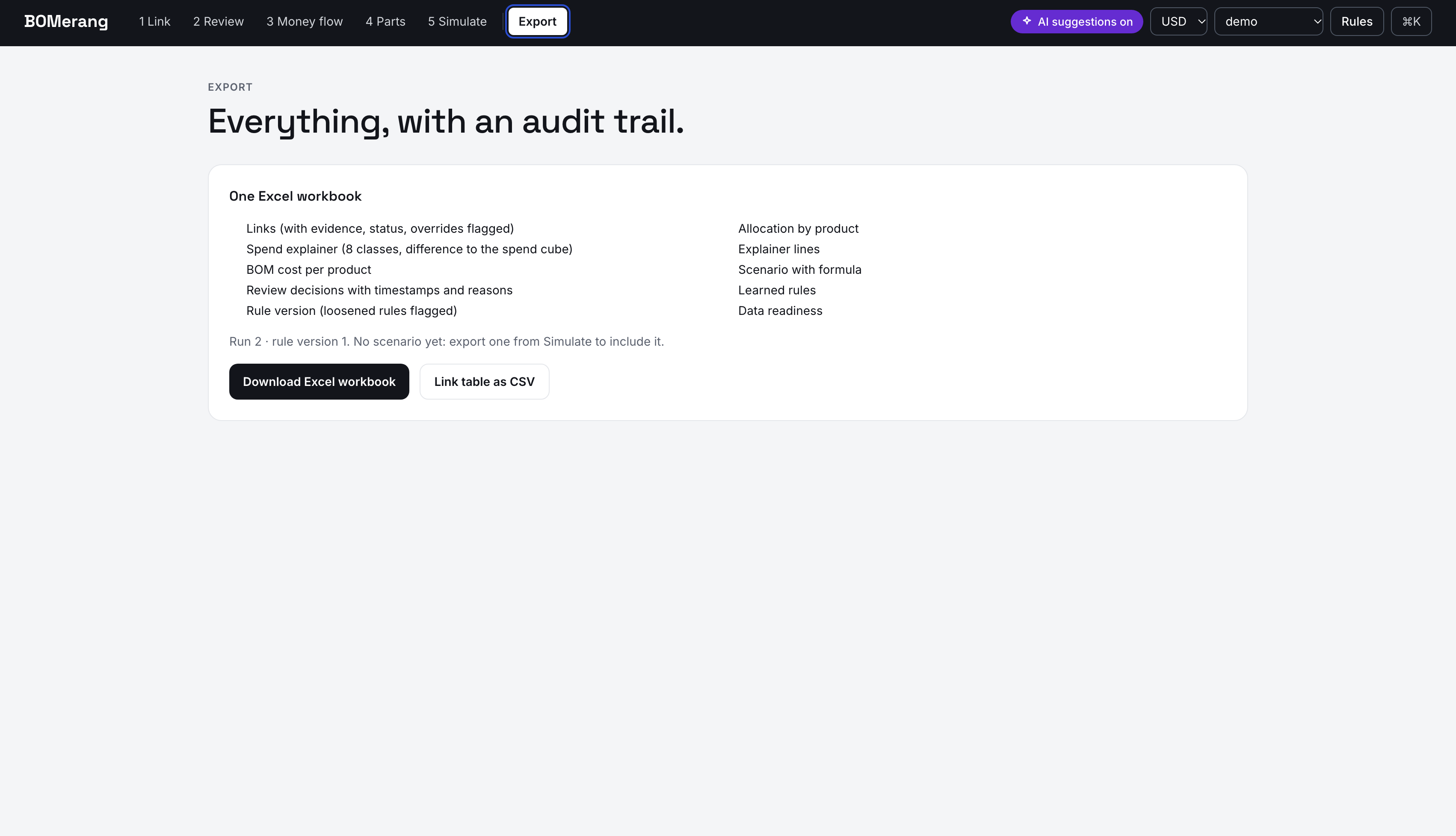
React + TypeScript, Python FastAPI, pandas + DuckDB, rapidfuzz, a multilingual embedding model, and a Claude model behind strict guardrails. Works fully with or without AI. Excel in, Excel out: no integration needed.
Challenges we ran into
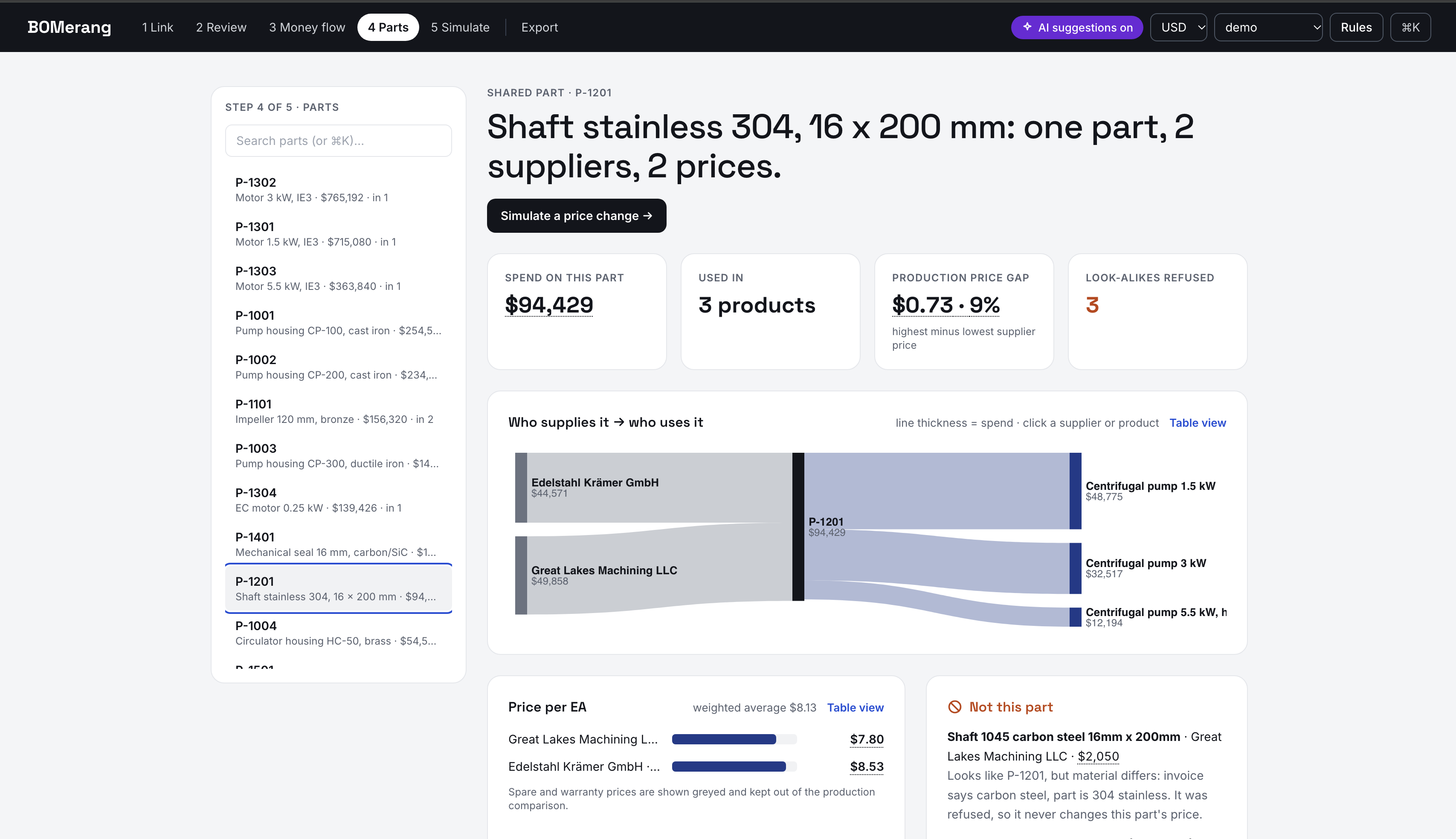
A carbon-steel shaft looks almost identical to a stainless one. Fuzzy matching links it and corrupts every cost after it, so we designed for refusing links, not just finding them.
Accomplishments that we're proud of
Zero wrong links, 94.8% of spend explained, and every number traceable to its invoice lines.
What we learned
In cost work, a wrong number is worse than a blank one. Trust beats match rate.
What's next for BOMerang
- Pilot: one real product family
- Now: Kearney accelerator
- Next: Velocity AI + Spend.Pro module
- Later: software for mid-size manufacturers
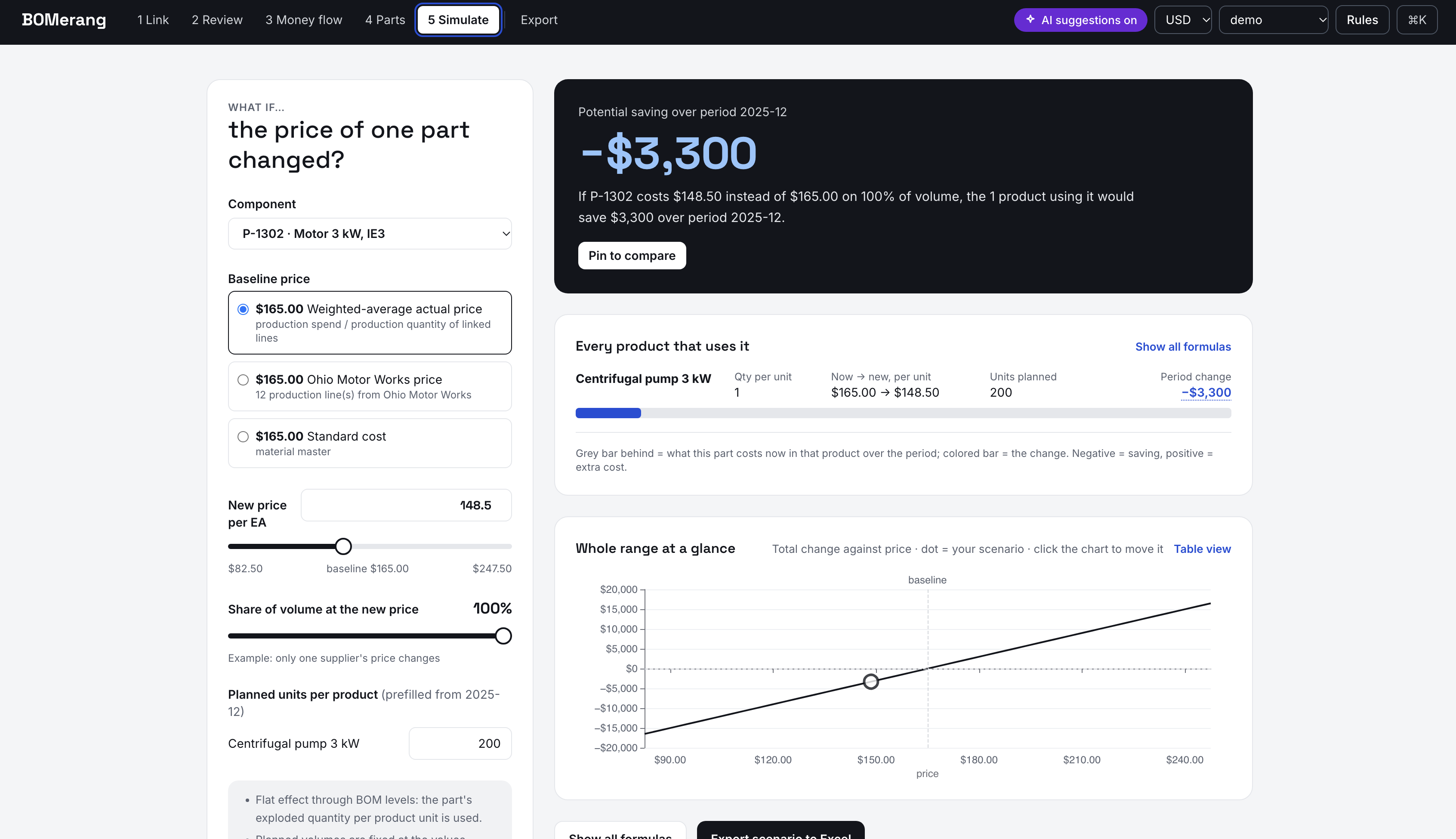
Demo data is synthetic; savings are scenarios.
Built With
- anthropic-api
- claude
- csv
- docker
- duckdb
- excel
- fastapi
- github
- llm
- natural-language-processing
- pandas
- powerpoint
- python
- react
- render
- sentence-transformers
- typescript
- velocity-ai

