-
-
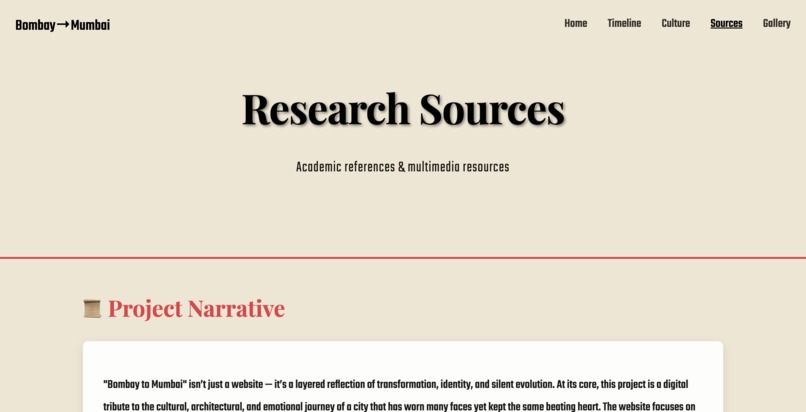
Sources Page
-
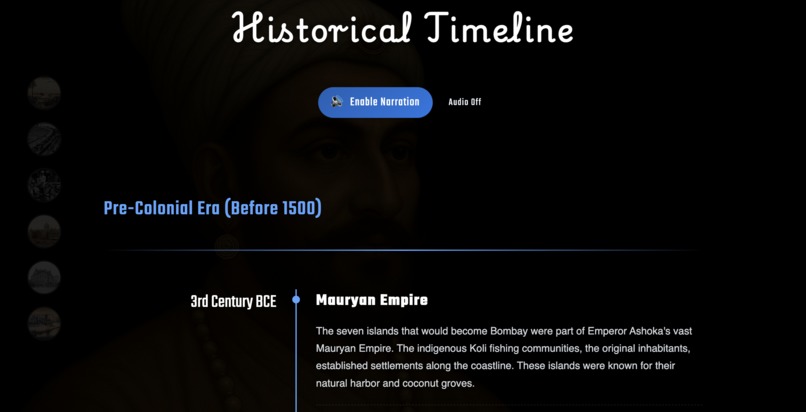
Timeline Page
-
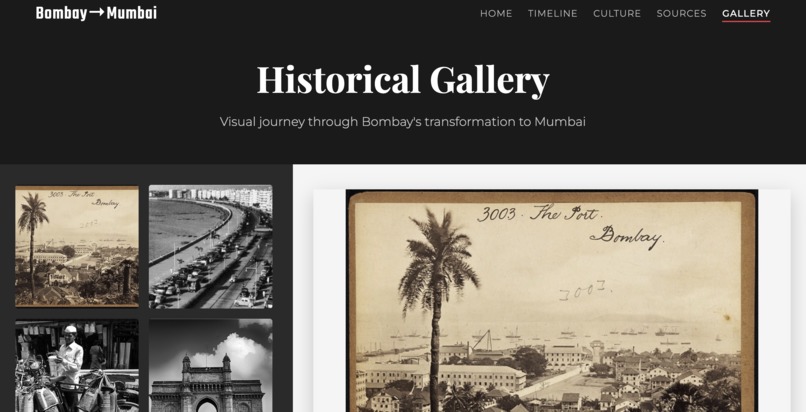
Gallery Page
-
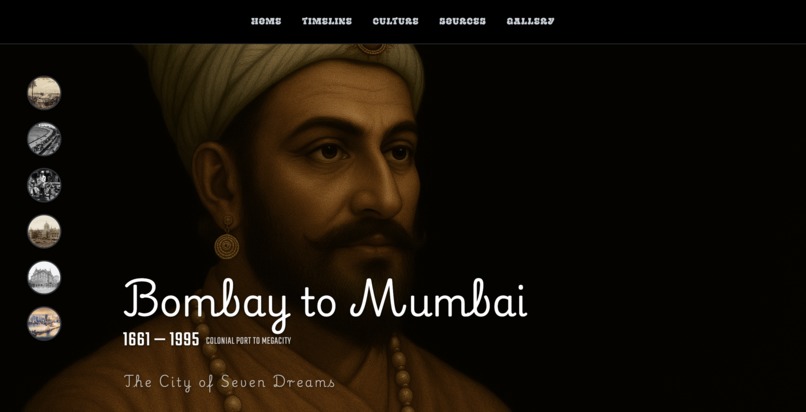
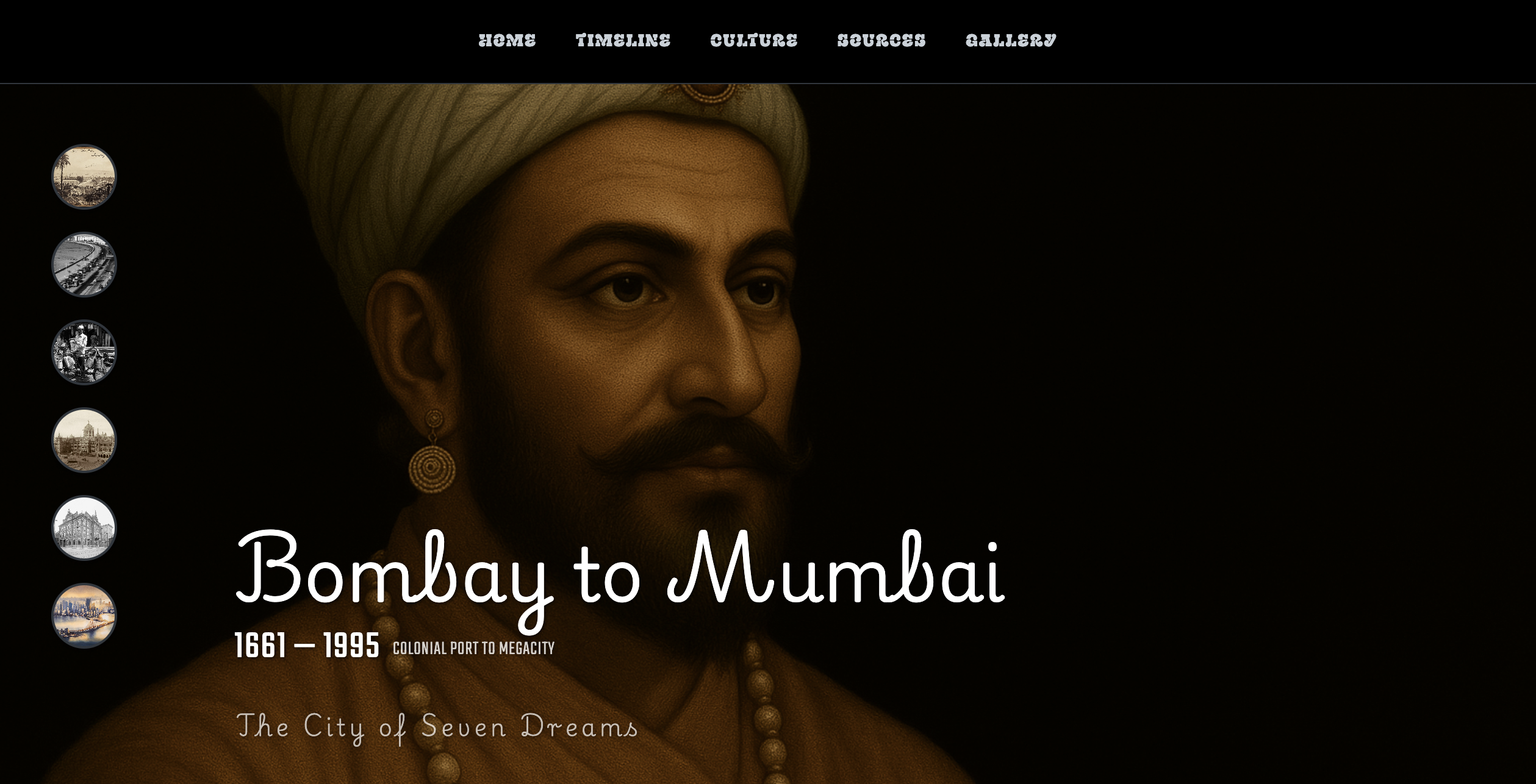
Home Page
-
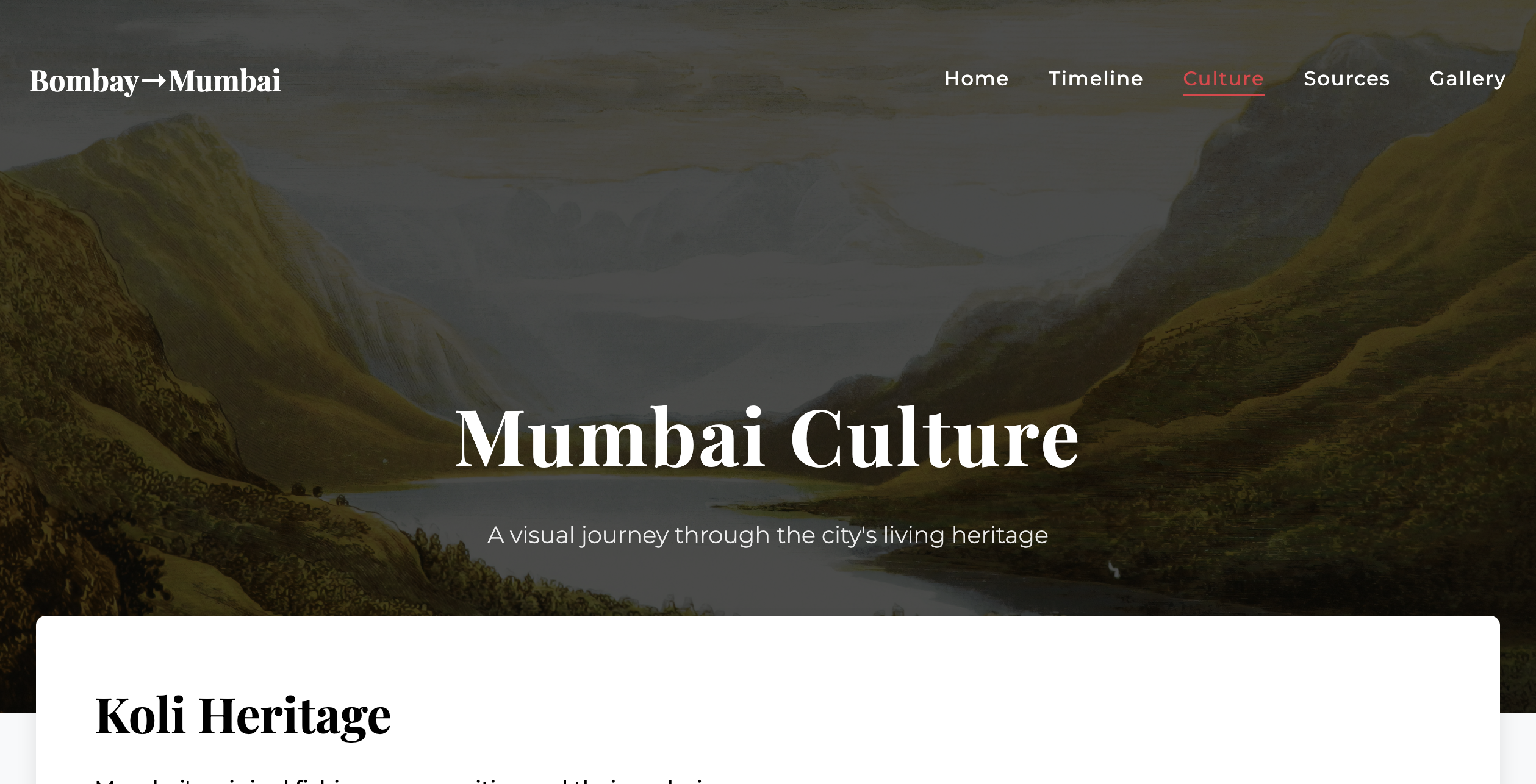
Culture Page
What is it?
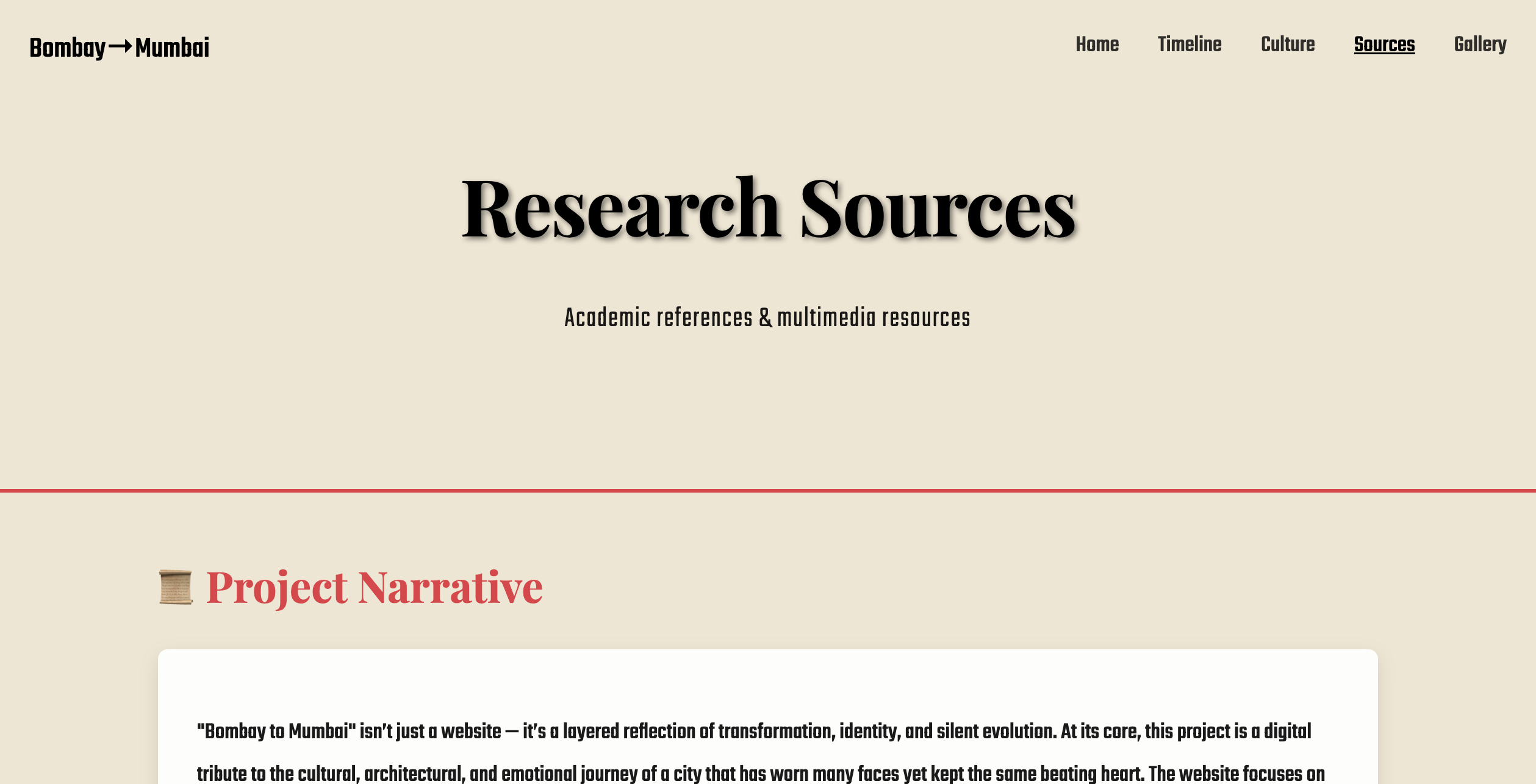
A storytelling website that traces Bombay’s transformation into Mumbai — from seven scattered islands to a global city — using design, emotion, and interactivity.
Why did I build it?
History is often taught like facts on paper. I wanted to make it feel real — something people could scroll through, listen to, and actually connect with.
What's inside?
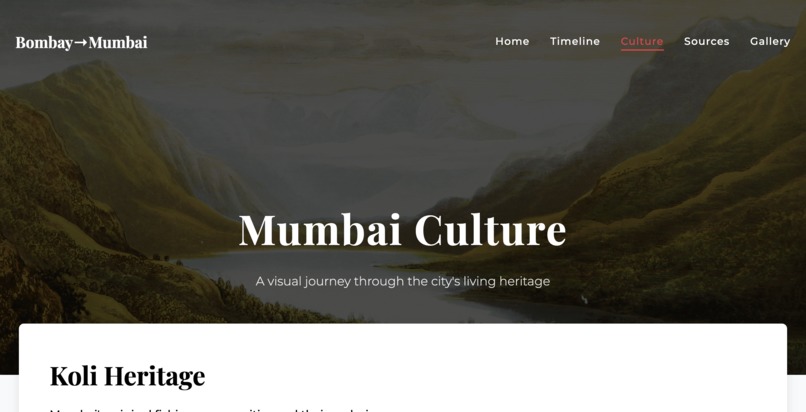
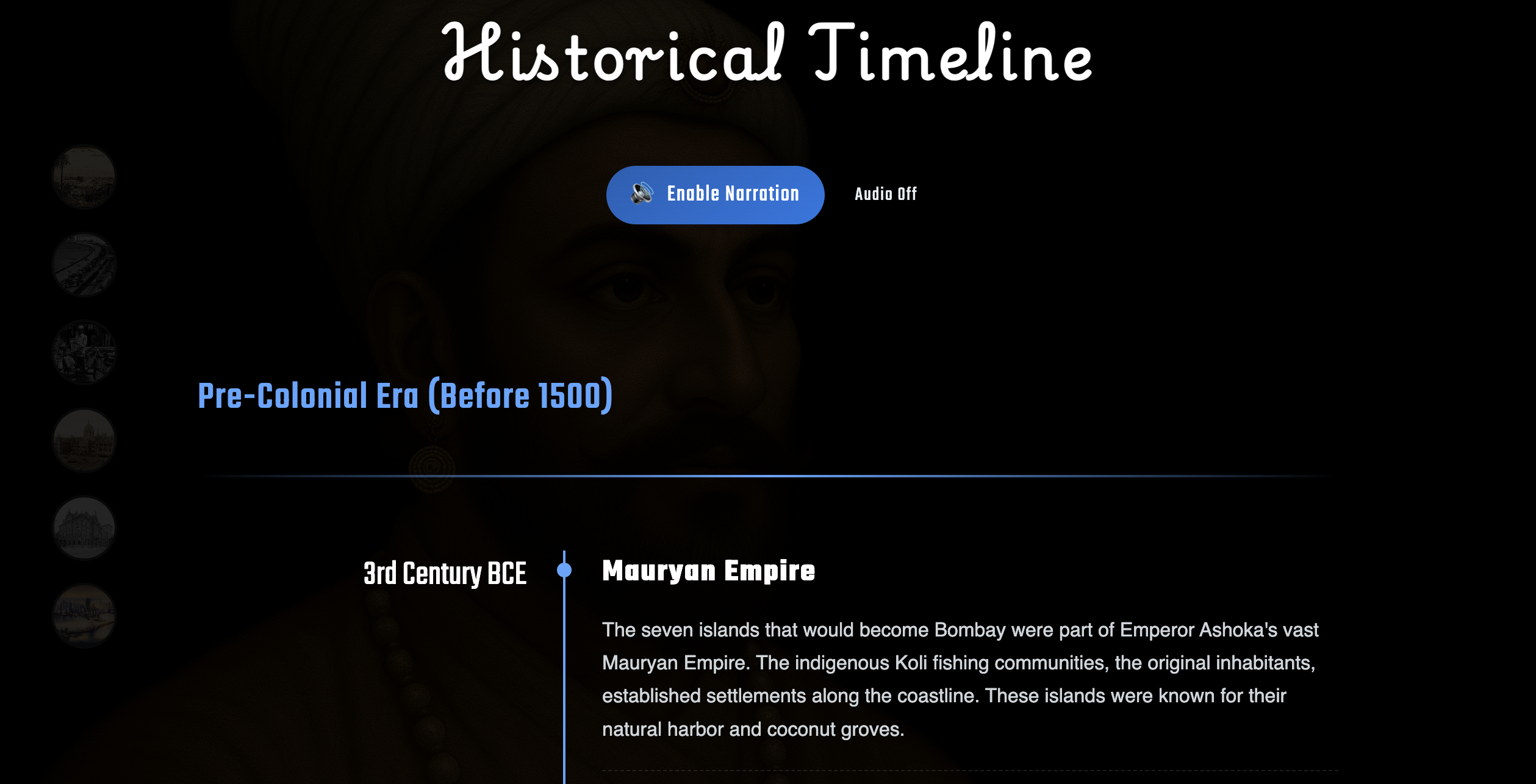
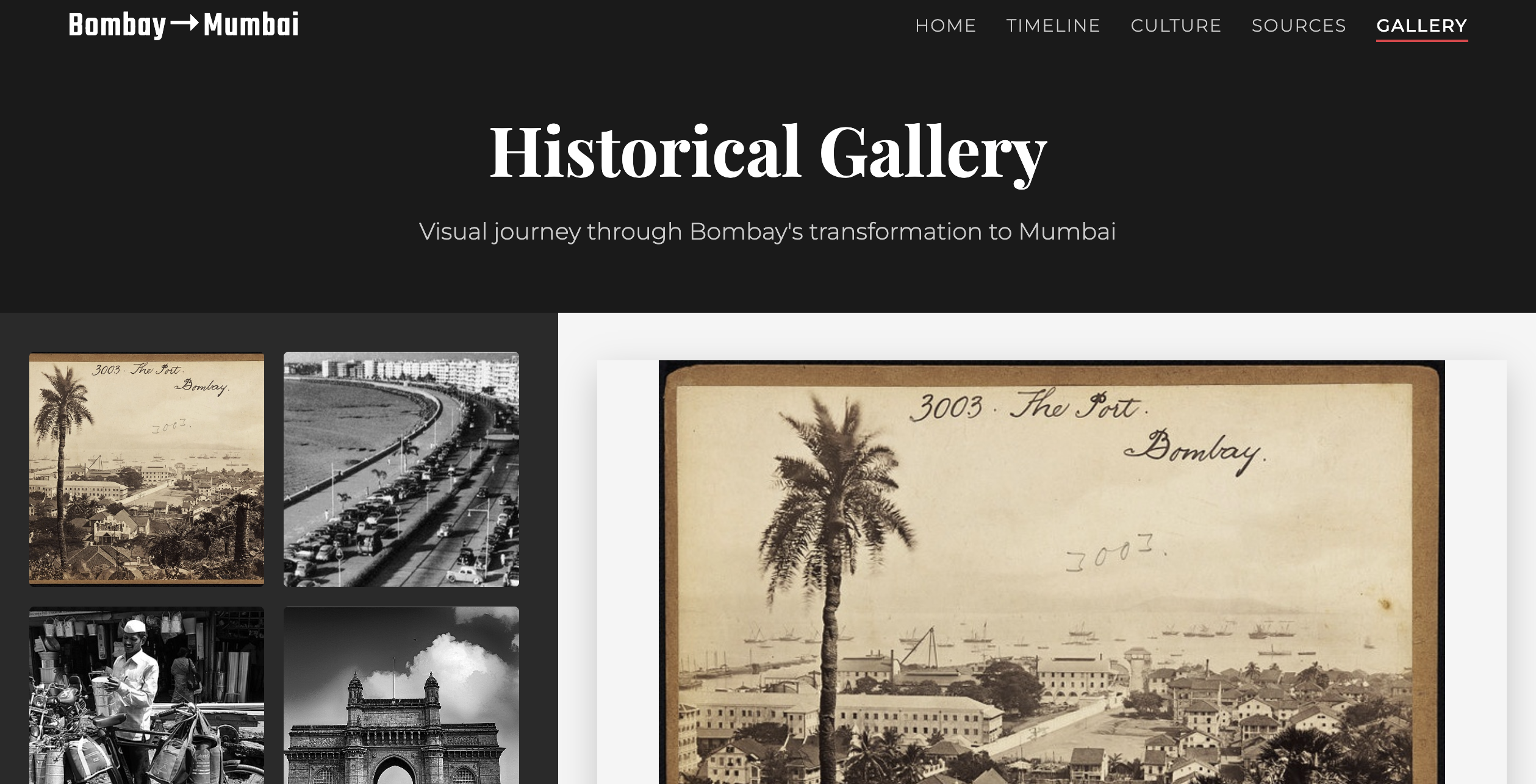
A vertical scrollable timeline (3rd Century BCE to present) A culture section with visuals and emotion A gallery of maps, leaders, and transitions An audio narration for depth A custom Sanskrit cursor trail — just as a symbolic detail
Tech I used:
HTML, CSS, JavaScript Custom animation and scroll logic Hosted on GitHub Pages AI tools like Gemini used for debugging and polishing
My intention:
To remind people that places like Bombay aren’t just names on maps — they’re stories. And if we tell them right, even a website can make you feel the past.
Challenges we ran into
Timeline alignment on scroll Balancing aesthetics with readability Working alone meant I had to handle code, design, content, and emotions all together Making it feel alive, not just functional
What's next for Bombay to Mumbai – The City of Seven Dreams
Add scroll animations and transitions Build mobile responsiveness Translate content into multiple Indian languages Expand this into a series — telling the digital story of more Indian cities Maybe even turn it into an educational tool or museum piece someday.
Built With
- and-javascript.-all-logic-is-custom-?-no-frameworks.-used-ai-tools-like-gemini-for-debugging-and-flow-suggestions.-hosted-on-github-pages
- built-solo-using-html
- css
- css3-javascript-(vanilla
- everything
- github
- historical
- hosting
- html5
- no-frameworks)-custom-cursor-logic-audio-embed-for-narration-assets:-royalty-free-images
- references
- stitched
- via


Log in or sign up for Devpost to join the conversation.