-
-
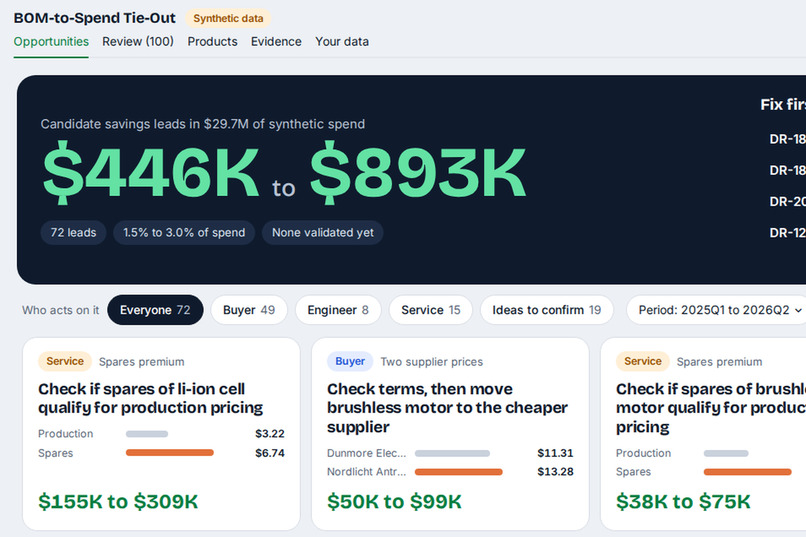
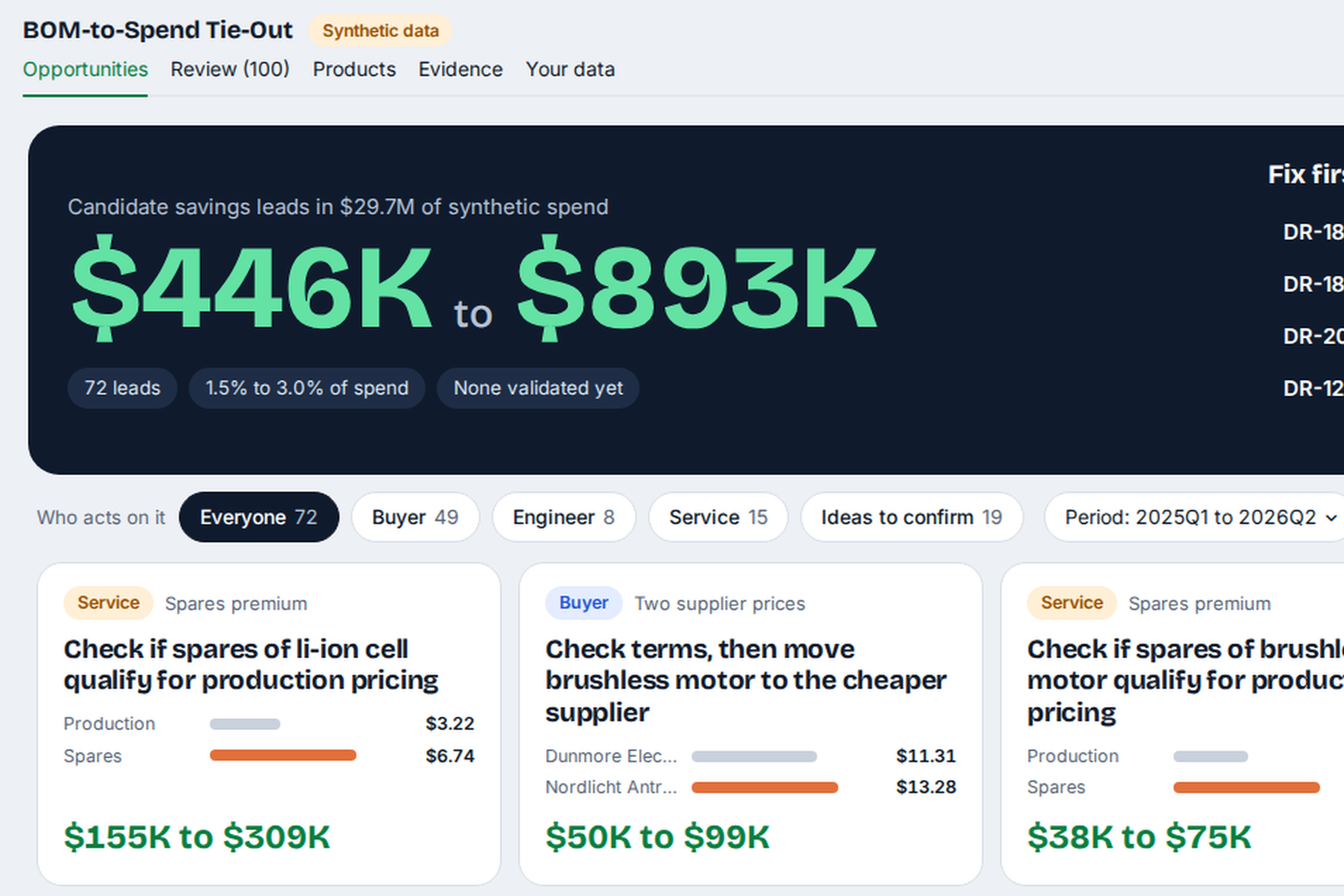
Ranked savings leads
-
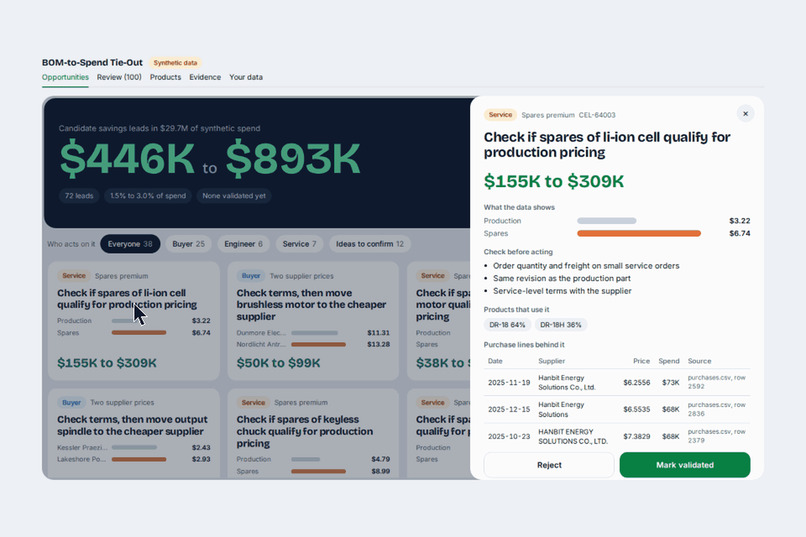
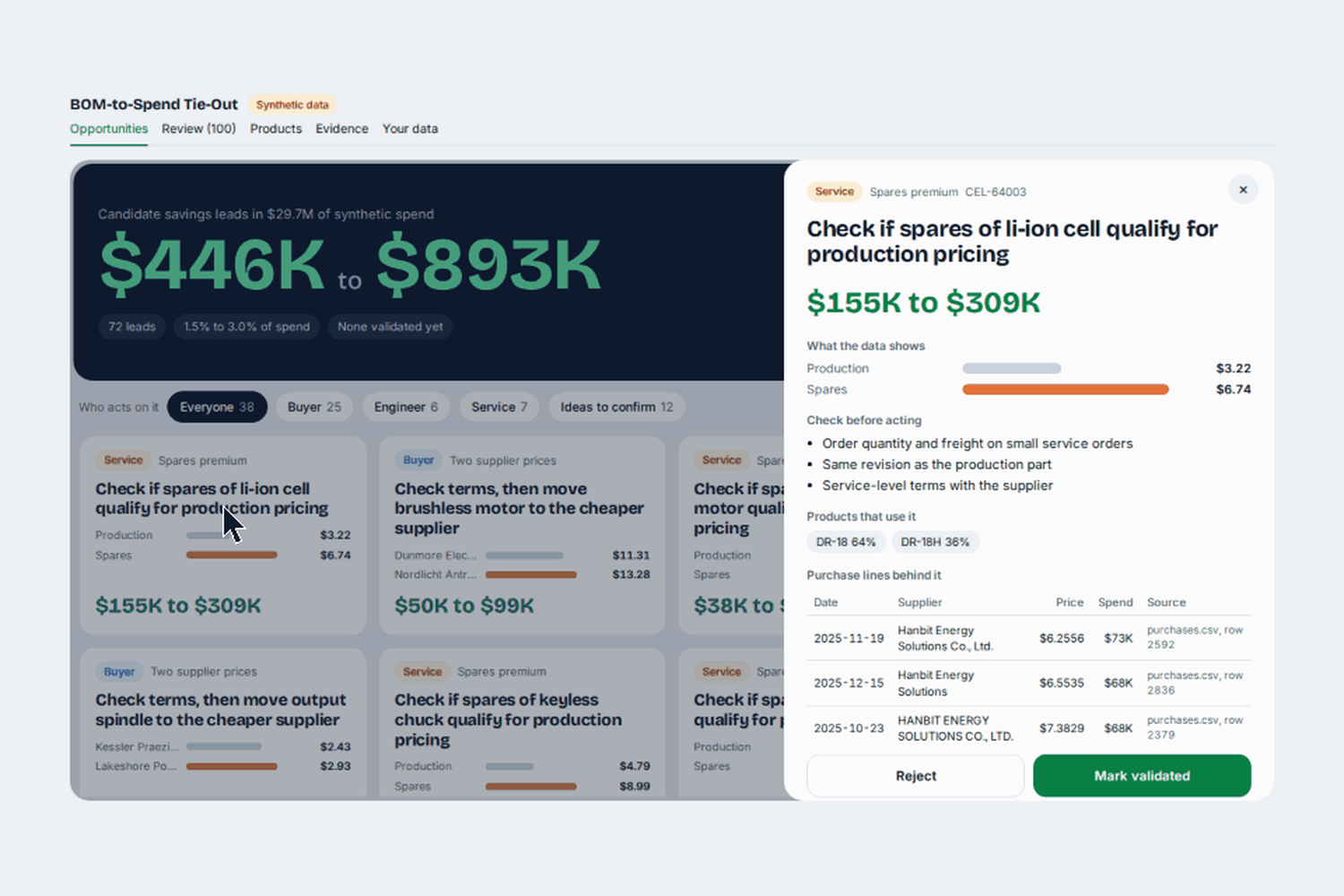
A savings lead with its evidence
-
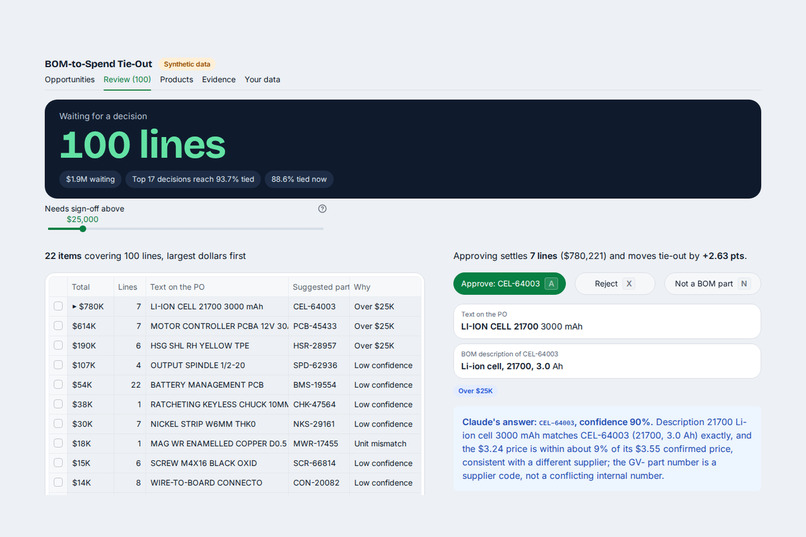
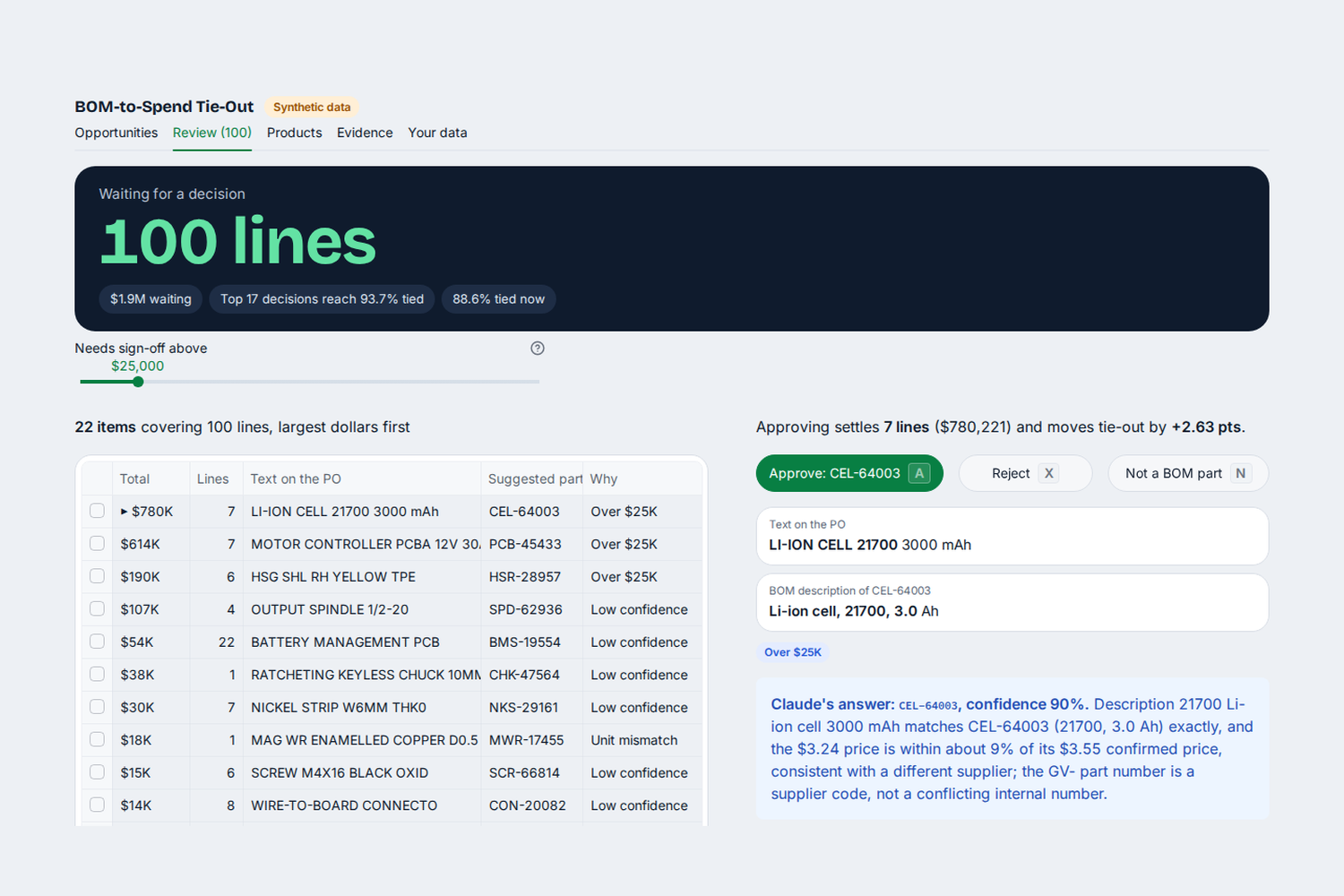
Uncertain matches go to a person
-
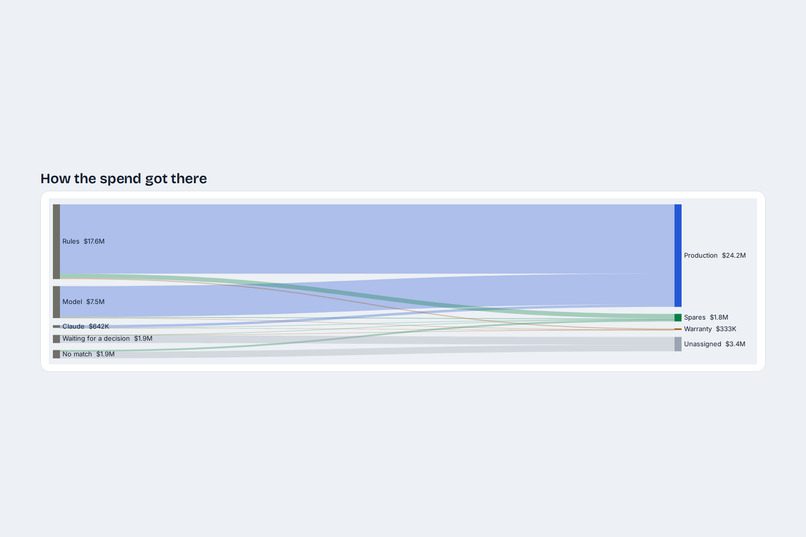
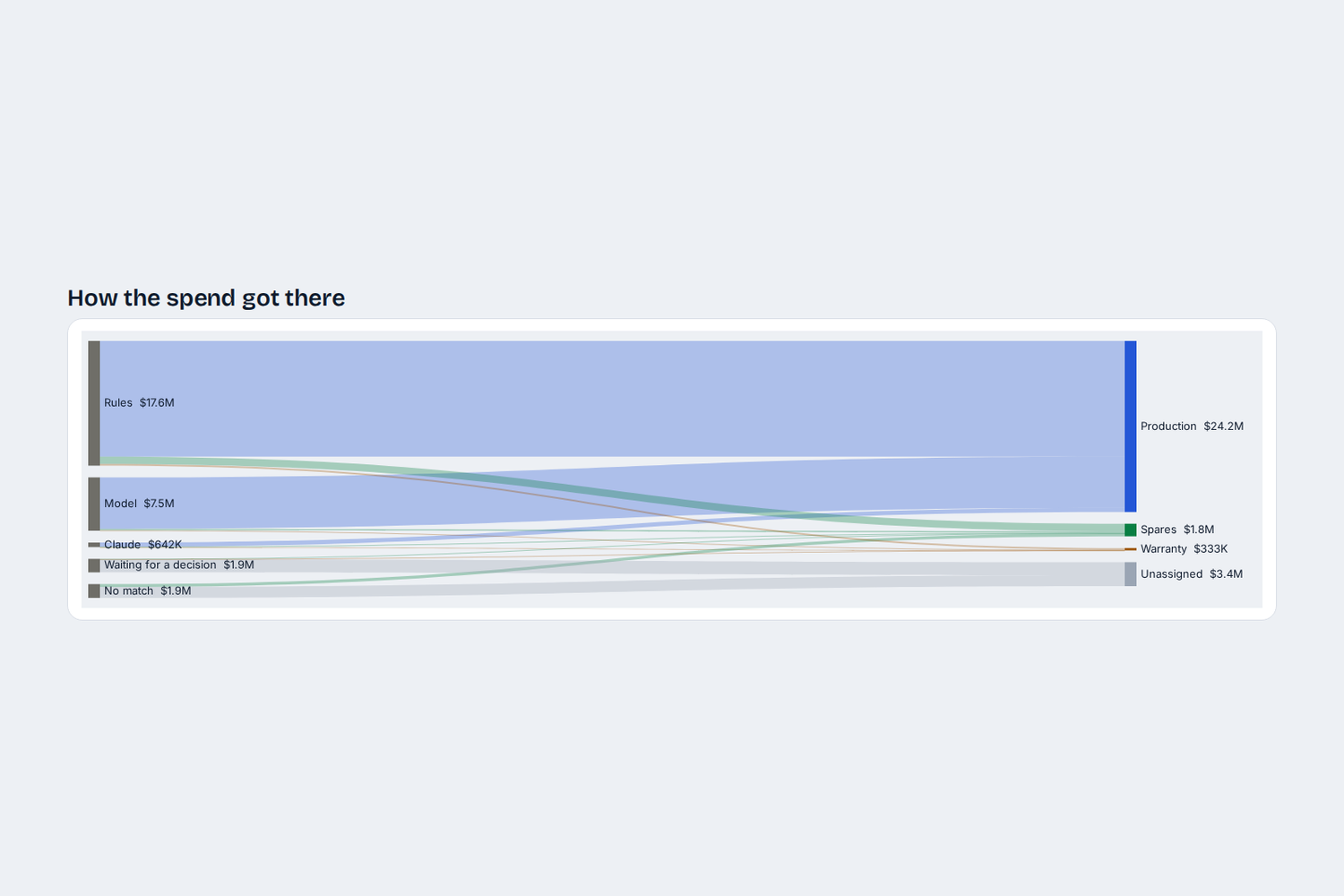
How each dollar was settled
-
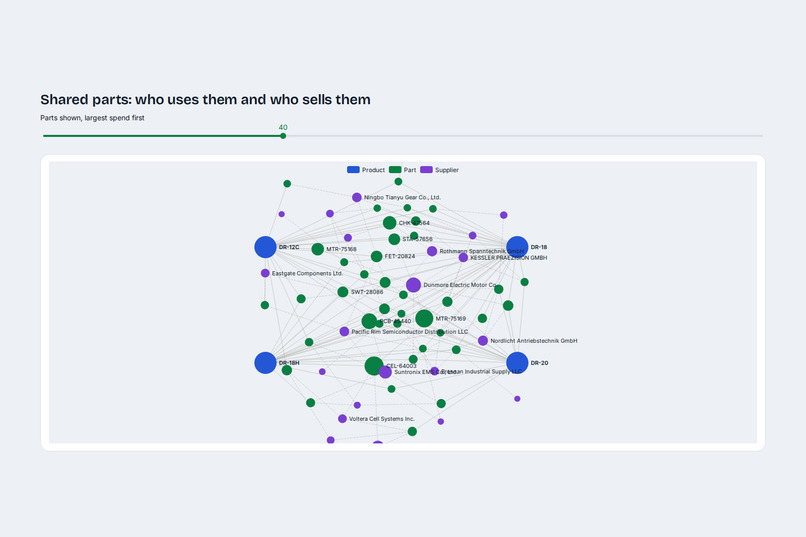
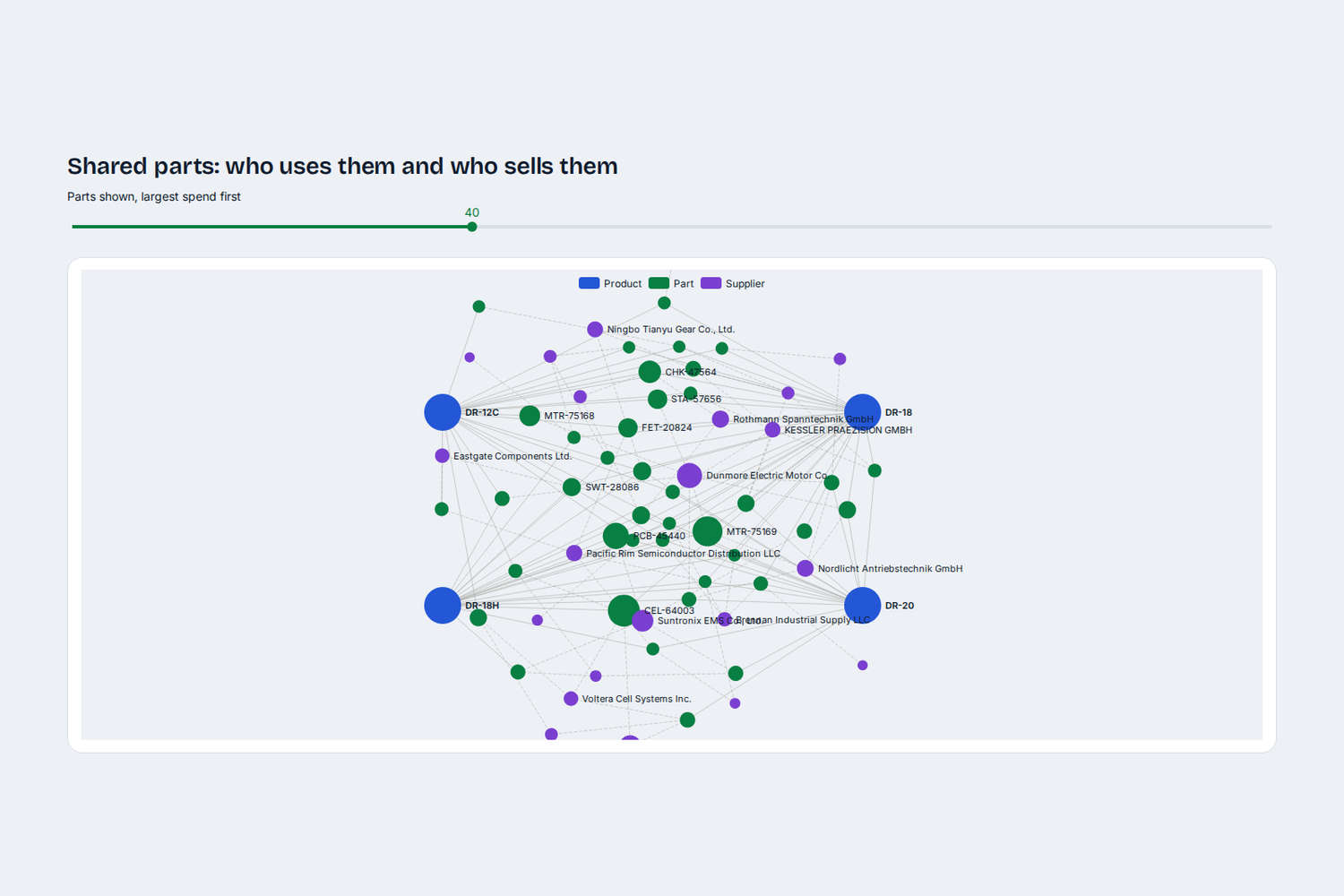
Parts shared across products and suppliers
-
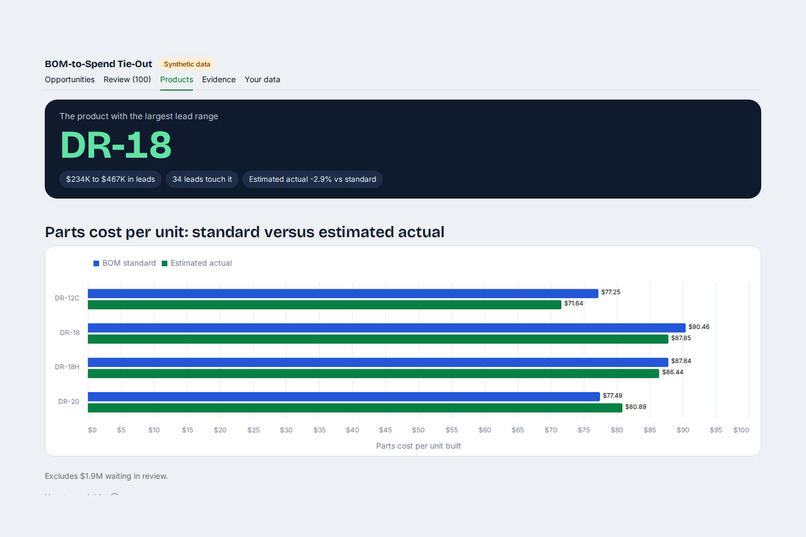
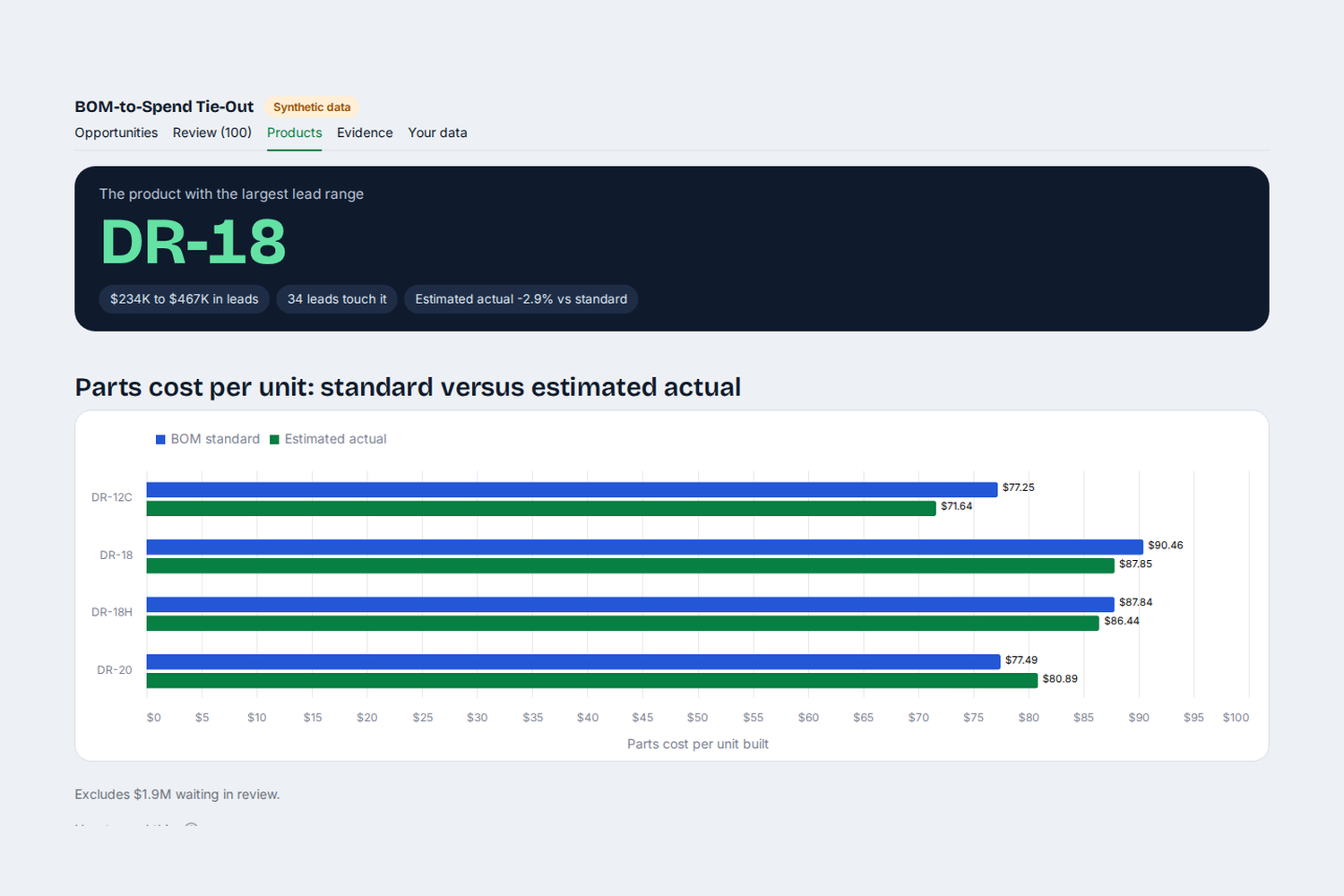
BOM standard against estimated actual
Inspiration
This problem shows up everywhere. Two systems describe the same thing in different words and nobody can connect them. A grocery store has it with supplier invoices and shelf items. Hiring has it with resumes and job postings. I wanted to see how far a general approach to that could go, using BOMs and purchase orders as the test.
What it does
You upload three exports: BOMs, purchase lines and build volumes. It matches each purchase to a BOM part and gives back a ranked list of savings leads. Each lead shows the prices, the purchase lines behind it, and what to check before acting. It also shows which product to fix first. If it is not sure about a match, it asks a person and does not guess.
How I built it
I worked solo. I made the design and experiment decisions and used Claude Code to write the code. Matching goes cheapest first. Rules on part numbers, then a trained model, then Claude for the hard lines, then a person. I made synthetic data with known answers so I could measure accuracy, then tested on real data.
Challenges I ran into
Matching a lot of spend was easy. Doing it without wrong matches was hard. One early version tied 84% of spend but put $86K on the wrong parts. Real data was harder too. With part numbers hidden, recall on real electronics dropped to 16%. Three things I tried did not work, so I took them out.
Accomplishments that I'm proud of
- 97.9% of spend tied on the held-out test, with no wrong matches
- 0.94 F1 on a public benchmark, against published baselines of 0.81 and 0.85
- 72 candidate leads worth $446K to $893K on $29.7M of synthetic spend
- A working app that runs on your own files, not a mockup
What I learned
Test on data the model has not seen before trusting a number. Most of my early ideas looked good until I did that.
What's next for BOM-to-Spend Tie-Out
A pilot on one real product family, after adding access and data retention controls.
Built With
- claude
- pandas
- python
- scikit-learn
- streamlit
- velocity-ai
