-
-
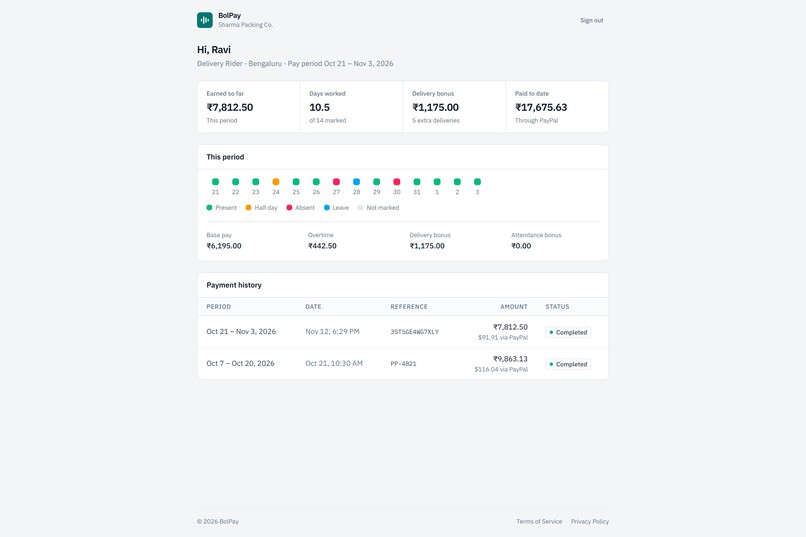
Worker View
-
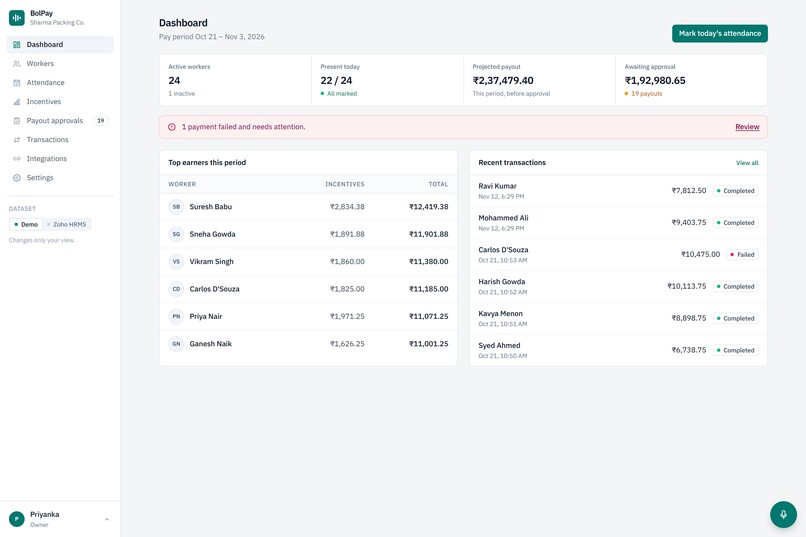
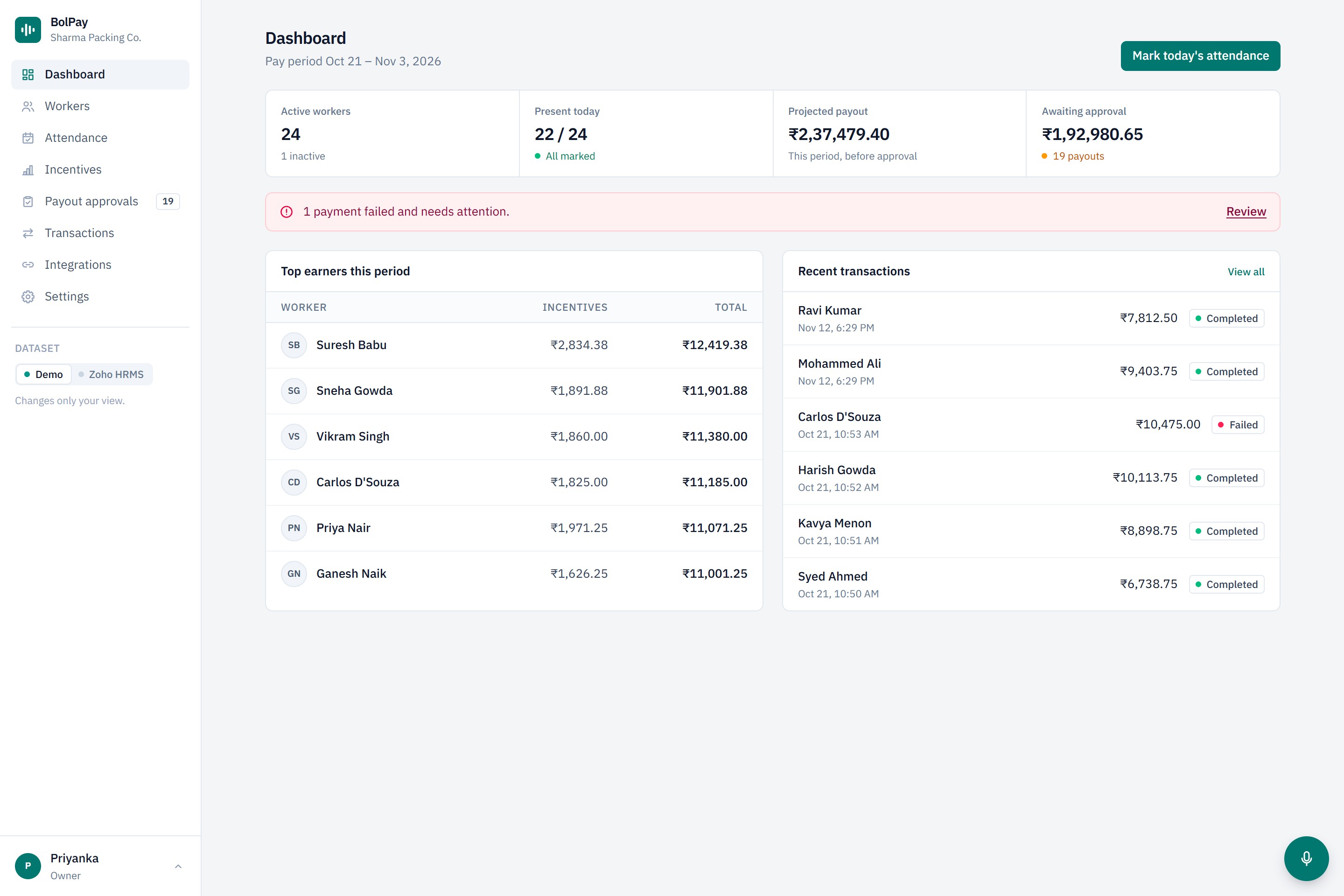
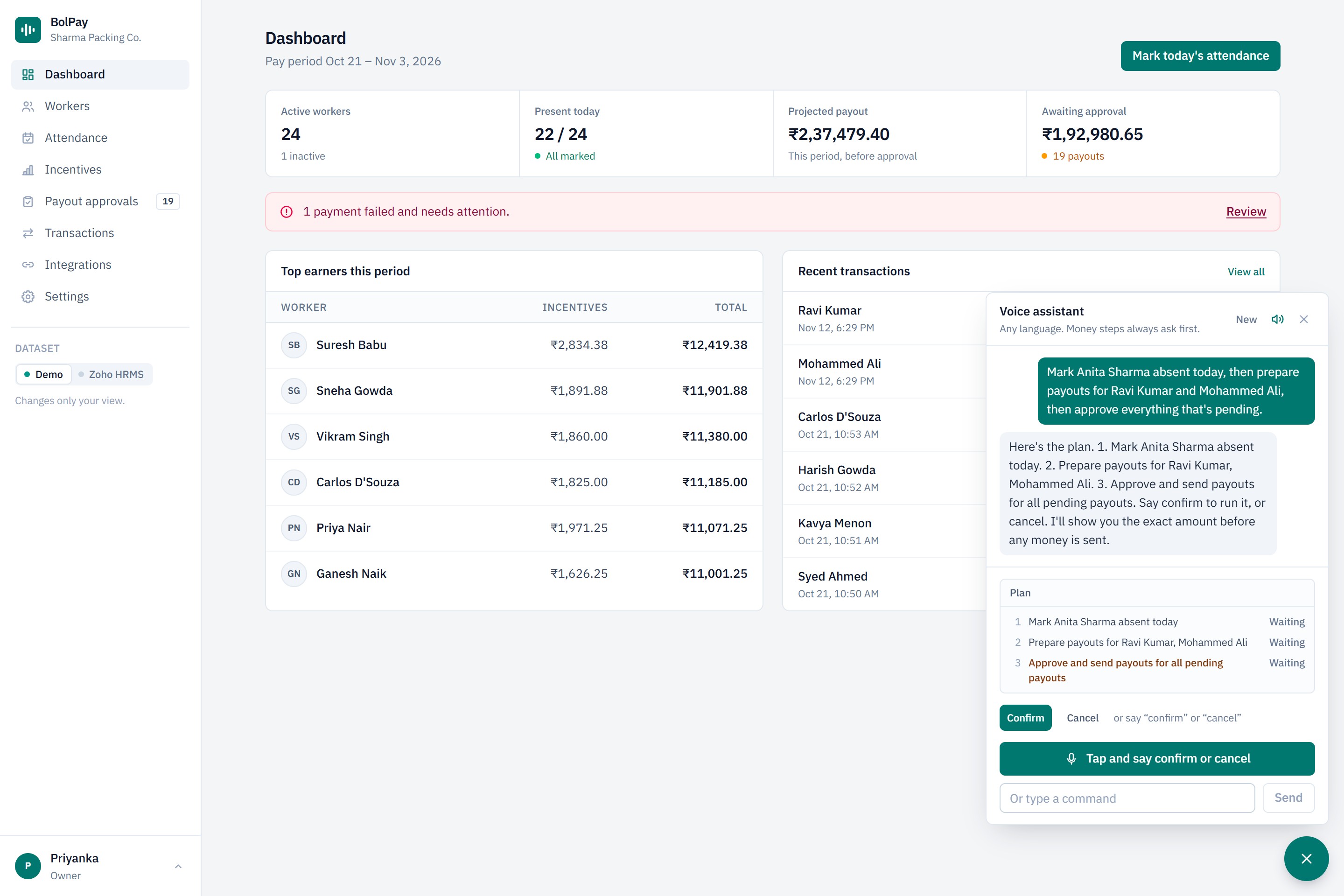
Dashboard
-
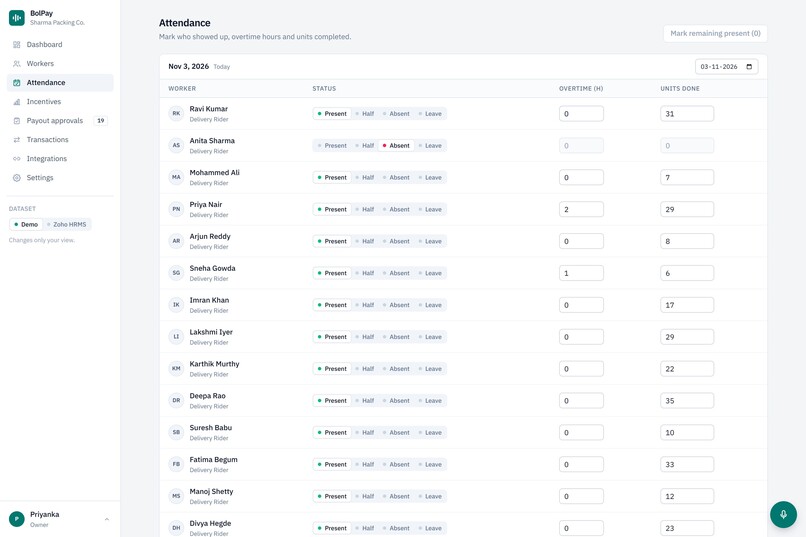
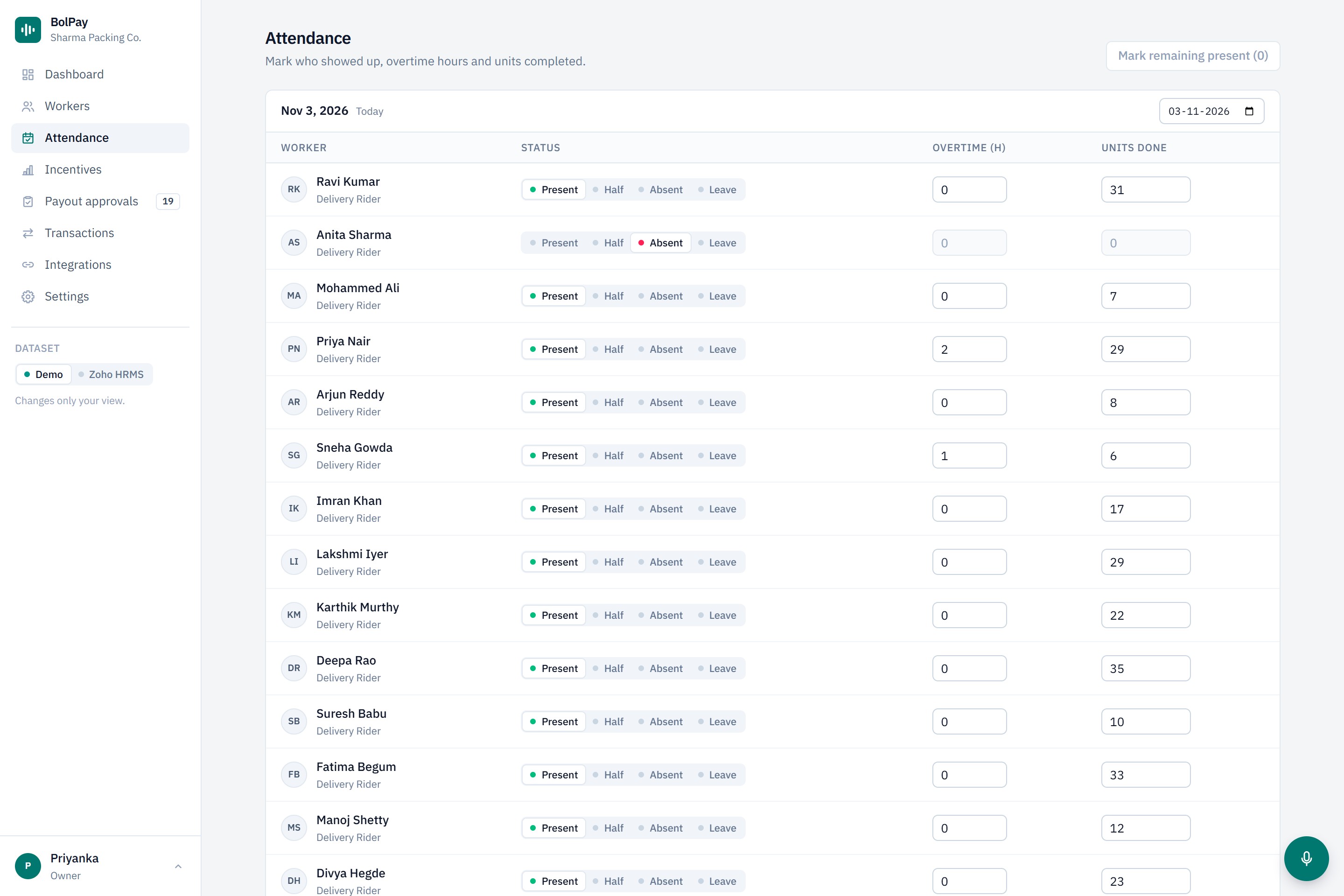
Attendance
-
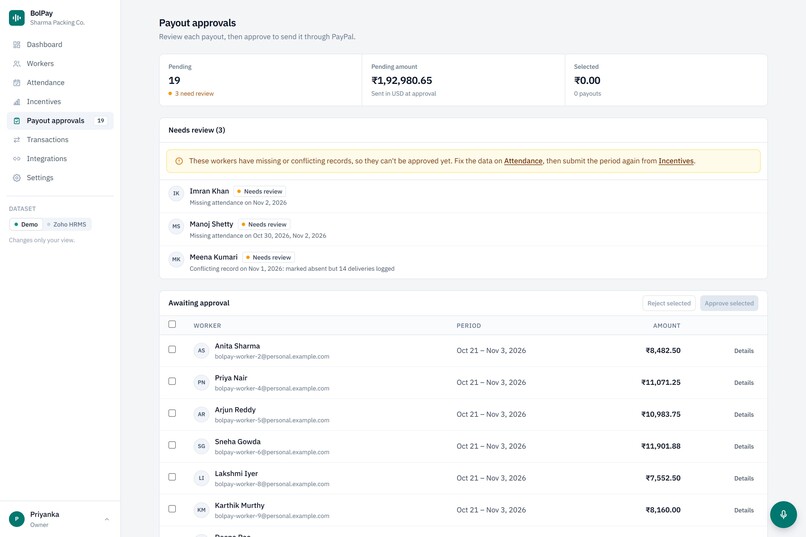
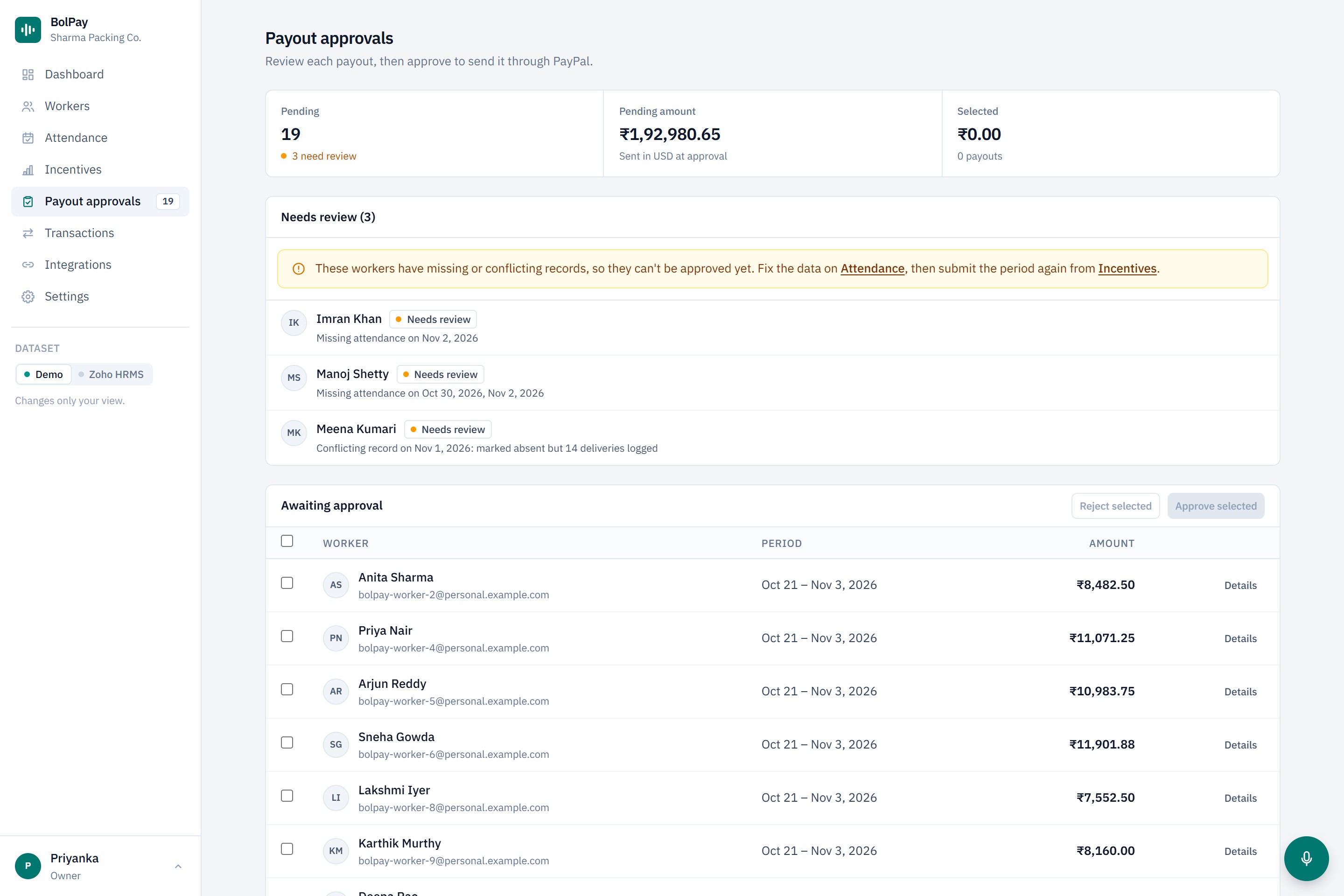
Payout Approvals
-
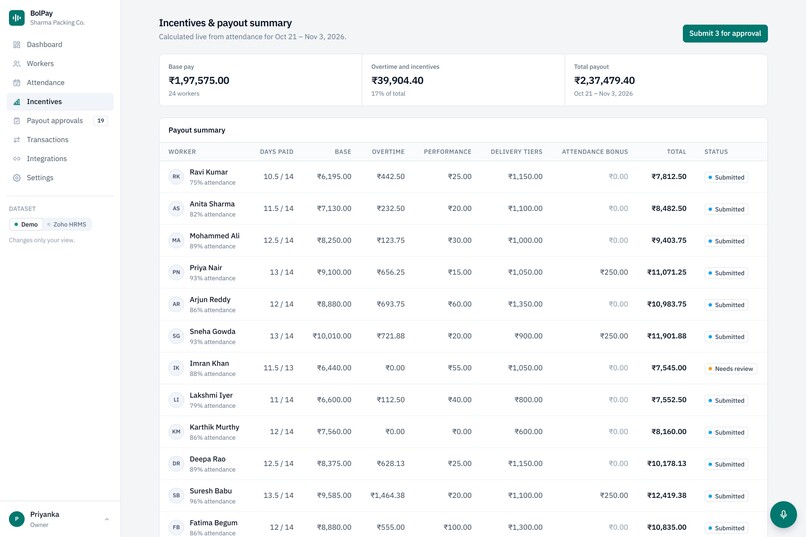
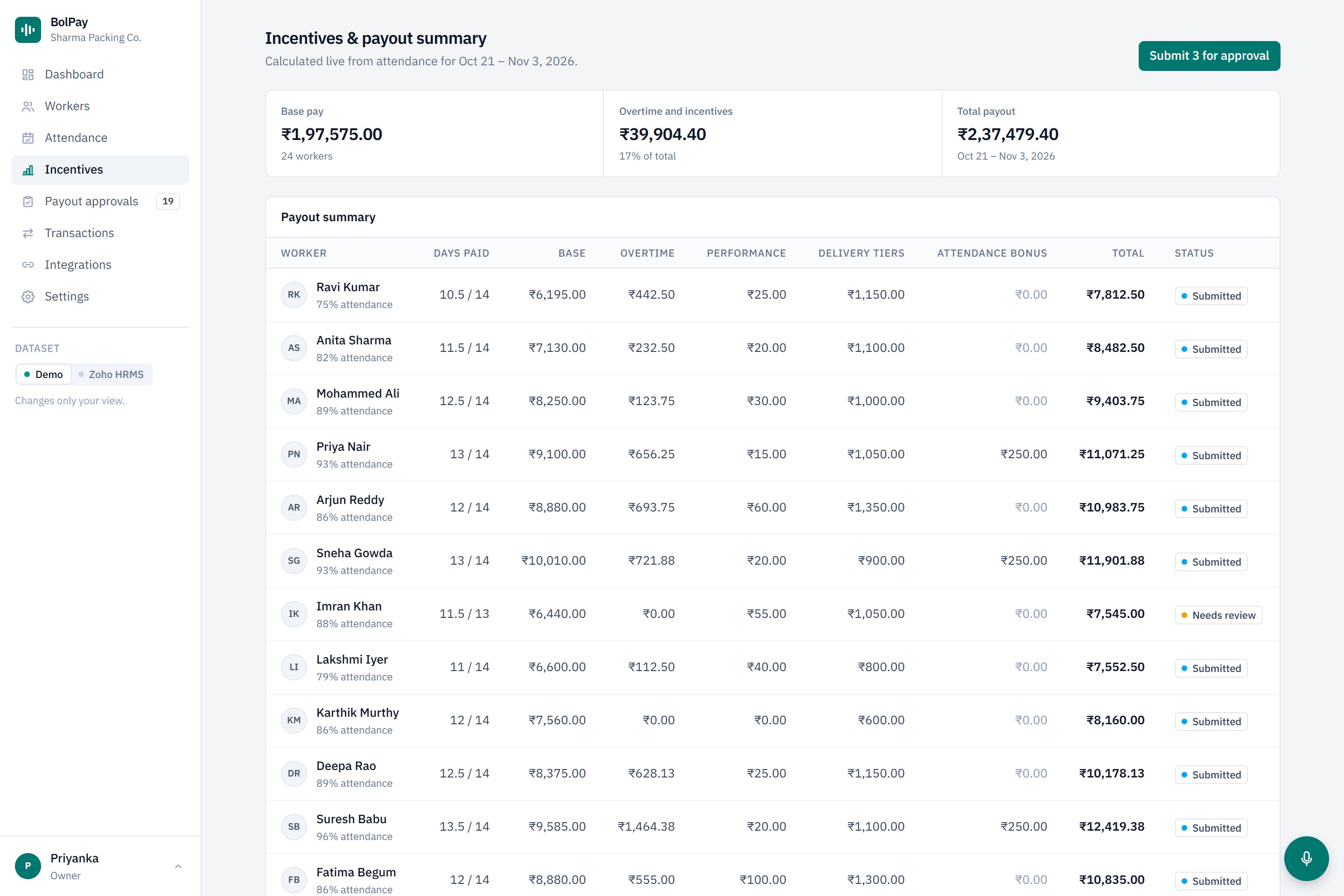
Incentive Page and Calculation Logic Setter
-
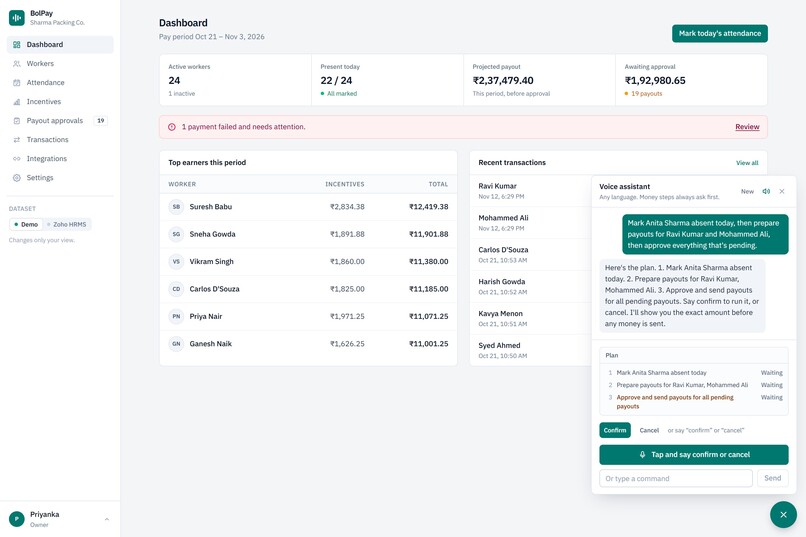
Voice Plan
-
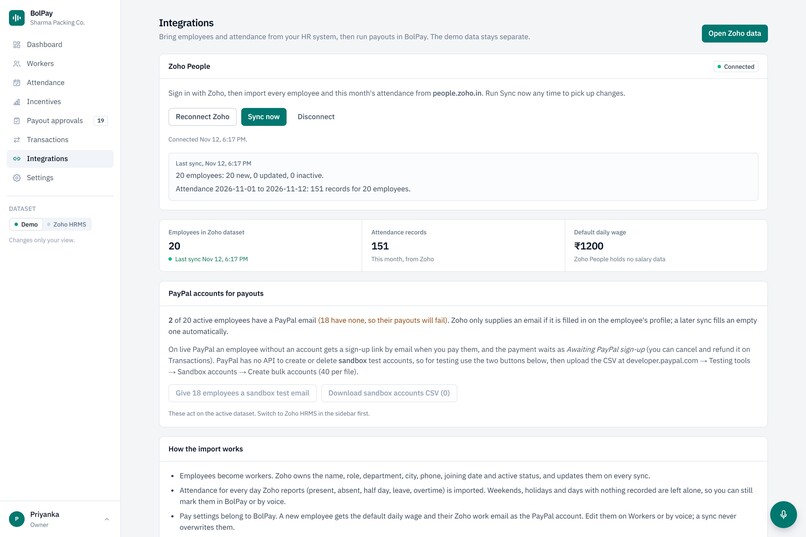
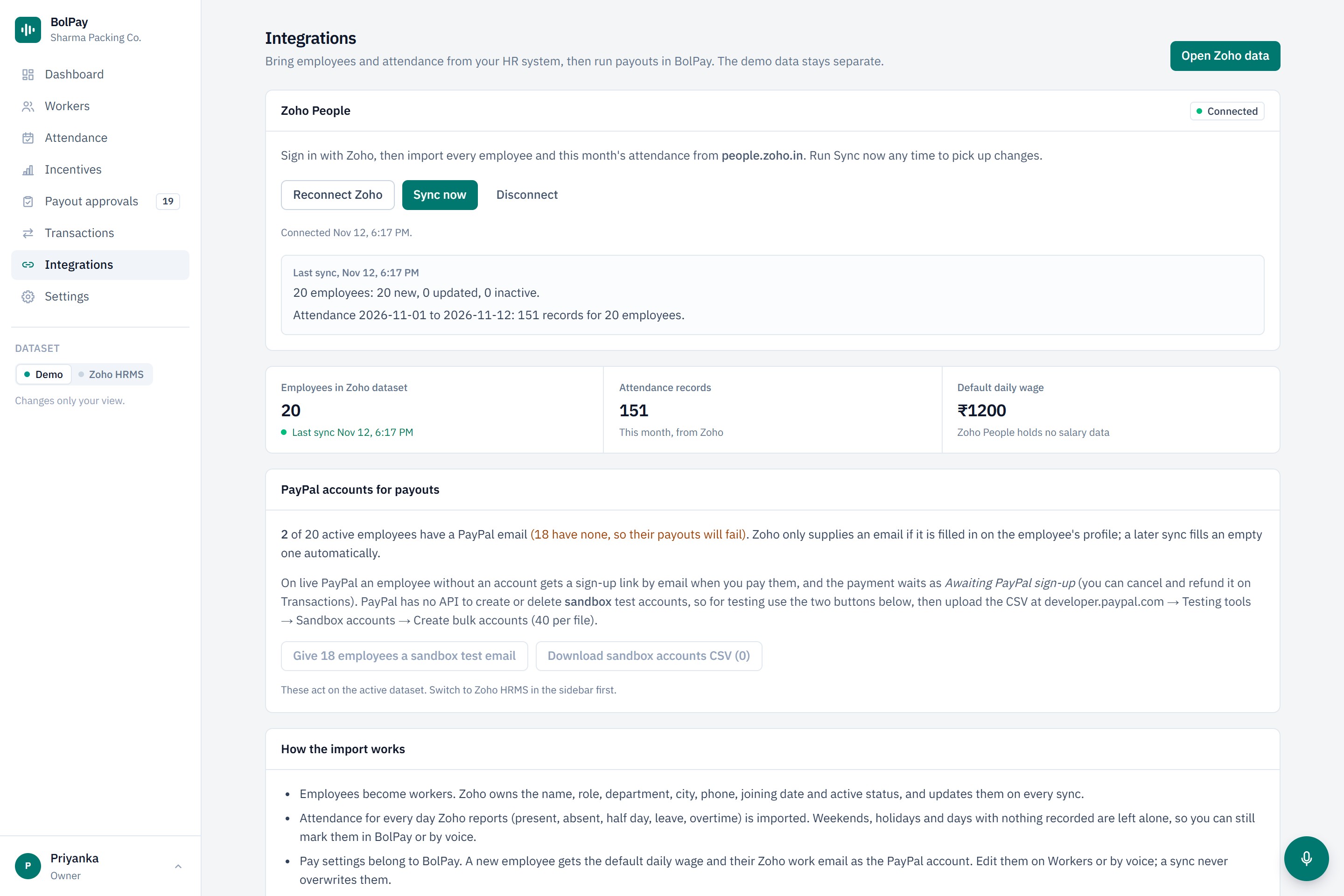
Integrations
-
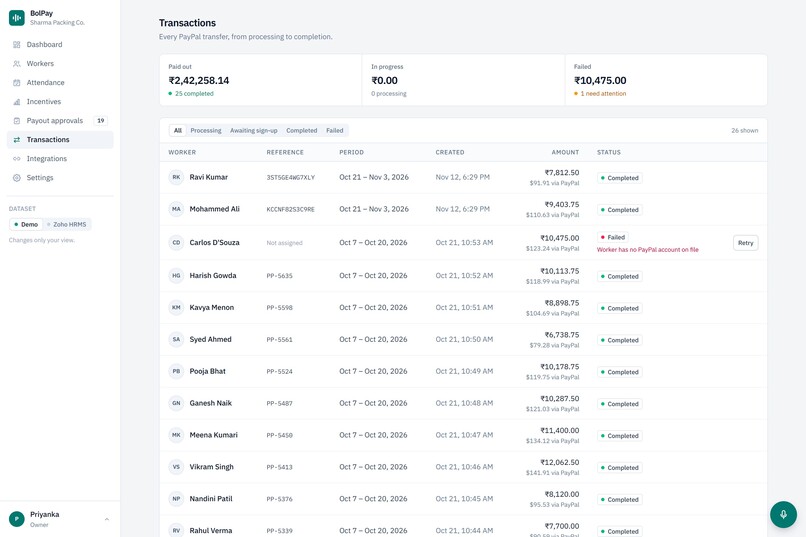
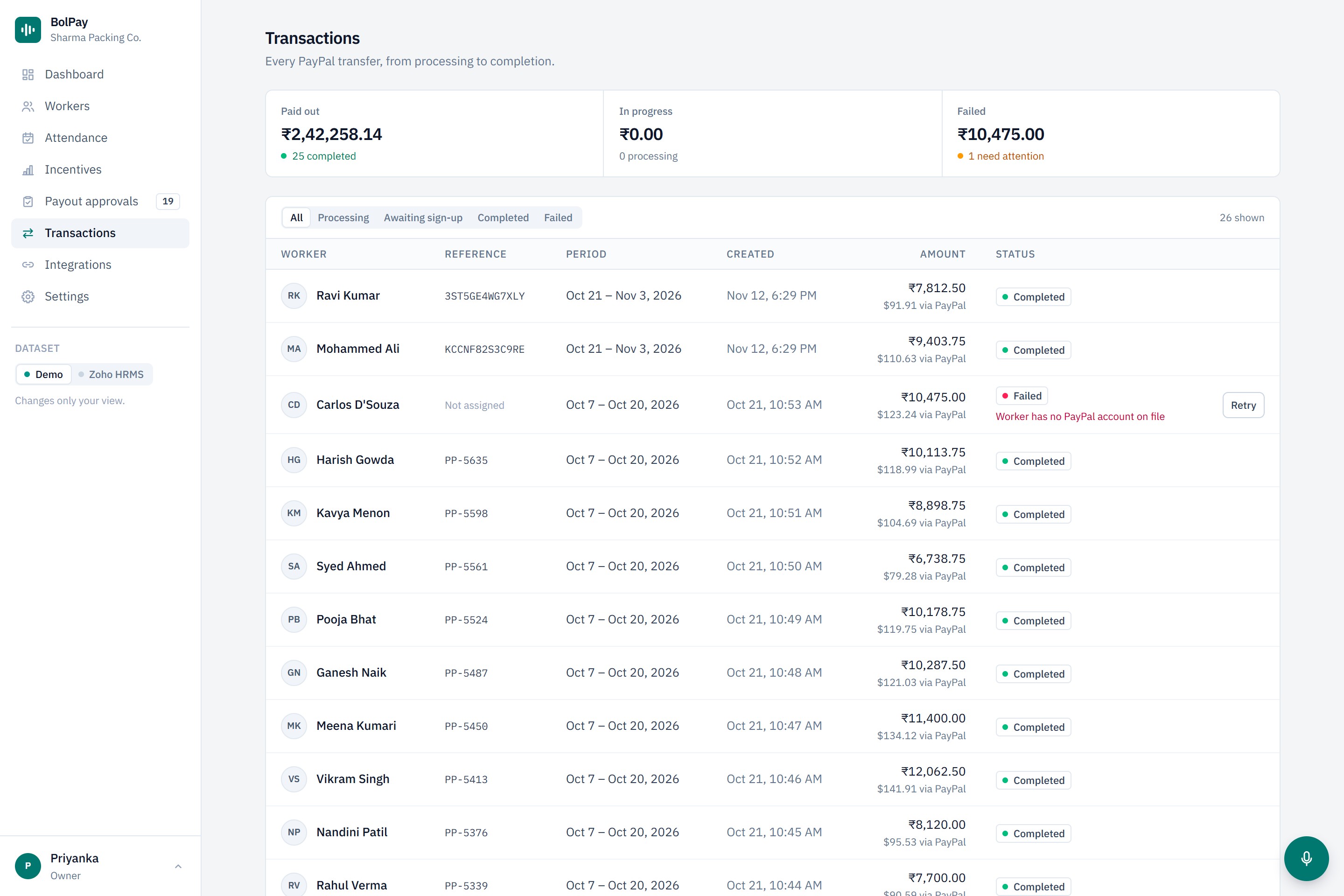
Transaction
-
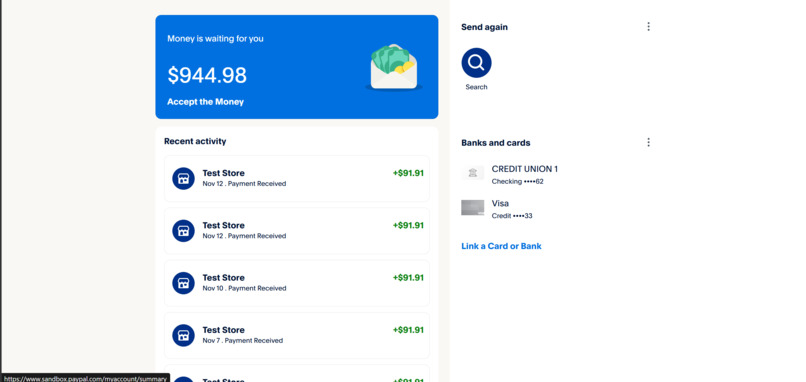
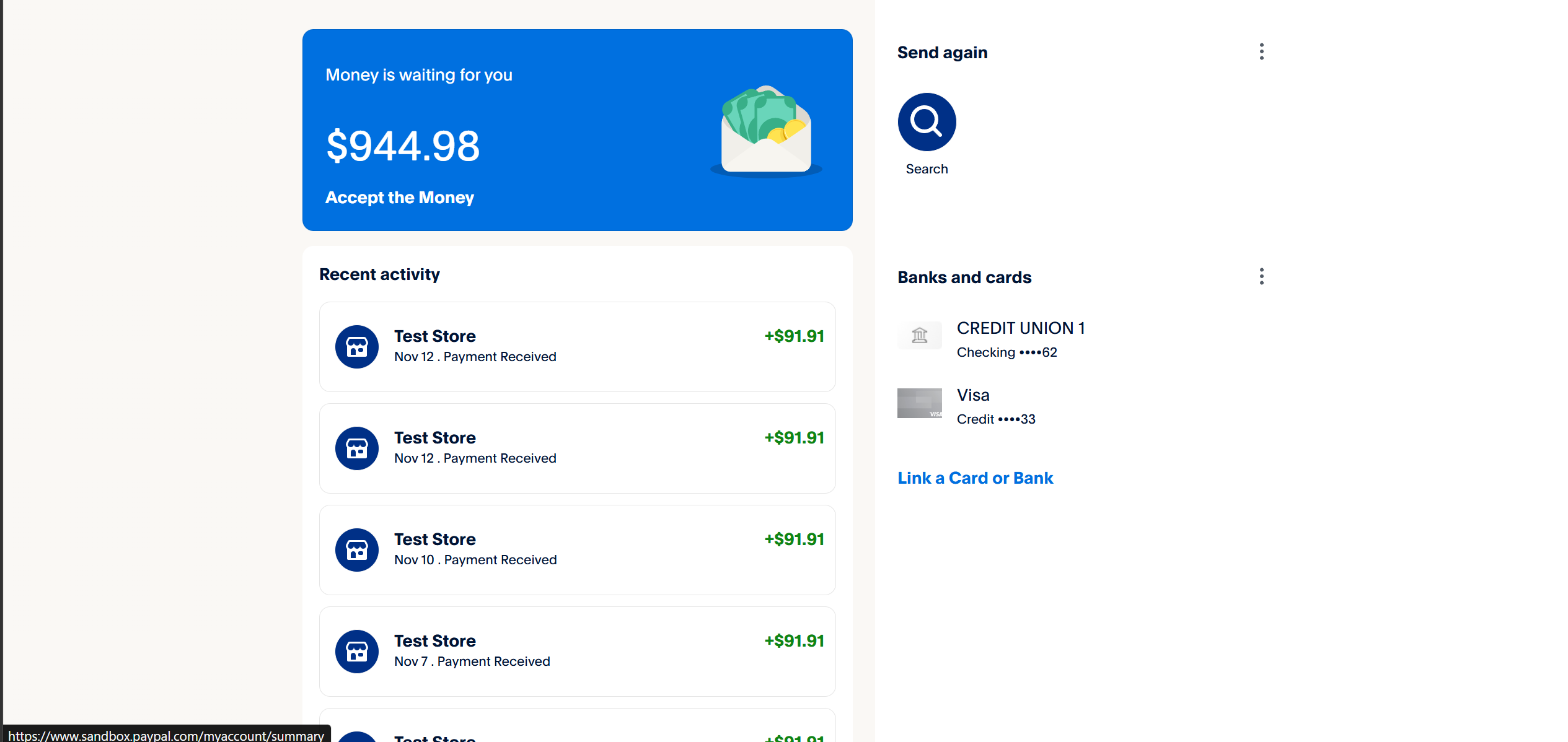
Live Payment on Paypal Sandbox
-
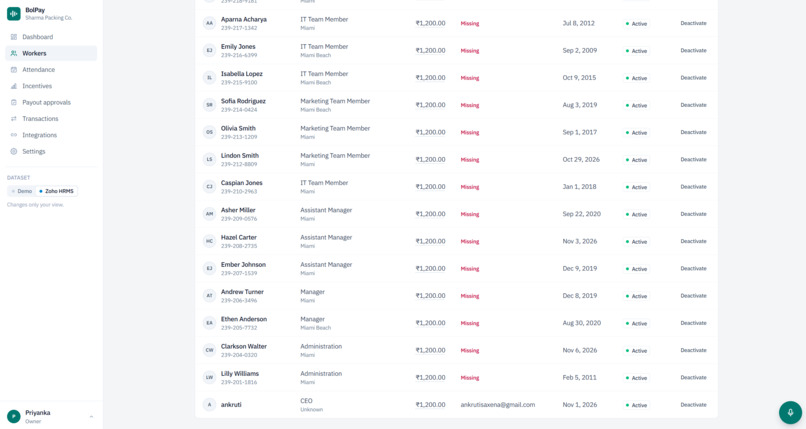
Zoho Fetched Worker Data with their Attendance
-
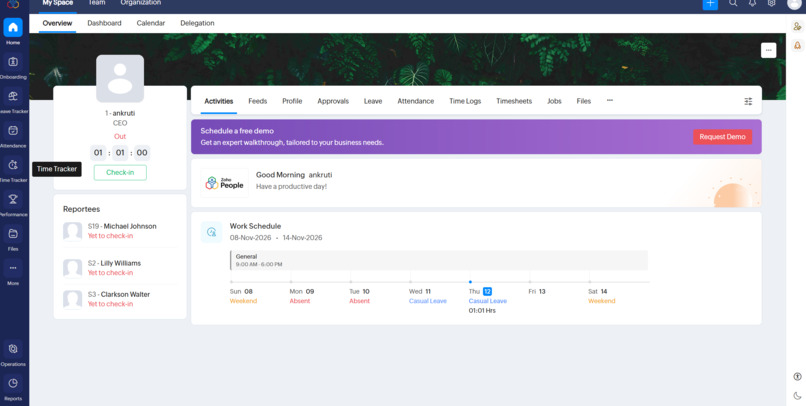
Zoho Portal Attendance
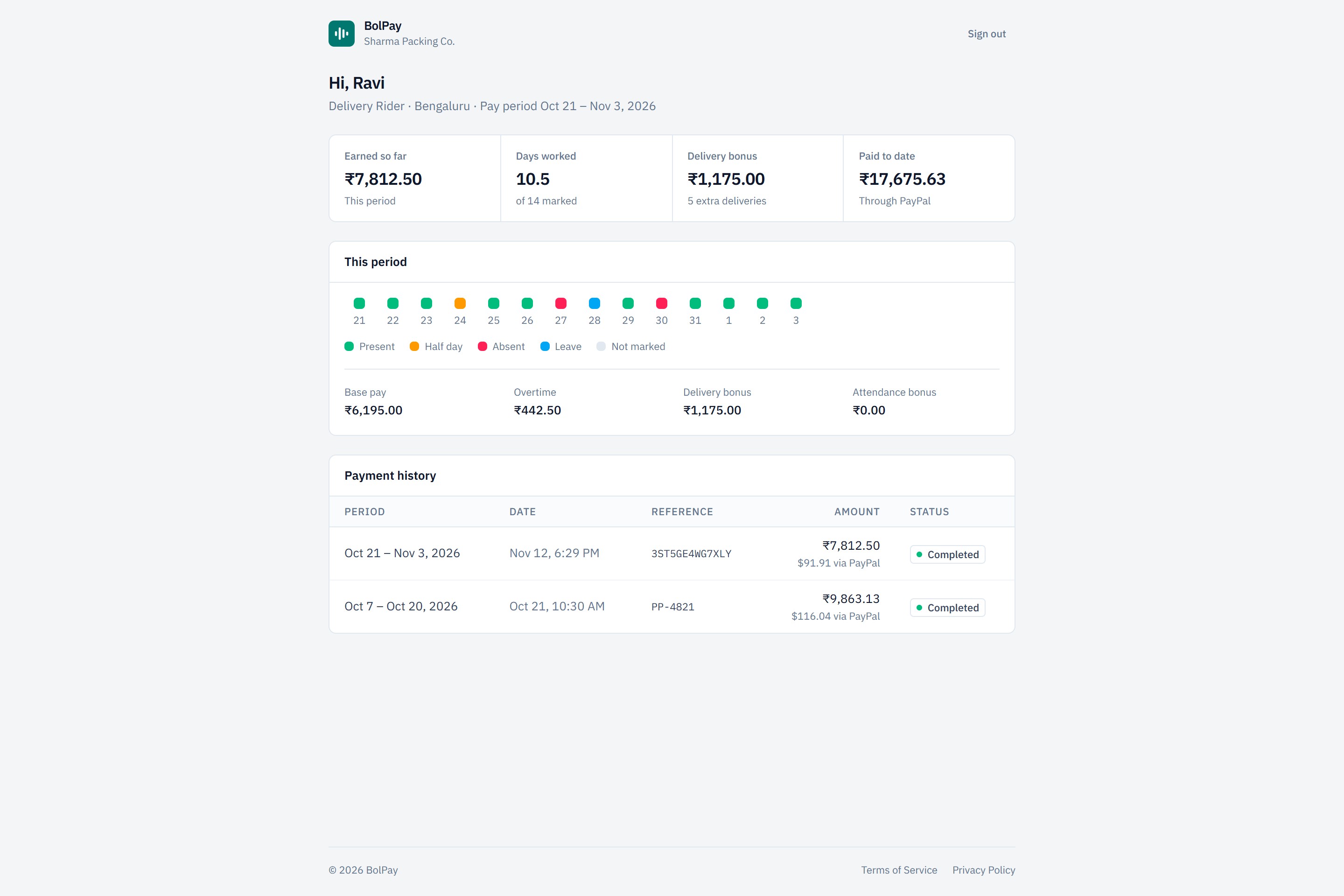
Inspiration
It takes a manager five seconds to decide who gets paid what, and a few hours to make it true. "Anita was absent, Ravi did 15 extra deliveries, pay everyone." That is how decisions about pay are really made. Then the real work starts: exports, formulas, a second look at the totals, and a quiet worry that one wrong cell means someone gets paid the wrong amount.
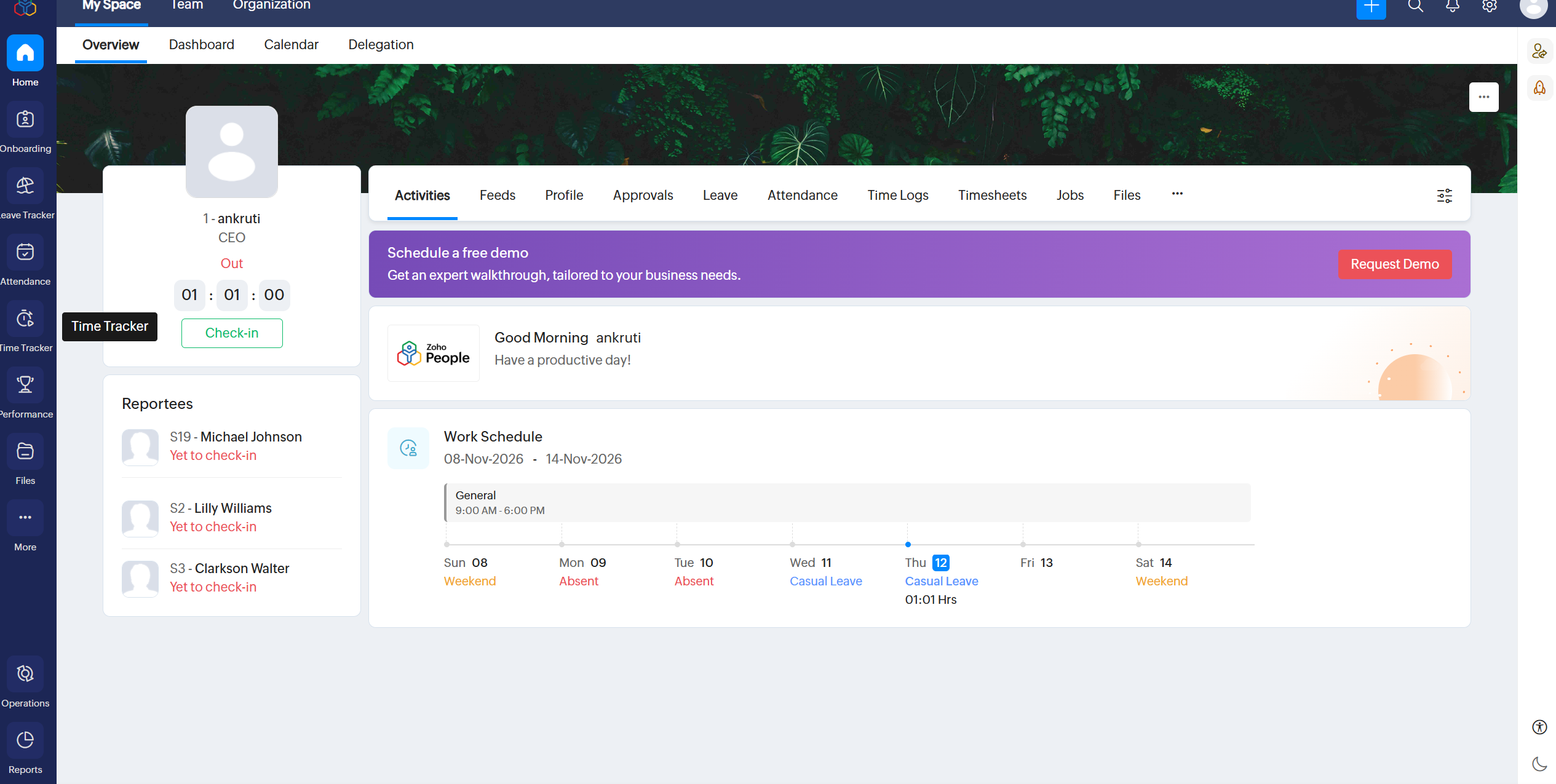
HR platforms like Zoho People already keep employee records, attendance and leave in good shape. We connected a real Zoho account while building this, and that part works well. The step that stays manual is the one right after the decision. We saw the same gap well beyond delivery businesses. Sales teams chase commissions, factories track shift bonuses, agencies pay freelancers, and offices sort out overtime and reimbursements.
One of us builds AI pipelines for a living, and one lesson keeps coming back. A language model is very good at understanding what someone means, and not good enough to be trusted with a number. At work we put checks around model output before anything depends on it. That habit is why BolPay is built the way it is.
We wanted to build a playform that sits on top of the tools a company already uses and listens to the sentence a manager would say anyway. The model only understands the request. Fixed rules calculate the pay, and a person sees the exact amount and says yes before PayPal sends anything.
You're right. The section is thin on the agent, which is your strongest part, and it also cuts off mid sentence. Here is a replacement that puts the agentic work first. I drew it from your draft and PRD sections 15.2 and 15.3 (VC-1 to VC-8).
What it does
BolPay is a voice agent that runs payroll. You say what you need in one breath, in Hindi, English or a mix, and it handles the whole job.
One sentence, many actions. Say "Anita was absent, Ravi did 15 extra deliveries, prepare payouts for everyone." The agent turns that into an ordered plan of tool calls: mark attendance, record deliveries, then prepare the payout batch. It shows you the plan before anything runs, then executes the steps in the order you said them. If a step fails, it stops there.
It asks instead of guessing. If a name is ambiguous or a number is missing, it asks one short question and continues the same request once you answer. The conversation lives on the server, so tapping the mic again, closing the panel or reloading the page doesn't lose it. Saying "confirm" runs the saved plan and "cancel" drops it.
Everything the screens do, by voice. The agent has 15 tools. It can record attendance, overtime and deliveries, prepare, approve, reject and retry payouts, refresh statuses, add or update workers, change rules and tiers, answer questions and navigate the app. It can also target people in different ways: by name, "everyone", "everyone except", a city, or a filter like missing attendance.
Money always pauses. Before any approval or retry, the agent stops and shows the exact payment count and totals in ₹ and US$. If earlier steps in the same plan change those numbers, it pauses again with the real figures. The model never calculates an amount and never decides to execute.
Around that core:
- A rules engine calculates pay from attendance, overtime, performance and delivery tiers, and shows the breakdown for every worker.
- Anyone with missing or conflicting records lands in Needs Review and can't be approved until someone fixes the data.
- Owners approve, supervisors record attendance and prepare payouts, and workers see only their own pay.
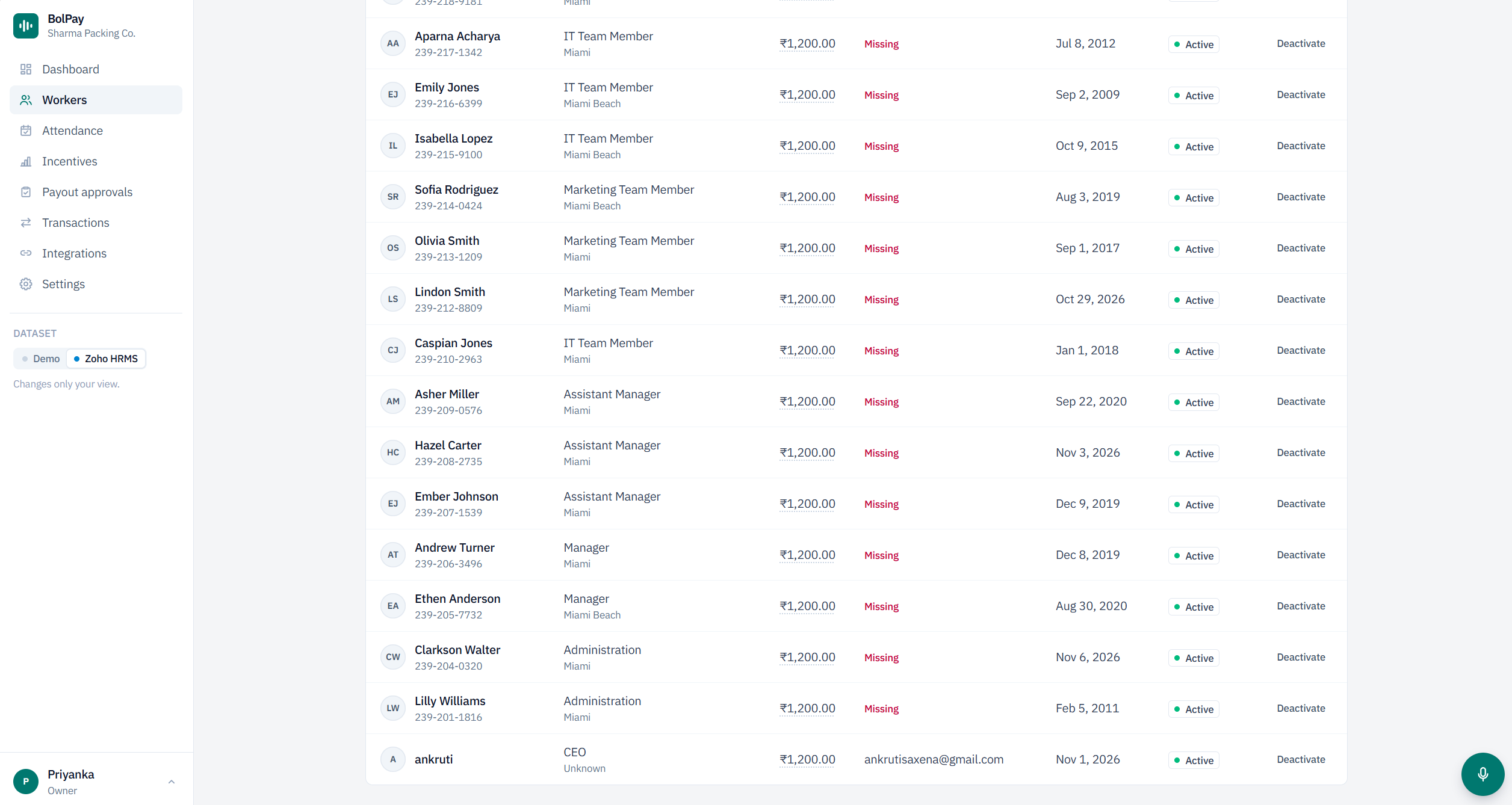
- A real Zoho People account can be imported in one click, with employees and attendance coming across.
- If someone has no PayPal account yet, BolPay shows "awaiting sign up" instead of pretending the payment is stuck.
Challenges we ran into
Keeping the AI useful and still harmless was the real work. A model that can say "pay Ravi" is only safe if it cannot choose how much, or which Ravi. Building the resolver and the checkpoint took more time than the voice part itself.
PayPal had its own surprises. India business sandbox accounts cannot send payouts, so we moved to a US business sandbox app and settled rupee amounts in dollars. Payments to emails without a PayPal account come back as unclaimed, and the sandbox returned an internal error when we tried to cancel them, so we made the interface report that honestly rather than hide it. Zoho's sample employees had no email addresses, so we added a way to give them sandbox test emails.
We also fought the plumbing. Streaming text to speech responses would not record in our test browser, Turbopack sometimes served a stale copy of a server file, and we had to make hosting work with a disk backed database.
Accomplishments that we're proud of
The whole loop is real. One spoken sentence turns into an approved plan, a confirmed total, a live PayPal payout that completes, and money appearing in the worker's sandbox account. A human sees exact numbers before any of it moves. We are also proud that the safety rules are in code, not in a prompt, so they hold even when the model gets something wrong. And the Zoho import works against a real account, not a mock.
What we learned
People trust a system that shows its numbers and asks twice before money moves, much more than one that sounds clever. Putting a deterministic engine behind a language model made the product both easier to talk to and safer. We also learned how much of a payments product is edge cases: retries, unclaimed money, rate conversion and webhooks arriving out of order. We're proud that one sentence with three intents becomes three checked tool calls and ends in a real PayPal payout.
What's next for BolPay
Live payments with proper verification, more HR tools beyond Zoho, a worker app where people can claim their pay and update their own details, and support for local payment rails like UPI alongside PayPal.
Built With
- ag-grid
- agentic
- commerce
- elevenlabs
- groq
- next.js
- paypal-payouts-api
- paypal-sandbox
- react
- supabase
- tailwind-css
- typescript
- vercel
- zoho-people-api


