-
-
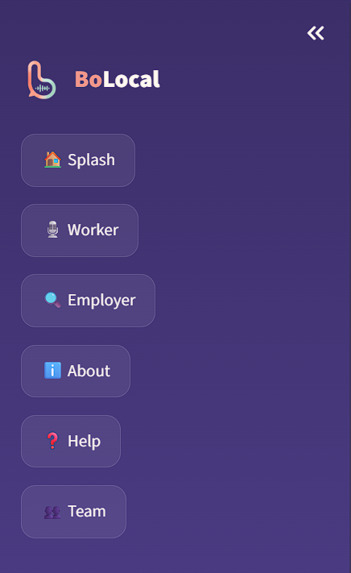
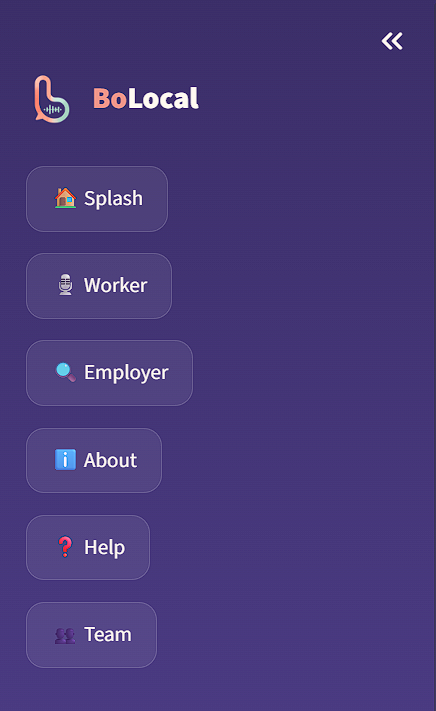
The side bar - Contains All the Buttons
-
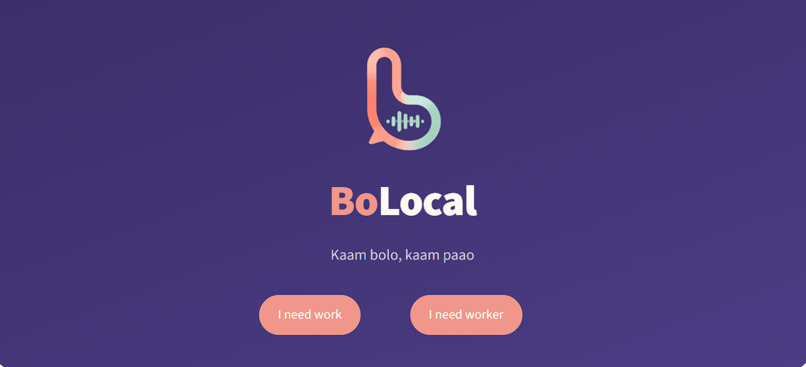
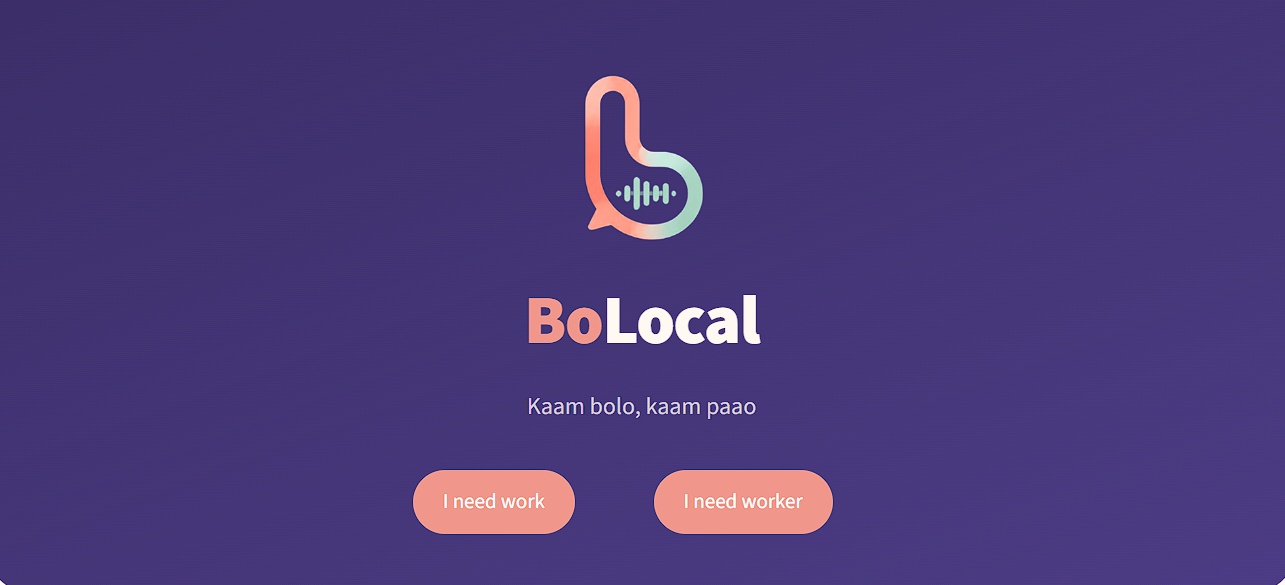
Splash- Main screen - where you can find work or worker.
-
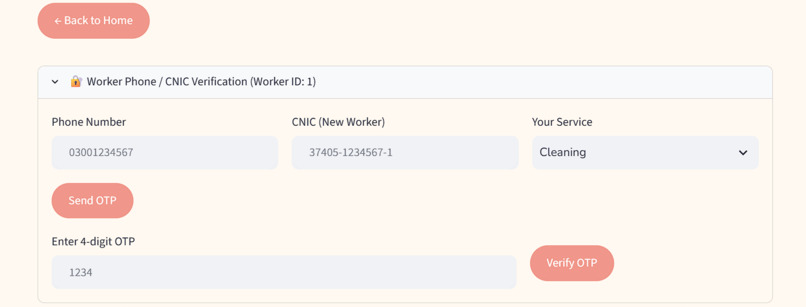
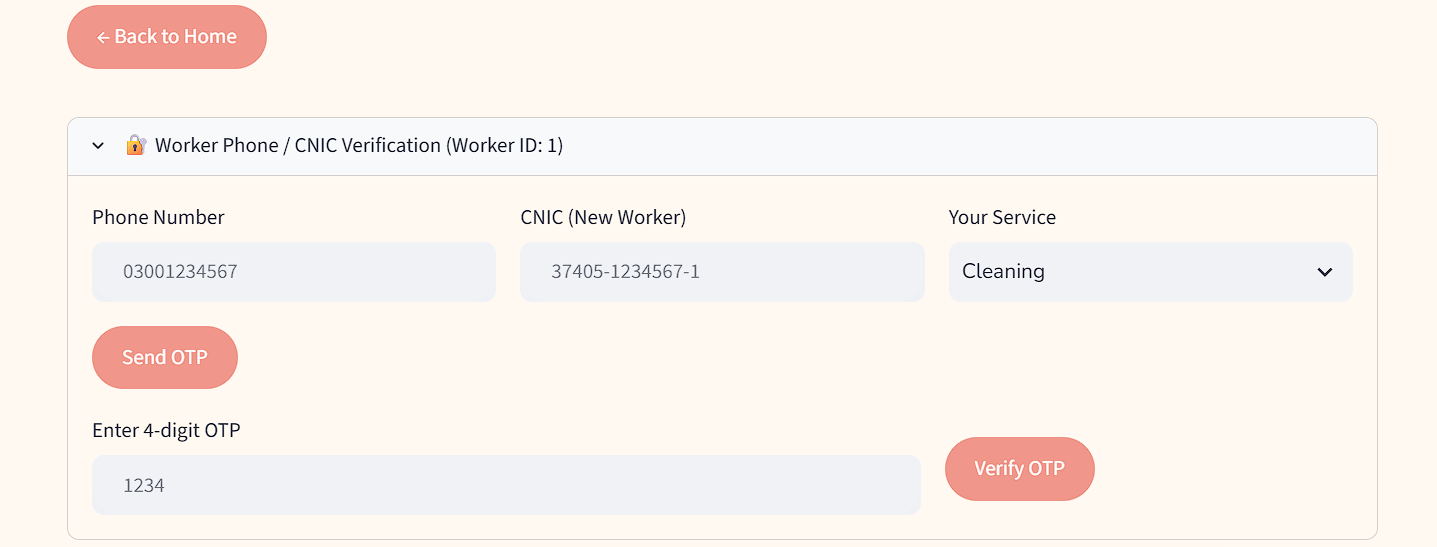
CNIC verification system only the person above 18 can create an account
-
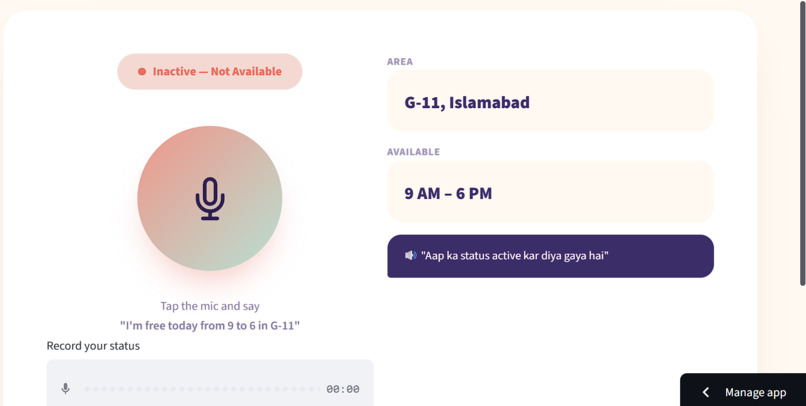
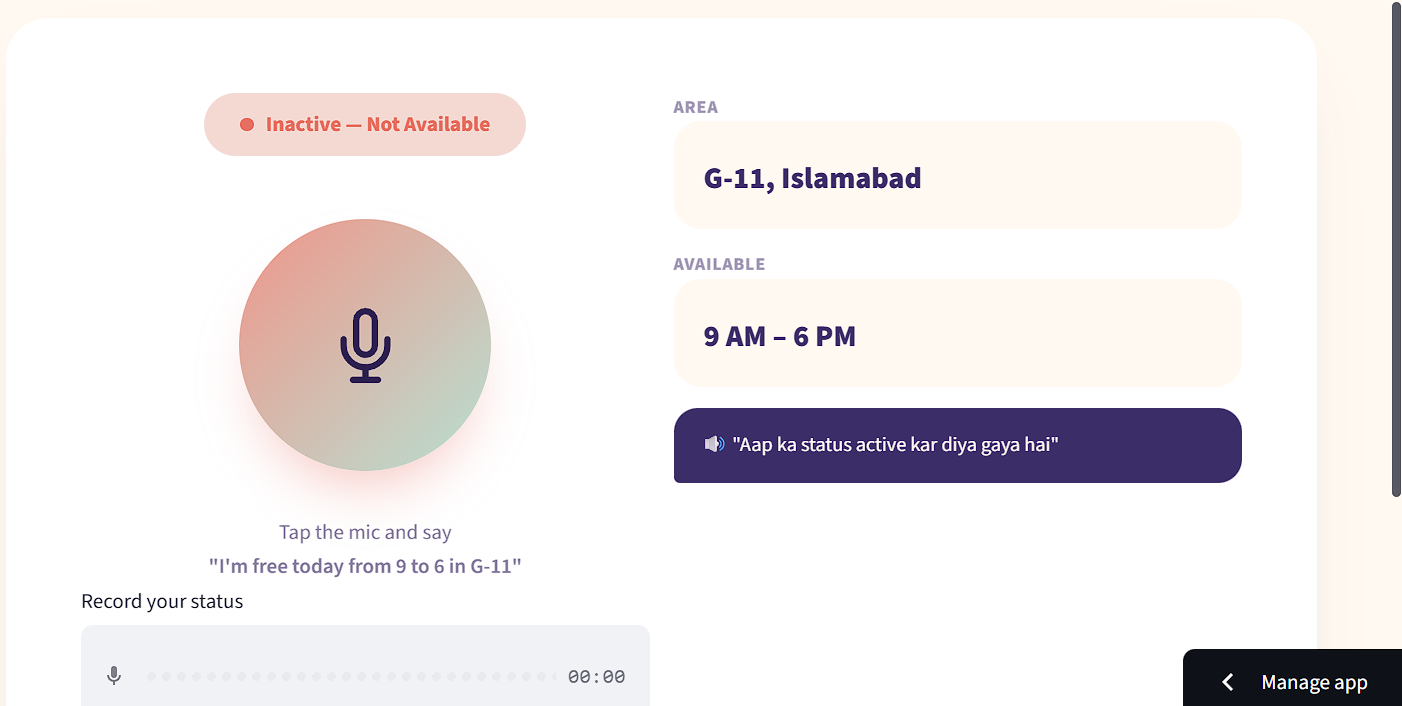
Worker Dashboard- Just simply voice and AI will update your Status from inactive to active
-
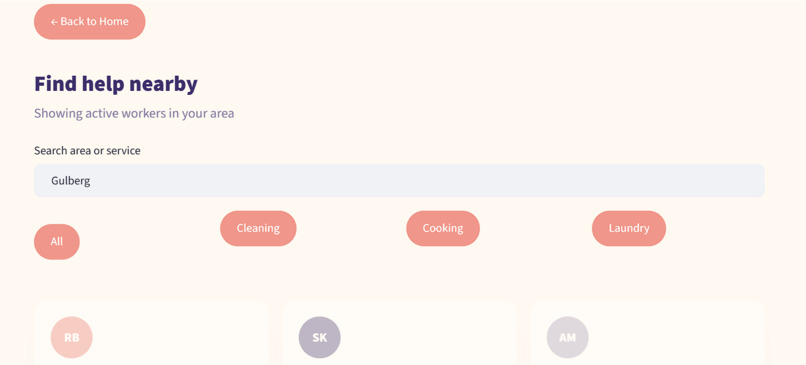
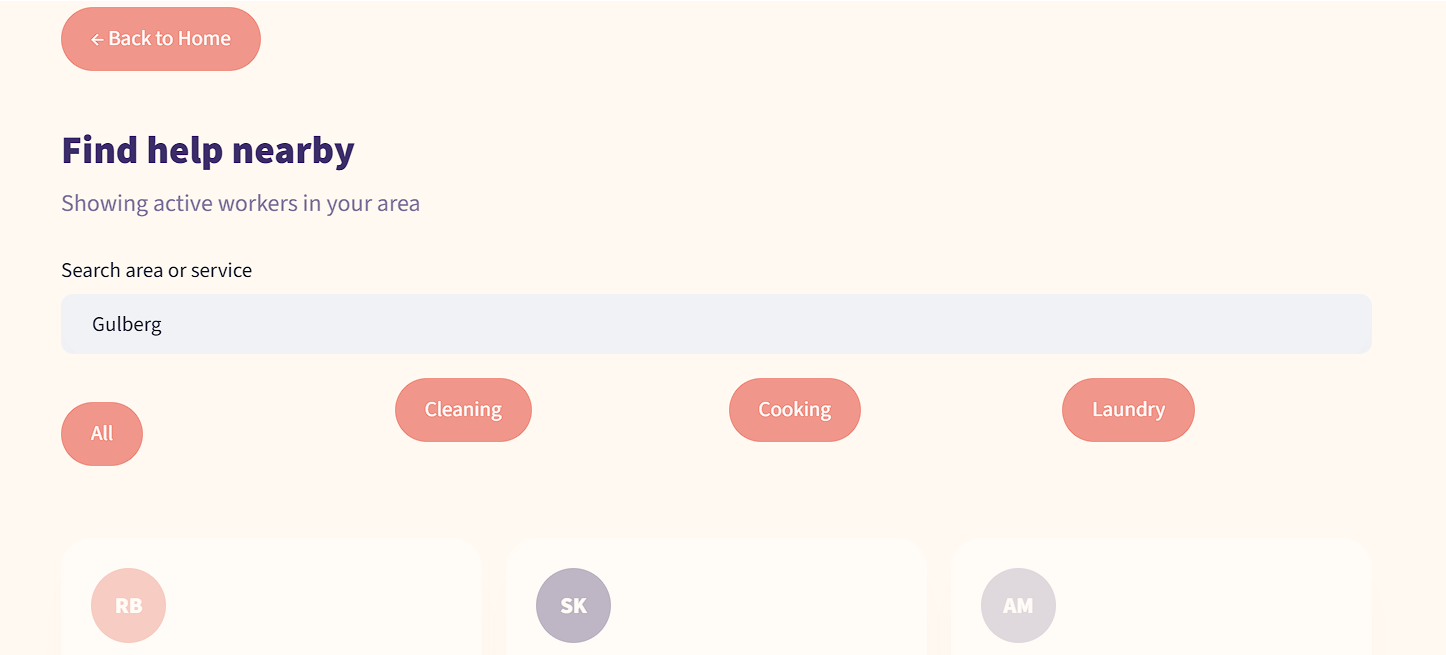
Employer section where Worker will be listed and can be chosen by their services
-
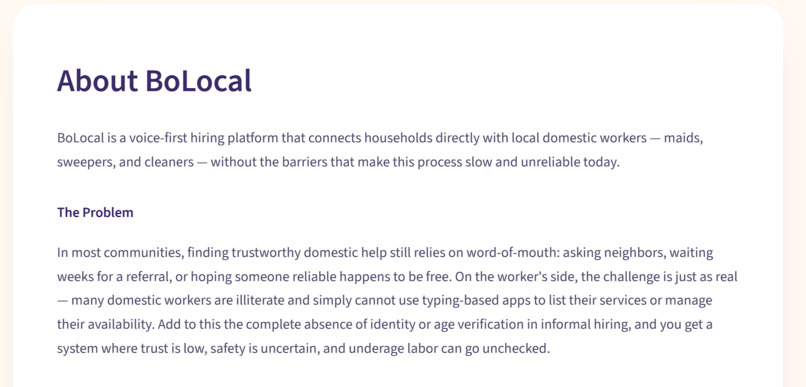
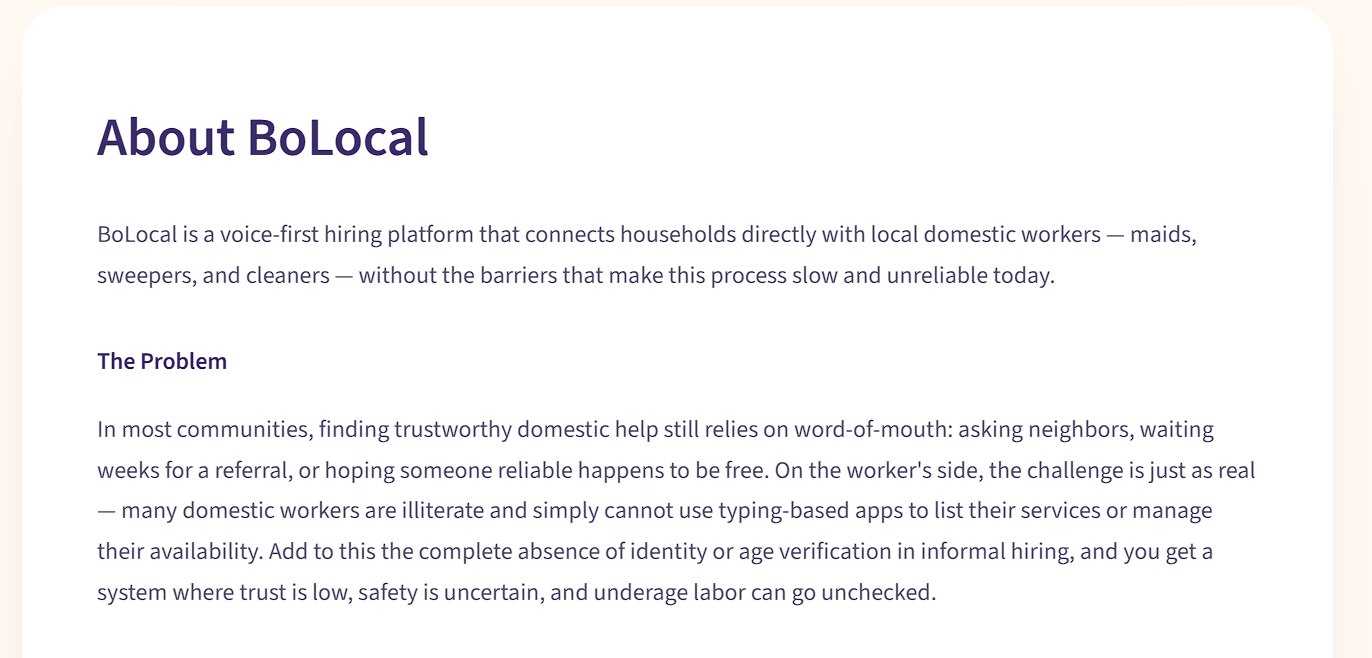
About Section- where you can read problem, solution and overview of BoLocal
-
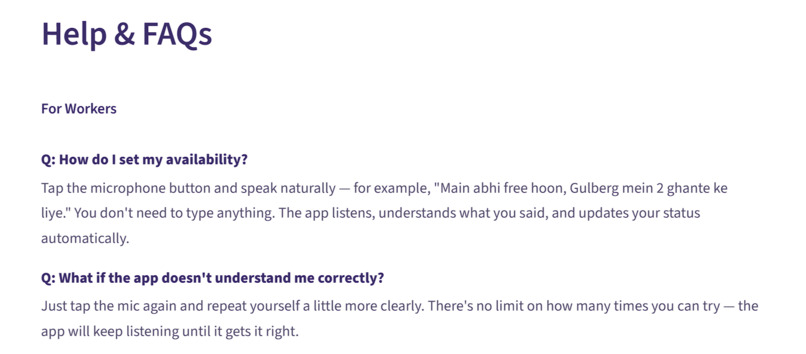
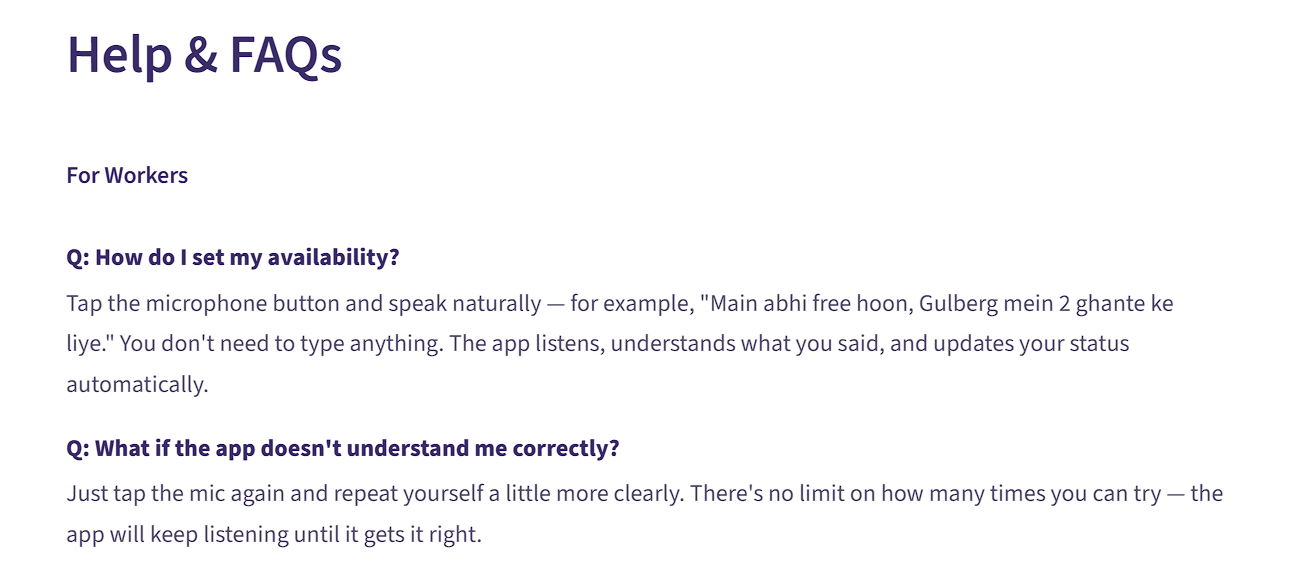
Help Section where we add FAQS, person can ask while using BoLocal
-
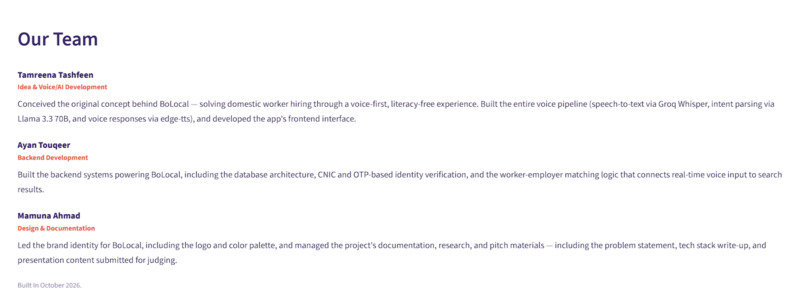
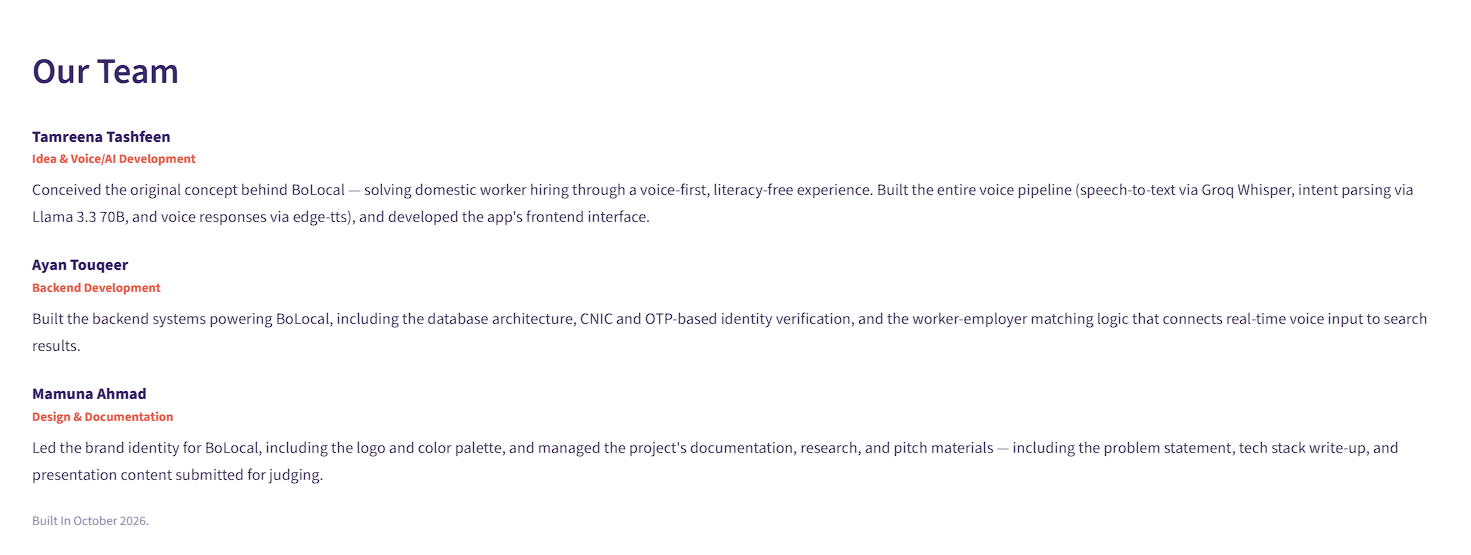
Team of Bolocal
Inspiration: We were inspired by the struggles of local workers who often depend on personal contacts and word-of-mouth to find employment. Despite their skills, hard work, and experience, many remain unseen and unheard simply because they lack literacy, digital access, or opportunities to showcase their abilities. At the same time, families struggle to find trustworthy workers they can confidently welcome into their homes. We believe that every hardworking individual deserves equal access to opportunities, regardless of their literacy or background. This belief inspired us to build a platform that bridges the gap between workers seeking dignified employment and families seeking reliable help, creating a world where talent is recognized, trust is valued, and no one is left behind.
What it does: BoLocal is a voice-first local employment platform that connects workers, such as maids, cleaners, and sweepers, with employers seeking their services. Workers can use their voice to showcase their skills, describe their services, and update their availability without needing to write. AI converts their speech into searchable information, while employers can find suitable workers through voice or text searches. The platform also incorporates CNIC-based identity verification and an 18+ age requirement to promote safer and more trustworthy hiring. BoLocal makes local workers easier to discover and helps families find suitable, verified service providers.
How we built it: We built BoLocal using Python and FastAPI for the backend, with SQLAlchemy and SQLite for data storage. Our voice pipeline uses Groq's Whisper-large-v3-turbo for speech-to-text, a Groq-hosted language model for interpreting spoken requests and extracting structured information, and edge-tts for generating spoken responses. We used Pydantic for data validation and Tenacity for retry handling. We also developed an employer-side voice search and parsing pipeline so that the system can process hiring requirements, rather than focusing only on worker registration.
Challenges we ran into: Our biggest challenge was making BoLocal understand real-world Pakistani speech accurately. Since many local workers communicate in Urdu rather than English, we tested the system with different accents, pronunciations, and speaking styles. Some accents were difficult for the AI to recognize, and Urdu speech was sometimes incorrectly transcribed as Hindi due to similarities between the two languages. We had to refine our voice-processing pipeline to better recognize Urdu as the intended language and make the system more reliable for Pakistani users.
Accomplishments that we're proud of: We are proud that we did not just identify the flaws in our idea but worked to address them and turn our vision into a working prototype. One of our biggest achievements was demonstrating how CNIC-based verification could fit into BoLocal, even though integrating a real verification system requires authorized access to NADRA's data and services. Rather than abandoning this essential feature because we lacked that access during the hackathon, we represented the verification concept in our prototype to help judges understand how it would work in the actual business model. We are proud of our ability to turn real-world challenges into practical solutions, refine our approach, and demonstrate a clear path from prototype to a scalable platform.
What we learned: We learned that limited resources do not mean limited possibilities. By working together, sharing ideas, and trusting our team, we found alternative solutions to challenges that seemed impossible at first. AI helped us write code, but human creativity, critical thinking, and teamwork helped us find alternatives and turn our vision into something unique. We realized that innovation is not just about using AI; it is about knowing how to solve problems when things don't go as planned.
What's next for BoLocal: Our next big step is to integrate authorized CNIC verification into BoLocal, moving beyond our current prototype toward genuine identity verification. Combined with our voice-first AI system, this would help families hire with greater confidence while making employment opportunities more accessible to local workers, regardless of their literacy level. Our goal is to build a platform where accessibility and trust work together.
Built With
- claud
- edge-tts
- fastapi
- groq
- groq-llama-3
- llm
- natural-language-processing
- postgresql
- pydantic
- sqlalchemy
- tenacity
- uvicorn


Log in or sign up for Devpost to join the conversation.