Inspiration
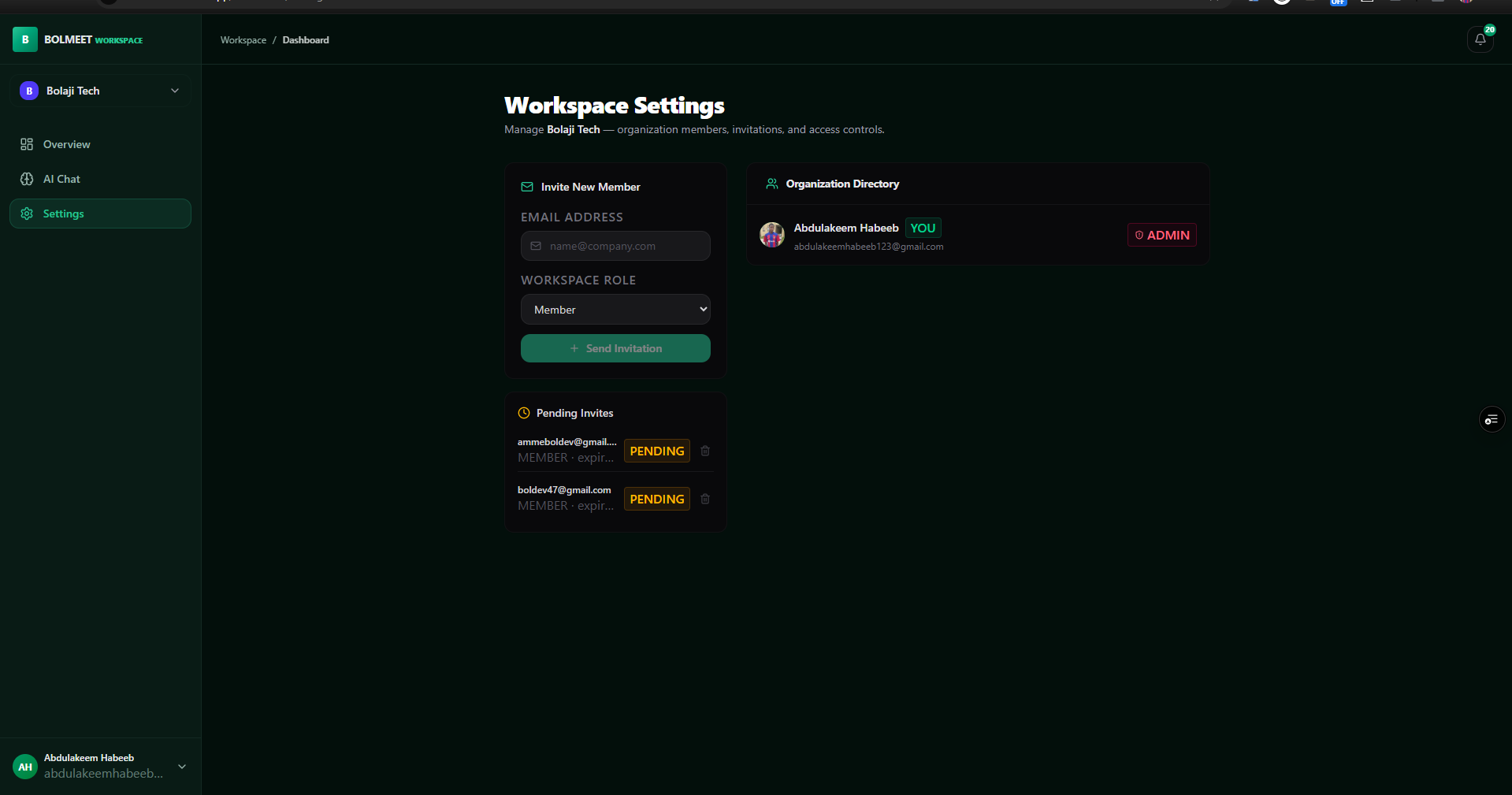
Modern meeting platforms help people communicate, but they still leave teams with a lot of manual work after every meeting. Someone has to remember decisions, create tasks, summarize discussions, search previous meetings, and follow up with teammates.
I wanted to build something different.
Instead of another AI meeting assistant that only generates summaries, I wanted to create an autonomous AI teammate that actively understands meetings, reasons over organizational knowledge, and performs meaningful work before, during, and after every meeting.
That vision became BOLMEET AI.
What it does
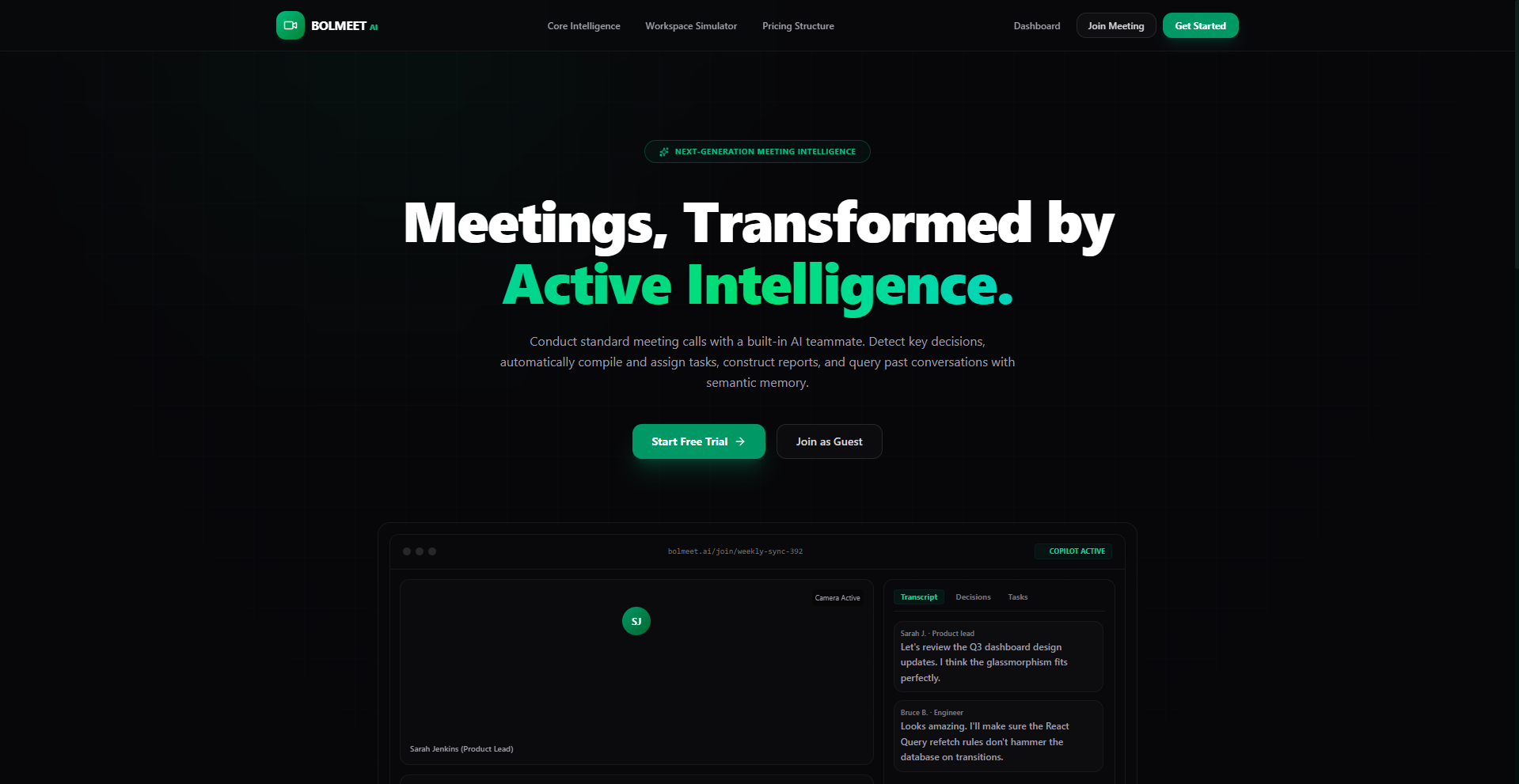
BOLMEET AI is an autonomous meeting intelligence platform powered by an AI agent named BOL.
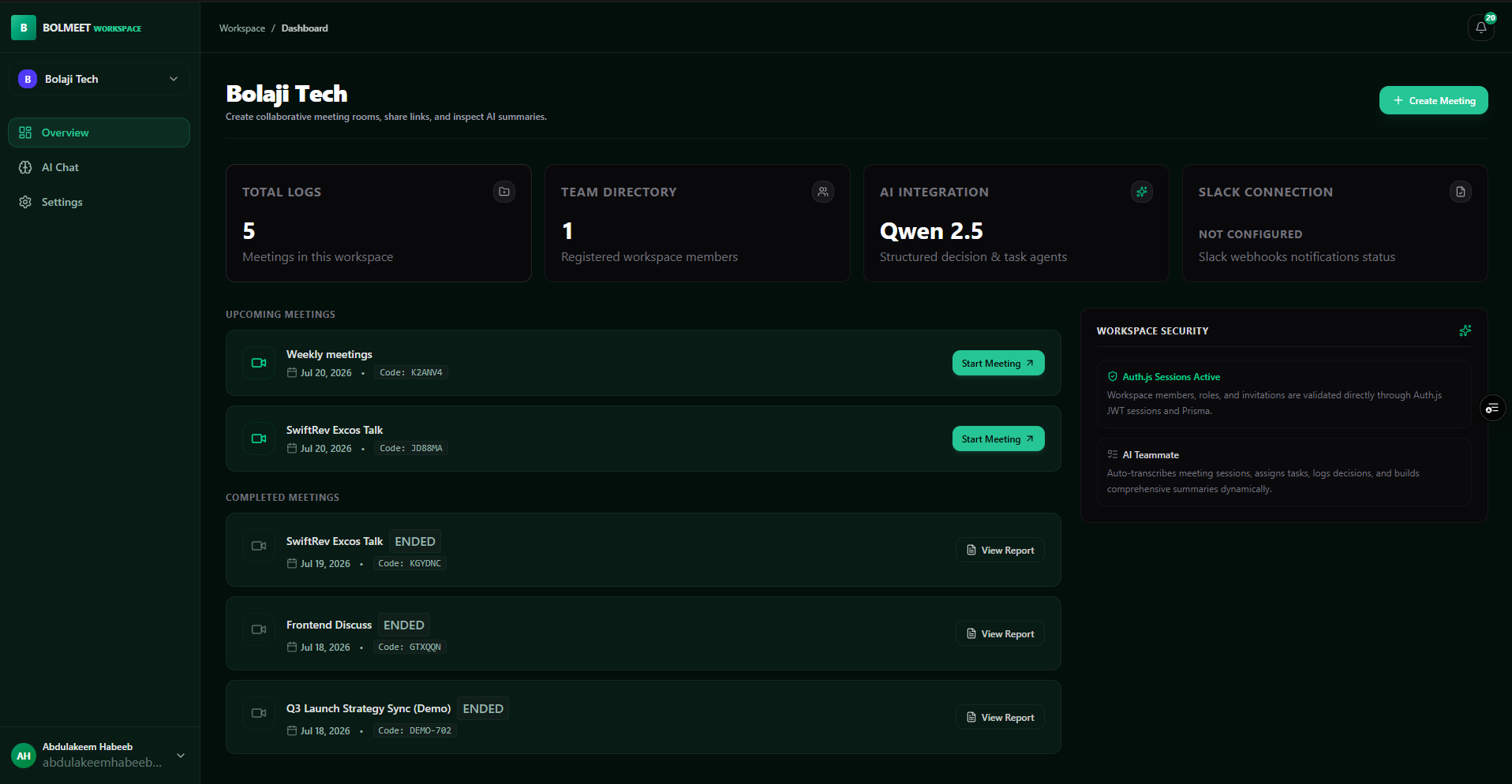
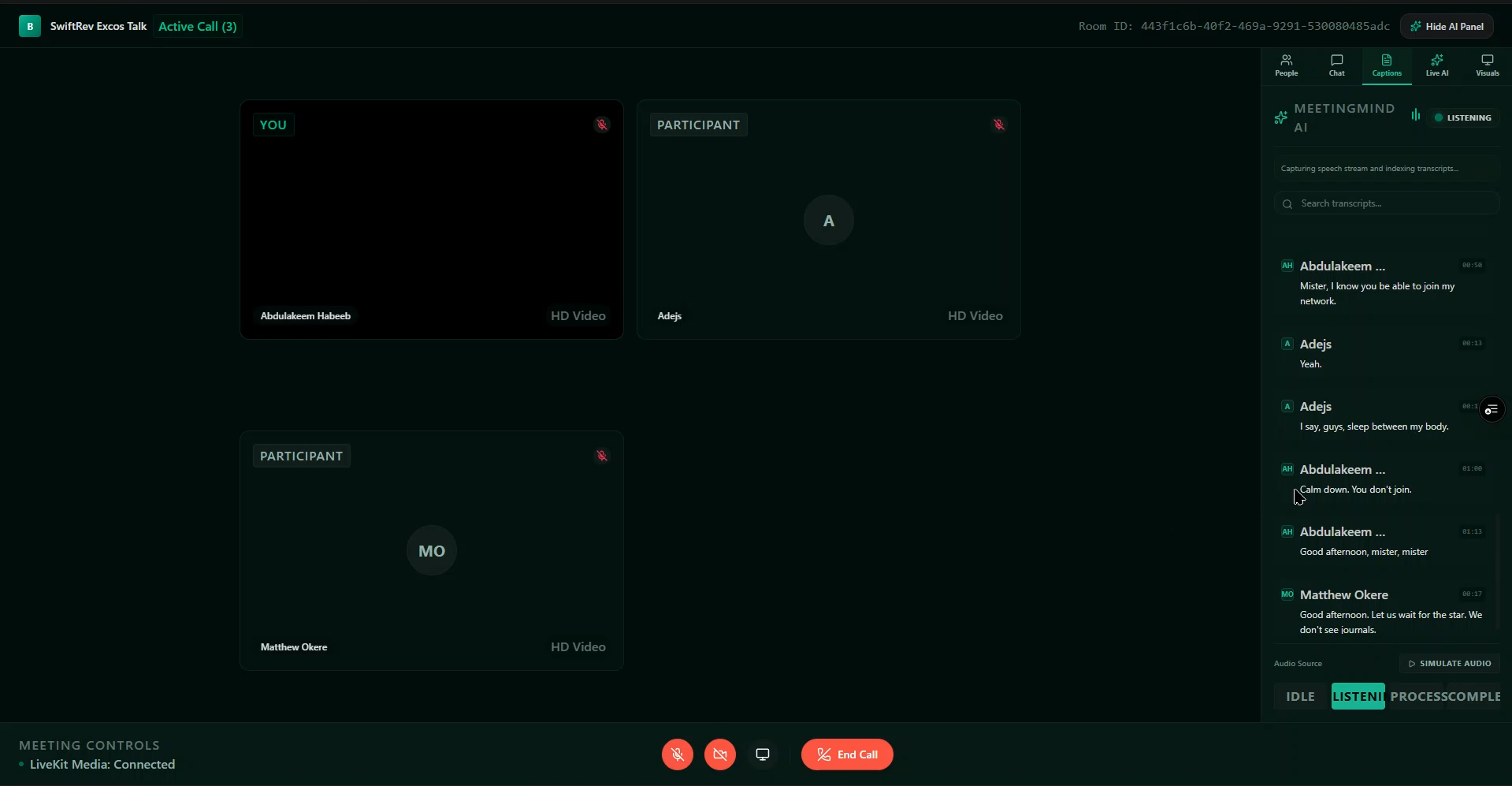
During meetings, BOL continuously observes conversations, analyzes live transcripts, understands presentation screenshots, and builds contextual awareness of the discussion.
Instead of relying on isolated AI features, BOL reasons about the meeting as a whole before selecting the appropriate tools to complete tasks.
After meetings, BOL can:
- Generate intelligent meeting summaries
- Extract key decisions
- Create actionable tasks
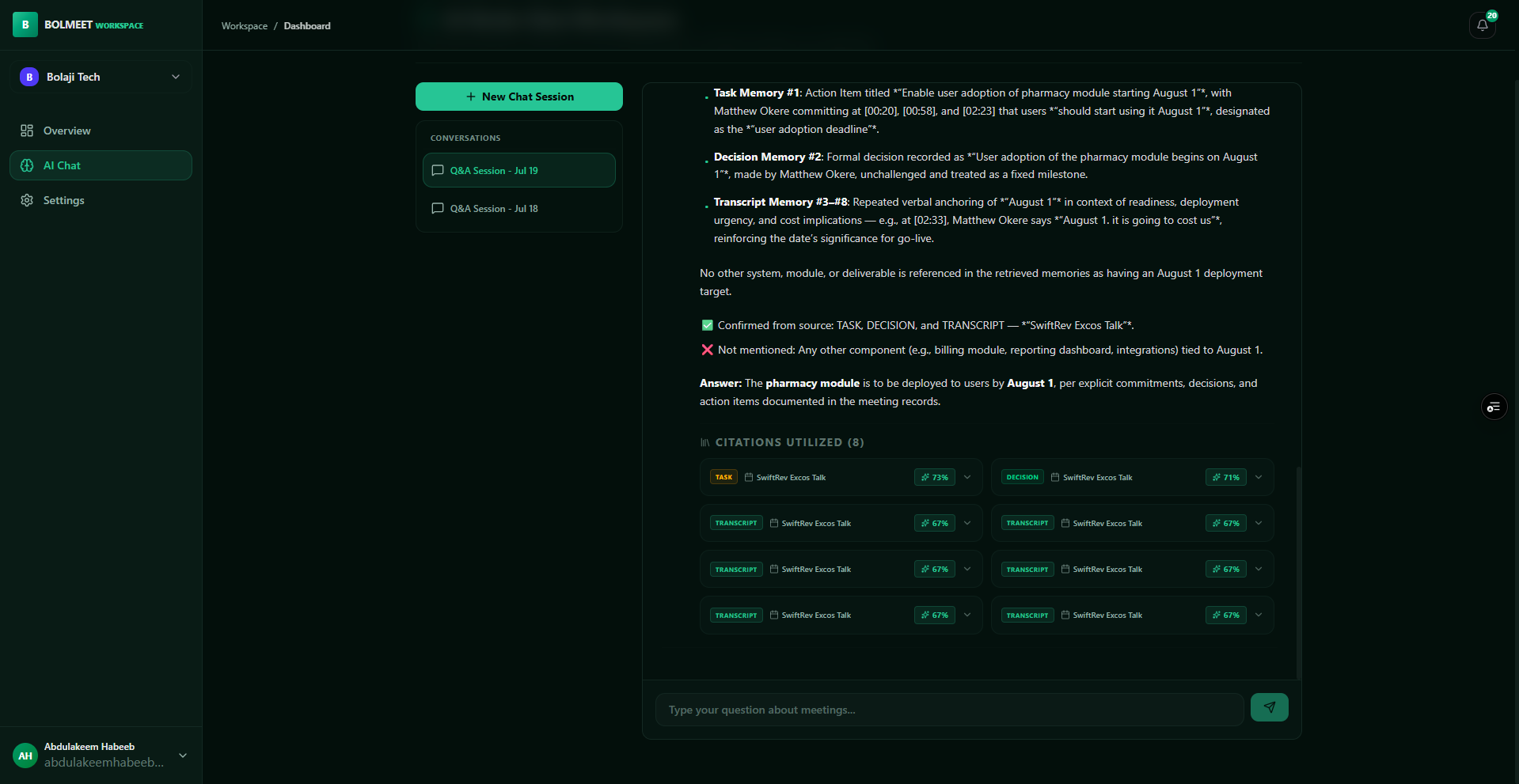
- Update organizational memory
- Detect conflicts with previous meetings
- Generate follow-up plans
- Send Slack notifications
- Answer questions across historical meetings
Rather than simply responding to prompts, BOL behaves like an AI teammate that plans, executes, reviews, and explains its work.
How I built it
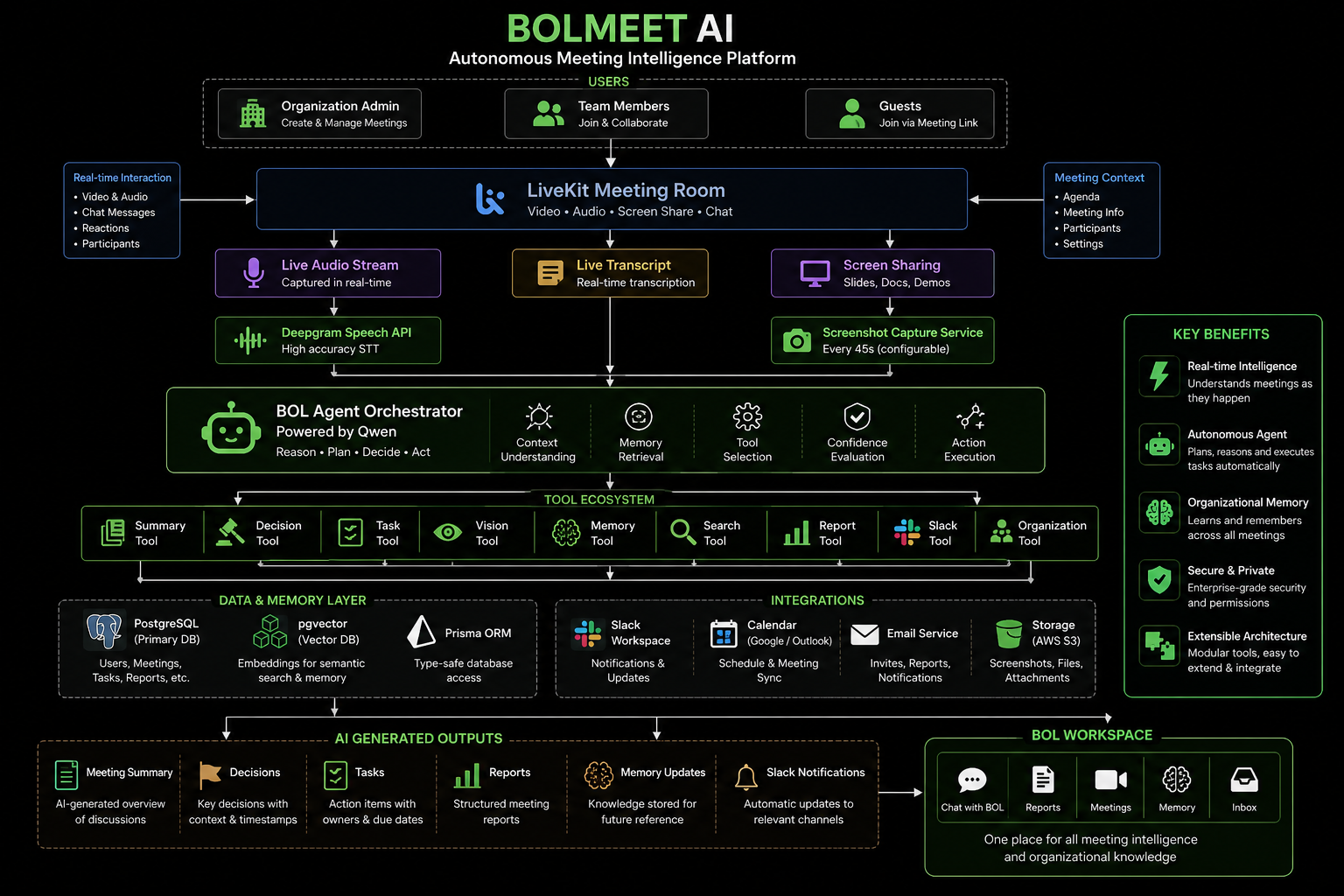
The application is built with a modern full-stack architecture using Next.js, TypeScript, PostgreSQL, Prisma, LiveKit, and pgvector.
The AI system follows an agent-based architecture consisting of:
- BOL Orchestrator
- Execution Agent
- Tool Registry
- Workflow Engine
- Organizational Memory
- Confidence Engine
- Human Approval System
Instead of hardcoding AI workflows, every capability is implemented as a reusable tool.
Examples include:
- Summary Tool
- Decision Tool
- Task Tool
- Vision Tool
- Memory Tool
- Search Tool
- Slack Tool
The Orchestrator reasons over meeting context, organizational memory, screenshots, and transcripts before selecting which tools to execute.
This architecture makes the platform modular, extensible, and ready for future multi-agent collaboration.
Challenges
The biggest challenge was designing an AI system that behaves like an autonomous teammate instead of a chatbot.
This required rethinking the architecture from independent AI features into an event-driven agent runtime capable of:
- Planning before acting
- Selecting appropriate tools
- Executing multi-step workflows
- Maintaining organizational memory
- Explaining its actions
- Requesting human approval when confidence is low
Another challenge was balancing autonomy with trust.
Rather than allowing AI to perform every action automatically, BOL includes a Confidence & Human Approval system that determines when actions should be executed autonomously and when user confirmation is required.
What I learned
Building BOLMEET AI reinforced that the future of workplace AI is not isolated prompts but autonomous agents capable of reasoning, planning, and collaborating alongside humans.
Designing reusable tools, structured workflows, persistent memory, and explainable AI proved to be just as important as choosing the right language model.
This project also deepened my understanding of agent architecture, event-driven systems, vector search, and production-ready AI engineering.
Future Plans
BOLMEET AI is only the beginning.
Future versions will include:
- Multi-agent collaboration
- Calendar automation
- Jira, GitHub, and Notion integrations
- Advanced organizational knowledge graphs
- Predictive project intelligence
- Cross-team analytics
- AI-powered meeting coaching
- Enterprise governance and security
Built With
- agent
- agents
- ai
- api
- auth.js
- css
- github
- livekit
- next.js
- node.js
- openai
- pgvector
- postgresql
- prisma
- qwen
- rag
- react
- sdk
- slack
- tailwind
- typescript
- vector
- vercel
- webrtc
- websockets


Log in or sign up for Devpost to join the conversation.