-
-
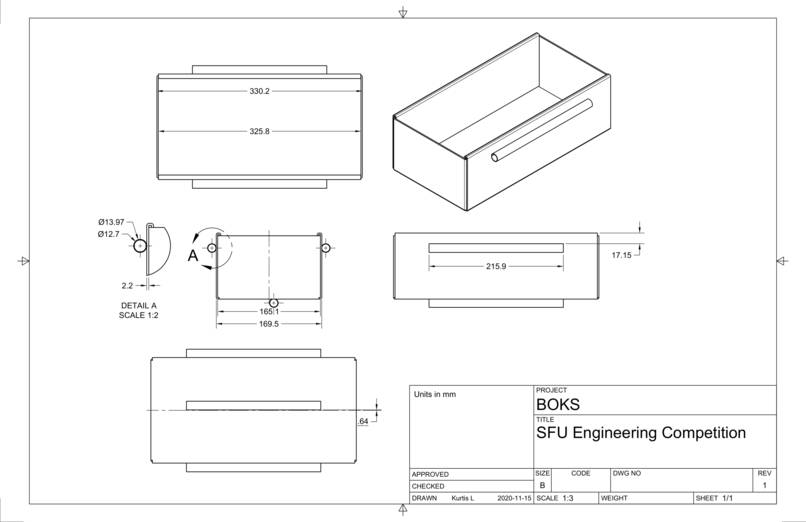
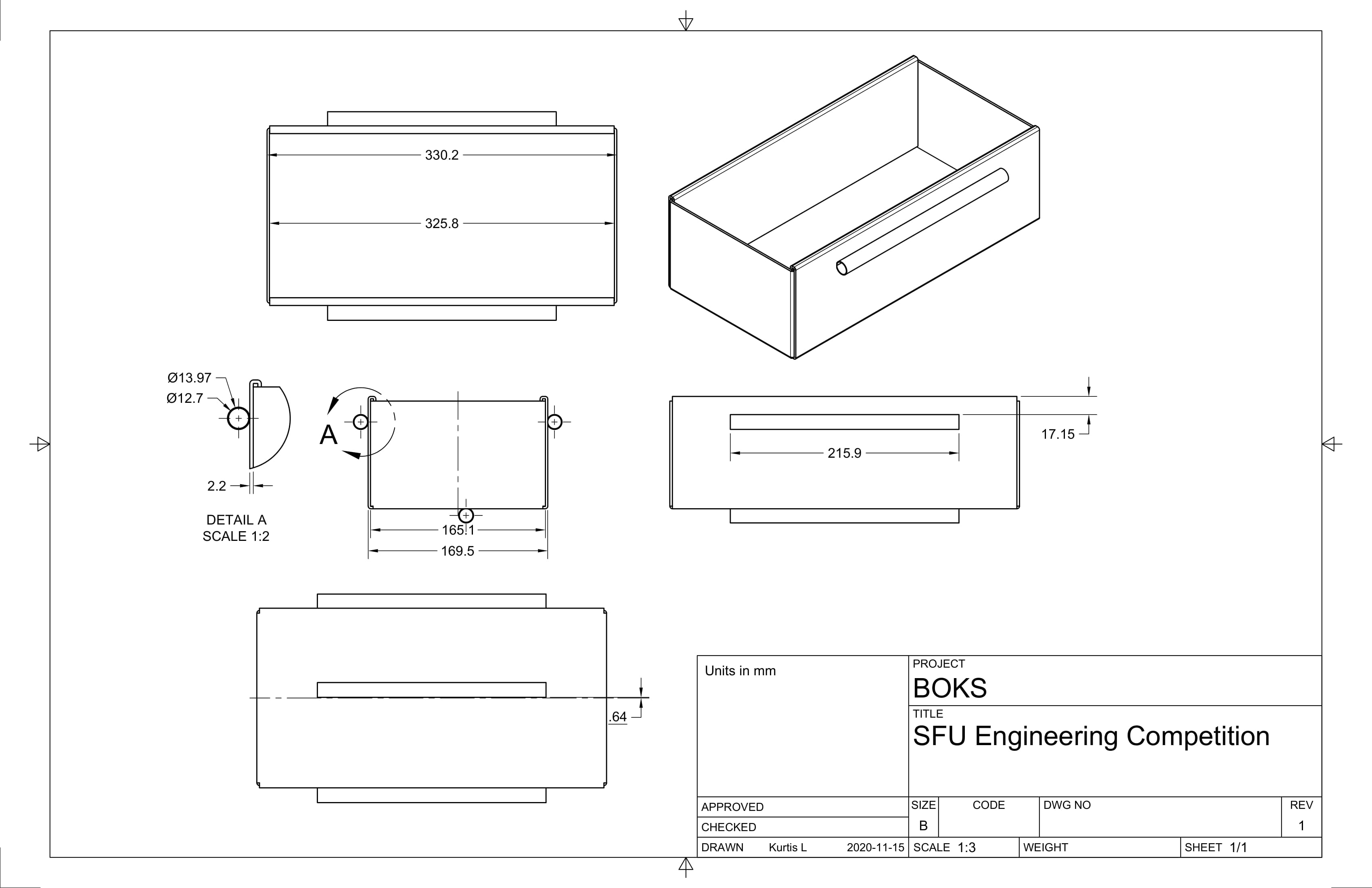
GD&T Drawings
-
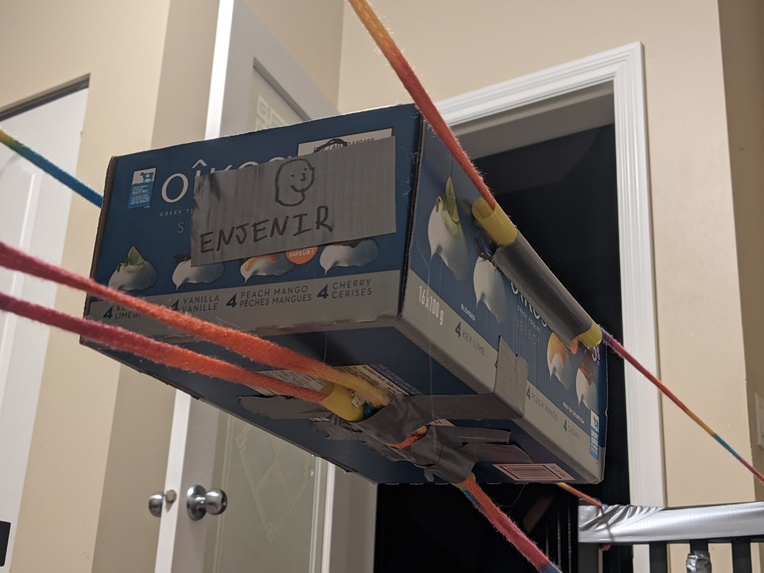
Underside View
-
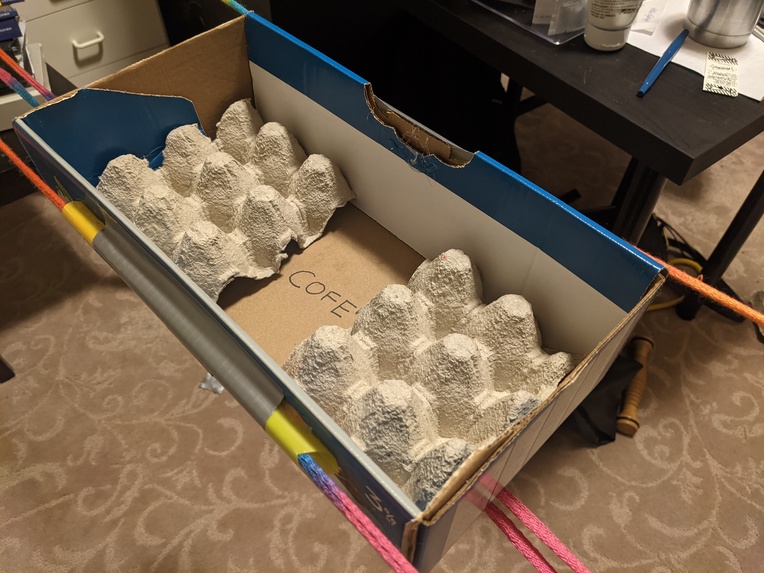
Topside View
Inspiration
Our project was inspired by clotheslines and more notably, the proposed SFU Gondola. We quickly realized that many competitors would devise some sort of rail or cart-based system to successfully move their coffee. Knowing this, we quickly pivoted towards an airborne system relying on tension in guide cables and a control cable, which allows for our solution to be usable in a wider variety of settings because of its ease of setup.
How we built it
Building BOKS was quite simple. Hot glue secures the plastic straw guide rails used to align the cables to the cardboard body. Wool yarn was used as the guide cables instead of fishing line to reduce the amount of plastic used in the design while increasing the visibility of the system. Thus, putting BOKS together is a simple process. Plastic is only found in hot glue, which can be substituted with a more sustainable adhesive in future replications. We place an emphasis on repeatability, as this design can be made by anyone with similar materials. Nothing found in the design needs to be sourced externally because its simplicity provides freedom for designers to choose their own materials.
What we learned/Our Challenges
- Sheet metal modelling in Fusion360 - This was used to better model folding cardboard in CAD
- Brainstorming a novel solution to the problem
- Minimizing the amount of material used in the design
- Simplifying the construction wherever possible
- Overcoming imbalance/shakiness due to the reliance on tension.
"Simplicity is the ultimate sophistication" Leonardo da Vinci

Log in or sign up for Devpost to join the conversation.