-
-
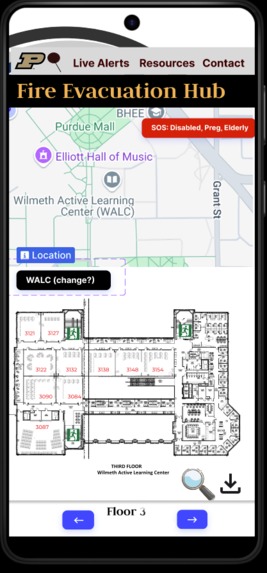
The figma of our mobile website
-
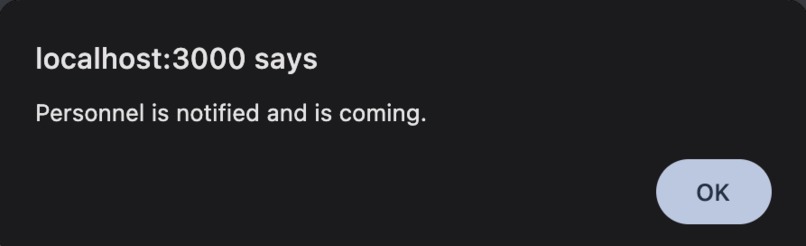
alert seen when SOS button is pressed
Inspiration
- That’s roughly the number of houses destroyed by the current LA fires. A victim reported that the first three evacuation plans they tried to access were hidden behind paywalls. Websites could quickly tell us what Harry Potter house we'd be in, but we still couldn't easily access fire evacuation plans.
What it does
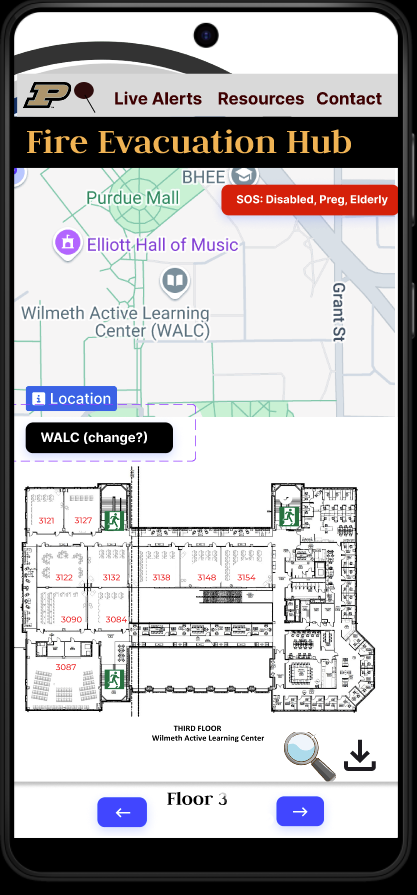
Our mobile website helps users quickly access fire evacuation plans by detecting their location (the building they're in) and displaying floor plans with clearly marked exits. People can also check the floor plans of any other building using a dropdown menu. We host functionality for an SOS button for vulnerable individuals (like the elderly, disabled, and/or pregnant) who might need extra help during an evacuation. The website is designed to be fast, user-friendly, and accessible, ensuring that everyone can find the nearest exit. We’ve also made it dynamic to accommodate different phone sizes.
How we built it
We began with a simple idea, then spent countless hours researching various software, platforms, and tools such as Google Maps, Purdue facilities, MongoDB, Figma, Flask, React, JavaScript, Python, AI tools like ChatGPT and Claude, as well as HTML and CSS. We struggled, drank a lot of coffee, and adjusted our project goals countless times to arrive at BoilerBolt what it is now a few hours later. We first built off of a base repository that used Flask and MongoDB. We then created mock-ups on whiteboards and then refined these designs on Figma. We used information from HTF's React workshop to start designing the front end.
Challenges we ran into
Our initial idea was to implement pathfinding technology inside buildings, showing people the fastest evacuation routes. However, the current geolocation APIs at our disposal were not accurate or economical enough for us to implement this. The existing software solutions that could do this were expensive.
As beginners in deploying full-stack projects, we faced a steep learning curve when first using new frameworks. Due to this and our limited experience with hackathons, we underestimated the tediousness of implementing our goal.
In response to this difficulty, we readjusted our project goals and condensed our minimum viable product. Instead of using pathfinding algorithms, we would instead display annotated maps that clearly showed fire exits on each floor of the Purdue buildings. This enabled us to create an innovative, yet feasible website.
Accomplishments that we're proud of
We faced a steep learning curve but read a lot of documentation and, despite the technical gap, persevered to create BoilerBot.
We’re incredibly proud of how accurate our geolocation calculations were. We also were amazed by how professional our web pages looked, emphasizing functionality while still being sleek. And most of all, we’re proud that we could successfully prototype an idea that has the potential to be expanded worldwide.
What we learned
We learned how to dynamically update our project goals in response to time and skill constraints to create the best possible MVP we could. We also became more resourceful, learning new skills as the need for them arose. We also grew more comfortable with using React, MongoDB, and Flask frameworks as a whole, as well as the intricacies of CRUD requests and effective website design.
What's next for Boiler Bolt
In the future, we hope to implement a Groq-powered anxiety-management chatbot to help users stay calm during fire emergencies. It also has a list of resources and contact information for those in need after distress. This website could be linked with the Purdue Alert System which most students have already enabled on their devices.
This project has a lot of potential to be expanded worldwide. The process would be to have enough marked floor maps and evacuation data ready to be uploaded on the website. Moreover, better technology can help us enhance location detection and rescue services.

Log in or sign up for Devpost to join the conversation.