
Inspiration
BOFUM started with a simple observation: some of the strongest bonds form when people have to rely on each other under pressure. We wanted to design a game where communication wasn’t optional or secondary, but the entire point. In a world where many multiplayer games allow players to act independently, we were curious what would happen if success was mathematically impossible without trust, timing, and shared problem-solving.
We were inspired by co-op games that create memorable moments through asymmetric roles, as well as by real-world teamwork scenarios where no single person has the full picture. BOFUM is our attempt to turn that feeling into a playful, fast, and social XR experience.
What it does
BOFUM is an asymmetric cooperative labyrinth game built around connection.
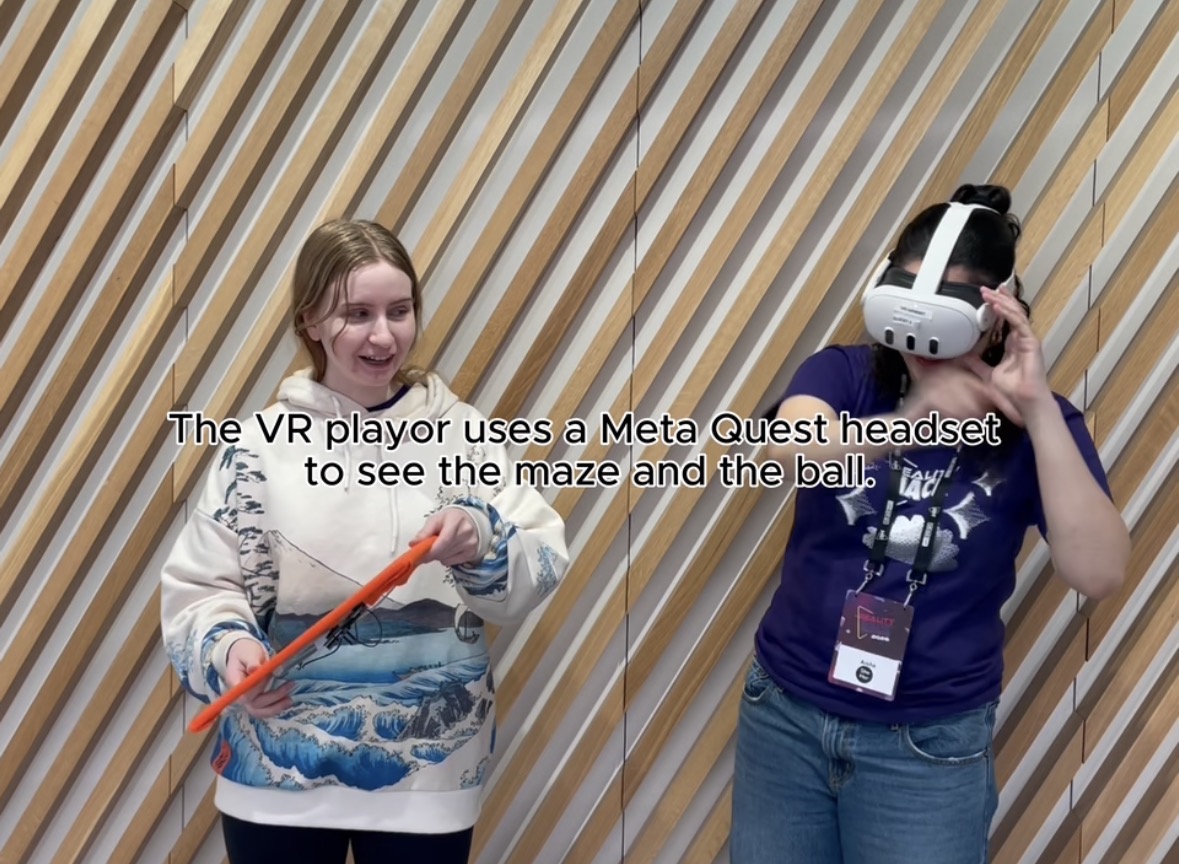
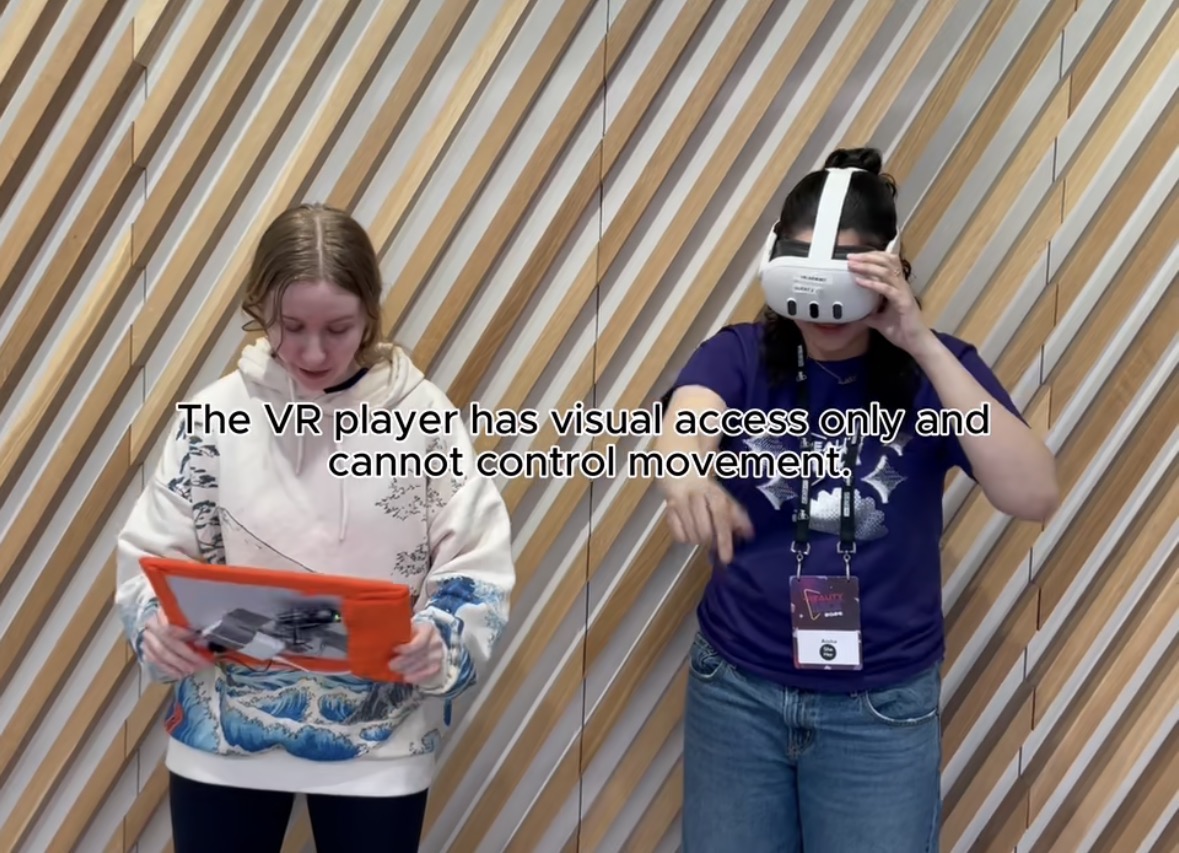
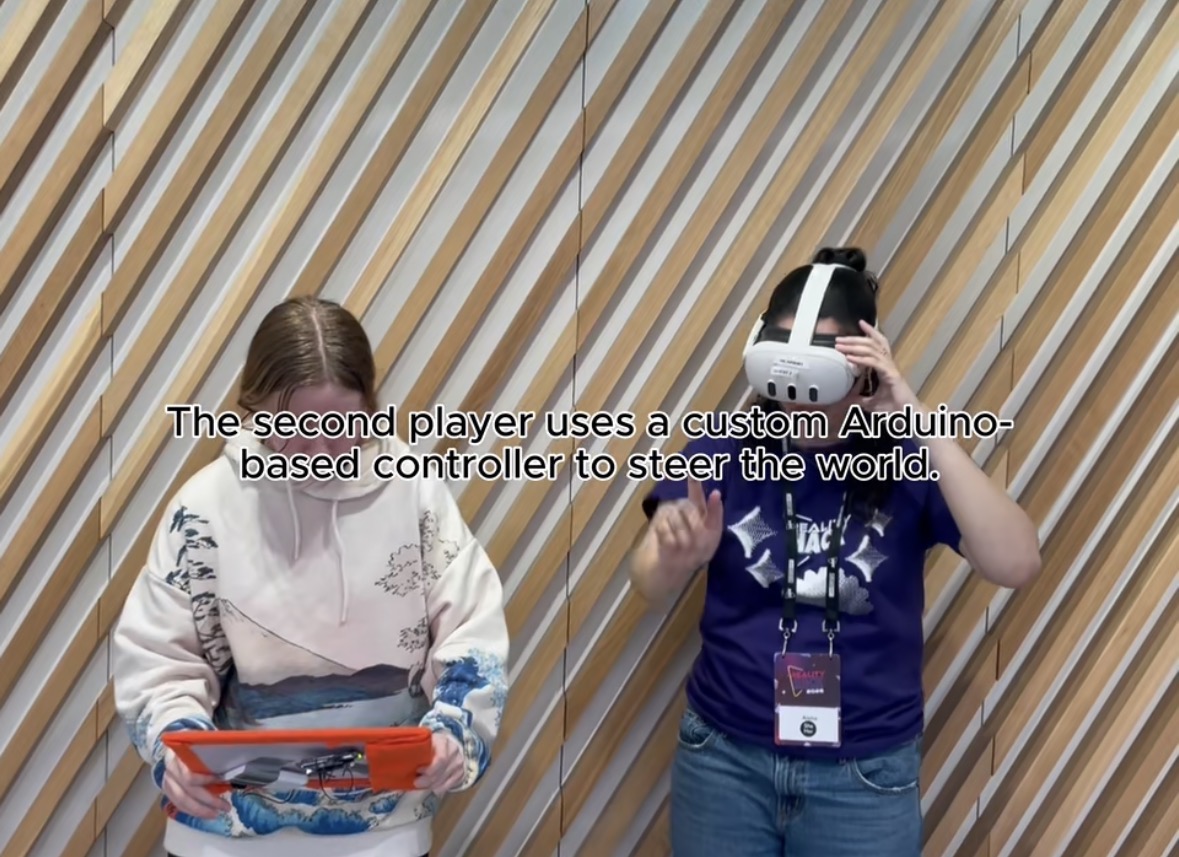
One player wears a VR headset and can see the maze and the ball, but cannot control movement. The other player holds a handmade physical controller and can steer and tilt the world, but cannot see the maze itself. To win, players must communicate clearly, stay calm under pressure, and synchronize their actions as they guide the ball through a Unity-built 3D labyrinth filled with tight paths, drops, and false routes.
The game is challenging but solvable, as success comes not from individual skill alone, but from shared understanding and trust built in real time.
How we built it
We built BOFUM using Unity for the game environment and custom hardware for the controller. The labyrinth was designed with intentional constraints: limited visibility, high-consequence movement, and spatial layouts that reward careful communication rather than speed alone.
The physical controller was prototyped from foam poster board, felt, duct tape, a rechargeable battery, an Arduino Uno Q, and a Modulino. We iterated heavily on ergonomics, button placement, and input reliability to make the controller intuitive despite its handmade nature.
User experience was a core priority throughout the hackathon. We actively walked around the event asking participants how they instinctively pronounced the name BOFUM, where their hands naturally rested on the controller, and which placement felt most comfortable for the calibration button. We incorporated this real-time feedback directly into our design decisions, refining both naming clarity and physical layout to reduce friction and make onboarding feel natural.
Throughout development, we tested constantly—observing how people explained directions, where communication broke down, and how small design changes dramatically altered player behavior.
Challenges we ran into
Our biggest challenges were at the intersection of hardware and interaction design. Early versions of the controller were unreliable or uncomfortable, which broke immersion and trust between players. Debugging hardware inputs under hackathon time pressure required rapid iteration and creative problem-solving.
On the software side, balancing difficulty was tricky: too easy and communication felt unnecessary; too hard and players became frustrated. Finding that “sweet spot” where failure was funny, learning was fast, and success felt earned took multiple redesigns of the maze and physics.
Accomplishments that we're proud of
We’re proud that BOFUM consistently creates laughter, intense focus, and genuine collaboration, even between strangers. Watching players naturally develop shared language, timing, and trust within minutes was incredibly rewarding.
Technically, we’re proud of successfully integrating a custom Arduino-based controller with a Unity XR experience under tight hackathon constraints. We added a dedicated collaboration button to reset the center, and used Arduino App Lab alongside Modulino to document controller rotation and input state, then worked through networking challenges to reliably send that data into Unity in real time.
Design-wise, we’re proud that the core idea stayed intact through constant iteration. Every technical decision served the same goal. BOFUM always remained about connection first, mechanics second.
What we learned
We learned that asymmetry is a powerful design tool when used intentionally. Giving players incomplete information doesn’t frustrate them, as it invites creativity, communication, and trust.
We also learned that physical hardware, even when simple and handmade, can dramatically deepen engagement in XR experiences. Finally, we learned the value of ruthless scoping and iteration, as the best moments in BOFUM came from refining one idea deeply rather than adding more features.
What's next for BOFUM
Next, we want to expand BOFUM with additional maze themes, difficulty modes, and accessibility features to support different communication styles. We’re interested in exploring haptic feedback, adaptive level generation, and onboarding systems that help players build trust even faster.
Long-term, we see BOFUM as a platform for studying cooperation and communication — a game that’s easy to learn, fun to play, and creates meaningful connections.

Log in or sign up for Devpost to join the conversation.