-
-
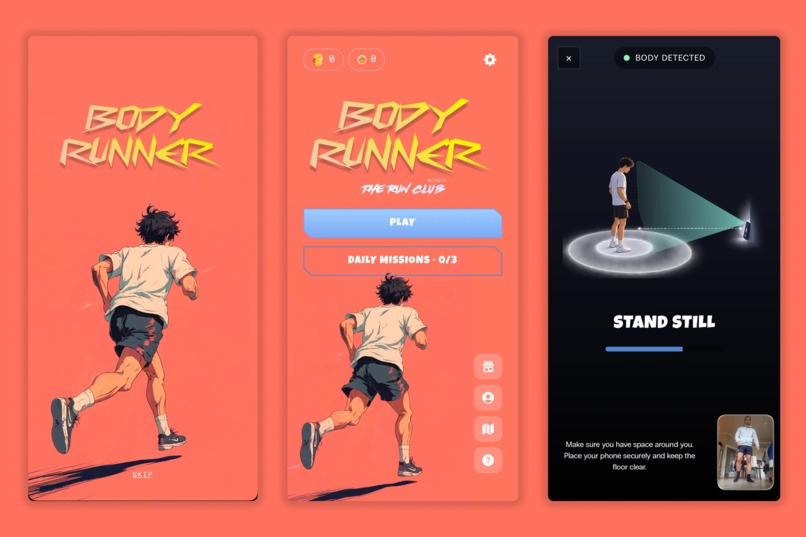
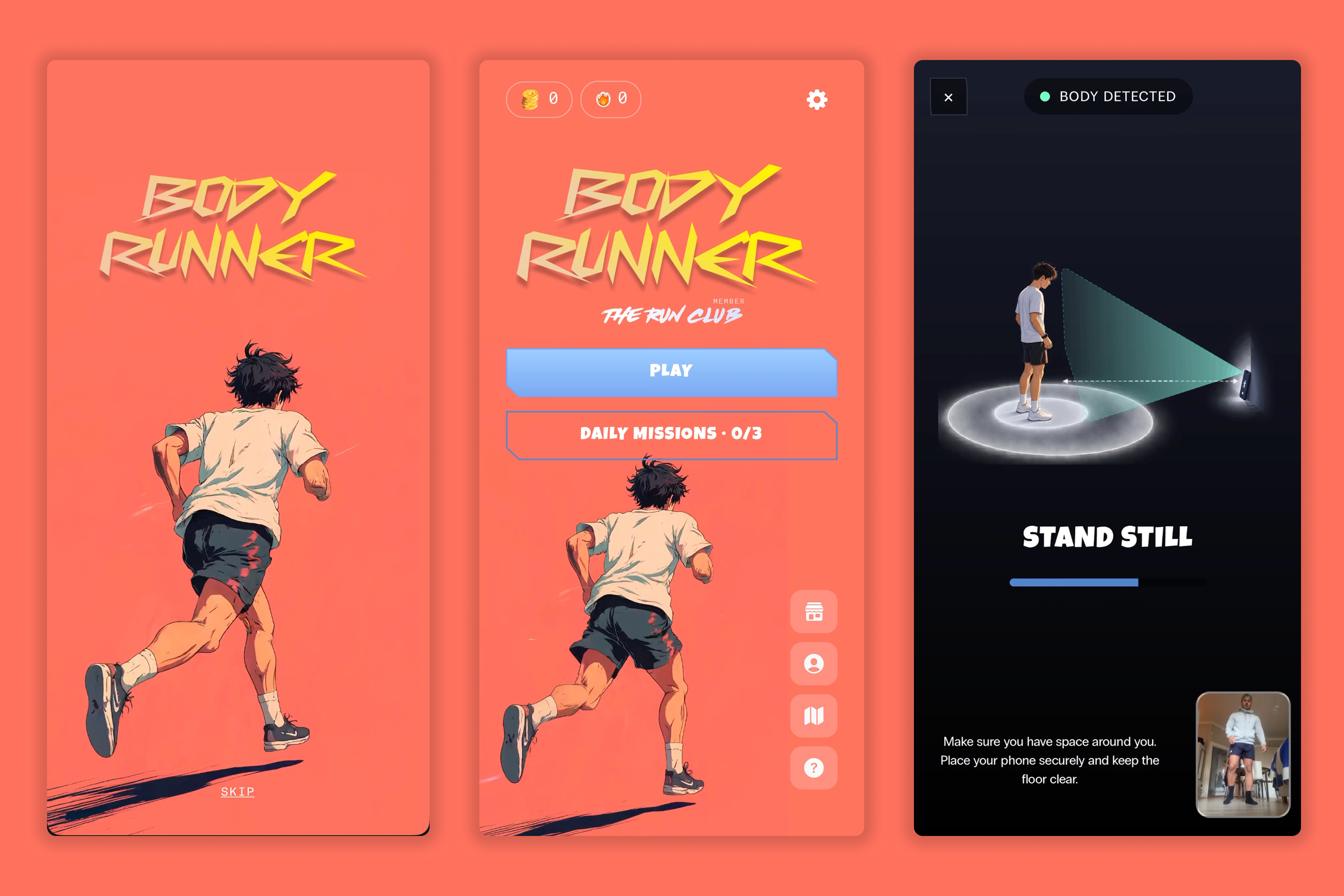
Starting screens
-
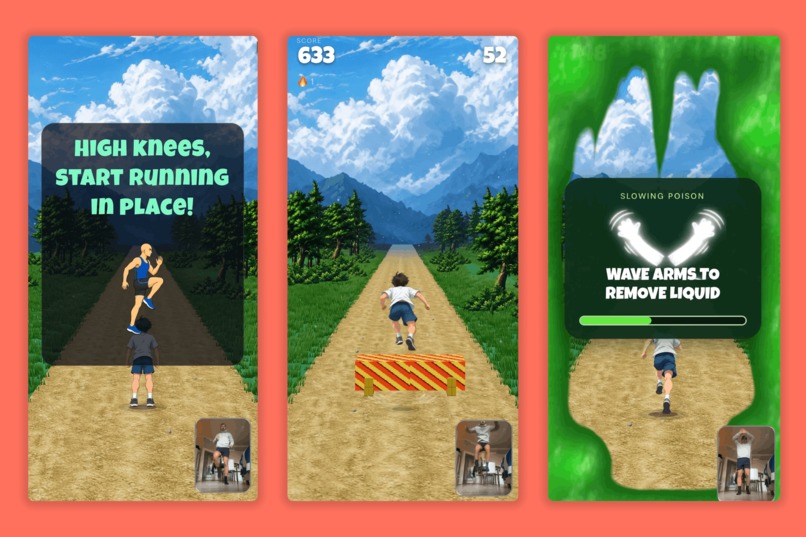
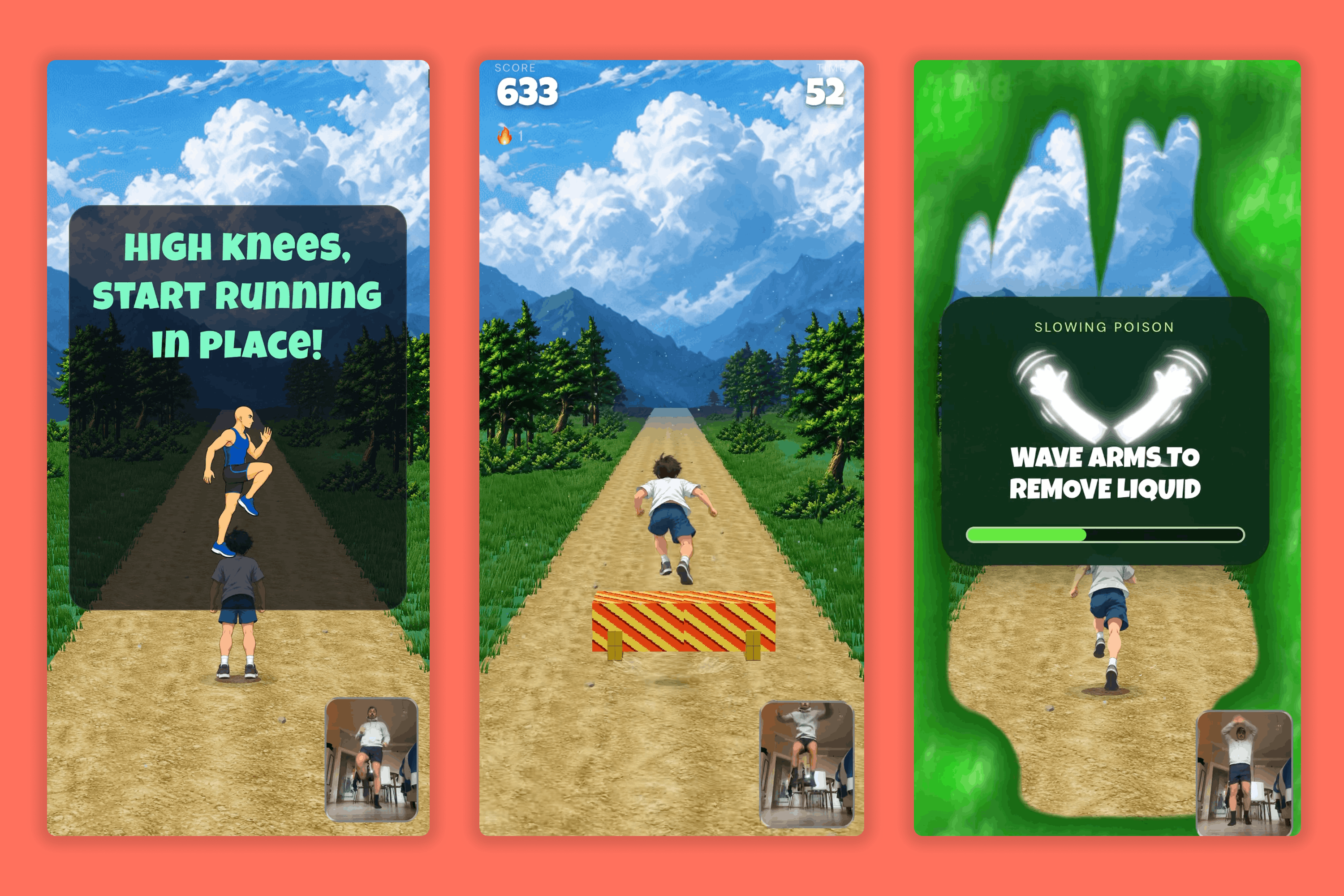
In game screens with different movements
-

App Icon

Inspiration
BodyRunner was inspired by YouTube videos of people using their phones and body movements as a controller while playing The Elder Scrolls. Watching someone physically move to control a game made the experience feel more immersive, funny, and alive. That sparked a question: What if you took that idea and built an entire mobile game around it?
I combined the fast, addictive structure of an endless runner with the physical fun of old-school Wii Sports games. Instead of swiping the screen, players become the controller. Moving left and right, jumping, and ducking to survive.
What it does
BodyRunner is a body-controlled endless runner for mobile. Place your phone securely in front of you, step into the camera frame, and start moving:
- Move left or right to change lanes
- Jump to clear barriers
- Duck under obstacles
- React quickly as the game gets faster The game processes body movement on the device and translates it into immediate gameplay actions. No controller or wearable is required. Just your phone and enough space to move safely.
How I built it
I built BodyRunner with Expo and React Native, using a development build for native functionality. The system is separated into a real-time pipeline:
Front camera → Pose detection → Landmark smoothing → Movement classification → Jump / Duck / Left / Right → Game engine
Players first complete a short calibration so movements are measured relative to their own body, proportions, distance, and phone placement. The game then uses smoothed pose landmarks and movement thresholds to detect actions while filtering out natural body movement and camera jitter. State machines prevent actions, especially jumps and lane changes, from triggering repeatedly. The runner uses a stylized 2.5D world with perspective-based obstacles, increasing speed, scoring, characters, environments, and an arcade-inspired presentation.
Challenges I ran into
The biggest challenge was making physical controls feel responsive and fair. Camera landmarks naturally move and jitter, even when the player is standing still. Too little smoothing caused false inputs, while too much smoothing made the controls feel delayed. I had to balance stability with responsiveness. Jump detection was especially challenging. Standing taller or moving closer to the camera can resemble a jump, so I combined movement distance, direction, velocity, and state to distinguish a real jump from ordinary motion.
Other challenges included:
- Supporting different heights and body proportions
- Handling different camera positions and room sizes
- Preventing repeated lane changes while leaning
- Detecting when the player leaves the camera frame
- Keeping collision windows forgiving enough for physical input
- Maintaining smooth gameplay while processing pose data
- Designing onboarding that explains a new control system quickly
Accomplishments that I am proud of
I am proud that BodyRunner makes exercise feel secondary to the fun. A player does not need to think, “I should work out.” They can simply try to beat their score and end up jumping, squatting, reacting, and moving along the way. The result is a fun mix of an endless runner and an old-school Wii Sports game, built around one simple idea: Your body is the controller.
What I learned
I learned that accurate pose detection alone does not create good controls. The experience depends on the full pipeline: calibration, smoothing, classification, game timing, animation, and forgiving collision design. I also learned that physical games need different rules from touchscreen games. Players require more reaction time, clearer feedback, and a better explanation of why they succeeded or failed. Most importantly, I learned to prioritize gameplay feel over visual complexity. A simple obstacle is fun when the body controls feel immediate; a beautiful world is frustrating when they do not.
What's next for BodyRunner
Next, I want to improve movement recognition through real-world playtesting and expand the game with:
- More obstacle patterns and environments
- New characters and unlockable content
- Improved reaction and performance statistics
- Additional accessibility and sensitivity controls
- Training classes, combining different maps, lengths, and intensity. A full HIIT workout but feels like gaming.
- More satisfying audio, haptics, and visual feedback
- Shareable challenges designed for friends and social video
Our goal is to make BodyRunner easy to understand, difficult to put down, and fun enough to inspire one immediate reaction: One more try.
