-
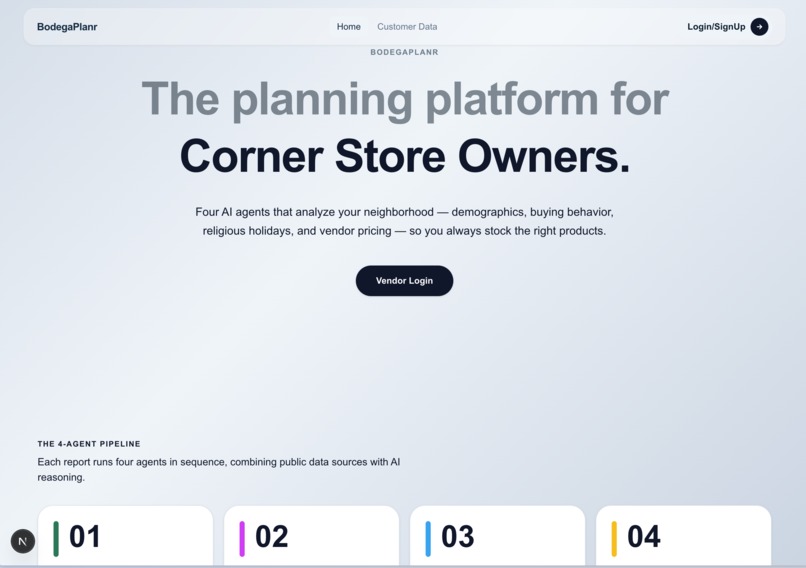
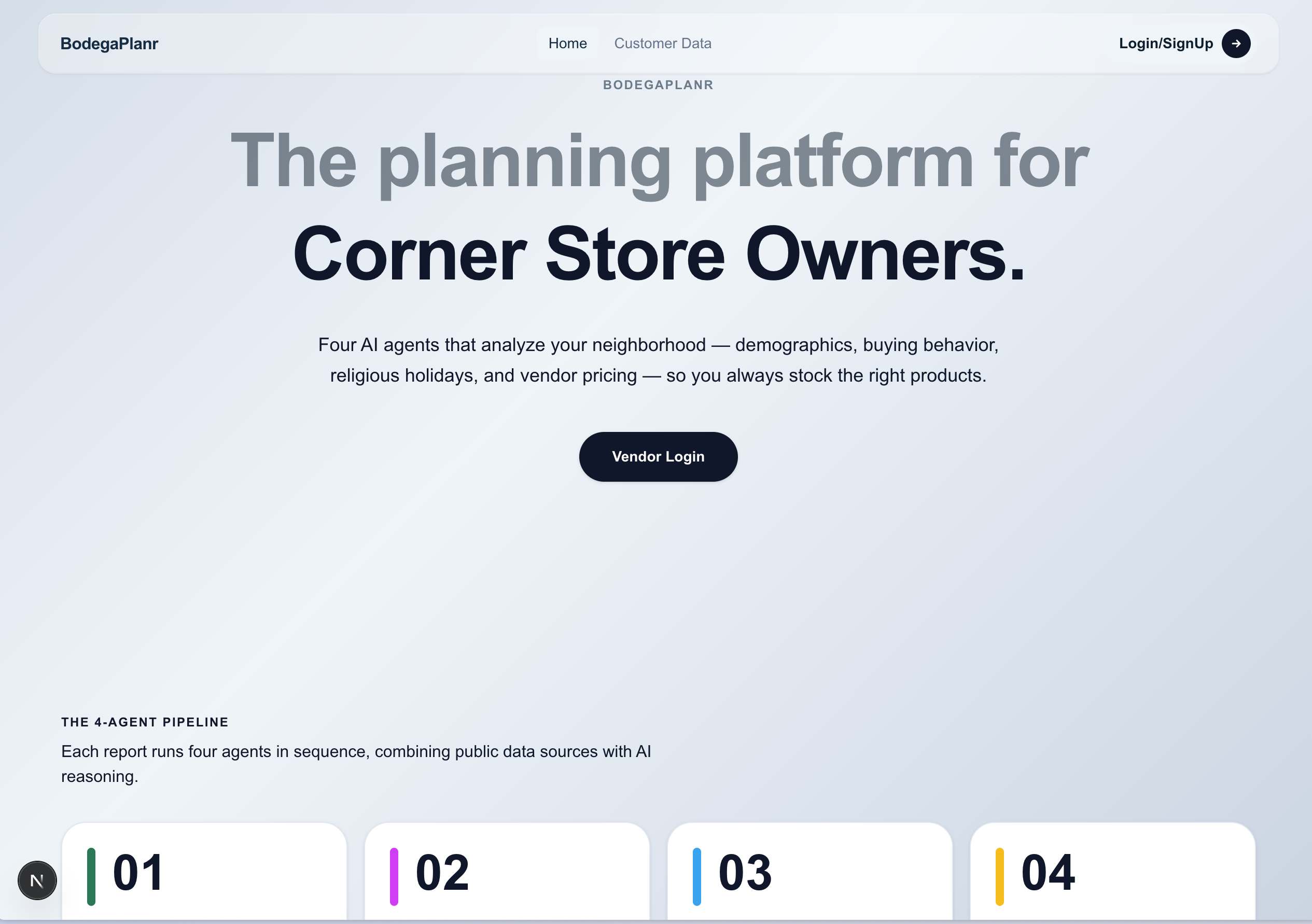
Home Page
-
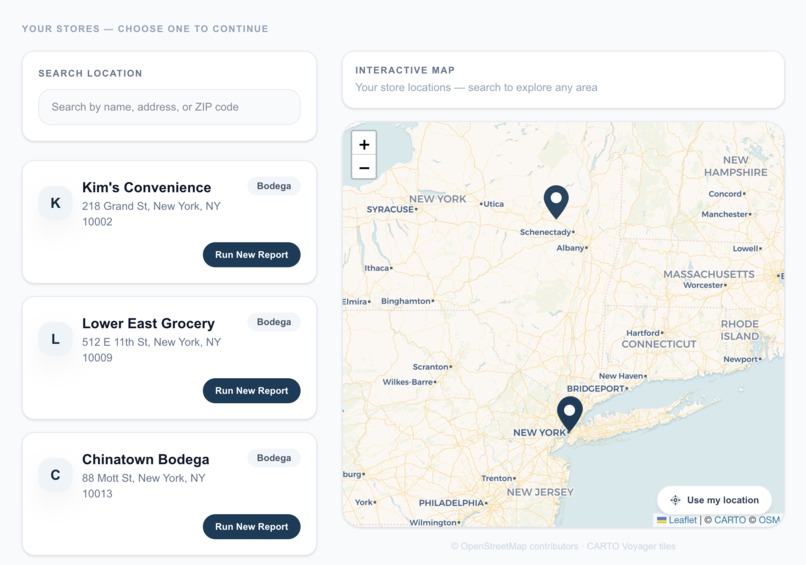
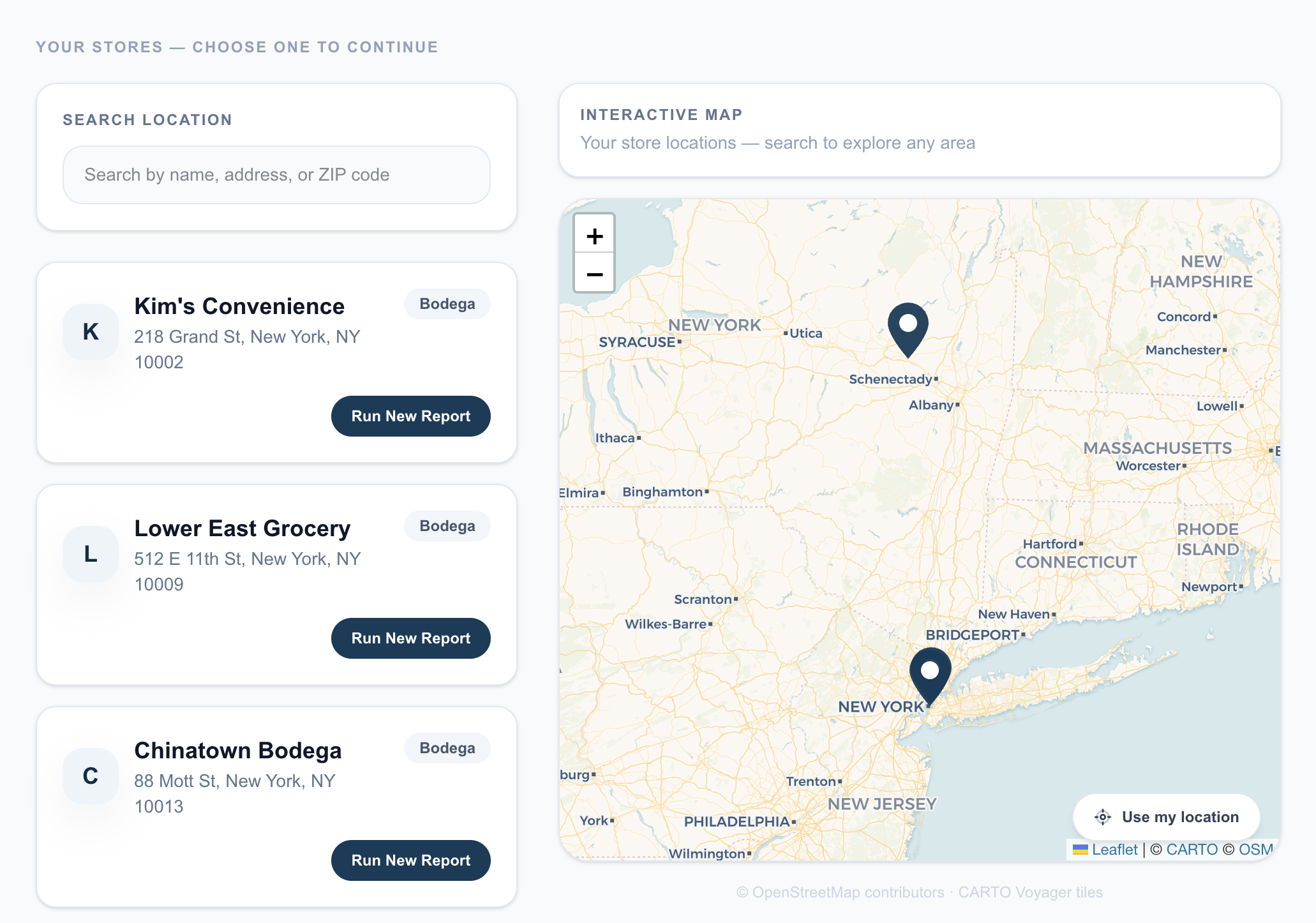
Bodega Dashboard
-
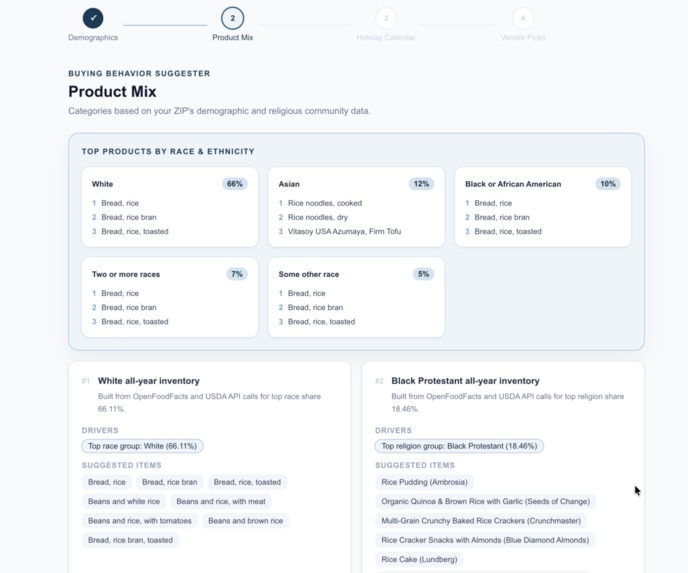
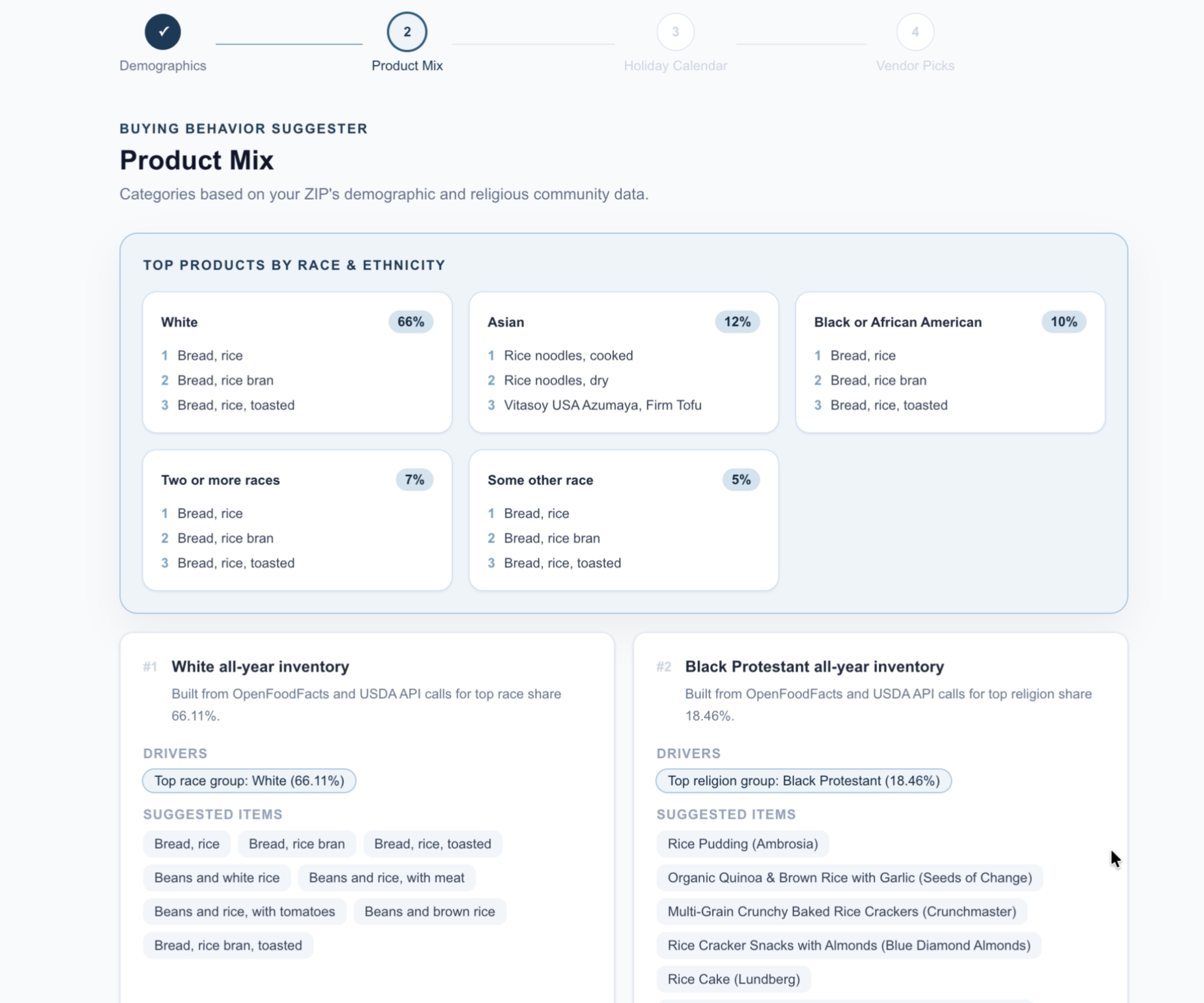
Food Items Report
-
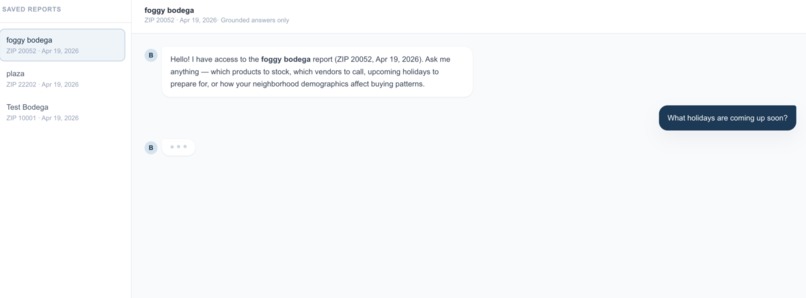
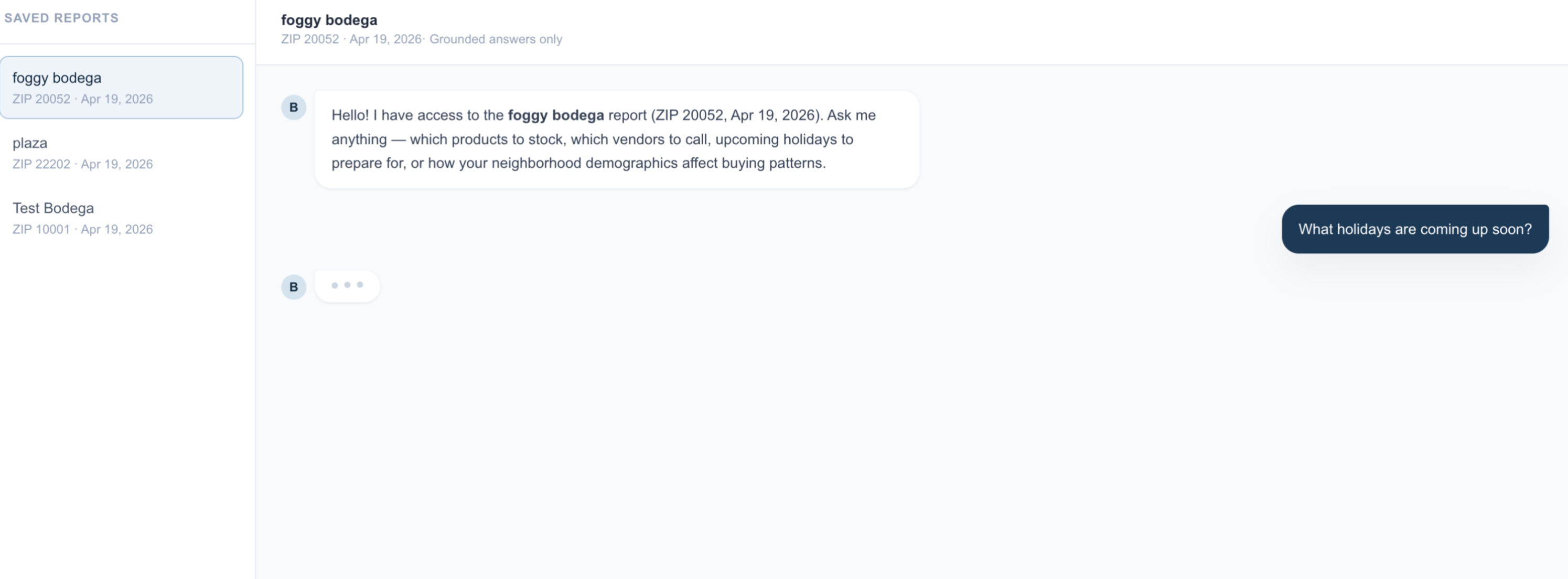
Chat
Inspiration
Small store owners often rely on guesswork for inventory, pricing, and seasonal planning.
We wanted to give corner stores the same data-driven planning power as large retailers.
Our goal was to turn local demographics and events into practical, daily decisions.
That became BodegaPlanr: smart planning built for neighborhood businesses.
What it does
BodegaPlanr analyzes a location and predicts what products customers are likely to buy.
It highlights upcoming holidays that can change demand and suggests stock-up timing.
It recommends vendors, expected costs, selling price strategy, and reorder signals.
It also supports report-grounded Q&A using stored and searchable project knowledge.
How we built it
We built a multi-agent FastAPI backend where each agent solves one planning step.
We integrated public APIs/datasets (Census, Open Food Facts, USDA, Hebcal, Aladhan, Nager).
We used Gemini for structured reasoning, fallback generation, and enrichment when APIs are incomplete.
We used MongoDB Atlas Vector Search to store report chunks + embeddings and power contextual chat retrieval.
Challenges we ran into
Public data sources are inconsistent, so some groups/items return sparse results.
Balancing speed, reliability, and response quality across multiple agent calls was difficult.
Rate limits and timeout handling required careful fallback logic.
Keeping outputs structured and judge-friendly across all agents took multiple iterations.
Accomplishments that we're proud of
We delivered an end-to-end multi-agent system from demographics to vendor recommendations.
We combined real-world APIs with AI fallback instead of static hardcoded flows.
We built report persistence and vector-powered retrieval for explainable follow-up chat.
Most importantly, we made advanced planning usable for independent store owners.
What we learned
AI works best when paired with grounded data, not used alone.
A modular agent architecture makes complex planning easier to debug and improve.
Vector search is powerful for keeping chat answers tied to actual generated reports.
Good product design is about trust, clarity, and actionable outputs.
What's next for BodegaPlanr
We will let owners customize reports based on store priorities and preferences.
We will let them edit recommendations using real sales data so outputs improve over time.
Next, we plan tighter POS integration and continuous learning from store performance.
Long term, BodegaPlanr becomes a daily operating copilot for small retailers.
Built With
- fastapi
- google-gemini
- hebcal-api
- mongodb-atlas-(vector-search)
- next.js-(react)
- open-food-facts-api
- python
- u.s.-census-apis
- usda-fooddata-central-api

Log in or sign up for Devpost to join the conversation.