-
-
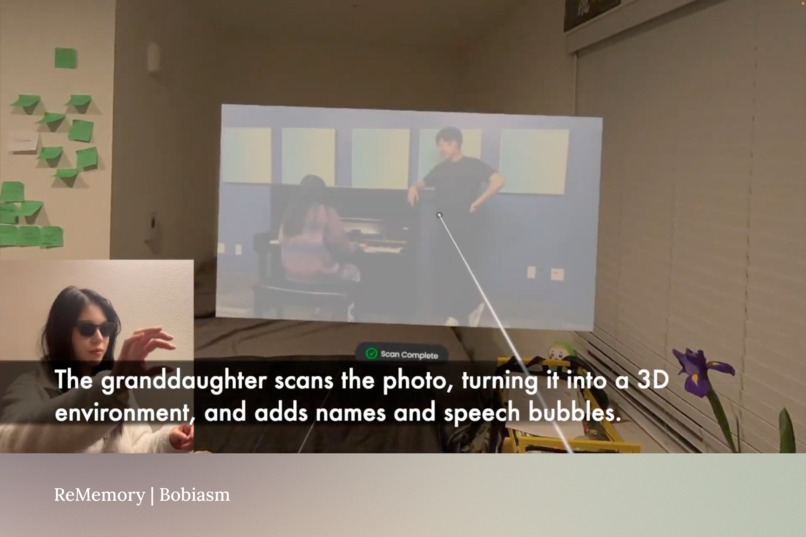
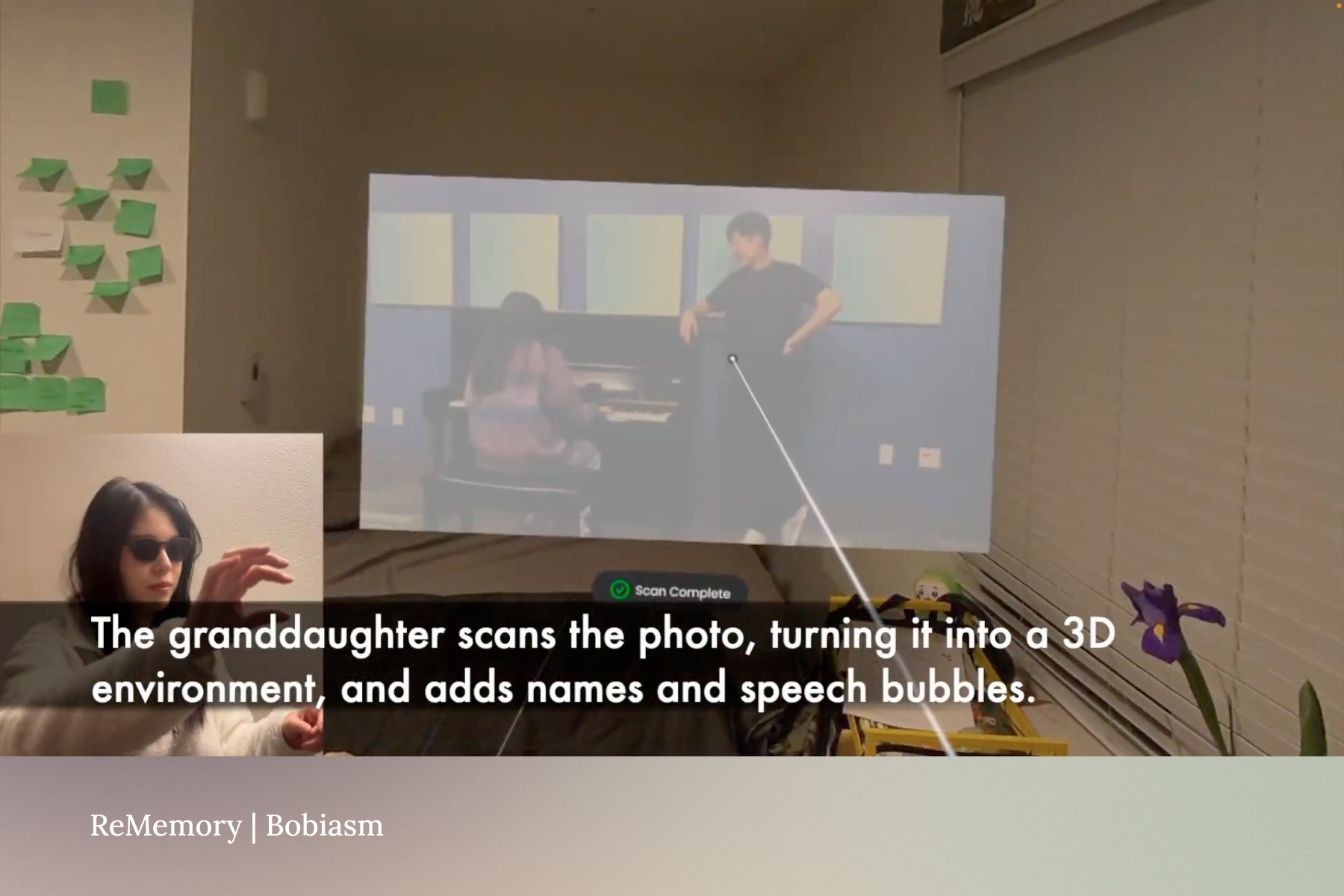
Family members scan the old photo of their memory-loss member using an XR headset to create a 3D version in the space.
-
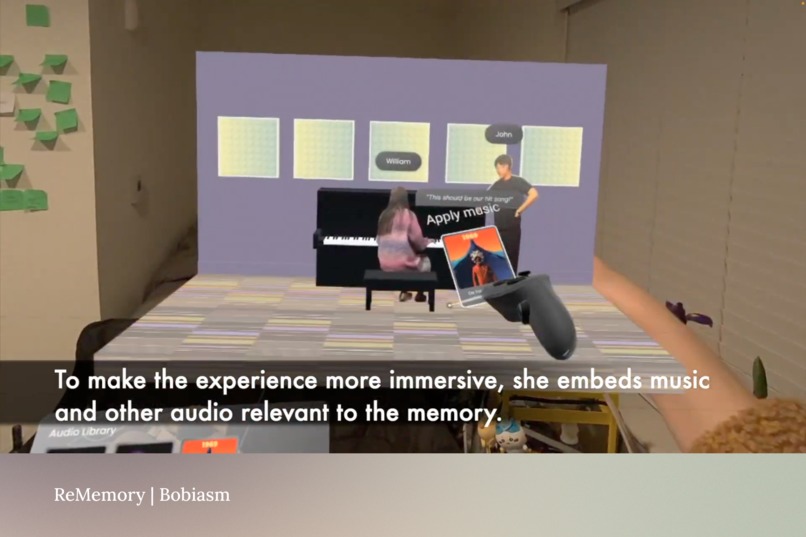
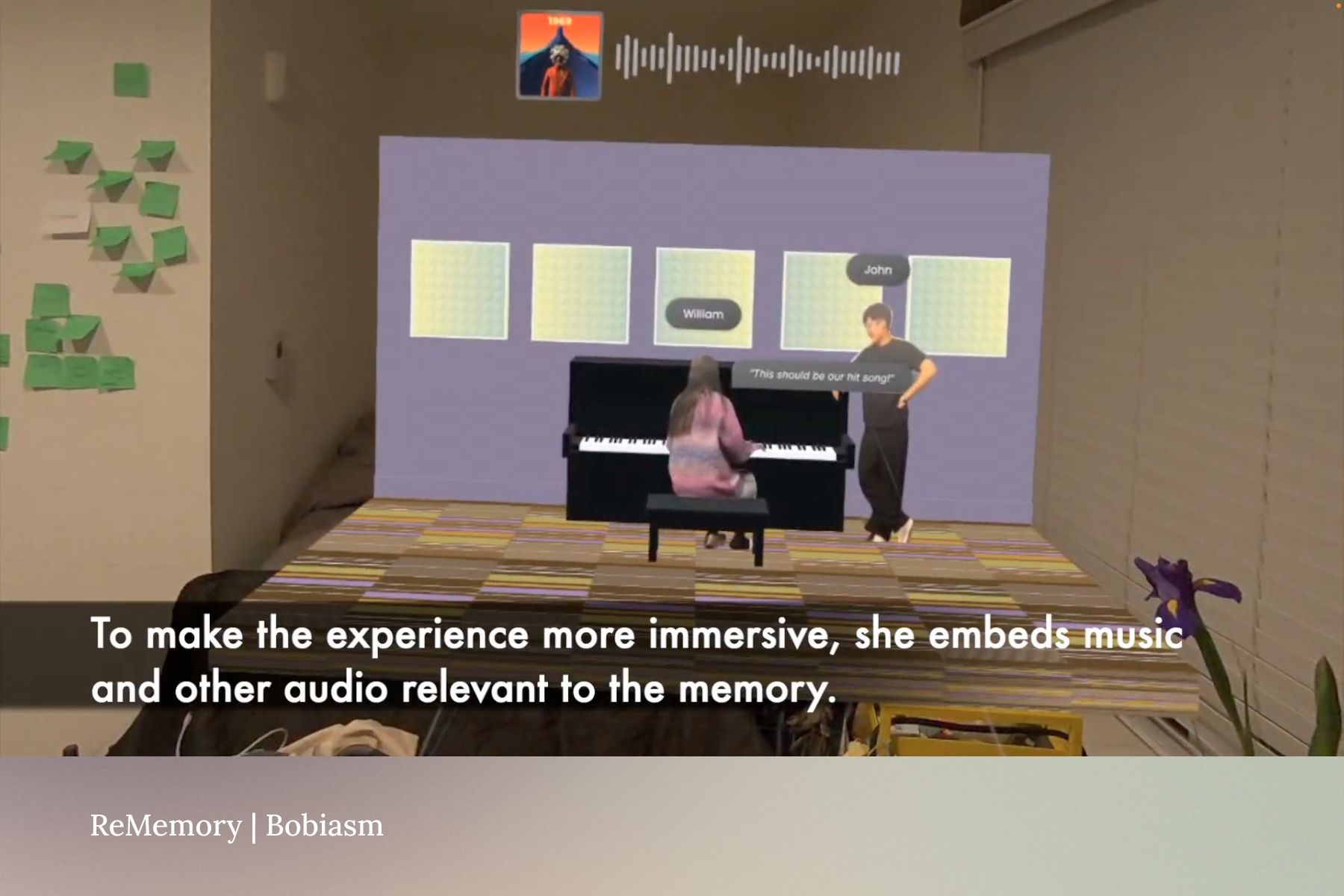
Annotating using names, comments, or sounds to create an immersive experience for the photo for the memory-loss member.
-
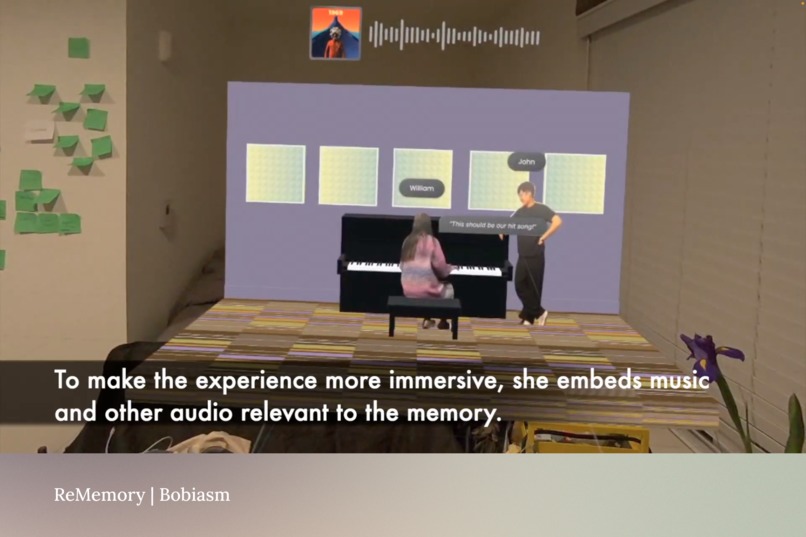
They can also attach music to the environment to enhance the connection between the memory-loss family member and the memory.
-
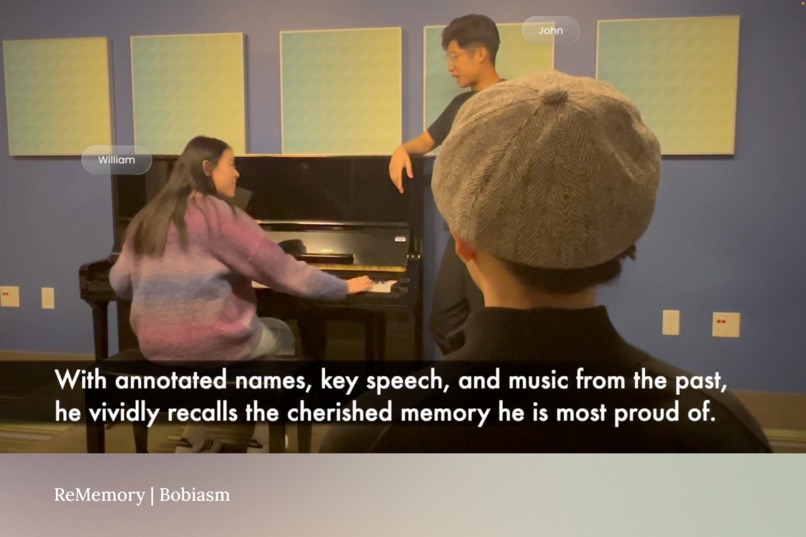
People with memory loss can recover their lost past in the immersive experience created by their family.


Inspiration
Memory loss caused by conditions such as strokes, brain injuries, or aging deeply impacts relationships within families. It can make it difficult for individuals to recognize loved ones, recall shared moments, or maintain their self-identity, further straining emotional bonds. Our team members have personally experienced the challenges of dementia through loved ones, fueling our passion to create a solution that improves the lives of both patients and caregivers.
Additionally, we were inspired by the movie Coco, which beautifully portrays how music and visual cues can rekindle memories and emotional connections. This motivated us to design a solution that bridges the gap between fragmented pasts and present experiences, fostering reconnection and improving the quality of life for individuals and their families.
What it does
“ReMemory” is a mixed-reality (MR) solution designed to help individuals with memory loss reconnect with their loved ones and cherished moments. Through gentle memory prompts—such as names, photos, videos, and comments from past conversations—it strengthens emotional bonds, empowers users to recall significant events, and enhances confidence in social interactions. By involving families in curating and annotating these prompts, ReMemory not only provides a deeply personalized experience but also reduces the caregiving burden.
How we built it
We followed a structured process to bring ReMemory to life: 1. Conceptualization We brainstormed various ideas centered on addressing the challenges of memory loss and decided on ReMemory as the most impactful solution.
2. Prototyping - UI and Storyboard Creation: Using Figma, we developed a detailed storyboard to define the user journey and created 2D prototypes of the user interface. - XR Simulation: We imported these designs into Shapes XR, where we built and refined the MR experience for intuitive interactions. - 3D Modeling: Using Rhino, we created 3D assets to enhance immersion and integrated them into the Shapes XR space.
3. Testing and Iteration We tested the prototype on Quest 2 and Quest 3 devices, iterating based on feedback to ensure the experience was accessible and meaningful for individuals with memory loss.
Challenges we ran into
- Understanding User Needs: Designing for individuals with localized and retrograde amnesia required navigating a limited research timeline while ensuring sensitivity to their unique needs. - Technical Learning Curve: Adapting to tools like Shapes XR and designing interactions in 3D space was challenging but ultimately rewarding. - Balancing Simplicity and Functionality: We needed to simplify complex features, such as real-time memory prompts, to prioritize usability and feasibility.
Accomplishments that we're proud of
- Technical Achievements: Successfully creating an immersive and functional XR prototype using new tools like Shapes XR and Rhino. - Empathy-Driven Design: Developing a solution that resonates emotionally with individuals and families affected by memory loss. - Team Collaboration: Collaborating effectively across diverse skill sets to produce a polished and meaningful product within a tight timeline.
What we learned
- Prototyping in XR: We gained hands-on experience with XR tools, refining our ability to prototype immersive experiences. - 3D Interaction Design: Adapting traditional design principles to the challenges of extended reality taught us how to create intuitive and accessible interactions. - Empathy and Accessibility: Designing for vulnerable populations deepened our understanding of user-centered and inclusive design practices. - Agile Development: Iterating quickly under time constraints improved our ability to prioritize features and deliver results efficiently.
What's next for Bobaism - ReMemory
1. Deeper Research Conduct in-depth studies with individuals affected by memory loss and their caregivers to refine the experience and expand functionality.
2. AI-Powered Personalization Integrate AI to automatically annotate memories with contextual details like names, locations, and events, reducing caregiver workload and enhancing personalization.
3. Expanded Features - Timelapse Visualizations: Provide a visual timeline of loved ones to bridge past and present. - Memory Health Tracking: Introduce tools to monitor cognitive changes over time, empowering users and caregivers to identify early signs of memory decline. - Enhanced Sensory Experiences: Add geotagged memory prompts, music, and multisensory cues to enrich the interaction. By continuing to refine ReMemory, we aim to create a powerful tool that not only reconnects families but also empowers individuals with memory loss to live fuller, more confident lives.
Built With
- figma
- rhino
- shapesxr


Log in or sign up for Devpost to join the conversation.