-
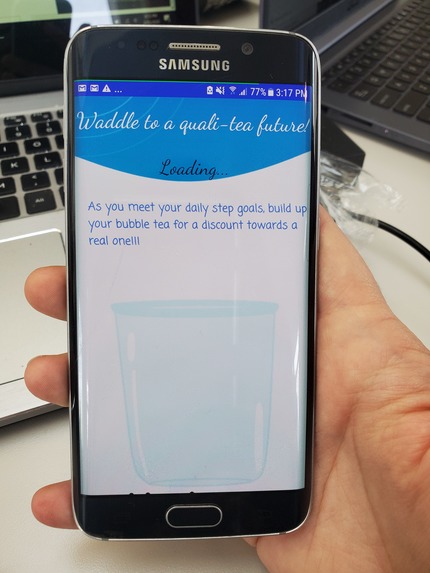
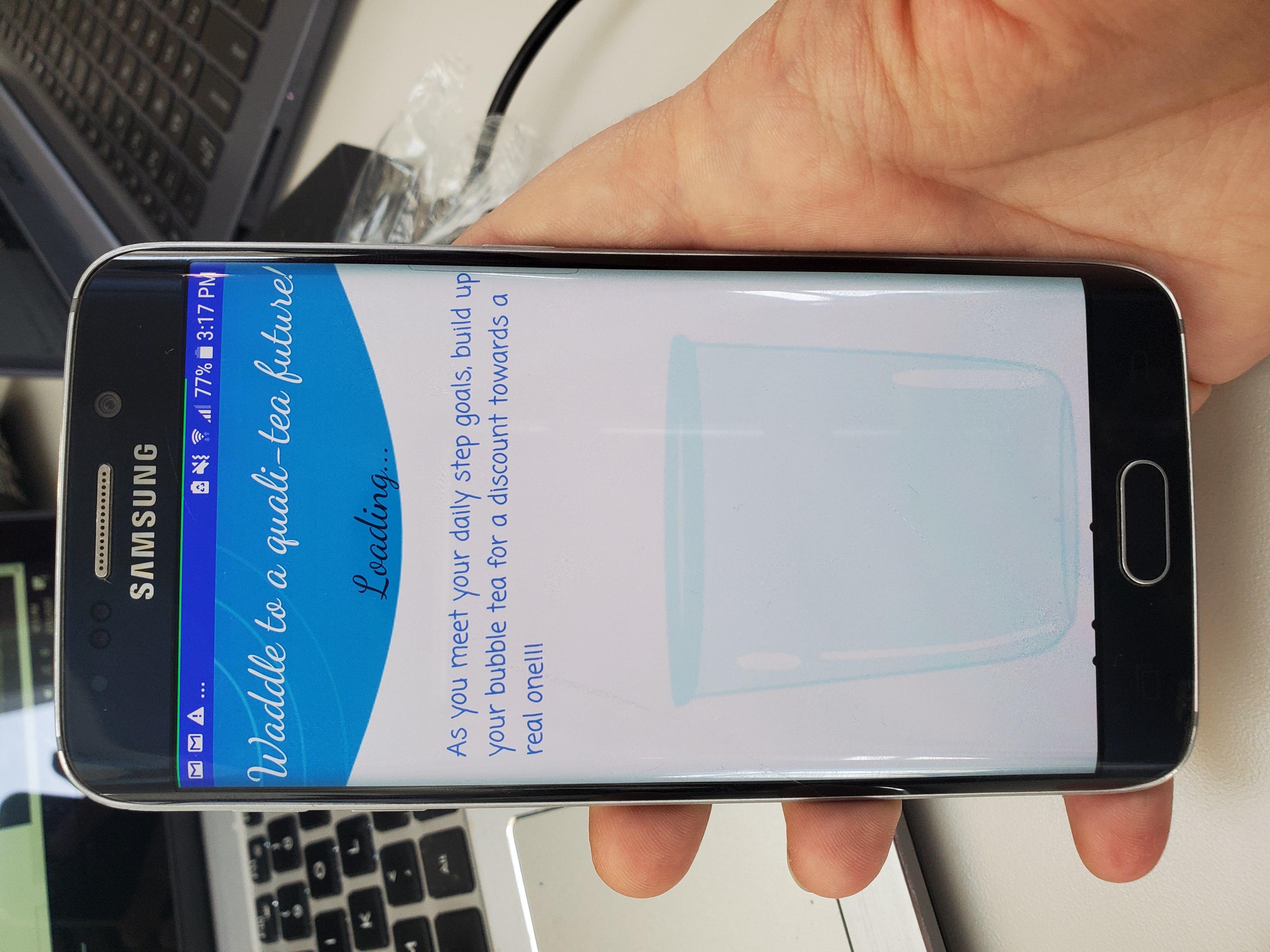
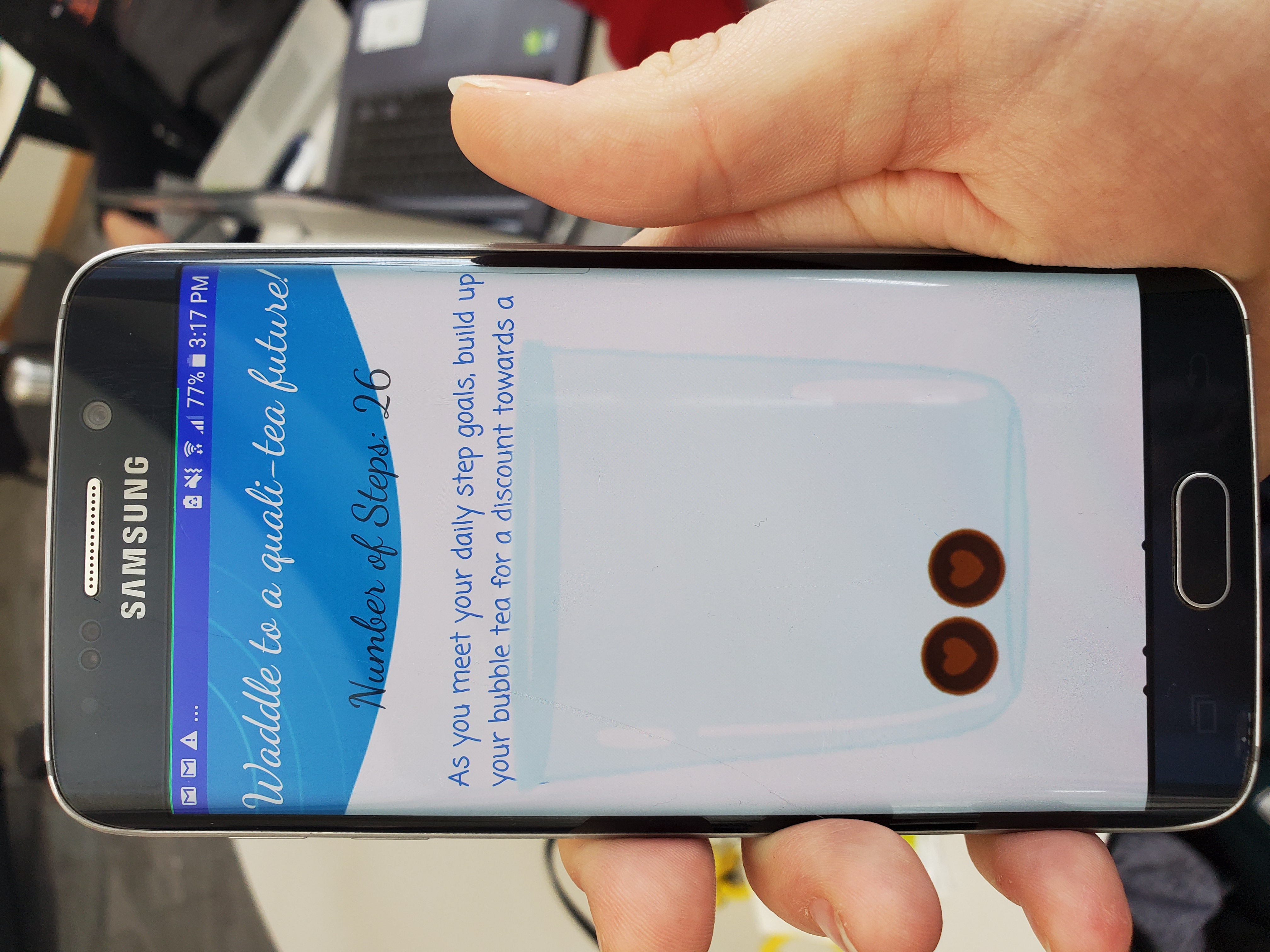
This is how the app looks before any steps are taken.
-
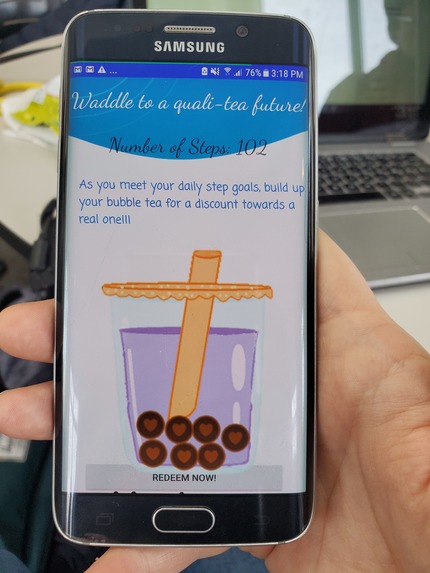
After redeeming the coupon, the straw would be placed in the cup and there would be some QR code to a coupon that the storeowner can redeem.
-
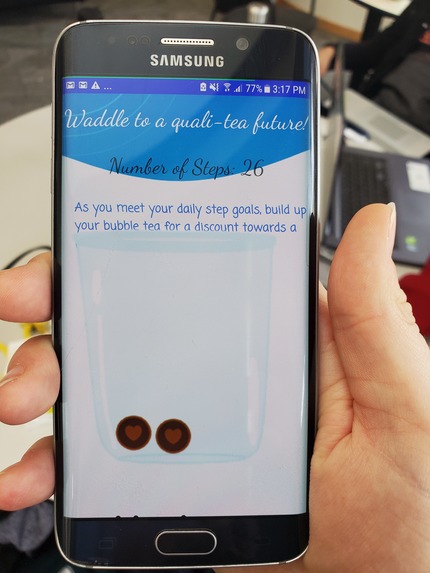
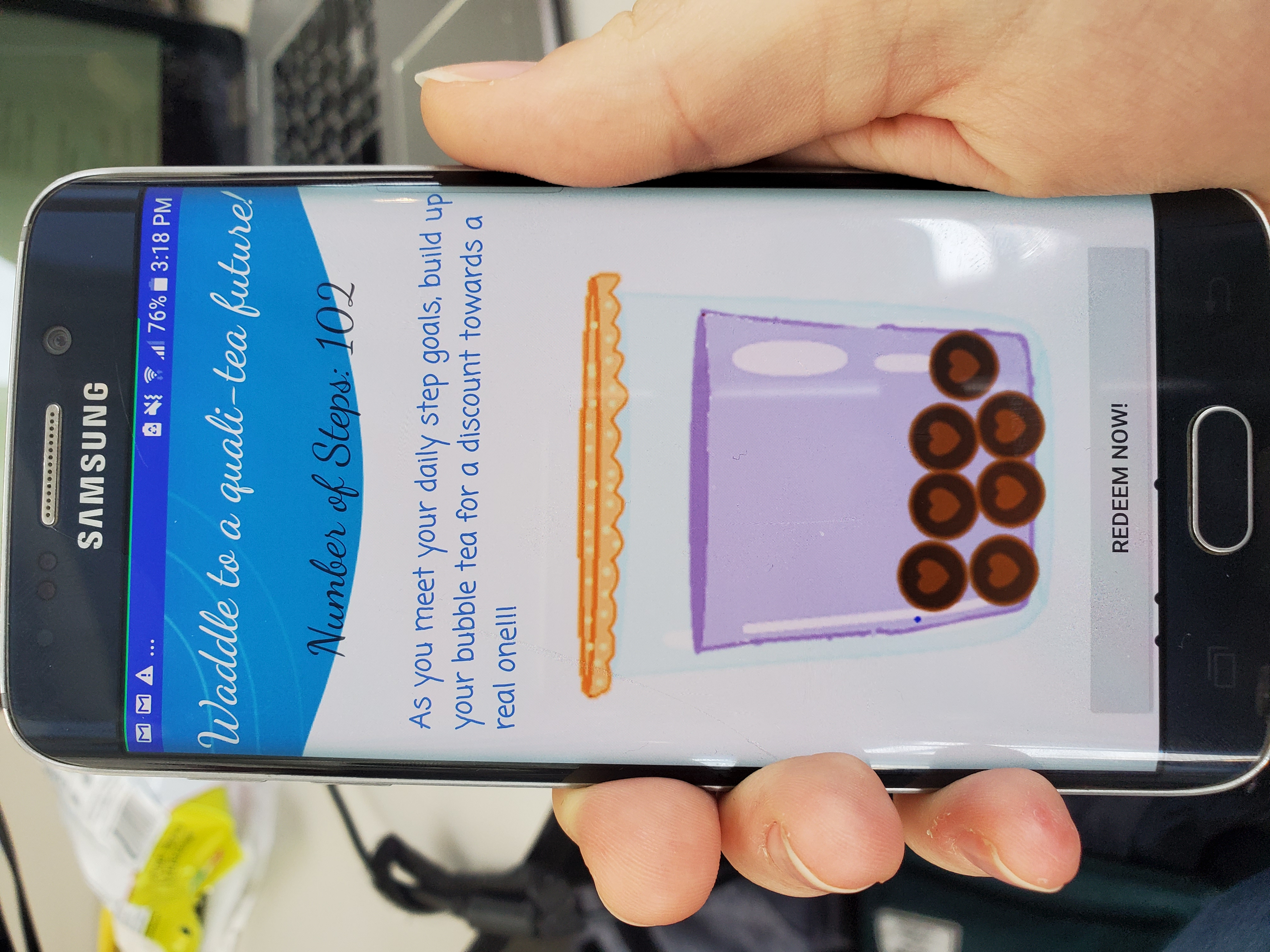
This is how the app would look after two days of 10,000 steps (smaller step count here for testing)
-
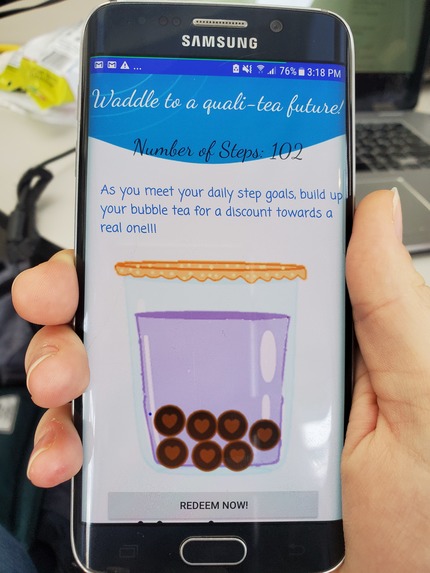
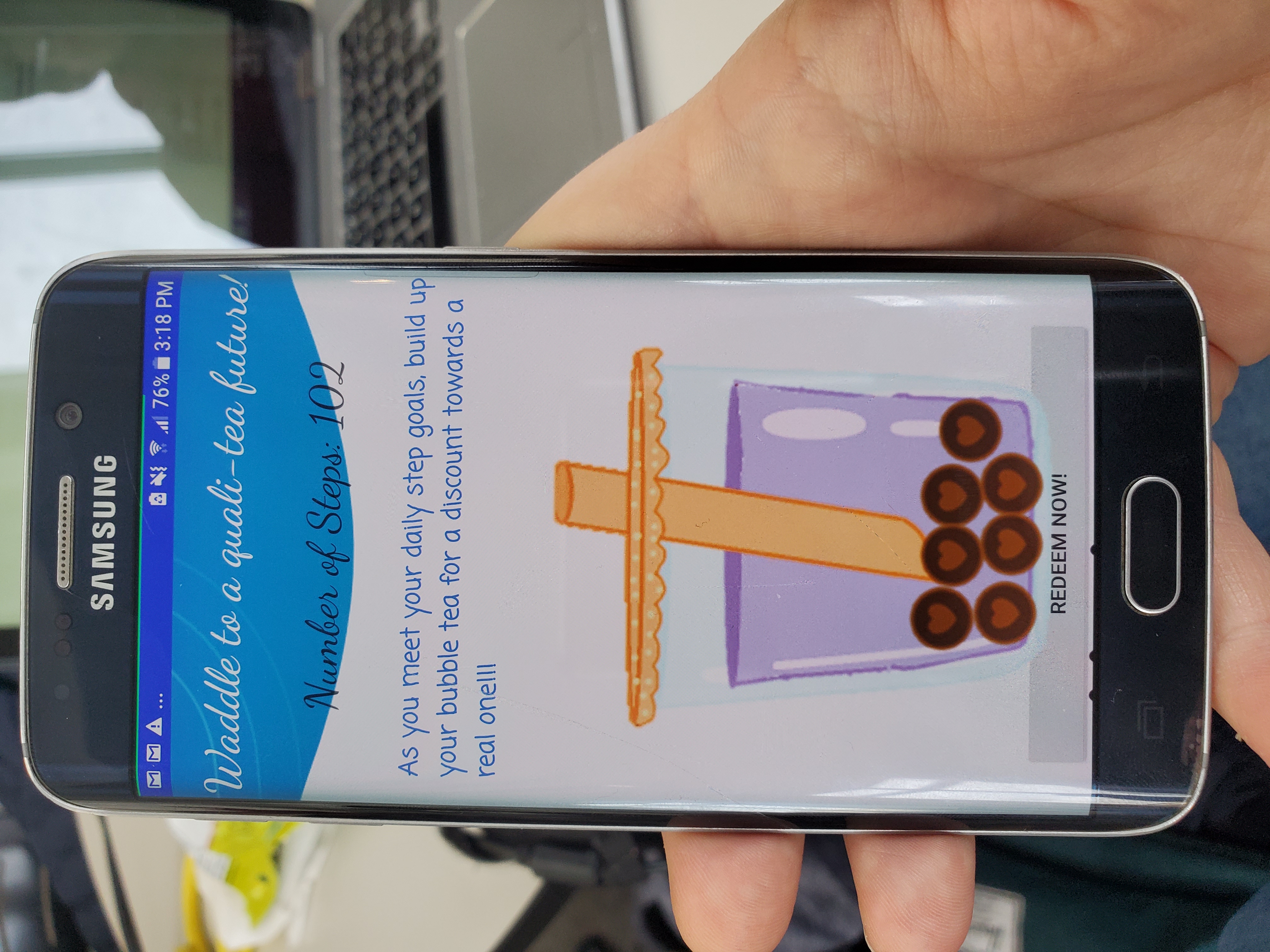
This is how the app would look after 10 completed days before redeeming the coupon.
Everyone always has the goal to be more active, but most times people need an external motivator to stick to their goals. Our team was looking into ways that we could encourage people to live a more active lifestyle, improving both personal health and the environment by motivating people to choose walking over driving as much as possible. With each of us enjoying the occasional cup of bubble tea, we began to think of a walking reward system that could also bring greater business to local stores. We came up with the idea of a walking tracker app, “Boba Dash”, that rewards the user with a small discount from a partnering bubble tea shop after reaching 10 days of walking over 10,000 steps each day. With an average stride length, 10,000 steps correspond to approximately five miles of walking in a day. That is five miles a day that the user is more active, and five miles a day that they choose to walk over driving. After walking at least five miles for 10 days, the user will have walked at least 50 miles. And with 24.7 MPG as the average of vehicles in the US, approximately 2 gallons of gas is saved per tea on the app. Since each gallon of gasoline burned emits 8,887g of CO2, achieving a tea would correlate to a reduction of between 17,000 and 18,000g of CO2. And alongside benefitting the user’s personal active goals and the environment, the user would also get to enjoy a delicious cup of their favorite tea at a reduced price and the partnering business would enjoy an increase in sales, knowing that they too are contributing to a cleaner environment. While creating our prototype of this app, we had difficulties with creating our own step counter using a smart phone’s accelerometer. Using the accelerometer was difficult because while we could get the acceleration of the phone in 3D space, we could not accurately analyze at what point we could count a step. The solutions that we came up with would either count a step too easily, or make it difficult for the phone to count a step. We discovered that the Android SDK has a dedicated sensor for detecting whether the phone had taken a step or not. However, the sensor did not start working until a few seconds after the app had started. Once the sensor started working, it was very accurate in tracking whether a step had been taken or not, so we left it as it was. We also had difficulty with the UI aspect of the app. We did not have any previous knowledge in UI for Android Studio, so we had to spend some time learning about UI in Android Studio. After some tinkering, we became comfortable with the UI aspect and implemented the UI that we needed in our app. Two out of the three team members arrived late (9pm) to the hackathon from a different state, limiting our time to research and learn more about UI and animating in Android Studio. Given these challenges and limitations, we were able to work through it and produce the best project that we could.
Built With
- android-studio
- java
- microsoft-paint

Log in or sign up for Devpost to join the conversation.