-
-

-
-
-
-
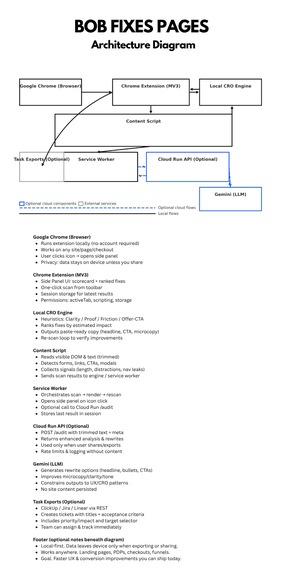
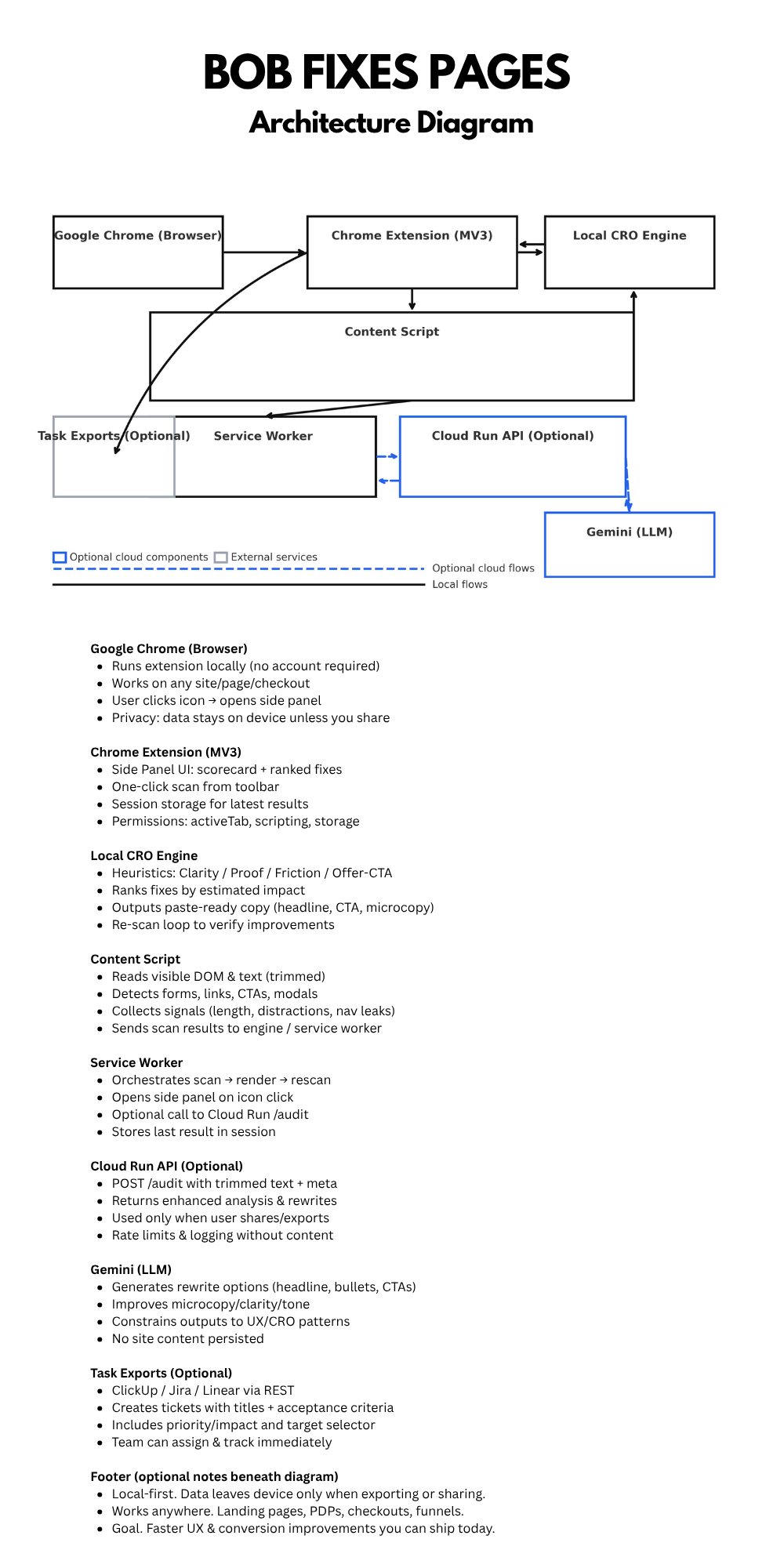
Architecture Diagram
-
Bob Fixes Pages

Inspiration
This idea was sparked by a presentation that opened my eyes to how far AI has come in giving truly in-depth guidance—on sales messaging, user experience, and consistency across multiple assets from both a story and conversion perspective.
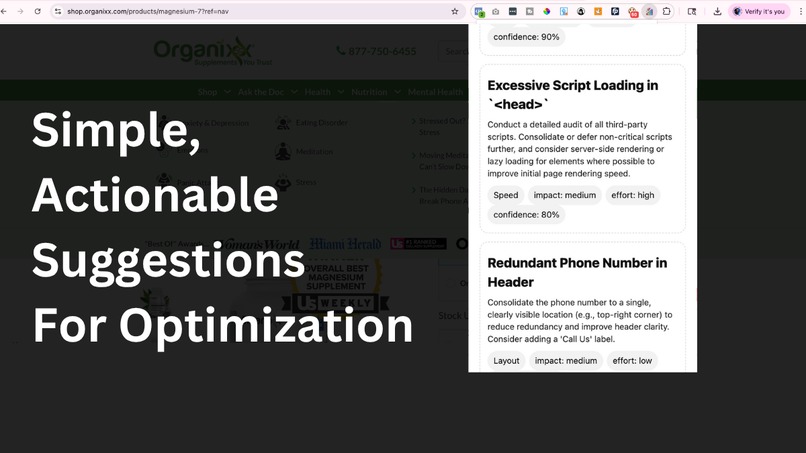
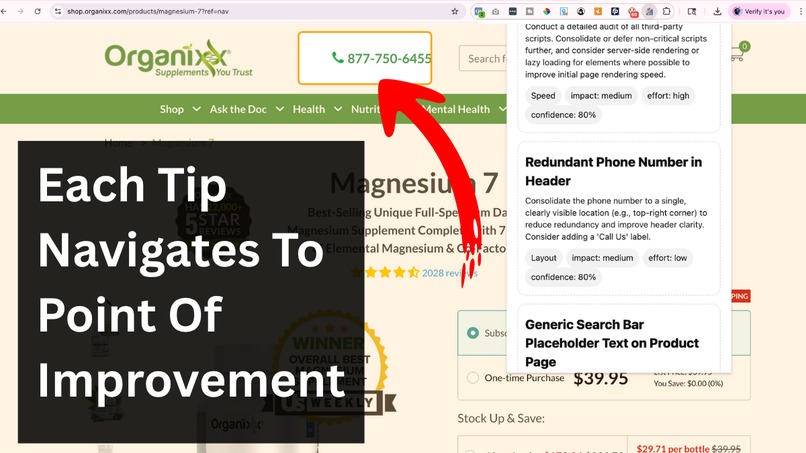
Most of our CRO wins have come from wisdom, experience, and hard lessons. Now we can compress that into instant, world-class feedback you can apply with a single click. With Gemini accelerating analysis, I wanted a point-and-click workspace that shows exactly where friction lives, what copy to change, and where edits need to be made—right on the page.
This serves everyone on the team:
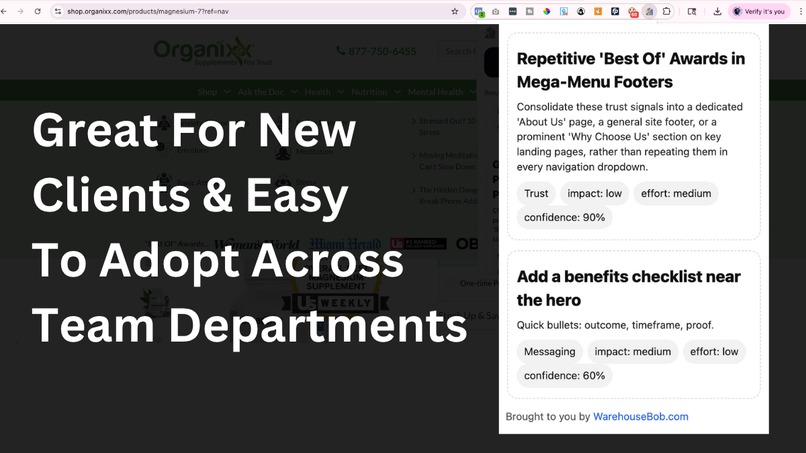
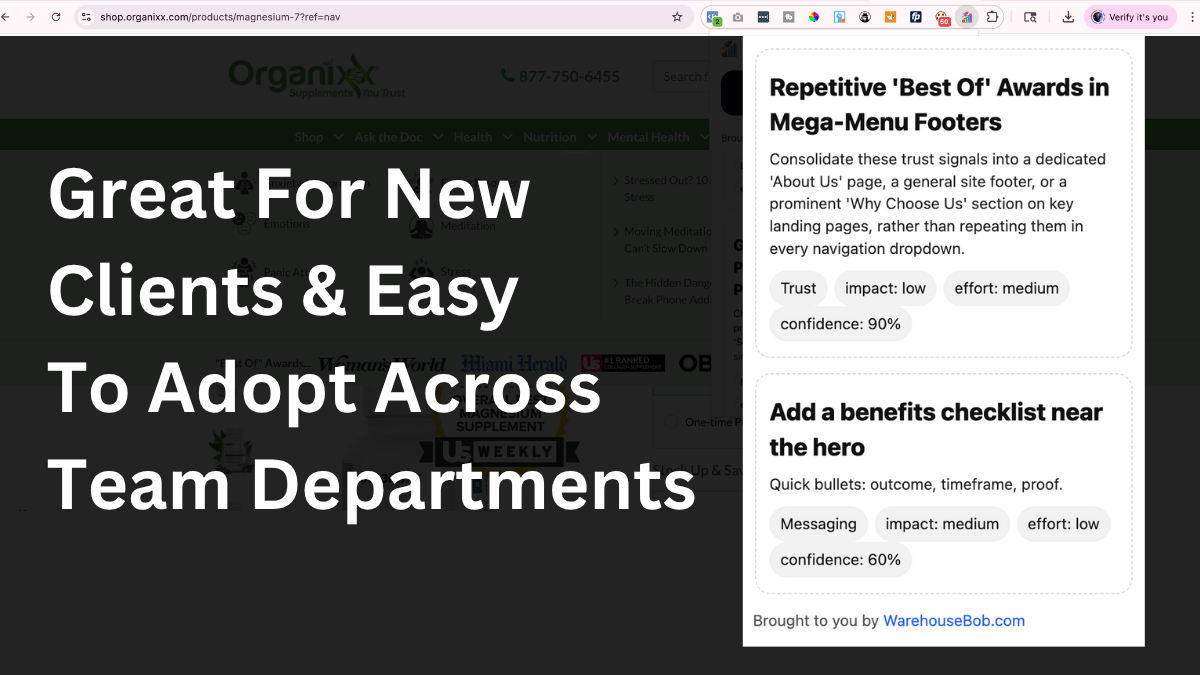
- Marketers get ranked, step-by-step fixes instead of vague best practices.
- Developers see the exact elements and sections to adjust.
- Copywriters get a second set of eyes — a built-in “copy chief” that flags gaps and proposes stronger headlines, bullets, microcopy, and CTAs.
- Integrators and entrepreneurs can run a fast pre-meeting audit, deliver concrete recommendations, and add value in cold outreach before the first call.
I built this to use daily on my own work: scan a page, get clear priorities, ship changes, and re-scan. It doesn’t just surface opportunities for modification—it also reveals where to run split tests—so user experience improves alongside conversion rate, every time.
What it does
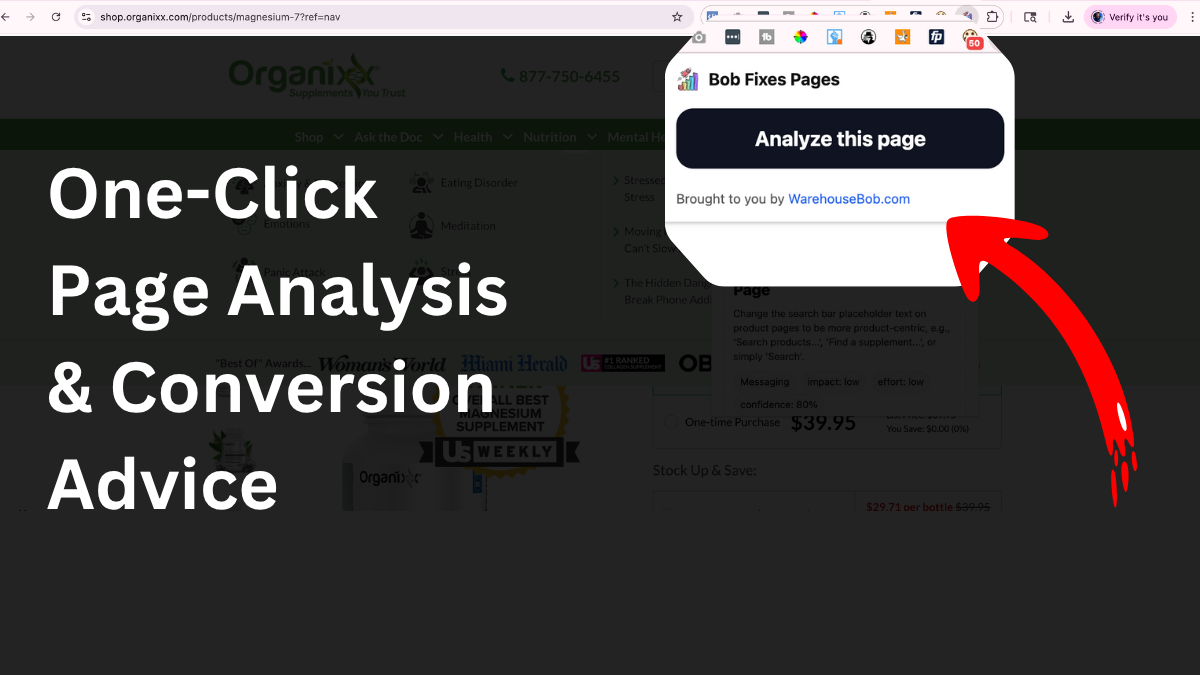
Bob Fixes Pages is a Chrome extension that gives one-click, on-page fixes to improve user experience and boost conversions on any site, page, or checkout.
How we built it
Stack: Chrome Extension (Manifest V3), TypeScript, DOM APIs.
Architecture:
- Service worker orchestrates scans and messaging.
- Content script collects page signals (DOM, copy, forms, links).
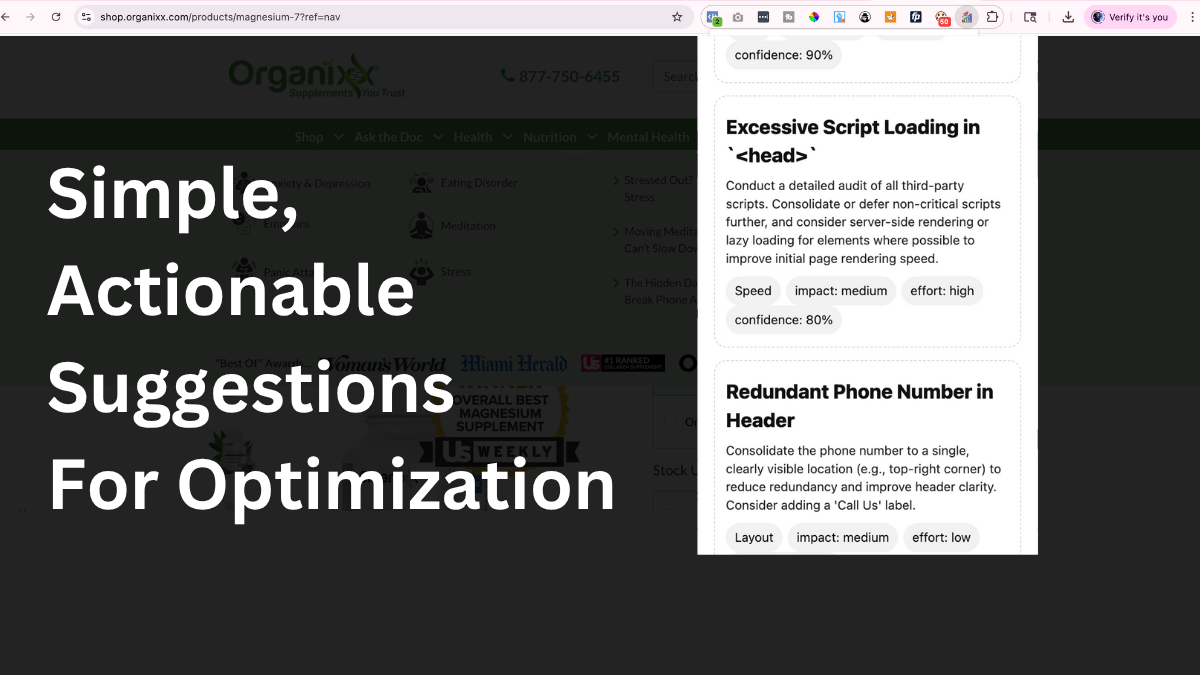
- Sidebar UI renders the scorecard, ranked fixes, and before/after copy.
CRO engine:
- Rules/heuristics distilled from years of CRO wins (clarity, proof, friction, offer/CTA).
- Gemini-powered rewrite layer proposes paste-ready headlines, bullets, CTAs, and microcopy.
Prioritization: Lightweight impact model ranks fixes (High/Med/Low) so teams ship the 20% that moves the 80%.
Developer pinpointing: Element targeting maps each recommendation to the exact section/selector to edit.
Exports: One-click task packets for ClickUp/Jira/Linear with titles, acceptance criteria, and priorities.
Privacy: Local, in-browser analysis of visible content; optional minimal payload only if a user shares a report.
Workflow loop: Open → Scan (1 click) → Apply fixes → Re-scan to verify improvement.
Challenges we ran into
Honestly, I’d never used Cloud Run and Gemini AI like this before. So it was a double learning curve: figure out the platform and ship the build. The first win was just getting it to run end-to-end. So much I had to redo because I was building on the wrong login, yeah complete rookie mistake.
After that, UX became a tightrope. Every tweak felt like, “Is this the one that breaks it again?” Dynamic pages, modals popping in late, hydration weirdness—lots of little dragons. We added staged scans, safer selectors, and a lighter sidebar to keep things snappy.
The other big lesson: make it actionable, not academic. Early outputs explained too much and didn’t help enough. We rewrote to give paste-ready words and point right at the element to change. Once that clicked, updates felt safer—and users started shipping fixes the same day.
Accomplishments that we're proud of
I’m genuinely grateful we pushed through an unfamiliar oasis—learning Cloud Run and Gemini on the fly, breaking things, fixing them, and finally getting a smooth end-to-end scan and sidebar that delivers real, paste-ready fixes. It’s not just a demo; it’s a tool I can use every day on my own pages to spot friction, sharpen copy, and ship improvements fast. That’s the win: we turned uncertainty into something practical, reliable, and personally valuable.
What we learned
Clarity and friction in the first scroll drive most of the lift. “Actionable, paste-ready” beats abstract advice every time, and mapping each recommendation to a specific element builds trust with dev and design. A simple, transparent priority model helps teams ship the 20% that moves the 80%, while a tight loop—scan → fix → re-scan—keeps momentum. We also learned to keep analysis local for privacy, and that Gemini + Cloud Run can power fast, reliable on-page guidance once you respect the platform’s quirks.
What's next for Bob Fixes Pages
Next up, we’re rolling out a premium edition for power users—advanced CRO playbooks, deeper rewrite options, and richer reporting. We’ll also keep polishing the UX so scans feel faster, the sidebar stays lighter, and fixes are even easier to apply. On the feature side, expect more segmented solutions tailored to e-commerce (PDP/checkout heuristics), SaaS (trial/activation flows), and publishers (engagement to subscription). And under the hood, we’re adapting the tech to support niche demands—think Shopify theme notes, GA/event hints, A/B draft exports, and selective frameworks support—so Bob meets you where your stack lives.
Built With
- action
- chrome-apis-(scripting
- chrome-devtools
- chrome-extension-(manifest-v3)
- clickup-api
- content-scripts
- css
- dom-apis
- express.js
- github-releases
- google-cloud-run
- google-gemini-(generative-language-api)
- html
- javascript
- jira-api
- linear-api
- node.js
- npm
- runtime
- service-worker
- sidepanel)
- storage
- tabs
- typescript
- vite/esbuild

Log in or sign up for Devpost to join the conversation.