-
-
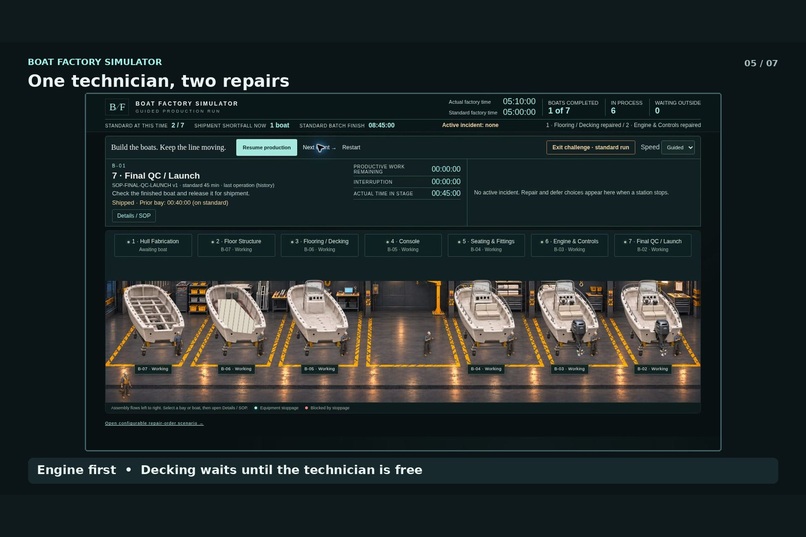
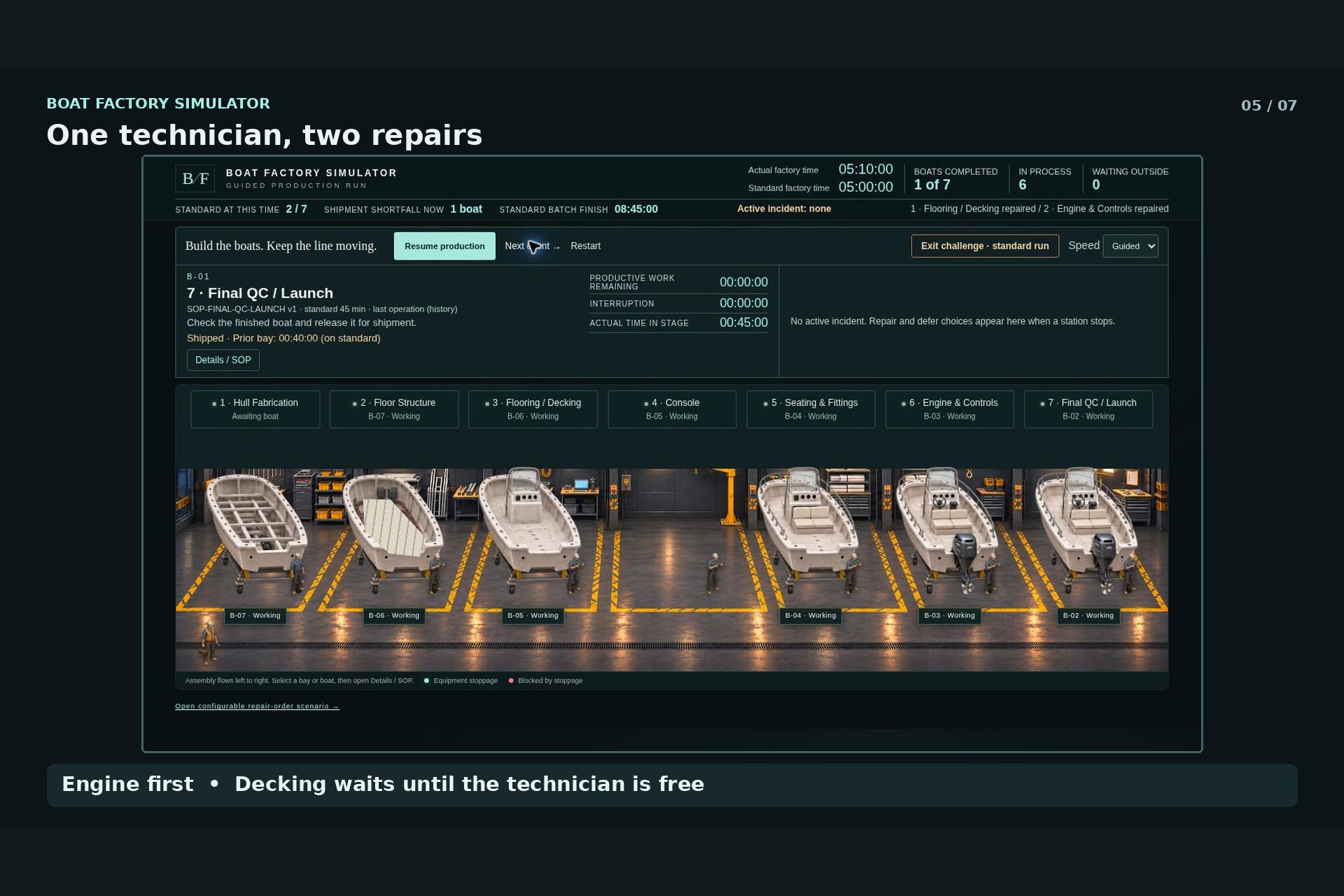
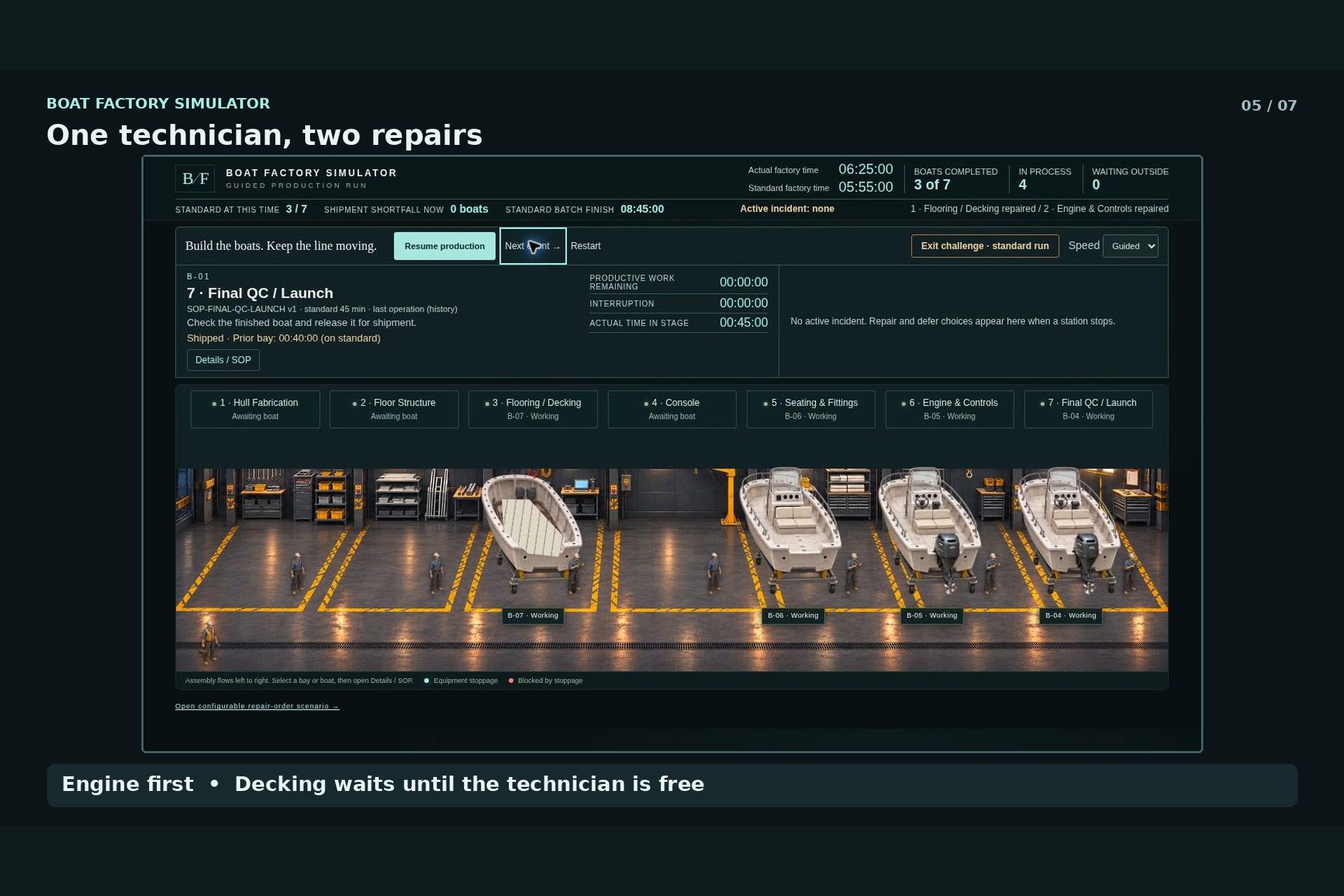
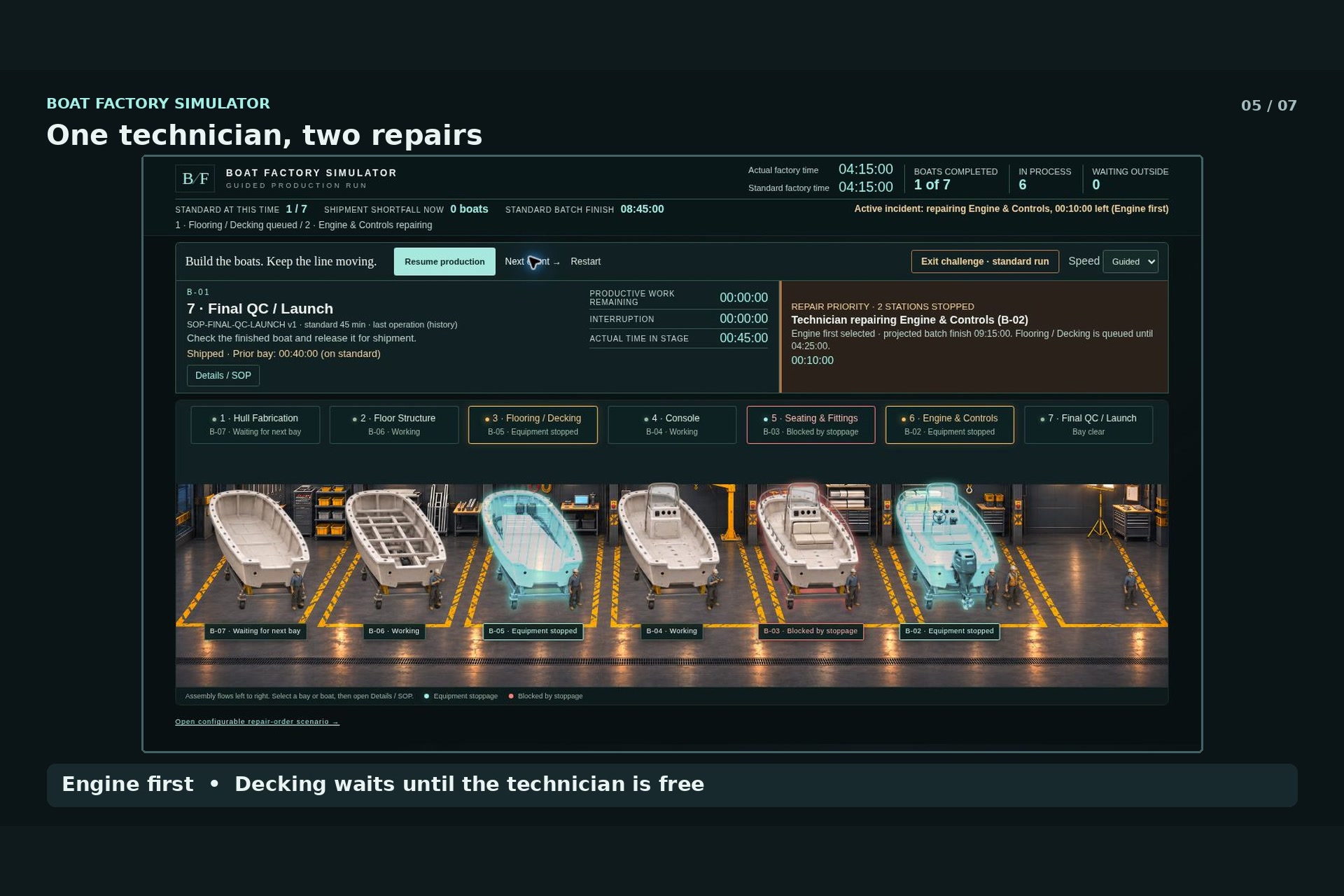
One technician, two repairs. Engine & Controls is repaired first while Flooring / Decking waits.
-
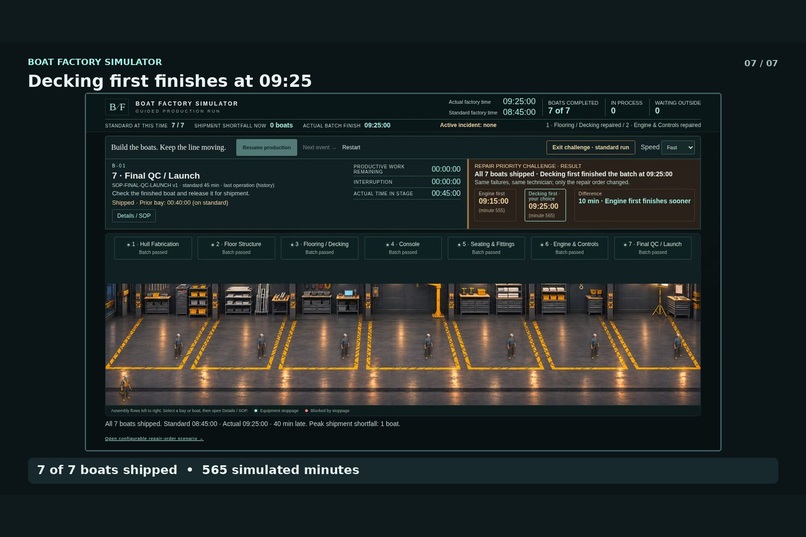
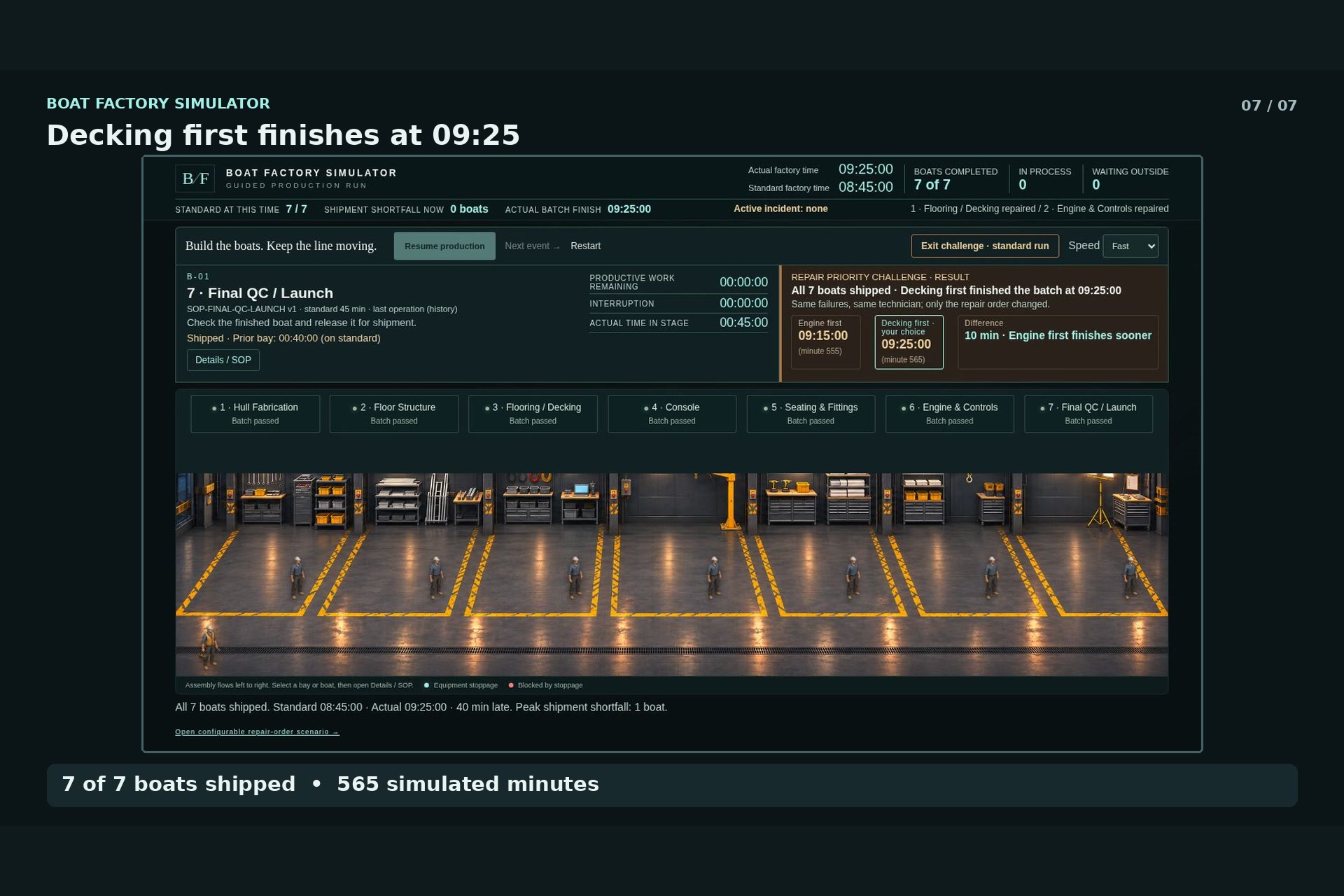
Decking first. All seven boats ship by 09:25, ten simulated minutes later.
-
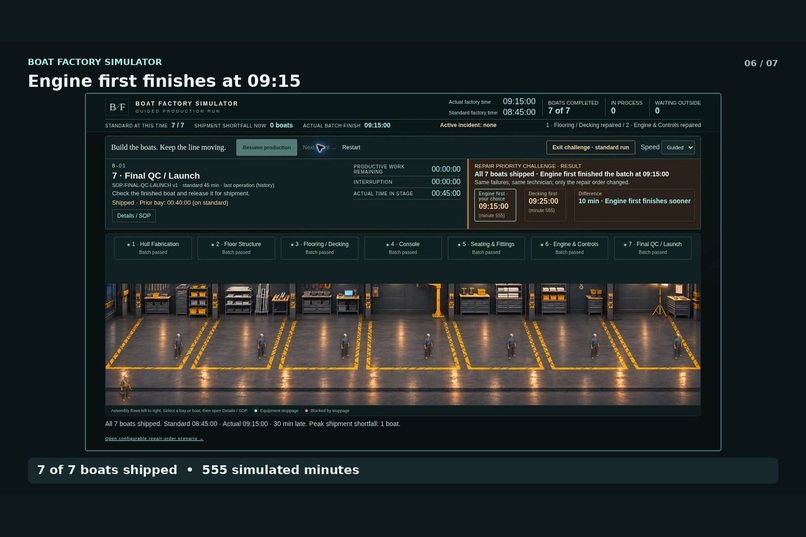
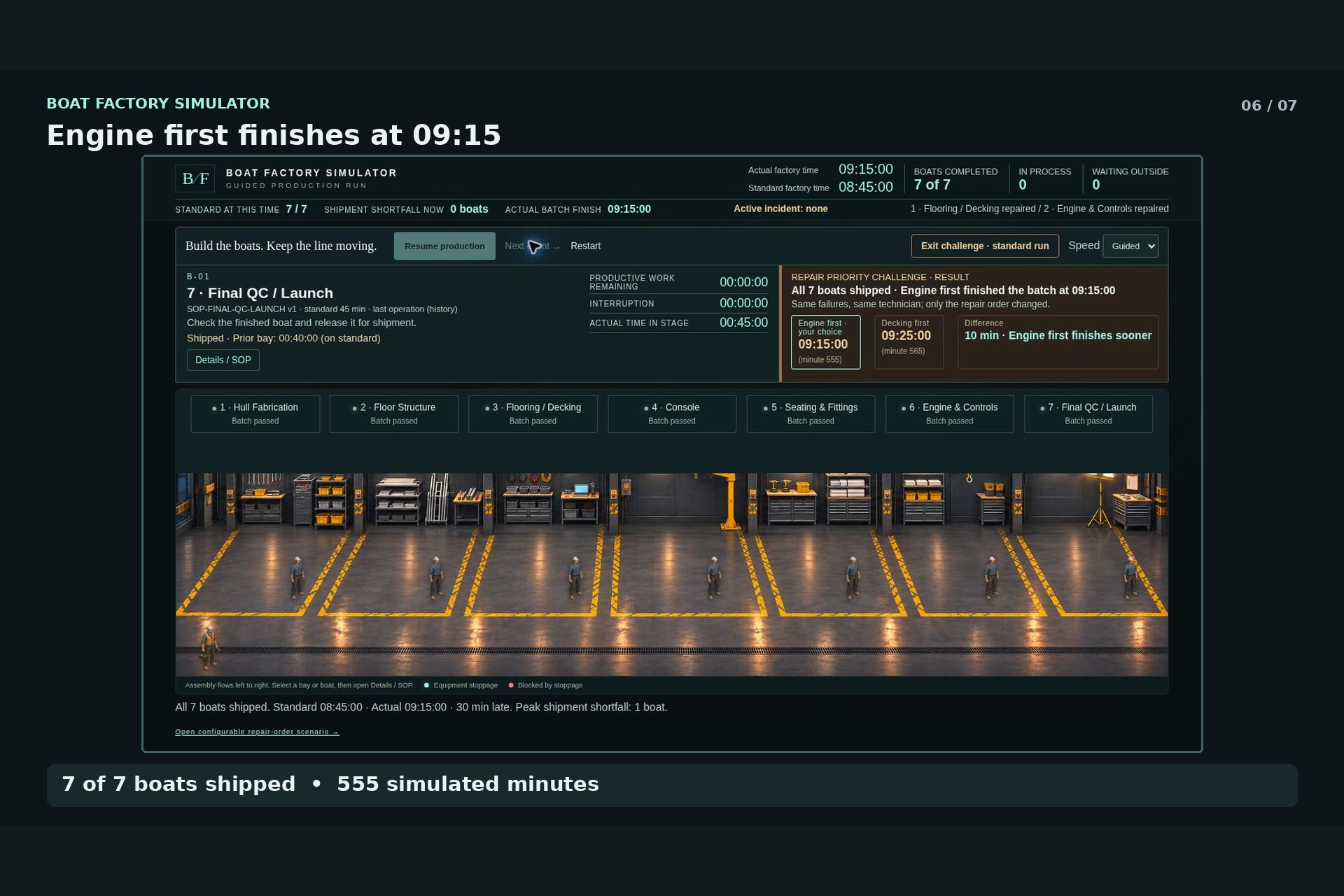
Engine first. All seven boats ship by 09:15 in simulated factory time.
-
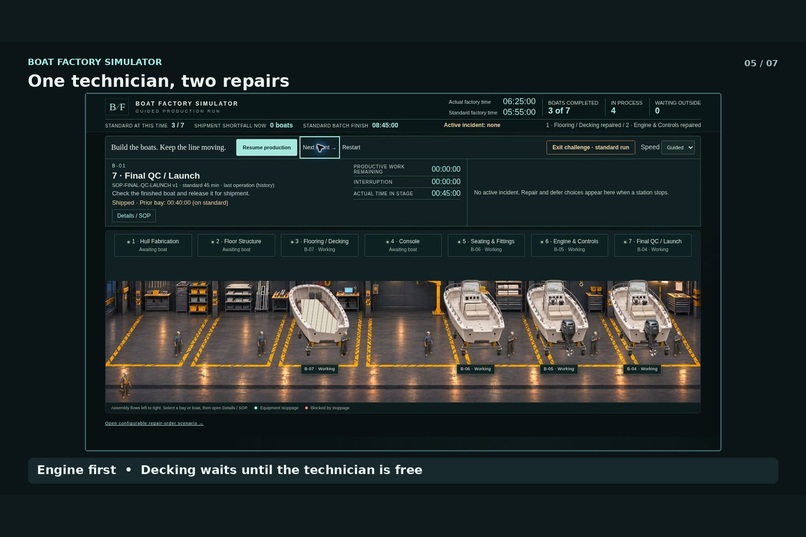
Production resumes. The boats move through the remaining stations after both repairs
-
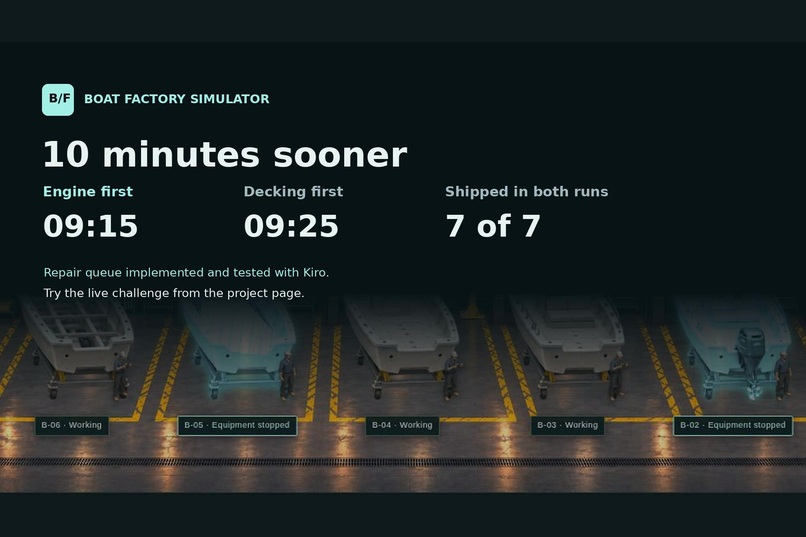
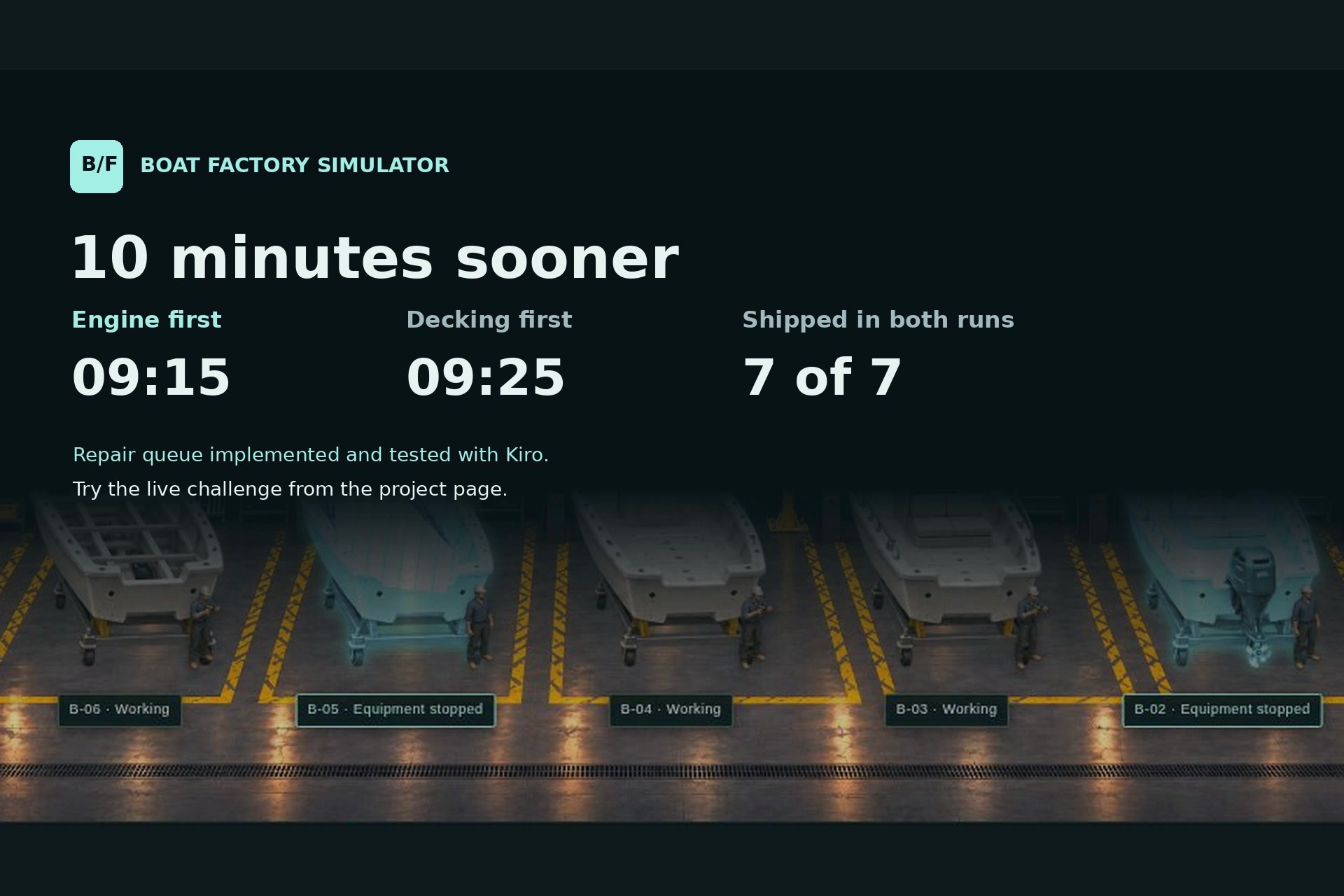
Repairing Engine & Controls first finished the batch 10 simulated minutes sooner. All seven boats shipped in both runs.
-
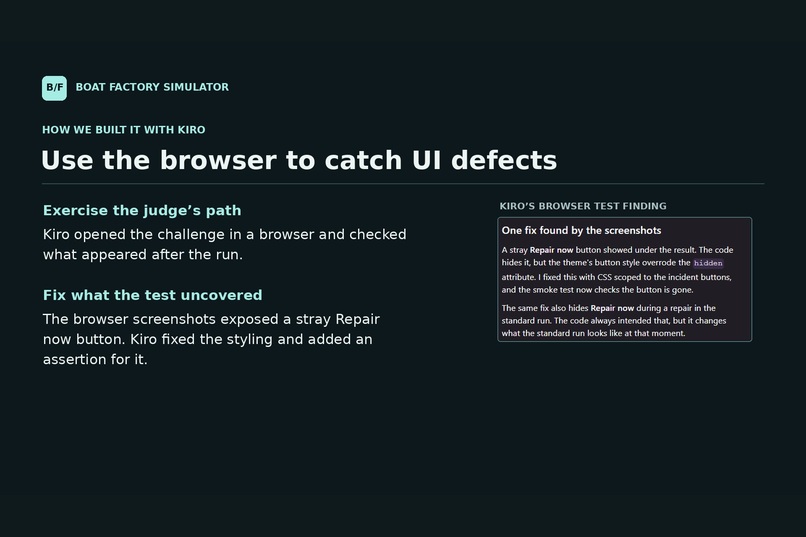
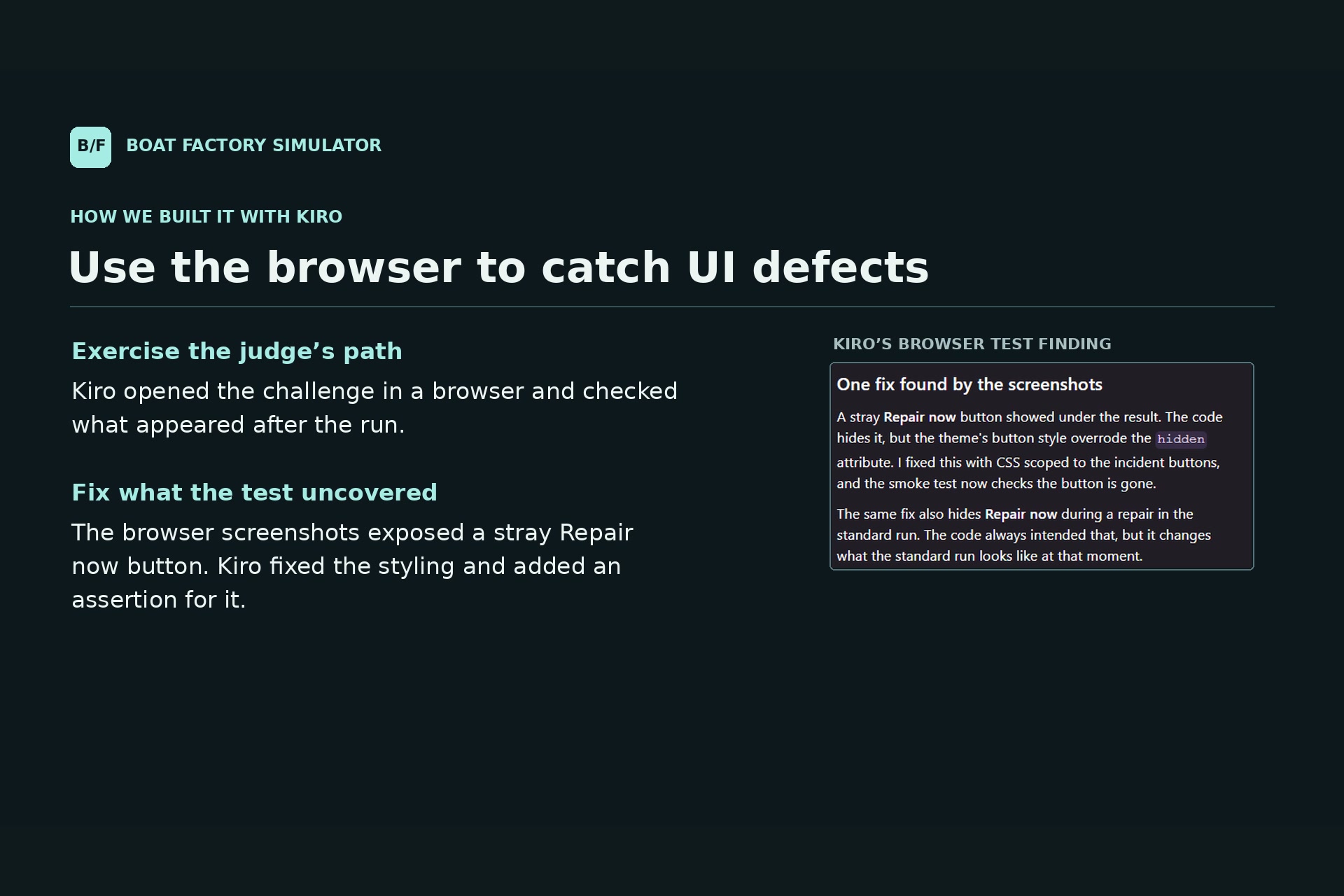
Kiro’s browser check caught a stray Repair now button after the run ended. A CSS fix hid it.
-
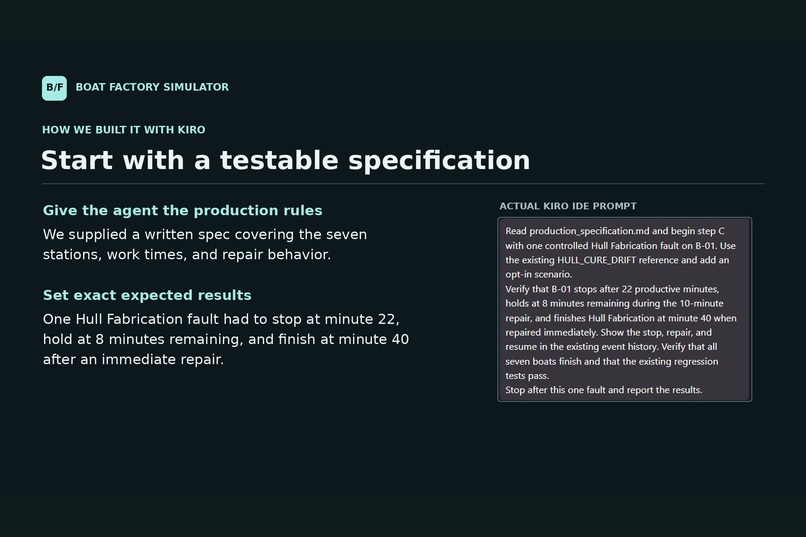
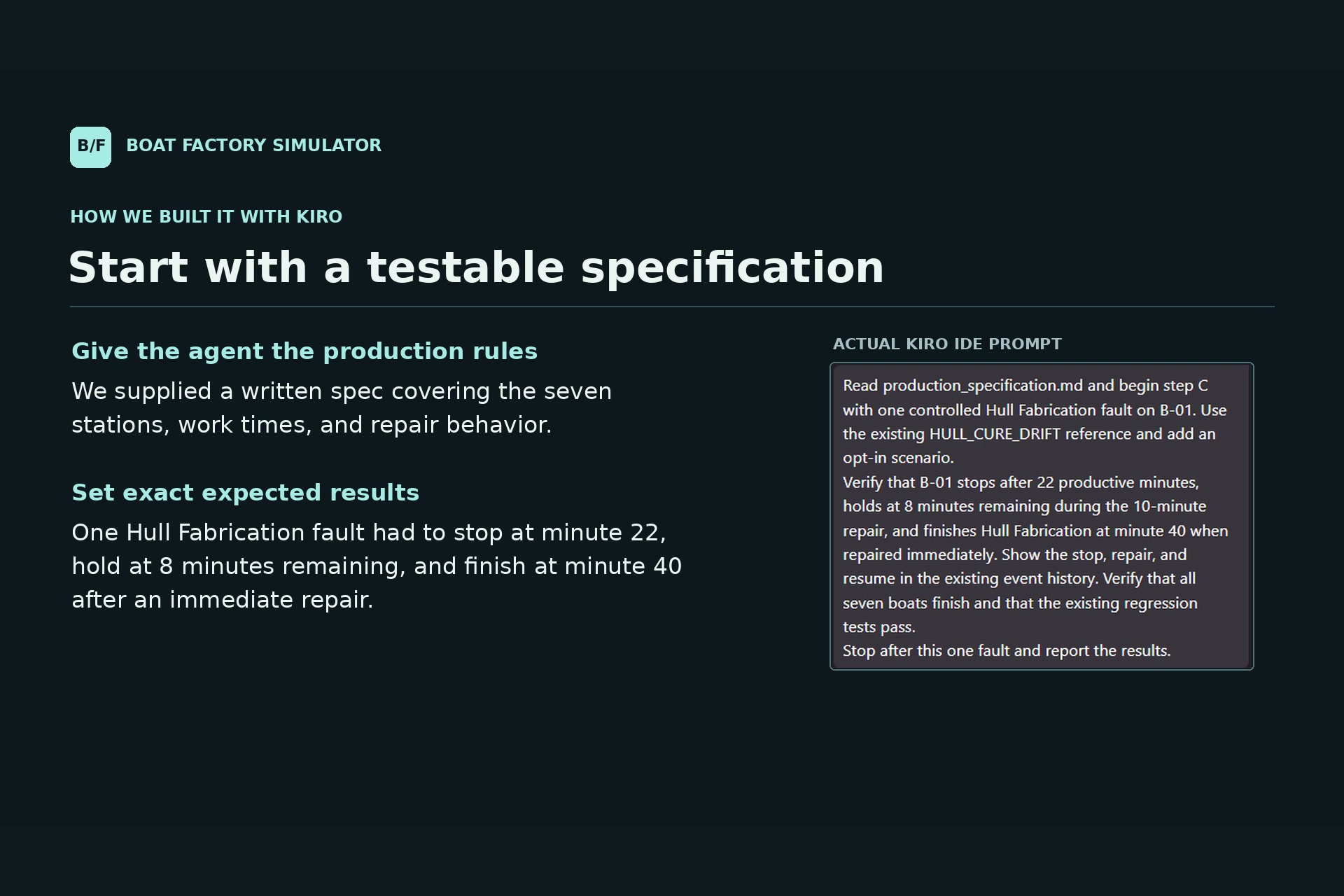
We gave Kiro a testable specification with production rules, repair constraints, and expected outcomes.
-
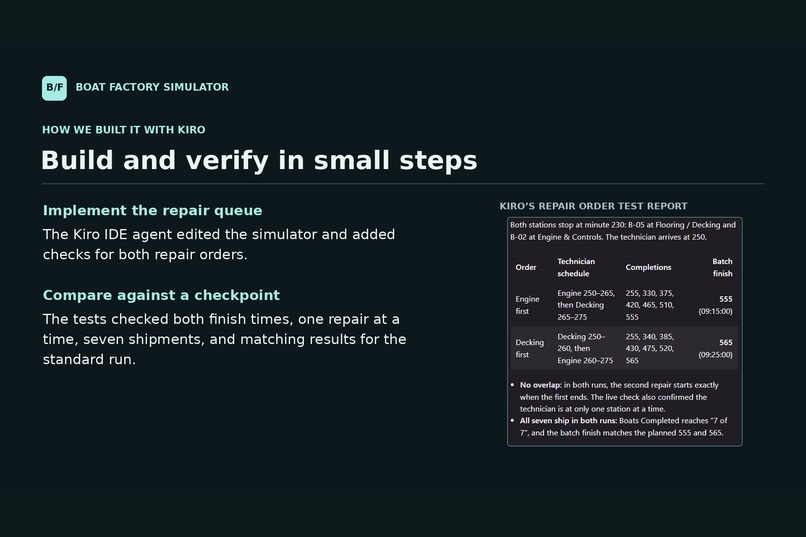
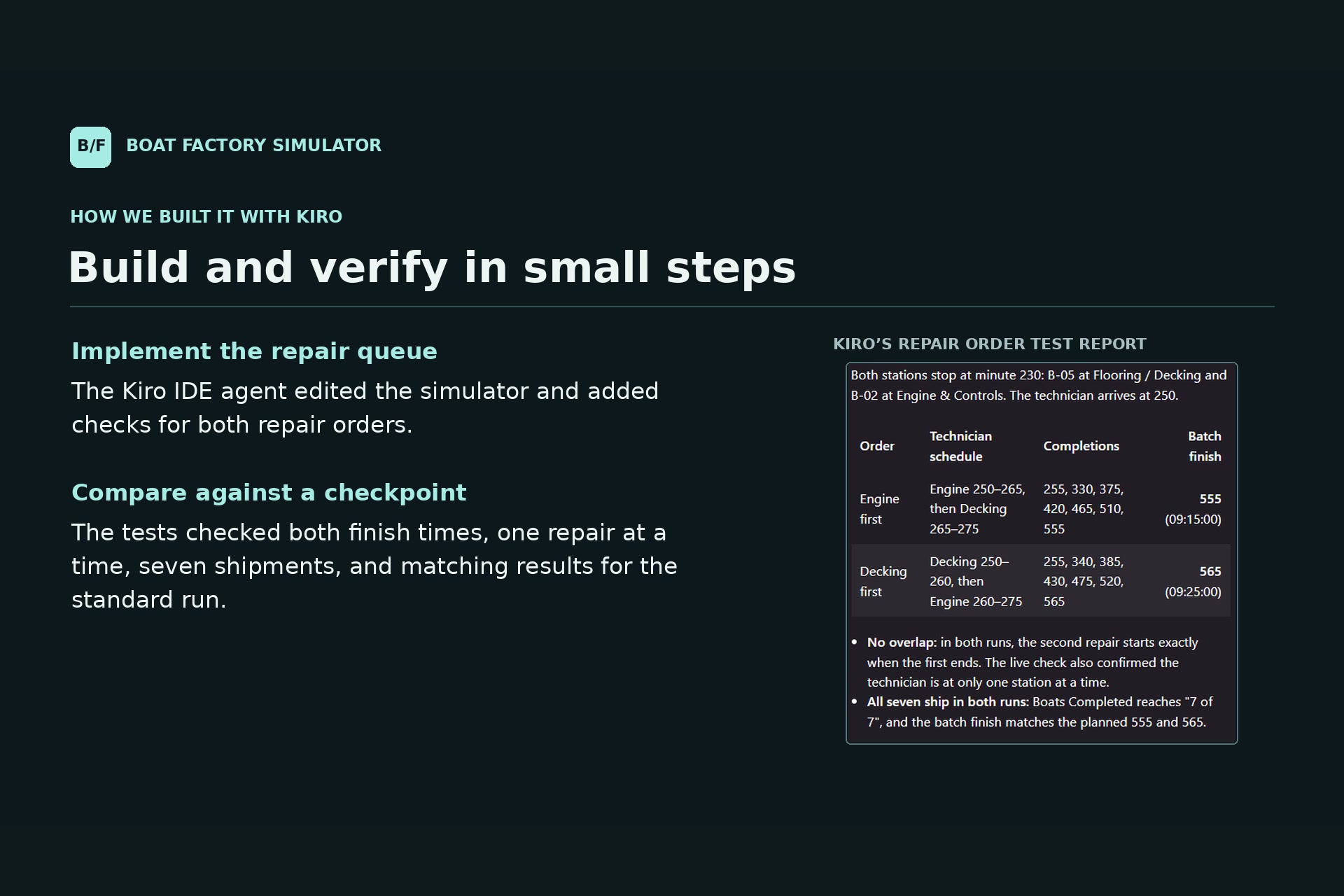
Kiro implemented the repair queue in small steps and verified both repair orders against the expected results.
-
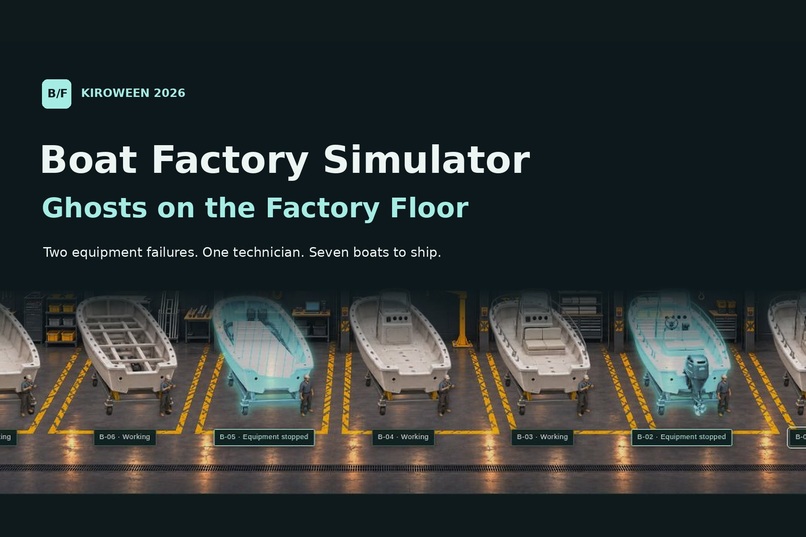
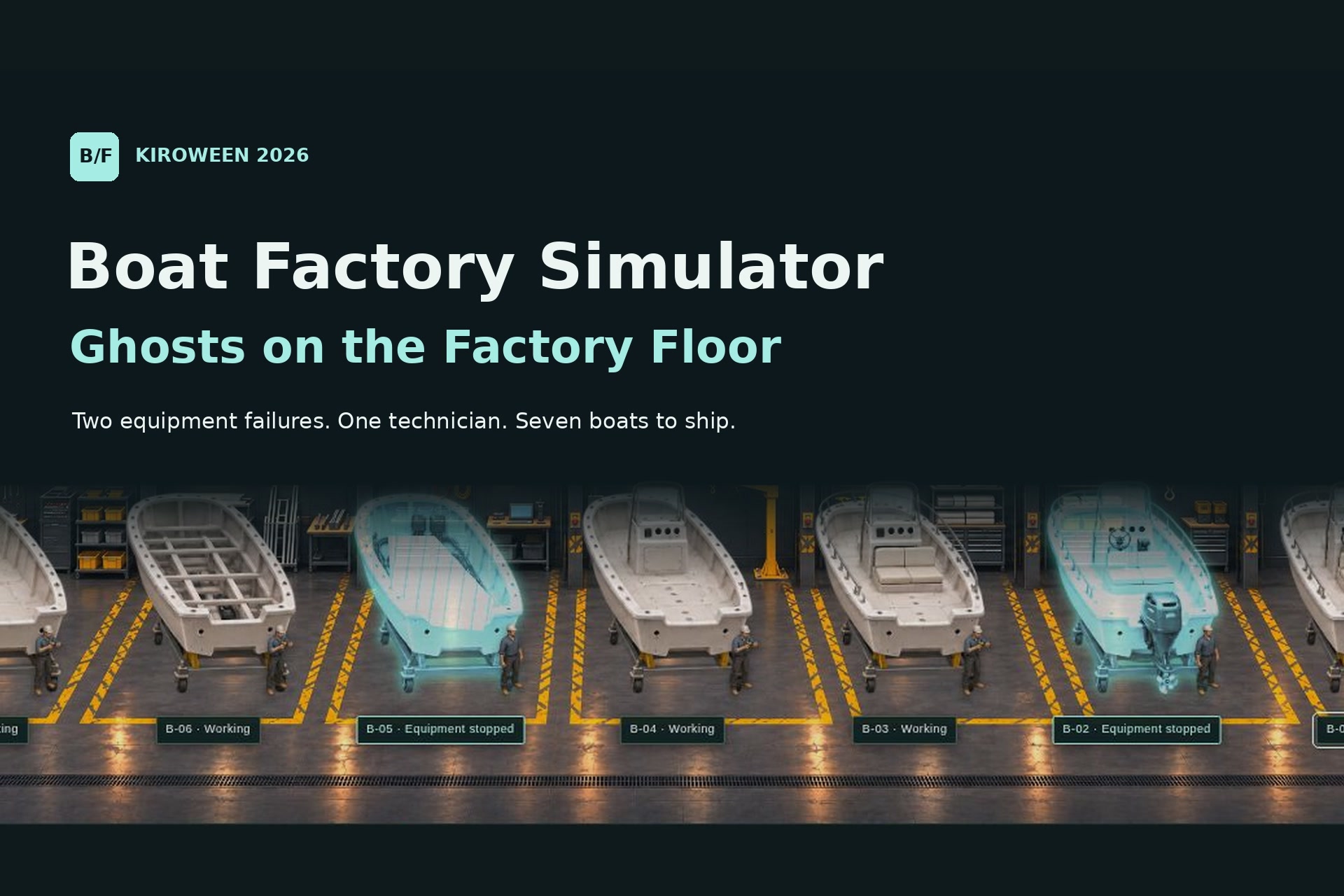
Ghosts on the factory floor. Two equipment failures, one technician, and seven boats to ship.
-
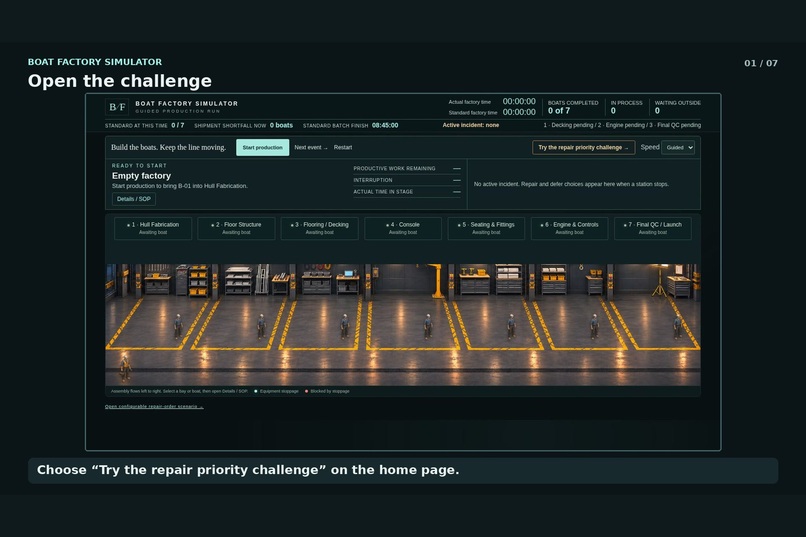
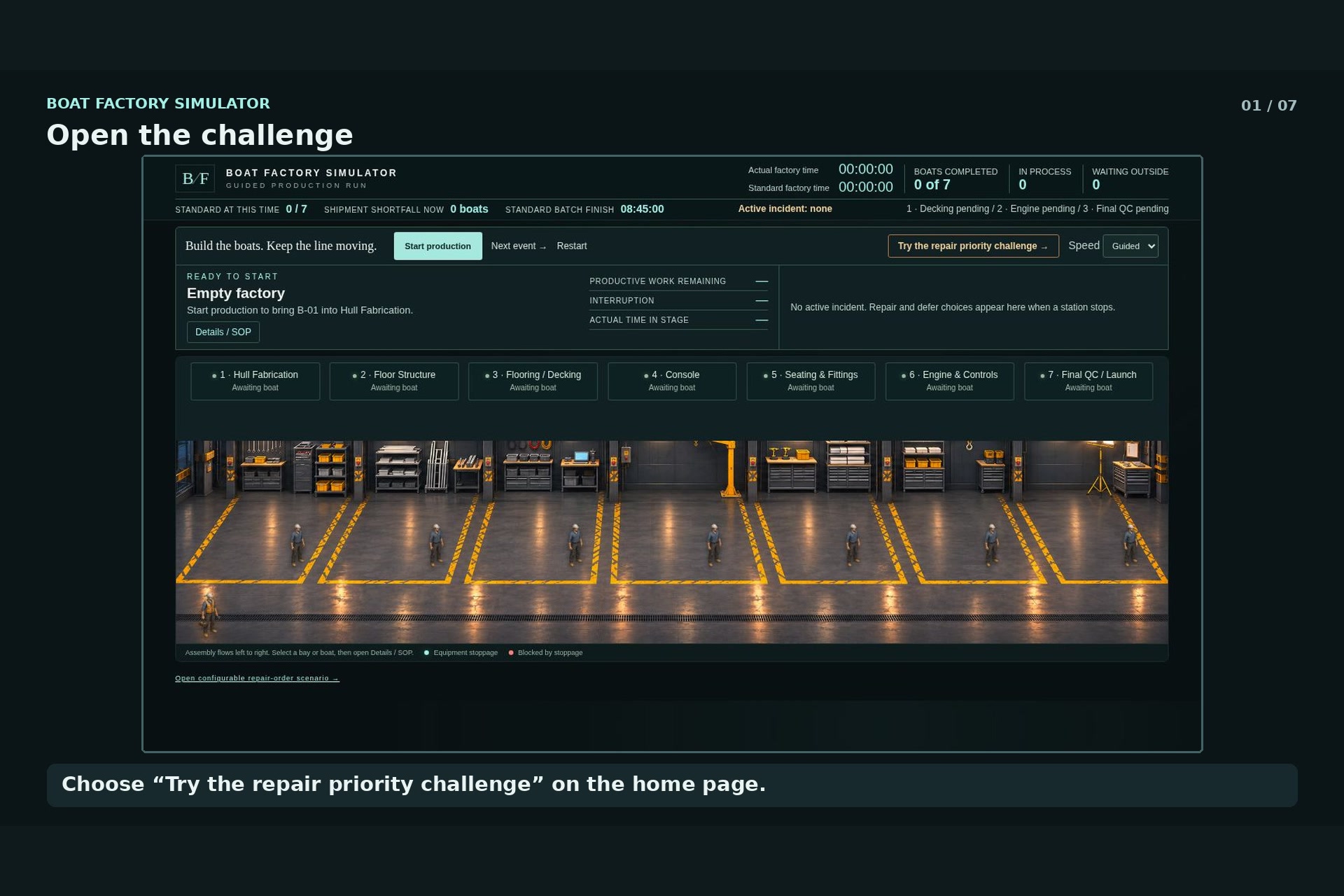
Open the Repair Priority Challenge to decide which station gets fixed first.
-
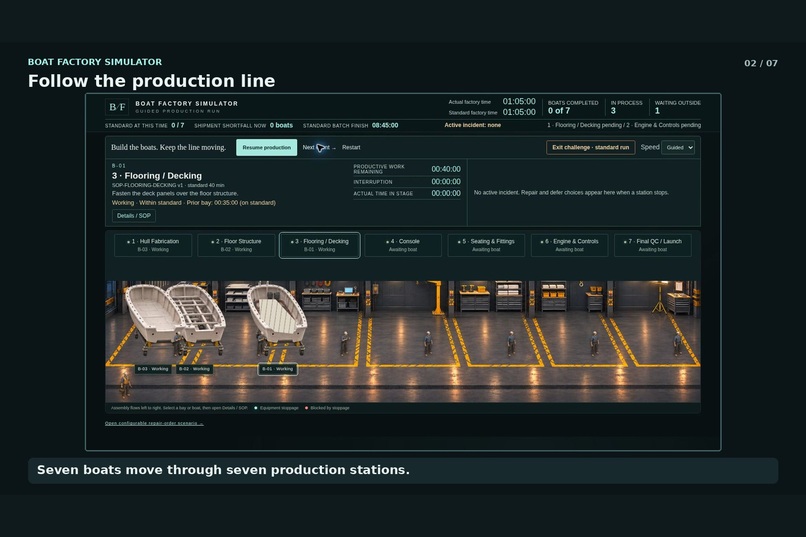
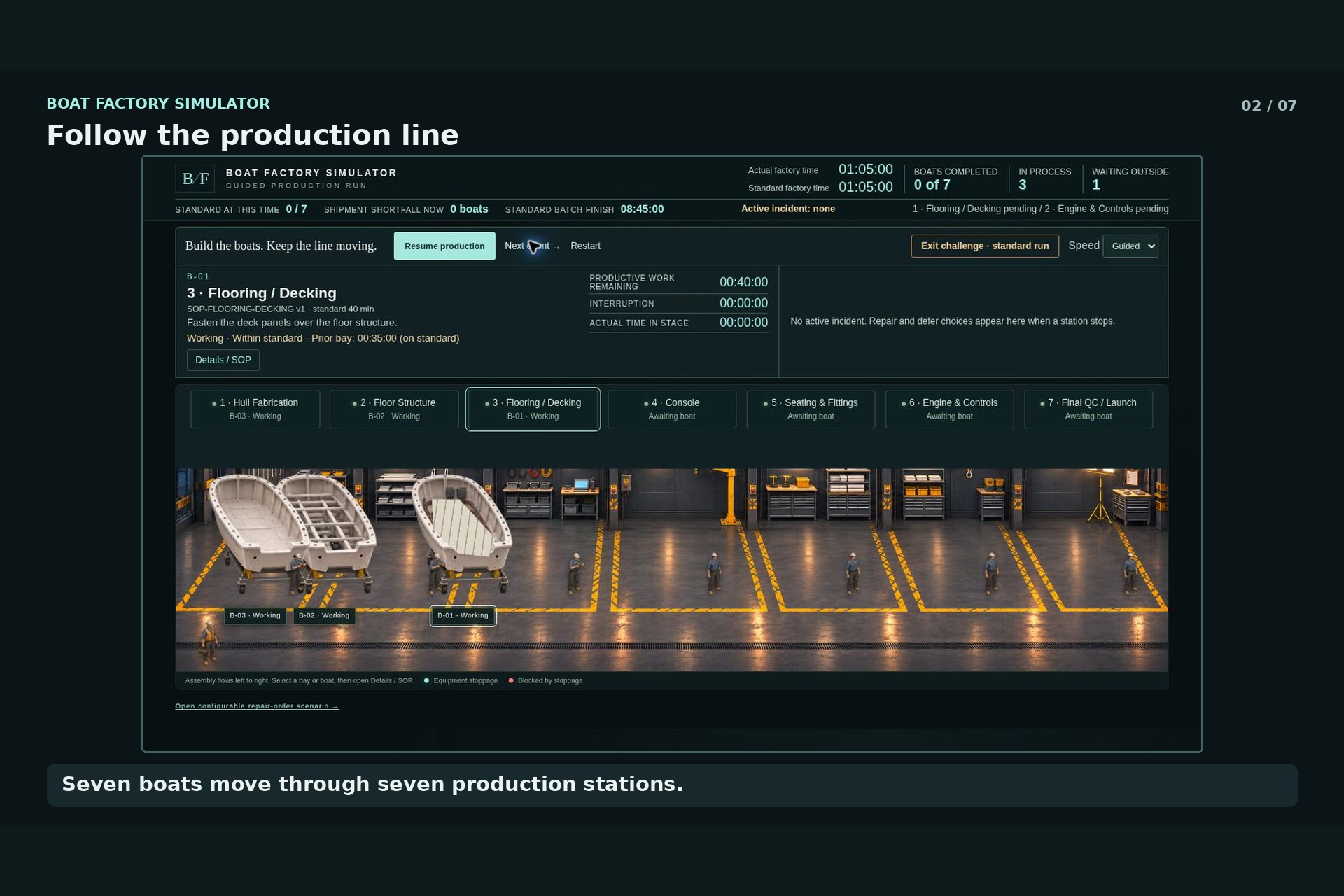
Production begins as the first boats enter the line.
-
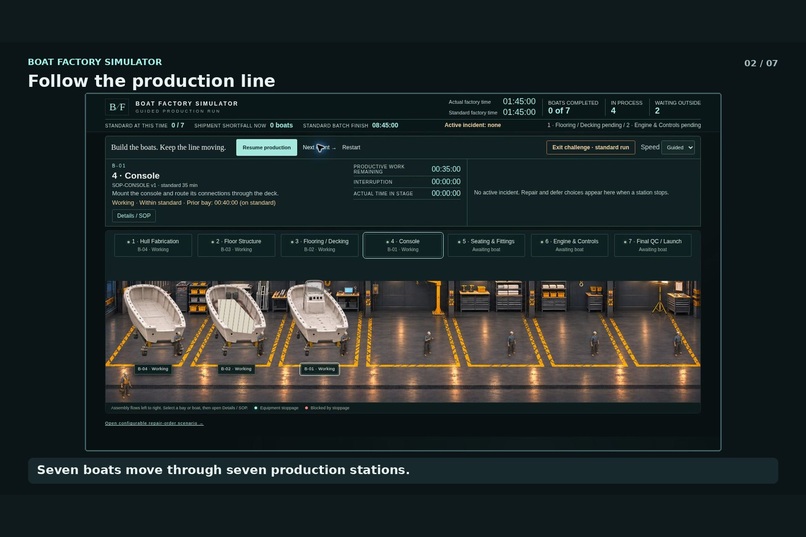
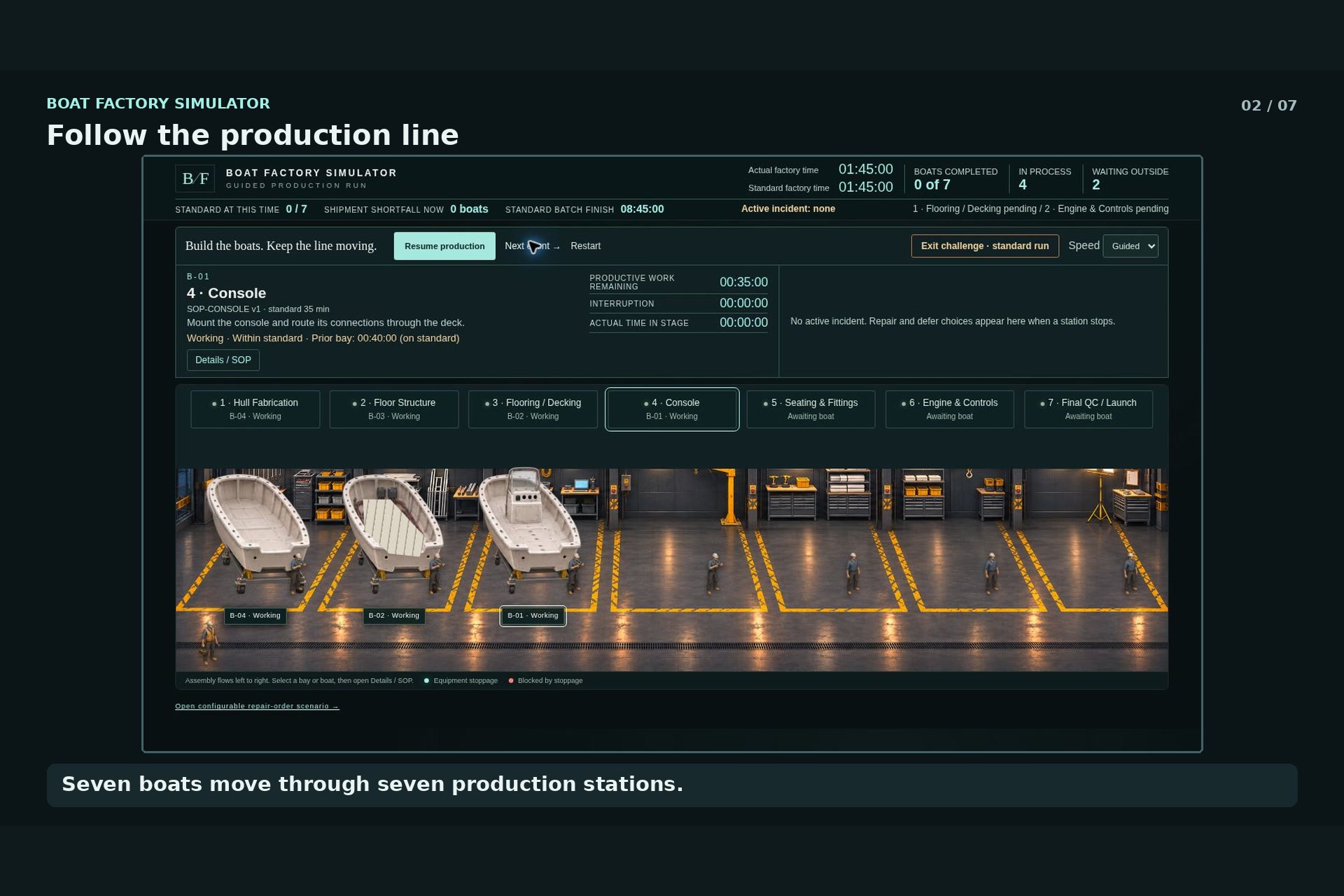
Follow the boats through seven production stations, from Hull Fabrication to Final QC / Launch.
-
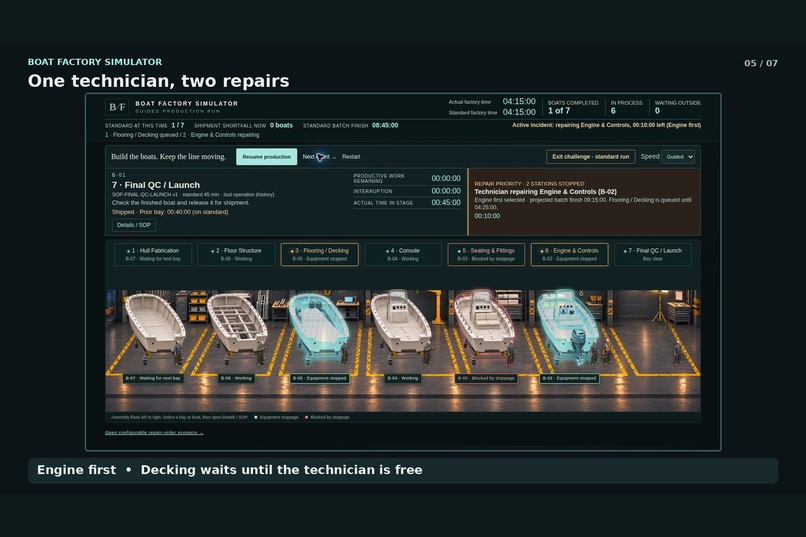
Engine & Controls gets the first repair while Flooring / Decking waits for the technician
-
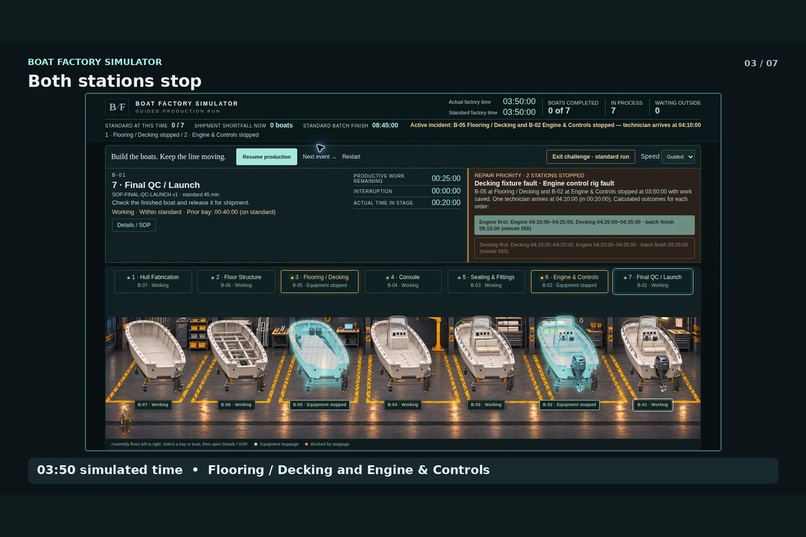
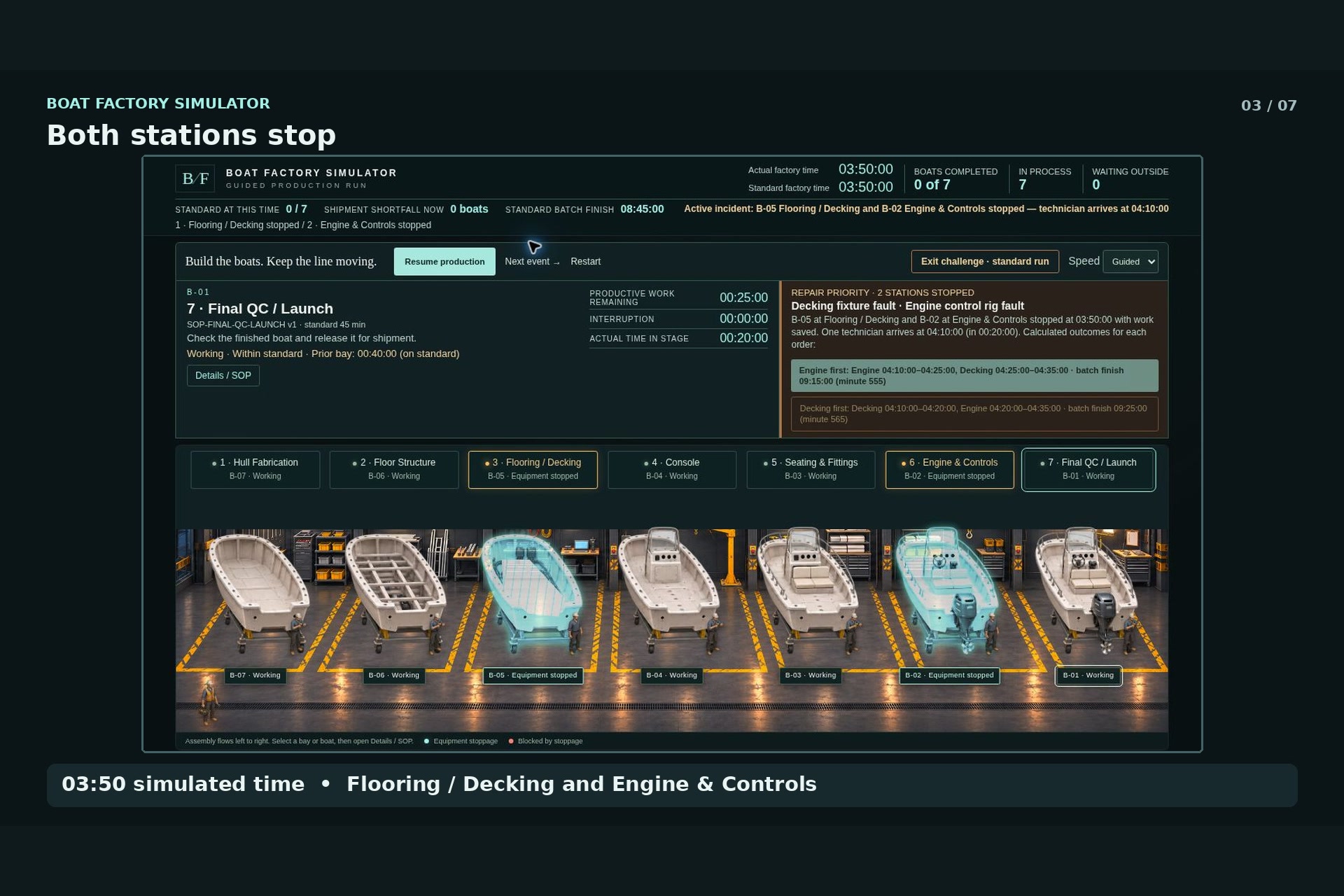
Flooring / Decking and Engine & Controls both stop at simulated minute 230.
-
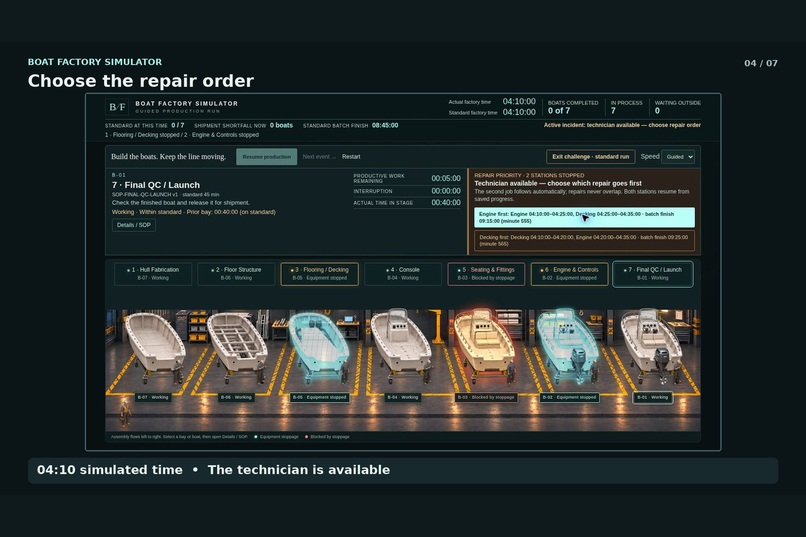
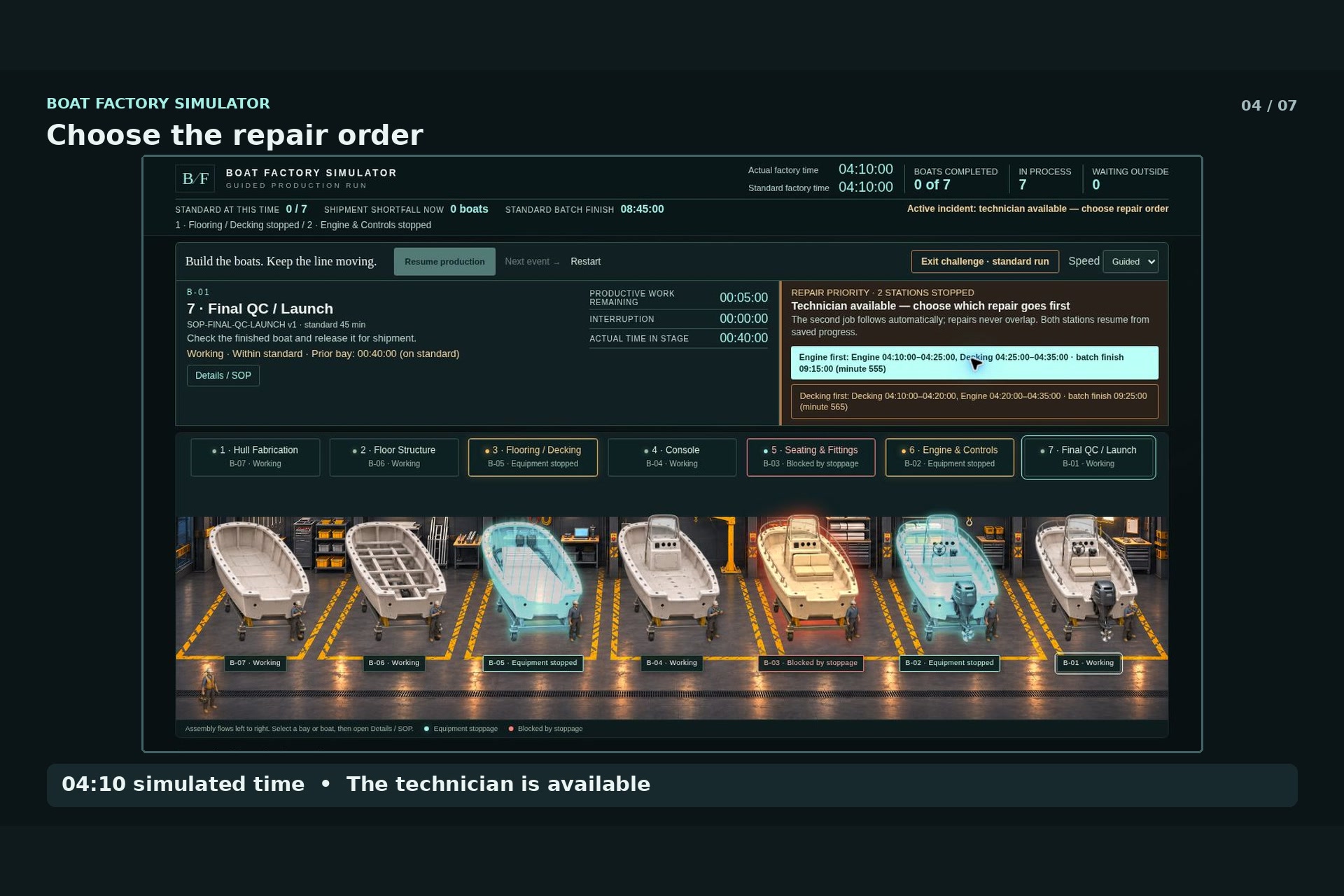
The technician arrives at minute 250. Choose which station to repair first.
Inspiration
I wanted to explore a deceptively simple decision. When two production stations break down and only one technician is available, which repair should come first? It’s easy to look at the two repair times. It’s harder to see how that choice will affect every boat still moving through the factory.
For Kiroween, I turned equipment failures into ghosts on the factory floor. When a ghost appears, the affected bay glows and work stops. The player takes over as the production supervisor and decides how to get the line moving again.
What it does
Boat Factory Simulator follows seven boats through seven stations, from hull fabrication to final inspection and launch. The dashboard shows work in progress, completed boats, and how shipments compare with the standard schedule. Players can also open a station’s operating procedure and event history to see what happened.
In the Repair Priority Challenge, Flooring and Decking and Engine and Controls stop at the same time. One technician handles both repairs, and the player chooses the order. In this scenario, Engine first ships all seven boats at 9:15 of simulated factory time. Decking first finishes at 9:25. The two repairs take the same total time in either order, but the shipment schedule changes by ten minutes.
How I built it with Kiro
I gave the Kiro IDE agent a written production specification and worked through the simulator in small steps. For an early Hull Fabrication test, I specified that work should stop after 22 productive minutes, hold at eight minutes remaining during the repair, and finish at minute 40 if repaired immediately. Those expected values gave Kiro a concrete test to implement and gave me a way to check its work.
Kiro then implemented the one-technician repair queue and wrote automated checks for both repair orders. The checks verified the batch finish times, confirmed that repairs never overlapped, and checked that all seven boats shipped. Kiro also compared the standard run against a saved checkpoint to catch regressions.
Challenges and what I learned
The main simulation challenge was keeping productive work, waiting, and repair time separate. A stopped boat has to keep the work it already completed, and a second repair has to wait until the technician is free. If either rule is wrong, the dashboard can show a plausible result even when the schedule is wrong.
The browser test caught a different kind of problem. A Repair now button was still visible after the challenge ended because a style rule overrode its hidden state. Kiro fixed the styling and added a check for that specific bug. Both repair orders were then played through on the public demo in Chrome.
What I took away was the value of giving Kiro measurable outcomes before asking it to change the code. The timing tests showed whether the factory behaved as specified. The browser walkthrough showed whether a player could understand and use it.
Built With
- csss3
- html5
- javascript
- kiro
