-
-

live lobby
-

learning variants
-
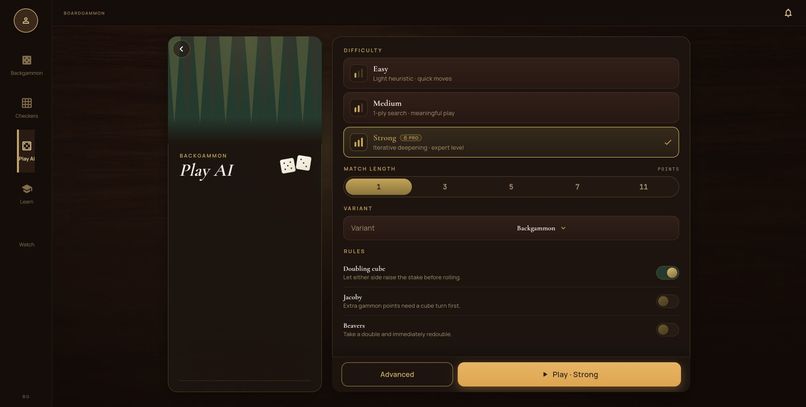
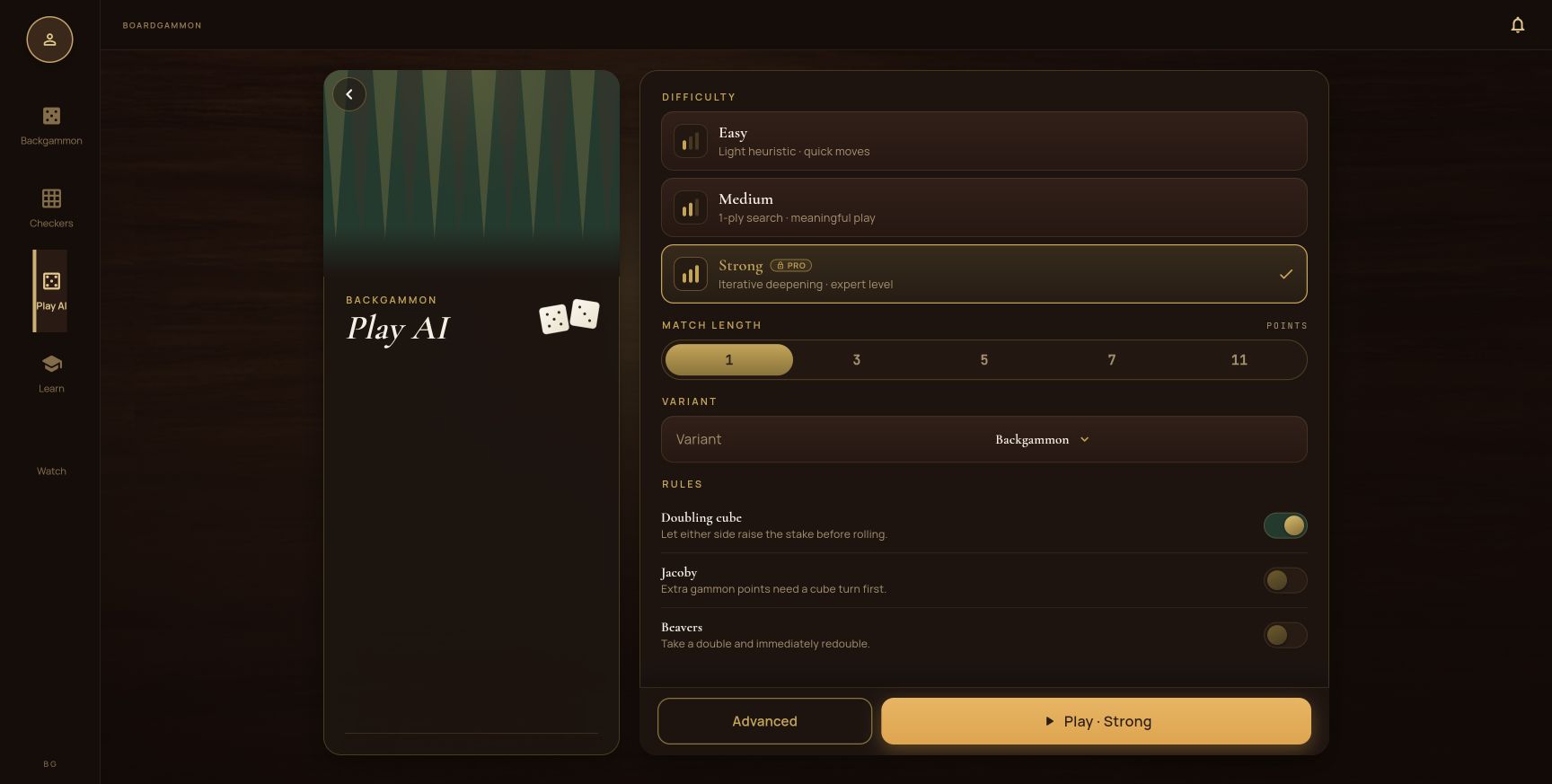
ai match setup
-
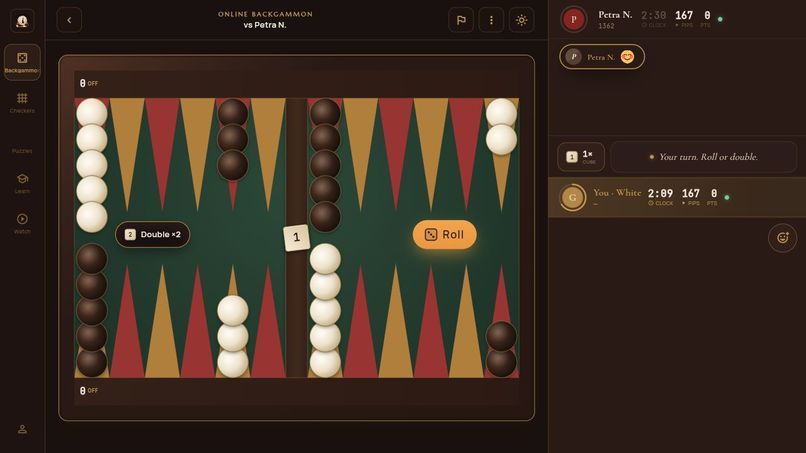
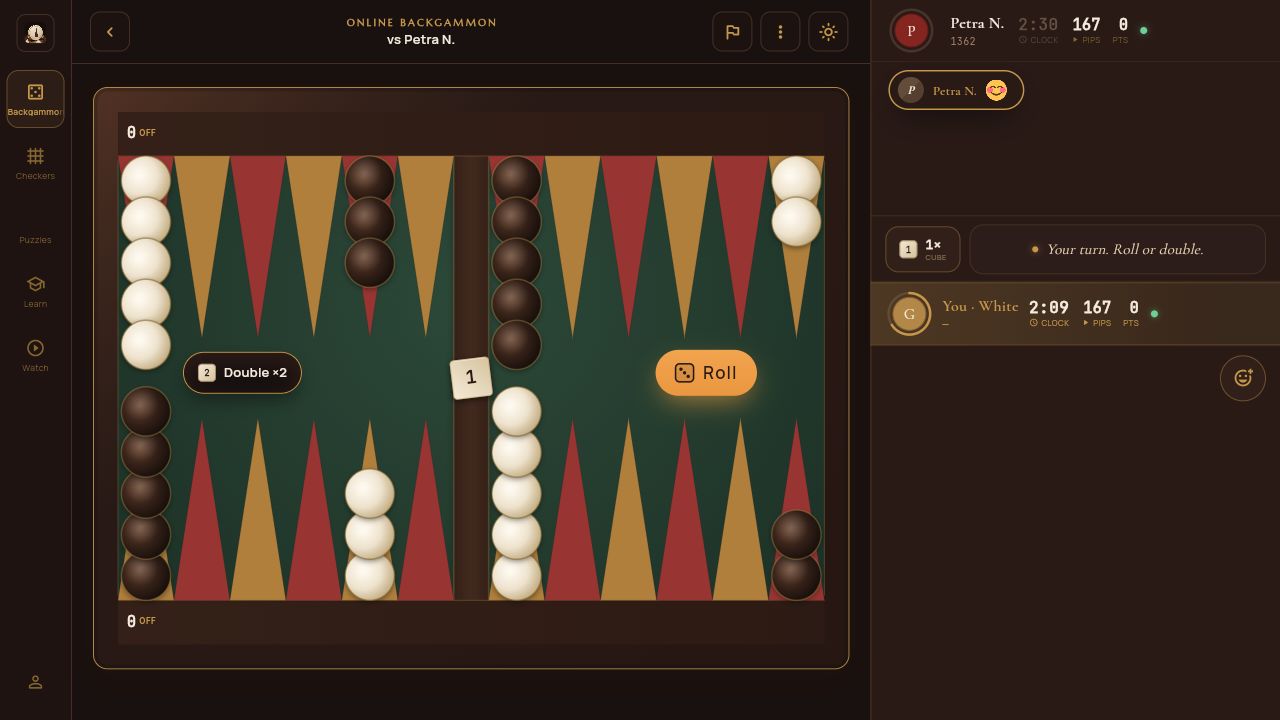
online match live


Inspiration
Backgammon is a timeless social game: played at home, in cafés, and between generations across many cultures. Yet online backgammon often feels either untrustworthy, overly casual, or inaccessible to players who want to improve.
We wanted to build a modern backgammon home where players can compete with confidence, trust the dice, play opponents at the right level, and understand what happened after a match.
What it does
Boardgammon is a cross-platform backgammon experience with:
- Live online matches with server-authoritative gameplay
- Provably fair dice using a cryptographic commit-reveal protocol
- AI opponents across several skill levels
- Detailed post-game analysis, including move quality, equity loss, cube decisions, and luck
- Multiplayer social features, puzzles, tournaments, and multiple languages with RTL support
- WebRTC voice chat for a more human table experience
The goal is to make backgammon feel both welcoming for new players and deep enough for serious ones.
How we built it
Boardgammon is built with Flutter and Dart for the mobile and web experience, and Go for the real-time backend. PostgreSQL and Redis support durable online games, accounts, matchmaking, ratings, and realtime sessions.
The game rules are treated as a source of truth and tested across Dart, Go, and Python. The server generates dice, validates moves, and records match events so online gameplay does not depend on trusting the client.
For AI, we use approachable heuristics for beginner levels, an on-device neural engine for stronger play, and GNU Backgammon for expert server-side analysis. We used OpenAI Codex throughout development to accelerate implementation, debugging, testing, refactoring, and documentation while our team retained ownership of the architecture and product decisions.
Challenges we ran into
The biggest challenge was balancing a simple, enjoyable game experience with the real complexity of backgammon.
Legal moves can involve the bar, hits, bearing off, doubles, the doubling cube, Crawford rules, and different variants. Fair dice also cannot be a hidden technical detail: players need a way to trust the result. We designed the online protocol around server authority and verifiable commit-reveal dice.
Another challenge was making expert analysis useful. Numbers such as equity loss and cube errors are valuable, but only when they are presented clearly enough to help players learn rather than overwhelm them.
Accomplishments that we're proud of
We are proud that Boardgammon is more than a board UI. It is a complete online game platform with fair-play foundations, multiplayer infrastructure, voice chat, AI play, analysis, social features, and a visual identity rooted in the heritage of the game.
We are especially proud of the cryptographically verifiable dice system, cross-language rules validation, and the combination of on-device and server-side AI analysis.
What we learned
We learned that trust is a product feature. Correct rules, fair dice, and transparent analysis matter as much as a polished interface.
We also learned the importance of clear system boundaries. Separating the game engine, AI evaluation, board UI, and online services made it possible to grow the product without compromising correctness.
Finally, we learned that AI developer tools are most valuable when they help a team move faster while preserving deliberate human judgment about gameplay, safety, design, and product direction.
What's next for Boardgammon
Next, we are focused on expanding the web “play now” experience, preparing public iOS and Android releases, completing store integrations, and improving localization for more of our launch communities.
We will continue developing learning and analysis experiences, growing the player community, and making Boardgammon the most trusted place to play and improve at backgammon online.

Log in or sign up for Devpost to join the conversation.