-
-
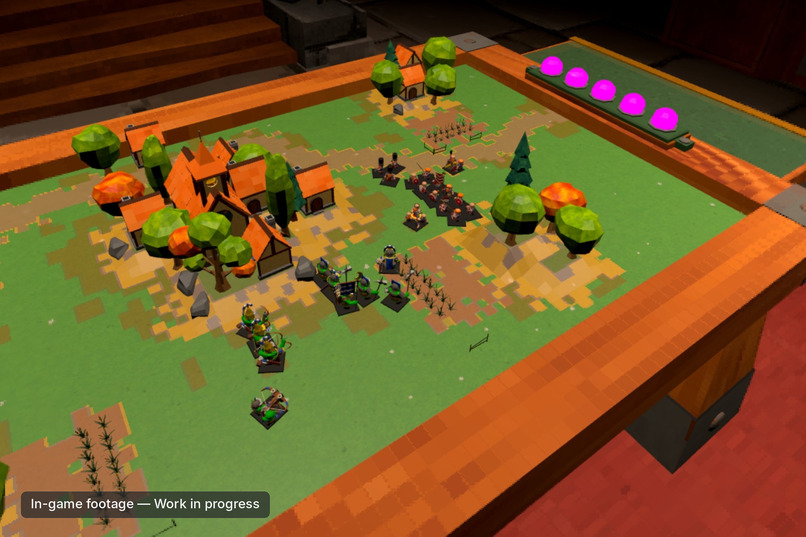
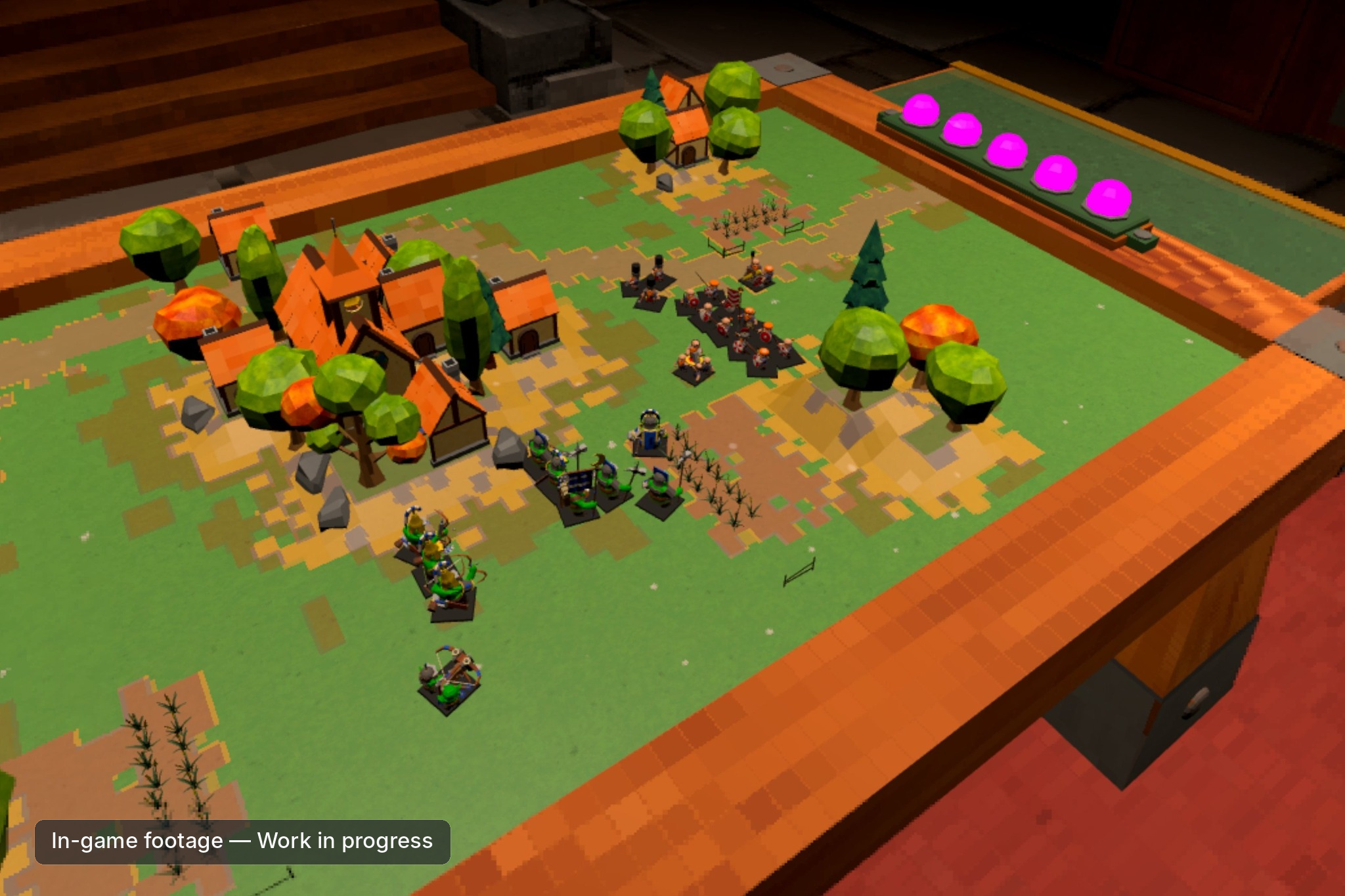
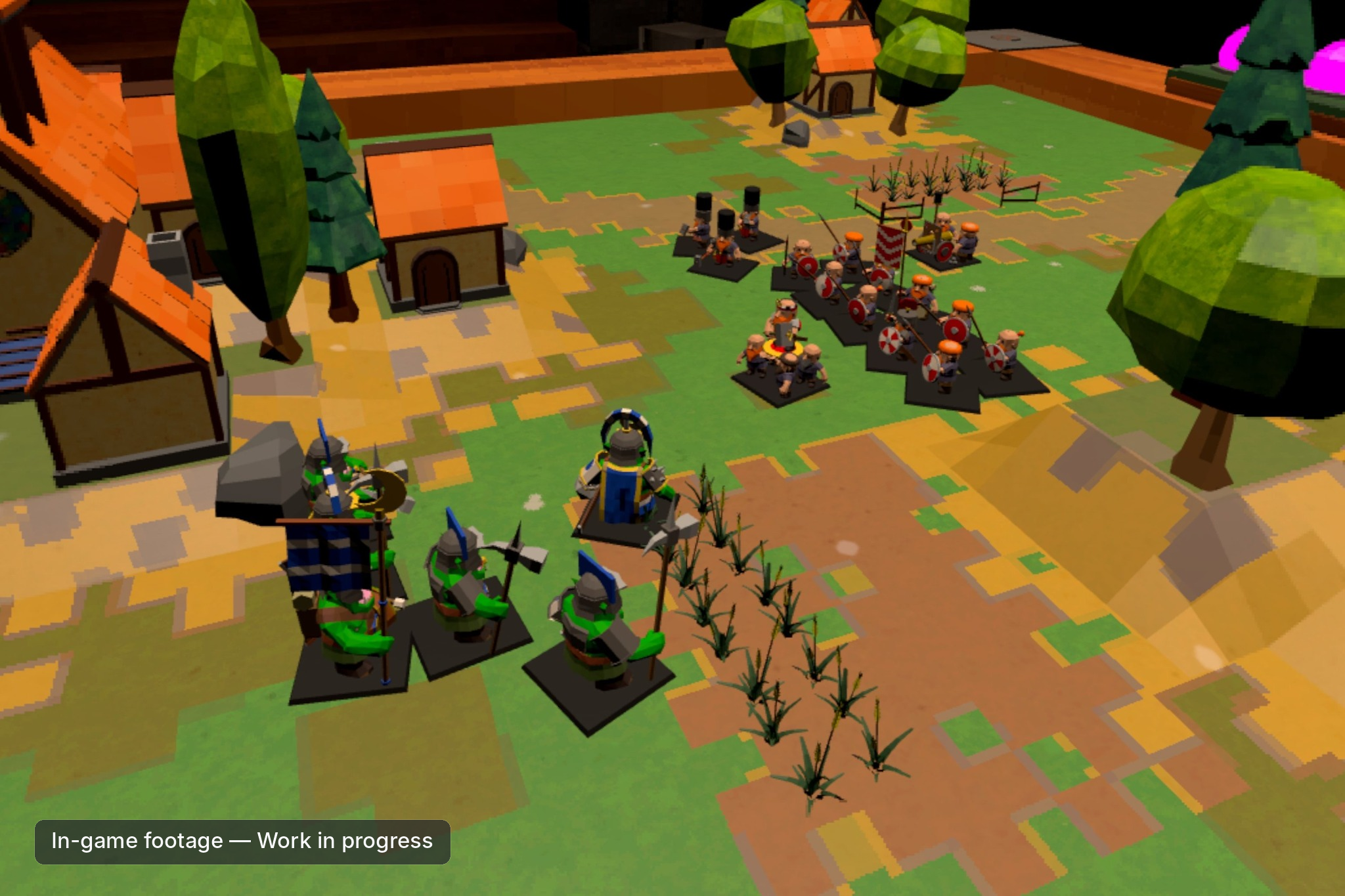
Battlefield overview — Opposing miniature armies deployed across a low-poly fantasy village.
-
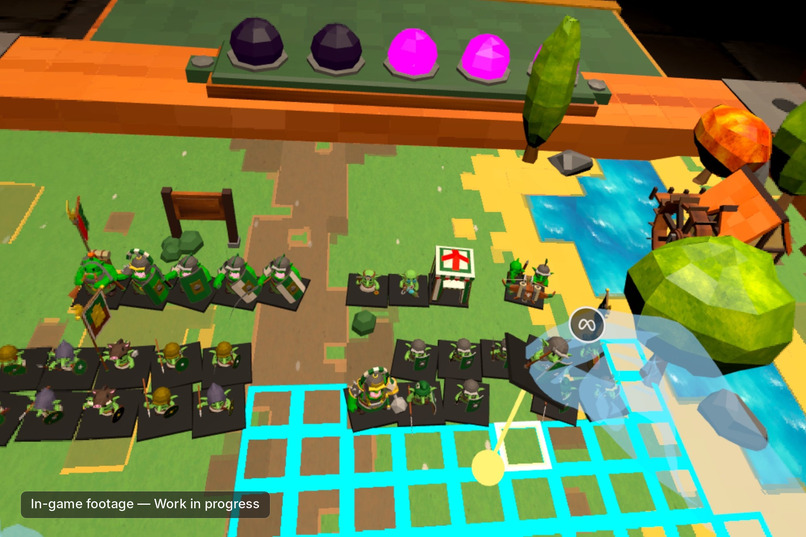
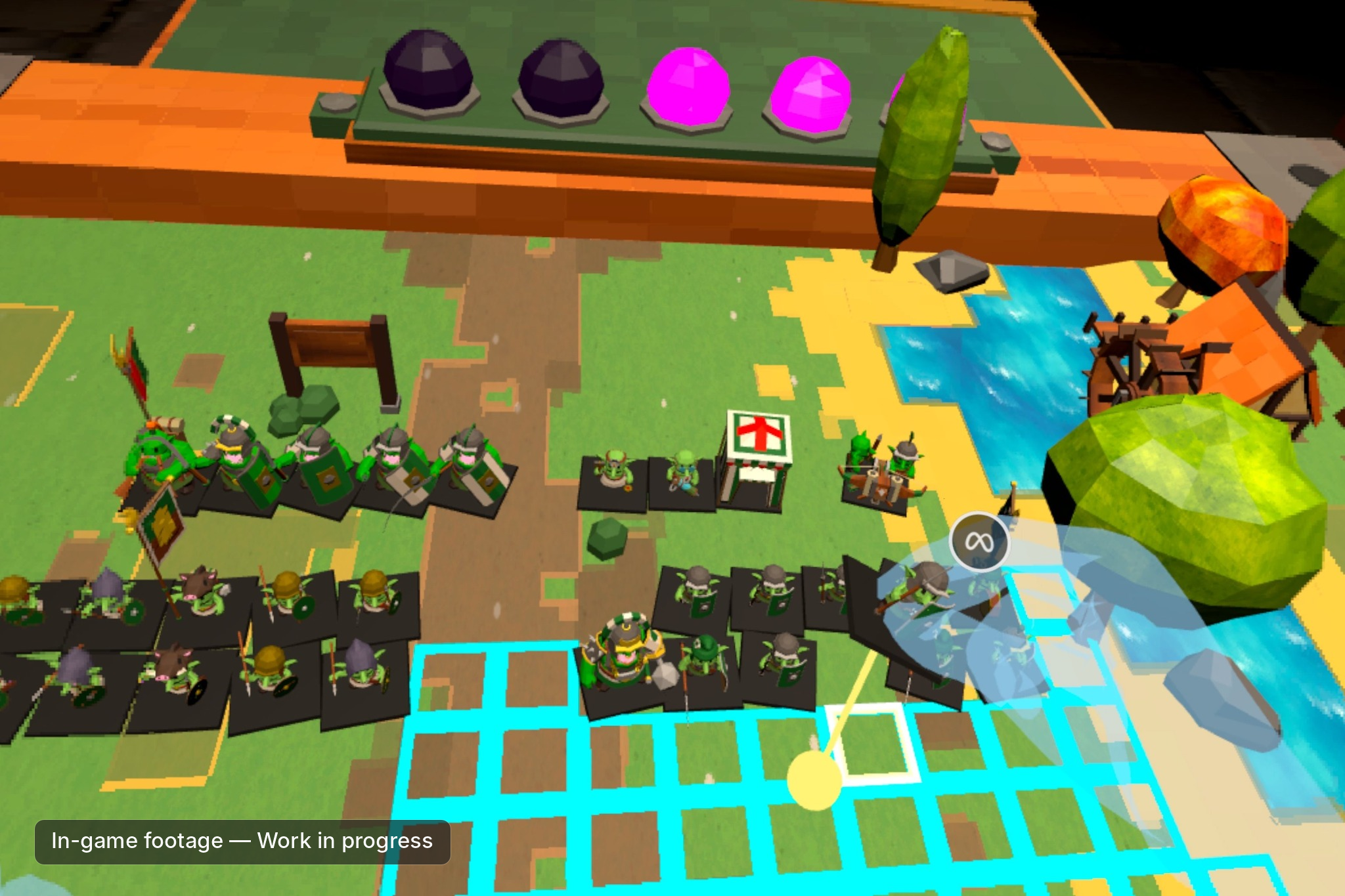
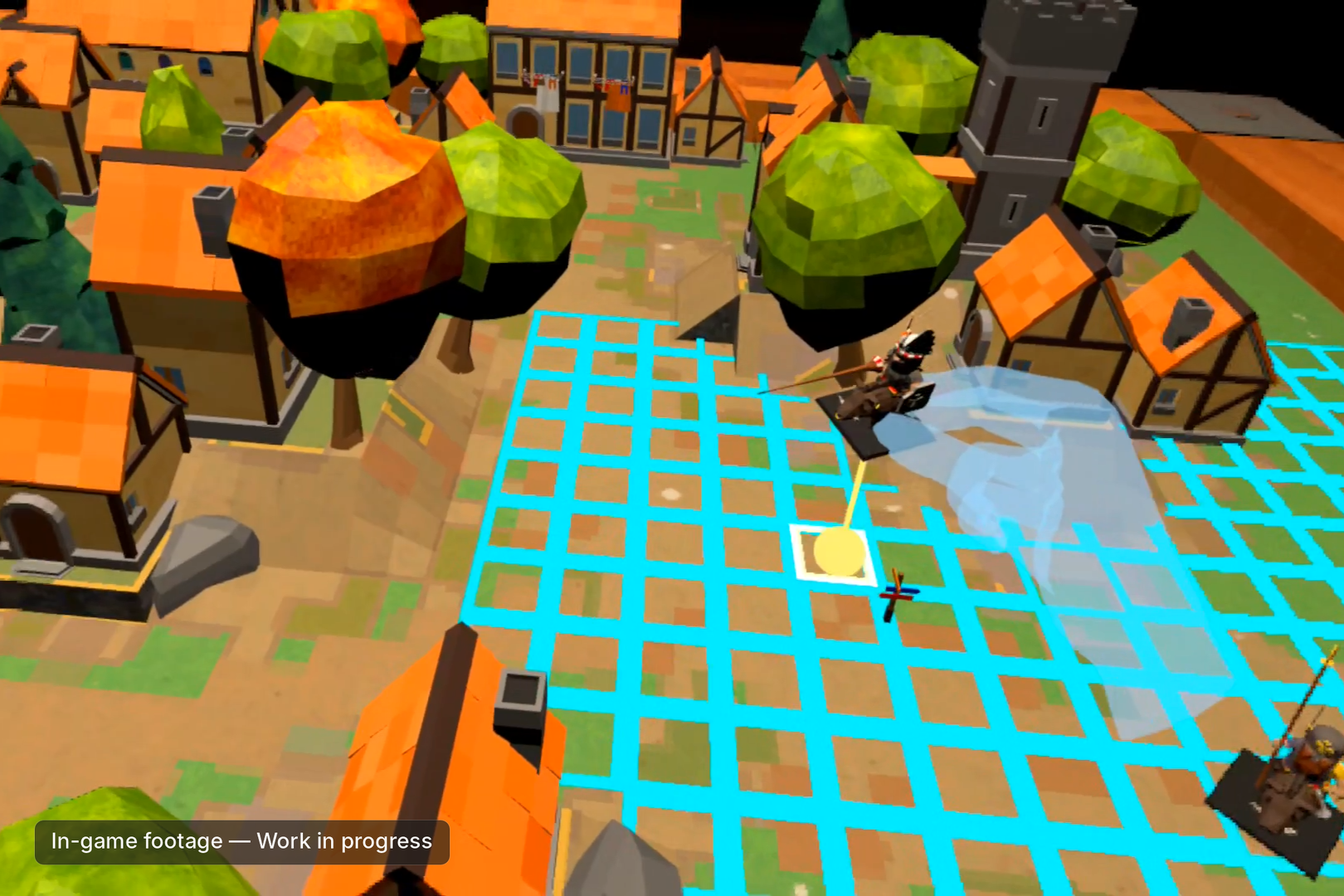
Hand Tracking — Pick up a miniature with your bare hands and use the highlighted grid to choose where it moves.
-
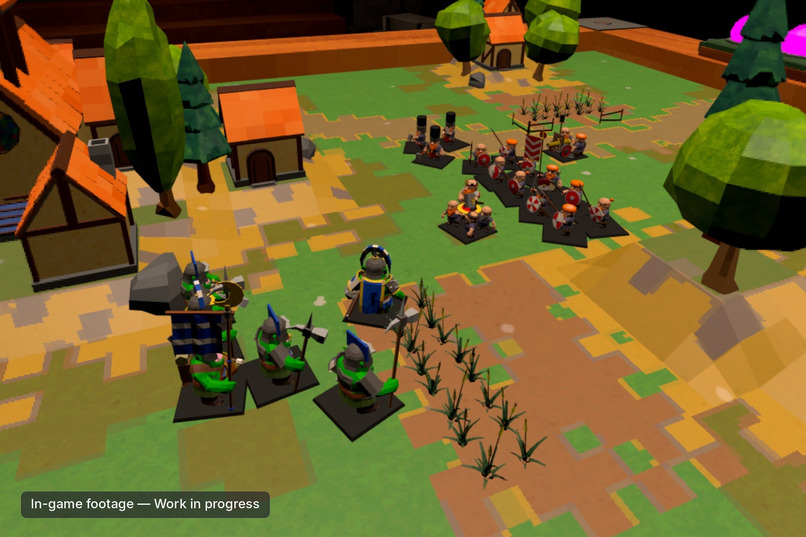
Tactical tabletop combat — Fantasy armies, miniature units, and battlefield positioning.
-
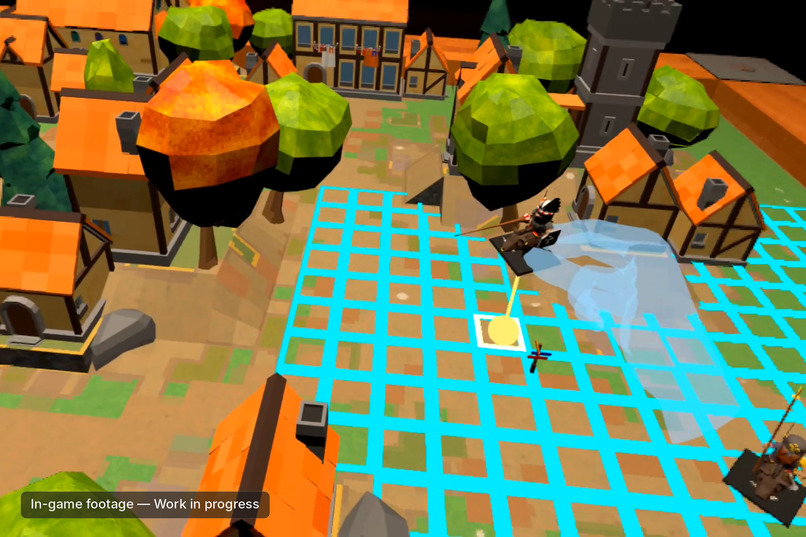
Hand Tracking — Lift a miniature by hand and use the blue grid to choose its destination among the village buildings.
-
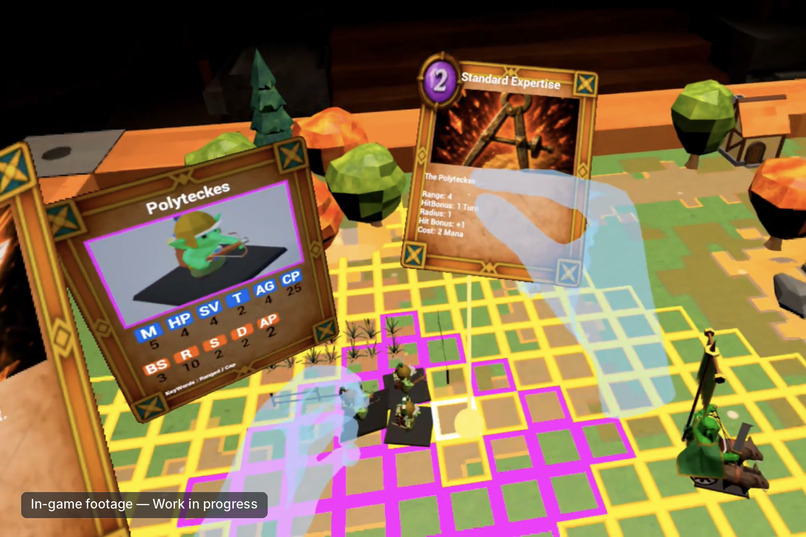
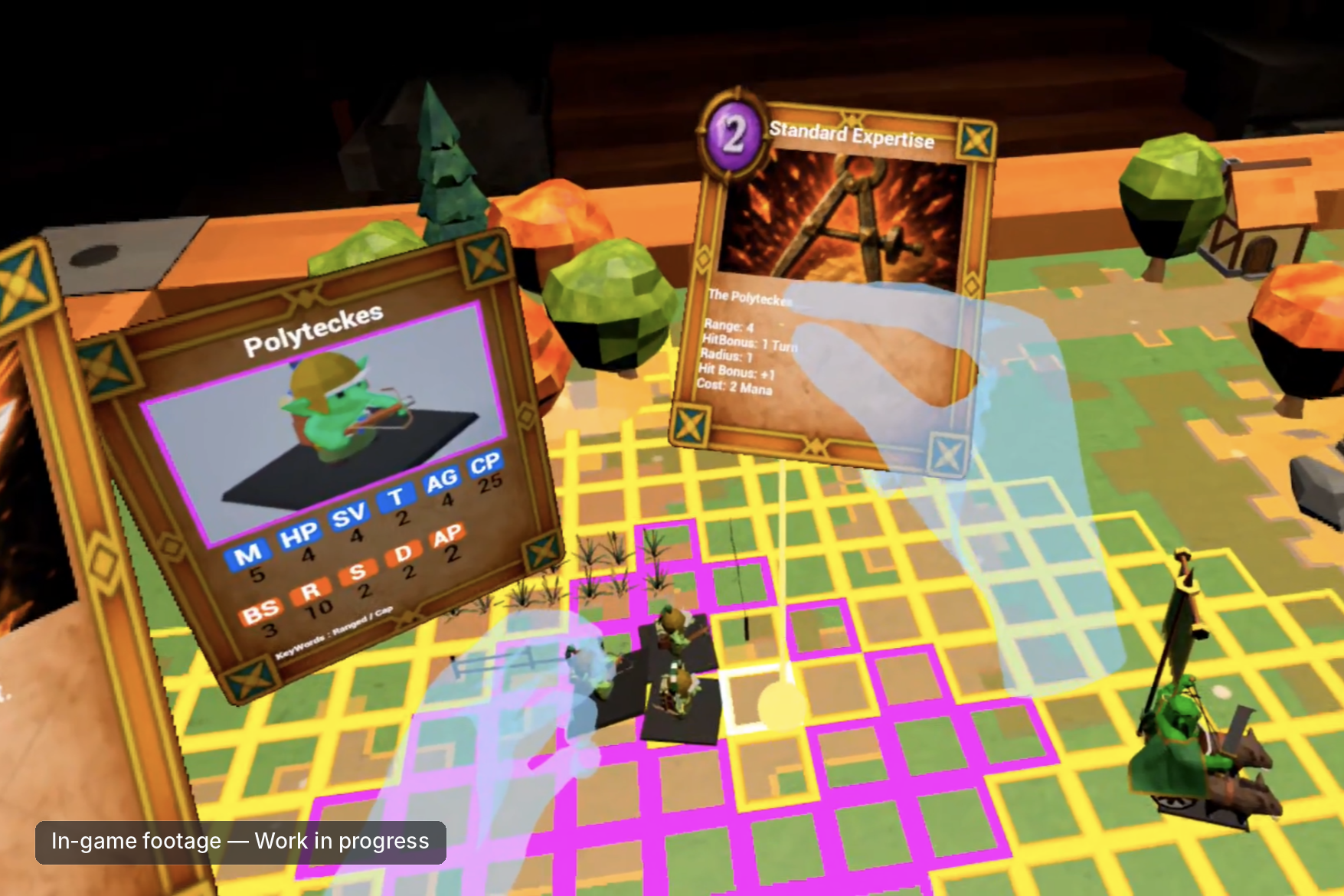
Hand Tracking — Natural spell card manipulation and interactions with the tactical battlefield grid.
-
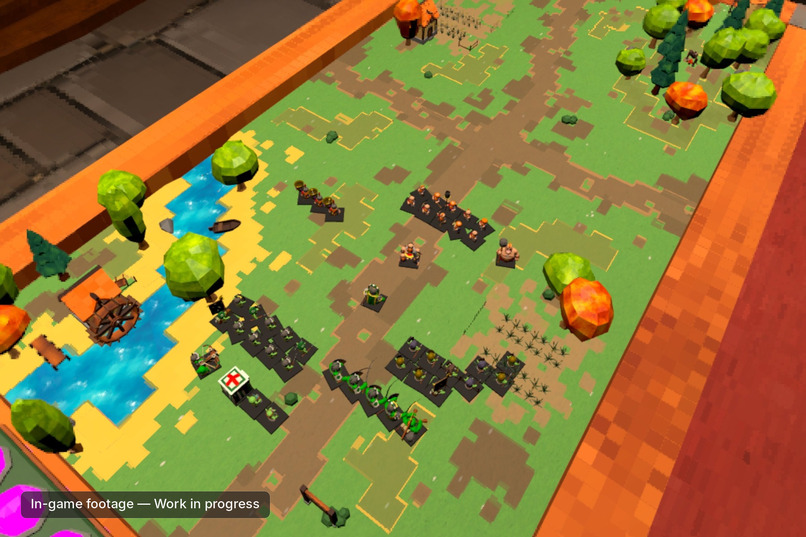
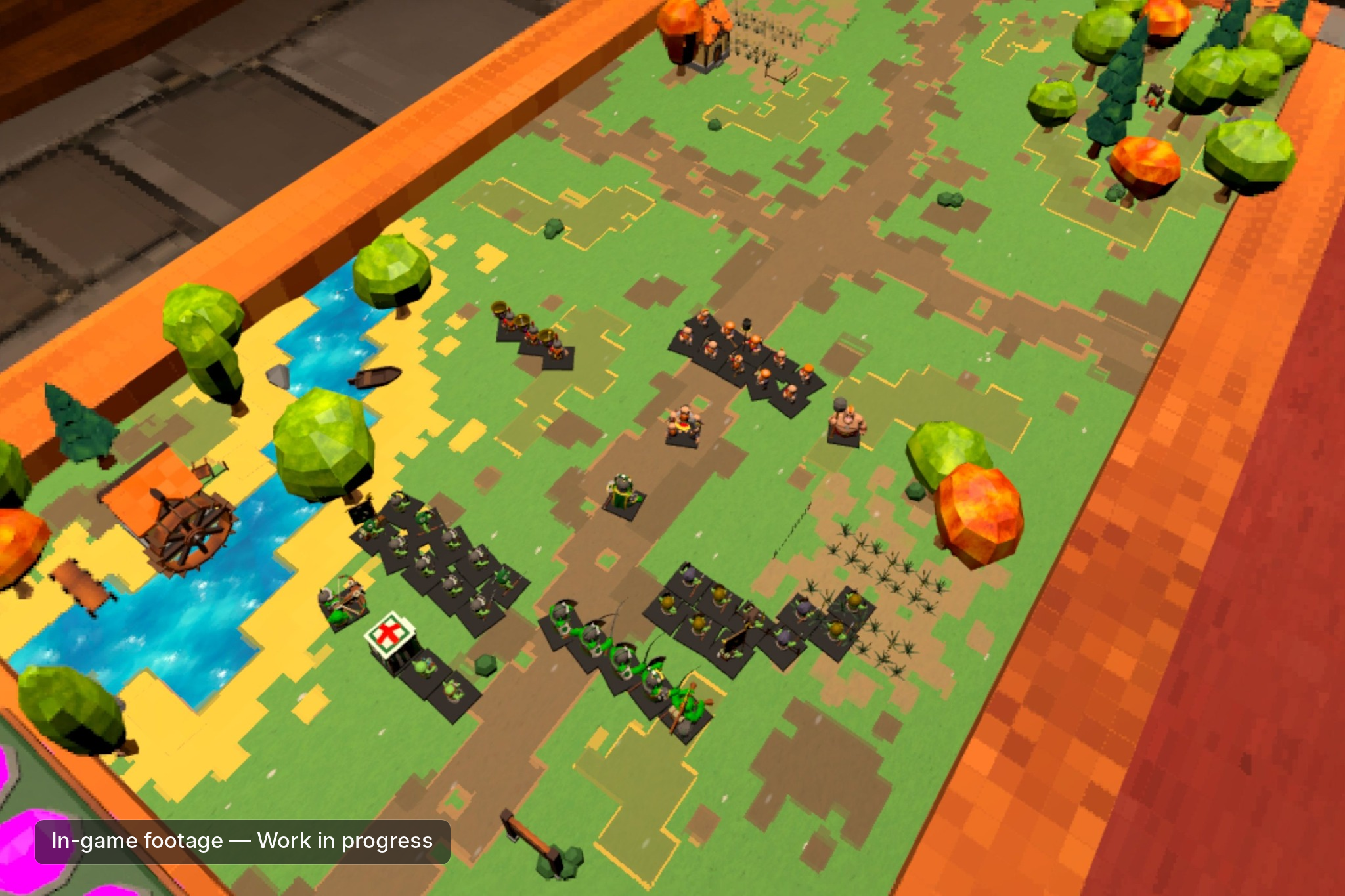
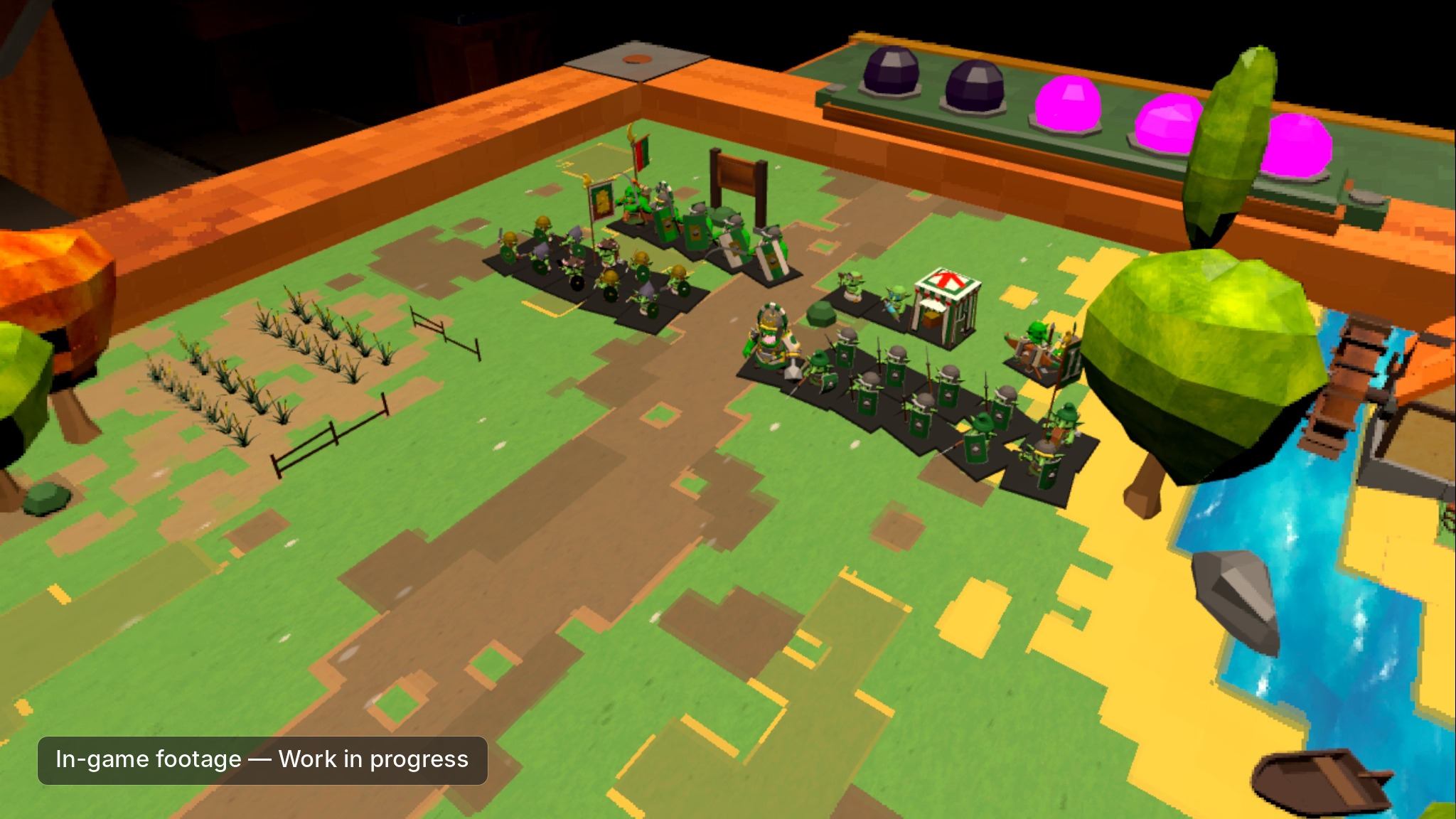
Battlefield overview — The Nayes hold their line as Orcs and Goblins prepare to attack on a riverside battlefield.
-
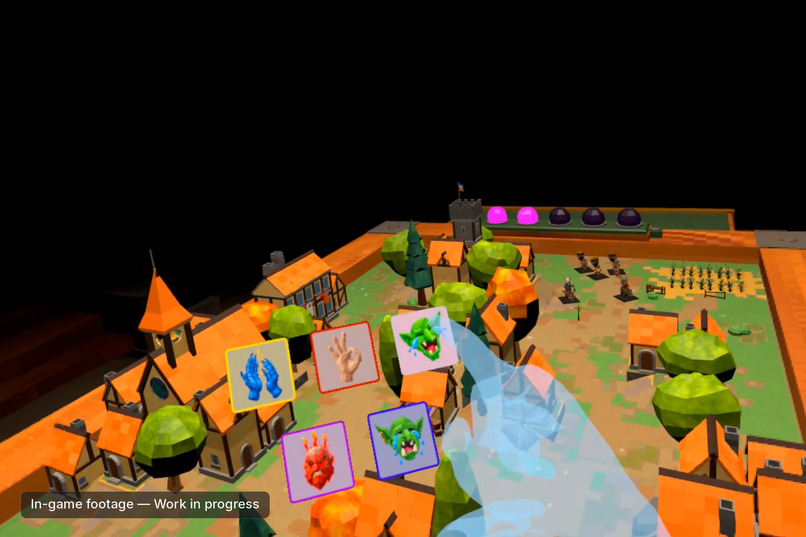
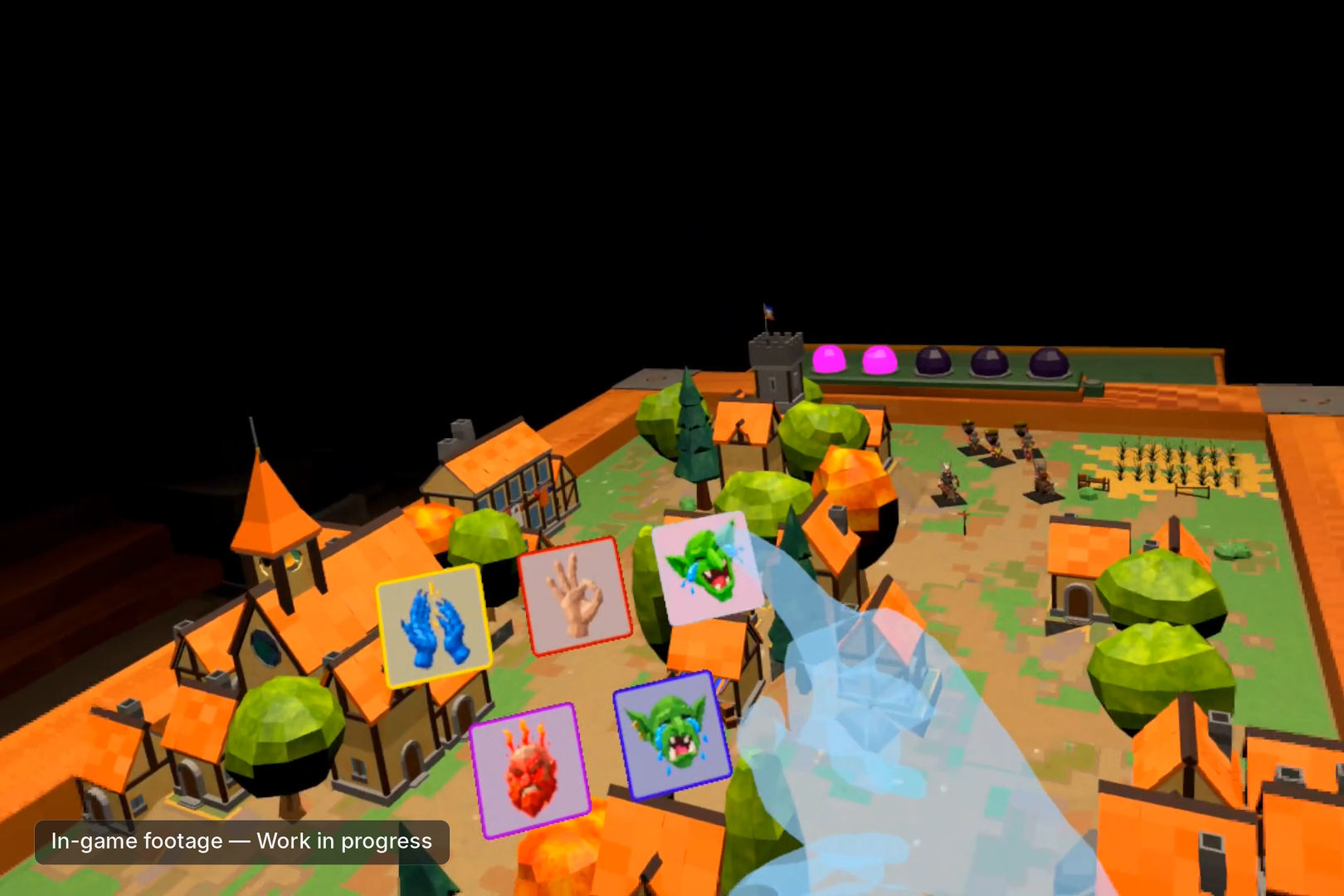
Hand Tracking — Use hand tracking to select an emote from a floating menu above the battlefield.
-
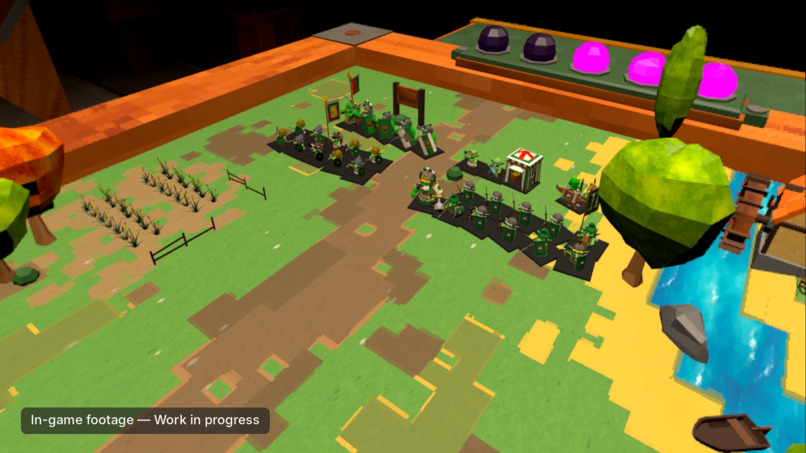
Army formation — An Orc and Goblin army assembles on a riverside battlefield, with infantry, siege crews, and a field medic.
-
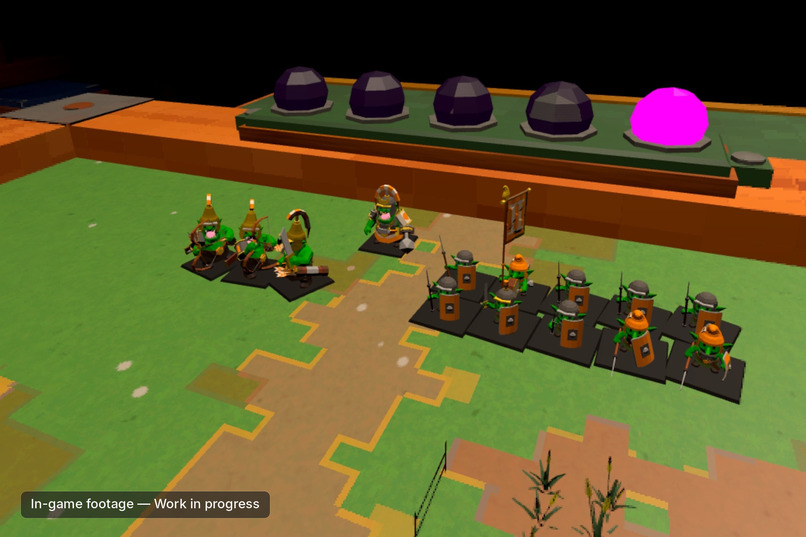
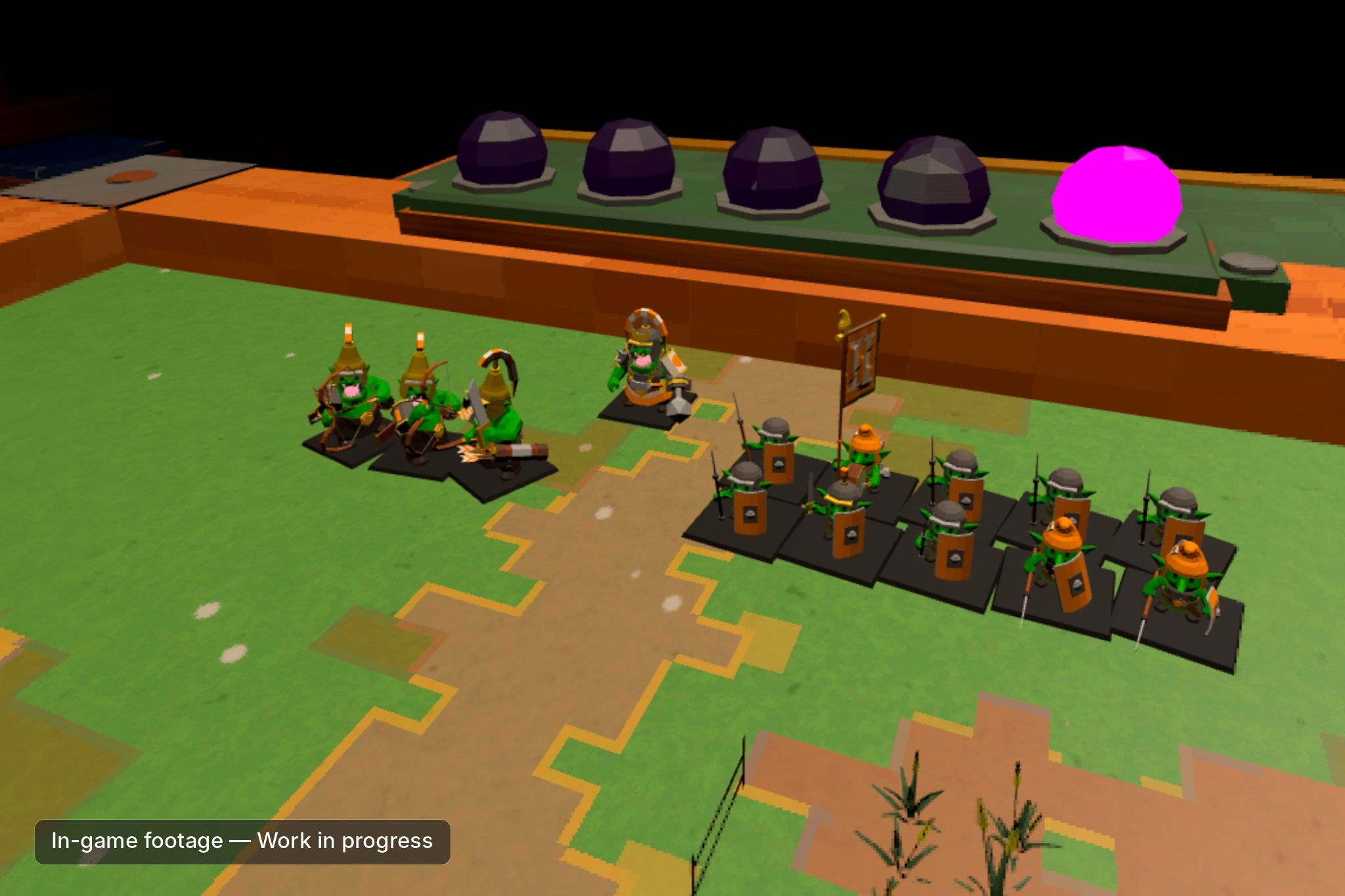
Army formation — Orc archers and Goblin spearmen form up around their armored champion on the tabletop battlefield.
-
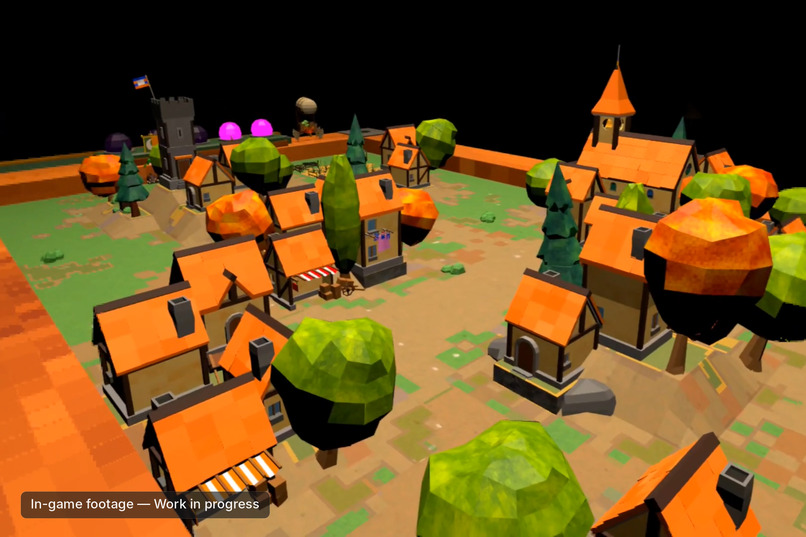
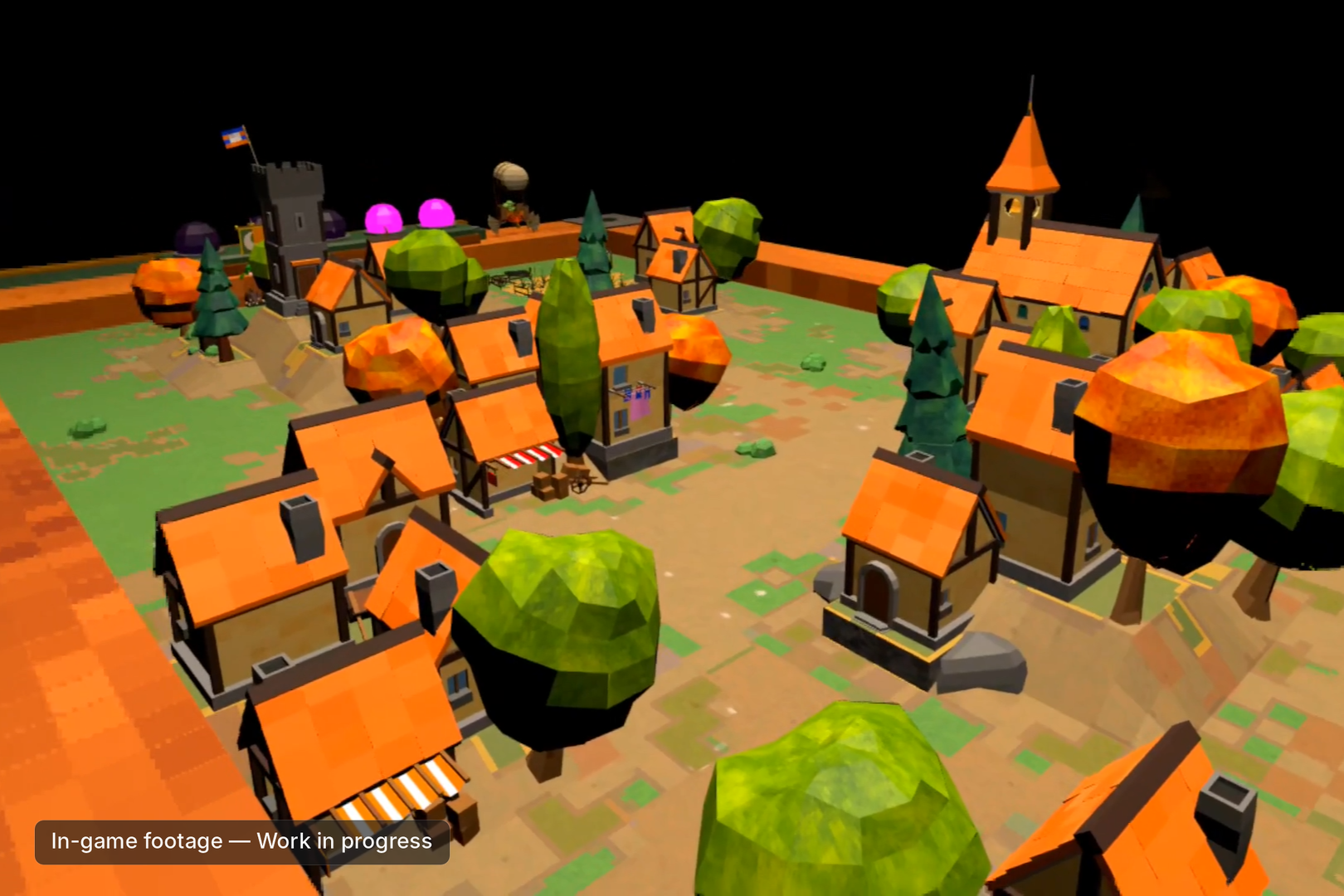
Battlefield scenery — A tabletop village battlefield with winding lanes, market stalls, and a stone watchtower.
Inspiration
I am a self-taught independent developer from the south of France, a region shaped by ancient ruins, Mediterranean landscapes, and wild garrigue. Growing up surrounded by these places, I developed a fascination with ancient civilizations, history, fantasy, RPGs, and video games.
What began as a simple desire to learn 3D modeling and animation gradually evolved into something much larger. Characters needed names, armies needed origins, and places needed histories. Little by little, an imaginary world began to take shape.
That is how BoardClash VR was born.
My idea was simple: to create a virtual table where friends, or even complete strangers from opposite sides of the world, could meet, command miniature fantasy armies, and share a small moment in an impossible history.
I never set out to reinvent fantasy or tabletop strategy games. I simply wanted to bring my interests together in a personal project, using virtual reality to make imaginary worlds feel a little more tangible and alive.
What is BoardClash VR?
BoardClash VR is a fantasy tabletop wargame currently in development for standalone Meta Quest headsets. Inspired by traditional miniature wargames, it combines turn-based tactical strategy with hands-on interaction in virtual reality.
Three factions are currently playable: Naye, Orcs & Goblins, and Sukkusiens. Each has its own identity, history, units, and tactical characteristics.
Players deploy their armies, move miniatures across a grid-based battlefield, engage in combat, cast spells, and manage their resources. Victory conditions include Regicide, Conquest, and the elimination of the opposing army.
Six core battlefields are currently playable, along with an additional snowy map in local mode. Online multiplayer also features two rainy battlefield variants and a snowy map. These environments are playable, while additional battlefields are in preparation.
Players can enjoy local pass-the-headset matches, online multiplayer, and private matches between friends.
Players can interact with the battlefield using traditional VR controllers or hand tracking. They can physically grab miniatures, select targets, and manipulate spell cards without controllers.
An additional Arcade mode, including Nautica and its naval battles, is available as a playable prototype in development builds. It will not be included in the initial public release and is planned for a future update after further testing and refinement.
The initial release will focus on the core tabletop wargame experience, with plans to introduce new factions, environments, and gameplay possibilities through future updates.
My goal is to recreate the feeling of gathering around a miniature wargame table, allowing friends and players from around the world to share that experience in virtual reality.
How I Built It
BoardClash VR is developed independently using Unreal Engine 5.6.1, primarily through Blueprints. As a solo developer, I have worked on gameplay programming, VR interactions, multiplayer architecture, 3D modeling, environments, characters, and overall game design.
All 3D models, miniature units, characters, battlefield maps, environments, and the entire lore of BoardClash VR are my own original creations. I designed and built these assets myself, drawing inspiration from ancient history, civilizations, and fantasy.
Grid-Based Gameplay
At the center of BoardClash is a grid-based system. Each battlefield uses a 50 × 25 grid, with tiles measuring approximately 4 cm. Units have individual coordinates, movement capabilities, attack ranges, and gameplay statistics.
The grid manages unit positioning, occupied tiles, movement validation, and targeting. A pathfinding system based on breadth-first search (BFS) determines valid movement routes while accounting for obstacles, other units, and movement restrictions.
Players interact with the grid through VR pointers and direct miniature manipulation. Physical gestures are translated into gameplay actions, including selecting positions, choosing destinations, and targeting enemy units.
The objective is to keep the underlying rules consistent and reliable while making the interaction feel as intuitive as moving miniatures across a real table.
Combat and Dice System
The combat system takes inspiration from traditional tabletop wargames and uses virtual six-sided dice (D6) to resolve combat actions.
Dice rolls are calculated internally rather than physically displayed, allowing attacks and their results to be resolved quickly without interrupting the flow of gameplay.
Each unit has its own characteristics, including health, movement points, attack range, and combat statistics. The game combines deployment, movement, and combat with additional tactical mechanics such as spells, buffs, and shared mana management.
I wanted to preserve the unpredictability of traditional dice-based combat while using virtual reality to create a more immediate and accessible experience.
VR Controllers and Hand Tracking
One of the most important technical challenges has been creating an interaction system that supports both traditional VR controllers and hand tracking without changing the fundamental gameplay mechanics.
With controllers, players can grab miniatures, select positions on the battlefield, target enemies, and perform movements, attacks, or spell-related actions.
The interaction follows a simple sequence: grab a miniature, aim at the desired position, and release it. The gameplay system validates the action, determines the appropriate result, and returns the miniature to its previous position when necessary.
Hand tracking allows players to perform these same gameplay actions without physical controllers.
Each hand has a primary role during gameplay. The right hand is mainly used for actions: grabbing and moving miniatures, selecting targets, attacking, and manipulating spell cards. A pointing system detects the direction of the hand and translates gestures into positions on the battlefield grid.
The left hand provides access to contextual information, including unit statistics and spell cards. It can also open or close an interaction menu through a sustained pinch gesture.
Although each hand has its own primary role, both hands can grab and manipulate miniatures using natural gestures.
Developing reliable hand interactions required particular attention to gesture recognition, temporary tracking fluctuations, and object release behavior.
To improve stability, I introduced grip-state checks, tracking-confidence conditions, and a short release-confirmation delay. These mechanisms help prevent accidental releases caused by small finger movements or momentary tracking instability.
The result is a more consistent grab-and-release interaction, particularly when manipulating miniature units and spell cards.
My intention is not to create a separate game mode for hand tracking, but to provide two ways of experiencing the same strategy game, each adapted to its control method.
Movement Without Joysticks
Another challenge was allowing players to navigate and rotate within the virtual environment without relying on joysticks.
BoardClash VR can be played either seated or standing. While traditional VR controllers provide familiar movement inputs, hand tracking required a different approach.
I developed a navigation system based on coordinated movements of both hands. To move, players close both fists in front of them, as though grabbing the virtual environment, then perform a pulling motion to reposition themselves relative to the battlefield.
Rotation follows a similar principle: coordinated pivoting movements of both hands allow players to change their orientation. An alternative method based on the direction of the player's gaze can also be used.
The aim is to make it possible to explore and interact with the battlefield naturally, without requiring controllers or joysticks.
Multiplayer, Testing and Performance
Another significant part of development has been implementing local and online multiplayer systems.
This includes turn synchronization, replicated game states, validation of gameplay actions, and unit positioning between players. Movement, combat, spells, mana management, and turn transitions all require network synchronization while respecting the rules of the game.
Online multiplayer has been successfully tested on physical Meta Quest headsets, including session creation, discovery, joining, friend invitations, and synchronized gameplay.
The local pass-the-headset mode is also functional, allowing two players to take turns using a single VR headset.
One of my most satisfying achievements has been seeing the different systems work together directly on standalone hardware.
BoardClash VR is functional on Meta Quest 3 and Quest 3S, where I have tested gameplay, interactions, and core systems. I have also carried out tests on Quest 2, although I am not currently committing to official support for that headset at launch.
Testing is ongoing, particularly to improve multiplayer reliability and address occasional synchronization issues.
Performance has remained an important consideration throughout development. I have focused on keeping 3D models, environments, visual effects, and gameplay systems relatively lightweight while preserving the game's visual identity.
Challenges and What I Learned
Developing BoardClash VR alone has been both a creative and technical challenge. It has required learning and combining many aspects of game development, from 3D modeling and animation to Blueprint programming, multiplayer synchronization, VR interaction design, and optimization.
One of the most important lessons has been understanding how these systems depend on one another.
A seemingly simple action, such as grabbing a miniature and moving it to another tile, involves several systems working together: input detection, targeting, grid validation, movement rules, visual feedback, and, in multiplayer, network synchronization.
Hand tracking introduced another level of complexity. Natural gestures are not always perfectly consistent, and temporary variations in finger tracking can affect how objects are manipulated.
Improving these interactions required repeated testing, adjustments to gesture conditions, and a better understanding of how small technical details influence the feeling of physically interacting with virtual objects.
There were many things I did not know when I started, and there is still much for me to learn. Each challenge has encouraged me to experiment, research, and find solutions.
This project has taught me patience, perseverance, and the importance of building systems that are reliable, maintainable, and enjoyable to use.
Artistic Direction and Resources
One of my main creative challenges has been giving the fantasy civilizations their own cultural identities rather than simply reproducing familiar archetypes.
Orcs and Goblins, often portrayed as barbarians, become peoples with traditions of epic poetry, capable of finding happiness beneath the shade of an ash tree or engaging in philosophical debates among monuments of white marble.
The reptilian civilizations draw inspiration from Ancient Egypt, from the earliest dynasties and the unification under Narmer to the monumental architecture of the New Kingdom. Their identity is expressed through sacred traditions, imposing buildings, and tombs that seem to preserve the living memory of those who came before.
I wanted these peoples to feel like civilizations with their own histories, traditions, and ways of understanding the world, even though they are entirely imaginary.
I also want to be transparent about the resources used during development.
All 3D assets, characters, miniature units, battlefield maps, and environments were created by me. External resources are limited to music, sound effects, and certain 2D illustrations, including spell card images. Some of these illustrations were generated using AI tools.
These external resources are separate from my original 3D work and the fictional universe I have created.
My intention is to gradually replace temporary illustrations and audio resources with original artwork and custom sounds that better reflect BoardClash's artistic identity.
In the future, I would also like to involve community artists through small, free creative contests. Some card illustrations could be contributed by community members, with clear attribution and transparent usage agreements, including the possibility for creators to request the removal of their artwork from the game.
What's Next for BoardClash VR?
BoardClash VR is now entering a phase focused on polishing its existing features and preparing for release.
My current priorities include refining VR interactions, improving hand-tracking comfort and precision, enhancing visual effects and animations, and making the overall experience as smooth and intuitive as possible.
I am also continuing multiplayer testing on physical Meta Quest headsets, paying particular attention to network synchronization and consistent gameplay between players.
For the initial release, I plan to focus on the core tabletop strategy experience, including its factions, battlefields, game modes, and multiplayer features.
The additional Arcade mode, including Nautica and its naval battles, is planned as a post-launch update, ideally around two weeks after the game's release. This will allow me to focus on delivering a stable core experience before introducing additional content.
After launch, I hope to continue expanding BoardClash with new civilizations, environments, and gameplay possibilities, while paying particular attention to faction balance, player feedback, and the overall experience.
My objective is to release an enjoyable and reliable strategy game, then allow its universe to continue growing alongside its community.
My Vision
For me, BoardClash VR is more than a strategy game. It is an invitation to gather around a table, regardless of distance, language, or background.
I have imagined the peoples, their traditions, their conflicts, and the places they inhabit. But when BoardClash is released, it will be the players who decide what happens on the battlefield, develop their own strategies, and share moments of adventure, laughter, and rivalry.
After all, a world truly comes alive when others begin to make their own stories within it.
Because sometimes, all it takes to bring two worlds together is a table, a few miniature warriors, and a little imagination.


