-
-
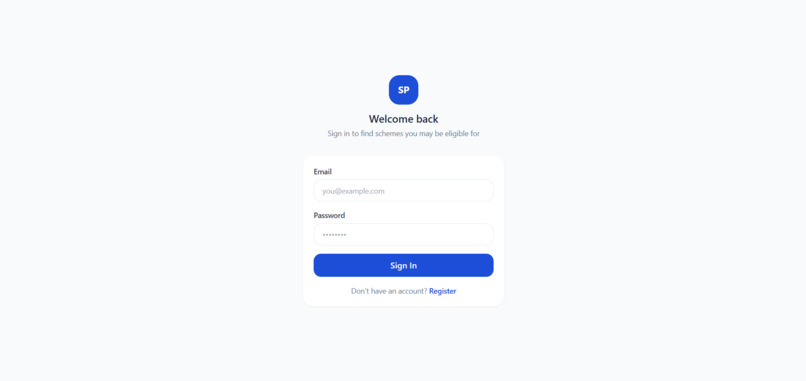
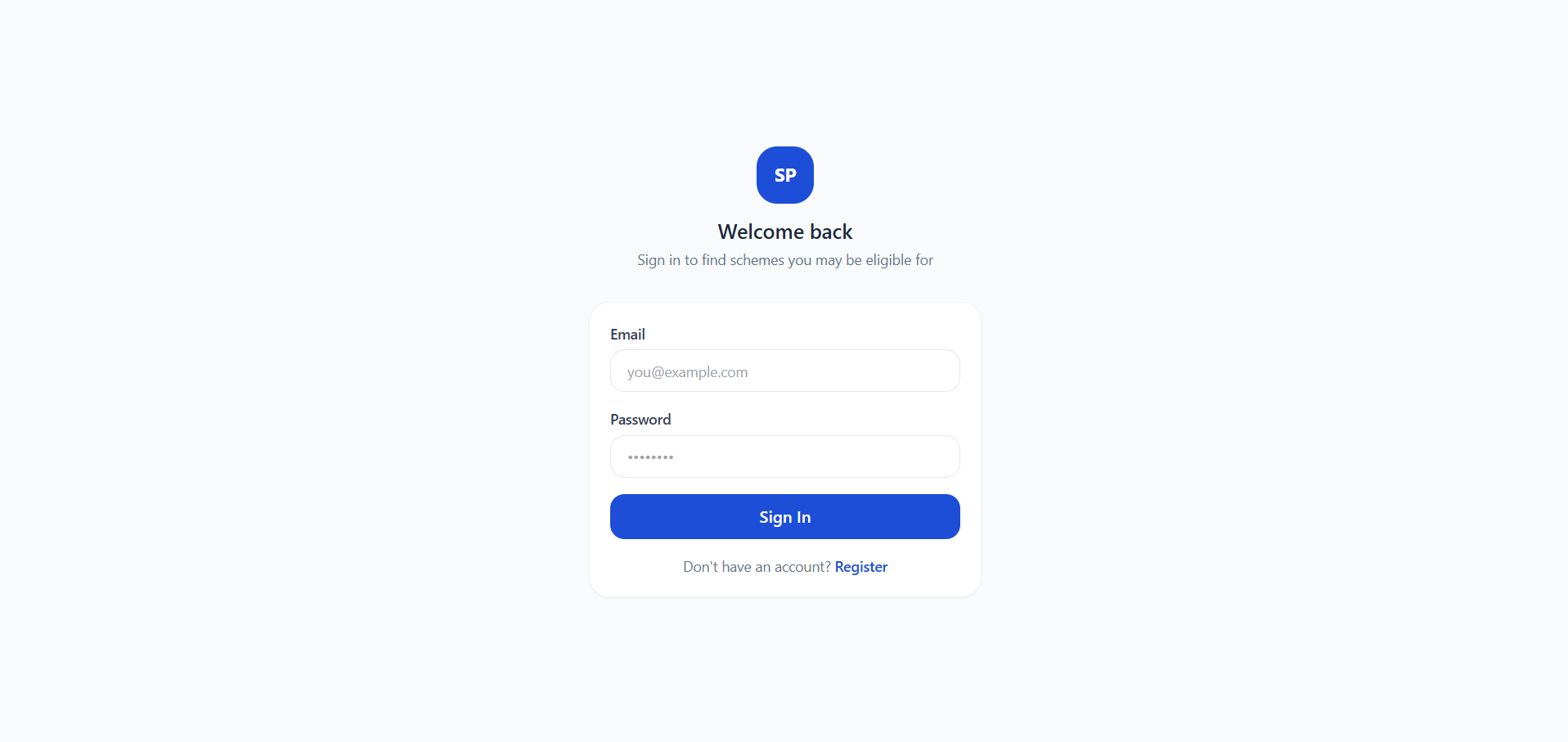
Sign in page
-
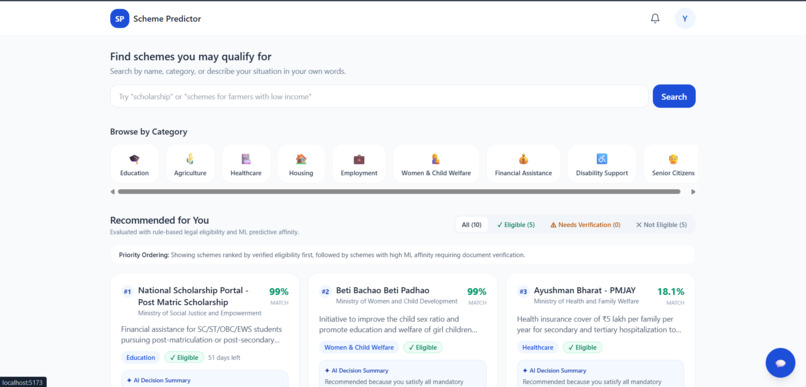
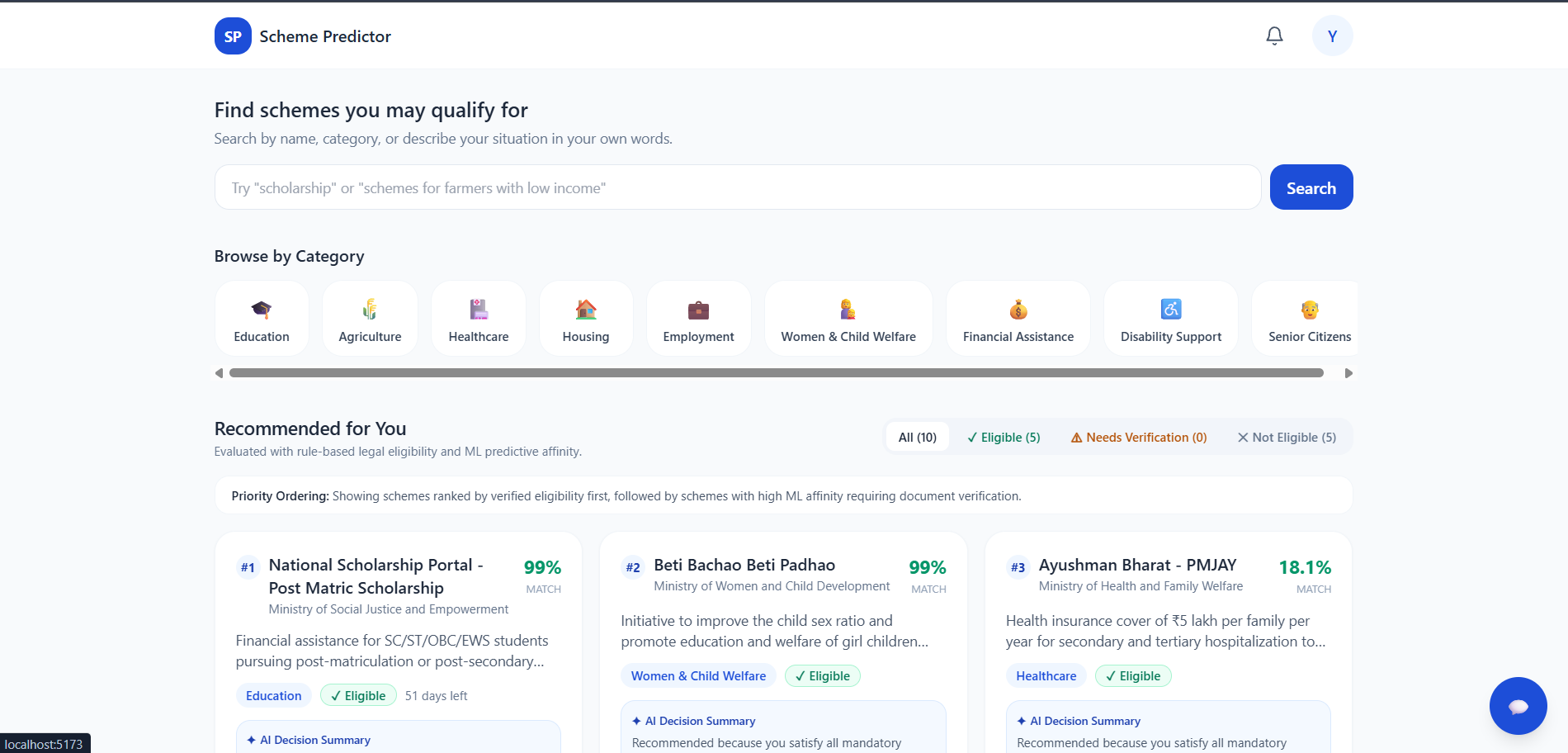
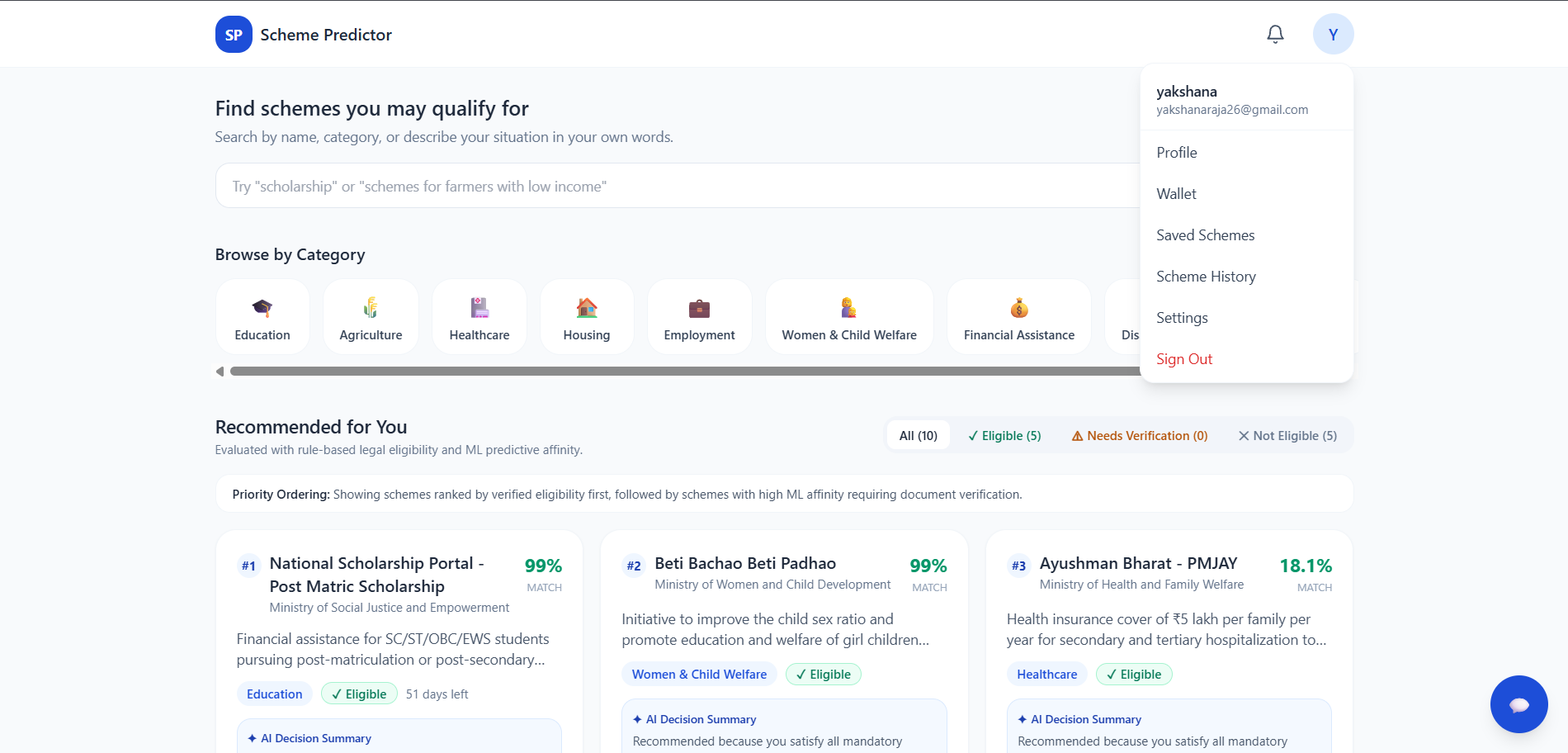
home page
-
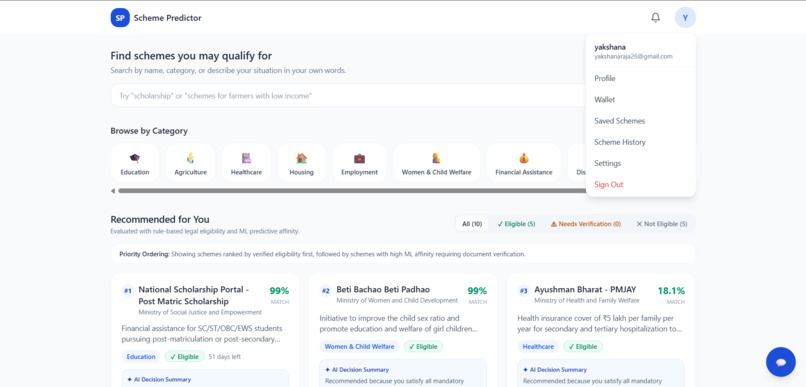
menu
-
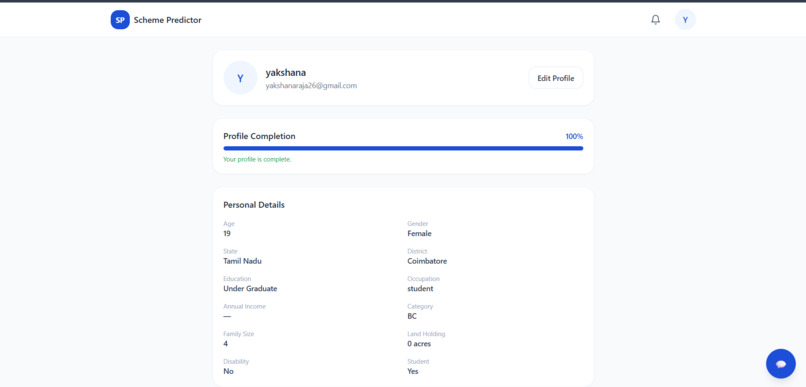
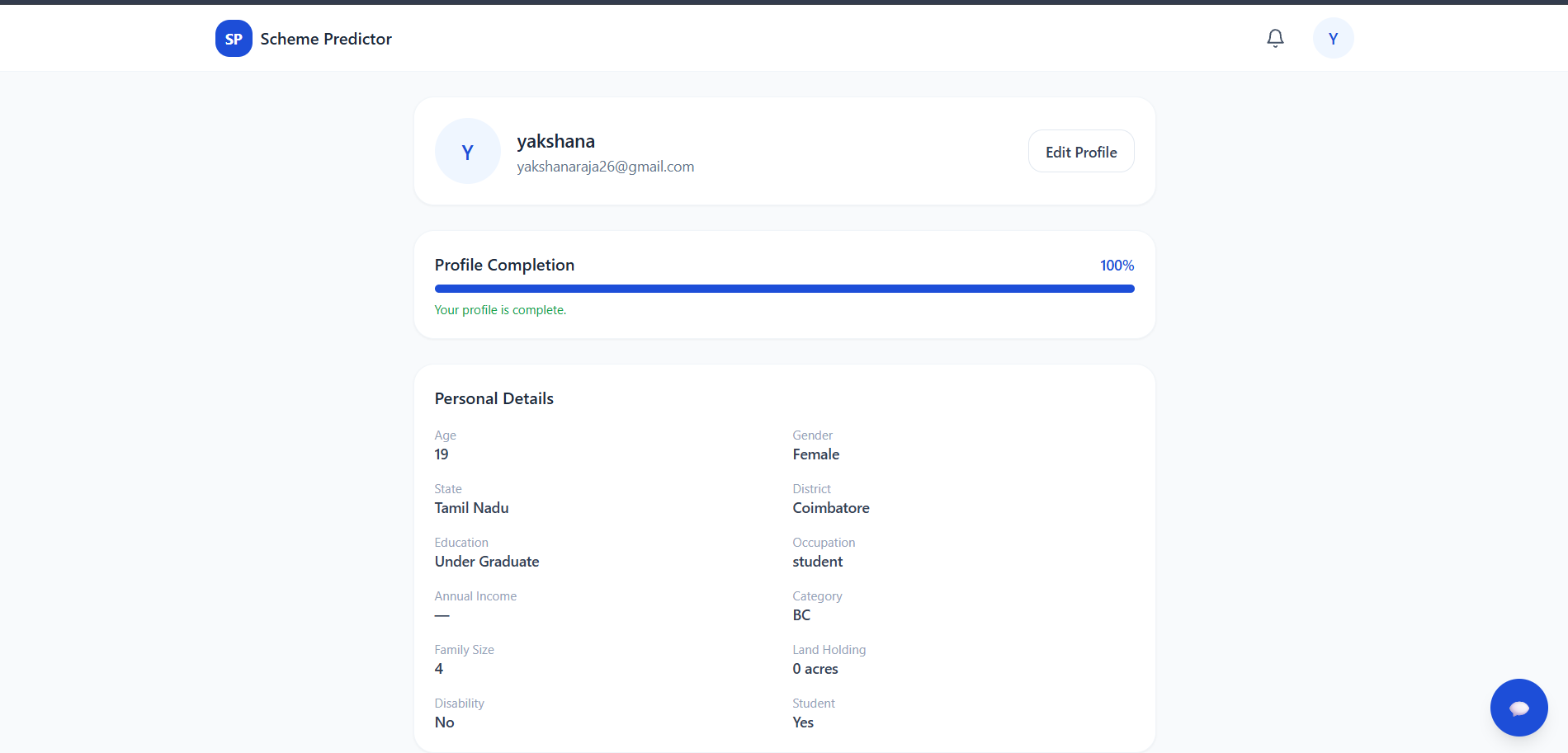
profile page 1
-
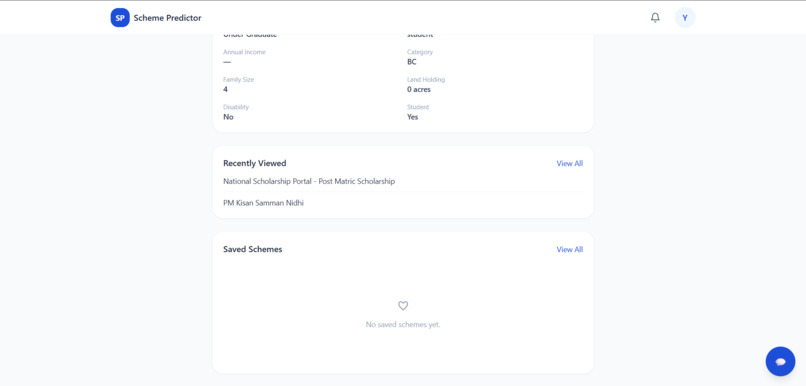
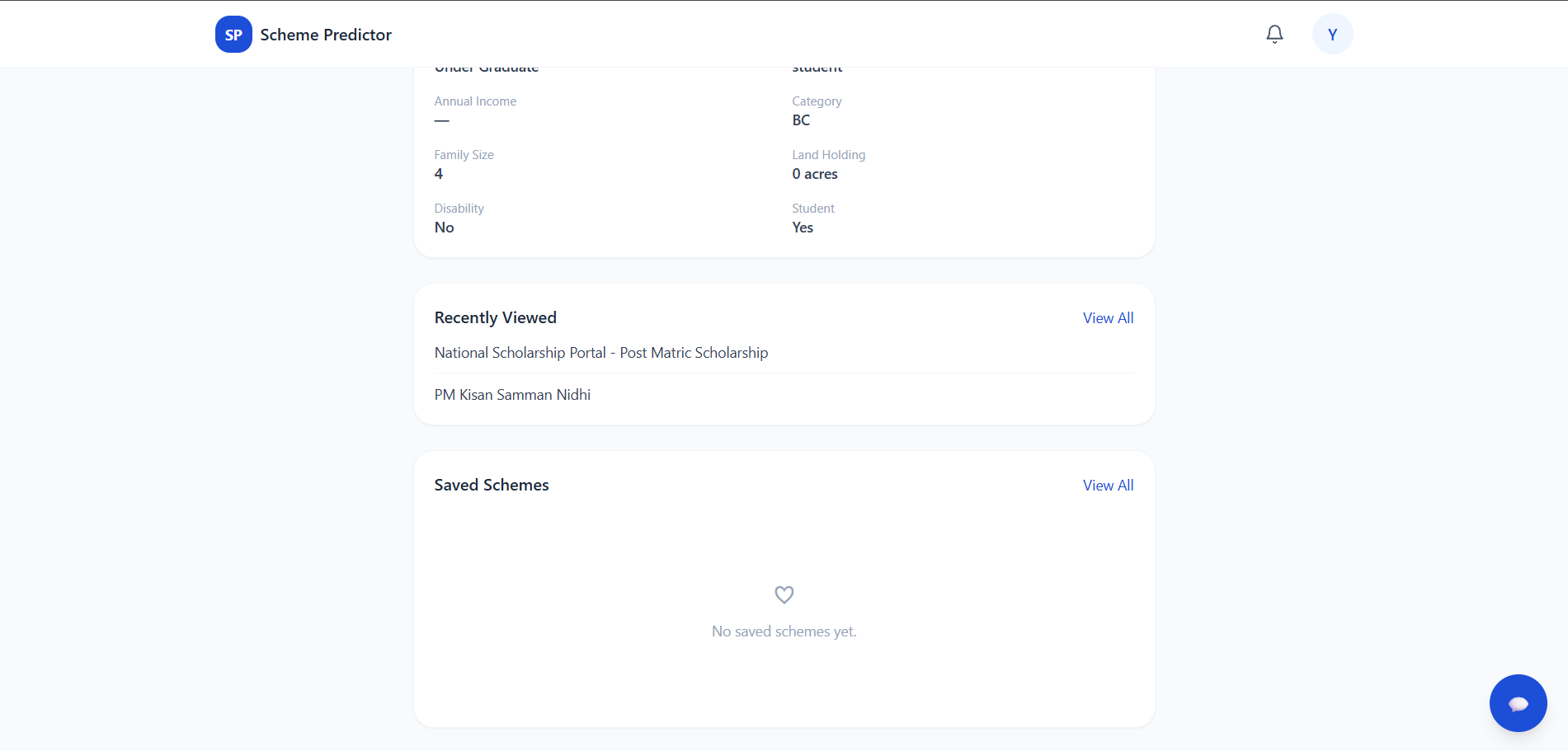
profile page 2
-
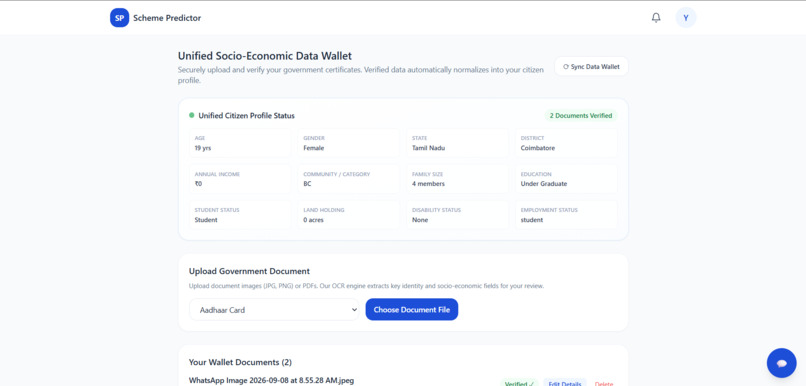
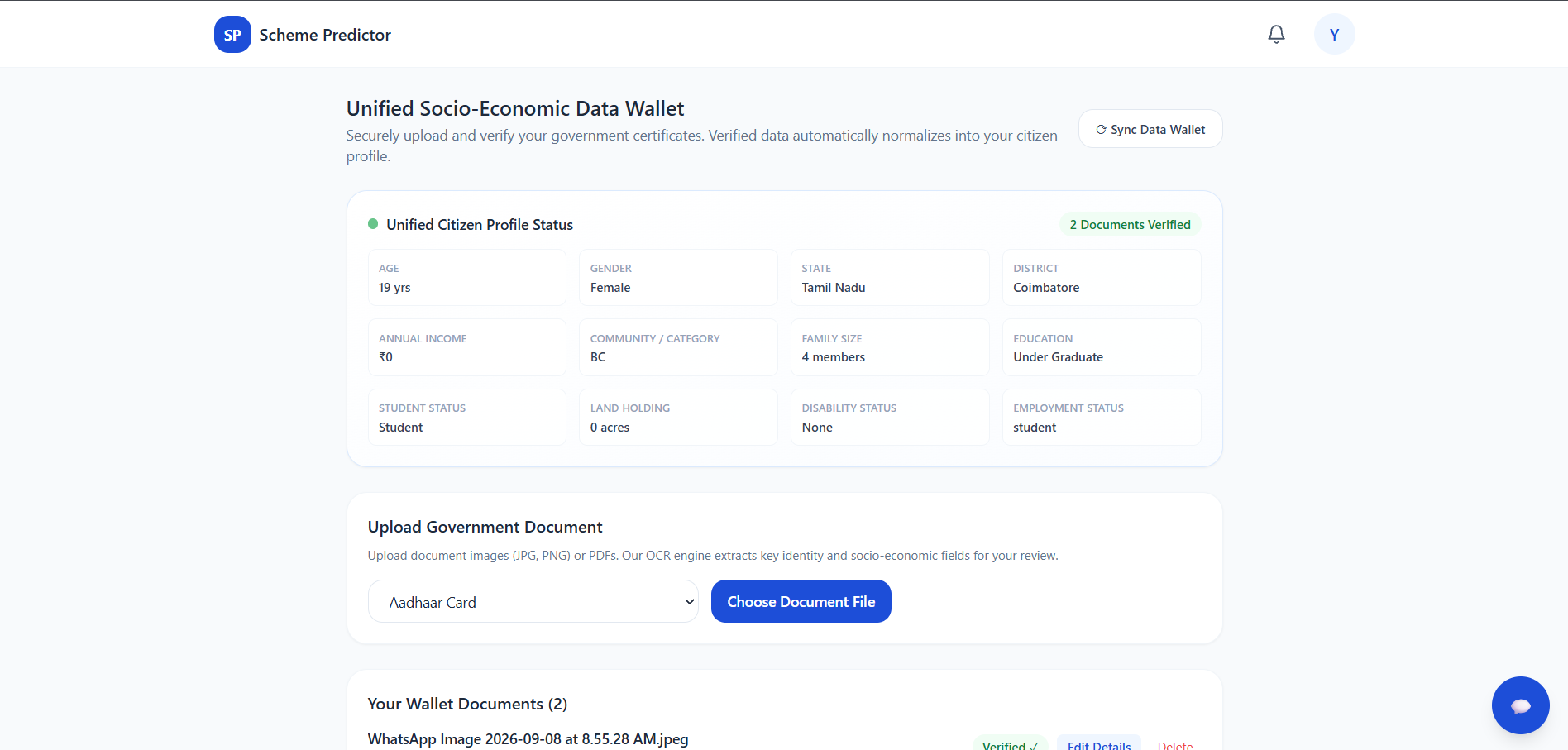
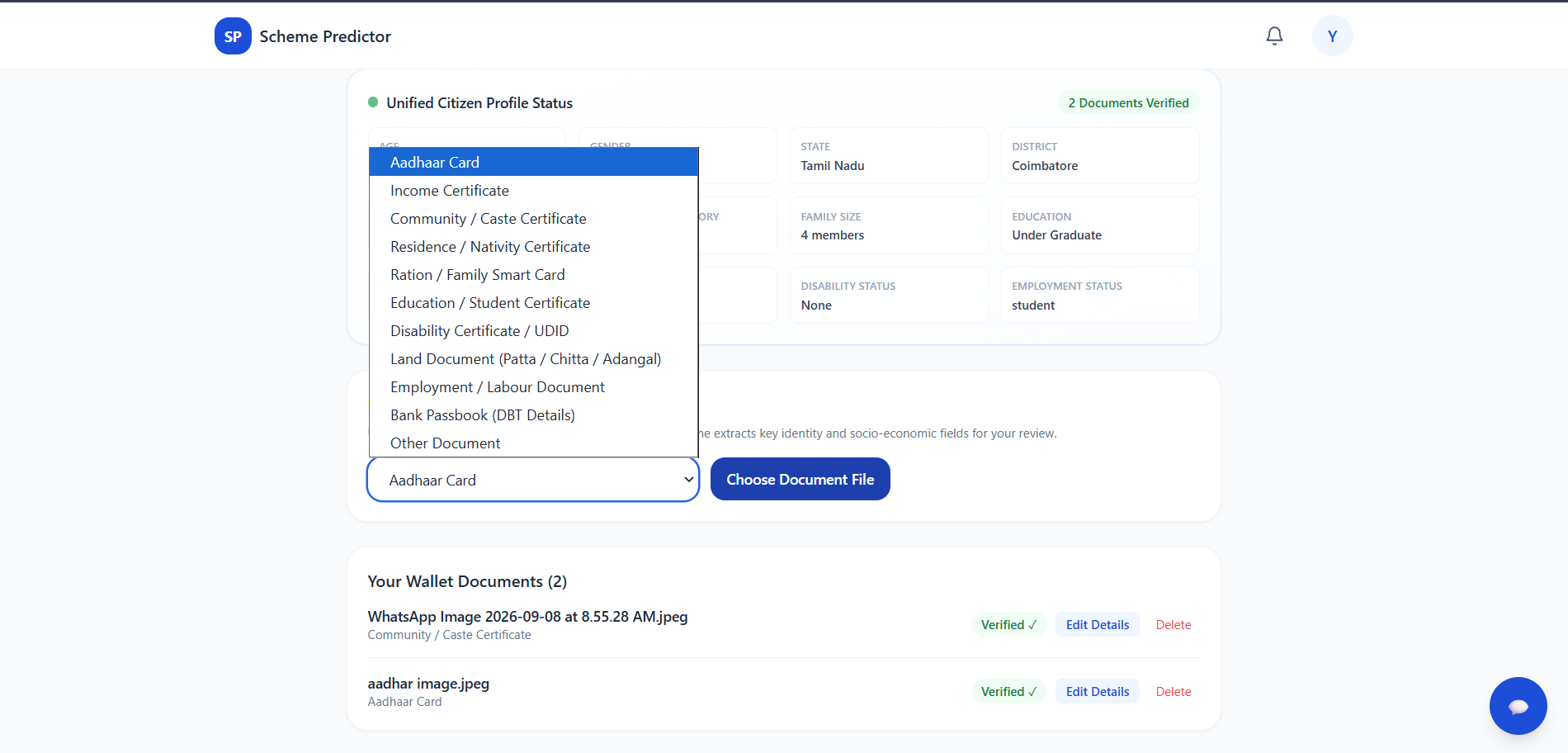
data wallet page
-
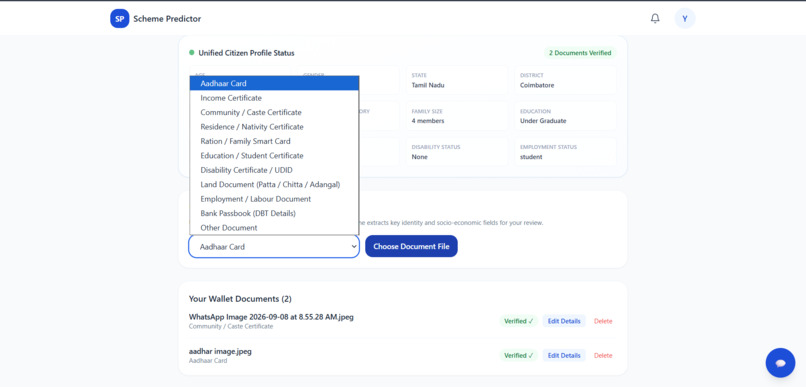
document option
-
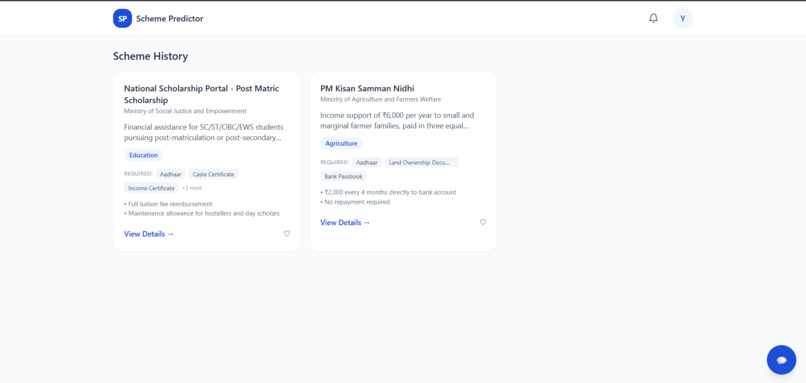
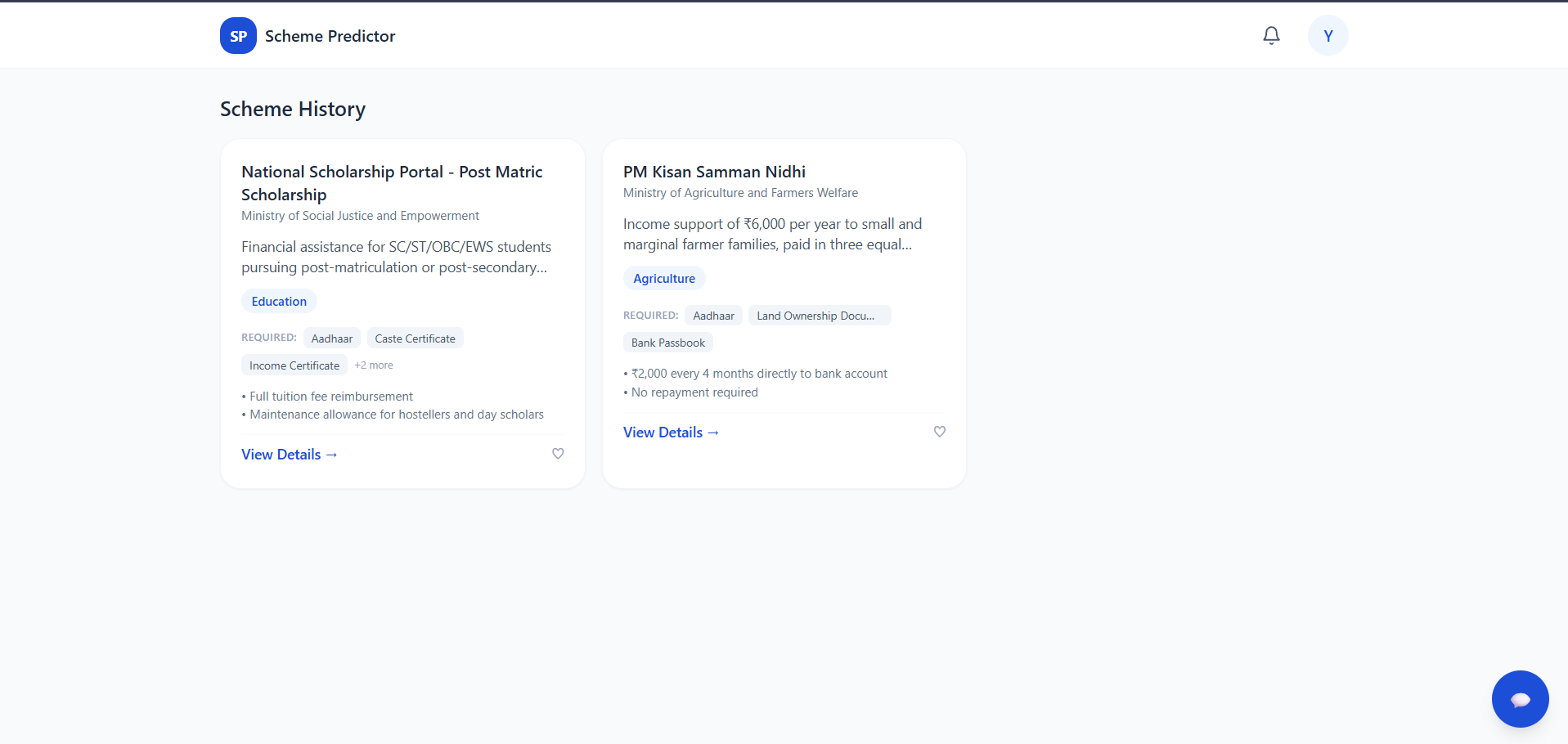
history page
-
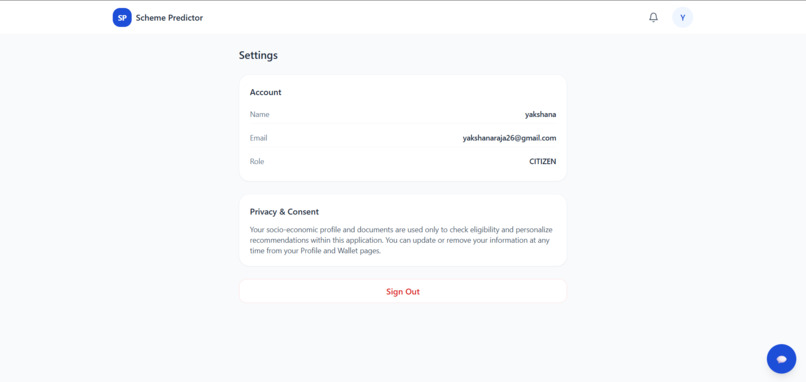
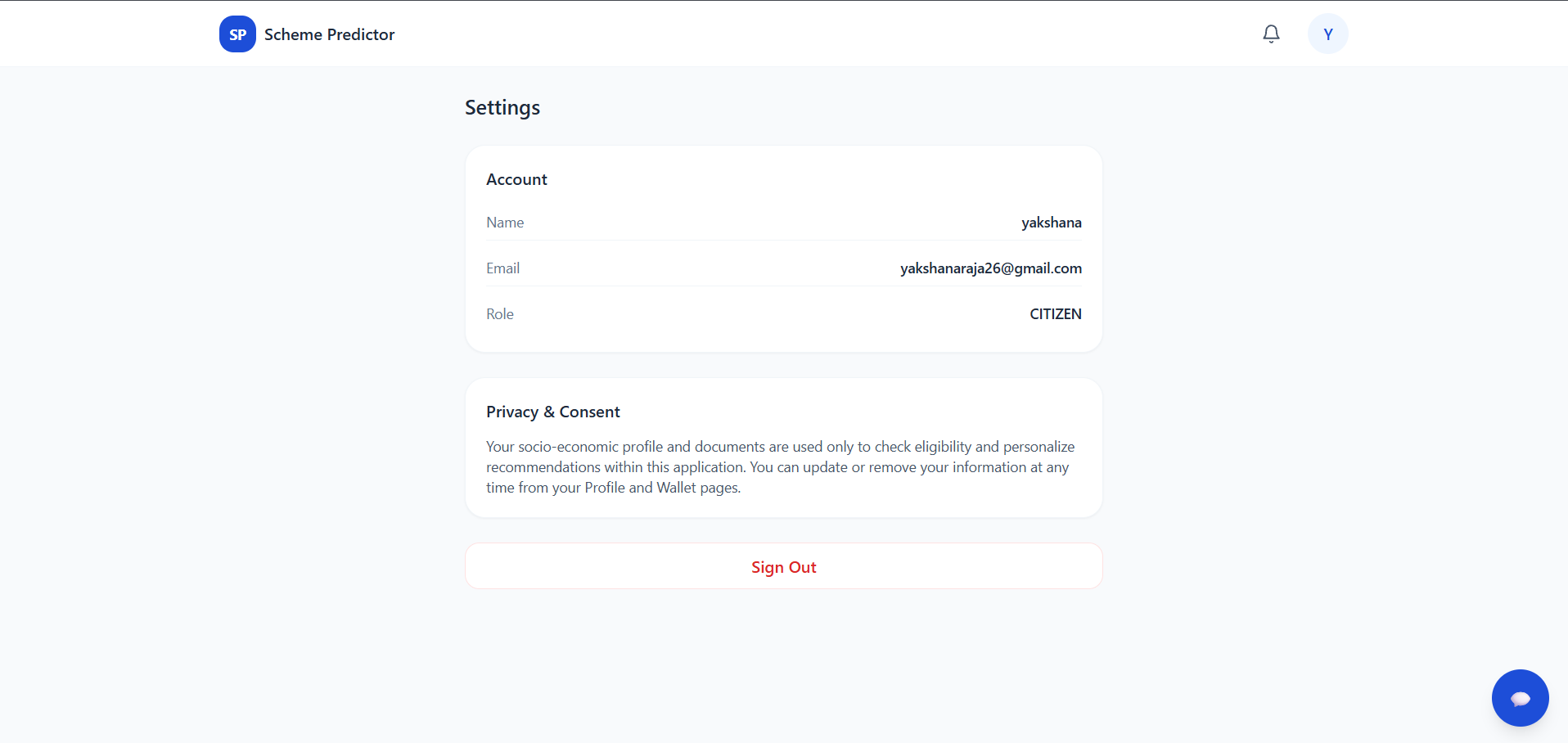
settings page
-
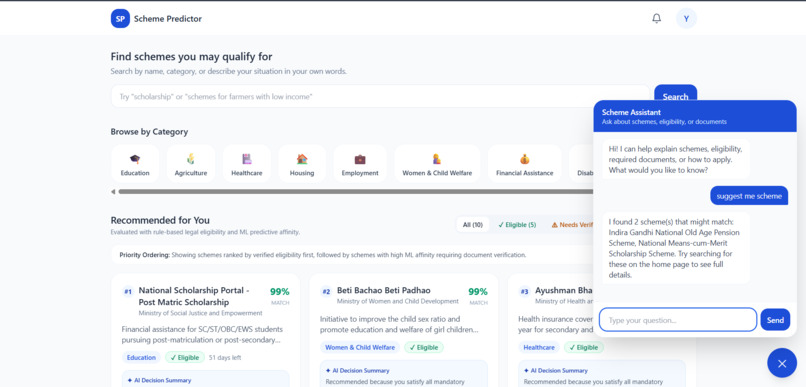
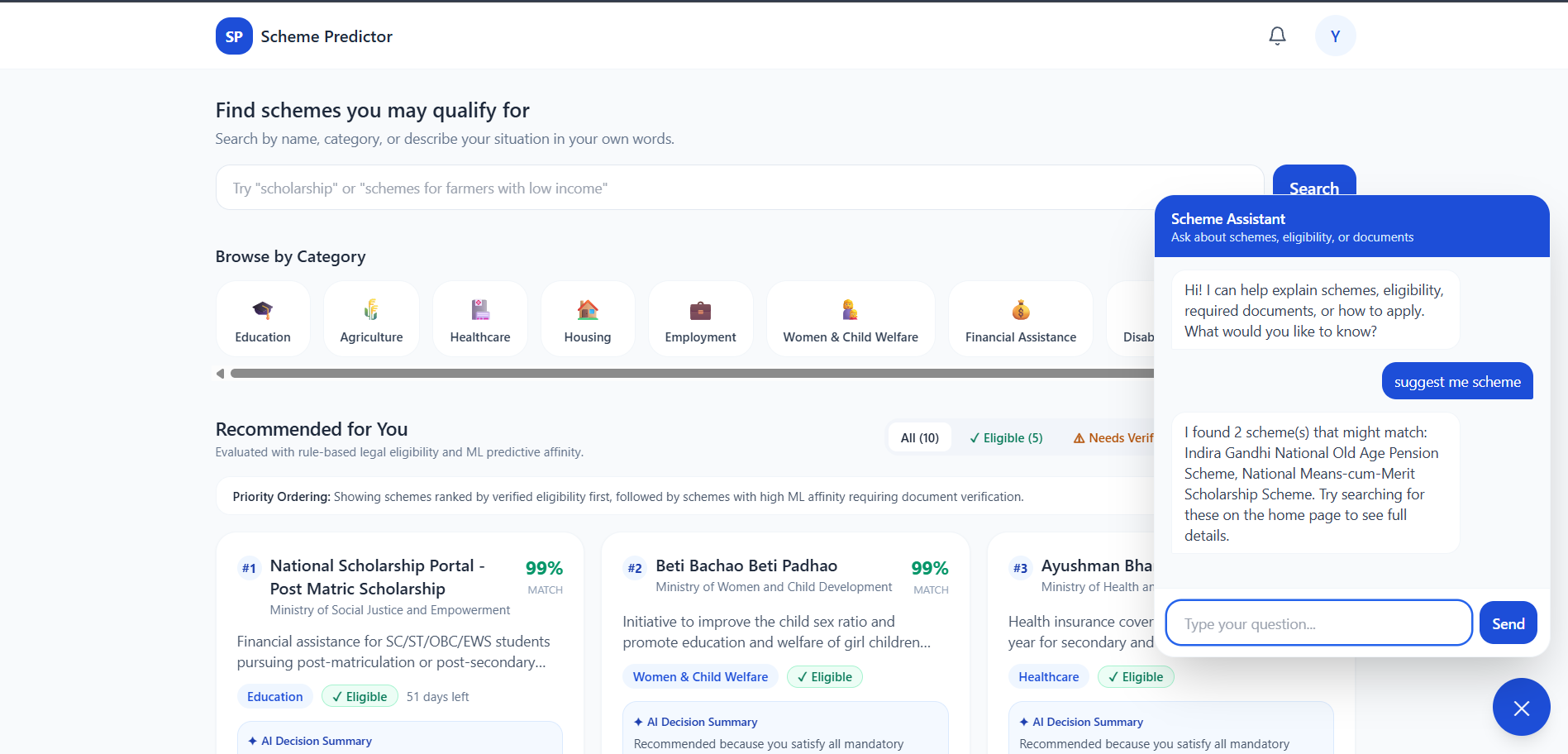
chatbot
-
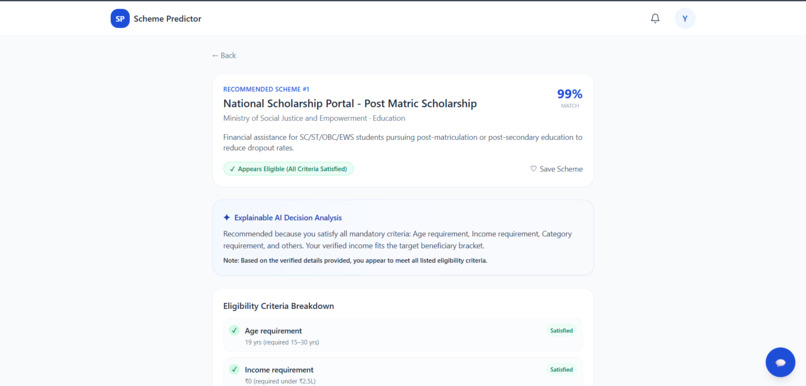
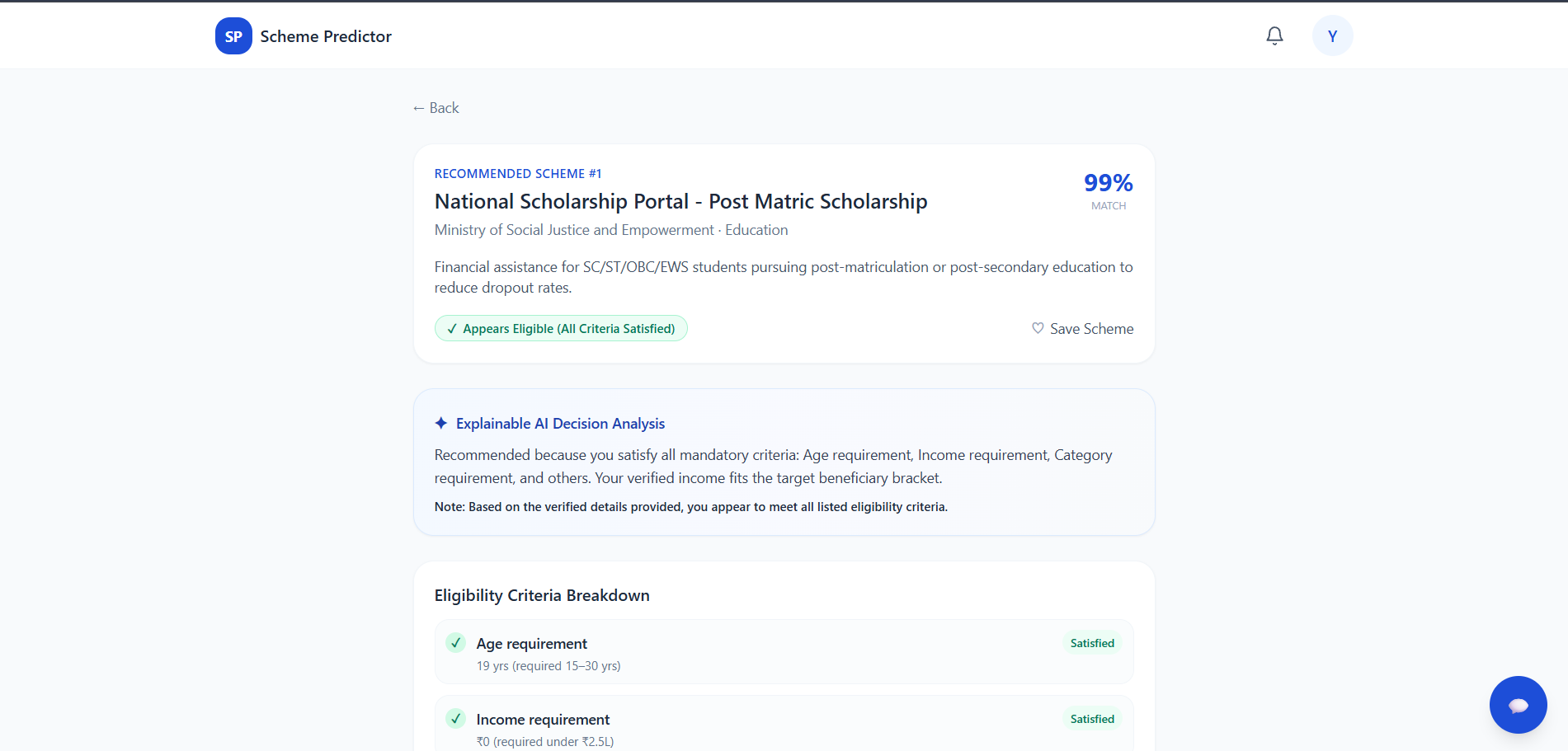
details of predicted scheme 1
-
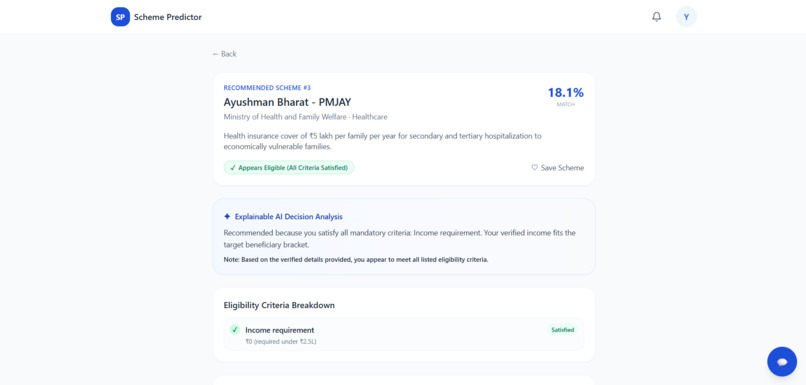
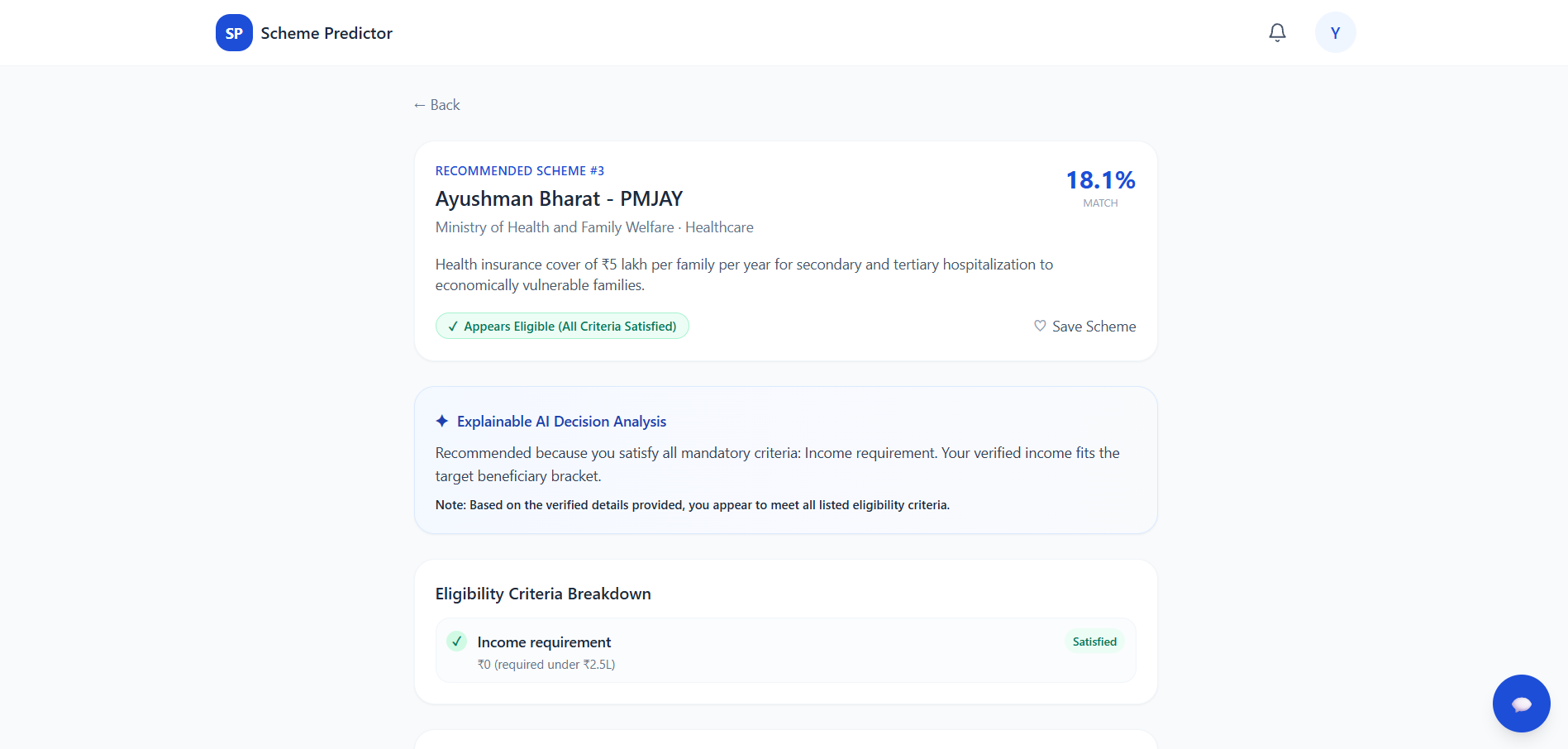
details of predicted scheme 2
-
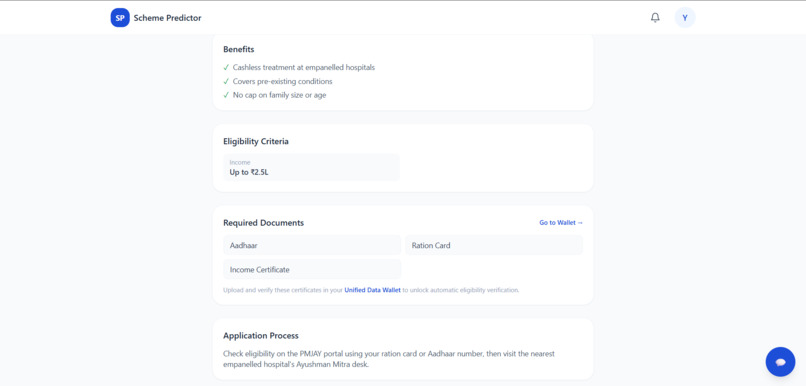
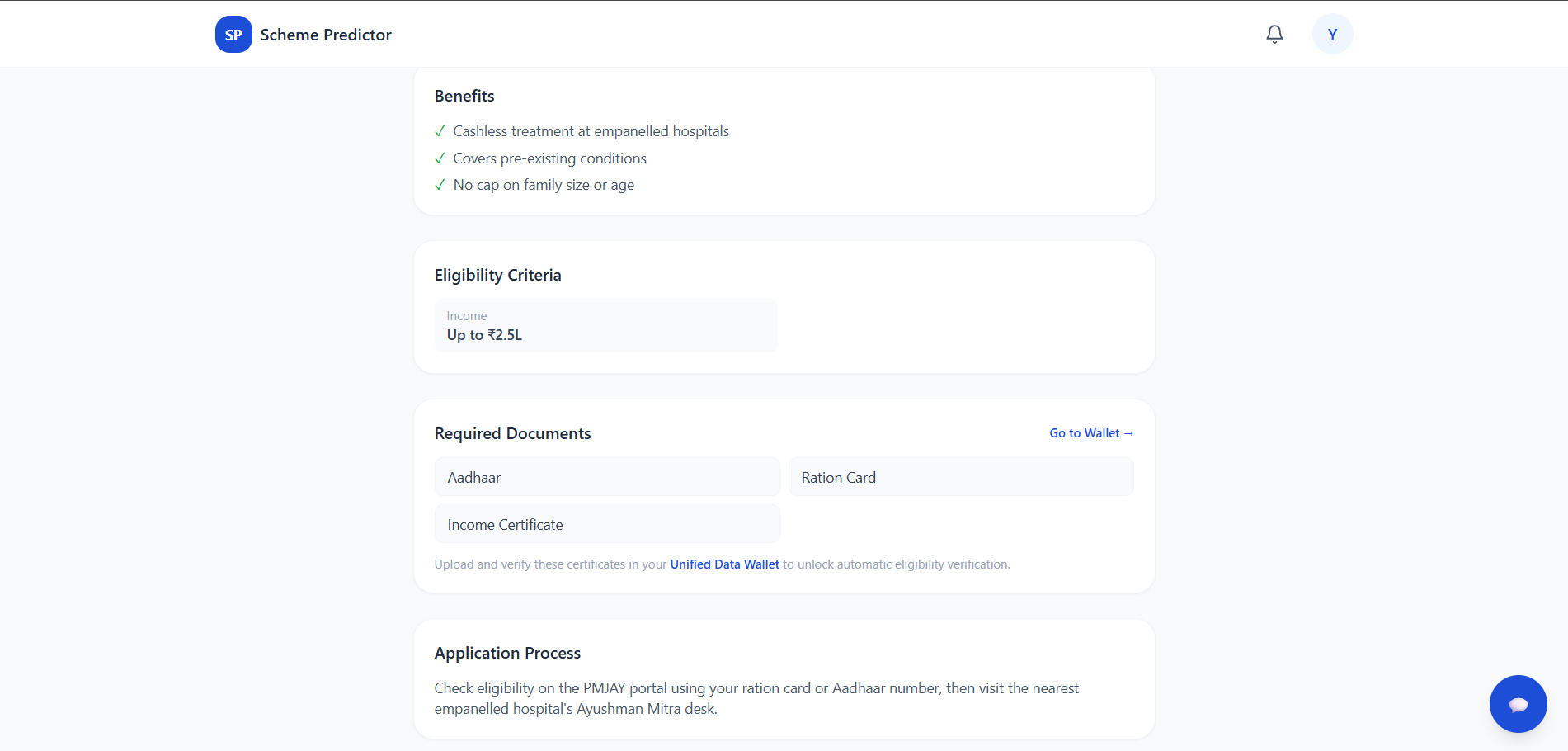
requirement details
-
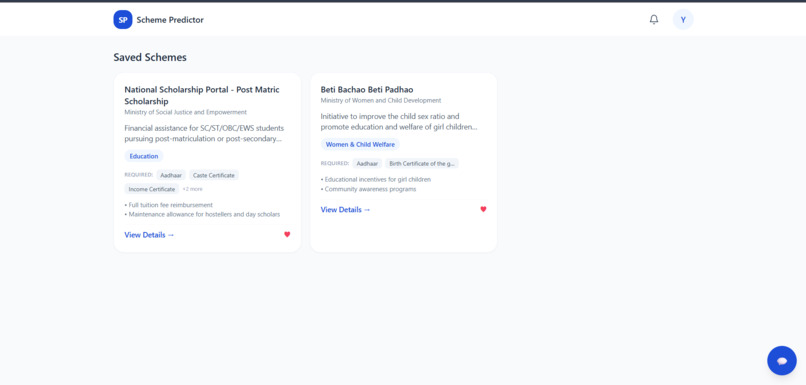
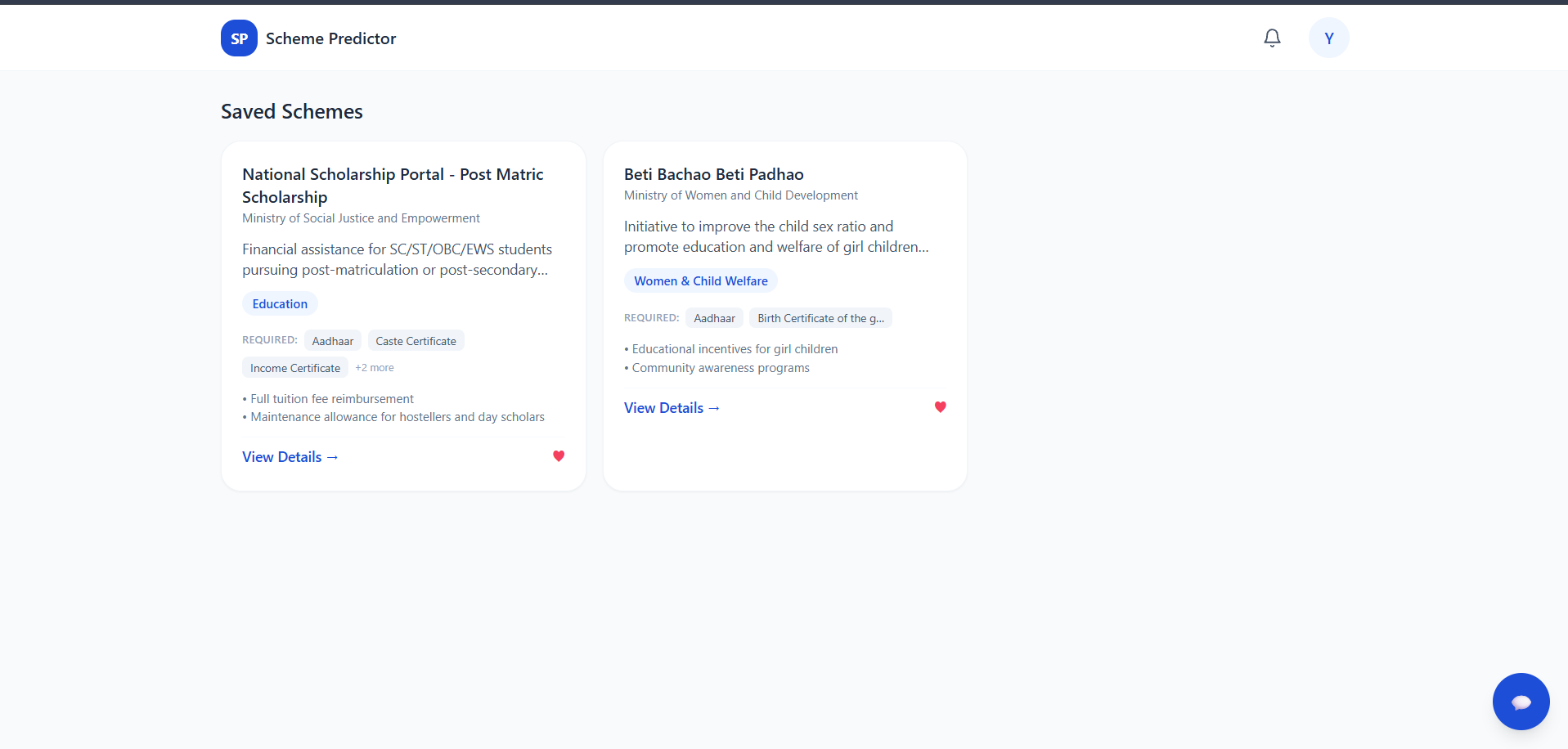
saved schemes page
Inspiration
Government welfare schemes provide valuable support to students, farmers, women, and families. However, many people struggle to discover schemes that match their needs because information is spread across different sources, eligibility criteria can be confusing, and required documents vary from scheme to scheme.
We were inspired to bridge this information gap by building SchemePredictor, an intelligent platform that simplifies scheme discovery and helps citizens understand their eligibility through a unified socio-economic data wallet.
What it does
SchemePredictor is an AI-powered government scheme eligibility and recommendation platform.
- Document Intelligence: Uses Optical Character Recognition (OCR) to extract information from uploaded documents such as identity proofs, income certificates, community certificates, and educational records.
- Unified Socio-Economic Data Wallet: Organizes extracted and citizen-verified information into a structured profile.
- Eligibility Assessment: Uses a rule-based engine to evaluate citizen profiles against scheme requirements and identify eligible, ineligible, or unverified criteria.
- AI-Based Recommendations: Uses machine learning to rank potentially relevant schemes based on citizen profile information.
- Explainable Results: Provides reasons for recommendations, highlights eligibility requirements, and identifies missing information.
- Admin Scheme Management: Allows authorized administrators to manage scheme information and review imported scheme data before publication.
The system separates eligibility decisions from machine learning recommendations so that an AI ranking does not automatically mean a citizen qualifies for a scheme.
How we built it
We developed SchemePredictor using a modular architecture that integrates frontend development, backend services, database management, OCR, and machine learning.
- Frontend: React.js and Tailwind CSS for a responsive user interface.
- Backend: Spring Boot REST APIs for authentication, citizen profile management, wallet operations, and eligibility evaluation.
- Database: MongoDB for storing scheme information, profiles, and document records.
- OCR Service: Python, Flask, and EasyOCR to extract information from uploaded documents.
- Recommendation Service: Python and XGBoost to rank relevant scheme categories.
- Rule-Based Engine: Evaluates predefined scheme criteria independently of machine learning scores.
- Administrative Workflow: Provides role-protected scheme management and a staging-and-approval approach for imported scheme updates.
We integrated the services through REST APIs and tested the backend and frontend builds to verify core functionality.
Challenges we ran into
One major challenge was extracting accurate information from documents with different layouts and inconsistent OCR output. We worked on improving field parsing and handling variations in names, dates, income formats, addresses, and other values.
Another challenge was integrating the frontend, Spring Boot backend, MongoDB, and Python-based services while maintaining reliable API communication and authentication.
We also needed to distinguish between a scheme that appears relevant and one for which a citizen satisfies the eligibility criteria. We addressed this by keeping rule-based eligibility assessment separate from machine learning recommendations and providing explanations for the results.
Maintaining trustworthy scheme information was another important consideration. We designed an approval-controlled ingestion workflow so that imported scheme data can be validated and reviewed before becoming active.
Accomplishments that we're proud of
- Built an integrated platform combining document processing, a unified citizen data wallet, eligibility assessment, and AI-based recommendations.
- Implemented a rule-based eligibility engine with three outcomes: eligible, not eligible, and needs verification.
- Integrated an OCR service to extract information from uploaded documents.
- Developed a machine learning recommendation service using XGBoost.
- Added explainable results to help users understand eligibility checks and recommendations.
- Implemented administrator-controlled scheme management and a staging workflow for reviewing imported data.
- Verified core backend functionality with automated tests and confirmed successful frontend production builds.
What we learned
This project helped us gain practical experience in full-stack development, REST API integration, database management, authentication, OCR, machine learning, and system integration.
We learned that building a useful AI-powered platform involves more than generating predictions. Data quality, validation, explainability, and clear separation between recommendations and eligibility decisions are equally important.
We also learned how to coordinate multiple services, debug integration issues, test individual components, and design safer workflows for handling citizen documents and government scheme information.
What's next for SchemePredictor
Our next goal is to expand SchemePredictor into a more comprehensive and accessible platform.
- Integrate additional officially permitted government datasets.
- Complete the administrator interface for reviewing, editing, approving, and rejecting imported scheme updates.
- Improve OCR accuracy across different document formats and languages.
- Expand coverage of state and central government welfare schemes.
- Add multilingual support to make scheme information accessible to more citizens.
- Improve recommendation quality using validated data and user feedback.
- Strengthen data privacy, security, and auditability.
Our long-term vision is to make government welfare benefits easier to discover and understand through a transparent, reliable, and citizen-friendly platform.
SchemePredictor — One Data Wallet. Smarter Eligibility. Better Access to Government Benefits.

Log in or sign up for Devpost to join the conversation.