



Inspiration
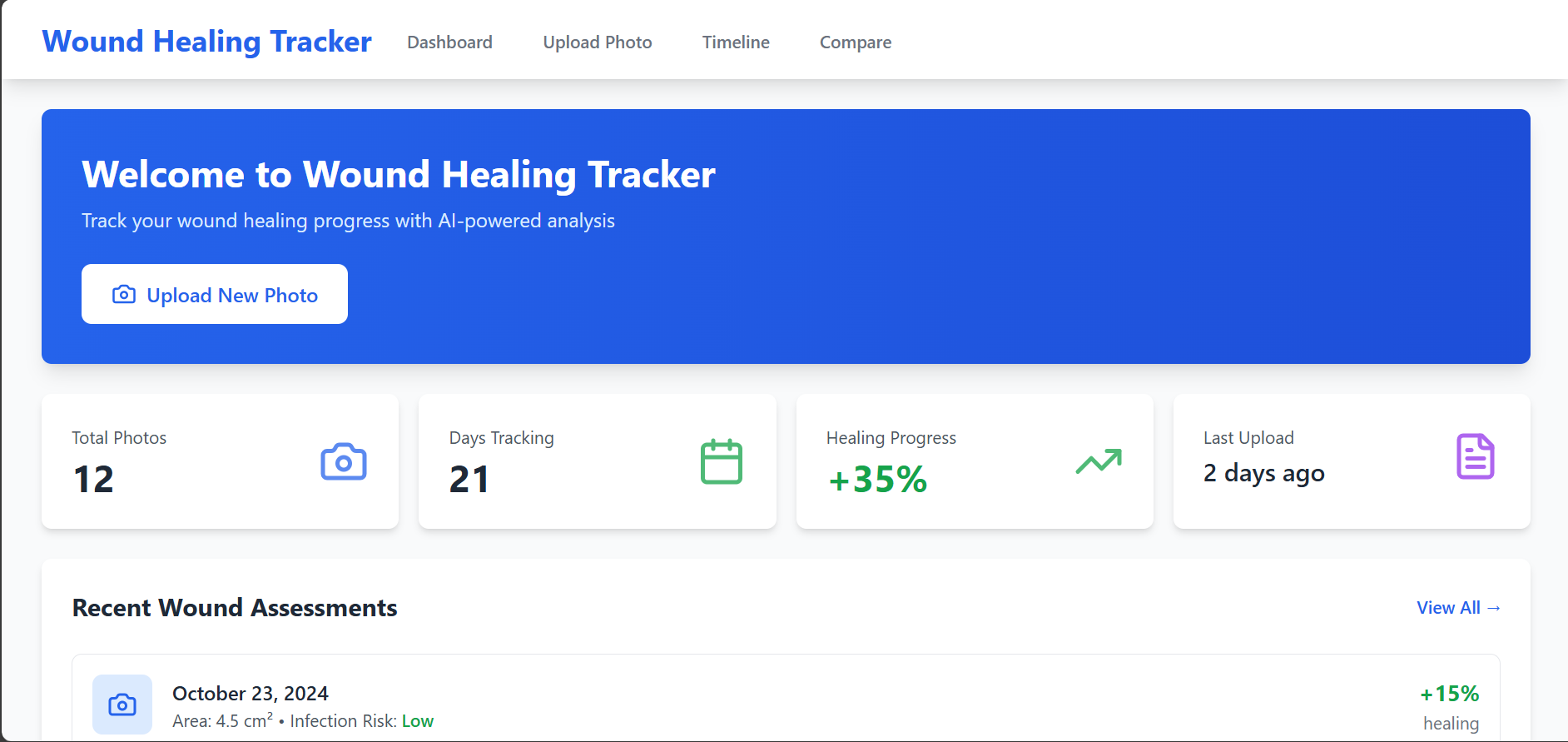
Chronic wounds and injuries require consistent monitoring, but manual tracking is time-consuming and prone to errors. We wanted to create an AI-driven system to assist patients and healthcare providers in accurately tracking wound healing and detecting early signs of infection.
What it does
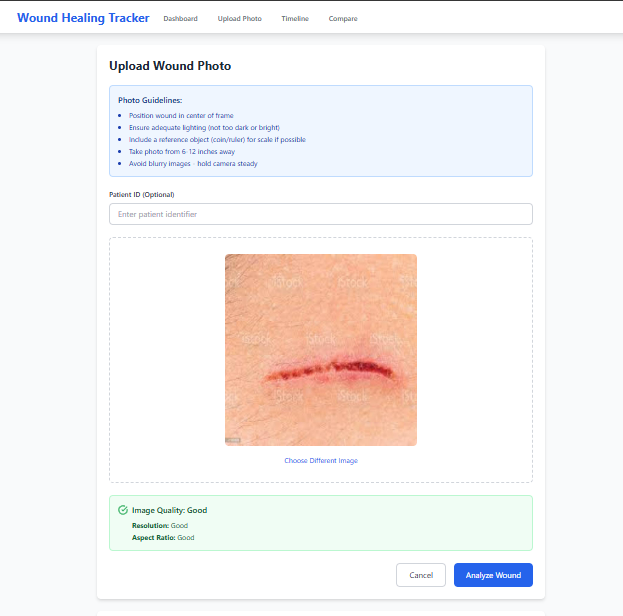
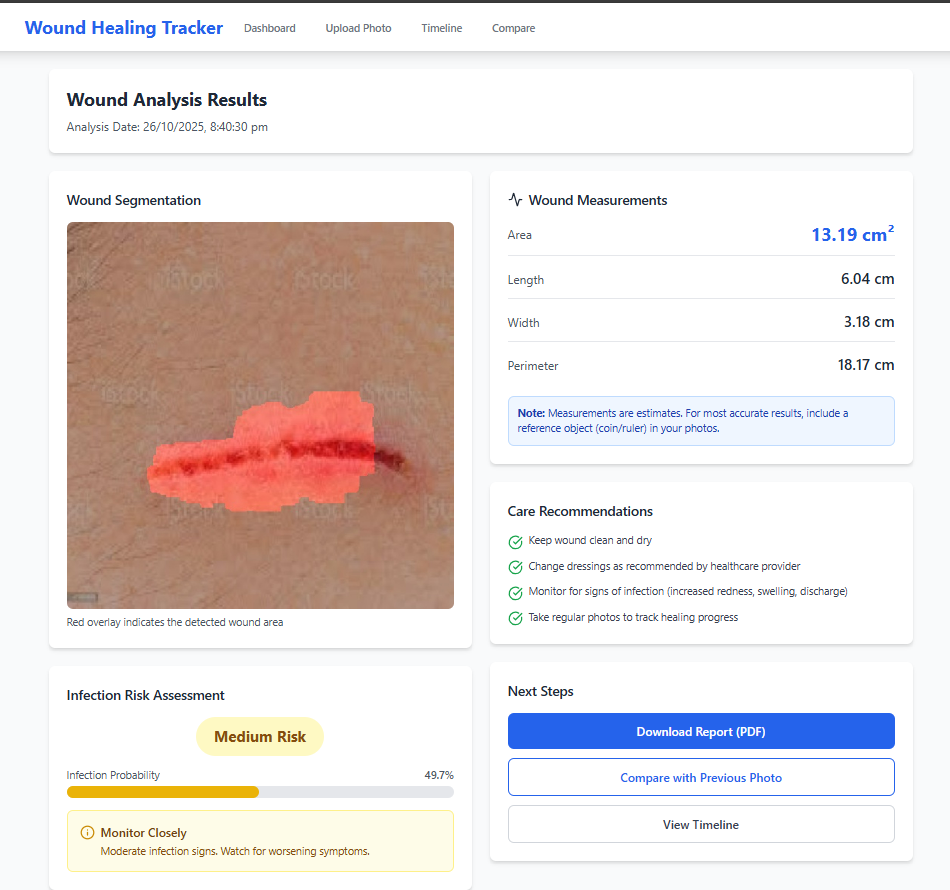
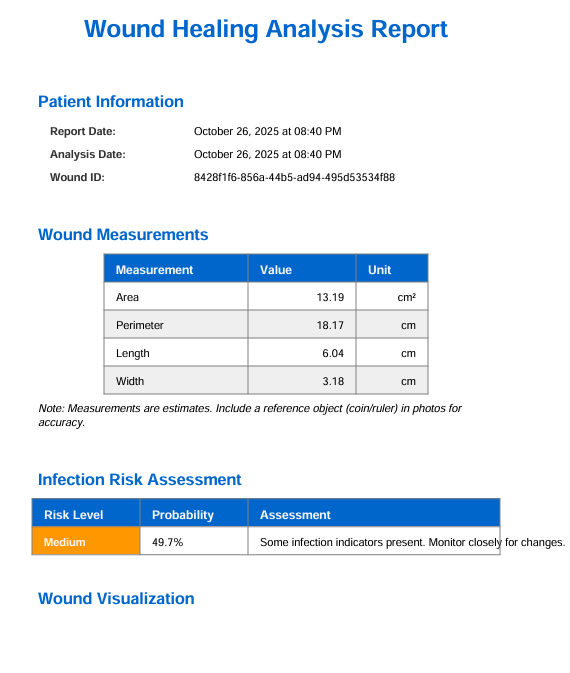
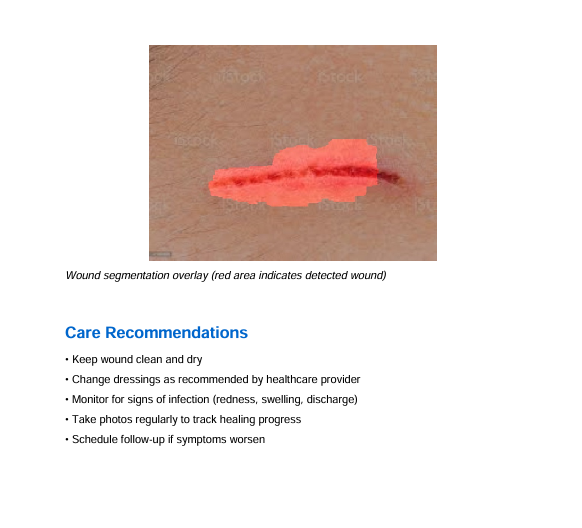
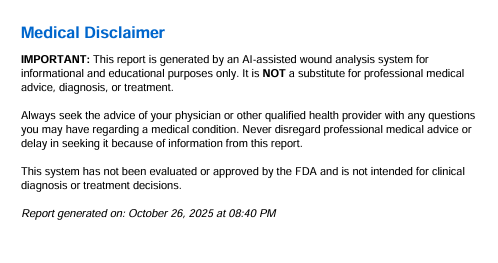
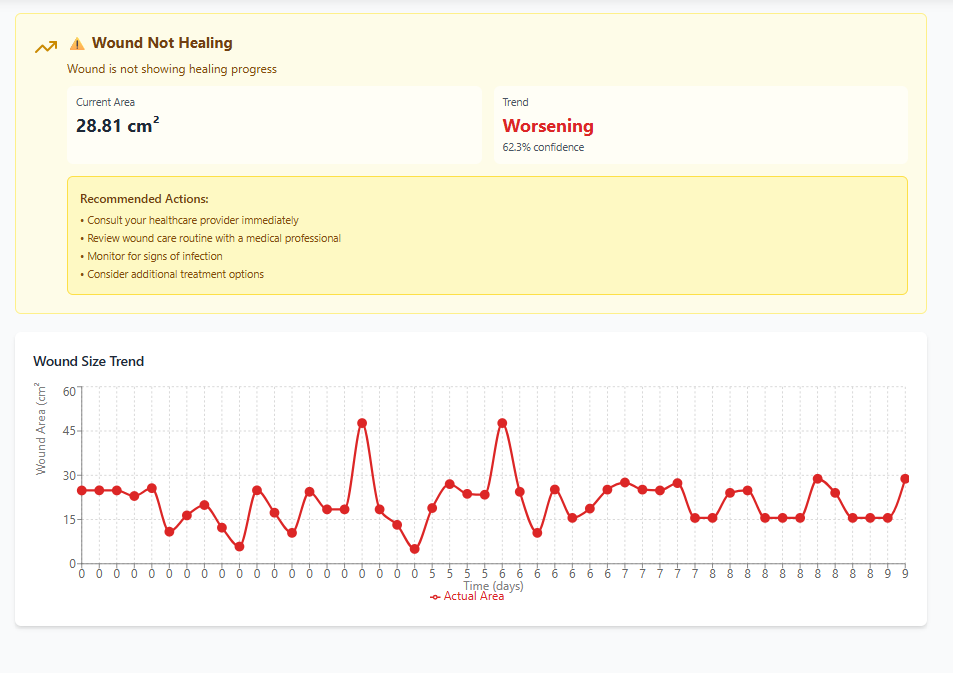
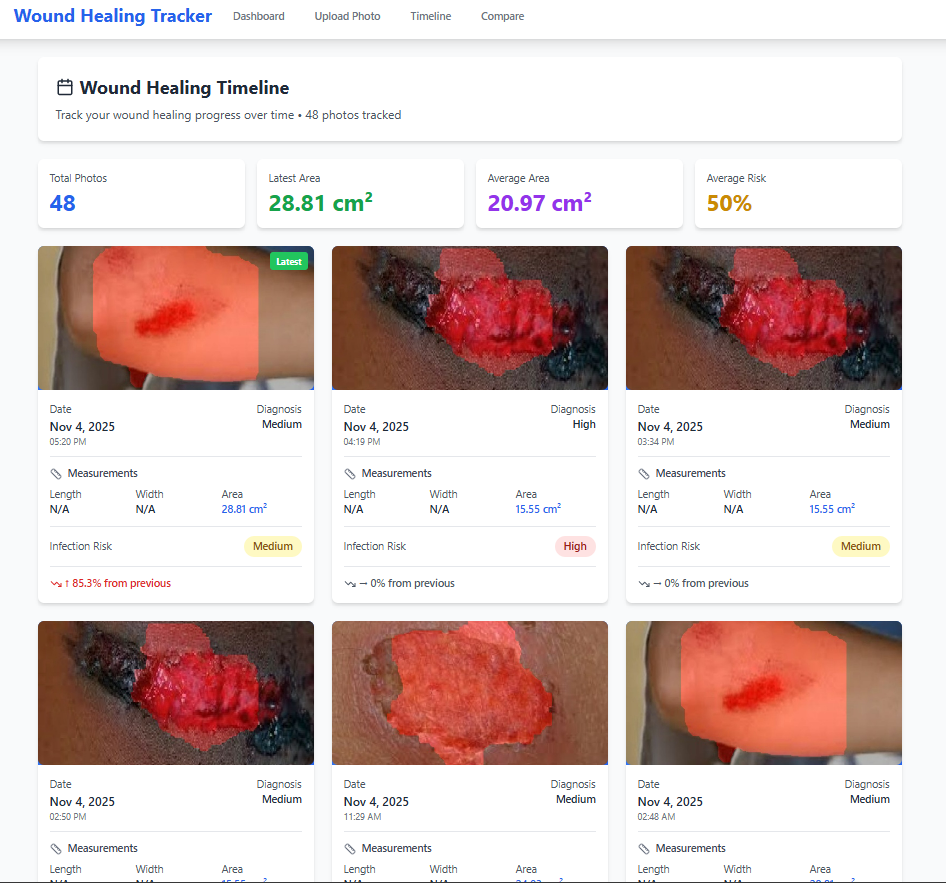
DIS uses advanced computer vision and deep learning to analyze wound images, generate healing metrics, assess infection risk, and produce detailed reports. It empowers clinicians and patients with actionable insights to improve recovery outcomes.
How we built it
We developed a FastAPI backend for image processing, simple segmentation, and infection detection using PyTorch. The frontend uses React for a responsive, interactive interface. Reports are generated via PDF automation, and all data is securely stored for tracking progress over time.
Challenges we ran into
Handling diverse wound image qualities and lighting conditions for accurate segmentation.
Ensuring the infection detection model is reliable with limited labeled data.
Generating comprehensive PDF reports dynamically for each patient while maintaining performance.
Accomplishments that we're proud of
Built a fully functional end-to-end system from image upload to report generation.
Achieved robust wound segmentation using simple adaptive algorithms without heavy training data.
Successfully integrated infection risk assessment into actionable metrics.
What we learned
The importance of preprocessing and consistent image standards in medical AI applications.
Techniques for combining classical CV methods with deep learning to achieve reliable results.
Best practices for building scalable, maintainable APIs that interface with a modern frontend.
What's next for DIS
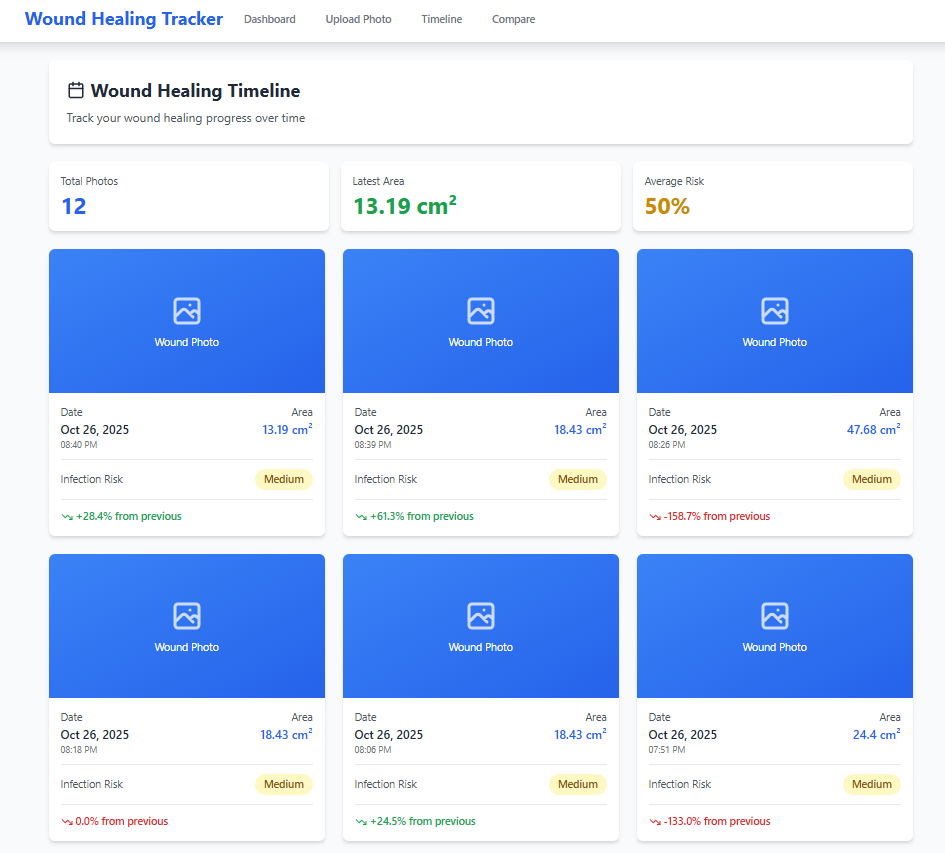
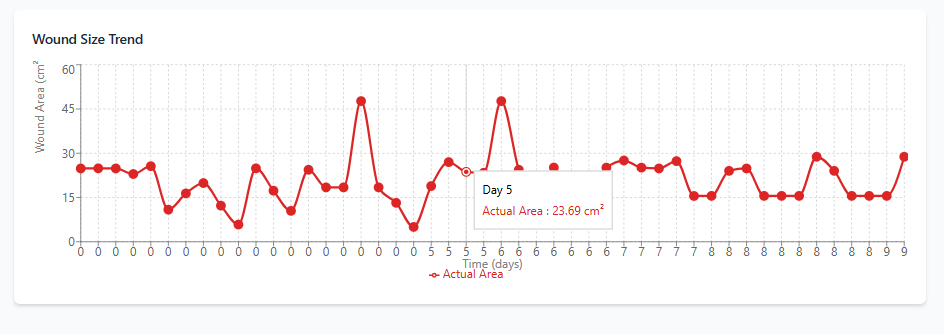
Integrate temporal tracking to monitor wound healing trends over time.
Enhance infection detection with more robust models trained on diverse datasets.
Develop mobile support for on-the-go wound monitoring by patients.
Incorporate predictive analytics to suggest personalized care plans.
Built With
- albumentations
- amazon-web-services
- celery
- chart.js
- cypress
- d3.js
- detectron2
- django-rest-framework
- docker
- dvc
- elasticsearch
- fastapi
- firebase
- git
- github
- github-actions
- gitlab
- grafana
- hashicorp-vault
- heroicons
- jenkins
- jinja
- jwt
- keras
- keycloak
- kibana
- kubernetes
- latex
- locust
- logstash
- lucide
- material-ui
- minio
- mlflow
- mongodb
- mysql
- next.js
- nginx
- numpy
- oauth2
- opencv
- pandas
- postgresql
- postman
- prometheus
- pytest
- pytorch
- rabbitmq
- react
- react-query
- recharts
- redis
- redux
- reportlab
- scikit-learn
- segmentation-models
- selenium
- sentry
- shadcn-ui
- sqlalchemy
- ssl/tls
- tailwindcss
- tensorflow
- terraform
- torchmetrics
- torchvision
- traefik
- unittest
- weasyprint
- weights-&-biases
- yolov8
- zustand

Log in or sign up for Devpost to join the conversation.