-
-
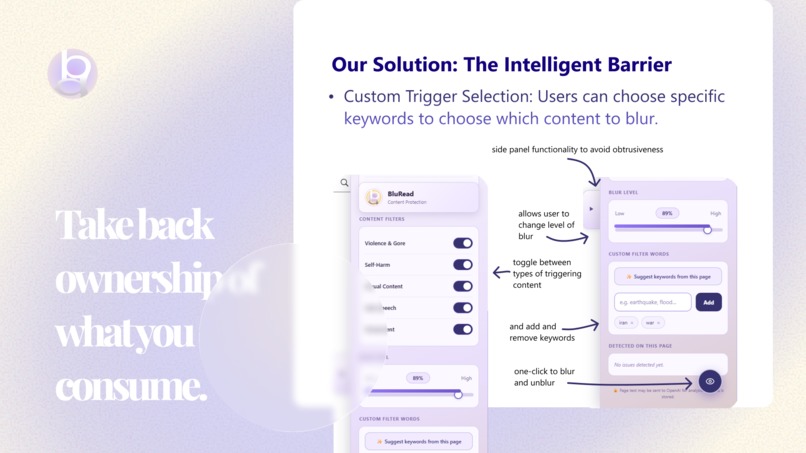
Functionality #1
-
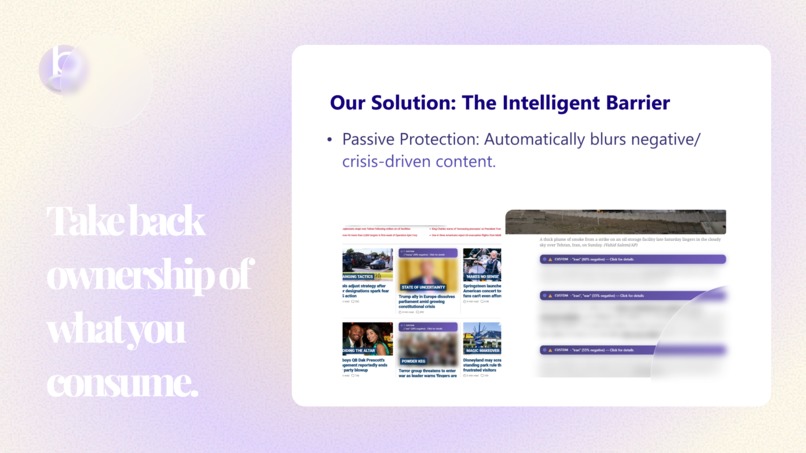
Functionality #2
-

Logo

Inspiration Digital environments often prioritize high-arousal, negative content because it captures attention, regardless of the cost to the user’s mental well-being. According to Vasterman (2018), the repetitive cycle of "media-hyped" crises can lead to increased public anxiety and a distorted perception of reality, making individual control over content consumption a vital digital literacy skill. We wanted to build a tool that helps users reclaim their "digital diet" and protect their headspace from the constant barrage of sensationalist news.
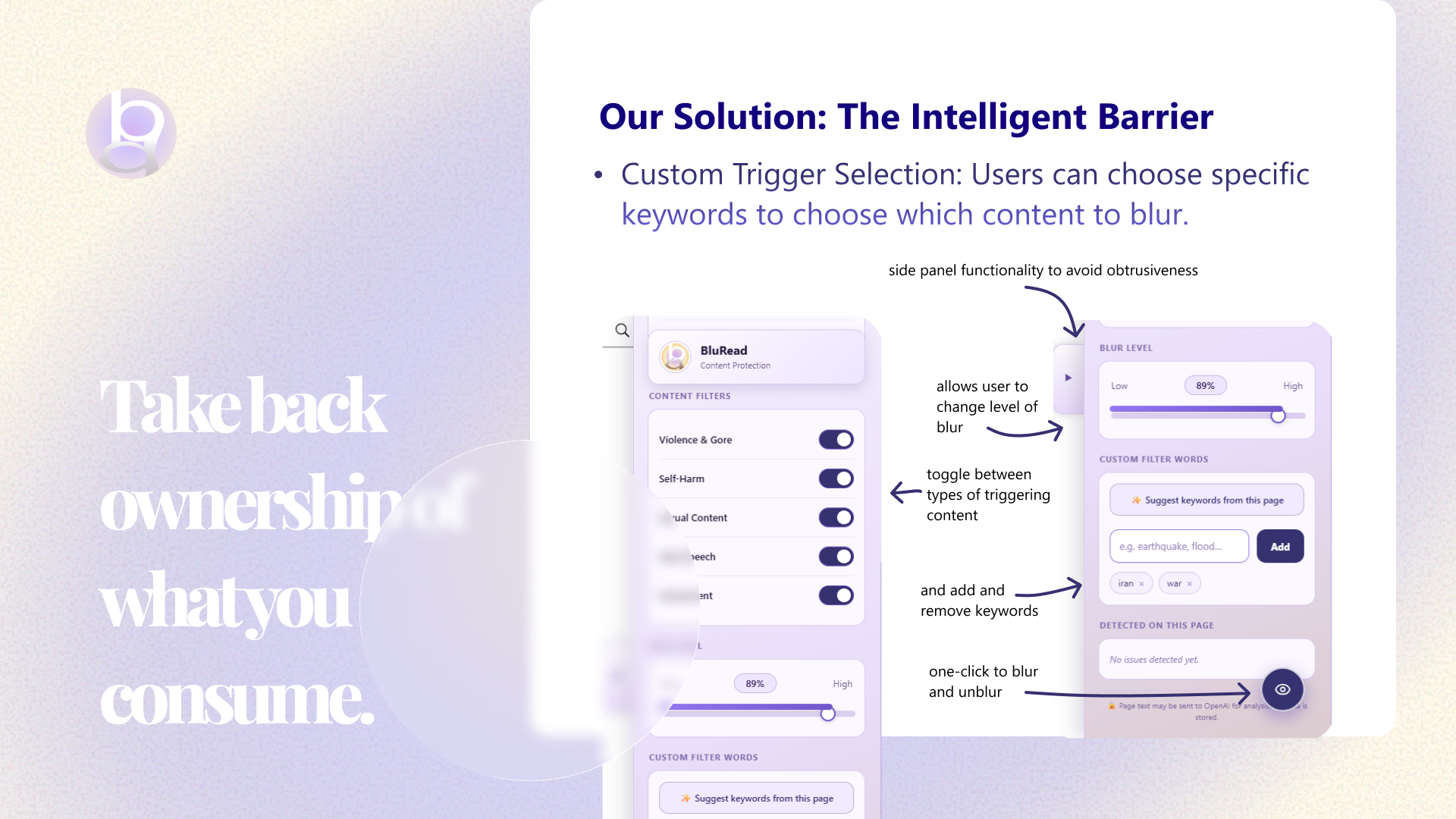
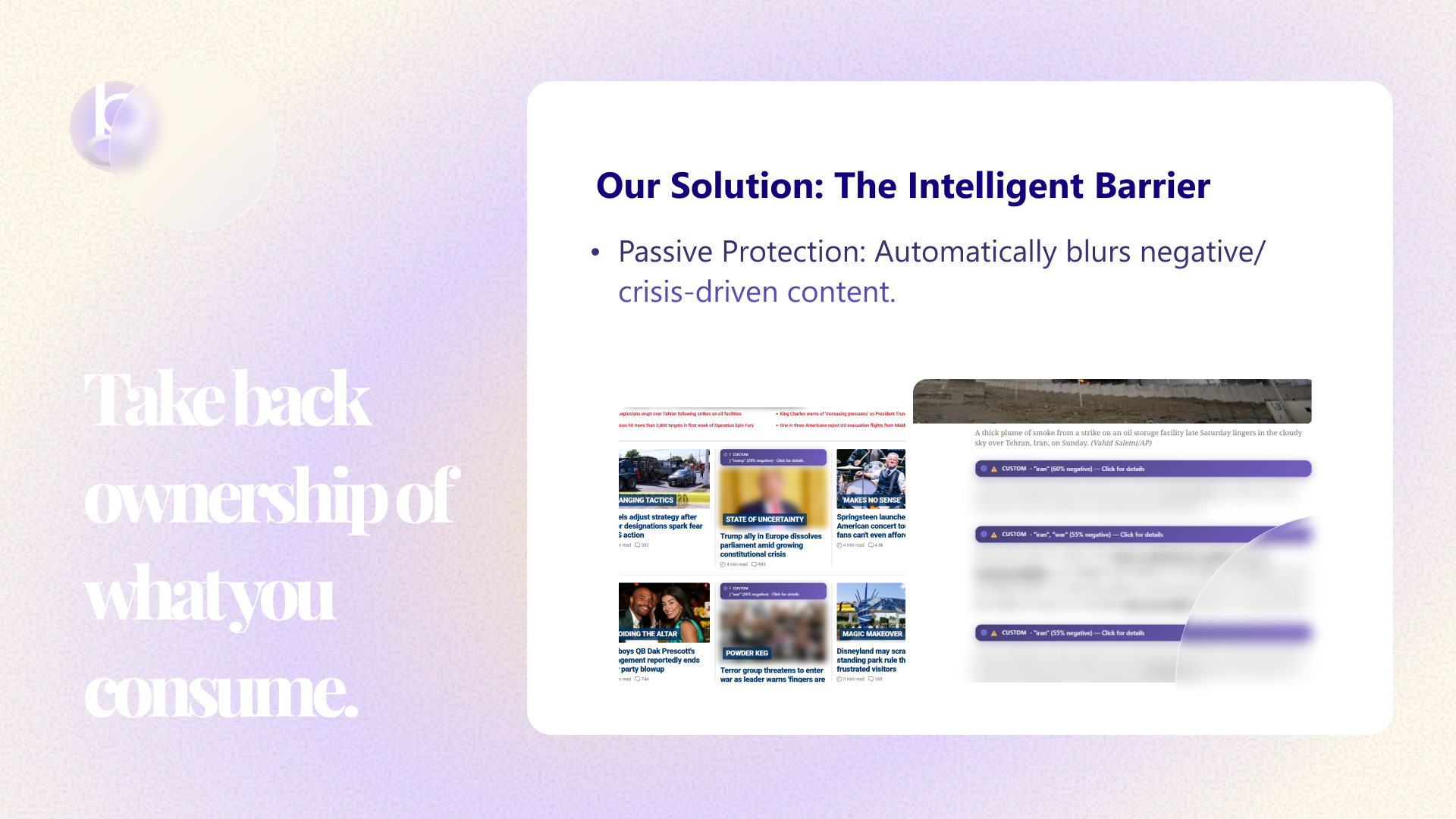
What it does Bluread is a privacy-first Chrome extension that gives users autonomy over their news feeds. It allows individuals to select specific keyword filters to hide articles related to topics that are violent, tragic, or intentionally designed to trigger a stressful reaction. Unlike most modern tools, it operates with a "no-cookie" architecture and a strict "no data sell-out" policy, ensuring that personal browsing habits remain entirely private.
How we built it The project was developed as a lightweight browser extension using a combination of HTML, CSS, and JavaScript. We focused on building a clean popup interface for user customization and a robust content script that scans and filters web elements in real-time. By avoiding external trackers and cookies, we prioritized a lean codebase that puts performance and privacy at the forefront of the user experience.
Challenges we ran into One of the primary hurdles was accurately identifying and filtering content across various news platforms without breaking the website's layout. Every site has a different structure, so creating a logic that could reliably hide "triggering" articles while maintaining a seamless browsing flow required significant trial and error. Additionally, balancing effective filtering with a "no-cookie" architecture meant we had to find creative ways to store user preferences locally.
Accomplishments that we're proud of We successfully created a functional tool that delivers on its promise of data integrity. In an era where "free" tools usually come at the cost of personal information, building a utility that refuses to sell user data is something we take great pride in. We also managed to make the filtering process feel natural rather than disruptive, allowing for a more intentional and calm reading experience.
What we learned This project taught us the importance of user-centric design in the context of mental health. We learned how much our emotional state is tied to the information we consume and how vital it is for developers to consider the psychological impact of the software they create. Technically, we gained a much deeper understanding of DOM manipulation and the nuances of privacy-preserving web development.
What's next for Bluread The immediate goal is to expand the keyword library and refine the filtering algorithm to better detect sensationalist "clickbait" titles. We are also looking into making the extension compatible with other browsers and adding a "focus mode" that summarizes articles to further reduce the impact of inflammatory language.
Built With
- antigravity
- geminiapi
- html/css
- manifestv3
- openaiapi
- vanillajs


Log in or sign up for Devpost to join the conversation.