Inspiration
We were inspired by existing organizational tools like Notion, and our frustrations with our Moodle course dashboards.
What it does
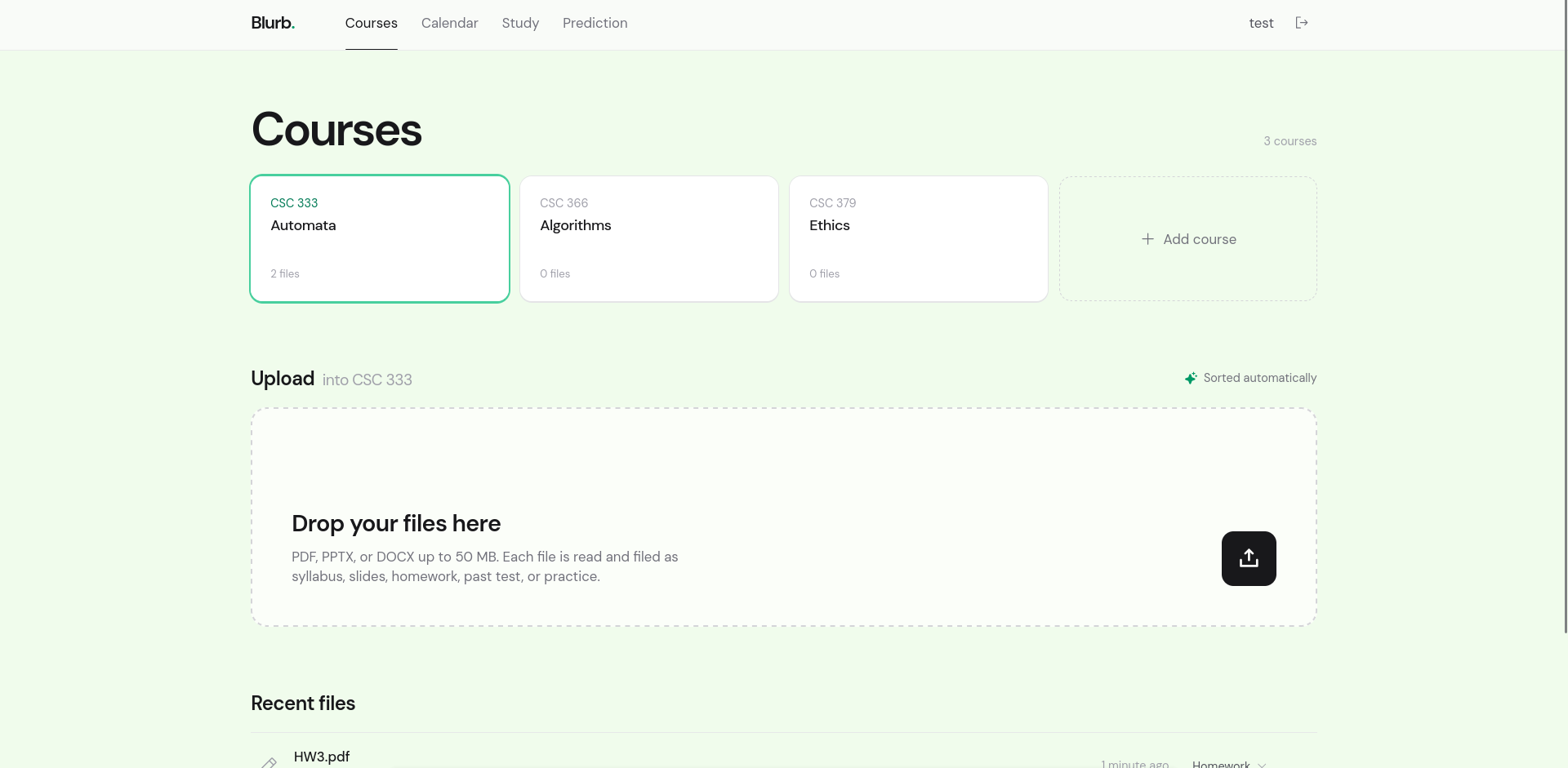
It organizes course files, catches deadlines and generates a calendar, provides topic summaries, and predicts whether a student is at risk of a low grade.
How we built it
We build it by using React, Vite, and Tailwind CSS, with a Python backend for the decision tree that predicts low grades.
Challenges we ran into
The scope of the project was large and infinitely extensible; as a two-person team, it was challenging to determine what we could actually implement in the given time and what would actually be useful to an end user. We also ran into issues tuning the decision tree model, balancing interpret-ability with accuracy.
Accomplishments that we're proud of
We're proud that we managed to ship a functional and polished web app that genuinely provides utility. Occasionally in the development process we thought, "I could actually use this", which we're proud of.
What we learned
We learned how to train a simple decision tree model using a data set, how to use Supabase, and gained experience designing/eliciting requirements.
What's next for Blurb
We want to flesh out the Study functionality to identify missed problems in uploaded files, using this to create an objective measure of progress. We also want to incorporate some data collection regarding study habits, so that the prediction model can be tailored to each user. We envision the Study functionality working in tandem with the Prediction functionality to create a more interactive platform.
Built With
- gemini
- python
- react
- supabase
- tailwind
- typescript
- vite
