Inspiration
BlueWell was inspired by a simple observation: staying healthy is hard not because people lack motivation, but because wellness tools demand too much effort. Tracking calories manually, making nutrition decisions on busy days, and maintaining balanced routines all require mental load that students and professionals often don’t have. We wanted to build an app that feels intuitive, adaptive, and supportive something that learns from you rather than making you do the work.
What it does
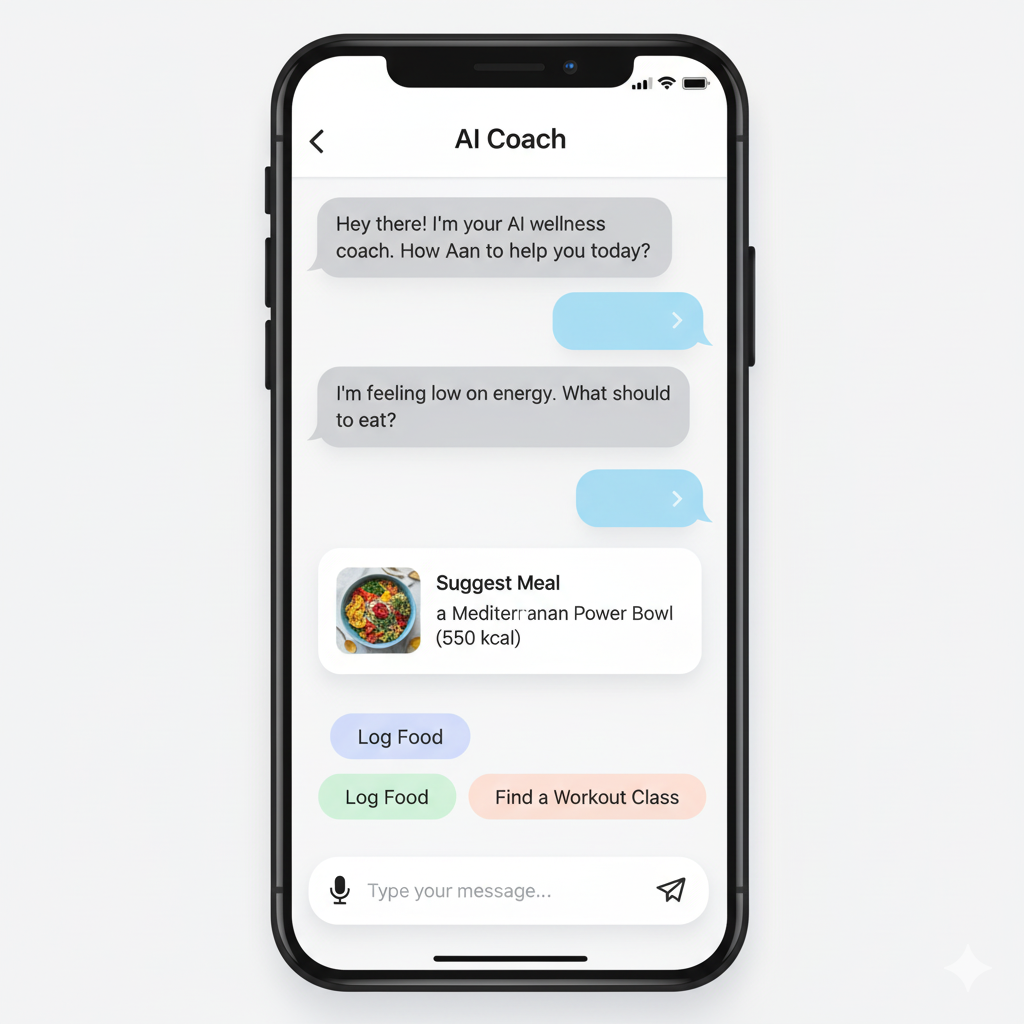
BlueWell is an AI-powered wellness companion that helps users build healthier habits with minimal stress.
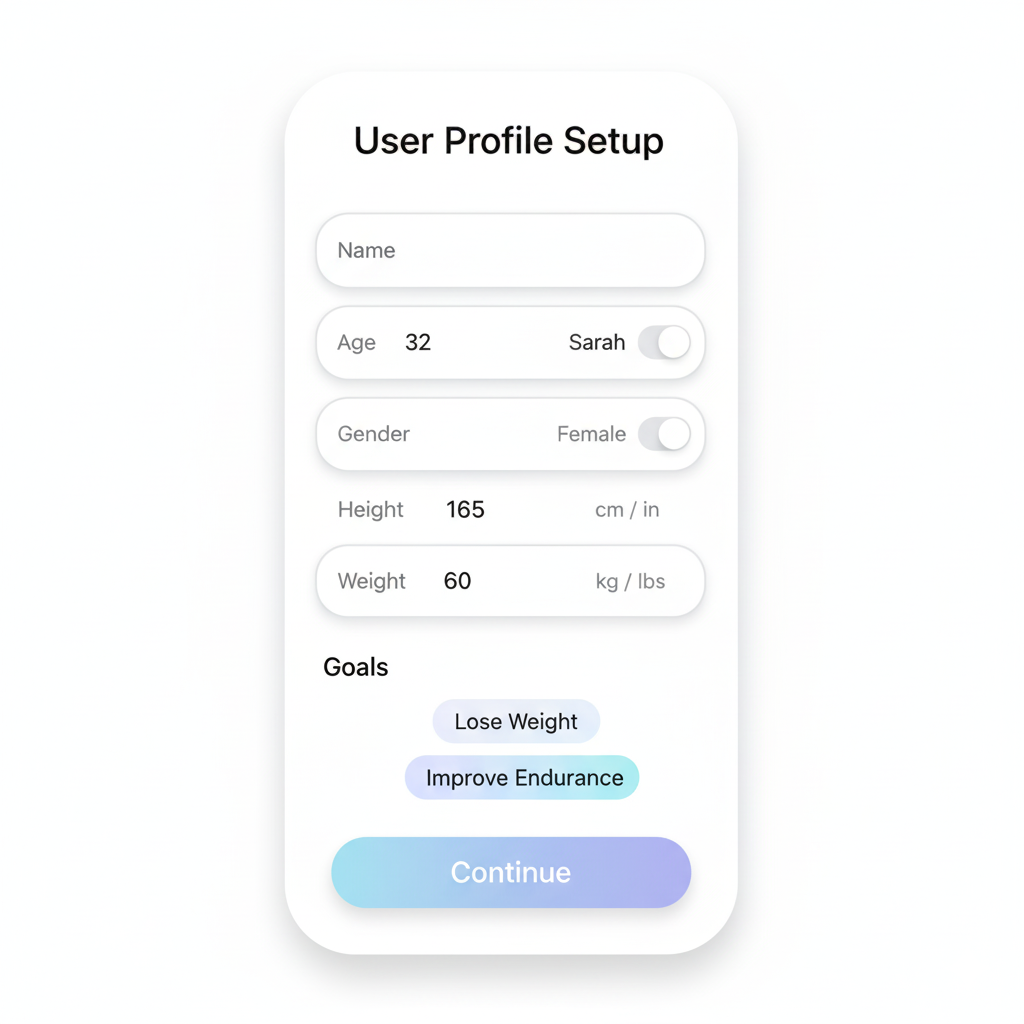
- It creates personalized wellness profiles based on dietary preferences, health goals, and lifestyle patterns.
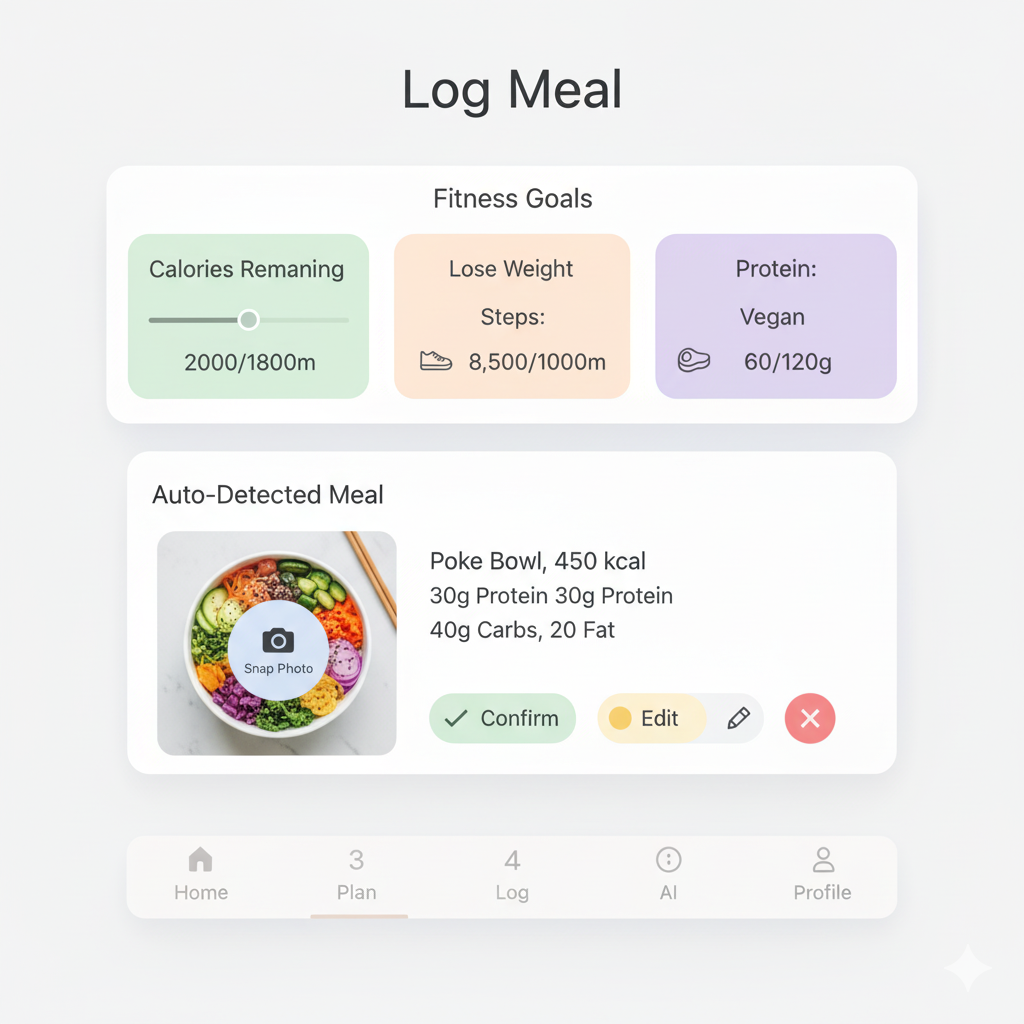
- It uses computer vision to recognize meals from photos and auto-log calories and macros.
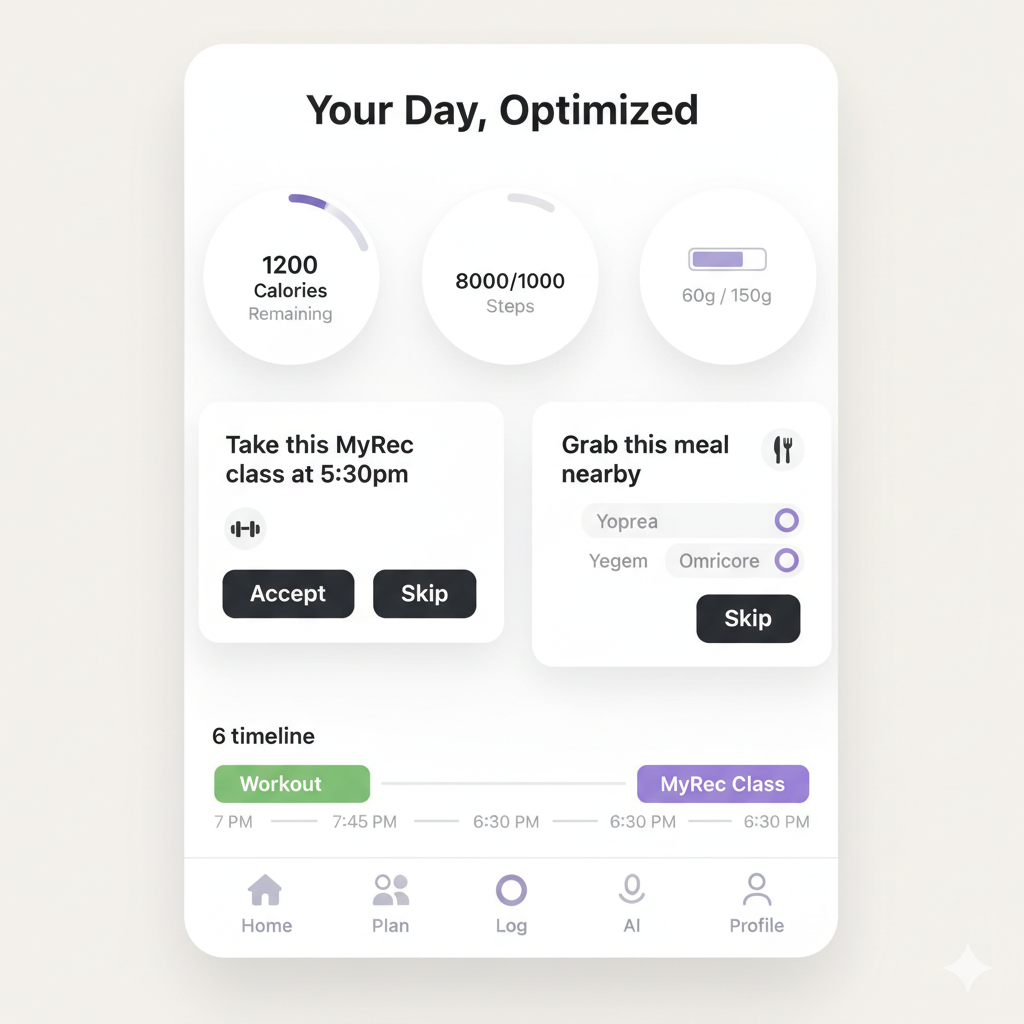
- It recommends healthy menu options from nearby restaurants and provides direct ordering links.
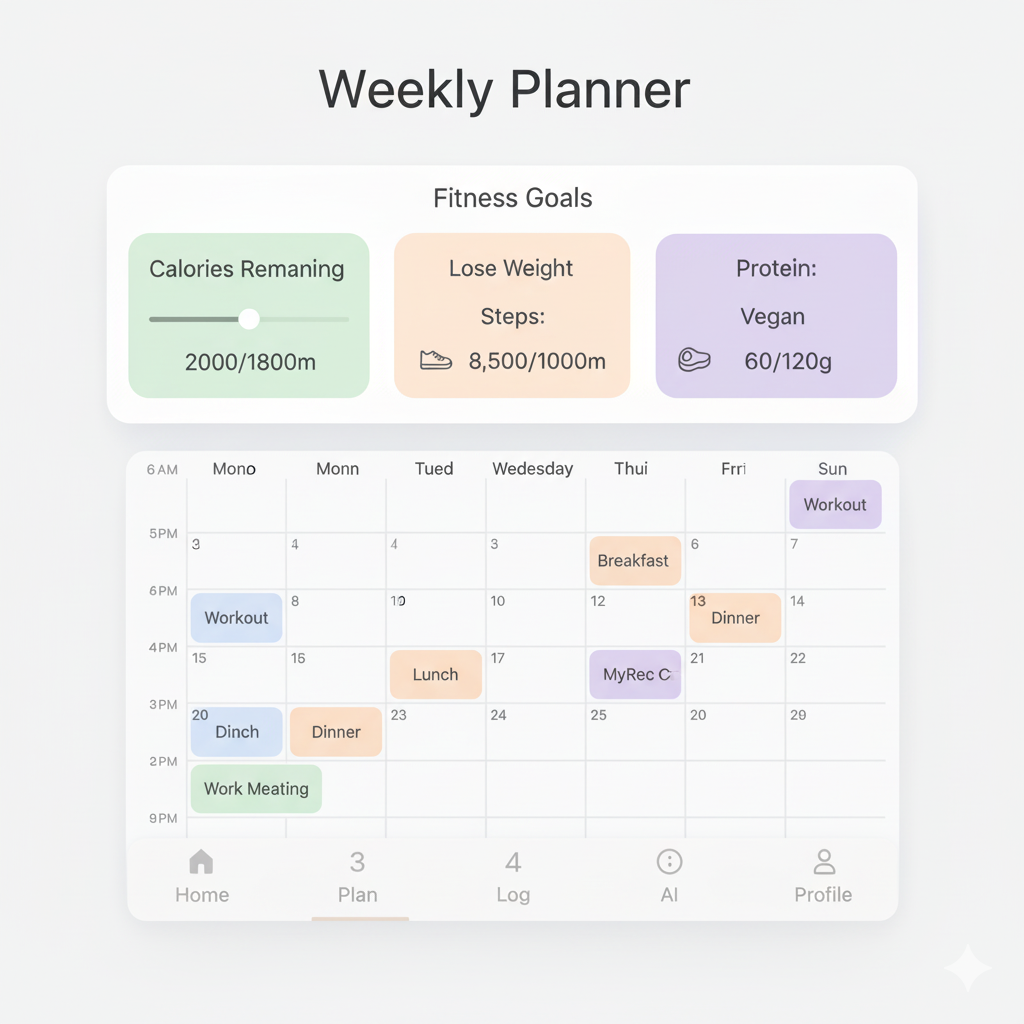
- It integrates with a user’s calendar to suggest and schedule restorative activities like yoga, hiking, or dance classes.
The result is a seamless ecosystem that guides nutrition, activity, and daily balance - without requiring tedious manual effort.
How we built it
We combined several components into a single pipeline:
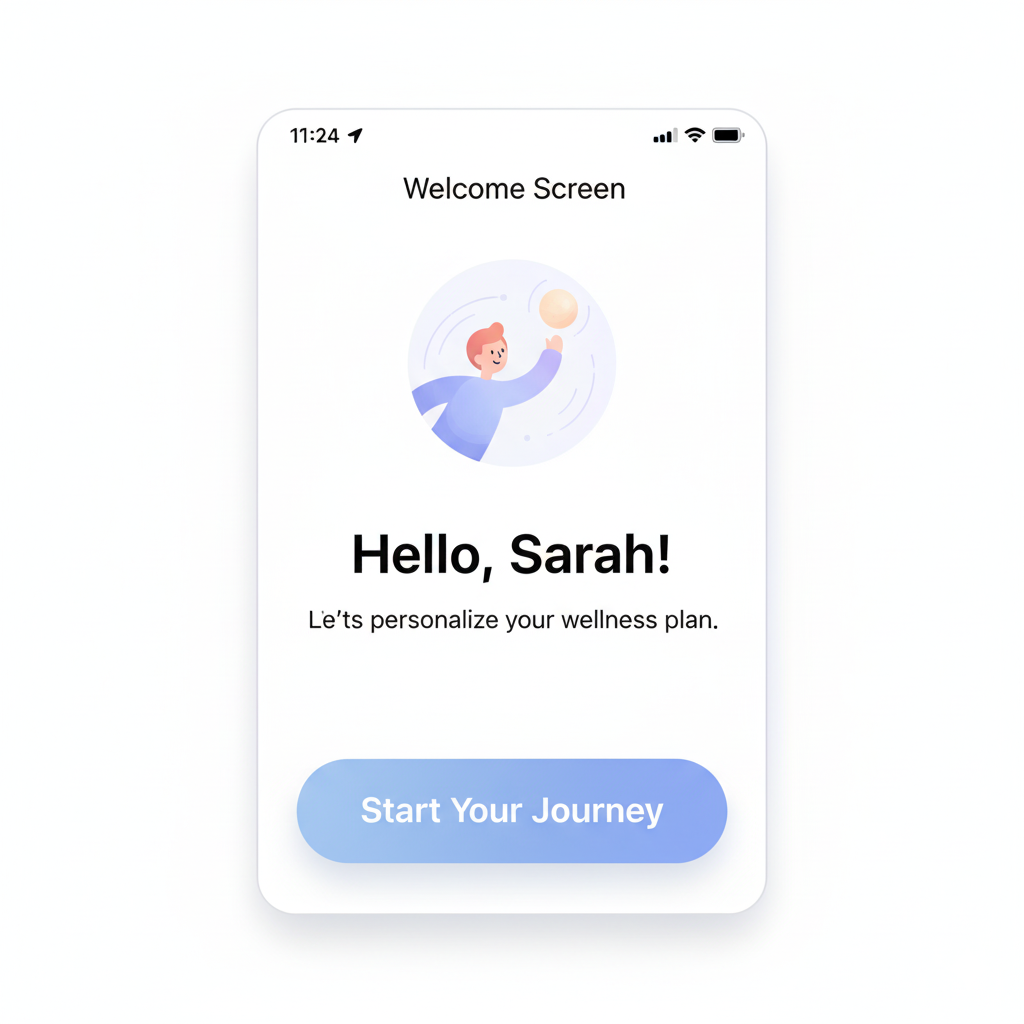
- Front-end prototype: Designed a minimal, calm UI inspired by Notion × Headspace aesthetics to match the brand.
- AI meal recognition: Used a vision model to detect food items from images and estimate nutritional content.
- Meal recommendation engine: Mapped restaurant menus to dietary goals using embeddings and similarity scoring.
- Profile personalization: Developed a simple rule-based and embedding-based system that adjusts suggestions over time.
- Calendar integration: Implemented scheduling logic that matches available time slots with recommended activities.
All systems communicate through lightweight APIs, allowing modular updates and testing.
Challenges we ran into
- Meal recognition variability: Lighting conditions, plating, and mixed foods required multiple preprocessing steps.
- Balancing personalization and simplicity: We wanted recommendations to feel tailored without overwhelming users with options.
- Integrating multiple data sources: Restaurant menus, nutritional datasets, and user calendars all needed consistent formatting.
- Time constraints: Building an AI-centric app with multiple features in a short development window required careful prioritization.
Accomplishments that we're proud of
- Built a working AI-driven meal logging system with automatic macro estimation.
- Designed a recommendation engine that adapts to users’ dietary goals.
- Created a cohesive wellness workflow—food, activities, scheduling—that feels intuitive and minimal.
- Developed a strong brand identity and product narrative around simplicity and personalized support.
What we learned
- How to unify several machine learning components into a smooth user experience.
- The importance of reducing cognitive load when designing wellness tools.
- How user context (schedule, location, preferences) dramatically improves the relevance of recommendations.
- The need for interpretable AI - users want to understand why recommendations are made.
What’s next for BlueWell
- Improved CV models for more accurate portion estimation using depth cues and reference objects.
- Macro tracking for mixed meals using segmentation-based analysis.
- Integration with Apple Health and smart scales for real-time metabolic insights.
- Reinforcement learning to improve recommendations based on user behavior.
- Mood and energy tracking to give proactive lifestyle suggestions.
- A full mobile app launch with a polished UI, gamified habit loops, and community features.
Built With
- autoprefixer
- clsx-(2.1.0)
- docker
- docker-compose
- eslint
- fastapi-(0.109.0)
- full-stack
- google-api-python-client
- google-auth
- google-auth-oauthlib
- google-oauth
- httpx-(0.26.0)
- lucide-react-(0.344.0)
- monorepo-architecture-(turborepo-+-pnpm)
- next.js
- next.js-(14.1.0-app-router)
- nextauth.js-(4.24.5)
- pillow-(10.2.0)
- pnpm-(8.15.0)
- postcss
- postgresql
- prettier
- prisma-(5.9.1)
- prisma-studio
- python-(3.11+)
- python-multipart
- react-(18.2.0)
- shadcn/ui
- tailwind-css-(3.4.1)
- tailwind-merge-(2.2.1)
- tanstack/react-query-(5.17.19)
- tsx
- turborepo-(1.12.4)
- typescript-(5.3.3)
- typescript-type-checking
- uvicorn
- zod-(3.22.4)


Log in or sign up for Devpost to join the conversation.