-
-
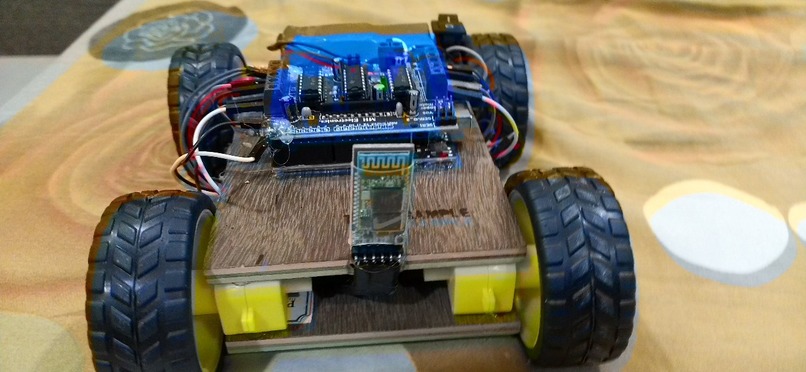
bluetooth Controlled Car
Inspiration
The inspiration for our Bluetooth-controlled car project came from a desire to merge the worlds of technology and everyday objects in a fun and educational way. We wanted to create something that not only showcased our technical skills but also provided a hands-on learning experience about wireless communication and robotics.
What it does
Our Bluetooth-controlled car can be maneuvered using a smartphone app. The app sends commands via Bluetooth to the car, allowing it to move forward, backward, turn left, and turn right. The car is designed to respond quickly to the commands, providing a seamless and interactive experience.
How we built it
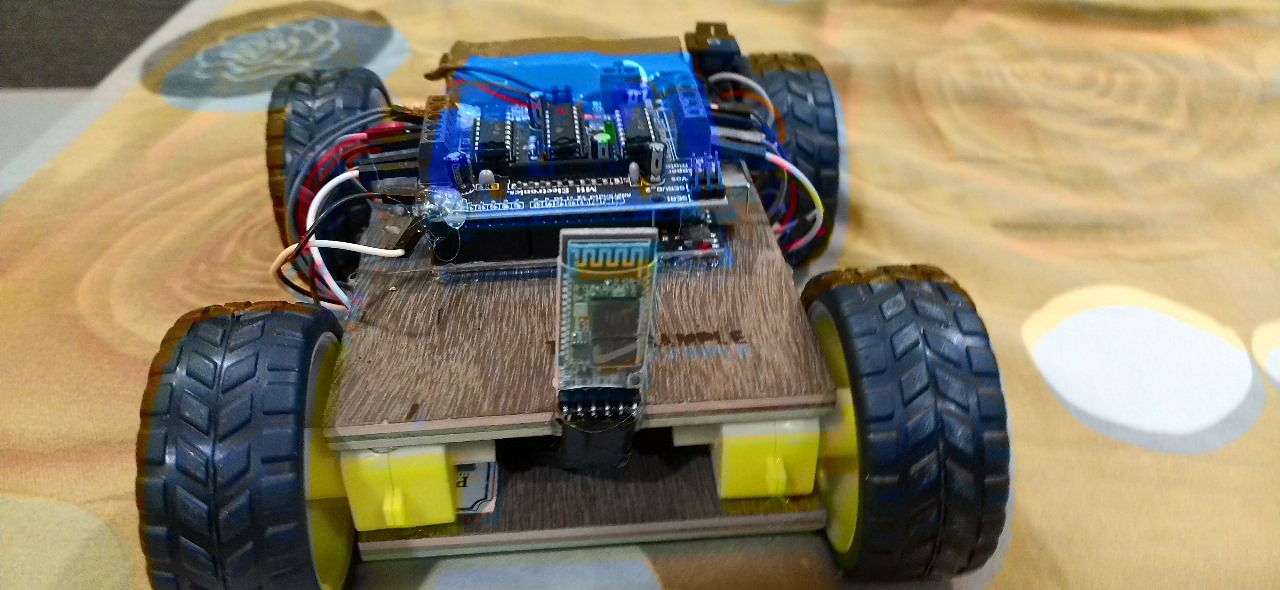
Planning and Design: We started by sketching out our ideas and drafting a plan. This included deciding on the components we needed and how they would fit together. We selected a microcontroller that supported Bluetooth communication, motor drivers, and other necessary components. Assembly: The chassis of the car was built using a combination of pre-made parts and custom-designed pieces. Motors were attached to the wheels and connected to the motor drivers. The microcontroller was mounted securely, with careful attention to wiring for both power and control signals. Programming: We wrote the code to control the car’s movements via Bluetooth commands sent from a smartphone app. The program included handling basic commands like forward, backward, left, and right, as well as stop functions. Testing and Iteration: Initial tests were conducted to ensure each component worked as expected. We encountered several issues, such as signal interference and motor synchronization problems, which required troubleshooting and code refinement.
Challenges we ran into
Signal Interference: We had to experiment with different Bluetooth modules and configurations to minimize interference and ensure a reliable connection. Power Management: Balancing the power requirements of the motors and the microcontroller was critical to prevent brownouts and ensure consistent performance. Mechanical Stability: Ensuring the car was mechanically stable and could handle various surfaces required several iterations of the chassis design. Software Bugs: Debugging the control software was a significant part of the project, as we needed to handle edge cases and unexpected user inputs gracefully.
Accomplishments that we're proud of
Successfully building a functional Bluetooth-controlled car from scratch. Overcoming technical challenges and improving our problem-solving skills. Creating a user-friendly smartphone app that reliably communicates with the car. Achieving smooth and responsive control of the car’s movements.
What we learned
Throughout the project, we gained a deeper understanding of several key concepts:
Bluetooth Communication: How Bluetooth technology can be used to control devices remotely. Microcontroller Programming: Writing code for microcontrollers to interface with hardware components. Mechanical Design: Building a robust and functional chassis for the car. Problem Solving: Tackling unexpected issues with creative solutions.

Log in or sign up for Devpost to join the conversation.