-
-
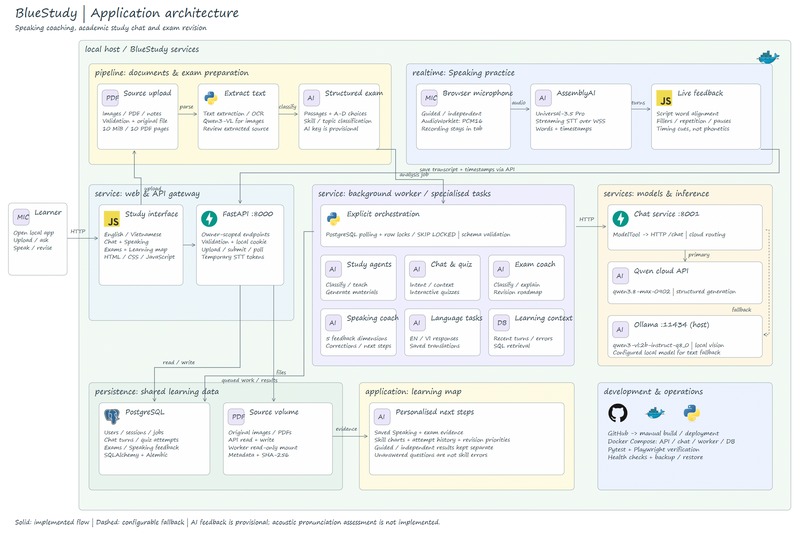
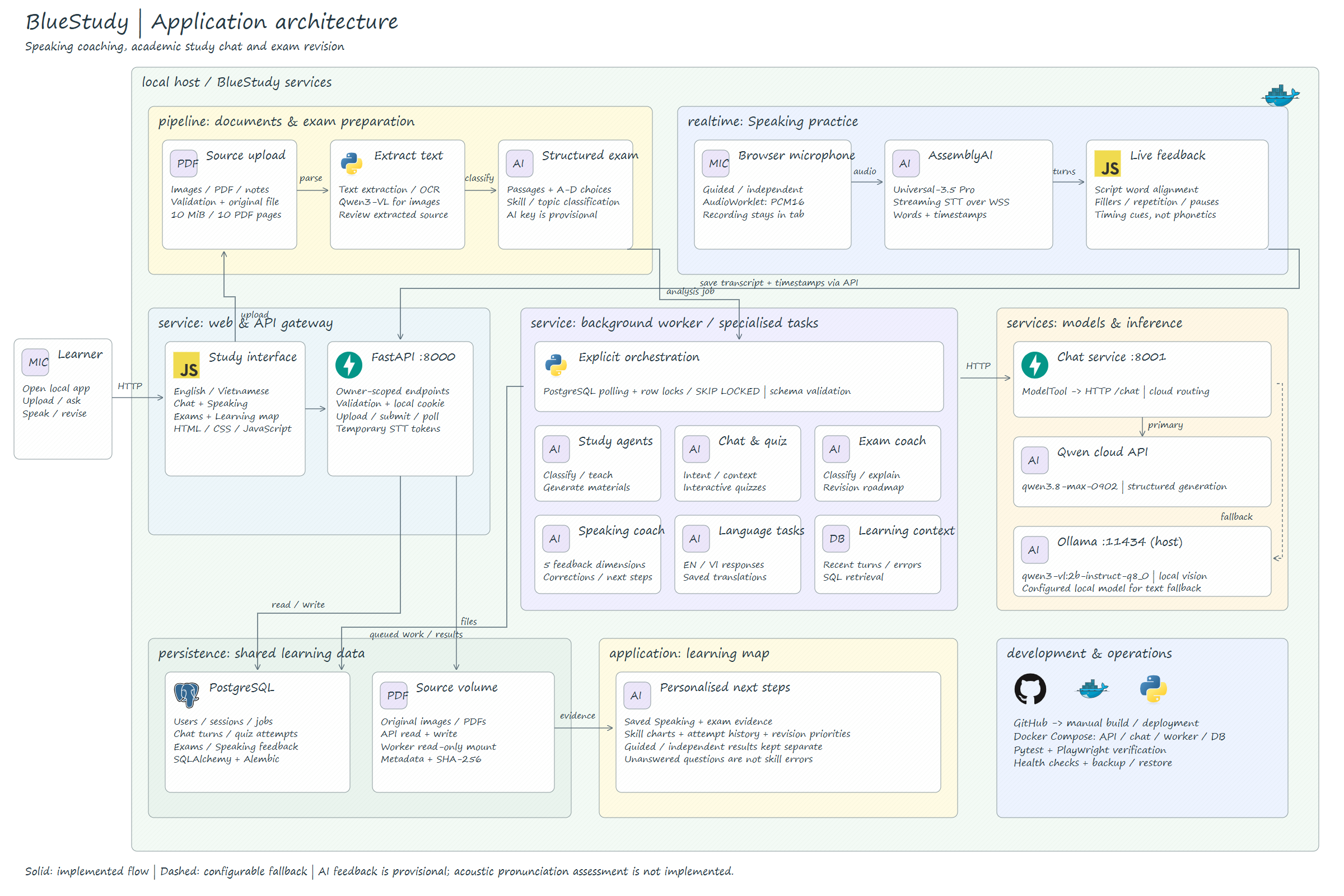
BlueStudy architecture: AI-powered speaking, exam revision, and personalised learning.
-
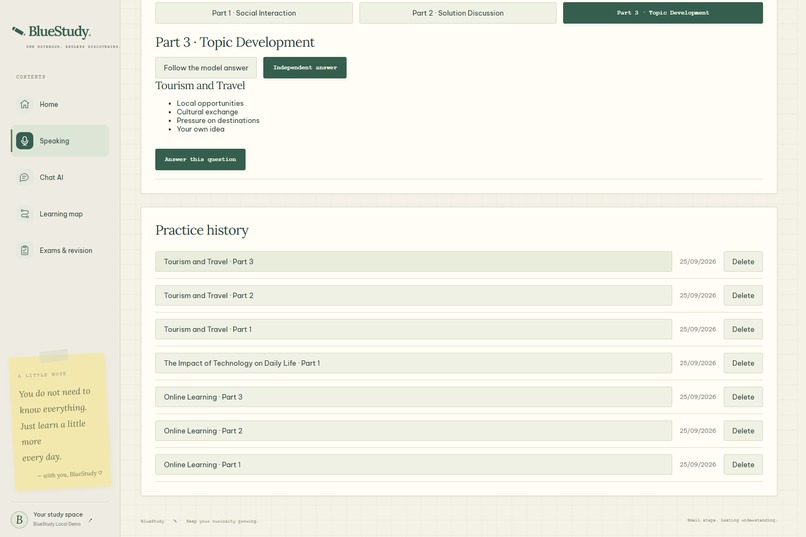
Independent Speaking: Build confidence by answering in your own words.
-
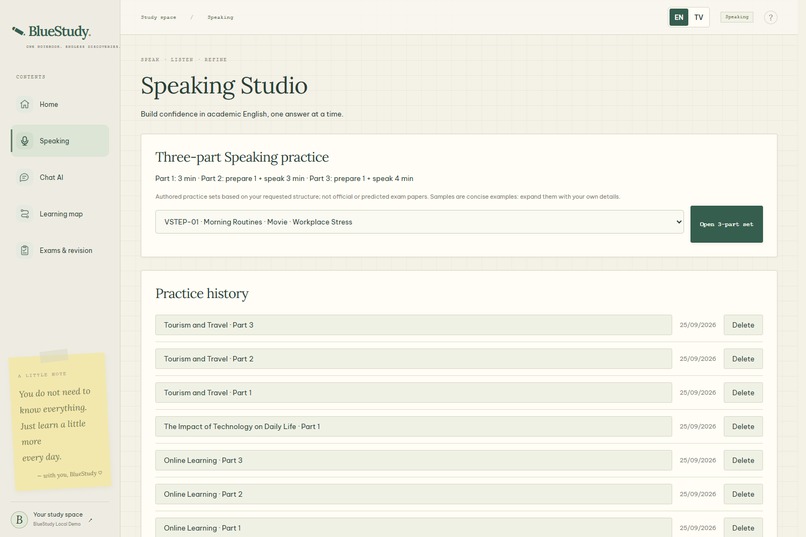
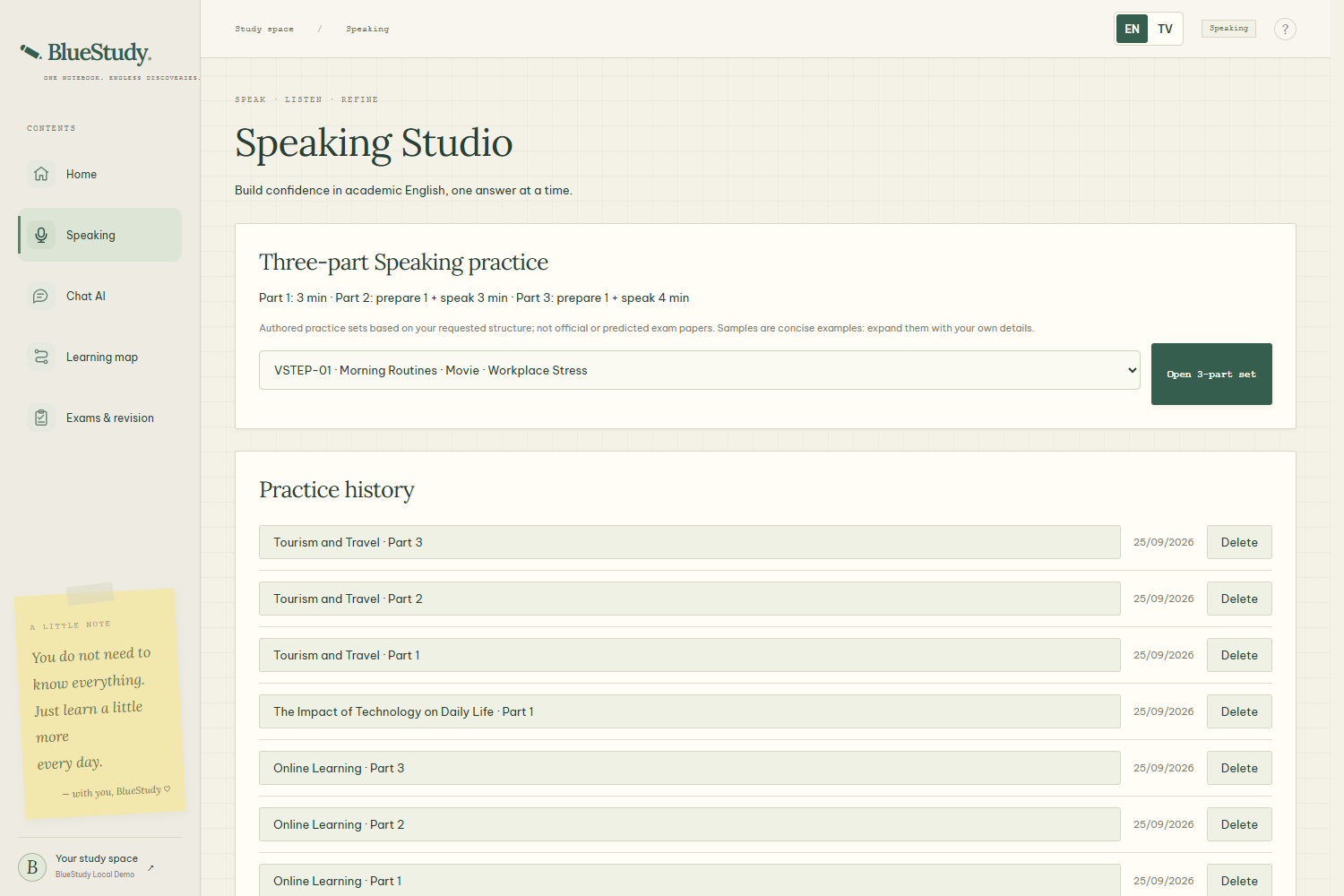
Speaking Studio: Practise with three-part speaking sets.
-
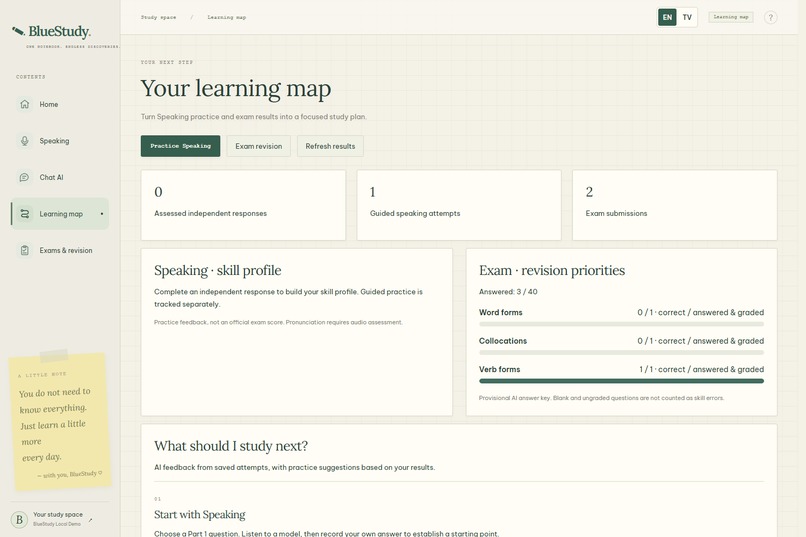
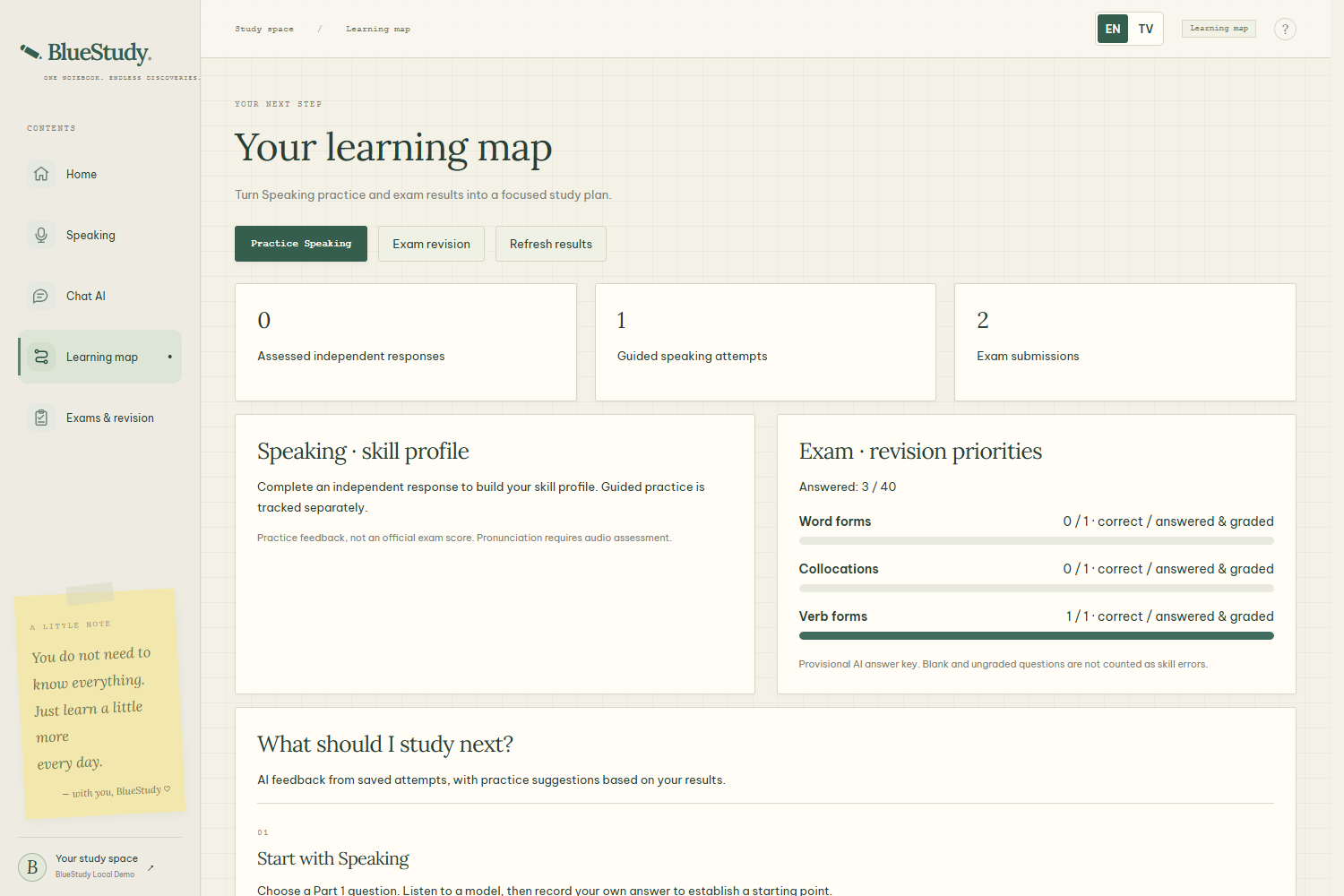
Learning Map: See your skill profile and results across practice sessions.
-
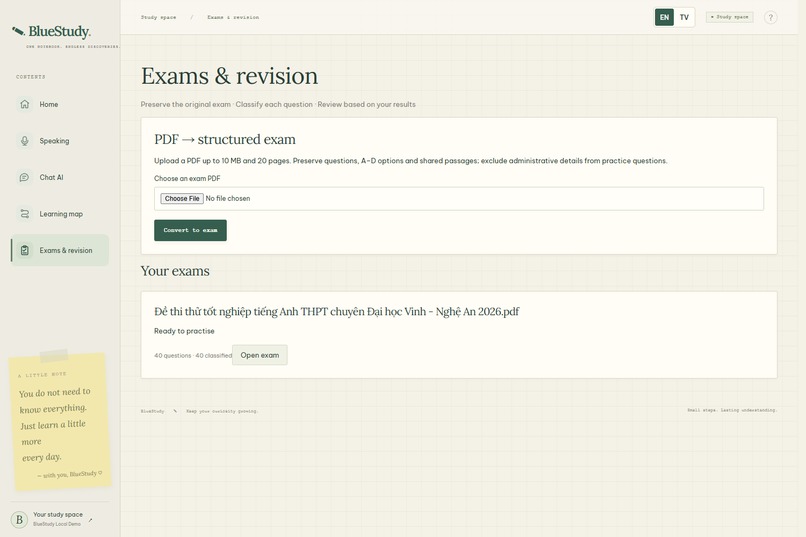
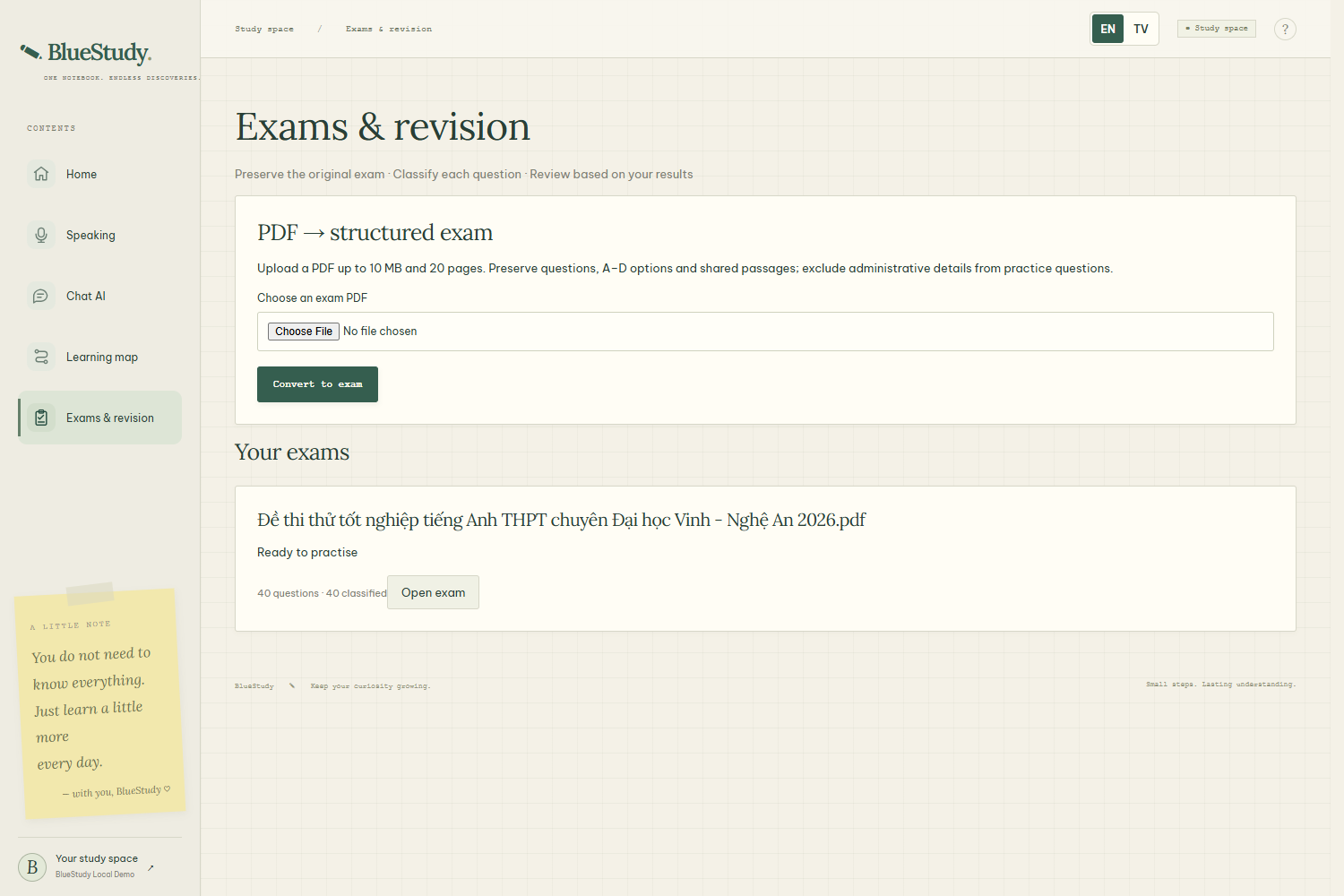
Exam Library: Turn uploaded exam PDFs into structured practice.
-
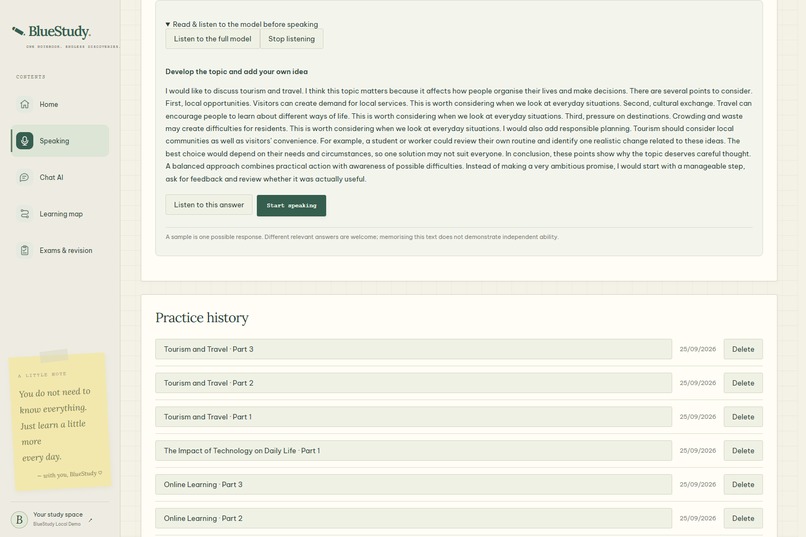
Guided Speaking: Listen to a model answer, then practise speaking along.
-
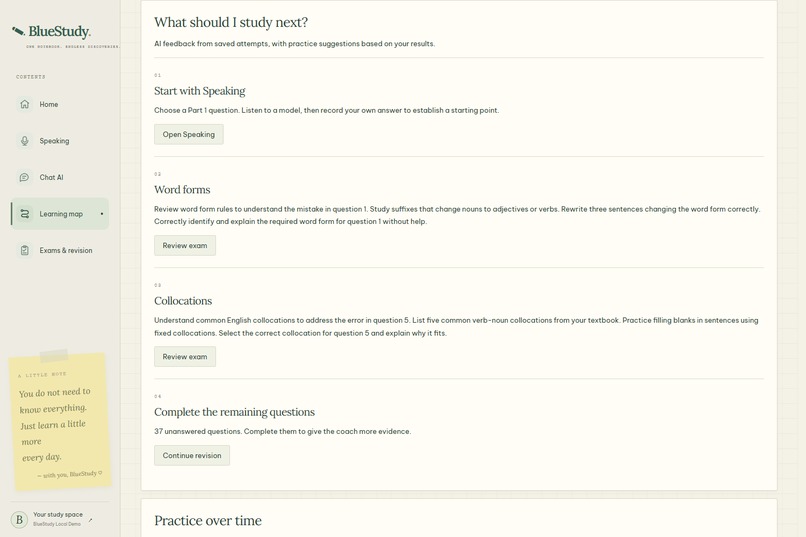
Personalised Study Plan: Turn your results into focused revision activities.
-
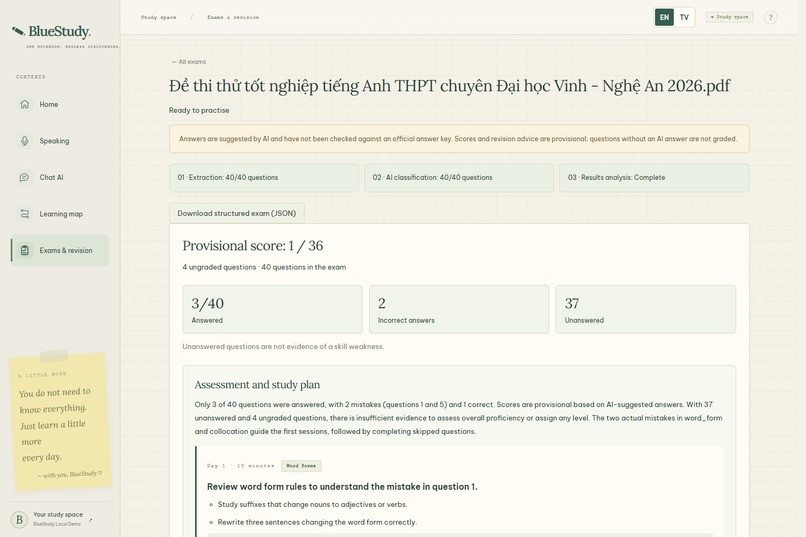
Exam Revision: Review your answers and identify skills that need attention.
-
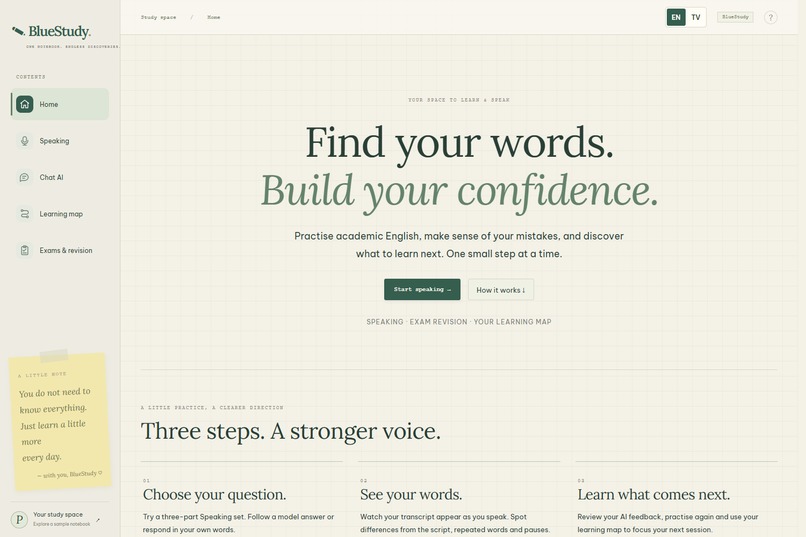
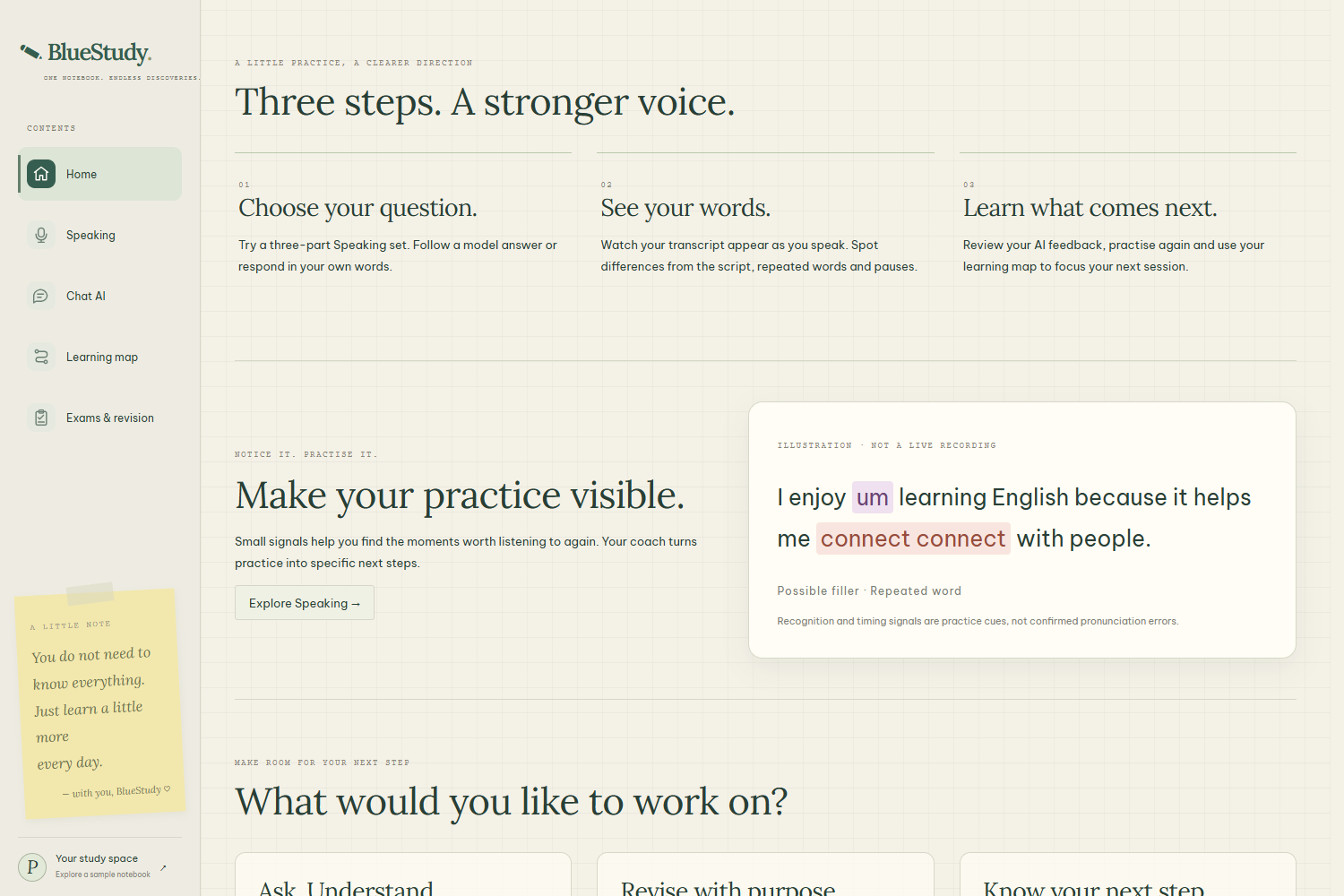
Home: Your AI-powered companion for academic English.
-
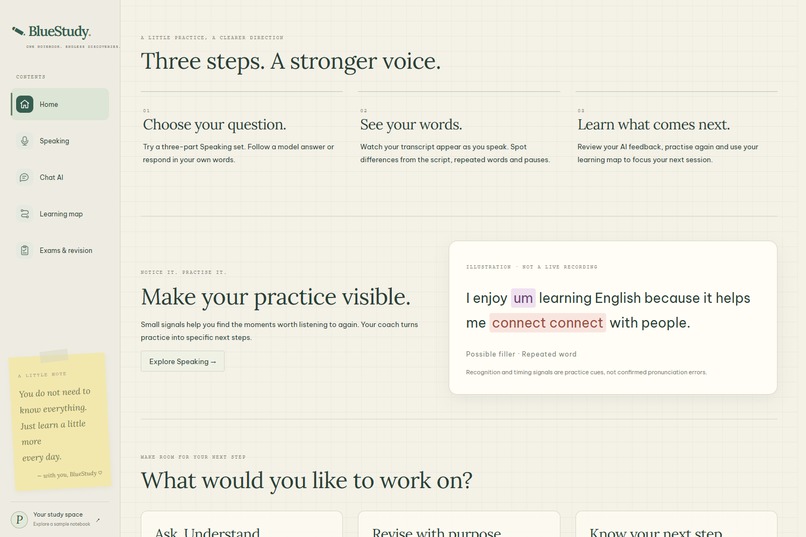
How It Works: Practise, receive feedback, and discover your next learning step.
-
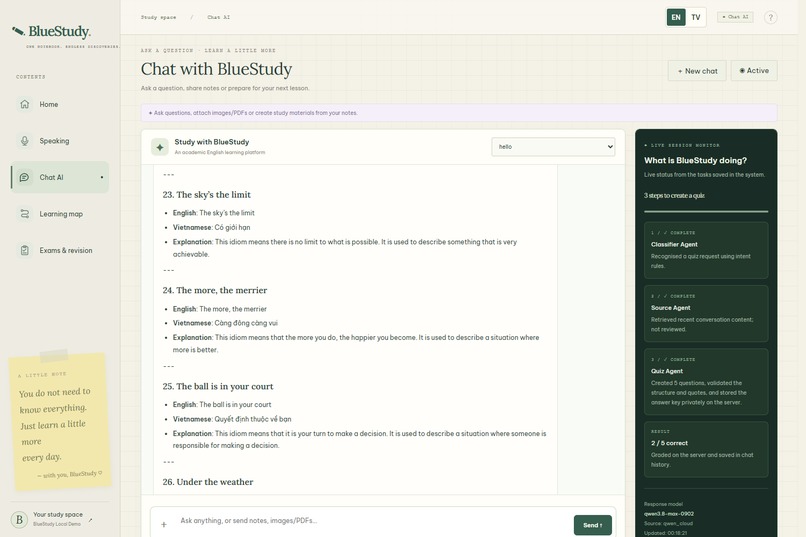
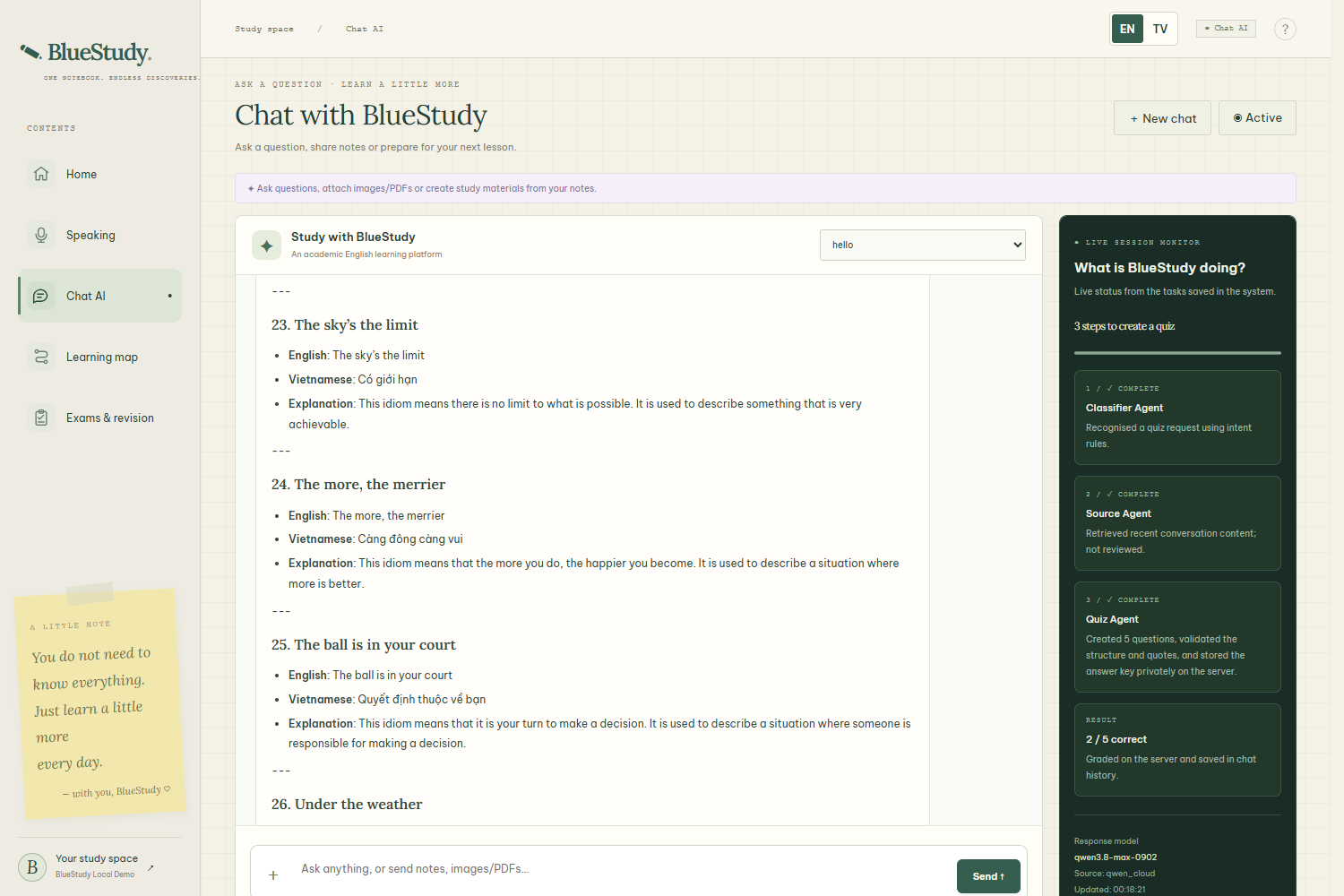
AI Study Chat: Ask questions, explore ideas, and learn from your notes.
-
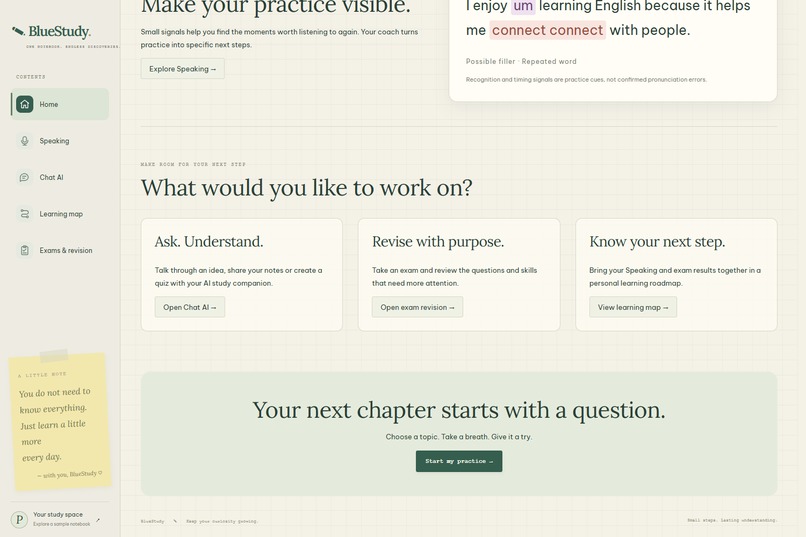
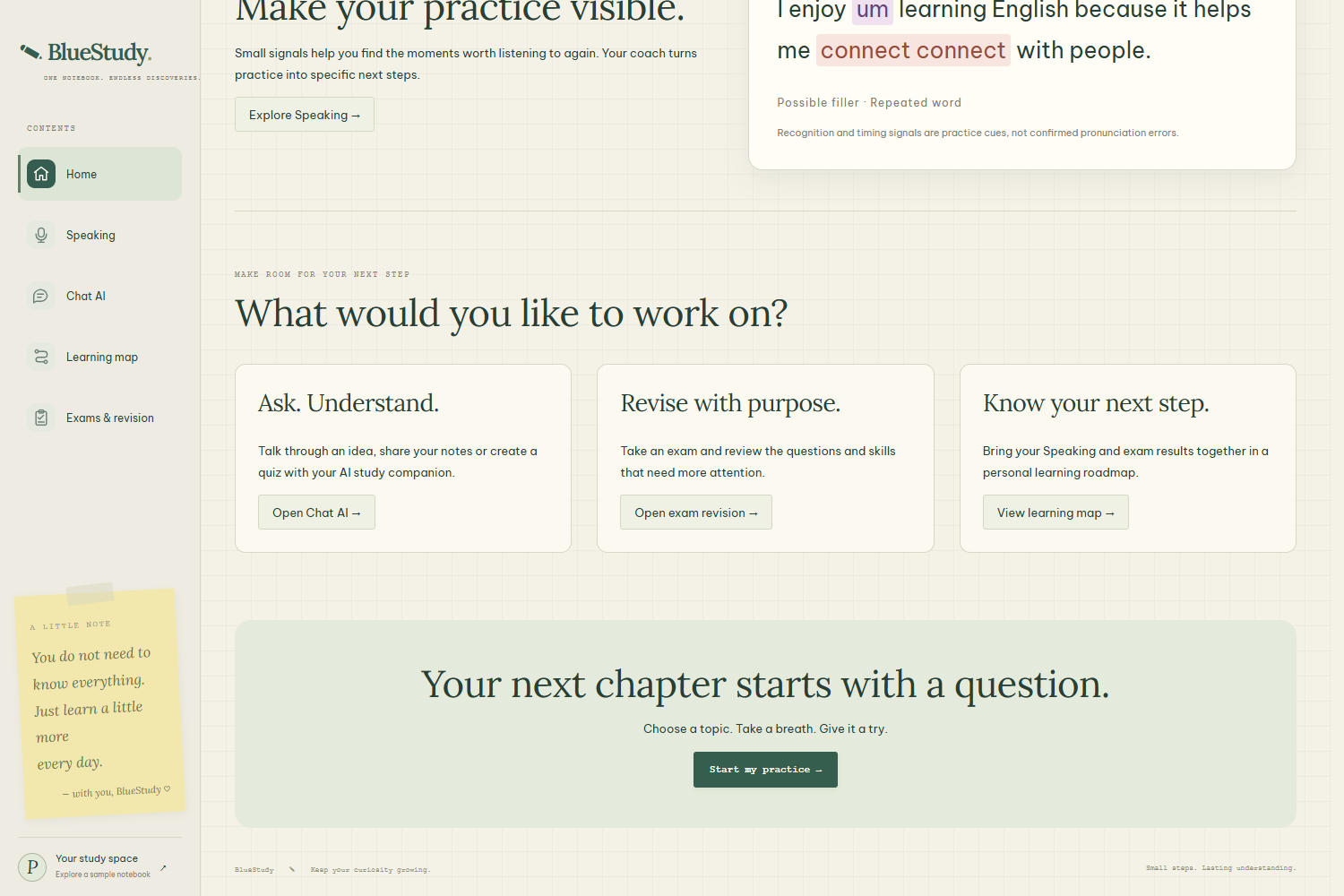
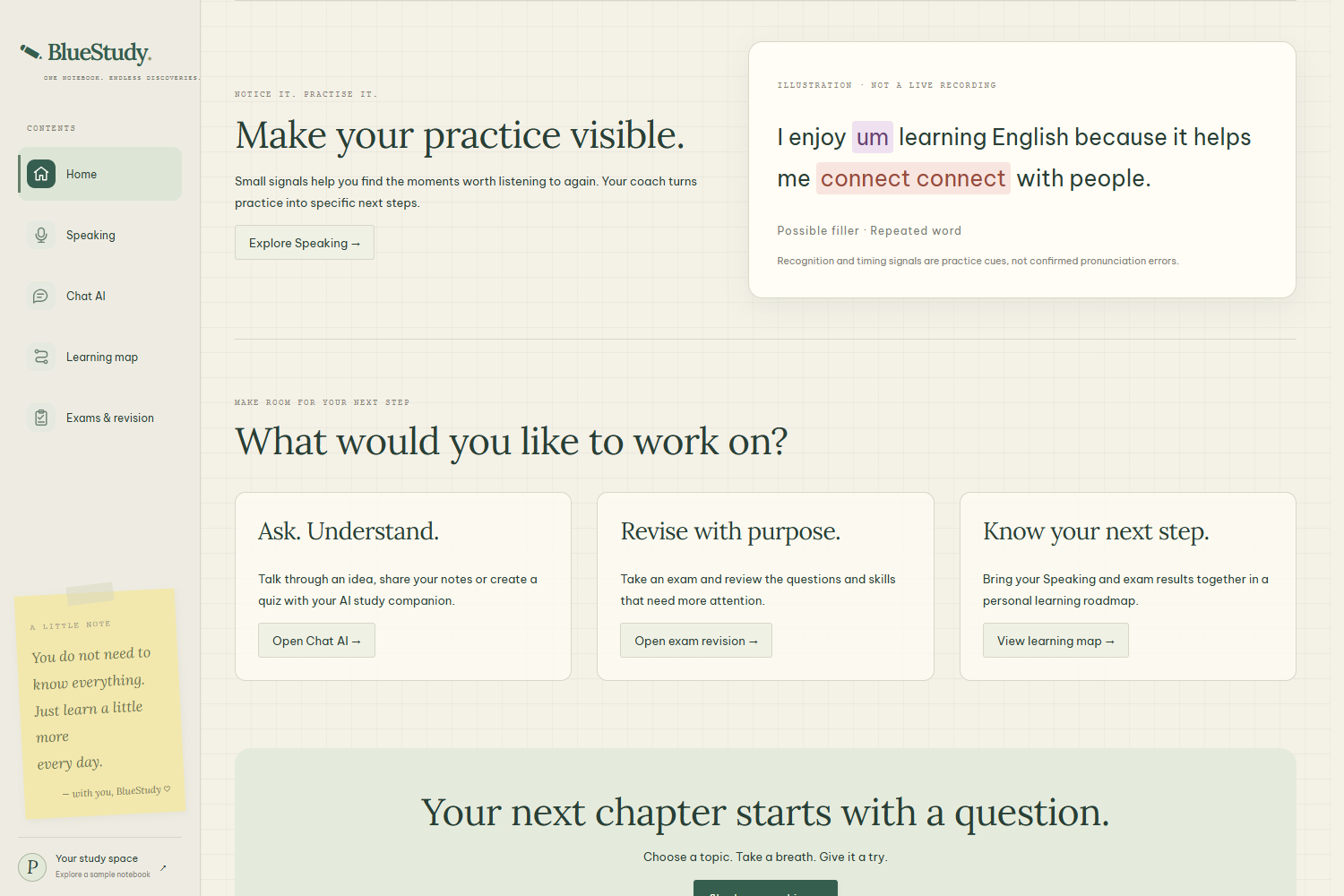
Learning Tools: Explore AI chat, exam revision, and personalised learning paths.
-
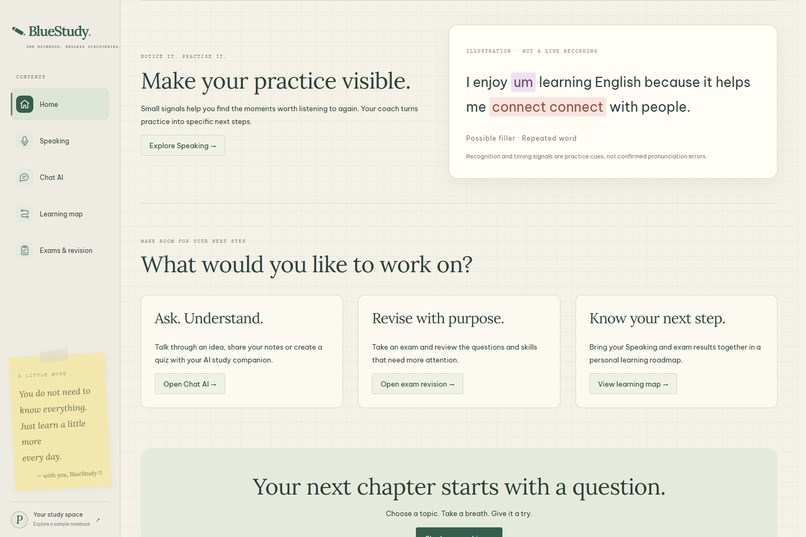
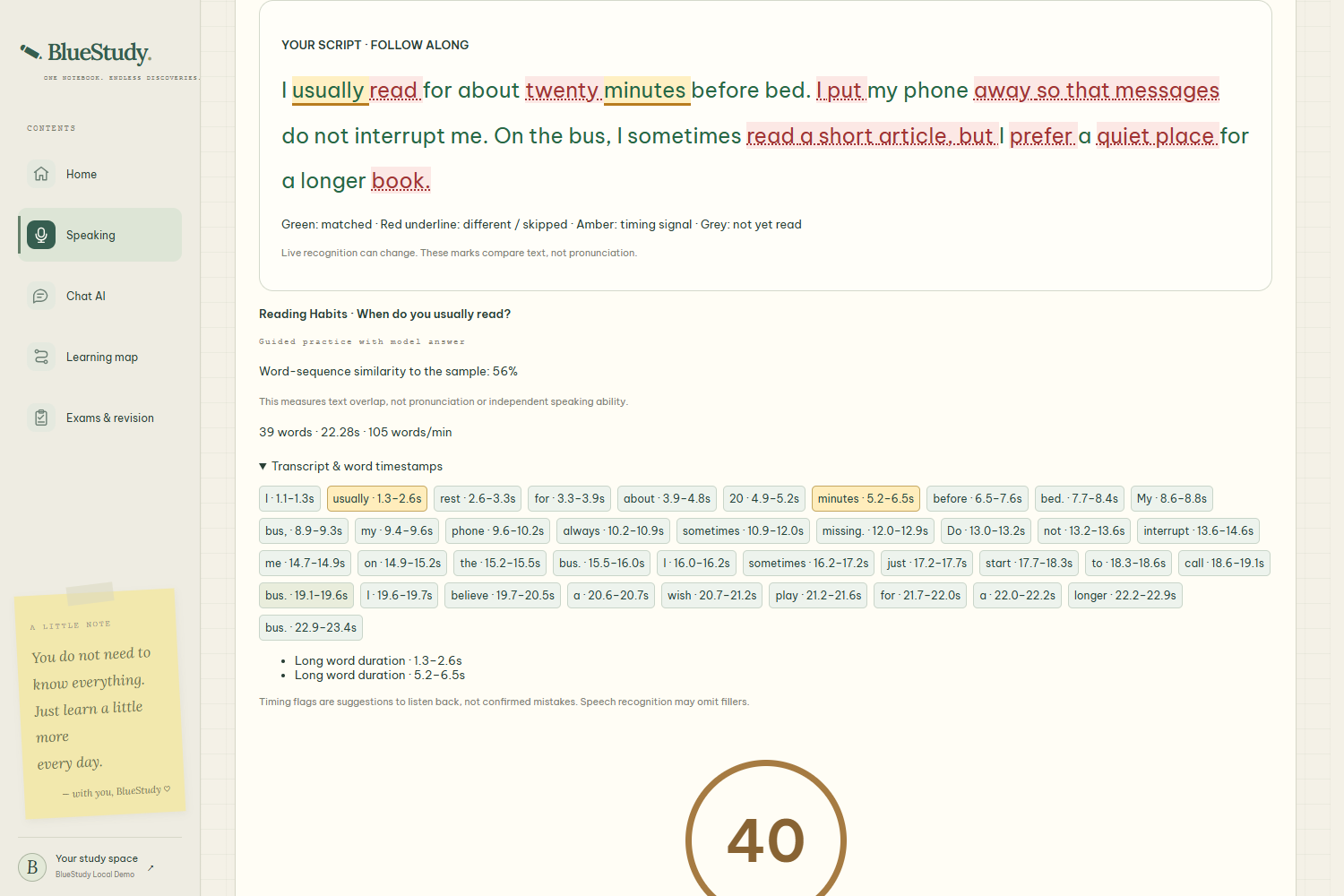
Speaking Highlights: Make speech patterns visible with word-level practice cues.
-
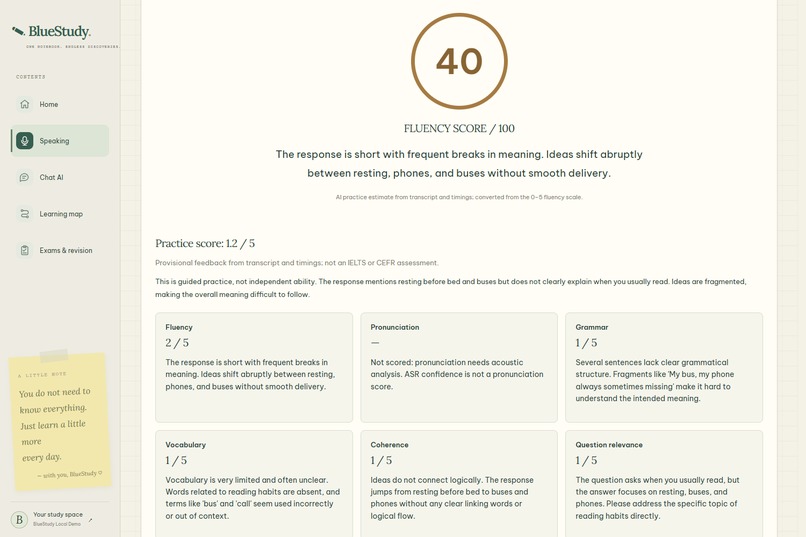
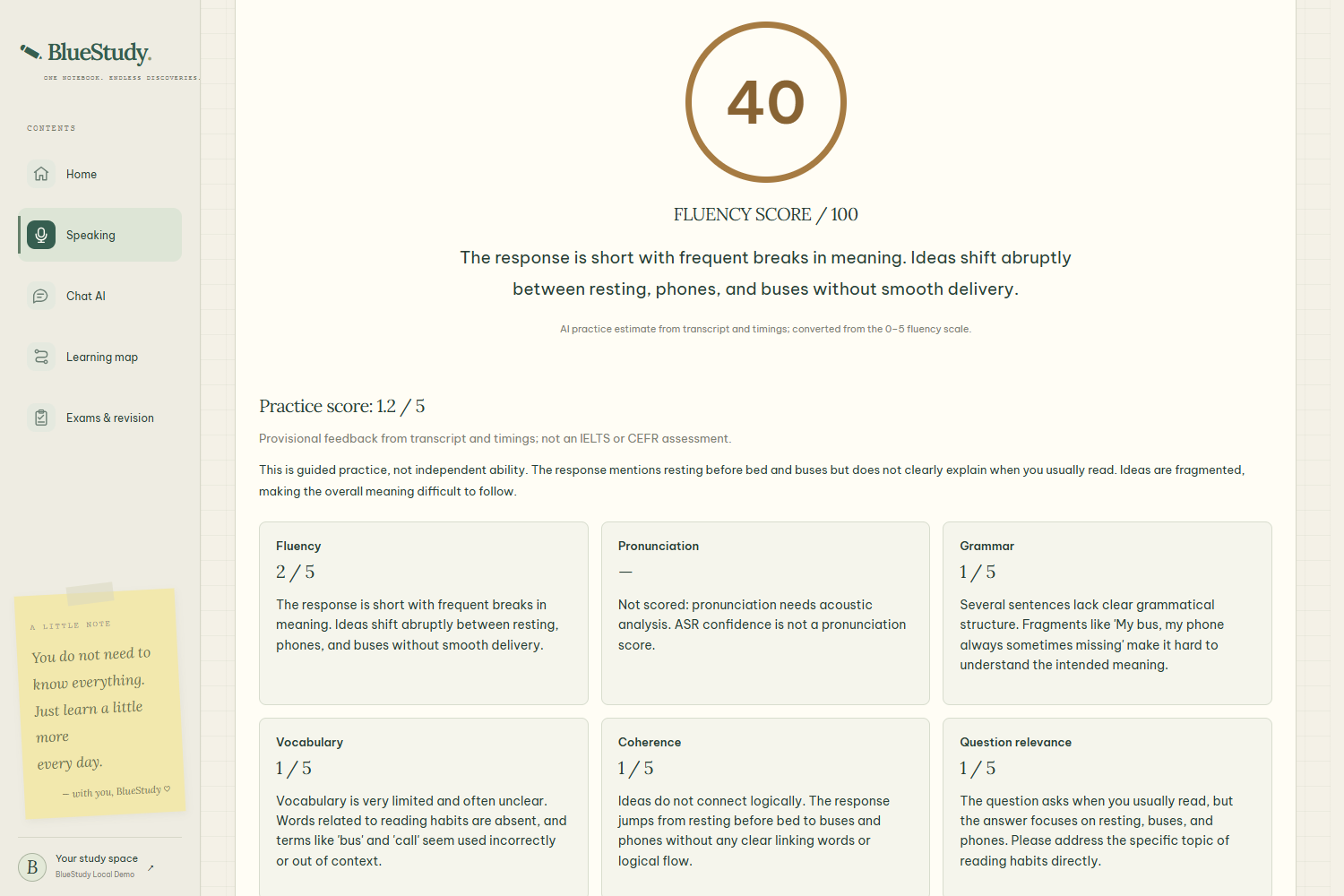
AI Speaking Coach: Review your fluency score, feedback, and suggested improvements.
-
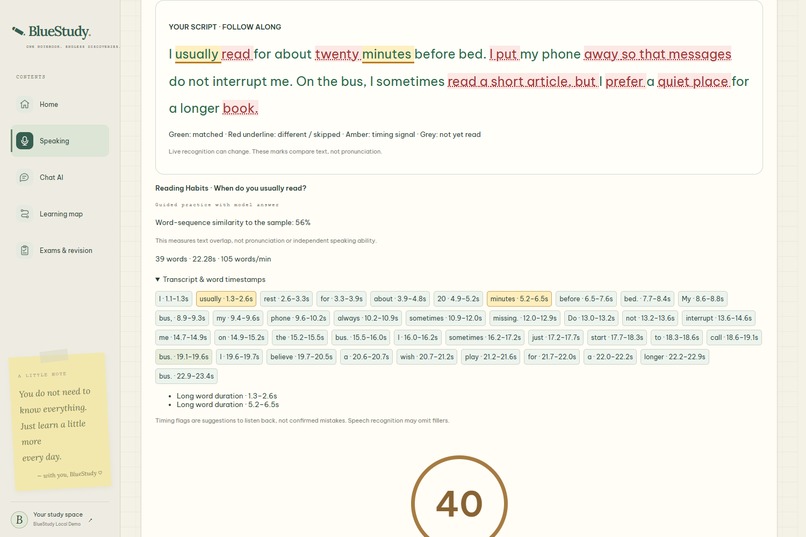
Word-Level Feedback: Compare your speech with the model answer and review word timestamps.
Inspiration
Learning English often means juggling scattered notes, practice tests, and speaking exercises without knowing what to improve next. We wanted to connect these activities into a clearer learning journey.
BlueStudy began with a simple question: What if an AI study companion could help learners understand their mistakes and turn them into practical next steps?
What it does
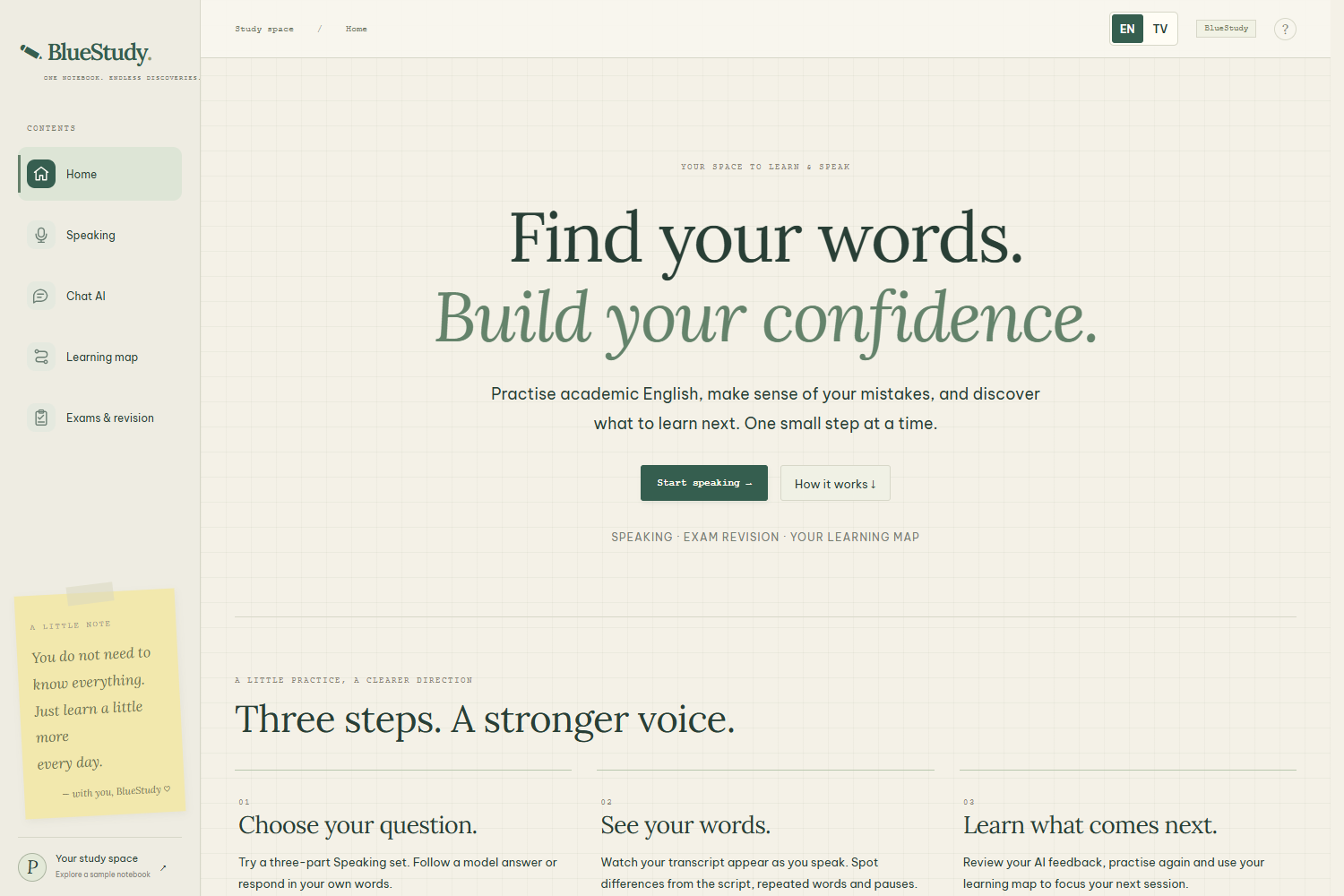
BlueStudy is an AI learning platform for academic English that connects speaking practice, exam revision, and personalised learning guidance.
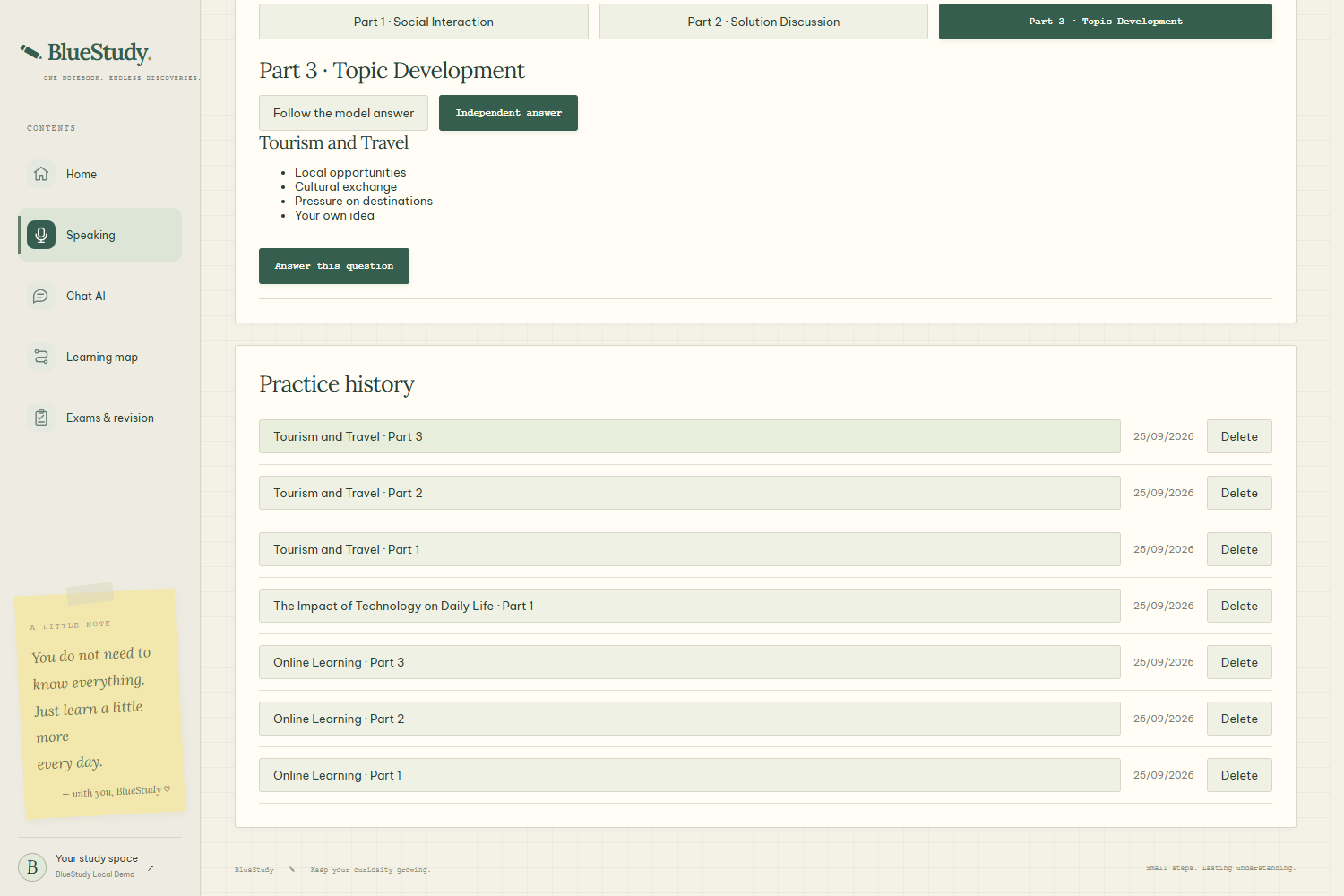
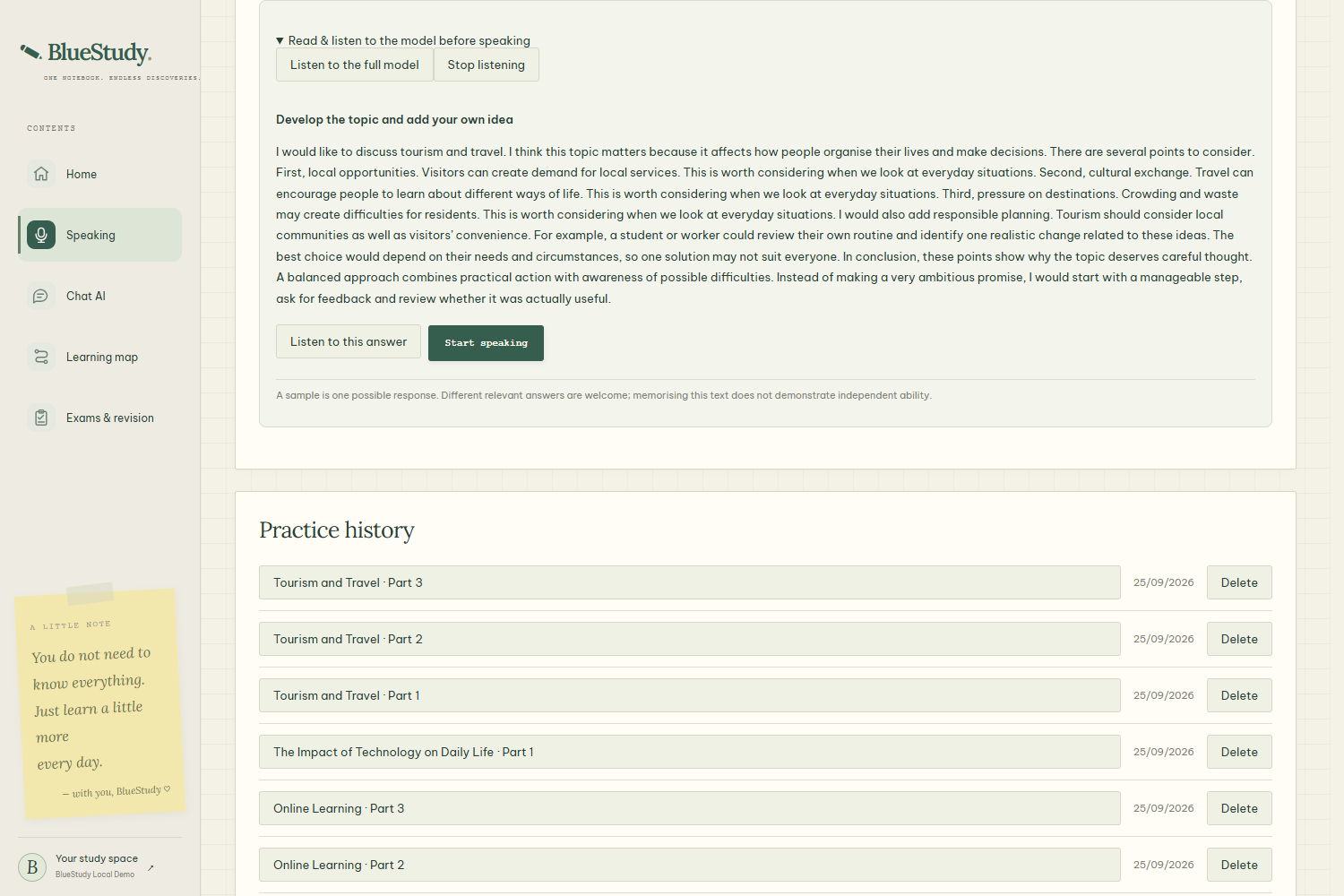
- Speaking practice: Practise with three-part speaking sets, including Social Interaction, Solution Discussion, and Topic Development. Choose between following a model answer and responding independently.
- Live speaking feedback: See your transcript as you speak, with word timestamps and indicators for possible fillers, repetitions, prolonged words, and pauses.
- Guided script highlighting: Compare recognised words against a model answer to identify matched, different, or skipped words.
- AI Speaking Coach: Receive feedback on fluency, grammar, vocabulary, coherence, and question relevance, alongside suggested corrections and practical next steps.
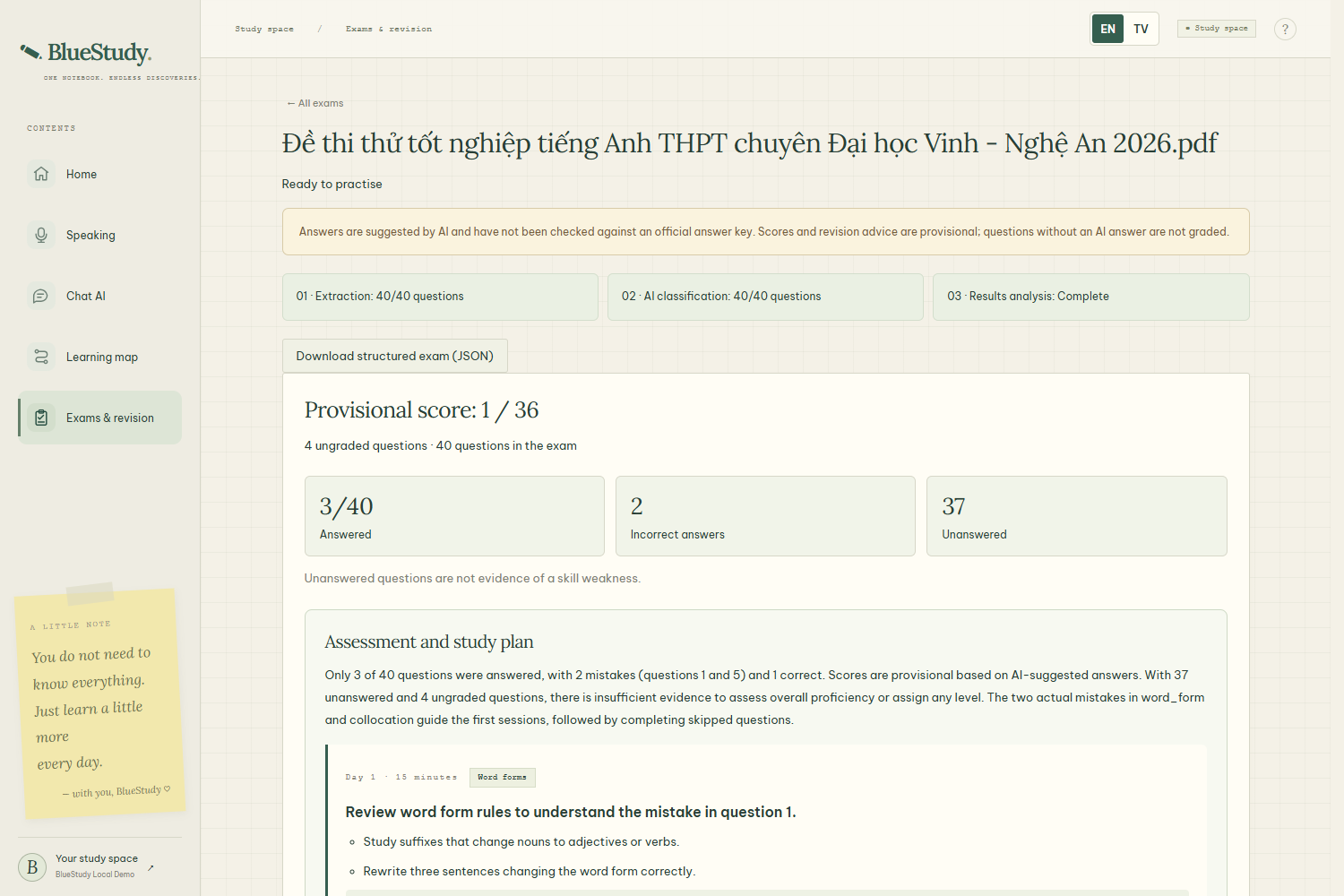
- Exam revision: Convert PDFs into structured practice exams, answer interactive questions, and review results by skill.
- Study chat: Ask questions, share images or notes, and generate interactive quizzes.
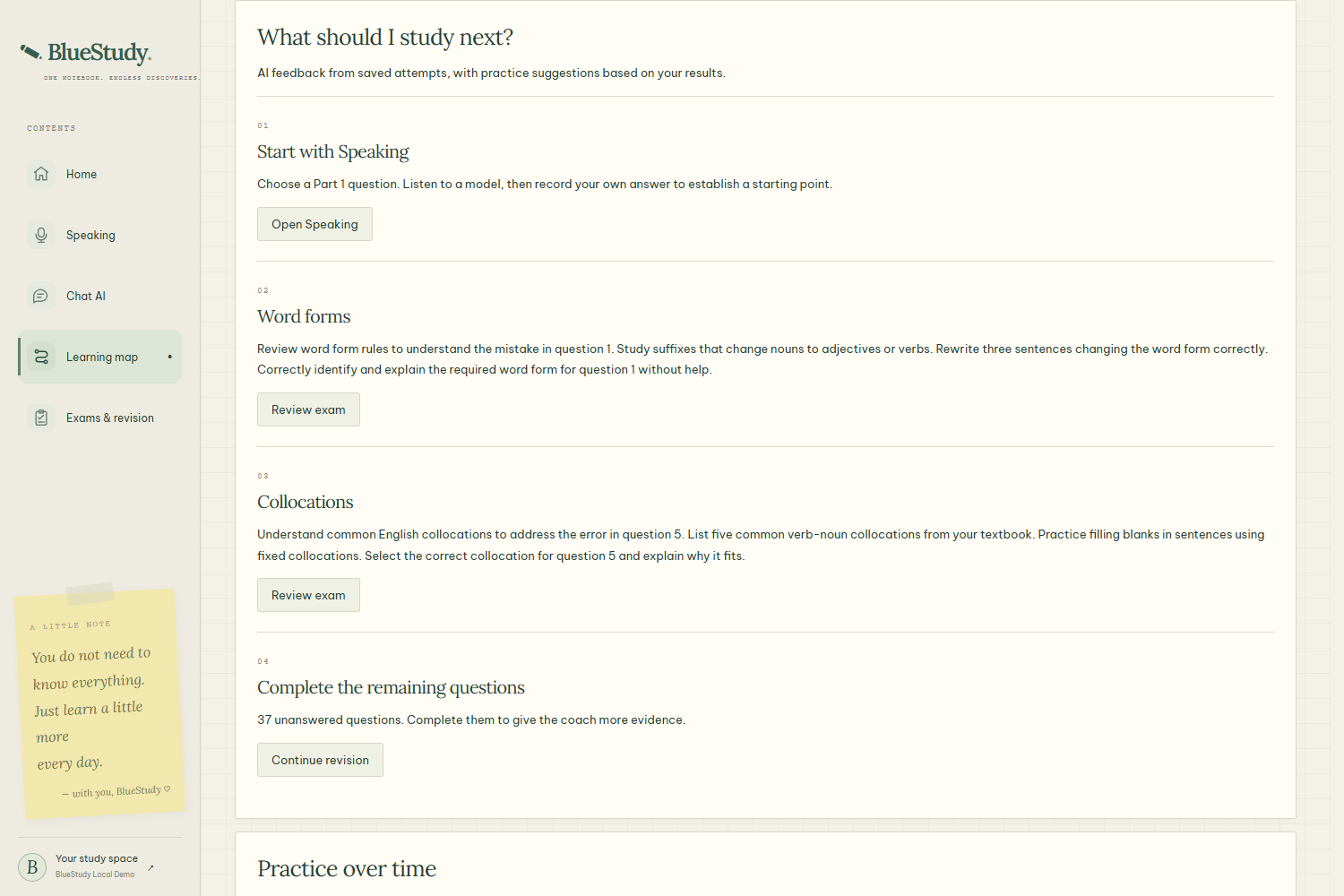
- Learning map: Bring Speaking and exam results together to identify revision priorities and decide what to practise next.
The interface supports English and Vietnamese.
How we built it
We built BlueStudy with a FastAPI backend, a JavaScript frontend, PostgreSQL, and Docker Compose.
The backend separates document processing, classification, learning material generation, assessment, and retrieval into specialised components. Background workers handle longer tasks such as document analysis and AI coaching.
For Speaking, the browser streams microphone audio to AssemblyAI. Incoming transcripts and word timestamps update the interface while the learner speaks. In guided mode, a word-alignment algorithm compares the latest recognised speech with the model answer.
After each attempt, the AI coach analyses the transcript and timing information to provide structured feedback. Saved results help build a learning map with relevant revision priorities.
Technologies and AI Models
- AssemblyAI Universal-3.5 Pro: Provides real-time speech-to-text and word timestamps. These support live transcripts and timing-based indicators for pauses, repetitions, and possible filler words.
- Qwen
qwen3.8-max-0902via API: Powers study conversations, quiz generation, exam analysis, and personalised Speaking feedback. - Qwen3-VL
qwen3-vl:2b-instruct-q8_0via Ollama: Processes uploaded images and extracts text from visual learning materials locally. - FastAPI and Python: Handle API requests, learning workflows, and background processing.
- PostgreSQL: Stores learning sessions, attempts, results, and progress.
- HTML, CSS, and JavaScript: Deliver the bilingual interface, interactive quizzes, learning charts, and live speaking highlights.
- Docker Compose: Runs the application services together.
Speech recognition and text comparison provide practice signals. They do not confirm pronunciation errors; dedicated acoustic pronunciation assessment is planned for a future version.
Challenges we faced
Separating learning content from document metadata
Exam documents contain headers, dates, page numbers, and instructions. These should not become revision questions. We worked toward preserving original questions, answer choices, and shared passages while keeping administrative details out of generated practice materials.
Handling changing live transcripts
Speech recognition can revise earlier words as more audio arrives. We needed to update highlighting without counting words twice or marking the unread remainder of a script as skipped.
Giving fair, evidence-based feedback
A blank answer does not demonstrate a weakness, and reading a model answer is different from answering independently. We separated these cases so that feedback reflects what the learner actually attempted.
We also distinguish transcription differences from confirmed pronunciation errors and present AI-generated exam scores as provisional.
Keeping the bilingual experience consistent
Supporting English and Vietnamese required more than translating navigation labels. Instructions, feedback, and learning guidance also needed to follow the selected language.
What we learned
We learned that helpful educational AI needs more than a fluent response. It needs context, clear evidence, and an actionable next step.
We also learned that interface design matters. Separating guided practice from independent speaking, placing recording controls beside each question, and making feedback visible at the word level helped create a clearer practice flow.
Most importantly, we learned to make the system's limits explicit. Timing signals can suggest moments to review, but they should not be presented as definitive pronunciation diagnoses.
Accomplishments we are proud of
- Connecting Speaking, exam revision, study chat, and a learning map in one workspace.
- Building live word highlighting that updates as recognised speech changes.
- Creating separate guided and independent Speaking practice experiences.
- Turning saved results into focused revision suggestions.
- Supporting both English and Vietnamese throughout the learning interface.
BlueStudy helps learners move through a practical cycle: attempt, understand, practise again, and choose the next step.
What's next for BlueStudy
We plan to:
- Add dedicated acoustic pronunciation assessment.
- Improve extraction accuracy for complex and scanned exam documents.
- Strengthen progress tracking across comparable questions and practice tasks.
- Expand the speaking question bank and model answers.
- Evaluate coaching quality with learners and teachers.
Our goal is to make BlueStudy a dependable study companion that helps learners practise with purpose and become more confident, independent English users.
Built With
- assemblyai
- compose
- css3
- docker
- fastapi
- html5
- javascript
- ollama
- postgresql
- python
- qwen
- qwen3-vl
- sqlalchemy


Log in or sign up for Devpost to join the conversation.