-
-
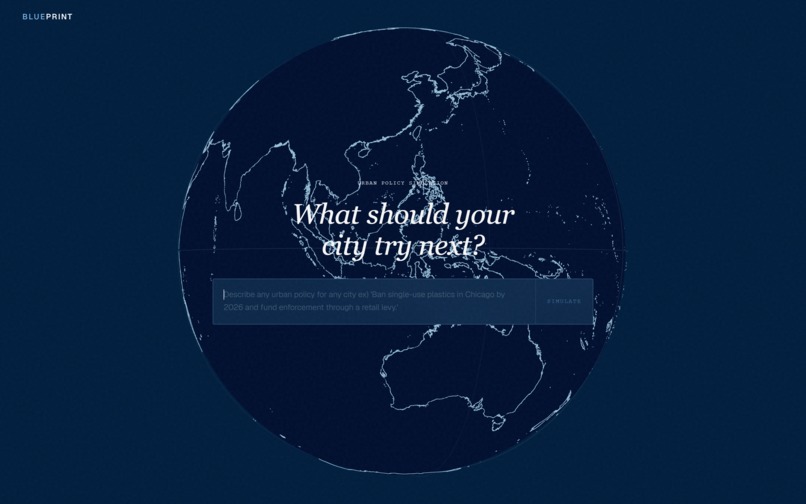
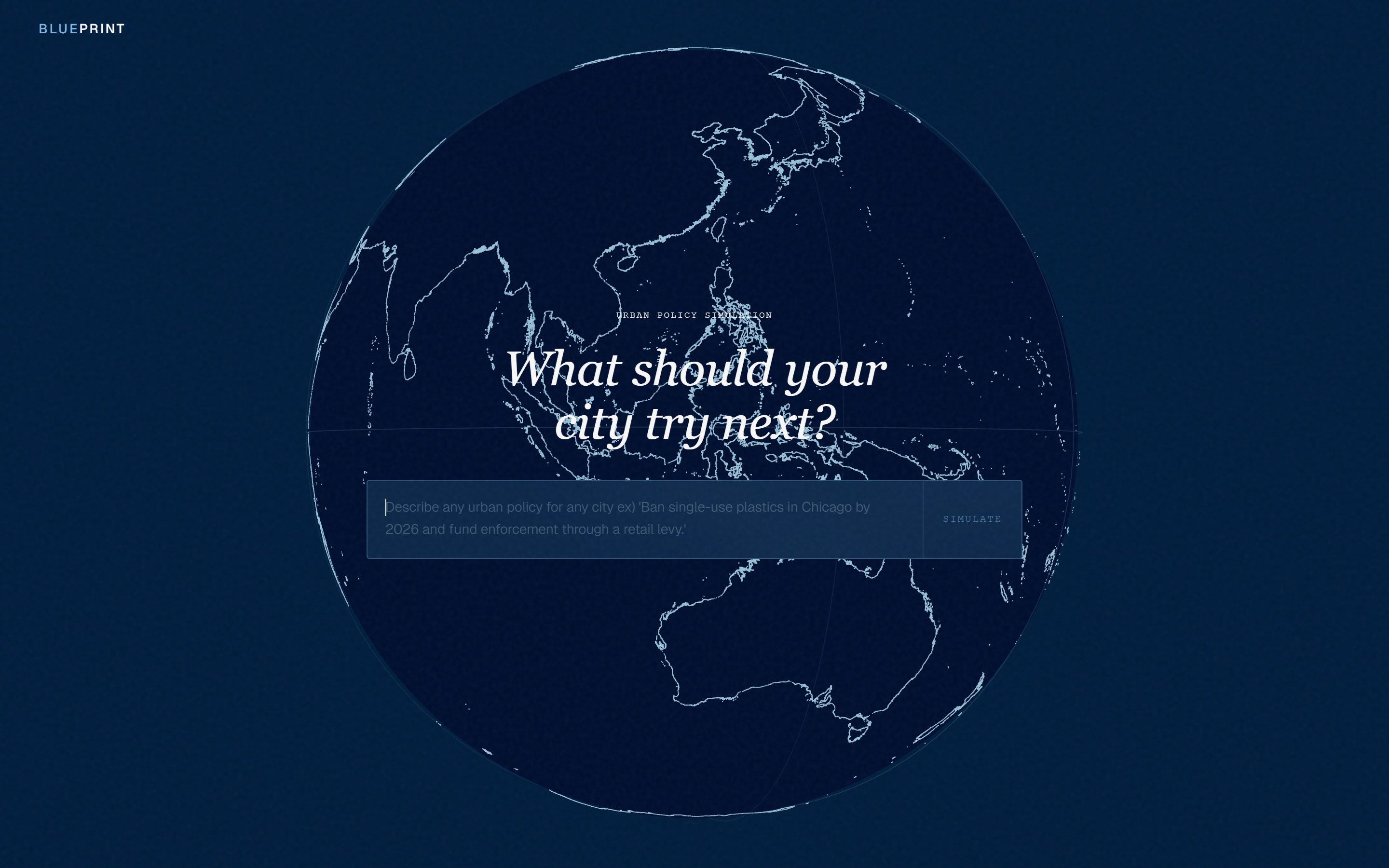
Landing Page
-
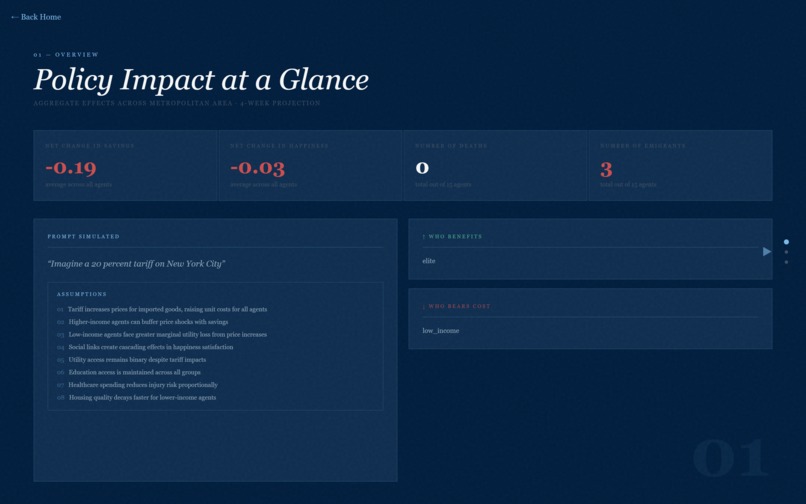
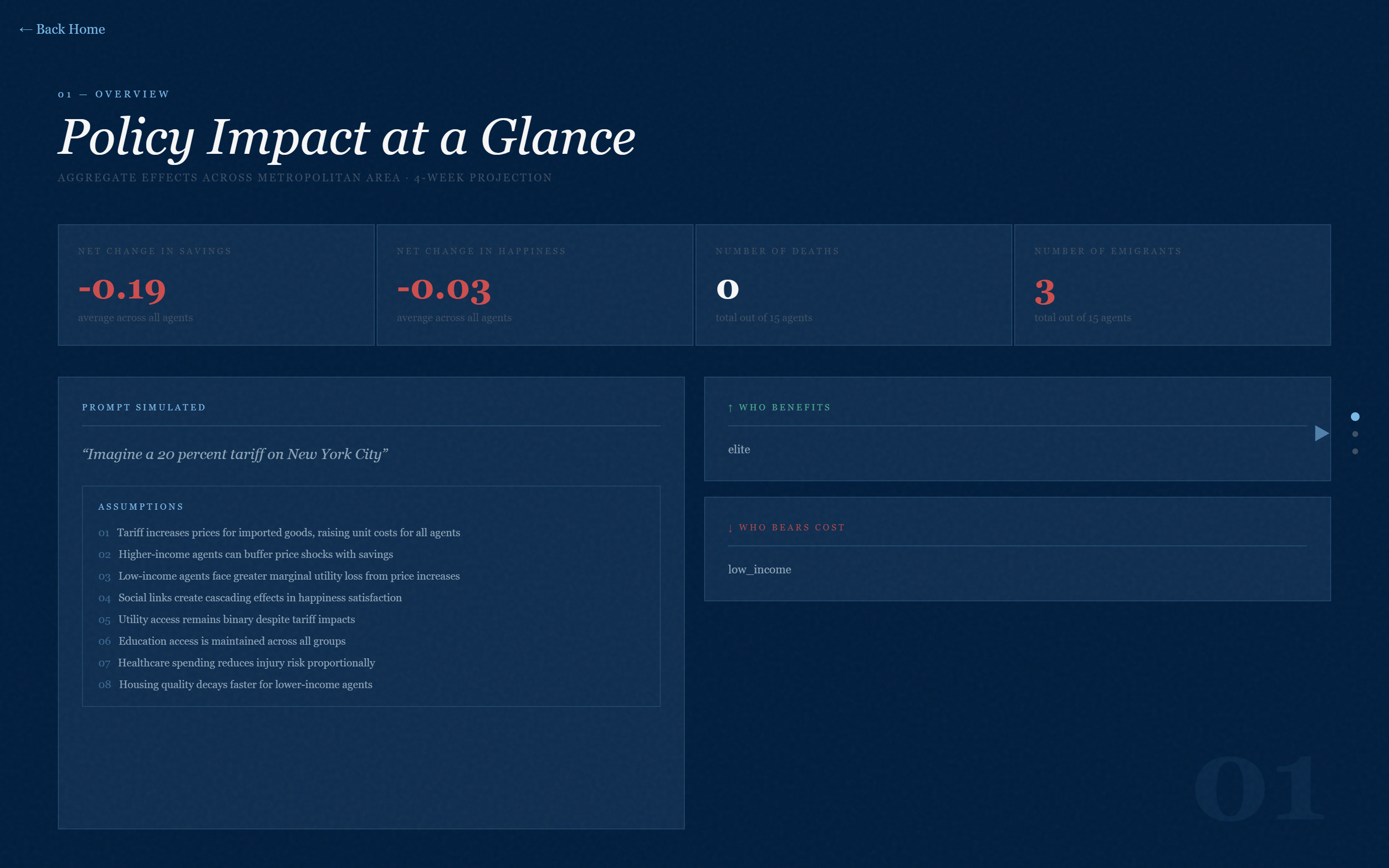
Results Page 1: Brief Summary
-
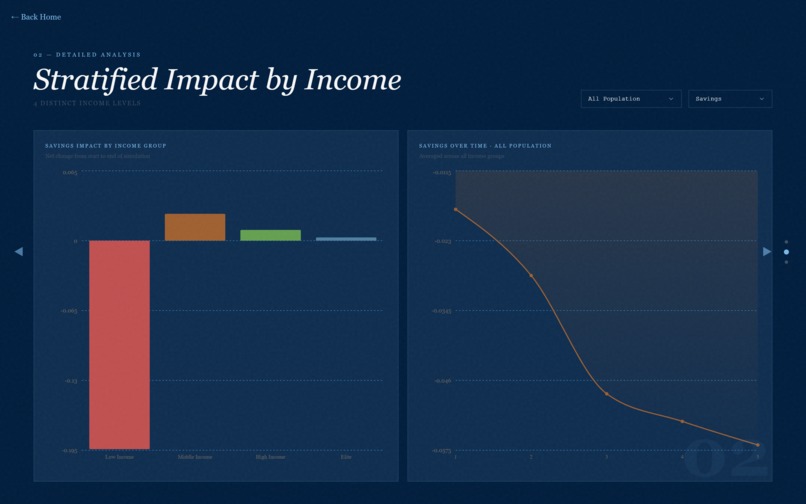
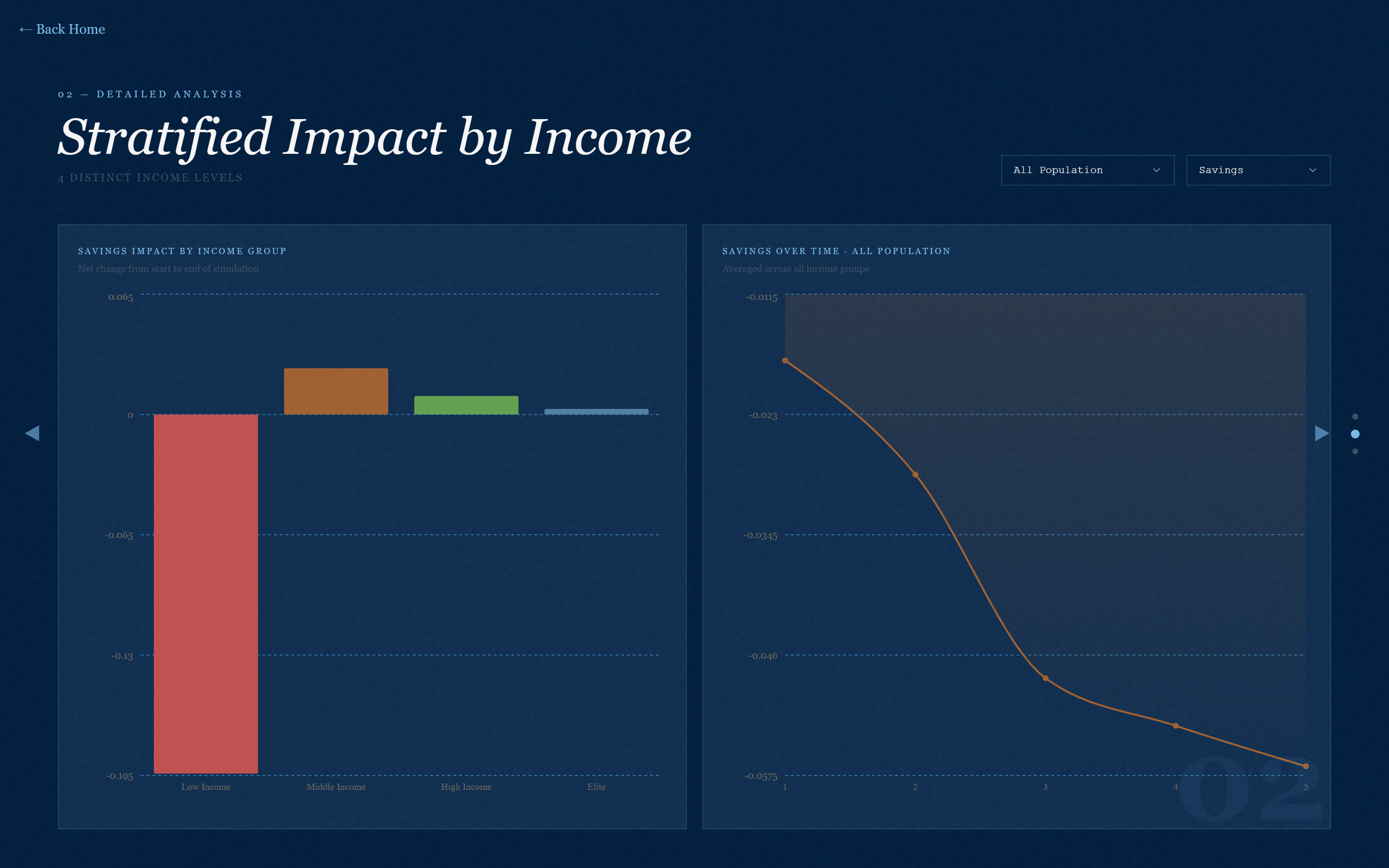
Results Page 2: Detailed Analysis
-
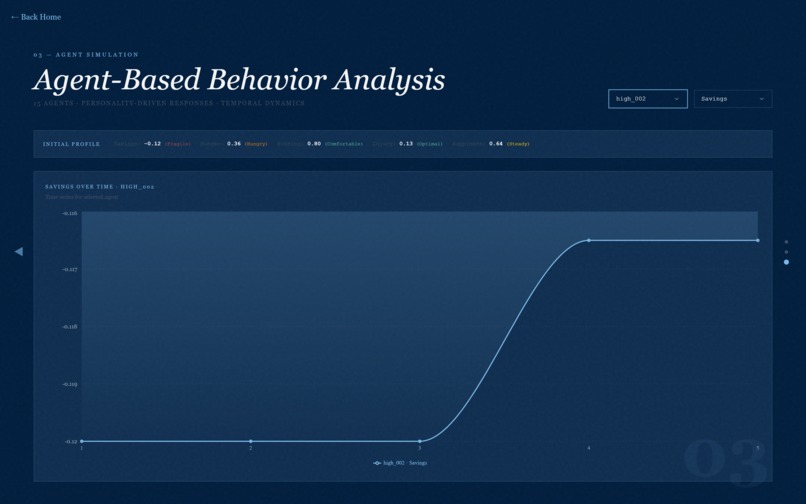
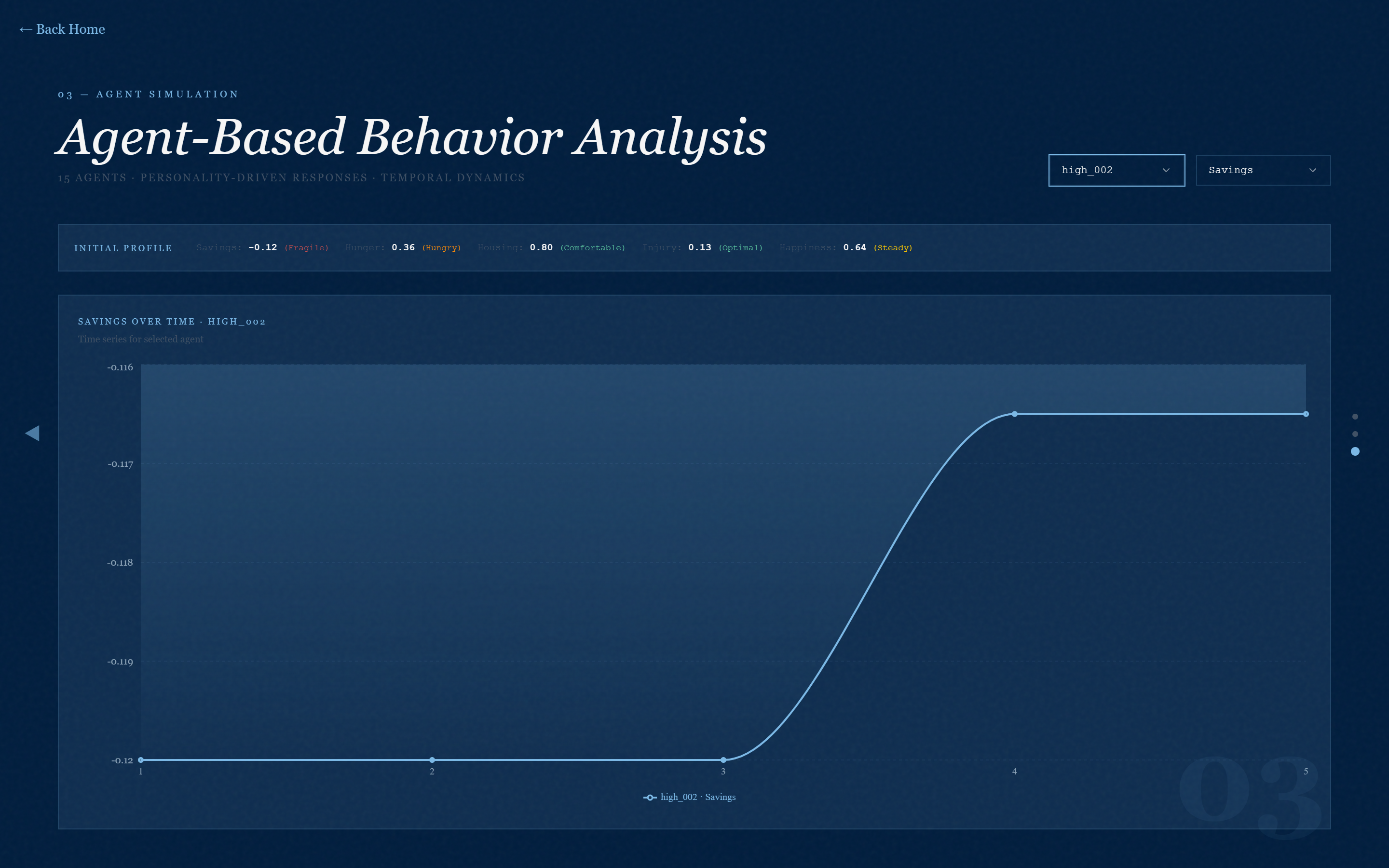
Results Page 3: Agent-Based Analysis
Inspiration
In a world where politics are polarized with policies often being dramatized for shock value, our product provides a clear way to simulate and visualize the impacts of public policies by putting virtual humans in virtual cities to live the policies out for us.
What it does
BluePrint is a scenario exploration engine for public policy or other systems that involve complex human interaction. It works by having the user type in the high-level outline of the policy they want to simulate. A Planner LLM then interprets the scenario---generating representative personas and constructing an economic & social environment. It then uses Agent LLMs to simulate these personas and allow them to interact with each other and make decisions in the simulated environment. Finally, it collects data from the simulation and presents it to the user in an easily digestible way.
How we built it
BluePrint uses a multi-stage LLM-driven architecture:
Planner Model
- Interprets the user’s scenario.
- Generates agent archetypes.
- Defines environmental variables and institutions.
- Specifies metrics to track.
Agent Policies
- Each agent is powered by an LLM-based decision model.
- Agents receive income and manage budgets.
- They balance survival (food, housing, health) with savings and long-term satisfaction.
- Agents are linked socially and influence each other’s dissatisfaction levels.
Deterministic Simulation Engine
- Handles state updates (hunger, housing, injury, savings).
- Applies economic rules and constraints.
- Computes satisfaction with weighted components.
- Tracks aggregate trends across the simulated society.
Visualization Layer
- Displays time-series metrics.
- Shows divergence between demographic groups.
- Highlights emergent macro-patterns. ## Challenges we ran into 1) Agent Behavior Realism - earl on agents had no concept of maintaining a house or staying fed, but rather prioritized saving above all else. 2) Model limitations - the smaller LLMs we used early-on we quick to run and iterate on but were insufficient for simulating people accurately. 3) Complexity when we introduced peer influence ## Accomplishments that we're proud of
Built a fully dynamic scenario-to-simulation pipeline in one hackathon.
Created socially linked agents that influence each other.
Designed a deterministic satisfaction model with diminishing returns on savings.
Successfully simulated macro-level societal shifts from micro-level decisions.
Turned abstract policy proposals into interactive, explorable systems.
Parallelized the simulator to efficiently use the multiple GPU flexibility Modal offered
What we learned
Prompt design is as important as model size.
Small architectural decisions dramatically affect emergent behavior.
Simulation is a powerful lens for understanding societal systems.
Even simplified agent-based models can reveal non-obvious macro outcomes.
Technology can play a role in strengthening democratic understanding — but only if designed responsibly.
What's next for BluePrint
Integrate real-world datasets for grounded environmental variables.
Improve agent diversity using demographic clustering.
Introduce stochastic shocks (economic downturns, supply disruptions).
Build a polished public-facing web interface.
Expand beyond economics into climate, urban planning, and AI governance.
Develop classroom and policymaker versions for educational use.


Log in or sign up for Devpost to join the conversation.